
Commentary
Invisible no more
Lesbian activists, writers and organizers were at the heart of the women’s movement that thrived in the 1960s and 70s. Lesbians worked tirelessly for the rights of all women, including the right to abortion and for publicly funded childcare – issues not at the forefront of lesbians’ needs. But those same lesbians were frequently stigmatized within the movement: In 1969 Betty Friedan famously labeled us “the lavender menace” and didn’t renounce that point of view until 1977.
In the 1980s and 90s, gay men in the U.S. suffered and died by the tens of thousands from AIDS. Lesbians advocated aggressively for public support of efforts to control the epidemic and volunteered countless hours to care for their gay friends. A study done in the 1990s of lesbians in Los Angeles found that 84 percent had contributed money to AIDS-related causes, 53 percent had volunteered their time, and 31 percent had helped care for someone with AIDS.
But while lesbians served others, they often remained invisible.
In 1989, as she was a few weeks away from dying of breast cancer, lesbian activist Mary-Helen Mautner conceived of an organization that would put lesbians at the center of the story. Soon after, her partner Susan Hester and a group of friends made it happen: the Mary-Helen Mautner Project for Lesbians with Cancer was born, with an initial mission of direct care by volunteers for lesbians with breast cancer. This community-based care remains a vital part of our program today.
For these past 20 years, Mautner Project (renamed in 2008) has worked locally and nationally for the health of women who partner with women. A vital component of that health is visibility.
LBT health is deeply affected by stigma and discrimination. Our community too often avoids health care because we’ve experienced hostile or foolish treatment that assumes heterosexuality. (No, I’m not pregnant. Yes, I’m sure. No really: I’m really, REALLY sure!)
The best predictor of whether a woman has health insurance is if she is married — and more of us don’t have health insurance than our heterosexual counterparts. Some of us react to the stress of stigma with cigarettes – we smoke more than heterosexual women. We may drink too much alcohol, or eat too much. We adopt our own community norms that say these behaviors are OK, because they’re different, and because we’re different.
But they’re not healthy.
So health is about eating well, exercising, getting regular checkups and screenings. But it’s also about making changes in the society around us: we can’t all take proper care of our bodies when we’re swimming in a sea of social ignorance or hostility. We won’t go for medical care if we expect to be treated disrespectfully. We won’t listen to health professionals if they aren’t speaking our language. And we may not change our behavior if our community doesn’t support the change.
Mautner Project has educated some 6,000 health care professionals around the country on how to remove barriers that inhibit them from giving knowledgeable, respectful care to all their patients. And Mautner Project has been educating the women in our community about what we need to do for our health, and how to stand up for ourselves and what we need and deserve.
For 20 years, we have advocated, too, with federal and local governments to make the needs of LBT people central, and to respond to those needs. Whether testifying before the Institute of Medicine or the Centers for Disease Control or the District’s health department, Mautner Project has led in the struggle for LBT visibility, and joined with our many colleague organizations to press the federal government to count us in census findings and in health surveys because too often, when we’re not counted, we’re treated as if we don’t count.
The sense of family that led to Mautner Project’s founding – taking care of ourselves, taking care of each other – is today part of our broader sense of community. As Ginny Sullivan, one of the board members of Mautner Project, always says, when we kick down doors, we’ve got to pull along with us as many folks as we can.
On Mautner Project’s 20th anniversary and with the support of Washington’s LGBT community and our allies everywhere, we look forward to knocking down some more barriers.
Leslie J. Calman, Ph.D., is executive director of the Mautner Project, which celebrates its 20th anniversary this weekend. Reach her at [email protected].
Commentary
World ‘isn’t much different today’
The Nazis murdered nearly 1 million Jewish people at Auschwitz
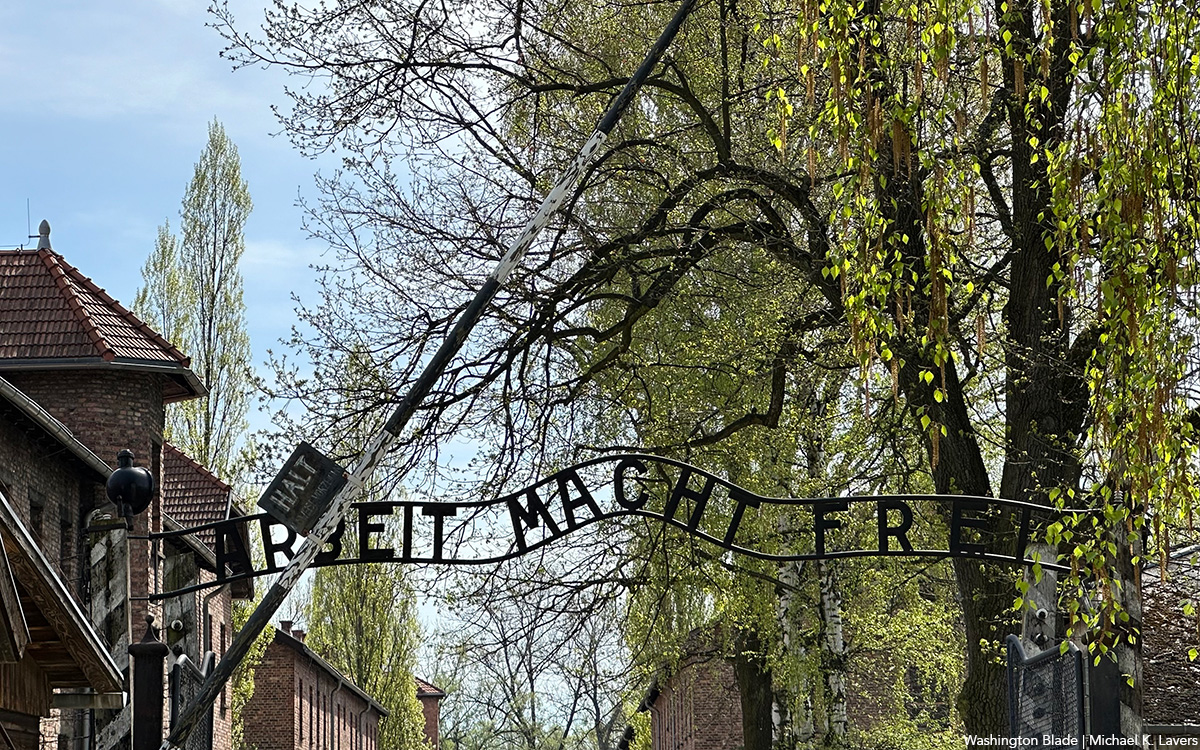
OŚWIȨCIM, Poland — Łukasz, a Polish man who was our group’s English-speaking tour guide at Auschwitz, on April 7 asked us while we were standing outside one of Auschwitz I’s barracks why the Nazis systematically murdered more than 6 million Jewish people.
“Once they are gone, Germany will be great again,” he said, referring to the Nazis’s depraved justification.
There were other Americans in our group of about 40 people. I would like to think they are familiar with the dehumanizing MAGA rhetoric to which our country has become accustomed since President Joe Biden’s predecessor announced his White House bid in 2015. The fact that I was at a Nazi concentration camp was simply overwhelming, and I didn’t feel like speaking with them or to anyone else at that moment.
The unspeakable horrors that happened at Auschwitz are on full display. Łukasz’s comment was a stark warning to us all amid the backdrop of the current socio-political realities in which we in the U.S., Europe and elsewhere around the world currently live.
• Suitcases, glasses, shoes, kitchen utensils, prosthetic limbs, baskets, Jewish prayer shawls, and toothbrushes that were taken from people upon their arrival at Auschwitz were on display in Auschwitz I’s Block 5. One exhibit also contains children’s clothes.
• Auschwitz I’s Blocks 6 and 7 had pictures of male and female prisoners along the corridors. They contained their birthdays, the day they arrived at the camp and when they died. Block 7 also had mattresses and bunk beds on which prisoners slept and the sinks and latrines they used.
• The basement of Auschwitz I’s Block 11 had cells in which prisoners were placed in the dark and starved to death. The basement also had cells in which prisoners were forced to stand for long periods of time. Executions took place at the “Death Wall” in the courtyard between Block 10 and 11. Guards also tortured prisoners in this area.
• Medical experiments took place in Block 10.
• A gas chamber is located near Auschwitz I’s entrance with the gate that reads “Arbeit macht frei” or “Work sets you free.” The adjacent crematorium contains a replica of the furnaces used to burn human bodies.
• An urn with human ashes is in Auschwitz I’s Block 4. Hair cut from people who were killed in the gas chamber was also there.
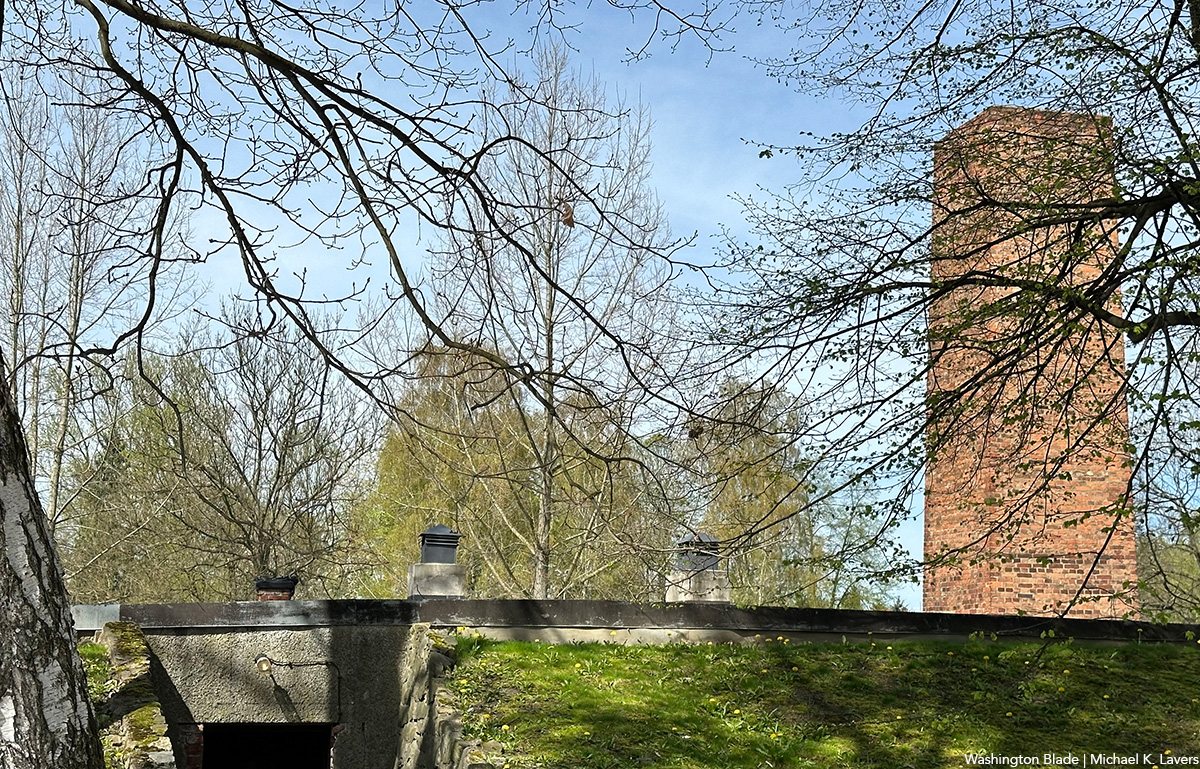
Auschwitz I, a former Polish army barracks, is one of 40 camps and subcamps around Oświęcim, a town that is roughly 30 miles west of Kraków, Poland’s second-largest city, that became known to the world as Auschwitz. Upwards of 90 percent of the 1.1 million people killed at Auschwitz died at Auschwitz II-Birkenau, which is roughly 1 1/2 miles northwest of Auschwitz I in the village of Brzezinka (Birkenau in German), and more than 90 percent of those murdered upon their arrival were Jewish.
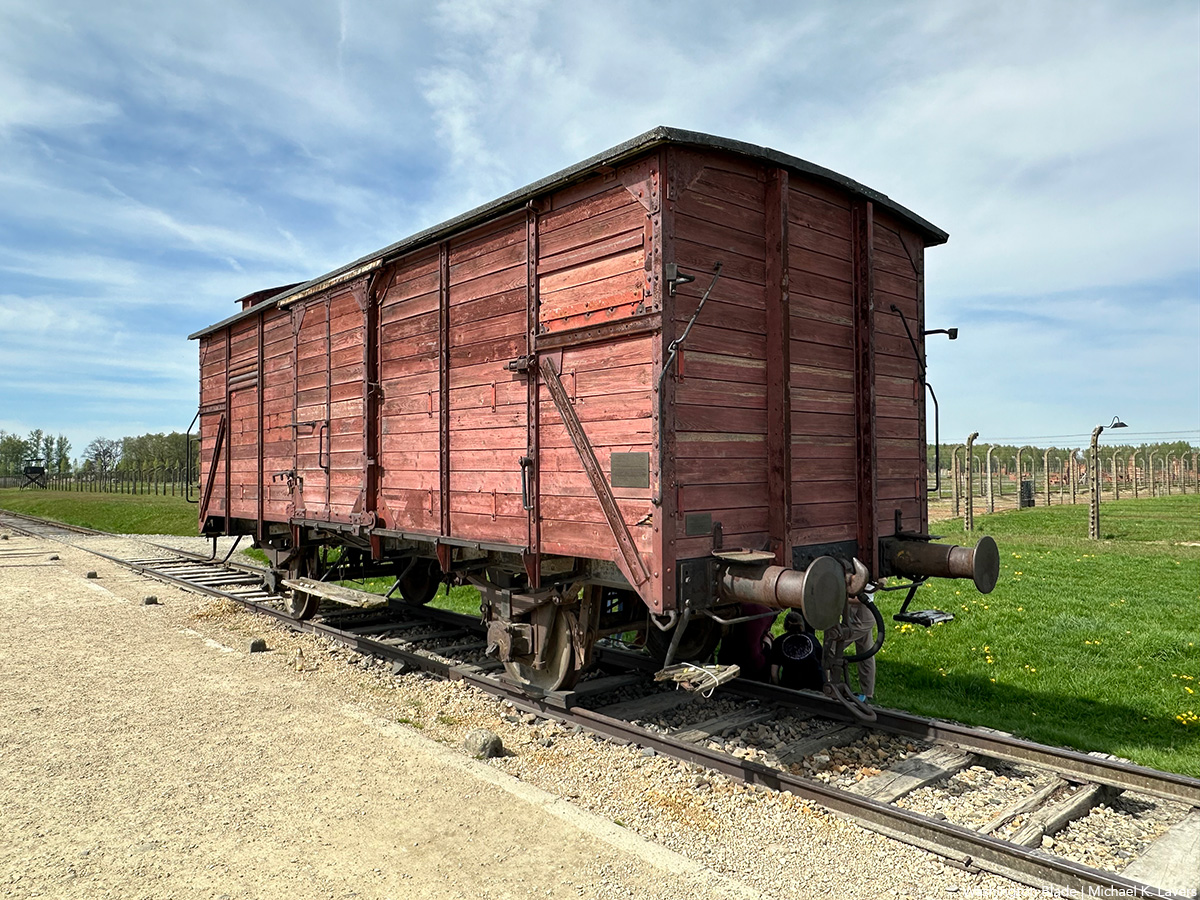
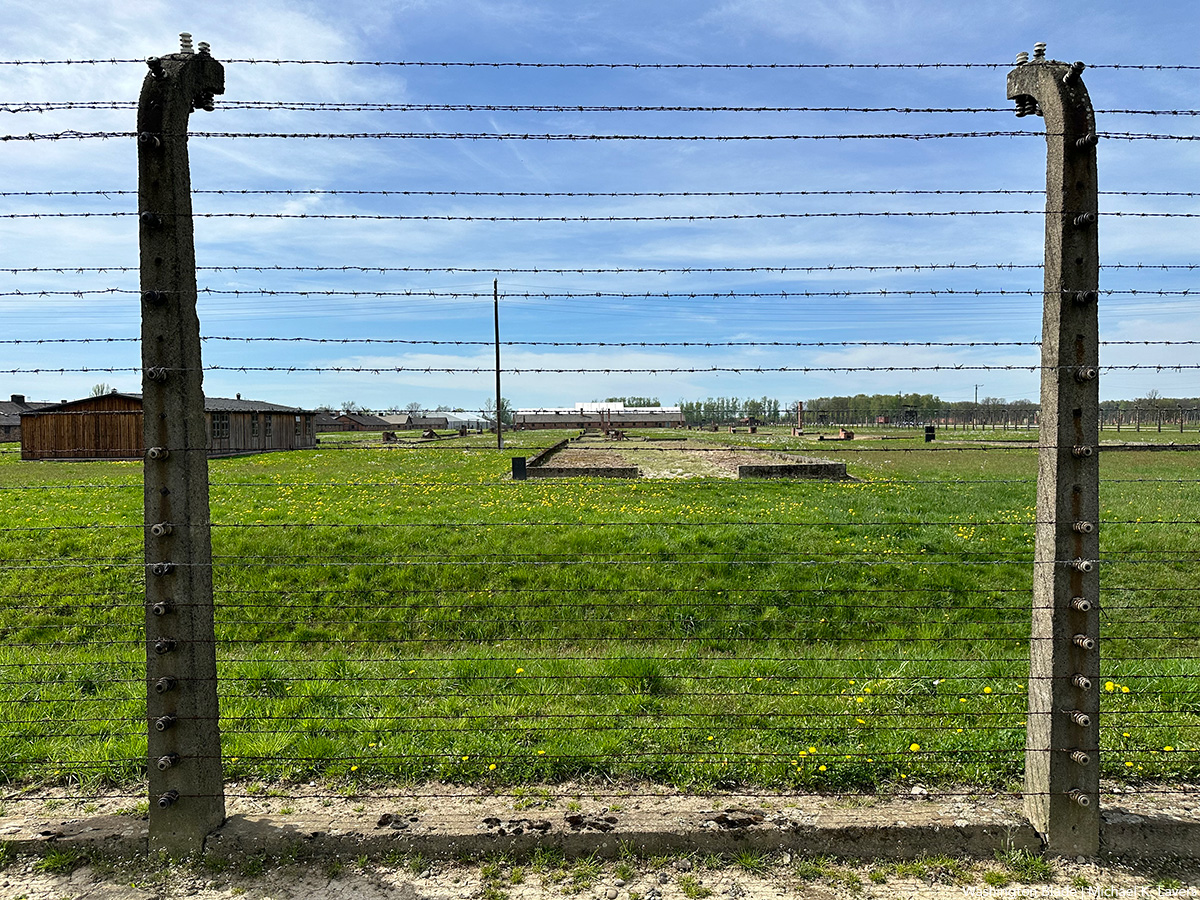
The ruins of two crematoria the Nazis blew up before the Soviets liberated the camp in January 1945 are there. (A group of Israelis were praying in front of them while our group was there.) A train car used to bring people to the camp was also there, along with some of the barracks in which those who were not immediately killed in the gas chambers lived.
Auschwitz II-Birkenau’s sheer size is incomprehensible.
The Nazis killed 6 million Jewish people in the Holocaust. They also murdered gay men, Poles, Roma, Sinti and millions of other people from across Europe.
The day I visited Auschwitz marked six months since Hamas launched its surprise attack against Israel.
More than 1,400 people — including 260 people who Hamas militants murdered at the Nova music festival in Re’im, a kibbutz that is a few miles from the Gaza Strip — have died in Israel since Oct. 7, 2023. The subsequent war has left more than 30,000 Palestinians in the Hamas-controlled enclave dead, and millions more struggling to survive. Oct. 7 was the deadliest attack against Jewish people since the Holocaust. That unfortunate coincidence of dates — Oct. 7 and April 7 — was not lost on me while I was at Auschwitz.
Another striking thing is the area in which the camps are located.
The train from Kraków to Oświęcim passes through idyllic countryside with green meadows, flowering trees and freshly tilled fields. Purple lilacs — like those that bloom each spring on the trees in my mother’s backyard in New Hampshire — were in full bloom inside Auschwitz I. Grass and dandelions were growing amid the remains of Auschwitz II-Birkenau’s barracks. Birds were chirping. The weather was also unseasonably warm with temperatures well over 80 degrees and a cloudless sky.
All of it was beyond surreal.
I visited Auschwitz while on assignment for the Washington Blade in Poland. I interviewed gay Deputy Polish Justice Minister Krzysztof Śmiszek in Warsaw and sat down with activists in the Polish capital and Kraków to talk about the country’s new government and the continued plight of LGBTQ refugees from Ukraine and other countries. My trip began in Budapest, Hungary, and ended in Berlin. I did not write this piece until I on my flight back to D.C. on Tuesday because I could not properly articulate my thoughts about what I saw at Auschwitz.
Governments, politicians, political candidates, and parties in the U.S. and around the world have used specific groups of people to advance a particular agenda, to blame them for what is wrong in their particular country and/or to deflect blame from their own failures. The Nazis and what they did to Jewish people and anyone else they deemed inferior is the most grotesque example of what can happen if such actions are not stopped.
Łukasz told us outside of one of the Auschwitz II-Birkenau barracks at the end of our tour that the world “isn’t that much different today.” He also said that we are “witnesses.”
“It’s up to you how you react to it,” said Łukasz.
Let’s hope we all do our part to make sure the atrocities that happened at Auschwitz never happen again.
Commentary
Preserving our tapestry: Navigating European elections, empowering queer women and the imperative of safe spaces
EU elections will take place in June 9
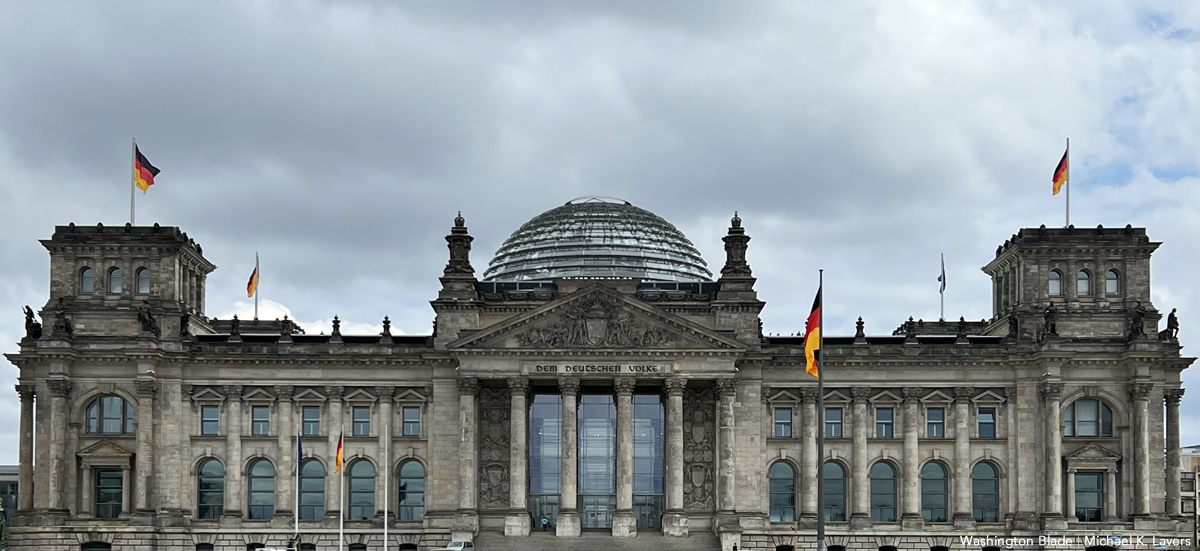
As the European Union anticipates the upcoming elections in June, a disconcerting wave of transphobic rhetoric has swept across the continent, notably in 21 EU member states, according to a recent report by ILGA-Europe. The 13th Annual Review of the Human Rights Situation of LGBTQ People in Europe and Central Asia stresses the alarming rise in hate speech targeting the LGBTQ and intersex community. This growth in negativity — which particularly is directed at transgender people — raises profound concerns about the state of inclusivity, human rights and democracy within the EU.
The alarming surge of transphobia in European politics
According to the report, there is a trend of hate speech coming from politicians across 32 European countries of which 21 being EU member states. Painting a stark picture of the challenges faced by the LGBTQ community. In a staggering list that includes Austria, Germany, Spain and others, politicians have increasingly weaponized anti-trans rhetoric. Exploiting children is a tactic often used as part of scare strategies to create opposition to trans minors’ access to healthcare and educational facilities, extending this divisive approach to a broader trend where politicians argue that restricting information about LGBTQ people is a necessity to protect minors.
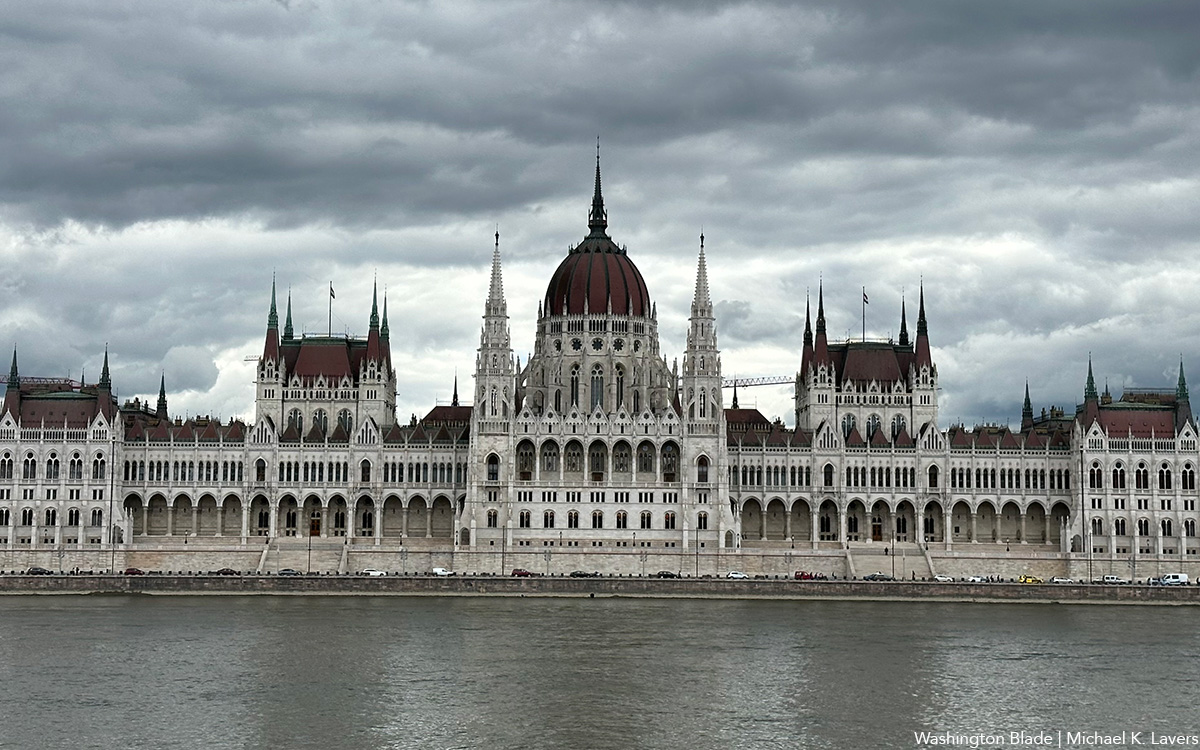
The rise in transphobic rhetoric is not only confined to politics but it has other tangible consequences. The report highlights a concerning escalation in suicide rates and mental health issues, particularly in LGBTQ youth. Violent protests outside schools and libraries have created unsafe environments, adding to the growing list of challenges faced by the community.
The far-reaching impact of demonization by politicians and the introduction of restrictive legislation underscores the need for urgent action. Hate speech is not merely an affront to people’s rights, it is an assault on the very core values upon which the EU was founded. As ILGA-Europe Advocacy Director Katrin Hugendubel notes, human rights, especially those of LGBTQ people, are facing a significant challenge from far-right forces. The exploitation of LGBTQ rights to undermine democracy, human rights and the rule of law highlights the divisive nature of the current political landscape.
As ILGA-Europe prepares to launch the “Come Out 4 Europe” campaign in response to these alarming trends, the need for visible and supportive queer female spaces is more apparent than ever. The campaign, seeking commitments from European Parliament candidates to protect the rights of LGBTQ people, underscores the urgency of safeguarding human rights, democracy and freedom.
The crucial role of queer women in European elections
Belgium, amid this backdrop of rising transphobia, is preparing for the European elections on June 9, 2024. The importance of this electoral process cannot be overstated, especially for queer women. With citizens aged 16 and above casting their votes to elect 22 members of the European Parliament (MEPs), it’s a pivotal moment for the LGBTQ community.
The voting process in Belgium follows EU law, utilizing a proportional representation system. Voters choose one party, either by marking the box above the party list or selecting individual candidates on the list. The total ballot forms for each party determine seat distribution, and preferential votes then decide which candidates secure a seat in the European Parliament.
Educated voting in the European elections is essential to queer women and the importance cannot be stressed enough. Throughout history they have faced unique battles, but this community holds the power to shape policies that directly influence their lives. By engaging in the democratic process, queer women can actively challenge the current surge in hate speech towards trans people by voting for electing representatives who actively advocate for LGBTQ rights.
Representation is more than a mere buzzword. It matters. Understanding candidates’ positions on LGBTQ issues is key and requires educating oneself on candidates’ stances as to allow queer women to vote for representatives who genuinely champion LGBTQ rights. A diverse and inclusive representation ensures that the concerns and voices of the queer community are not just heard but which are acted upon. Decisions within the European Parliament influence policies ranging from anti-discrimination laws to access to healthcare. An informed vote makes sure that legislation promotes equality, acceptance and the protection of LGBTQ rights.
By being educated on the European elections and its candidates, queer women embark on a journey of self-empowerment. By supporting candidates who prioritize inclusive curricula, they contribute to addressing LGBTQ history, health and rights, encouraging a more accepting future.
The undeniable need for physical queer women spaces
Since the European elections are nearing, the importance of physical spaces for queer women to gather and discuss voting and the candidates becomes increasingly evident. While online spaces offer the chance to connect and discuss, they come with their own unique challenges, including the spread of misinformation and miscommunication. In navigating the democratic landscape, the value of in-person gatherings for education and discussion cannot be stressed enough.
The world is saturated with digital information, and misinformation can easily infiltrate online spaces. Physical gatherings allow for a more controlled environment with direct feedback from peers, where queer women can share accurate and reliable information, ensuring a more nuanced understanding of candidates, policies and the electoral process.
In the lead-up to the European elections, we have to recognize that physical spaces for queer women are crucial. They do not only combat misinformation, disinformation and miscommunication but also serve as a vital space for shared learning. In-person gatherings create the foundation for an informed and engaged electorate, promoting a collective voice that resonates in the democratic process. The power of change lies not just in our votes but in the shared wisdom and unity forged in the physical spaces we create together.
The plight of the Crazy Circle and the call for investment in queer women spaces
After the closing of Brussels’ iconic Crazy Circle, a feminist queer space that has served as a safe haven for the LGBTQ community, it becomes increasingly evident that the struggle for queer women-only spaces in Belgium is a critical issue demanding our attention.
For the past five years, Crazy Circle has been a testament to the resilience of the LGBTQ community, creating a safe and celebratory space for queer women and their allies. However, its closure after the previous management leaving for unknown reasons and current fundraising attempt by the new owners to reopen highlight the challenges faced by such spaces in Belgium. These establishments play a vital role not only as social hubs but as catalysts for education, empowerment and advocacy. Fortunately for the new owners they recently reached their fundraising goals and raised over 50,000 euros to reopen Crazy Circle.
The loss of a space like this underscores the broader struggle faced by queer women-only spaces in Belgium. Beyond being social hubs, these spaces are vital agents of change, providing a haven for education, empowerment and advocacy. We must recognize that our commitment to the LGBTQ community extends beyond words.
The “Come Out 4 Europe” campaign by ILGA-Europe serves as a proactive response to the alarming trends in hate speech. It calls for clear political commitments on safeguarding human rights, democracy and freedom from candidates in the upcoming European Parliament elections in June. Belgium, with its own elections on the horizon, stands at a crossroads where the choices made will resonate far beyond its borders.
If we want to inform queer females about campaigns like “Come Out 4 Europe” we need spaces like the Crazy Circle. Its closure is a stark reminder of the fragility of these vital spaces. It’s a call to action, urging us to invest more in preserving and expanding queer women-only spaces. The struggle faced by Crazy Circle is not an isolated incident; it reflects a broader challenge that demands a collective response all over the world.
By fighting to preserve and expand queer women-only spaces, we are not merely safeguarding physical venues. We are investing in the education, empowerment and advocacy of the LGBTQ community. These spaces are not mere bars or gathering spots; they are crucial agents of change and empowerment.
Building a future of inclusivity
As we see what happened to Crazy Circle in Belgium, let us use this moment as a catalyst for change. It is time to rally together behind existing queer women spaces, ensuring their survival and actively working towards expanding and creating new ones. By doing so we empower individuals to educate, advocate, and, most importantly, vote for a future where safety, equality and acceptance prevail for all members of the LGBTQ community. It’s not only a matter of choice to preserve these spaces; it is a commitment to a world where everyone has the right to be safe, heard and celebrated.
In navigating the complex tapestry of the European elections, the empowerment of queer women spaces through informed voting and the preservation of physical queer women spaces become integral threads. As we stand on the precipice of change, our choices today will shape the inclusive and accepting future we envision. Together, let us weave a tapestry that celebrates diversity, protects human rights and builds a future where every voice, especially those of queer women, is not just heard but cherished.
Commentary
Returning to the kibbutz: A journey of heartbreak and hope
Hamas militants attacked Kfar Aza on Oct. 7
BY K.T. COLIN | In 2019, my first encounter with Israel was through the lens of a sponsored Birthright trip. I embarked on a three-week journey, traversing the diverse landscapes from the northern regions to the eastern territories and finally to the arid southern desert. I had the opportunity to visit different communities within Israel and Palestine. Amidst this exploration, I spent an unforgettable three days and two nights in a kibbutz situated near the Gaza border. The memories etched in my heart were ones of unbridled joy, resilience and the harmonious coexistence of the desert dwellers — an emotional tapestry that forever imprinted itself on my soul. Coming from an Iraqi heritage, I viewed these expressions of coexistence through a lens shaped by my own region’s history of conflict and diversity.
As I recall the Shabbat dinner at the kibbutz, the air resonated with the sacred call to prayers (Adhan) from a nearby Bedouin Arab-Muslim town. The juxtaposition of cultures and faiths was a poignant reminder of the shared humanity that bound the Jewish and Arab Israelis in this region. It was a journey that transcended the ordinary, leaving an indelible mark on my consciousness. Filled with memories of peace and unity, I returned, only to confront a reality far removed from my cherished memories.
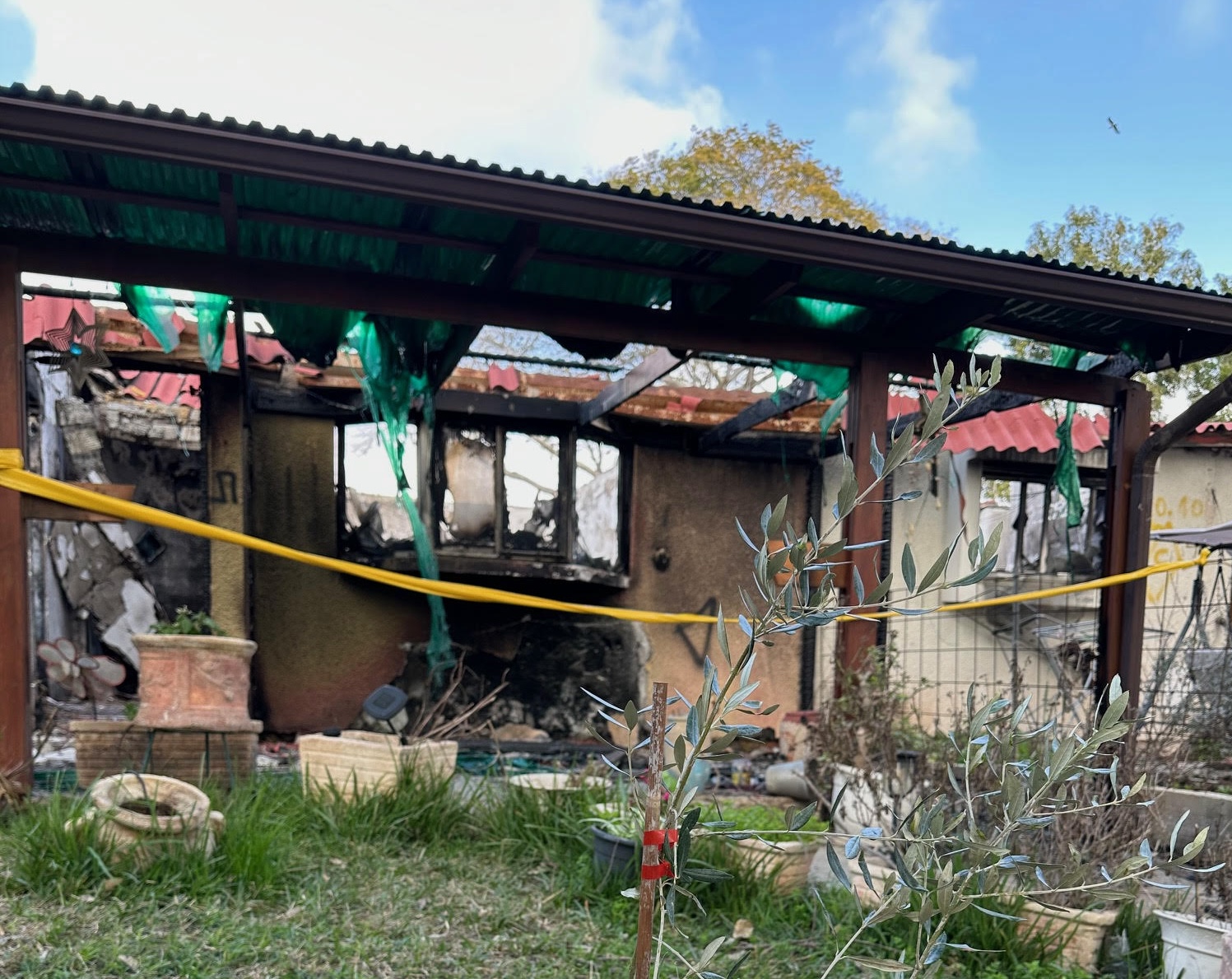
Fast forward to last month, when I returned to the Negev Desert, specifically to Kfar Aza — one of the 22 kibbutzim targeted by Hamas on that fateful day, Oct. 7, 2023. The once vibrant oasis, brimming with the light of life, now stood shrouded in the darkness of war-induced death and destruction. The very bench where camaraderie blossomed in 2019, while sharing a moment of connection with an Israeli companion, lay reduced to ashes. The thriving pathways, once bustling with life, had metamorphosed into haunting reminders of blood and rubble. The faces that animated Shabbat gatherings, weaving tales of peace advocacy between Palestinians and Israelis, were now conspicuously absent. In the wake of Hamas’s brutality, no entity — be it human, animal or plant — escaped unscathed. The aftermath resembled scenes from an apocalyptic movie, a tableau of sensory deprivation dominated by the stench of death and the echoes of destruction. This destruction, while uniquely harrowing, echoed the all-too-familiar scenes of conflict from my childhood in Iraq, underscoring the universal tragedy of war.
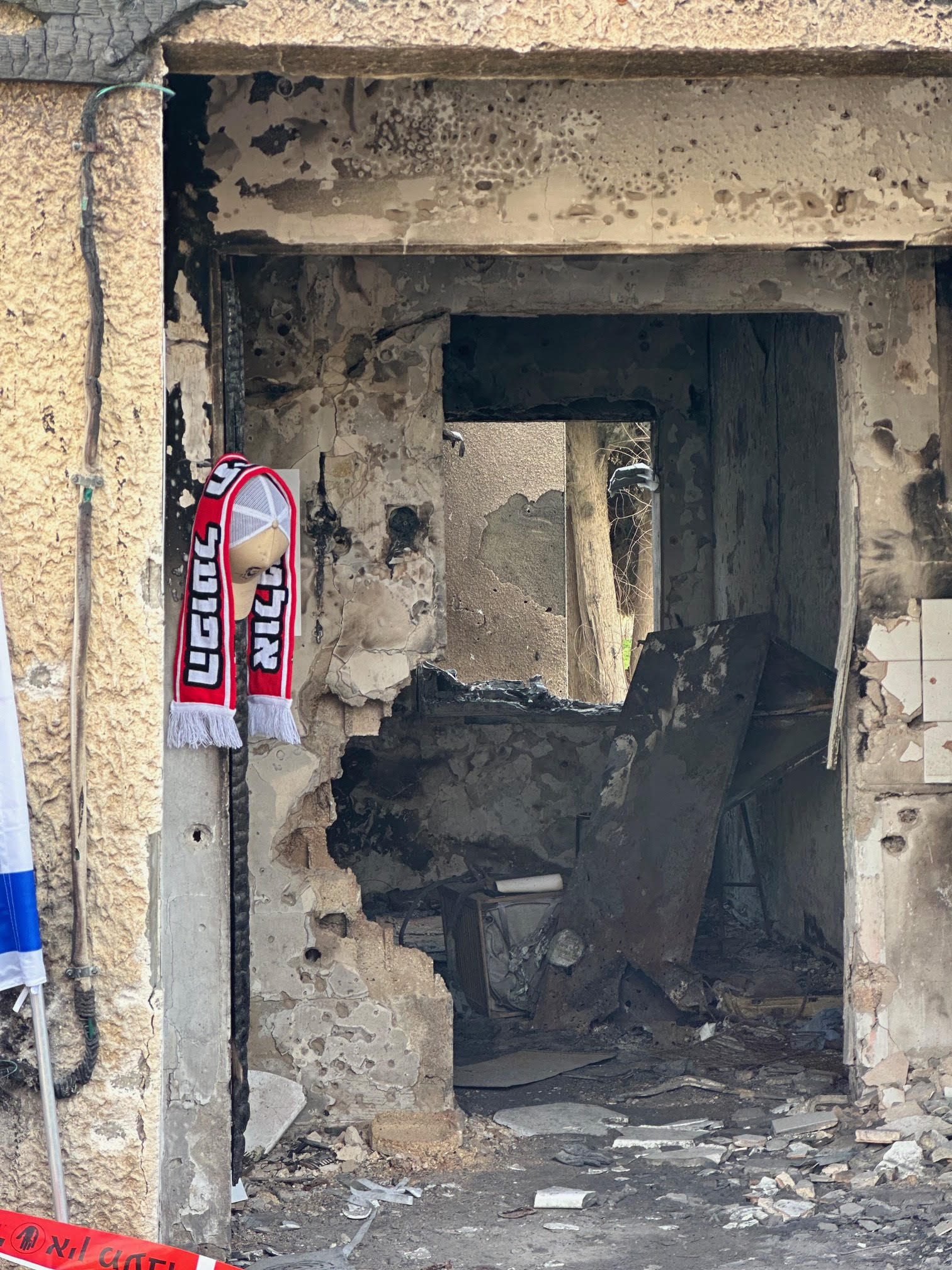
While my roots trace back to Iraq, a land marred by wars and the brutality of conflict, the devastation witnessed in Kfar Aza struck a chord that reverberated with the echoes of my past. My personal journey, from witnessing Saddam’s reign of terror to observing the aftermath in Kfar Aza, underscores a broader narrative of resilience and the enduring hope for peace. Born during the Iraqi-Iranian war, my father’s absence for the first six months of my life spoke volumes about the toll of conflict. The invasion of Kuwait and subsequent wars entrenched the narrative of war as an unwelcome companion in our daily lives. Memories of the U.S. invasion in 2003, the ensuing civil war, and the subsequent loss of rights for women, secular individuals and LGBTQ+ members further underscored the harsh reality of conflict.
Yet, Kfar Aza was a unique chapter in my journey, revealing a form of malevolence that transcended my prior experiences. In their assault, Hamas meticulously targeted specifically peace activists who wanted nothing but peace and prosperity between Israelis and Palestinians, sparing no atrocity in their pursuit. This was not just about taking lives; it was a heinous assault on the very prospect of peace. The evil that unfolded reminded me of the forces mentioned in the Quran — Yaajooj and Maajooj — entities of pure malevolence against whom even Alexander the Great erected a wall, according to Muslim prophecy.
My upbringing in Iraq, under the shadow of Saddam Hussein’s dictatorship, fanned the flames of anti-Semitism. A once diverse Iraq, home to 165,000 Iraqi Jews, witnessed their forced exodus through decades of genocide. Subsequently, Christians, Yazidis and Sabbea Mandaeen fell victim to ethnic cleansing orchestrated by dictatorial regimes, Nazi pogroms, Iranian militias and ISIS. The slow erosion of tolerance and coexistence occurred methodically, propelled by hate campaigns championed by Arab nationalists and later fueled by Islamist movements, plunging Iraq into its darkest era.
My school days were marked by compulsory flag-greeting ceremonies, ostensibly patriotic but laden with hate. The chants of “Death to America; Death to the Zionists; Death to the Jews” echoed through the air, fostering a culture of animosity. Arabization and Nationalism classes further fueled this bigotry, leaving an indelible mark on impressionable minds.
The recent horrors in Kfar Aza echoed memories of a similar brand of terror perpetrated by Saddam’s regime — the Fedaeen of Saddam, a precursor to Hamas’s brutality. The parallels were chilling — beheadings, brutal punishments and a reign of terror continued even after the fall of Saddam, as they joined Al-Qaeda, leaving a trail of atrocities in cities like Fallujah and Ramadi.
As I witnessed the devastation in Kfar Aza, the echoes of war in nearby Beit Hanoun, Gaza, resonated hauntingly. The pain echoed from both sides — the Israeli people enduring Hamas rockets since 2015 and the Palestinians suffering daily under the same regime. My heart shattered for the children left orphaned, the LGBTQ+ Gazans now without shelter or life-saving medications and the vulnerable girls and boys exposed to the horrors of Human trafficking and rape. The theft of humanitarian aid by Hamas left many without food and water, and the lip services to Palestinians by Arab and Muslim majority nations, painting a grim picture of a future hanging in uncertainty for those who survived.
Despite the deep scars of conflict, both in my homeland and here, I see glimmers of hope that guide us toward a shared future. I have endured the darkest chapters of conflict in my past, and I hold onto the belief that one day this war will end. I dream of a future where Israelis and Palestinians coexist in shared spaces, attending the same schools, dining at the same restaurants and dancing in the same nightclubs. Having witnessed such unity among Jews, Druze, Muslims and Christians in Israel, I pray for a day when this reality extends to Gazans and Israelis in the Negev Desert. The journey towards peace is arduous, but the human spirit, resilient and compassionate, holds the promise of a brighter tomorrow.

Smithsonian staff concerned about future of LGBTQ programming amid GOP scrutiny

Upcoming Ugandan Census will not count intersex people

Three of five LGBTQ candidates win race for DNC delegate from D.C.

Same-sex couples vulnerable to adverse effects of climate change

Out in the World: LGBTQ news from Europe and Asia

New D.C. LGBTQ+ bar Crush set to open April 19

Reenactment of first gay rights picket at White House draws interest of tourists

Daniel Zamudio murderer’s parole request denied

Open or closed? No, not your bar tab

Montgomery County police chief discusses arrest of trans student charged with planned school shooting
-
 District of Columbia5 days ago
New D.C. LGBTQ+ bar Crush set to open April 19
-
 District of Columbia5 days ago
Reenactment of first gay rights picket at White House draws interest of tourists
-
 South America3 days ago
Daniel Zamudio murderer’s parole request denied
-
 Opinions5 days ago
Open or closed? No, not your bar tab