
Blade Blog
Responding to an unfair attack
Village Voice story on gay media is flawed, inaccurate

The recent Village Voice story, “Gay print media on the wane,” by Michael Lavers is riddled with factual errors and suffers from conflicts of interest and general amateurishness. Lavers and his editors clearly set out to write a self-serving story about the supposed demise of LGBT news outlets. And they didn’t let pesky facts get in the way of their hypothesis.
Lavers interviewed me for the story and it became clear from the outset that he had already decided what to write — he just needed a few supportive quotes to fill out the piece. Hence, nothing I said to him made it into the final story. He spends significant time writing about the Blade, Window Media and the Advocate, but no one from those entities is quoted or allowed to respond to Lavers’ irresponsible and baseless claims. Instead of talking to professionals working in LGBT media, Lavers quotes an anthropology professor whose qualifications and experience in niche media are never revealed.
In addition to the blatant bias, there are sloppy factual errors. Lavers cites Window Media’s closure of the Washington Blade on Nov. 16, 2009 as the “day the death rattle began” for LGBT media. He writes that the paper was shuttered the Monday after its 40th anniversary celebration in a hotel ballroom and that employees found themselves “locked out.” None of that is true — our anniversary party wasn’t held in a hotel ballroom; the closure happened a full month after that party and staffers were not locked out of our offices.
What’s more disturbing than the lack of basic fact checking (what an old-school concept!) is that Lavers fails to disclose his work for Edge Media Network, a company he describes as “fast becoming the new gay press establishment,” a grandiose claim he offers no evidence to support. He also conveniently omits the fact that one of Edge’s senior executives, William Kapfer, was an officer of Window Media, the Blade’s former parent company that is criticized in the story. It sounds like Kapfer, an Edge marketer, wrote the story for Lavers.
Lavers makes other fanciful claims. He writes, “It’s true that all print media is going through an adjustment as newsgathering and disbursement goes digital. But the change is especially painful in the gay world.”
Really? Where are the numbers to support that claim? In fact, I have heard anecdotally from colleagues in cities all over the country that niche and alternative media are faring much better than major metropolitan dailies that got greedy and lazy after decades of monopolistic control of their markets. Unlike the metro dailies, LGBT outlets are lean operations with relatively small staff and low overhead, making them much more likely to survive an economic downturn. We’re also able to move more quickly to adapt to technological changes.
Lavers further writes, “The publishers and editors of Southern Voice in Atlanta and the Washington Blade are attempting to resurrect their respective papers, but starting a ‘hard copy’ niche weekly in these hard times will prove daunting — to say the least.”
A good reporter would have talked to some of those publishers and editors to find out just how daunting it is to start a new business in this economy. But that would require actual effort and might yield inconvenient facts that undermine your thesis. It’s much easier to make assumptions along with self-congratulatory, wishful-thinking claims of being the “new gay press establishment.”
Another false notion that Lavers advances is that LGBT media outlets are unnecessary because the mainstream media do such a thorough job of covering our issues. Again, not true. In 2007, when Congress was debating the Employment Non-Discrimination Act, the Blade devoted dozens of stories to the issue. When the Washington Post editorialized in favor of ENDA, the writer relied on the Blade’s coverage of the issue because the Post’s own newsroom hadn’t written one word about ENDA.
More recently, the Post refused to report the basic fact that murder victim Brian Betts, a D.C. school principal, was gay. The Blade broke that story and forced the Post to confront its outmoded policies on reporting on sexual orientation. When there’s an overt gay angle to a story — marriage, for example — mainstream outlets do a better job of covering our issues. But when the gay angle is less obvious (the Betts case) or too complicated (the ENDA debate), mainstream outlets continue to disappoint.
Lavers praises a couple of bloggers and then pats himself on the back (again), writing, “I was able to report on the New York State Senate’s vote on gay marriage from my apartment in Brooklyn via a live stream of the proceedings in Albany.”
Unfortunately, that’s not “reporting,” it’s stenography. And let’s hope that relying on live streaming of events doesn’t represent the future of LGBT journalism. What happens when the feed goes down?
Bloggers play an important role in covering LGBT rights and I’ve become friendly with several of them. But there are very few LGBT bloggers who devote themselves to their sites full time. We need full-time reporters who can attend congressional hearings, news conferences and other events without the time constraints of working another job. We need investigative journalists who can devote themselves 100 percent to their craft and serve as movement watchdogs.
The notion that bloggers are the cool kids with neat-o toys like Twitter and Facebook, while print outlets are hammering out stale news on stone tablets is such an inaccurate and dated cliché that I’m reluctant to respond to it. But since Lavers builds his entire story on such stereotypes, here are a few facts for those interested in such anachronistic things.
The Blade was shuttered by its parent company that was mired in debt unrelated to our operations. Window Media was part of a larger entity that had investments in diverse industries. Since closing in November, the staff rallied and re-launched the Blade. We’re now a locally owned and operated robust business employing openly LGBT media professionals. I am immensely proud of that. Our recent Pride issue was bigger and more profitable than last year’s. We have morphed into a 24/7 news outlet with a strong Facebook presence and more than 6,000 Twitter followers.
So why continue to publish a print edition at all? The dirty secret in publishing is that no newspaper is making more than 10-15 percent of its revenue from web ads. Even Politico didn’t start making money until it launched a print edition. Of course, the print medium is fading in favor of the immediacy of the web. Most of us have been aware of that fact since the mid-‘90s. Lavers and the Village Voice sound like they only just now figured it out. I embrace that change and am excited to be a part of it, as I have been since joining the online staff of the Baltimore Sun in 1996. I am also platform agnostic — I don’t care how our readers access our content, just that they do so and that our advertisers are along for the ride.
One day the business model will catch up to readership. No one knows how or when that day will come — not the publisher of the Washington Post and not the CEO of Google. In the meantime, we at the Blade are doing all the things that Lavers seems to think we’re neglecting. We are no longer a weekly; our site is updated daily and as news warrants. We have a strong Facebook and Twitter presence, we have blogs and podcasts and video and photo galleries and all the bells and whistles you’d expect from a 2010 media entity.
As I told Lavers in my interview with him, the Blade has never had more readers and there has never been more news to cover. It’s disappointing that a gay reporter who has made his living writing for — and being paid by — LGBT news outlets didn’t give those outlets a fair shake.
Blade Blog
Cruising into Pride
Celebrity holds firm as a proud corporate supporter of LGBTQ community
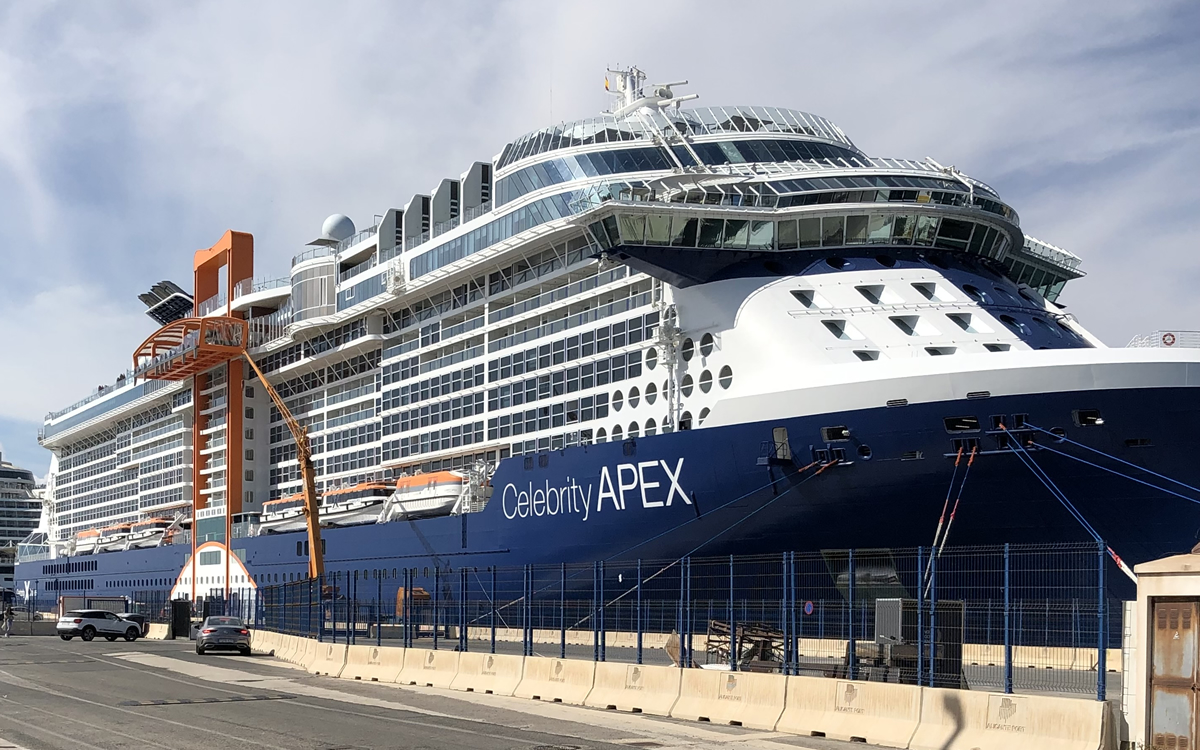
As you know if you have read my columns and blog posts, I love cruising. The kind where you are on a river or the ocean. Today in both the United States and around the world the LGBTQ community is facing difficult times. Attacks are coming fast and furious. There are few places where members of our community can feel totally safe these days.
One of those places is on a cruise ship that values the community. That is what I have found whenever I travel on a Celebrity ship. Today, they are going even further in letting the world know about their respect for the community. They happily advertise Pride at Sea. Of course, they are doing it to attract LGBTQ passengers and their dollars, but that’s great in this day and age, when a company is willing to step up proudly, wants our business, and will do everything they can to make us feel both wanted and safe. That is what Celebrity Cruise Lines is doing.
I want Pride to be celebrated not just in June, but every month. But I am excited about the June celebrations whether hosted in D.C. by Capital Pride, or on the high seas. While many of us will be at the D.C. Wharf, on June 10 to help the Washington Blade celebrate Pride on the Pier with spectacular fireworks, those who miss that and are on a Celebrity ship will be part of a Pride celebration as well. Their ships will all celebrate the month in various ways including flying a LGBTQ Pride flag.
Celebrity has invited my friend, entertainer extraordinaire, Andrew Derbyshire, to lead the celebration on the Edge on June 13, in Ibiza. He recently quoted Celebrity, “In honor of Pride month and our continuing commitment toward fostering positive and authentic partnerships within the LGBTQIA+ community, Celebrity Cruises is raising the Pride flag to celebrate acceptance, unity, and support for the community. Each June, Celebrity Cruises hosts our annual Pride Party at Sea. Every ship takes part in the celebration that brings our crew and guests together to honor and celebrate Pride.” Andrew added, “I am happy to announce I will be flying to Ibiza on the 13th of June for a few nights, to host Pride on the Celebrity Edge, with my friend and captain, Captain Tasos, and the amazing team on board.” Andrew, like many of the entertainers I have seen and met on Celebrity ships, is encouraged to be who he is, ‘out’ and proud.
The Edge will kick off Celebrity’s fifth annual Pride Party at Sea during its June 10, 2023, sailing. “The party will take place in tandem across the award-winning Celebrity fleet, with each ship ‘handing off the party baton’ to the next, to keep the festivities running across hemispheres and time zones. A variety of multi-generational LGBTQ+ focused programming will take place throughout the month of June. Together, officers, staff and crew around the world will participate in Celebrity’s signature Pride programming.”
You should know one of the things straight couples could always do on a Celebrity cruise is have the captain marry them. Now, since same-sex marriage became legal in Malta, where most Celebrity ships are registered, their captains can legally marry same-sex couples. After this happened the first legal same-sex marriage at sea, on a major cruise line, occurred on board Celebrity Equinox in January 2018 when the captain married Francisco Vargas and Benjamin Gray.
Celebrity is a Florida-based company, and along with Disney, they are standing up for the LGBTQ community. They have been a Presenting Sponsor of Miami Beach Gay Pride for four years in a row. They continue to advertise their collaborations with gay cruise companies like VACAYA, which has charted the Celebrity Apex for a cruise of the Caribbean in 2024. The ship will be sailing with a lot of happy LGBTQ cruisers on Feb 17-24, 2024 for seven nights from Fort Lauderdale to Puerto Rico, St. Croix, and Antigua. For anyone who hasn’t been on the Apex, it is an amazing ship. While not during an official Pride month I will show my Pride along with many other LGBTQ travelers on Celebrity Beyond this October out of Rome, and on Celebrity Ascent in October 2024 out of Barcelona. The Ascent hasn’t even set sail yet.
Let’s hope other companies will follow Celebrity’s lead and value the LGBTQ community. We are entitled to live our lives safely and to the fullest, as who we were born to be.
Peter Rosenstein is a longtime LGBTQ rights and Democratic Party activist. He writes regularly for the Blade.
Blade Blog
Shawna Hachey of Celebrity APEX on what makes a good cruise director
A love of people is a must
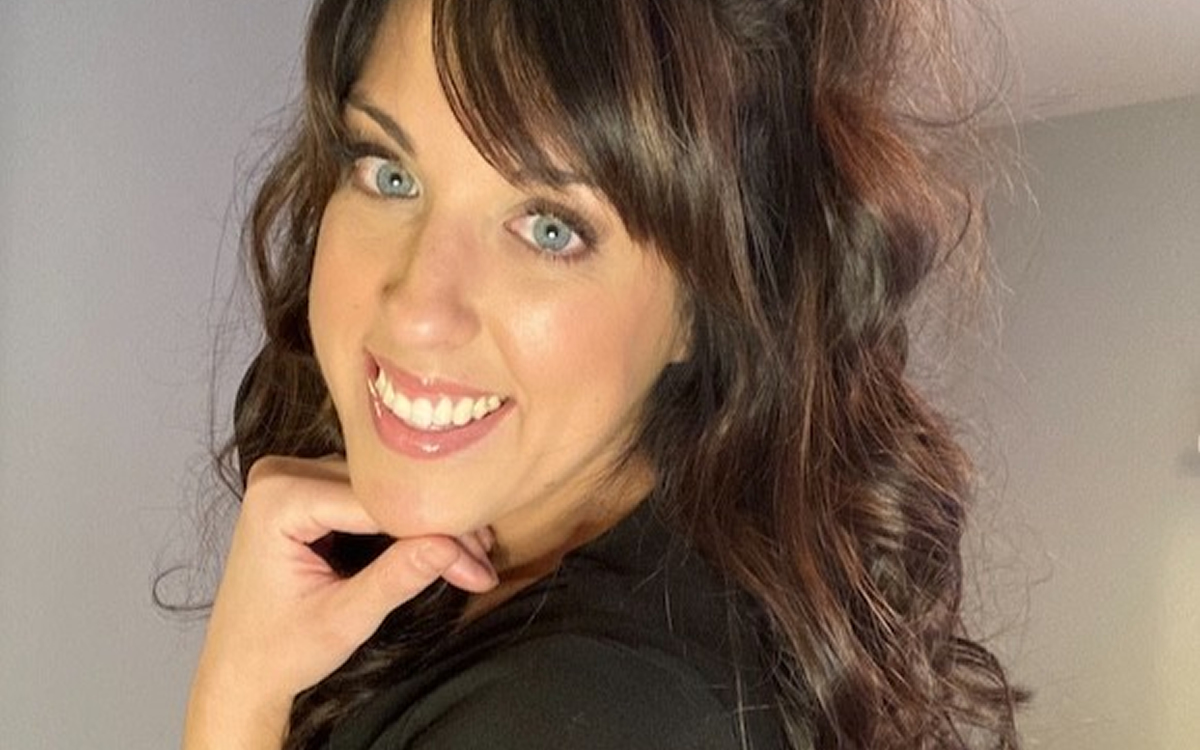
The position of cruise director on any ship is one of the most important, especially on a transatlantic voyage, like the recent one I took on the Celebrity APEX. So much of what people remember is the entertainment. Shawna Hachey is a great Cruise Director and I had the opportunity to sit and chat with her during the cruise. The job keeps her jumping and she is one of the busiest people on the ship. Shawna has a great bubbly personality. She likes people, which is a requirement for that position.
Shawna shared she is from New Brunswick, Canada, and has come a long way from there. She has now been with Celebrity for nearly thirteen years. I kidded her that meant she must have begun when she was ten. She is actually a very young looking thirty-five. She graduated from the University of New Brunswick with a degree in fashion design, a passion of hers. Shawna told me when she graduated, she had the options of a job in the fashion industry, or working on a cruise ship. Her dad was the one who suggested she go see the world and she ended up falling in love with cruise ships.
It is not an easy job. Her schedule is four months on and four off. The recent pandemic had her off the ship for a year and a half, during which time she worked in a government job back in Canada until Celebrity called her back. Her first contract after the pandemic, because of staff shortages, was eight months on and two off. But she loves the job.
Shawna did the usual for someone in her position and worked her way up the ranks from activity host, to activity manager, to cruise director. At one point she did something different and had a stint as a school teacher in London for a year, teaching kindergarten, but came back to cruising. I can just see her with those kids and am sure she was great.
As Cruise Director she is responsible for organizing all the entertainment on the ship. That includes lectures, Zumba, game shows, silent disco’s, evening parties, resort deck parties and other games, as well as the back of house and theater tours. She works to ensure every traveler has something to keep them busy and having fun. As Shawna told me, that is always a little harder on a transatlantic cruise with so many sea days. But judging by the comments on the ship by so many of the people I met, she was doing a great job.
The Cruise Director doesn’t get to choose all the talent, as Celebrity does the booking, but Shawna can and did request some approved acts. She loves working with those like the incredibly talented, Andrew Derbyshire. Many of us were excited he was going to be on our cruise. I first met Andrew, and wrote about him, last year when I was on APEX. He is an amazing entertainer. Shawna explained to me with the big shows like Crystalize and Tree of Life, Celebrity now produces those themselves and interviews talent for them around the world. One of the cast members in those shows, Nate Promkul, I predict will end up a star on Broadway. With the individual artists, their agents submit them to Celebrity, who then hires them for all their different ships.
Before working on APEX Shawna has worked on a number of other Celebrity ships including Solstice, Reflection, Equinox and Silhouette. Shawna shared a story with me about Celebrity. They have always had a lot of crew from the Ukraine. Apparently, after the war began any crew members from Ukraine still working, were able to bring their families who could get out of Ukraine on board to live with them. This is a wonderful humanitarian thing to do.
I enjoyed talking to Shawna and urge any cruiser on the APEX to say hello when you are onboard. She will always have a big smile for you.
Blade Blog
Meet Captain Nikolaos Christodoulakis of the Celebrity APEX
Reflecting on life aboard a ship during COVID
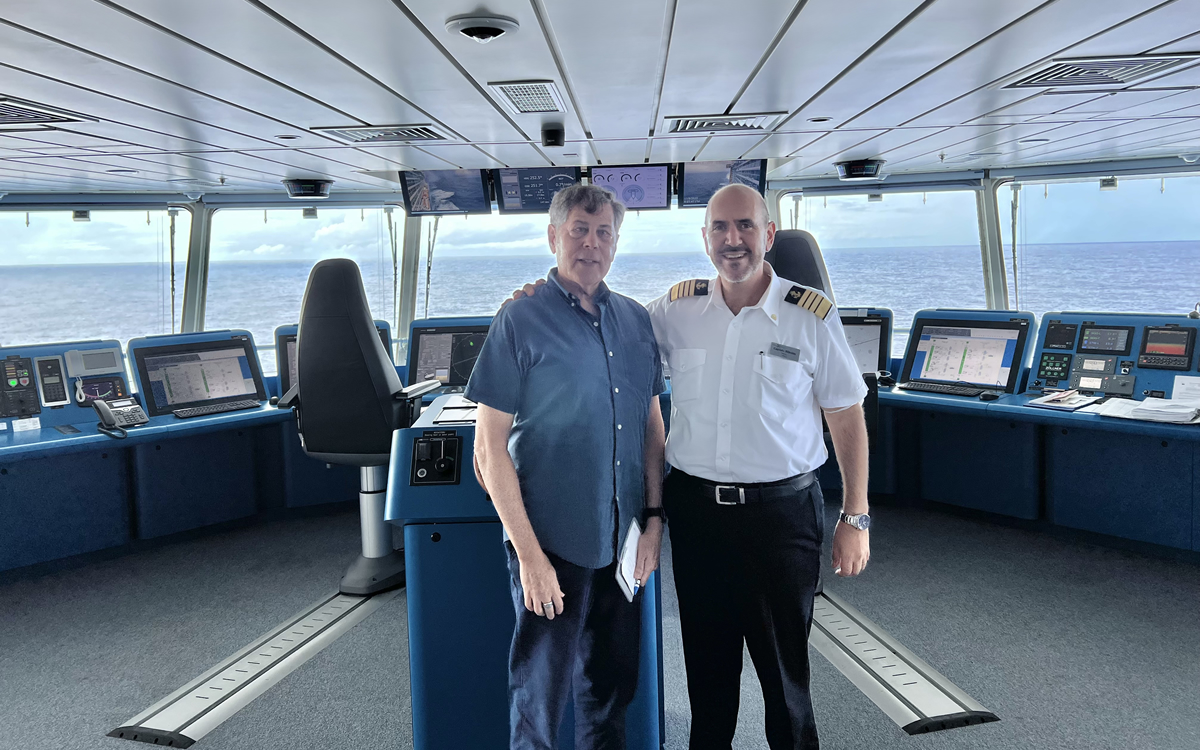
It really was a pleasure to chat with Celebrity APEX Captain Nikolaos Christodoulakis who invited me to the bridge for a conversation. I learned he is quite an amazing man.
Captain Christodoulakis told me Celebrity is the only cruise company he has ever been with and joined them twenty-eight years ago in 1994. While still a young man of 47 he has already been a captain for 12 years. In one of the many interesting lectures during the cruise, we were given a talk on how one can become a captain. How one moves up the ranks at Celebrity. We were told about all the education and testing required. The speaker, who was not yet a captain, kidded he would reach that goal by 2080. He then told us jokingly about the exception for those of Greek extraction. He said they received their captain’s certificate along with their birth certificate. When I mentioned this to the captain during our conversation he laughed and assured me he did have all the needed education and tests.
Captain Christodoulakis told me proudly he is from the Island of Crete, and still lives there with his wife and eight-year-old daughter. A captain with Celebrity is on a schedule of three months on, and three months off. He said he loves those three months off when he can be with his wife and daughter, and the rest of his family, back on Crete. I told him I had been to Crete many years ago and thought it was beautiful and asked him if he had ever walked down the famous Samariá Gorge and he said he hadn’t.
Over his years with Celebrity, he worked on many ships, including Horizon and Century among others. His most recent ship was the Reflection, which he captained during the COVID pandemic. That was not an easy time for the cruise line. He was with Reflection for three years and during the pandemic spent part of the time with the ship sitting in the Bahamas, with a crew of less than 100. Just enough to keep the ship ready to sail again when he could welcome passengers back. I told him I was on the APEX last year on a transatlantic cruise out of Barcelona with only had 1250 passengers and a crew of about 1,000. He told me on this cruise there were 2340 passengers and a crew of close to 1200. The APEX can accommodate up to 3,400 passengers with a crew of 1,250. The captain agreed staffing back up has been difficult and complimented the Celebrity HR department who he said has been working overtime recruiting crew.
I asked him about protections for the crew during the pandemic and continuing today. He said Celebrity has been really good about that and all crew on the APEX have been vaccinated and boosted against Covid and during this transatlantic cruise they were all getting flu shots. On this trip the crew was required to wear masks for their safety. During the sea days they were allowed to take them off when outdoors, so we could see their smiles.
I then asked him what he wants to do next after he stops being a Captain. He told me he loves being a Captain and really can’t see another career. He did tell me once he retires, years from now, maybe when his daughter is in college, he wants to get an RV, and drive across Europe with his wife, seeing all the sites at a slow and leisurely pace. Then would like to do the same going across the United States stopping at all the national parks. Sounds like a great retirement. I asked if he often leaves the ship in the ports where it stops. He says he does if his wife and daughter are on board visiting, and anticipates them joining him for the upcoming holidays. When they aren’t with him, he gets off if he can get to a beach, or a place to swim and dive, which he loves.
I then mentioned there was a party that afternoon my friends and travel agents, Scott and Dustin, with My Lux Cruise, were hosting in the Iconic suite. He said he would enjoy coming to that. I thanked him for taking the time to chat, said I hope to see him at the party, and left the bridge.
I didn’t say anything to Scott or Dustin about inviting him. Not only did he come but brought the Hotel Director, Christophe, with him. They were incredibly open and gracious, taking selfies. Christophe told us he would be on the BEYOND when we do our next transatlantic cruise in October 2023.

Walking the pathway to national cannabis legalization

The Rare Book Fair is coming to D.C.

Montgomery County police chief discusses arrest of trans student charged with planned school shooting

Calendar: April 19-25

Lambda Legal praises Biden-Harris administration’s finalized Title IX regulations

Congolese lawmaker introduces anti-homosexuality bill

Reenactment of first gay rights picket at White House draws interest of tourists

New D.C. LGBTQ+ bar Crush set to open April 19

Out in the World: LGBTQ news from Europe and Asia

Ariz. governor vetoes anti-transgender, Ten Commandments bill
-
 Africa5 days ago
Congolese lawmaker introduces anti-homosexuality bill
-
 District of Columbia2 days ago
Reenactment of first gay rights picket at White House draws interest of tourists
-
 District of Columbia1 day ago
New D.C. LGBTQ+ bar Crush set to open April 19
-
 World5 days ago
Out in the World: LGBTQ news from Europe and Asia