
Theater
Pink flamenco
Local gay dancer keeps tradition alive with Latin art form
‘Fuego Flamenco VI’
Through Dec. 5
3333 14th Street, N.W.
202-234-7174
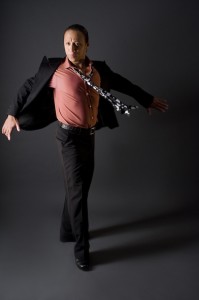
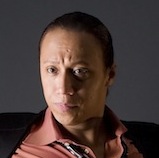
Gay dancer Edwin Aparicio says he'd eventually like to explore aspects of being gay in his dancing. (Photo courtesy of GALA Hispanic Theatre)
Costumed like a bull fighter in short jacket and tight pants, his heels passionately striking the floor, the flamenco dancer is an unmistakable classic image. Gay choreographer and dancer Edwin Aparicio is doing his best not only to keep the fiery tradition alive but also to ensure its relevancy. Part of how he does this is by coordinating Gala Hispanic Theatre’s annual flamenco festival (through Dec 5).
Each year, Aparicio curates the program and recruits first rate flamenco artists (musicians, singers and dancers) from throughout the Americas and Europe. For the final weekend of Gala’s “Fuego Flamenco VI,” Aparicio’s own company — Flamenco Aparicio Dance Company – will debut the world premiere of “Alma Flamenco.”
“It’s a salute to Gala’s 35th anniversary,” says Aparicio, who is choreographing and performing his new work with flamenco star Nélida Tirado and other female dancers from his company. “’Alma’ means ‘soul’ in Spanish, and I hope to express how Gala has been the soul and spirit of the Latino performing arts community for such a long time.”
“For me,” says Aparicion (also 35), “the beauty of dance is its expressiveness. Flamenco allows the musician, singer and dance to show both happiness and pain. As a choreographer I hope the audience picks up on the feelings that I’m trying to express.”
Influenced by the gypsy, Arab, Jewish and indigenous cultures of Andalusia in southern Spain, flamenco’s roots are centuries old. What began as songs sung around the fire sometimes accompanied by guitar gained in popularity and moved to cafes in the 19th century where dancers were added to the mix. Over the years, flamenco slowly earned its niche in the pantheon of internationally recognized and respected art forms.
“What’s so great about flamenco is that it’s always evolving,” Aparcio says. “My choreography employs traditional and contemporary movement and makes greater use of the space. And though our female dancers wear skirts and I wear a suit, we’ve relaxed the traditional costumes significantly.”
Aparicio, who was born in El Salvador but grew up in D.C., began his dance career as a student at Bell Multicultural High School in Columbia Heights.
“Because our gym class was full, some of us were offered to take a dance class instead. And even though I’d never been exposed to any formal dance training before, I, of course, accepted. The class was very rudimentary — held in a room without a mirror or bar — but I was immediately hooked.”
Soon after, Aparicio transferred to Duke Ellington School of the Arts in Georgetown where he was able to more seriously concentrate on dance. Eventually he began auditioning for professional dance gigs. During this time, one of the directors he encountered suggested that Aparicio give flamenco a try. He did and he loved it from the start. Shortly after graduating from high school, Aparicio traveled to Spain where he studied flamenco and performed with the masters. In addition to running his eponymous dance company, he conducts flamenco classes nationwide and is a faculty member of the Washington School of Ballet.
Not long ago, only male flamenco dancers were expected to execute rapid fire footwork; the women typically tapped lightly and swayed their ruffled, loud-print skirts. While that is now changing and female dancers are stomping hard and competing with men in competitions, flamenco remains primarily, a very masculine-oriented art form.
“During tours with other flamenco groups, I tend to keep to myself,” Aparicio says. “It’s not a particularly open environment for gay people. But more and more dancers are coming out sometimes shocking other artists and audiences.”
Aparicio hasn’t yet explored his sexuality on stage but says he’d like to. He imagines a show called “Hombres” (or “Men”) that will feature an all-male cast and reflect aspects of being gay.
“In my head I’m already choreographing it,” he says.
Since the day he was first introduced to Spain’s signature dance, Aparicio’s passion for flamenco culture and movement has never dimmed. Now, more than ever, he revels in his role as a steward of traditional flamenco and excited about the unique part he is currently poised to play in shaping its evolution.





Theater
Jessica Phillips shines in ‘Penelope,’ a ‘pandemic parable’
Alex Bechtel was inspired to write about loneliness, waiting, separation
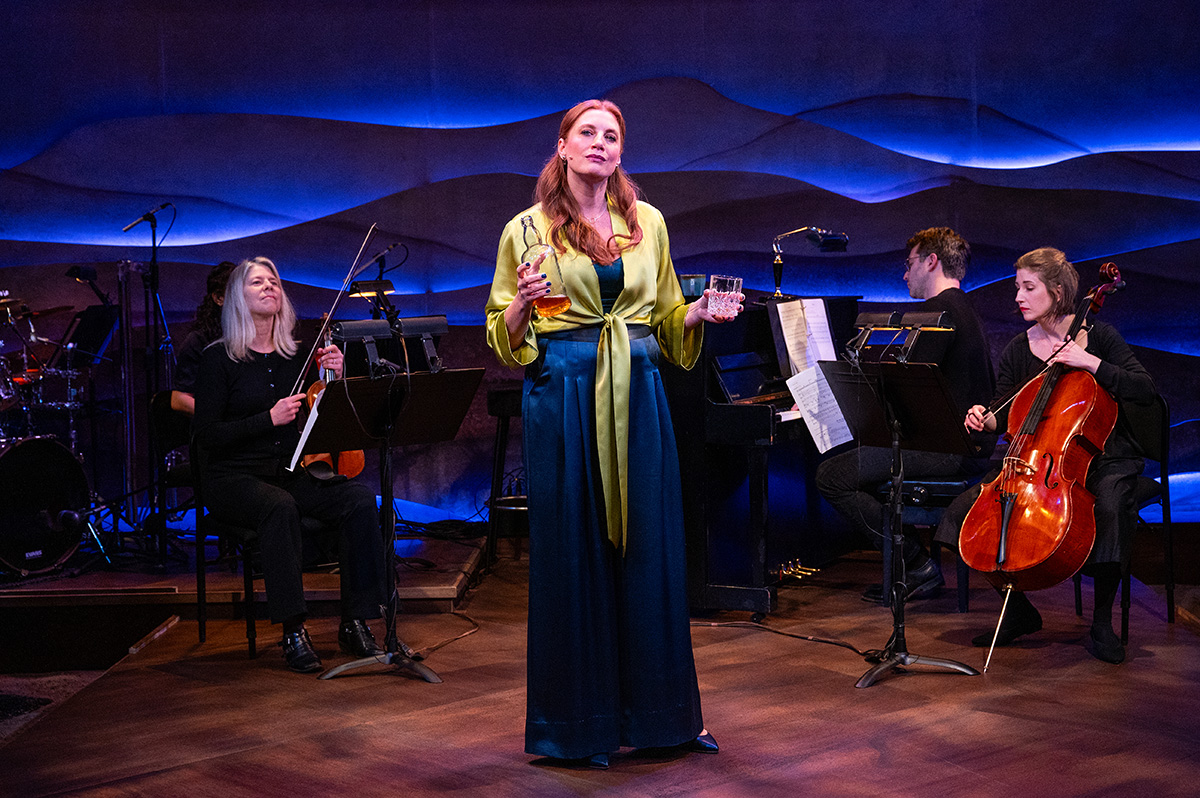
‘Penelope’
Thorough April 28
Signature Theatre, the Ark
4200 Campbell Ave, Arlington
$40-$99
Sigtheatre.org
In the new musical “Penelope,” Broadway’s Jessica Phillips gives an unforgettable take on the title role torn from the pages of Homer’s “Odyssey” — more or less. Fortified by bourbon and backed by a Greek chorus of musicians, the character uncharacteristically steps out from the background to share her story surrounding two decades waiting on the island kingdom of Ithica for the return of her absent husband Odysseus.
Sometimes described as a “pandemic parable,” the 70-minute work is based on composer/playwright Alex Bechtel’s personal experience. While separated from his partner during COVID, he was inspired to write about loneliness, waiting, and separation, a subject Phillips was eager to tackle.
An accomplished Broadway actor and mother of two, Phillips, 52, is best known for memorable turns in “Dear Evan Hansen,” “The Scarlet Pimpernel,” “Next to Normal,” and “Priscilla Queen of the Desert.”
Two years ago, she made news for coming out as queer after having long been identified as straight. Parts of the theater scene were caught a bit off guard, but only momentarily. Now, she lives in New York with her partner Chelsea Nachman, a theatrical publicist.“We share the same professional community but in very different roles. I think that makes life easier for us.”
Currently enjoying an extended run at Signature in Arlington where the trees are in bloom, she spares time for a phone interview, starting off with“Perfect timing. I’ve just finished the last song on Beyonce’s ‘Cowboy Carter.’ Let’s talk.”
WASHINGTON BLADE: Increasingly, I hear artists report having been deeply changed by the pandemic. Did that have anything to do with your coming out in 2022?
PHILLIPS: Definitely. During the pandemic, those of us in the arts were in deep crisis, because our industry had collapsed in almost every way. At the same time, that space allowed us to be contemplative about where we were. For me, that period of time gave me the space to both come to terms with and confront those fears about saying who I was, out loud and publicly.
BLADE: Did you have professional concerns?
PHILLIPS: Oh yeah, I was specifically worried about perception. Not so much about being queer but more what it meant to have come out relatively late in life. I had some fear around whether people would take me less seriously.
At the same time, I was nervous about being fully transparent and worried about my privacy and being vulnerable. Like other women I knew, I was more comfortable dealing with traditional societal expectations in America. I grew up with those cultural expectations and thought of myself in those terms for a long time.
BLADE: What changed?
PHILLIPS: What’s been so freeing for me, I can confront how I took on those expectations and say I’m not going to let those determine how I live my life. I get to decide.
BLADE: There’s a lot of wonderful storytelling in “Penelope.” What’s been your way into that?
PHILLIPS: My way of moving through the show is allowing this character to experience all five stages of grief. Humor, slapstick comedy, bargaining, denial. And ultimately acceptance and deep grief.
When an audience is alive and invested, it’s palpable and elevates the storytelling. When an audience is having a thinking rather feeling experience that changes the tone of my storytelling and not in a bad way.
It’s interesting how much they’re a part of everything. It’s really intimate. The audience is just six feet away. It’s a unique experience and we’re on this ride together. And I find this to be a really beautiful and satisfying experience that I’ve not had before.
BLADE: After Signature, what’s next for “Penelope”?
PHILLIPS: That’s the million-dollar question. Hopefully we’ll take it forward to New York or tour it, but that requires willingness and money. I do think there’s a broad audience for this. It’s beautiful, unique, artistic, really emotional, and at the same time possesses an intellectual quality that’s missing from a lot of commercial theater these days.
BLADE: And what’s next for theater?
Phillips: I think one good thing that came out of the pandemic is that people like Alex Bechtel had an opportunity to create. In the next decade we’re going to see the results of that. I think we have some extraordinary things to look forward to. If a work like “Penelope” is any indication, we’re all in for something really good.
Theater
‘Nancy,’ soaked in ‘80s nostalgia, is ‘queer AF’
Mosaic production led by out director Ken-Matt Martin
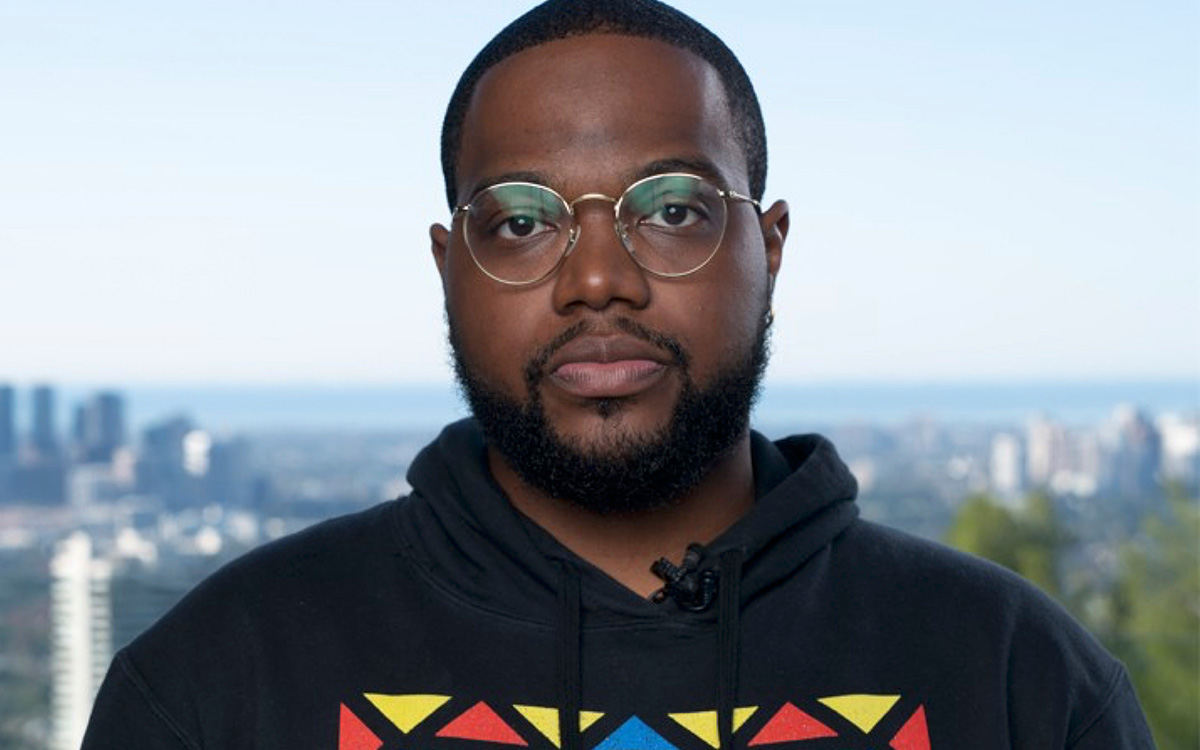
‘Nancy’
Through April 21
Mosaic Theater Company at Atlas Performing Arts Center
1333 H St., N.E.
$53-$70
Mosaictheater.org
Set in 1985, smack dab in the middle of the Reagan years, Rhiana Yazzie’s “Nancy” is totally soaked in nostalgia: shoulder pads, high hair, Van Halen, etc. For some theatergoers, it jogs the memory and for others serves as an introduction to an alien era.
Out director Ken-Matt Martin describes the production (now at Mosaic Theater) as “queer AF.” He continues, “But that’s true with everything I touch. My aesthetics and interests are unapologetically queer. When you first walk into theater, you see a big ass picture of Nancy’s face. The whole play is kind of set on her face.”
Martin, who puts his age as “somewhere over 30,” gives a brief rundown via telephone: “‘Nancy’ places two women on parallel tracks and we get to watch them on a collision course. Esmeralda [Anaseini Katoa], a Navajo mother and advocate determined to improve the condition of her family and reservation. Her story is juxtaposed to that of Nancy Reagan [Lynn Hawley] who’s busy at the White House consulting with society astrologer Joan Quigley to help guide Reagan [Michael Kevin Darnall] and his administration. The women’s worlds come together over Nancy’s direct ancestral connection to Pocahontas.”
The busy storyline also includes a moment surrounding Rock Hudson’s final days, a moment when well-coiffed, clothes-crazy Nancy was presented with the opportunity to make a difference but chose not to.
“And the work doesn’t let Nancy off the hook,” adds Martin. “It’s a full meal of a play.”
Produced in partnership with New Native Theatre based in the Twin Cities, Mosaic’s epic offering, a very D.C. play about ancestry and ambition, almost looks at Ron and Nancy as cartoon characters but isn’t without empathy.
Martin and Yazzie both love satire and absurdity; they enjoy comedy and things that are funny until they’re not. So, the evening shifts in tone as it moves into more serious areas, particularly an exploration of how the ‘80s and Reagan’s failed trickle-down agenda set the stage for many of today’s problems.
The director’s way into theater was as a child actor. After successfully begging his mother to drive him from their native Little Rock, Ark., to a regional Atlanta audition, he booked an appearance on Nickelodeon’s landmark series “All That” and snagged an agent in the process. He continued to act for a time before becoming interested in other facets of showbiz.
After graduating with an MFA in directing from Brown University/Trinity Repertory Company, Martin embarked on a terrifically busy schedule. In addition to freelance directing, he has helmed and helms various prestigious companies as artistic director and managing producer (Pyramid Theatre Company in Des Moines, IA, Victory Gardens Theater in Chicago, and was recently appointed Interim Artistic Director of Baltimore Center Stage and Arkansas Repertory Theatre.)
Currently an itinerant professional (Martin gave up his place in Chicago and hops from job to job where they house him), he says, “It can get a little old, but overall, not bad at all.”
Next up, Martin is directing Olney Theatre’s production “Long Way Down,” the adaptation of a Young Adult novel by DMV native Jason Reynolds. “It’s a big regional tryout that after a limited engagement in Olney leaves for the Apollo Theatre in New York. I’m excited.”
Martin is at home with plays that are tricky to stage, making him a good fit for “Nancy” with its multiple locations, scope, and scale. He’s enjoyed the challenge of the work’s collapsing time lines and the playwright’s tough, complicated, smart, and fast-moving language.
“Perhaps most importantly,” he adds. “Rhiana has entrusted me with the opportunity to tell this very unique story, a story that can resonate with Native people and Native audiences. This part is very new to me as a director.”
Theater
Talented pair of local queer actors tackles ‘Little Shop of Horrors’
Ford’s production features terrific score
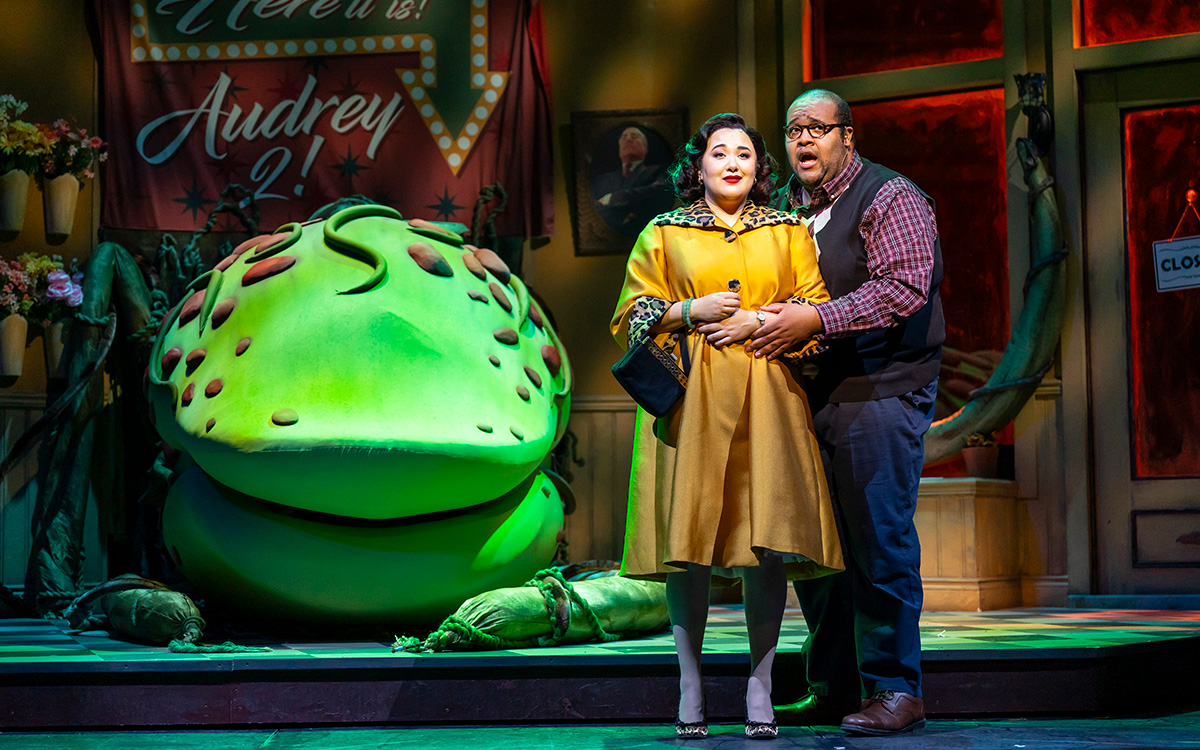
‘Little Shop of Horrors’
Through May 18
Ford’s Theatre
511 10th St., N.W.
$33-$95
Fords.org
Ever since premiering off-Broadway in 1982, “Little Shop of Horrors” has drawn a devoted following of avid audiences as well as performers eager to act in the show. Now playing at Ford’s Theatre, the doo-wop, dark comedy features a terrific cast including a wildly talented pair of local queer actors who’ve longed to appear in the show since they were kids.
Set in the urban 1960s, Alan Menken and Howard Ashman’s hit show with a terrific score follows the wacky rise of Seymour, a nebbishy florist in a Skid Row shop who changes his fortunes by unintentionally marketing an exotic, human eating plant.
Chani Wereley, 28, who plays Seymour’s love interest Audrey, a hyper femme downtowner with an edge, has had her on eye the role for years. Wereley says, “Audrey’s been around the block more than once, but I approach her as a person who moves through the world with love and hope.”
The queer D.C. native adds, “On long trips to visit family in Canada or Florida, the first thing we’d do is pop a ‘Little Shop of Horrors’ video [film version] into the car’s VHS player. I’ve watched is so many times, I could quote the whole movie to you.”
After auditioning to play Audrey in director Kevin S. McAllister’s production at Ford’s, Wereley never thought she’d book the part, and when they said she got it, she cried.
Similarly, Tobias A. Young, 34, the pansexual actor who voices the part of the bloodthirsty plant affectionately dubbed Audrey II, explains his intense interest in the work: “I started watching the film in ’86. Growing up as a little gay boy in Calvert County, Md., I wanted to be blonde Audrey [played by Ellen Green in the movie]. I didn’t know much about musicals at the time, but I was absorbed.”
When asked by Ford’s to play the voracious plant Audrey II without auditioning, his reply was an unhesitant “yes.”
Voicing a role requires Young to sing from backstage in a black box rigged with monitors and a mixing board. He says, “people ask if I’m singing from inside of the ever-growing, scary plant. No, I’m not, and that’s fine. But let’s face it, actors love to be seen on stage, but I don’t feel entirely unseen as Audrey II.”
He’s worked hard and successfully with formidable puppeteers Ryan Sellers and Jay Frisby to bring parts of himself to the carnivorous plant — his sassiness, own movements, and even a tilt of his head; their efforts have drawn the actual Young into the show.
Both Wereley and Young possess gorgeous, emotive voices as evidenced by Wereley’s striking rendition of Audrey’s “Suddenly Seymour,” and Young’s soulful “Feed Me (Git It).” Additionally, both actors are also big on queer representation in theater.
When her young pals were listening to Britney Spears, Wereley was dancing to retro tunes like “Mashed Potato Time,” and her favorite song to this day, the Shirelle’s girl group anthem “Will You Still Love Me Tomorrow.” As Audrey, Wereley eschews the character’s usual platinum hair for a bouncy brunette, cherry-streaked wig, tight pencil skirts, swing coats, and her very own half-sleeve tattoo.
“It’s important for people to see themselves on stage,” she says. “Seeing me or someone like me is inherently interesting. Being that person on Instagram or with the institution, cast, or audiences is meaningful. It’s important.”
In 2011, a couple years after finishing high school, Young landed a part in “Dream Girls” at Toby’s Dinner Theatre, and he’s been working professionally ever since. Growing up, he didn’t see a lot of himself – Black and queer – on social media. He now wants to be open and honest for those out there who might not feel seen, he says
An introvert who lets everything loose on the stage, Young says, “theater is a safe space for queer people. That’s the first place we feel safe, particularly in school. And this is why we need theaters in schools, now more than ever.”
He adds, “What’s great about Ford’s is its surprises, especially when they switch up casting. It’s meaningful to see the shows you love, but why not see them with a twist? Using unexpected actors and incorporating queer people just makes it that much better.”

Walking the pathway to national cannabis legalization

The Rare Book Fair is coming to D.C.

Montgomery County police chief discusses arrest of trans student charged with planned school shooting

Calendar: April 19-25

Lambda Legal praises Biden-Harris administration’s finalized Title IX regulations

Reenactment of first gay rights picket at White House draws interest of tourists

New D.C. LGBTQ+ bar Crush set to open April 19

Ariz. governor vetoes anti-transgender, Ten Commandments bill

Ugandan activists appeal ruling that upheld Anti-Homosexuality Act

Reenactment of first gay rights picket at White House set for April 17
-
 District of Columbia2 days ago
Reenactment of first gay rights picket at White House draws interest of tourists
-
 District of Columbia2 days ago
New D.C. LGBTQ+ bar Crush set to open April 19
-
 Arizona2 days ago
Ariz. governor vetoes anti-transgender, Ten Commandments bill
-
 Africa4 days ago
Ugandan activists appeal ruling that upheld Anti-Homosexuality Act