
Blade Blog
20,000 to 200,000: The first downtown Pride festival
1995 ‘Lesbian & Gay Freedom Festival’ pioneered a new event
The 1995 Lesbian & Gay Freedom Festival logo prominently appeared around the city prior to an expanded series of events, promoting D.C.’s first downtown Pride celebration and exhorting community members to “Come Out Proud!”
(Editor’s note: Washington Blade columnist Mark Lee recalls his experience as the producer of Washington, D.C.’s Pride festival on June 18, 1995.)
The 1995 annual Pride celebration in Washington was an exciting and challenging adventure that celebrated “20 Years of Pride” and gave birth to the modern era of local events continuing this weekend.
Sponsored for the first time by One In Ten, the June 1995 “Lesbian & Gay Freedom Festival” was an amazing success, expanding activities to include a series of political, social and cultural events spanning eight days and culminating in a parade route lined with throngs of spectators all the way from Dupont Circle through the downtown business district to Freedom Plaza and a festival on Pennsylvania Avenue which drew an estimated 200,000 participants.
It was a gigantic leap from the origins of Pride as a small block party begun in 1975 at the corner of 20th and S streets by Deacon Maccubbin and the staff of the original Lambda Rising outside the Dupont Circle bookstore townhouse location and its subsequent years on the dusty field behind Francis Junior High School at 24th and N streets. In those later early years the annual parade kicked off at Meridian Hill (aka Malcolm X) Park on 16th Street, winding its way through Adams Morgan before heading to the festival grounds.
In an effort to link the old with the new – and counter the stinging criticism from those initially opposed to the changes – the parade began at Francis Field before heading toward the new festival grounds on “America’s Main Street.”
Emblematic of D.C.’s celebration joining the ranks of the splashy events held in other cities, the parade featured a huge rainbow flag cut from the gigantic one used in New York City. And, thankfully, everyone knew to throw coins onto it!
Our community perused nearly 200 booths representing local organizations, businesses and vendors, ate and drank (each soda, bottled water, beer and “Freedom Cocktail” sold got us one step closer to paying the bills through the generous support of Budweiser and Absolut Vodka), and enjoyed enhanced day-long main stage entertainment by a wide range of local and regional performers and featuring headlining acts The Village People, musical trio Betty, and Martha Wash of The Weather Girls.
And, yes, as was the custom at public festivals in D.C. at the time, then-again Mayor Marion Barry was booed by the crowd when he appeared on stage. Ironically, the mayor and his staff were extremely helpful in paving the way for all the necessary permits and arrangements for the event and accommodating special requests that made the event financially viable and self-supporting.
After the festival, the party continued at another new addition – the “Field of Dreams” outdoor dance at dusk with DJ David Knapp and featuring a live performance by CeCe Peniston, held in Stead Park at 17th and P streets. This event was attended by several thousand and was produced by fellow long-time nightclub promoter Ed Bailey and generously underwritten as a critical festival funding source by Tracks nightclub.
This big and bold new approach to the annual D.C. festivities was the result of much hard work over a short period of time by many dedicated volunteers and the leadership of One In Ten. The organization’s then-president Keith Clark, at the time a co-owner of Universal Gear, went so far as to privately guarantee a bank loan using his 15th Street rowhouse as collateral, in order to front the final costs of producing the festival.
We self-produced a first-ever glossy-cover promotional festival program guide that included sponsorship ads by local businesses and national advertisers. The Washington Blade donated full-page ads and we distributed fliers, posters and buttons, hoping that people would show up and support our efforts — both enthusiastically and financially.
Having the privilege of serving as the producer of this suddenly new and refreshed and expanded series of public events — the success of which took everyone by surprise and quieted the naysayers — I will never forget the universal sense of community pride and participant tears of joy as the parade contingents marched down the incline of the final stretch on 14th Street to Freedom Plaza.
Over and over again, each group erupted in cheers echoing against the downtown office and hotel buildings as the towering stage backdrop and blocks-long landscape of white tents spread out before marchers became visible. The enthusiastic response and broadened participation by the metropolitan area LGBT community and our friends was palpable — and no one, including us, expected or predicted such an overwhelming turnout.
It was a special moment in our local history and was a “coming out” for the LGBT community as the event transformed into a larger public arena with greater prominence and visibility. D.C. had previously hosted large national marches and the NAMES Project AIDS Quilt, but this was a hometown effort.
And, importantly, the 1995 Lesbian & Gay Freedom Festival inaugurated an expansion of activities offering a robust schedule of public events held throughout the preceding week that has also continued through the years.
I was struck by 2011 Capital Pride board president Michael Lutz’s commentary in this year’s Pride Guide that “whenever someone asks me ‘why is Pride still important?’ I know I can answer, ‘because it’s always someone’s first Pride’.”
Although many of us living in an increasingly acclimated, accepted and geographically dispersed community less and less self-identify in a cohesive way and don’t regard the annual Pride events with the same enthusiasm as in years past, Michael’s words ring true. Not only is Pride a special tradition in our community life, for many it is an opportunity to connect with the LGBT community in all of its diversity for the very first time.
When participating in this weekend’s Saturday evening parade and the festival on Sunday, take a moment to reflect on how these events have evolved alongside the community that commemorates the Stonewall Rebellion every June and the legacy sustained by the many volunteers and coordinators.
Remember to use the admission gates to enter the festival grounds – and when you do, ignore the suggested donation of $5 and contribute $10. It’s a small price to pay to support this annual endeavor and its significant production costs.
And have fun!
Mark Lee is a local small business manager and long-time community business advocate. Reach him at [email protected].



Blade Blog
Cruising into Pride
Celebrity holds firm as a proud corporate supporter of LGBTQ community
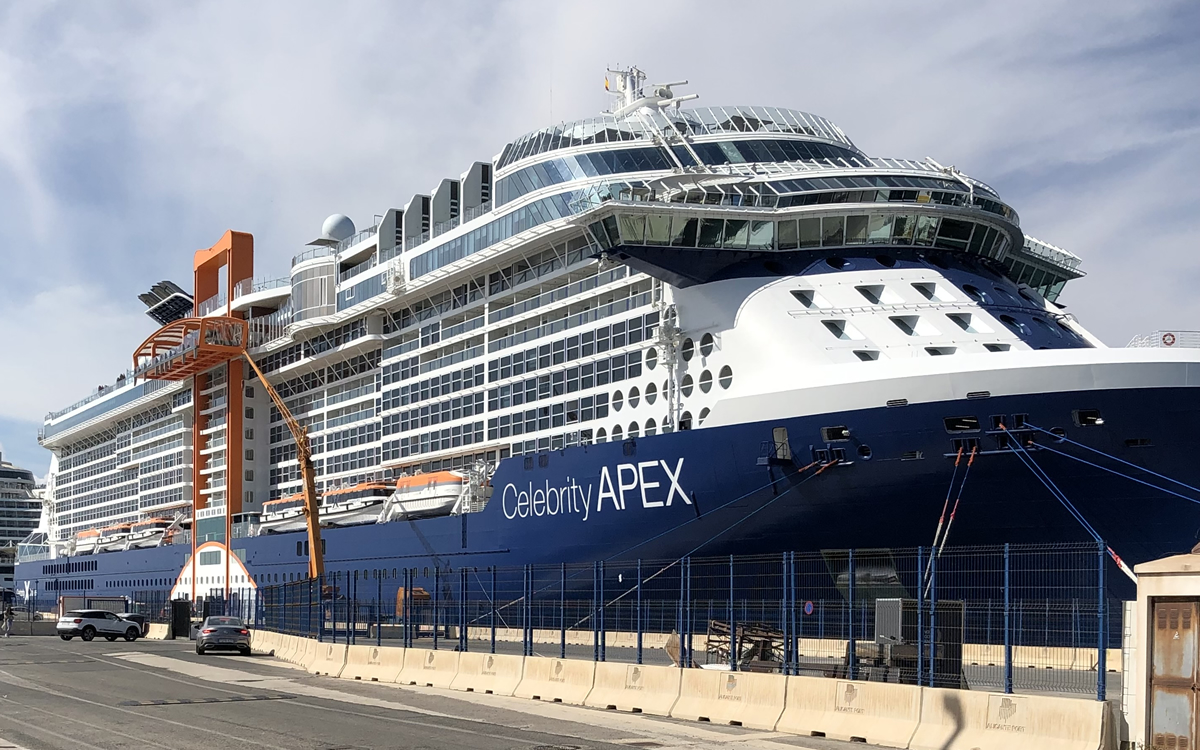
As you know if you have read my columns and blog posts, I love cruising. The kind where you are on a river or the ocean. Today in both the United States and around the world the LGBTQ community is facing difficult times. Attacks are coming fast and furious. There are few places where members of our community can feel totally safe these days.
One of those places is on a cruise ship that values the community. That is what I have found whenever I travel on a Celebrity ship. Today, they are going even further in letting the world know about their respect for the community. They happily advertise Pride at Sea. Of course, they are doing it to attract LGBTQ passengers and their dollars, but that’s great in this day and age, when a company is willing to step up proudly, wants our business, and will do everything they can to make us feel both wanted and safe. That is what Celebrity Cruise Lines is doing.
I want Pride to be celebrated not just in June, but every month. But I am excited about the June celebrations whether hosted in D.C. by Capital Pride, or on the high seas. While many of us will be at the D.C. Wharf, on June 10 to help the Washington Blade celebrate Pride on the Pier with spectacular fireworks, those who miss that and are on a Celebrity ship will be part of a Pride celebration as well. Their ships will all celebrate the month in various ways including flying a LGBTQ Pride flag.
Celebrity has invited my friend, entertainer extraordinaire, Andrew Derbyshire, to lead the celebration on the Edge on June 13, in Ibiza. He recently quoted Celebrity, “In honor of Pride month and our continuing commitment toward fostering positive and authentic partnerships within the LGBTQIA+ community, Celebrity Cruises is raising the Pride flag to celebrate acceptance, unity, and support for the community. Each June, Celebrity Cruises hosts our annual Pride Party at Sea. Every ship takes part in the celebration that brings our crew and guests together to honor and celebrate Pride.” Andrew added, “I am happy to announce I will be flying to Ibiza on the 13th of June for a few nights, to host Pride on the Celebrity Edge, with my friend and captain, Captain Tasos, and the amazing team on board.” Andrew, like many of the entertainers I have seen and met on Celebrity ships, is encouraged to be who he is, ‘out’ and proud.
The Edge will kick off Celebrity’s fifth annual Pride Party at Sea during its June 10, 2023, sailing. “The party will take place in tandem across the award-winning Celebrity fleet, with each ship ‘handing off the party baton’ to the next, to keep the festivities running across hemispheres and time zones. A variety of multi-generational LGBTQ+ focused programming will take place throughout the month of June. Together, officers, staff and crew around the world will participate in Celebrity’s signature Pride programming.”
You should know one of the things straight couples could always do on a Celebrity cruise is have the captain marry them. Now, since same-sex marriage became legal in Malta, where most Celebrity ships are registered, their captains can legally marry same-sex couples. After this happened the first legal same-sex marriage at sea, on a major cruise line, occurred on board Celebrity Equinox in January 2018 when the captain married Francisco Vargas and Benjamin Gray.
Celebrity is a Florida-based company, and along with Disney, they are standing up for the LGBTQ community. They have been a Presenting Sponsor of Miami Beach Gay Pride for four years in a row. They continue to advertise their collaborations with gay cruise companies like VACAYA, which has charted the Celebrity Apex for a cruise of the Caribbean in 2024. The ship will be sailing with a lot of happy LGBTQ cruisers on Feb 17-24, 2024 for seven nights from Fort Lauderdale to Puerto Rico, St. Croix, and Antigua. For anyone who hasn’t been on the Apex, it is an amazing ship. While not during an official Pride month I will show my Pride along with many other LGBTQ travelers on Celebrity Beyond this October out of Rome, and on Celebrity Ascent in October 2024 out of Barcelona. The Ascent hasn’t even set sail yet.
Let’s hope other companies will follow Celebrity’s lead and value the LGBTQ community. We are entitled to live our lives safely and to the fullest, as who we were born to be.
Peter Rosenstein is a longtime LGBTQ rights and Democratic Party activist. He writes regularly for the Blade.
Blade Blog
Shawna Hachey of Celebrity APEX on what makes a good cruise director
A love of people is a must
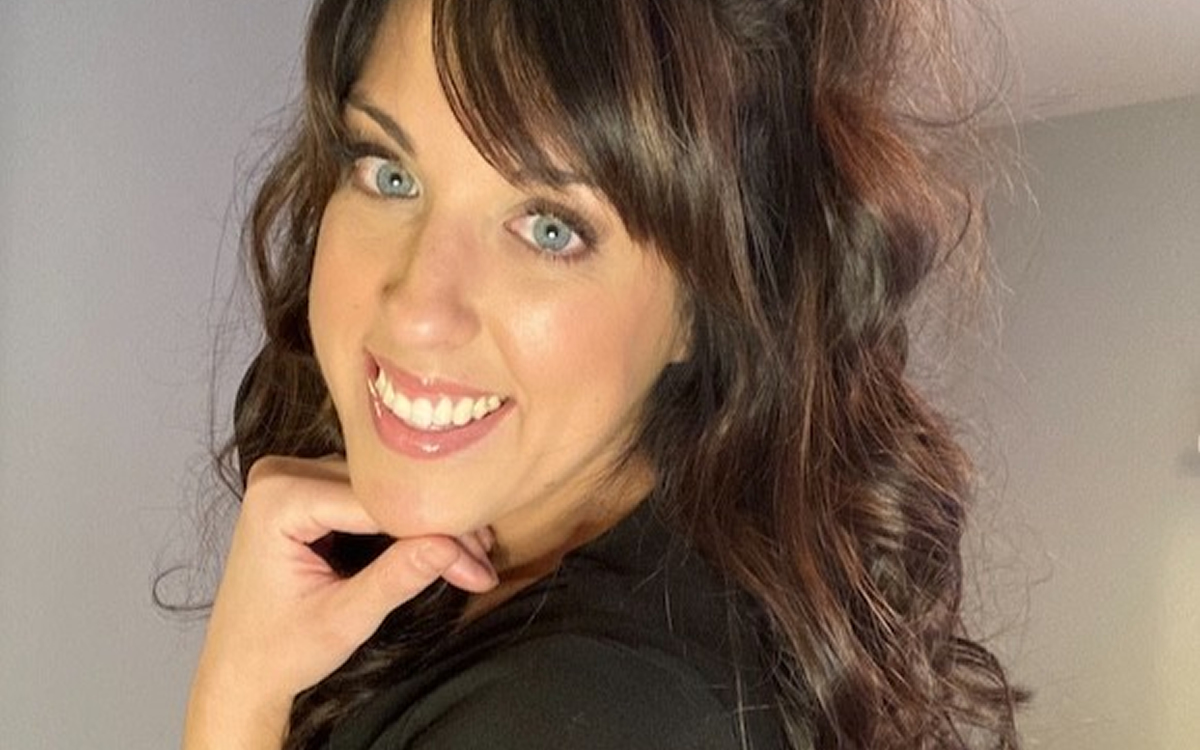
The position of cruise director on any ship is one of the most important, especially on a transatlantic voyage, like the recent one I took on the Celebrity APEX. So much of what people remember is the entertainment. Shawna Hachey is a great Cruise Director and I had the opportunity to sit and chat with her during the cruise. The job keeps her jumping and she is one of the busiest people on the ship. Shawna has a great bubbly personality. She likes people, which is a requirement for that position.
Shawna shared she is from New Brunswick, Canada, and has come a long way from there. She has now been with Celebrity for nearly thirteen years. I kidded her that meant she must have begun when she was ten. She is actually a very young looking thirty-five. She graduated from the University of New Brunswick with a degree in fashion design, a passion of hers. Shawna told me when she graduated, she had the options of a job in the fashion industry, or working on a cruise ship. Her dad was the one who suggested she go see the world and she ended up falling in love with cruise ships.
It is not an easy job. Her schedule is four months on and four off. The recent pandemic had her off the ship for a year and a half, during which time she worked in a government job back in Canada until Celebrity called her back. Her first contract after the pandemic, because of staff shortages, was eight months on and two off. But she loves the job.
Shawna did the usual for someone in her position and worked her way up the ranks from activity host, to activity manager, to cruise director. At one point she did something different and had a stint as a school teacher in London for a year, teaching kindergarten, but came back to cruising. I can just see her with those kids and am sure she was great.
As Cruise Director she is responsible for organizing all the entertainment on the ship. That includes lectures, Zumba, game shows, silent disco’s, evening parties, resort deck parties and other games, as well as the back of house and theater tours. She works to ensure every traveler has something to keep them busy and having fun. As Shawna told me, that is always a little harder on a transatlantic cruise with so many sea days. But judging by the comments on the ship by so many of the people I met, she was doing a great job.
The Cruise Director doesn’t get to choose all the talent, as Celebrity does the booking, but Shawna can and did request some approved acts. She loves working with those like the incredibly talented, Andrew Derbyshire. Many of us were excited he was going to be on our cruise. I first met Andrew, and wrote about him, last year when I was on APEX. He is an amazing entertainer. Shawna explained to me with the big shows like Crystalize and Tree of Life, Celebrity now produces those themselves and interviews talent for them around the world. One of the cast members in those shows, Nate Promkul, I predict will end up a star on Broadway. With the individual artists, their agents submit them to Celebrity, who then hires them for all their different ships.
Before working on APEX Shawna has worked on a number of other Celebrity ships including Solstice, Reflection, Equinox and Silhouette. Shawna shared a story with me about Celebrity. They have always had a lot of crew from the Ukraine. Apparently, after the war began any crew members from Ukraine still working, were able to bring their families who could get out of Ukraine on board to live with them. This is a wonderful humanitarian thing to do.
I enjoyed talking to Shawna and urge any cruiser on the APEX to say hello when you are onboard. She will always have a big smile for you.
Blade Blog
Meet Captain Nikolaos Christodoulakis of the Celebrity APEX
Reflecting on life aboard a ship during COVID
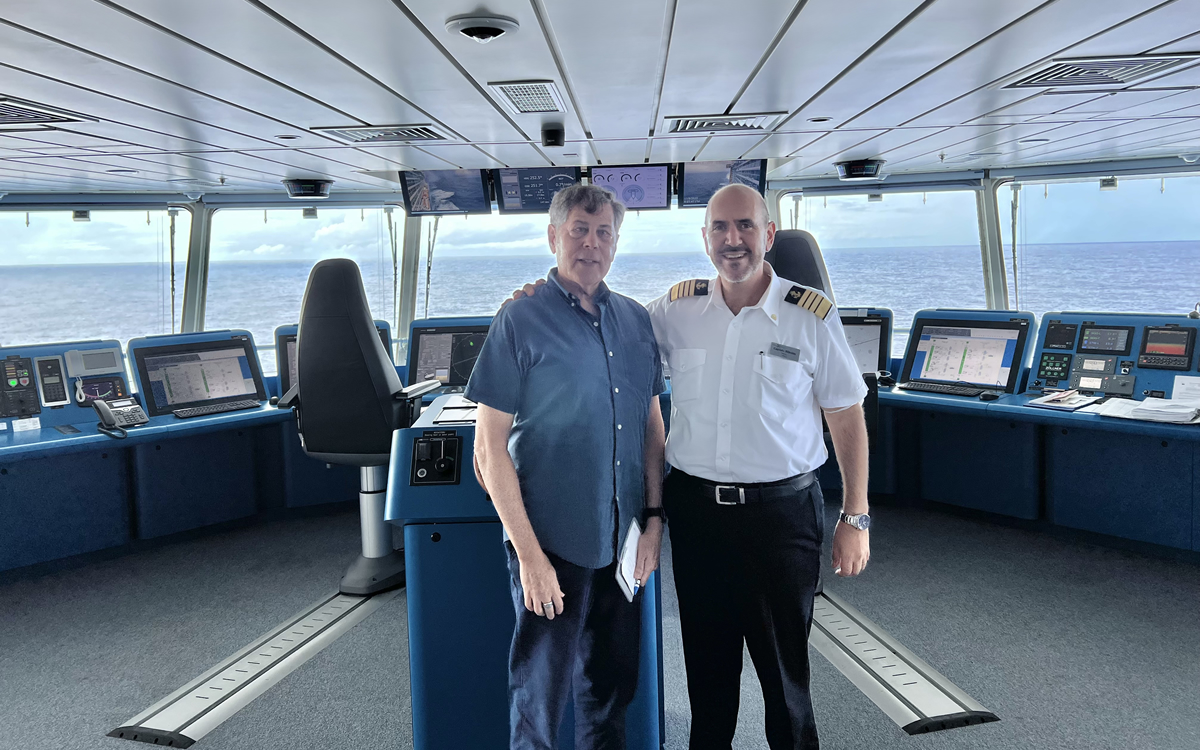
It really was a pleasure to chat with Celebrity APEX Captain Nikolaos Christodoulakis who invited me to the bridge for a conversation. I learned he is quite an amazing man.
Captain Christodoulakis told me Celebrity is the only cruise company he has ever been with and joined them twenty-eight years ago in 1994. While still a young man of 47 he has already been a captain for 12 years. In one of the many interesting lectures during the cruise, we were given a talk on how one can become a captain. How one moves up the ranks at Celebrity. We were told about all the education and testing required. The speaker, who was not yet a captain, kidded he would reach that goal by 2080. He then told us jokingly about the exception for those of Greek extraction. He said they received their captain’s certificate along with their birth certificate. When I mentioned this to the captain during our conversation he laughed and assured me he did have all the needed education and tests.
Captain Christodoulakis told me proudly he is from the Island of Crete, and still lives there with his wife and eight-year-old daughter. A captain with Celebrity is on a schedule of three months on, and three months off. He said he loves those three months off when he can be with his wife and daughter, and the rest of his family, back on Crete. I told him I had been to Crete many years ago and thought it was beautiful and asked him if he had ever walked down the famous Samariá Gorge and he said he hadn’t.
Over his years with Celebrity, he worked on many ships, including Horizon and Century among others. His most recent ship was the Reflection, which he captained during the COVID pandemic. That was not an easy time for the cruise line. He was with Reflection for three years and during the pandemic spent part of the time with the ship sitting in the Bahamas, with a crew of less than 100. Just enough to keep the ship ready to sail again when he could welcome passengers back. I told him I was on the APEX last year on a transatlantic cruise out of Barcelona with only had 1250 passengers and a crew of about 1,000. He told me on this cruise there were 2340 passengers and a crew of close to 1200. The APEX can accommodate up to 3,400 passengers with a crew of 1,250. The captain agreed staffing back up has been difficult and complimented the Celebrity HR department who he said has been working overtime recruiting crew.
I asked him about protections for the crew during the pandemic and continuing today. He said Celebrity has been really good about that and all crew on the APEX have been vaccinated and boosted against Covid and during this transatlantic cruise they were all getting flu shots. On this trip the crew was required to wear masks for their safety. During the sea days they were allowed to take them off when outdoors, so we could see their smiles.
I then asked him what he wants to do next after he stops being a Captain. He told me he loves being a Captain and really can’t see another career. He did tell me once he retires, years from now, maybe when his daughter is in college, he wants to get an RV, and drive across Europe with his wife, seeing all the sites at a slow and leisurely pace. Then would like to do the same going across the United States stopping at all the national parks. Sounds like a great retirement. I asked if he often leaves the ship in the ports where it stops. He says he does if his wife and daughter are on board visiting, and anticipates them joining him for the upcoming holidays. When they aren’t with him, he gets off if he can get to a beach, or a place to swim and dive, which he loves.
I then mentioned there was a party that afternoon my friends and travel agents, Scott and Dustin, with My Lux Cruise, were hosting in the Iconic suite. He said he would enjoy coming to that. I thanked him for taking the time to chat, said I hope to see him at the party, and left the bridge.
I didn’t say anything to Scott or Dustin about inviting him. Not only did he come but brought the Hotel Director, Christophe, with him. They were incredibly open and gracious, taking selfies. Christophe told us he would be on the BEYOND when we do our next transatlantic cruise in October 2023.

State Department releases annual human rights report

Dominica High Court of Justice strikes down sodomy law

Smithsonian staff concerned about future of LGBTQ programming amid GOP scrutiny

Upcoming Ugandan Census will not count intersex people

Three of five LGBTQ candidates win race for DNC delegate from D.C.

New D.C. LGBTQ+ bar Crush set to open April 19

Daniel Zamudio murderer’s parole request denied

Montgomery County police chief discusses arrest of trans student charged with planned school shooting

Court records raise concerns about right-wing TikTok investor’s influence

World ‘isn’t much different today’
-
 District of Columbia5 days ago
New D.C. LGBTQ+ bar Crush set to open April 19
-
 South America3 days ago
Daniel Zamudio murderer’s parole request denied
-
 Maryland4 days ago
Montgomery County police chief discusses arrest of trans student charged with planned school shooting
-
 Politics5 days ago
Court records raise concerns about right-wing TikTok investor’s influence