Opinions
New D.C. divorce statute aids gay couples
Enables spouses to end one chapter, begin another

Once again the ability for same-sex couples to divorce makes the news. Last week, the Maryland Court of Appeal held that two women married in California could divorce in Maryland, thus establishing that Maryland will recognize marriages between same-sex couples married outside of Maryland. This week, a new statute going into effect in the District of Columbia allows couples that have been married in the District to divorce in the District if the couple is unable to divorce because both of them live in jurisdictions where their marriage is not recognized.
The District, like all almost all jurisdictions, has a residency requirement for couples to be eligible to divorce here. This law creates an exception to that requirement so that couples who both live where their marriage is not recognized, but were married in D.C., will be able to divorce here. Since the District has no residency requirement to get married here, many couples have come from around the country to marry here, but, like opposite-sex couples, 50 percent of those marriages will break up.
Until now, for those couples who both live in states that do not recognize our marriages, it has been impossible to divorce without one member of the couple moving to a jurisdiction that does. Now, there is a rebuttable presumption in this new law that any state with laws prohibiting our marriages will not allow same-sex couples to divorce in that state. So, for example, Virginia certainly qualifies. So does North Carolina. But, because of the decision in Port v. Cowan last week, we can definitely take Maryland off that list.
However, given other legal requirements for jurisdiction, couples seeking such a divorce in D.C. are best advised to negotiate an agreement covering any issues arising out of their marriage, such as division of marital property, award of alimony and spousal support, child custody, support, and visitation, if there are children of the marriage. Most couples that seek a divorce settle these issues before a divorce is actually granted in any case.
These agreements usually take the form of a voluntary separation and property settlement agreement that is submitted to the Court with the request for divorce. In order to be divorced in the District the couple must have been separated for at least six months with no marital relations, and in this instance the separation must be mutual and voluntary. In an uncontested divorce, the couple files a complaint and answer at the same time and tells the Court that they have resolved all issues from their marriage. A 10-minute hearing is usually scheduled within about six weeks, and only one party has to appear.
After the divorce is granted, all jurisdictions should recognize it for all purposes, although I never underestimate the power of homophobia to affect our legal rights. Although not perfect, the new D.C. statute is a very important development allowing some married couples to end a chapter in their lives and move forward to the next.
Michele Zavos is a principal in the Zavos Juncker Law Group, PLLC, which practices family law in all three local jurisdictions. She is a long-time lesbian activist attorney and was counsel to Jessica Port in Port v. Cowan. She aided in the passage of the new D.C. divorce statute.






In 2023, the law was signed to expand the District’s medical cannabis program. It also made permanent provisions allowing residents ages 21 and older to self-certify as medical cannabis patients. Overall, cannabis is fully legal in D.C. for medical and recreational use, and 4/20 Day is widely celebrated.
Medical cannabis, for example, has a long history with the LGBTQ community, and they have often been one of the oldest supporters of marijuana and some of the most enthusiastic consumers. Cannabis use also has a long history of easing the pain of the LGBTQ community as relief from HIV symptoms and as a method of coping with rejection from society.
The cannabis culture continues to grow in the District, and as a result, so does the influence on younger people, even youth within the LGBTQ community. Drug education can play an important role and should not be avoided during 4/20 Day. Parents and educators can use drug education to help their kids understand the risks involved with using marijuana at a young age.
According to DC Health Matters, marijuana use among high school students has been on the decline in the District since 2017. In 2021, it was estimated that around 20% of high school students use marijuana, a drop from 33% in 2017. Nationally, in 2020, approximately 41.3% of sexual minority adults 18 and older reported past-year marijuana use, compared to 18.7% of the overall adult population.
When parents and educators engage with their kids about marijuana, consider keeping the conversations age appropriate. Speaking with a five-year-old is much different than speaking with a teenager. Use language and examples a child or teen would understand.
The goal is to educate them about the risks and dangers of using cannabis at a young age and what to avoid, such as edibles.
Most important, put yourself in your kid’s shoes. This can be especially important for teenagers as they face different social pressures and situations at school, with peer groups, or through social media. Make a point of understanding what they are up against.
When speaking to them about cannabis, stay calm and relaxed, stay positive, don’t lecture, and be clear and concise about boundaries without using scare tactics or threats.
Yet, it’s OK to set rules, guidelines, and expectations; create rules together as a family or class. Parents and educators can be clear about the consequences without lecturing but clearly stating what is expected regarding cannabis use.
Moreover, choose informal times to have conversations about cannabis and do not make a big thing about it. Yet, continue talking to them as they age, and let them know you are always there for them.
Finally, speak to them about peer pressure and talk with them about having an exit plan when they are offered marijuana. Peer pressure is powerful among youth, and having a plan to avoid drug use helps children and students make better choices. Ultimately, it is about assisting them in making good choices as they age.
Members of the LGBTQ community often enter treatment with more severe substance use disorders. Preventative measures involving drug education are effective in helping youth make good choices and learn about the risks.
Marcel Gemme is the founder of SUPE and has been helping people struggling with substance use for over 20 years. His work focuses on a threefold approach: education, prevention, and rehabilitation.
Opinions
Walking the pathway to national cannabis legalization
Social equity needs to be front and center in our efforts
As we gear up for a major election year, the buzz around cannabis legalization is getting louder. Policymakers are starting to see the need for comprehensive reform, while advocates and small business owners in the industry are cautiously optimistic about the future. But let’s not kid ourselves, this system was designed to keep certain communities out, and it’s crucial that we continue to address these deep-rooted inequities as we blaze the trail forward. A step toward legalization that doesn’t prioritize equity and dismantle the barriers that have held back marginalized groups would be a major bummer. In this op-ed, we’re going to take a groovy journey through the evolution of grassroots organizing in the cannabis industry and highlight the importance of social equity in achieving true national cannabis legalization and boosting our humanity along the way.
Over the years, I’ve been right in the thick of it, helping to build grassroots organizations like Supernova Woman and Equity Trade Network. These groups have been on the frontlines, fighting for cannabis programs in Oakland and San Francisco. I’ve also rocked my own brand, Gift of Doja, and organized the first Cannabis Garden at a major neighborhood street fair, Carnaval San Francisco. I even served as chair of the first Cannabis Oversight Committee in the nation. But the real magic has always happened in when working in coalitions. Each individual and organization brings a unique piece to the puzzle. Grassroots organizing is as challenging as crafting a democratic society but is worth the effort in generating workable implementable solutions. Collective efforts have been game-changers in shifting public opinion and paving the way for major policy changes at both the state and local levels.
As we navigate the path toward cannabis legalization, lobbyists and lawmakers can’t forget about the small business owners who have been grinding to build their dreams. Political advocacy and lobbying are important, but if we’re not uplifting the voices and experiences of those who have been fighting on the ground, we’re missing the mark. Big companies can hire lobbyists, but small business owners don’t have that luxury and if we are not in the room we are on the table. Coalitions allow for us to be in the room when we can’t physically be there. Our communities, especially people of color, have been hit hard by systemic oppression, from over-policing to mass incarceration and limited economic opportunities to limit our ability to be in the room of power and decision making.
Social equity needs to be front and center in any cannabis legalization efforts. It’s not enough to just remove criminal penalties or create a legal market. We need to actively work on repairing the damage caused by years of prohibition. That means fighting for resources, investment, and low-interest loans for small businesses. It means creating a tiered fee and tax structure that doesn’t crush the little guys. And it means opening up equity programs to all industries, not just cannabis. Social justice without economic access and repair is like a joint without a lighter – it just won’t spark the change we need. We have a responsibility to evolve the economy and break down unnecessary barriers. Activism, social justice, and economic reform are all connected, man.
Industry leaders, culture creators, advocates, and consumers alike, we all need to step up and promote social equity. It’s on us to support initiatives that provide resources, mentorship, and funding for individuals from affected communities to enter the legal cannabis market. And let’s not forget the power of our wallets. Buying from companies that align with our values and support the work we believe in can send a powerful message. Voting with our dollars might just be more impactful than showing up at the ballot box.
As we head into a major election year, the cannabis industry is at a crossroads. It’s a time for drumming up voter interest and for candidates to make promises that grassroots organizations have fought hard for. Small business owners will be navigating a tricky landscape, but we can’t lose sight of the power of collective work. By keeping social equity at the forefront, we can undo the harms of the past while building new frameworks that will shape a brighter future for all.
In conclusion, grassroots organizing has been the driving force behind shifting public perception and pushing for policy changes in the cannabis industry. But let’s not forget that true national cannabis legalization can only be achieved if we address social equity. It’s time for us to come together, listen to the voices of those most impacted, and walk the high road towards a future where cannabis legalization isn’t just about business opportunities, but also about healing and empowerment for all communities. Let’s light up a joint of social justice and blaze a trail towards a better tomorrow.
Nina Parks is co-founder of Equity Trade Network & Supernova Women. Reach her at [email protected].
Commentary
World ‘isn’t much different today’
The Nazis murdered nearly 1 million Jewish people at Auschwitz
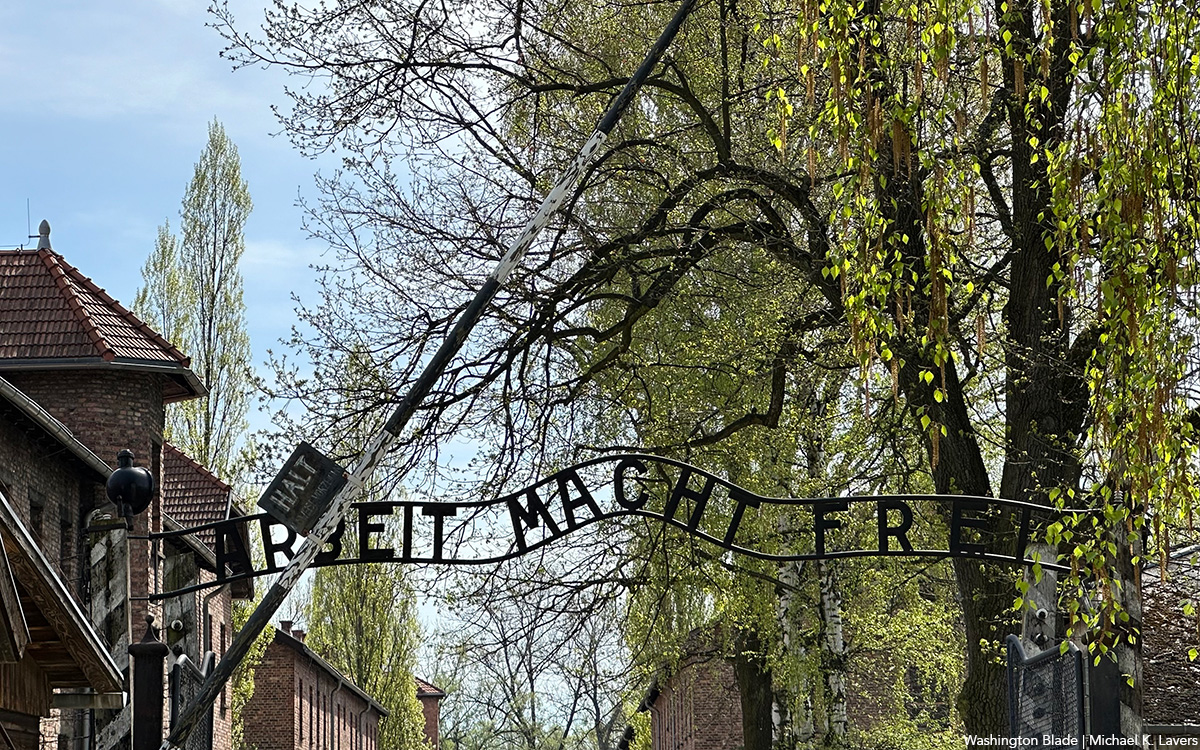
OŚWIȨCIM, Poland — Łukasz, a Polish man who was our group’s English-speaking tour guide at Auschwitz, on April 7 asked us while we were standing outside one of Auschwitz I’s barracks why the Nazis systematically murdered more than 6 million Jewish people.
“Once they are gone, Germany will be great again,” he said, referring to the Nazis’s depraved justification.
There were other Americans in our group of about 40 people. I would like to think they are familiar with the dehumanizing MAGA rhetoric to which our country has become accustomed since President Joe Biden’s predecessor announced his White House bid in 2015. The fact that I was at a Nazi concentration camp was simply overwhelming, and I didn’t feel like speaking with them or to anyone else at that moment.
The unspeakable horrors that happened at Auschwitz are on full display. Łukasz’s comment was a stark warning to us all amid the backdrop of the current socio-political realities in which we in the U.S., Europe and elsewhere around the world currently live.
• Suitcases, glasses, shoes, kitchen utensils, prosthetic limbs, baskets, Jewish prayer shawls, and toothbrushes that were taken from people upon their arrival at Auschwitz were on display in Auschwitz I’s Block 5. One exhibit also contains children’s clothes.
• Auschwitz I’s Blocks 6 and 7 had pictures of male and female prisoners along the corridors. They contained their birthdays, the day they arrived at the camp and when they died. Block 7 also had mattresses and bunk beds on which prisoners slept and the sinks and latrines they used.
• The basement of Auschwitz I’s Block 11 had cells in which prisoners were placed in the dark and starved to death. The basement also had cells in which prisoners were forced to stand for long periods of time. Executions took place at the “Death Wall” in the courtyard between Block 10 and 11. Guards also tortured prisoners in this area.
• Medical experiments took place in Block 10.
• A gas chamber is located near Auschwitz I’s entrance with the gate that reads “Arbeit macht frei” or “Work sets you free.” The adjacent crematorium contains a replica of the furnaces used to burn human bodies.
• An urn with human ashes is in Auschwitz I’s Block 4. Hair cut from people who were killed in the gas chamber was also there.
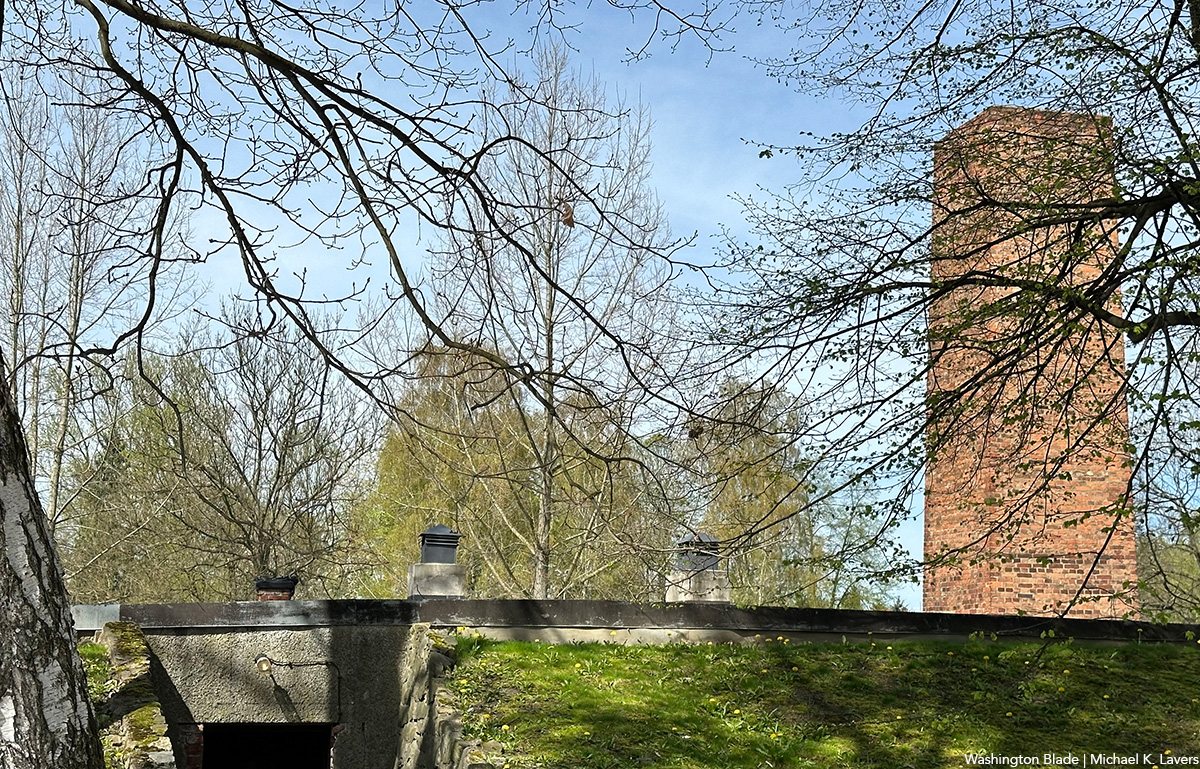
Auschwitz I, a former Polish army barracks, is one of 40 camps and subcamps around Oświęcim, a town that is roughly 30 miles west of Kraków, Poland’s second-largest city, that became known to the world as Auschwitz. Upwards of 90 percent of the 1.1 million people killed at Auschwitz died at Auschwitz II-Birkenau, which is roughly 1 1/2 miles northwest of Auschwitz I in the village of Brzezinka (Birkenau in German), and more than 90 percent of those murdered upon their arrival were Jewish.
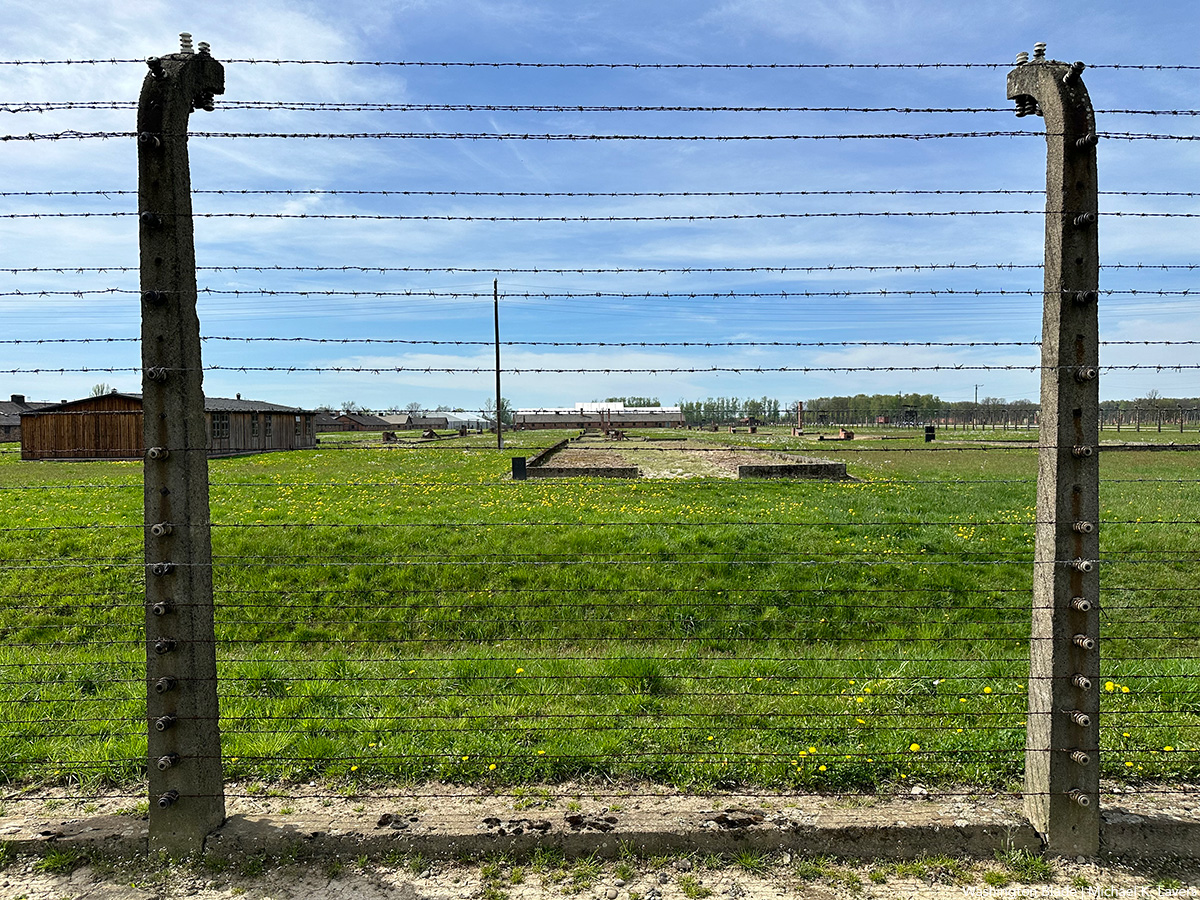
The ruins of two crematoria the Nazis blew up before the Soviets liberated the camp in January 1945 are there. (A group of Israelis were praying in front of them while our group was there.) A train car used to bring people to the camp was also there, along with some of the barracks in which those who were not immediately killed in the gas chambers lived.
Auschwitz II-Birkenau’s sheer size is incomprehensible.

The Nazis killed 6 million Jewish people in the Holocaust. They also murdered gay men, Poles, Roma, Sinti and millions of other people from across Europe.
The day I visited Auschwitz marked six months since Hamas launched its surprise attack against Israel.
More than 1,400 people — including 260 people who Hamas militants murdered at the Nova music festival in Re’im, a kibbutz that is a few miles from the Gaza Strip — have died in Israel since Oct. 7, 2023. The subsequent war has left more than 30,000 Palestinians in the Hamas-controlled enclave dead, and millions more struggling to survive. Oct. 7 was the deadliest attack against Jewish people since the Holocaust. That unfortunate coincidence of dates — Oct. 7 and April 7 — was not lost on me while I was at Auschwitz.
Another striking thing is the area in which the camps are located.
The train from Kraków to Oświęcim passes through idyllic countryside with green meadows, flowering trees and freshly tilled fields. Purple lilacs — like those that bloom each spring on the trees in my mother’s backyard in New Hampshire — were in full bloom inside Auschwitz I. Grass and dandelions were growing amid the remains of Auschwitz II-Birkenau’s barracks. Birds were chirping. The weather was also unseasonably warm with temperatures well over 80 degrees and a cloudless sky.
All of it was beyond surreal.
I visited Auschwitz while on assignment for the Washington Blade in Poland. I interviewed gay Deputy Polish Justice Minister Krzysztof Śmiszek in Warsaw and sat down with activists in the Polish capital and Kraków to talk about the country’s new government and the continued plight of LGBTQ refugees from Ukraine and other countries. My trip began in Budapest, Hungary, and ended in Berlin. I did not write this piece until I on my flight back to D.C. on Tuesday because I could not properly articulate my thoughts about what I saw at Auschwitz.
Governments, politicians, political candidates, and parties in the U.S. and around the world have used specific groups of people to advance a particular agenda, to blame them for what is wrong in their particular country and/or to deflect blame from their own failures. The Nazis and what they did to Jewish people and anyone else they deemed inferior is the most grotesque example of what can happen if such actions are not stopped.
Łukasz told us outside of one of the Auschwitz II-Birkenau barracks at the end of our tour that the world “isn’t that much different today.” He also said that we are “witnesses.”
“It’s up to you how you react to it,” said Łukasz.
Let’s hope we all do our part to make sure the atrocities that happened at Auschwitz never happen again.

Malcolm Kenyatta could become the first LGBTQ statewide elected official in Pa.

Bowser budget proposal calls for $5.25 million for 2025 World Pride

White House debuts action plan targeting pollutants in drinking water

Health care for Marylanders with HIV is facing huge cuts this summer

Maine governor signs transgender, abortion sanctuary bill into law

Daniel Zamudio murderer’s parole request denied

State Department releases annual human rights report

‘Amm(i)gone’ explores family, queerness, and faith

Joe Vogel campaign holds ‘Big Gay Canvass Kickoff’