
Health
Fuel for the journey
Smart food choices before you work out help get you through your fitness routine

When my clients tell me during workouts they’re dizzy, lightheaded or nauseous, I always ask what they ate and when.
The causes of these symptoms during exercise is almost always food- and fluid-related. To get the most out of a workout you must be fueled and ready to go. But is it most effective to eat before or after a workout? The short answer is both. Knowing when the best time to eat and what types of food to eat is essential to an effective workout.
Your body is a fine-tuned machine and it needs fuel to operate and not just any type of fuel. You need the right type of gas and at the right time, otherwise you will either putter along or stall or worse, you may have to replace your transmission. And equally important to the right fuel sources are water and fluids, which are akin to your body’s radiator, regulating your core temperature and cooling abilities. Eating and fluid intake must go hand in hand with exercise. You are eating to exercise, not exercising to eat.
While most credentialed and qualified nutritionists or registered dieticians can give you a structured eating plan, this might prove to be either too complex or too time consuming for most people if it involves writing down your food.
While it’s always good to confer with your health care provider, the basic principles are simple and apply to anyone without dietary restrictions, food allergies, eating disorders or obesity.
Before you work out, eat something low fat, low in calories and foods that contain fluids. No fancy foods or food experiments here. A banana and yogurt always works well.
Avoid consuming a heavy meal at least 90 minutes before working out. Two hours is more optimal and for large meals, three is best.
Avoid eating while you are working out unless you exercise for more than 90 minutes.
Always stay hydrated and if you are thirsty, you are likely on your way to dehydration. Also, as another test you should have a light urine color. You may also weigh yourself before and after your workout and replace lost weight with two cups of fluid with each pound lost. Sports drinks can be beneficial especially in hot humid weather and I will address them in another column. You should drink about a half cup to one cup of water every 15-20 minutes during exercise.
Post workout meals should be consumed within 30 minutes of your workout and be a combination of lean protein and complex carbohydrates. Nuts (almonds and walnuts are the most nutritional) are recommended. Low fat string cheese, peanut butter without sugar or a light meal with meat, starch and partially cooked (not mutilated) vegetable are healthy choices. And remember your whole grains.
Other popular and often misunderstood eating strategies worth mentioning are meal replacement plans or MRPs and in particular protein shakes and of course the ever popular, but often dismissed today, carbo loading. There can be a place for these tools, but these options are usually reserved for sport specificity or long endurance events and races. For the general exercise population there seems to be a misguided allure to them, but they are not a necessity under normal exercise circumstances. Simply remember real food is your best fuel source. Any substitutions, particularly synthetic, should be secondary and many nutrition bars are disguised sugar and chemical-laden candy bars. Yeah, I know the non-regulated supplementation industry, supremely referred to as neutraceuticals are going to have my head for this statement. But I say go natural as much as possible.
Finally, if weight maintenance, loss or gain is your goal, remember to be aware of your overall caloric consumption. The basic equation is one pound equals 3,500 calories. Hence to lose a pound or gain a pound, you will need either a 3,500 expenditure/deficit or an additional 3,500 in caloric consumption. And remember to regulate your portion sizes and eat smaller incremental meals throughout they day with your meals or snacks consuming lighter quantities as the day progresses.
Health
UNAIDS to commemorate Zero Discrimination Day’s 10th anniversary
UN agency urges global action to protect human rights

As the world marks the 10th anniversary of Zero Discrimination Day; UNAIDS is sounding the alarm on the increasing threats to human rights, calling for renewed efforts to protect the rights of all individuals as a fundamental step towards ensuring health for everyone.
Established by UNAIDS a decade ago, Zero Discrimination Day aims to promote equality and fairness regardless of gender, age, sexuality, ethnicity or HIV status. The progress achieved over the past years is now in jeopardy, however, due to rising attacks on the rights of women, LGBTQ people and other marginalized communities.
UNAIDS Executive Director Winnie Byanyima emphasized the critical link between protecting human rights and safeguarding public health.
“The attacks on rights are a threat to freedom and democracy and are harmful to health,” she said in a press release. “Stigma and discrimination obstruct HIV prevention, testing, treatment and care and hold back progress towards ending AIDS by 2030. It is only by protecting everyone’s rights that we can protect everyone’s health.”
Despite challenges, there has been notable progress.
At the onset of the AIDS pandemic more than 40 years ago, two-thirds of countries criminalized consensual same-sex sexual relations. They are now decriminalized in two-thirds of countries. An additional 38 countries around the world have pledged to end HIV-related stigma and discrimination, contributing to positive changes that include 50 million more girls attending school compared to 2015.
To sustain and enhance these advancements; UNAIDS urges global support for women’s rights movements, LGBTQ rights, racial justice, economic justice, climate justice and peace initiatives. By standing with communities advocating for their rights, the U.N. aims to reinforce the collective effort towards a more inclusive and equitable world.
Zero Discrimination Day is observed on March 1.
Events and activities that will take place around the world throughout the month will serve as reminders of the essential lesson and call to action: Protecting everyone’s health is synonymous with protecting everyone’s rights.
“Through upholding rights for all, we will be able to achieve the Sustainable Development Goals and secure a safer, fairer, kinder and happier world — for everyone,” said Byanyima.
Health
New CDC report finds transgender women at higher risk for HIV
More than 1,600 people in seven cities surveyed

The Centers for Disease Control and Prevention issued a new study report this week that revealed that restricted by employment and housing discrimination and lack of access to needed gender-affirming healthcare for transgender women increasing the risk of contracting HIV.
Researchers reviewed data from a 2019-2020 survey, the National HIV Behavioral Surveillance Among Transgender Women, which found that the demographics of HIV/AIDS have been disproportionally high, especially among Black and Latina trans women, who had experienced employment and housing discrimination coupled with lack of access to gender-affirming healthcare.
The Jan. 25 Morbidity and Mortality Weekly Report was based on data studies of more than 1,600 trans women in seven major urban locales. Participants from Atlanta, Los Angeles, New Orleans, New York, Philadelphia, San Francisco and Seattle were chosen by referrals from people and community-based organizations who knew or were part of the local population of trans women.
The study’s researchers noted: “Employment discrimination occurs at the overlapping nexus of poverty, homelessness, incarceration, health insurance, disability, food insecurity and survival sex work. These issues are interconnected.”
The study stated that trans women’s inability to access quality healthcare, including gender-affirming treatment or access to PrEP, and can expose them to potential incarceration as many turn to “survival sex work” and violence, which increases the risk of contracting HIV.
The study’s author’s pointed out: “When economically marginalized transgender women are refused employment, this refusal cyclically contributes to economic hardships. This analysis …demonstrates the importance of transgender women working and living with dignity and without fear of unfair treatment.”
Health
A Whole New Perspective on Well-Being
The Mather’s team recognizes that everyone’s wellness journey is completely unique to their life experiences and influences.

It’s easy to spot the distinctive, elegant silhouette of The Mather, a Life Plan Community for those 62+ opening this spring in Tysons, Virginia. What is not apparent to the naked eye is The Mather’s unique wellness philosophy, which is literally built into the community.
The Mather’s team recognizes that everyone’s wellness journey is completely unique to their life experiences and influences.
Nature is one of the important factors that contribute to well-being. So The Mather is incorporating biophilic design—a design approach to facilitate access to nature or things that replicate natural patterns. This can include interior spaces with sightlines to a garden, choosing natural wood and stone as interior materials, or incorporating fragrant flowers and plants indoors to spark memories and provide tactile opportunities such as gardening.
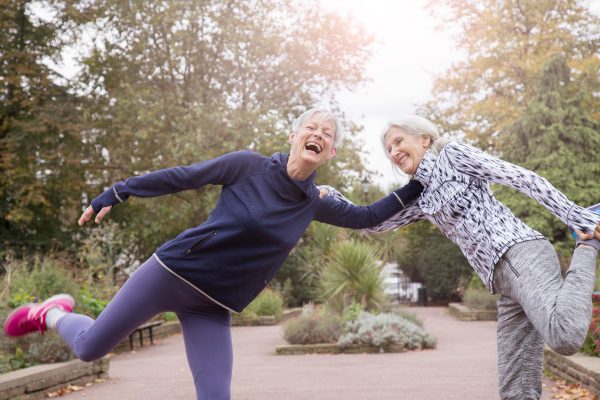
“Providing biophilic design within interior settings connects residents to the natural world,” says Mary Leary, CEO and President of Mather, the organization behind The Mather. “Research shows that a connection to nature provides positive benefits to mental states and overall well-being. At The Mather, biophilic design is the intersection of buildings and programs with nature in an urban setting.”
“The Mather is attracting a diverse group of older adults,” says Mary. “As a result, we aim to incorporate wellness practices from around the world, including Wyda movement theory of the Celtic Druids, which helps people achieve harmony with nature and contentment through mindfulness.” This holistic regenerative approach is similar to Qi Gong and yoga, while born in a different part of the world. Mather Institute has a special focus on mindfulness to support older adults’ practice of present moment awareness, which can lead to increased overall well-being, compassion, and joy.
A very different example of a wellness offering at The Mather is the Gharieni Welnamis spa wave bed, which uses computer-controlled vibrational therapy and audio frequencies to train the brain to relax. “The bed increases mindfulness, concentration, and creativity—all of which support our mission of creating Ways to Age Well,SM” says Mary.
These and other personalized ways to wellness will ensure that residents of The Mather can choose from seemingly countless ways to focus on their well-being. In other words, the sky’s the limit!

Walking the pathway to national cannabis legalization

The Rare Book Fair is coming to D.C.

Montgomery County police chief discusses arrest of trans student charged with planned school shooting

Calendar: April 19-25

Lambda Legal praises Biden-Harris administration’s finalized Title IX regulations

Congolese lawmaker introduces anti-homosexuality bill

Reenactment of first gay rights picket at White House draws interest of tourists

New D.C. LGBTQ+ bar Crush set to open April 19

Out in the World: LGBTQ news from Europe and Asia

Ariz. governor vetoes anti-transgender, Ten Commandments bill
-
 Africa5 days ago
Congolese lawmaker introduces anti-homosexuality bill
-
 District of Columbia2 days ago
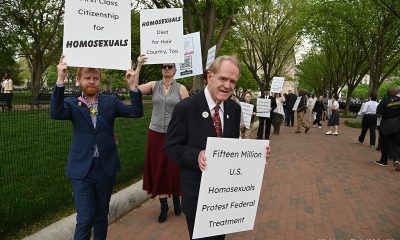
Reenactment of first gay rights picket at White House draws interest of tourists
-
 District of Columbia1 day ago
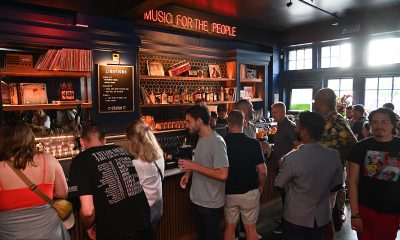
New D.C. LGBTQ+ bar Crush set to open April 19
-
 World5 days ago
Out in the World: LGBTQ news from Europe and Asia