
Opinions
Remembering an icon of style, wit
Vidal’s influence still felt across cultural landscape

Some icons seem so approachable, that everyone wants to bask in their warmth over dinner or drinks. This wasn’t so with Gore Vidal, the queer legendary man of letters, often called the Oscar Wilde of our time, who died at age 86 on July 31. Everyone, from Hollywood celebs to public intellectuals to TV hosts to unliterary TV viewers, loved the delicious, icy brilliance of his acerbic wit and aphorisms.
“There is not one human problem that could not be solved if people would simply do as I advise,” Vidal said.
Vidal was so multi-talented — he wrote 25 novels, two memoirs, screenplays, plays, several volumes of essays — that you almost believed that our planet’s problems would have been fixed if Vidal had been in charge. His presence could (and can still be felt) in our cultural landscape. Nothing shows how relevant his work still is, especially, during an election year, than the current Broadway revival of his renowned play “The Best Man.” (The show titled “Gore Vidal’s The Best Man” will run through Sept. 9.) Written in 1960, the play is about the scandal-plagued machinations of a presidential campaign.
Unlike many writers who shy from the limelight, Vidal loved being in the public eye. (“Some writers take to drink, others take to audiences,” he said.) He ran unsuccessfully for public office (as a Democratic congressional candidate in upstate New York in 1960 and for the Senate in California in 1982). Vidal acted in movies (the film version of his own play “The Best Man,” the Fellini movie “Roma” and the political satire “Bob Roberts”). His visage was ubiquitous on TV – from his stints as a witty guest on Johnny Carson’s “Tonight Show” to his infamous feuds with William F. Buckley Jr., Norman Mailer and Truman Capote.
His contretemps with Buckley occurred in 1968 when the two covered the Democratic National Convention for ABC. Buckley, at a time when the term was only used as an epithet, called Vidal a “queer” after Vidal called him a “crypto Nazi.”
Though Vidal loathed sexual intolerance, he hated being labeled gay. “We are [all] bisexual,” Vidal argued in the volume “The Selected Essays of Gore Vidal.” “Opportunity and habit incline us toward this or that sexual object…it is impossible to say that some sex acts are ‘right’ and others ‘wrong.’”
Vidal didn’t like it when people were categorized as homosexual or heterosexual. “Only a country, basically as mindless about these matters – based upon our peasant superstitions, religious superstitions,” he told Terry Gross on “Fresh Air,” “would they make [such] categories.”
During his life, Vidal was said to have had sex with thousands of men and some women. “I never miss a chance to have sex or appear on television,” he said.
Though Vidal described himself as a cool customer, saying, “love is not my bag,” his life was not devoid of tenderness. As a teenager attending St. Albans School in Washington, D.C., he fell in love with Jimmie Trimble, a fellow student. Vidal was devastated when Trimble, who he called his “other half” was killed fighting in World War II. For 53 years, Vidal lived with Howard Austen, who died in 2003. Their relationship worked, he said, because they didn’t have sex.
There is a substantial queer quotient in Vidal’s work. His 1948 novel “The City and The Pillar” was one of the first to depict homosexuality and his 1968 camp classic “Myra Breckenridge” was the first to feature a transsexual character.
Though he later became hugely successful, Vidal’s work wasn’t reviewed by “The New York Times” and other outlets for several years because any depiction of homosexuality was viewed with so much disapproval when “The City and the Pillar” was published.
“Style is knowing who you are, what you want to say, and not giving a damn,” Vidal said.
You had more style than anyone, Gore. R.I.P.



Commentary
Preserving our tapestry: Navigating European elections, empowering queer women and the imperative of safe spaces
EU elections will take place in June 9
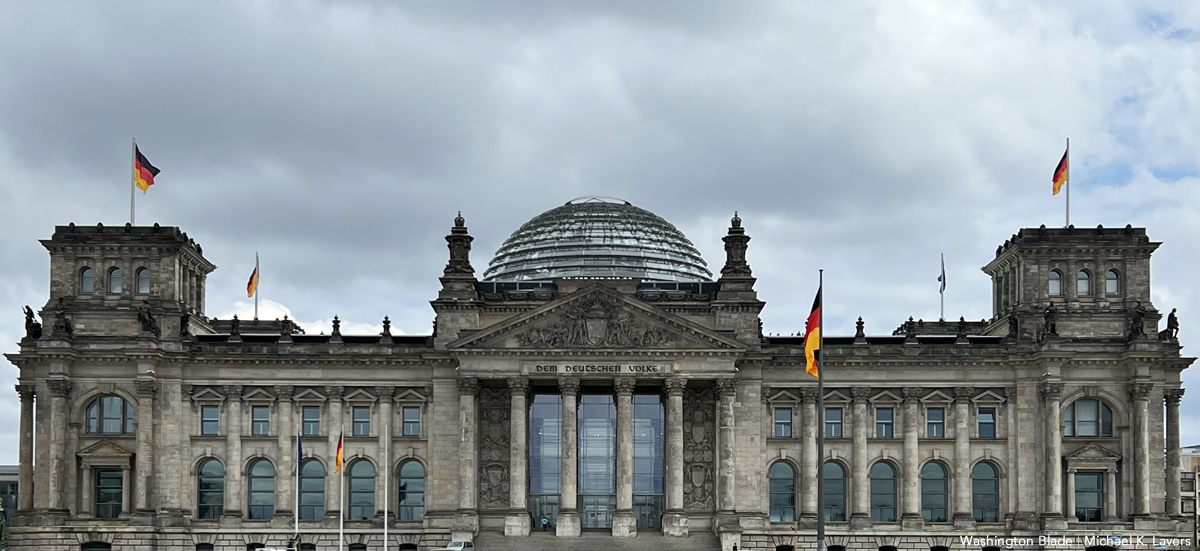
As the European Union anticipates the upcoming elections in June, a disconcerting wave of transphobic rhetoric has swept across the continent, notably in 21 EU member states, according to a recent report by ILGA-Europe. The 13th Annual Review of the Human Rights Situation of LGBTQ People in Europe and Central Asia stresses the alarming rise in hate speech targeting the LGBTQ and intersex community. This growth in negativity — which particularly is directed at transgender people — raises profound concerns about the state of inclusivity, human rights and democracy within the EU.
The alarming surge of transphobia in European politics
According to the report, there is a trend of hate speech coming from politicians across 32 European countries of which 21 being EU member states. Painting a stark picture of the challenges faced by the LGBTQ community. In a staggering list that includes Austria, Germany, Spain and others, politicians have increasingly weaponized anti-trans rhetoric. Exploiting children is a tactic often used as part of scare strategies to create opposition to trans minors’ access to healthcare and educational facilities, extending this divisive approach to a broader trend where politicians argue that restricting information about LGBTQ people is a necessity to protect minors.
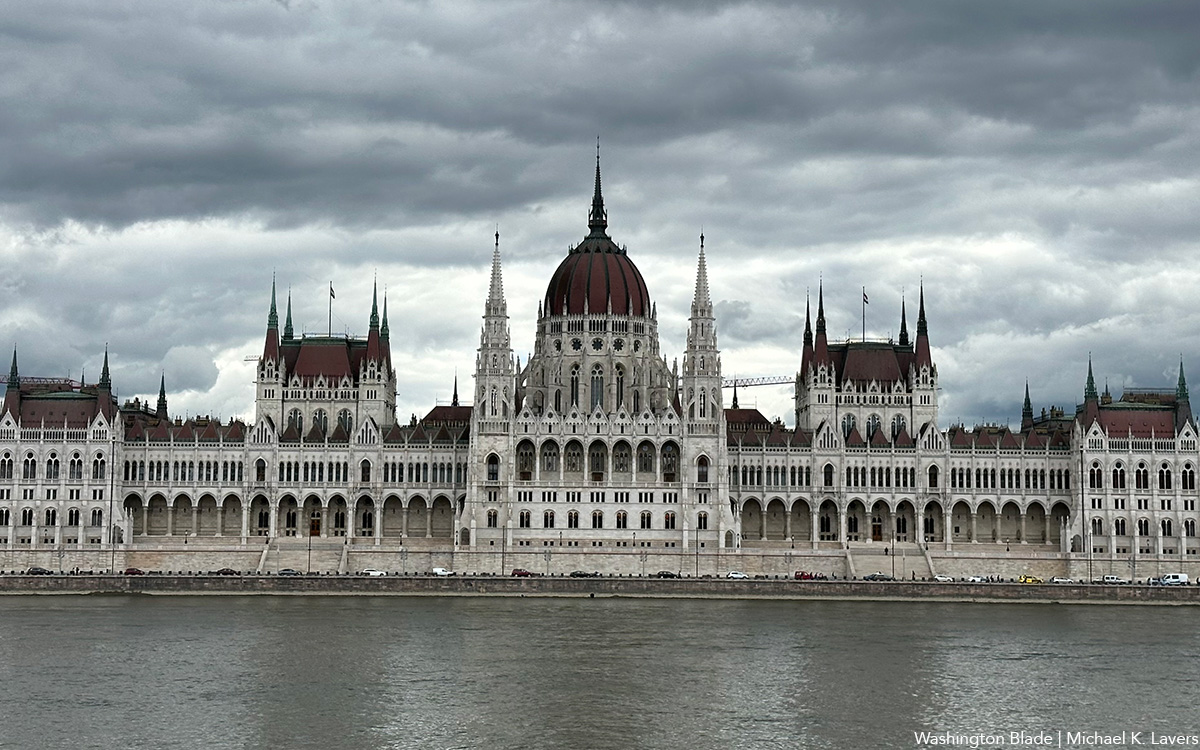
The rise in transphobic rhetoric is not only confined to politics but it has other tangible consequences. The report highlights a concerning escalation in suicide rates and mental health issues, particularly in LGBTQ youth. Violent protests outside schools and libraries have created unsafe environments, adding to the growing list of challenges faced by the community.
The far-reaching impact of demonization by politicians and the introduction of restrictive legislation underscores the need for urgent action. Hate speech is not merely an affront to people’s rights, it is an assault on the very core values upon which the EU was founded. As ILGA-Europe Advocacy Director Katrin Hugendubel notes, human rights, especially those of LGBTQ people, are facing a significant challenge from far-right forces. The exploitation of LGBTQ rights to undermine democracy, human rights and the rule of law highlights the divisive nature of the current political landscape.
As ILGA-Europe prepares to launch the “Come Out 4 Europe” campaign in response to these alarming trends, the need for visible and supportive queer female spaces is more apparent than ever. The campaign, seeking commitments from European Parliament candidates to protect the rights of LGBTQ people, underscores the urgency of safeguarding human rights, democracy and freedom.
The crucial role of queer women in European elections
Belgium, amid this backdrop of rising transphobia, is preparing for the European elections on June 9, 2024. The importance of this electoral process cannot be overstated, especially for queer women. With citizens aged 16 and above casting their votes to elect 22 members of the European Parliament (MEPs), it’s a pivotal moment for the LGBTQ community.
The voting process in Belgium follows EU law, utilizing a proportional representation system. Voters choose one party, either by marking the box above the party list or selecting individual candidates on the list. The total ballot forms for each party determine seat distribution, and preferential votes then decide which candidates secure a seat in the European Parliament.
Educated voting in the European elections is essential to queer women and the importance cannot be stressed enough. Throughout history they have faced unique battles, but this community holds the power to shape policies that directly influence their lives. By engaging in the democratic process, queer women can actively challenge the current surge in hate speech towards trans people by voting for electing representatives who actively advocate for LGBTQ rights.
Representation is more than a mere buzzword. It matters. Understanding candidates’ positions on LGBTQ issues is key and requires educating oneself on candidates’ stances as to allow queer women to vote for representatives who genuinely champion LGBTQ rights. A diverse and inclusive representation ensures that the concerns and voices of the queer community are not just heard but which are acted upon. Decisions within the European Parliament influence policies ranging from anti-discrimination laws to access to healthcare. An informed vote makes sure that legislation promotes equality, acceptance and the protection of LGBTQ rights.
By being educated on the European elections and its candidates, queer women embark on a journey of self-empowerment. By supporting candidates who prioritize inclusive curricula, they contribute to addressing LGBTQ history, health and rights, encouraging a more accepting future.
The undeniable need for physical queer women spaces
Since the European elections are nearing, the importance of physical spaces for queer women to gather and discuss voting and the candidates becomes increasingly evident. While online spaces offer the chance to connect and discuss, they come with their own unique challenges, including the spread of misinformation and miscommunication. In navigating the democratic landscape, the value of in-person gatherings for education and discussion cannot be stressed enough.
The world is saturated with digital information, and misinformation can easily infiltrate online spaces. Physical gatherings allow for a more controlled environment with direct feedback from peers, where queer women can share accurate and reliable information, ensuring a more nuanced understanding of candidates, policies and the electoral process.
In the lead-up to the European elections, we have to recognize that physical spaces for queer women are crucial. They do not only combat misinformation, disinformation and miscommunication but also serve as a vital space for shared learning. In-person gatherings create the foundation for an informed and engaged electorate, promoting a collective voice that resonates in the democratic process. The power of change lies not just in our votes but in the shared wisdom and unity forged in the physical spaces we create together.
The plight of the Crazy Circle and the call for investment in queer women spaces
After the closing of Brussels’ iconic Crazy Circle, a feminist queer space that has served as a safe haven for the LGBTQ community, it becomes increasingly evident that the struggle for queer women-only spaces in Belgium is a critical issue demanding our attention.
For the past five years, Crazy Circle has been a testament to the resilience of the LGBTQ community, creating a safe and celebratory space for queer women and their allies. However, its closure after the previous management leaving for unknown reasons and current fundraising attempt by the new owners to reopen highlight the challenges faced by such spaces in Belgium. These establishments play a vital role not only as social hubs but as catalysts for education, empowerment and advocacy. Fortunately for the new owners they recently reached their fundraising goals and raised over 50,000 euros to reopen Crazy Circle.
The loss of a space like this underscores the broader struggle faced by queer women-only spaces in Belgium. Beyond being social hubs, these spaces are vital agents of change, providing a haven for education, empowerment and advocacy. We must recognize that our commitment to the LGBTQ community extends beyond words.
The “Come Out 4 Europe” campaign by ILGA-Europe serves as a proactive response to the alarming trends in hate speech. It calls for clear political commitments on safeguarding human rights, democracy and freedom from candidates in the upcoming European Parliament elections in June. Belgium, with its own elections on the horizon, stands at a crossroads where the choices made will resonate far beyond its borders.
If we want to inform queer females about campaigns like “Come Out 4 Europe” we need spaces like the Crazy Circle. Its closure is a stark reminder of the fragility of these vital spaces. It’s a call to action, urging us to invest more in preserving and expanding queer women-only spaces. The struggle faced by Crazy Circle is not an isolated incident; it reflects a broader challenge that demands a collective response all over the world.
By fighting to preserve and expand queer women-only spaces, we are not merely safeguarding physical venues. We are investing in the education, empowerment and advocacy of the LGBTQ community. These spaces are not mere bars or gathering spots; they are crucial agents of change and empowerment.
Building a future of inclusivity
As we see what happened to Crazy Circle in Belgium, let us use this moment as a catalyst for change. It is time to rally together behind existing queer women spaces, ensuring their survival and actively working towards expanding and creating new ones. By doing so we empower individuals to educate, advocate, and, most importantly, vote for a future where safety, equality and acceptance prevail for all members of the LGBTQ community. It’s not only a matter of choice to preserve these spaces; it is a commitment to a world where everyone has the right to be safe, heard and celebrated.
In navigating the complex tapestry of the European elections, the empowerment of queer women spaces through informed voting and the preservation of physical queer women spaces become integral threads. As we stand on the precipice of change, our choices today will shape the inclusive and accepting future we envision. Together, let us weave a tapestry that celebrates diversity, protects human rights and builds a future where every voice, especially those of queer women, is not just heard but cherished.
Opinions
Calm down about over-the-counter birth control
Oral contraceptives do not constitute abortion

The first over-the-counter (OTC) oral contraceptive pill in the U.S., known as Opill, will become available in drugstores, convenience stores, and online retail stores in the coming weeks. The pill has been available by prescription for years, and the U.S. Food and Drug Administration (FDA) has recently approved it for purchase without a prescription. Researchers, advocates, and the pill’s manufacturer, Perrigo, have been working for many years to make this pill more accessible to the general public in the U.S., and it is finally becoming a reality.
It has taken a very long time to approve this form of birth control, and many people are upset that it is being available at all to purchase OTC because contraception has become equated with abortion. This bizarre notion has arisen from anti-abortion groups, who would like the general public to believe that contraceptives, such as the pill, may act as abortifacients (any drug or chemical preparation that induces abortion), and not only as contraceptives. Besides the fact that expanding access to safe and affordable birth control improves women’s healthcare, it also reduces unplanned pregnancies and abortions. Everyone should realize that birth control is not abortion.
Opill is a progestin only pill (POP), which means that it contains progestin instead of the estrogen-progestin combination found in other birth control pills. Progestin is a form of progestogen, which is the hormone that plays a role in pregnancy and menstrual cycles. The POP works by changing the mucus at the entrance to the womb (uterus) so that sperm cannot pass through the fertilized egg. POPs are also sometimes referred to as mini pills and are taken as a form of birth control by mouth every day to prevent pregnancy.
Some patients are unable to take birth control with both estrogen and progestin because they may have certain medical problems that prevent them from ingesting the combination of the hormones. Many people who cannot take estrogen-progestin pills can safely use Opill, and POPs are safe for those with high blood pressure, diabetes, and cardiovascular disease, among other conditions. Side effects reported by users are mild and include irregular spotting.
Approximately 9 percent of women become pregnant in the first year of use with POPs with typical use (when usage is not consistent or always correct), in comparison to less than 1 percent of women become pregnant with perfectuse (consistent and always correct usage). This makes Opill an incredibly effective form of reversible birth control that is now becoming easily accessible both online and in retail stores in the U.S. Not only is it an extremely effective form of accessible birth control, but it is in demand. The nationally representative 2022 KFF Women’s Health Survey found that more than three-quarters (77 percent) of female respondents ages 18-64 favored making birth control pills available over the counter without a prescription.
Despite the strong effectiveness of the mini pill, easy accessibility, minimal side effects, cost-effectiveness, and safe consumption of the pill without a prescription, some people are still upset about Opill becoming approved. Why is that?
Antiabortion groups have undertaken a strategic campaign to convince the public that birth control is synonymous with abortion, when it is not. The OTC availability of Opill will mean that the birth control pill will become more accessible to people who may not be able to visit a provider for a prescription, as well as help someone decide if they would like to have children and when that timeline would be. People need to do more research on this subject before they condemn life-changing products such as Opill, which will benefit many people, especially women, in a positive way.
Catalina Desouza is a Public Health graduate student at George Washington University.

I stand with the thousands of Israelis who are demonstrating in Tel Aviv and Jerusalem, calling for an immediate election in Israel. The current conduct of the war is counter-productive to achieving peace, and is earning Israel animosity around the world.
The killing of the aid workers serving with José Andrés, World Central Kitchen, may be the straw that breaks the camel’s back. There must be an immediate pause in the fighting, with food and medicine flowing into Gaza for the innocent women and children.
While I call on Israel to act unilaterally, to do this now, let no one forget who began this current war on Oct. 7 by massacring Israeli women and children, and taking more than 200 hostages. Again, while I call on Israel to act unilaterally, let no one forget, there could be an immediate ceasefire if Hamas would release the rest of the hostages, whether they are alive or dead. The health of the hostages is something no one knows, because Hamas has refused to allow any human rights groups in to see them. Let no one forget, Hamas, a terrorist organization, hides behind the civilians they claim they fight for, using them as human shields. They share responsibility for the deaths of the women and children in Gaza.
Again, I call on Israel to act now, to show the world they are not terrorists. They are a country trying to protect themselves against a terrorist organization whose stated mission is to wipe them off the face of the earth; from the river to the sea. But, despite this, Israel must now show the world its compassion, and its ability to continue to defend itself, while not starving women and children, and cutting off their medical care. Israel has the power to do both. If they do, the world will support them. If they continue to go on as they have, the world will not.
I have for years called for the Israelis to get rid of Netanyahu and his government. He is as much of a disaster for Israel as Trump is for the United States. They both believe they are above the law, and both believe only by clinging to power can they escape the law. A very sad state of affairs for both nations.
I am the child of Jewish immigrants who escaped the Nazis. My mother as a child from Austria, and my father from Germany. My father’s parents were killed in Auschwitz. I am a first generation American. I am, and will continue to be, a strong supporter of Israel. Calling for Netanyahu’s removal doesn’t change that. But it has become clear that his right-wing government will never be willing to do what is necessary to have a real peace, and both the Israeli and Palestinian people will suffer. A new Israeli government must take action to stop any new settlements, and be prepared to remove some that are there now. Some of those lands would become part of a new Palestinian state, if we are ever to move to a two-state solution. If Israel is willing to do this, then we must convince Arab countries like Jordan and Egypt to condemn Hamas. They must work to convince the Palestinian people they will support them in getting their own state, if they rid themselves of Hamas. They cannot continue to be represented by a terrorist organization, and expect to live in peace.
The Palestinians turned down their own state in 1947, and missed maybe the last best chance to come to an agreement at the summit President Bill Clinton convened at Camp David, Maryland with Yasir Arafat, and Ehud Barak. It was an ambitious attempt to reach a sweeping settlement on questions such as the shape of a new Palestinian state, and the future of Palestinian refugees, that have kept the two sides in a state of conflict for 77 years. It is generally felt it was Arafat who couldn’t bring himself to move to a final agreement.
There is no ‘right’ in this war at this time. Israel is wrong in some of what they are doing, and Hamas is wrong in what they are doing. This isn’t a one-sided situation. But after six months of war, Israel must be the bigger party at this time, and show the world they are ready to move on in their tactics, and give peace a chance.
Peter Rosenstein is a longtime LGBTQ rights and Democratic Party activist. He writes regularly for the Blade.

Brittney Griner, wife expecting first child

Appeals court strikes down W.Va. transgender athlete ban

News is Out, Word In Black and Comcast NBCUniversal welcomes 16 journalism fellows to cover Black and LGBTQ+ communities

Indian political parties for the first time include LGBTQ rights in election platforms

Ugandan activists appeal ruling that upheld Anti-Homosexuality Act

Congolese lawmaker introduces anti-homosexuality bill

Five transgender, nonbinary ICE detainees allege mistreatment at Colo. detention center

First lady warns Trump is ‘dangerous to the LGBTQ community’ at HRC event

New book offers observations on race, beauty, love

Hot fun in the desert sun: Your Palm Springs guide
-
 Africa2 days ago
Congolese lawmaker introduces anti-homosexuality bill
-
 Colorado4 days ago
Five transgender, nonbinary ICE detainees allege mistreatment at Colo. detention center
-
 Politics4 days ago
First lady warns Trump is ‘dangerous to the LGBTQ community’ at HRC event
-
 Books4 days ago
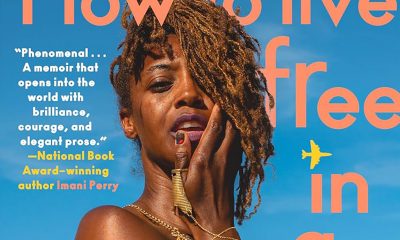
New book offers observations on race, beauty, love