Arts & Entertainment
Family planning
New novel explores male couple’s baby plight
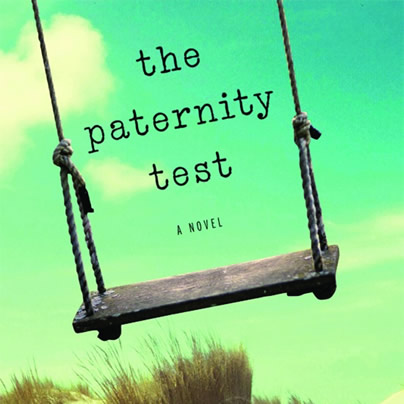
‘The Paternity Test’
By Michael Lowenthal
University of Wisconsin Press
$26.95
288 pages
A lot of the things you’ve done in your life, you’ve done just for kicks.
You’ve taken dares to alleviate boredom. Taken risks on what-the-heck whims. You’ve done things legal and illegal for no other reason than that they were there and it seemed like a good idea at the time.
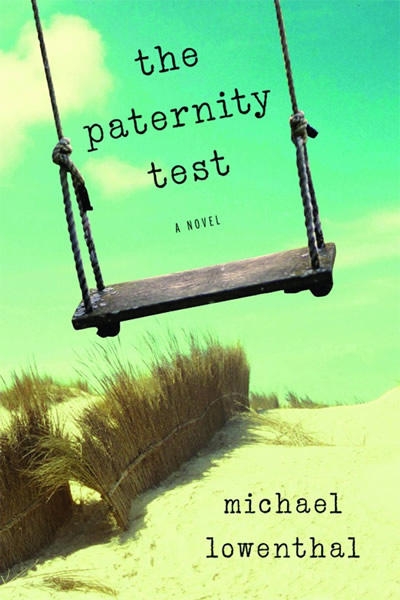
(image courtesy University of Wisconsin Press)
But when it comes to having a family, the only kicks you want are the ones from your unborn child. In the new book “The Paternity Test” by Michael Lowenthal, getting to that point, for two prospective fathers, almost gives their relationship the boot.
Patrick Faunce met Stuart Nadler at a charity event.
Stu, an airline pilot, once had boyfriends near every major airport. It was something Pat learned not to question so he just stayed at home, working and worrying, never knowing if he was good enough, always overthinking. Pat had been in love with both boys and girls before, but he was afraid of losing Stu.
So when the Faunce family vacation house on Cape Cod fell into Pat’s ownership, he convinced Stu to move. It was a perfect place for a start-over, which made things better but still bumpy.
This time, though, it wasn’t all Stu’s fault: Patrick realized he wanted a baby.
His childhood had been marked by a largely absent father and hints of infidelity from his mother, and Pat wanted a family like the one he never had. He knew about surrogacy and researched more, which is how he and Stu ended up meeting Debora and Danny Neuman.
Debora was sassy and beautiful, a Brazilian Jew with a charming grasp on the English language. Danny was reticent but friendly, if not a little nervous. They had an adorable 4-year-old daughter, they said their family was complete and they only wanted to be able to help someone else have a family.
Agreements were made. Papers were signed.
But when month after month passed with no pregnancy, Patrick and Stu began to unravel. Debora and Danny’s relationship began to fray, too, so Debora started to rely on Pat’s friendship. Could a baby — maybe? — put everything back the way it was before?
You have to love a story that makes you a little scared to move on to the next chapter because you’ve come to care about the characters so much. Fortunately, that’s what will happen when you read “The Paternity Test.”
Told from the perspective of one almost-parent, this novel is rich with angst and eagerness, laced with past-inflicted pain, yet still hopeful. Author Michael Lowenthal perfectly depicts the emotions of trying to start a family. Beginning slow in his storytelling, he just as slowly builds to an almost-see-it-coming, tense-but-can’t-look-away ending that will leave readers feeling strangely, breathlessly pensive.
You can expect a lot from this story of expectations met and dashed, and I don’t think you’ll be disappointed because it’s one of those novels that will stick in your mind.

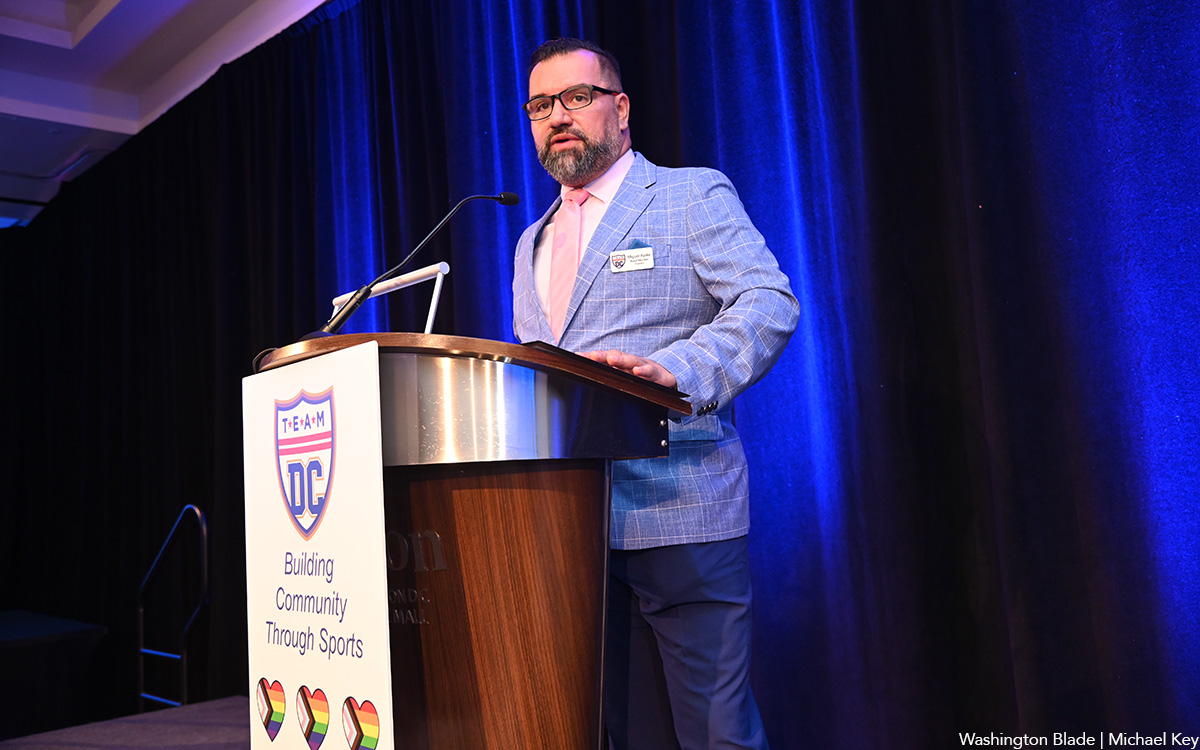
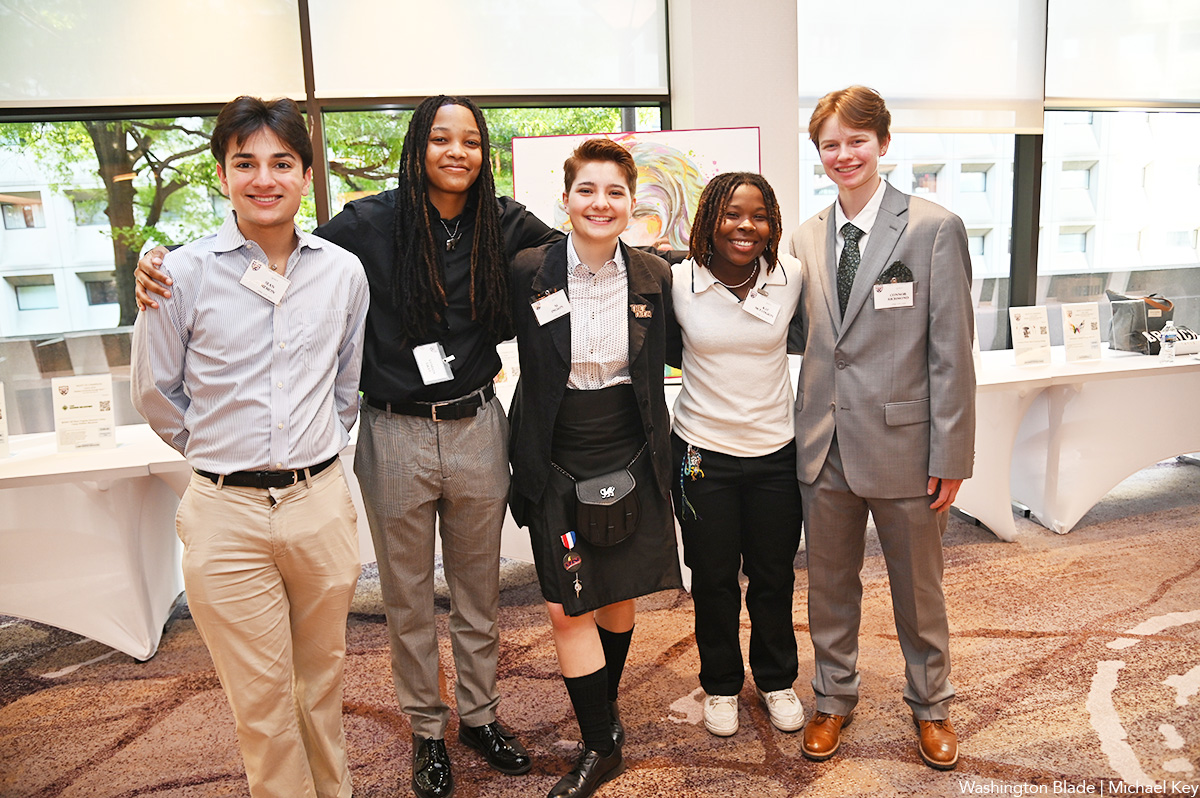
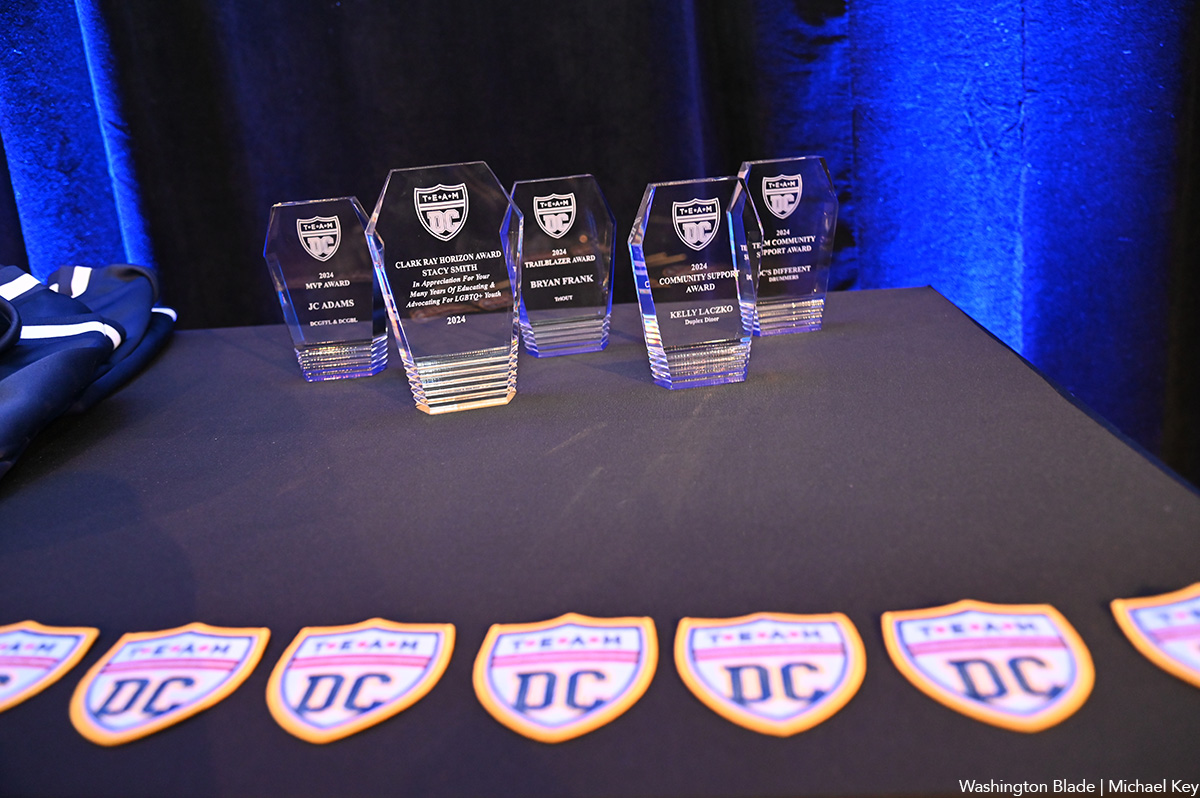
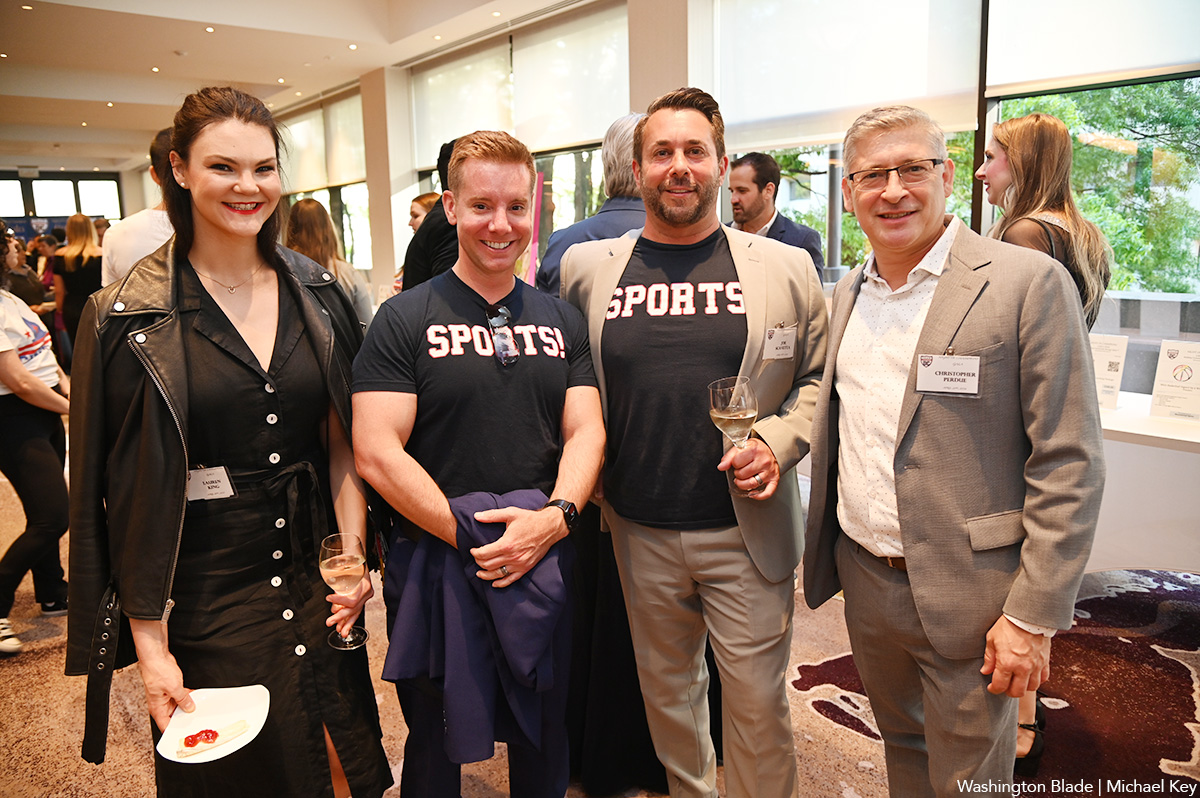
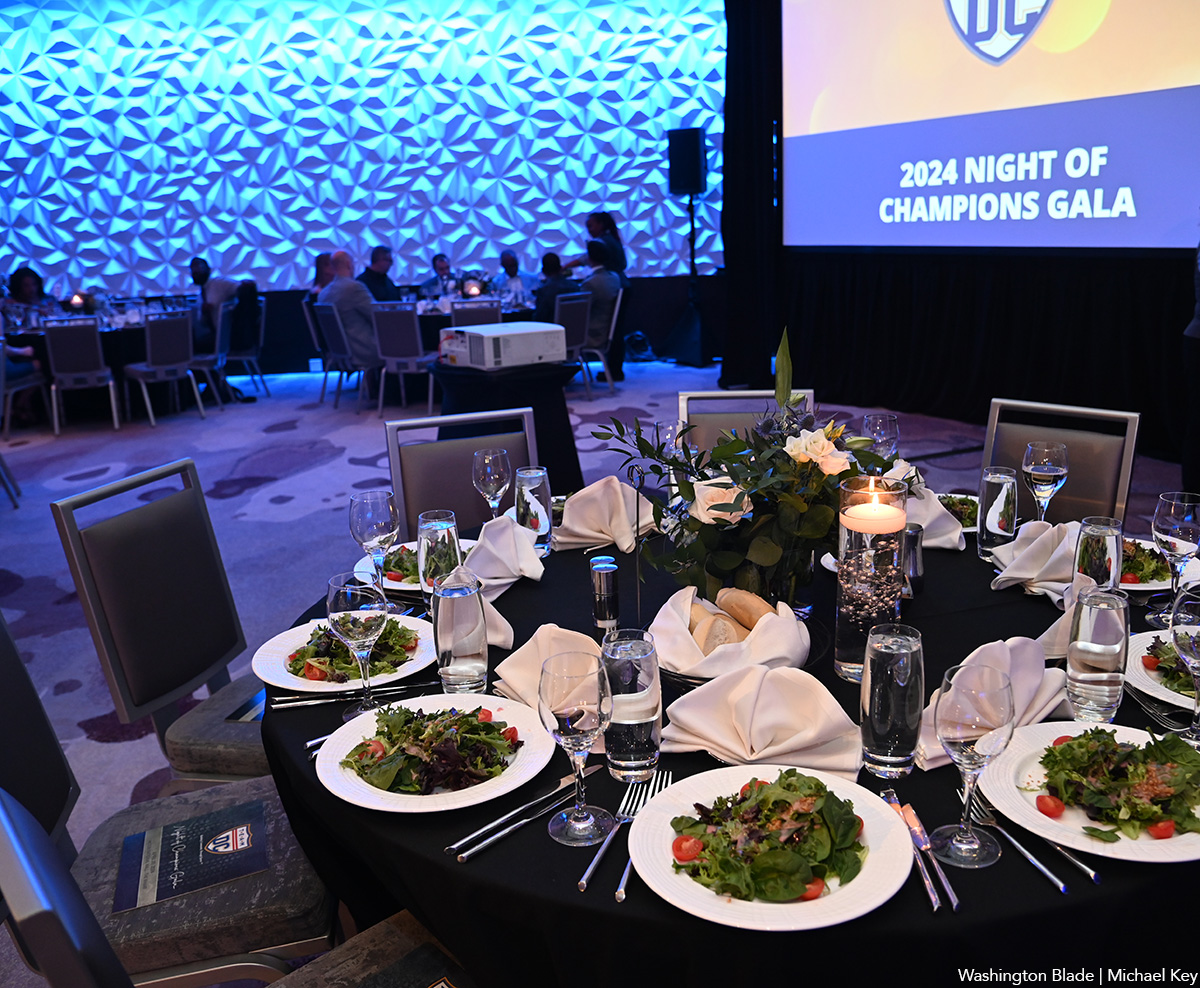
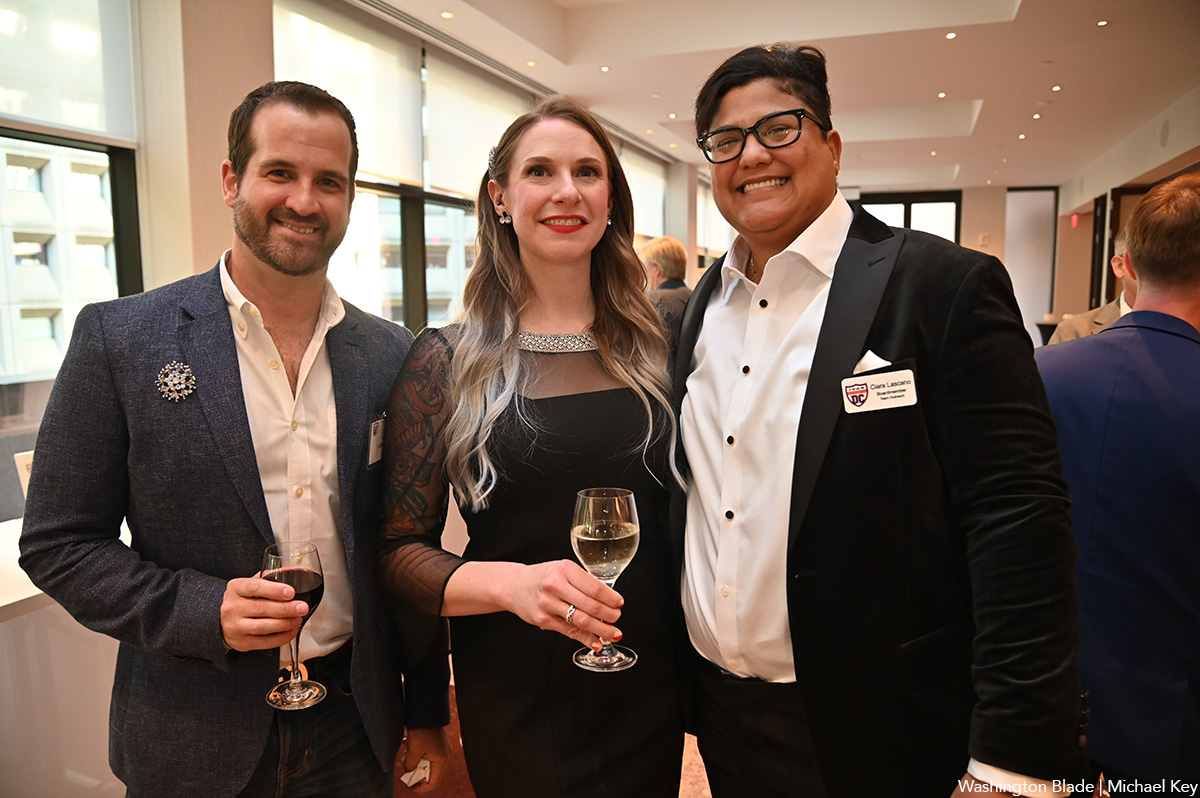
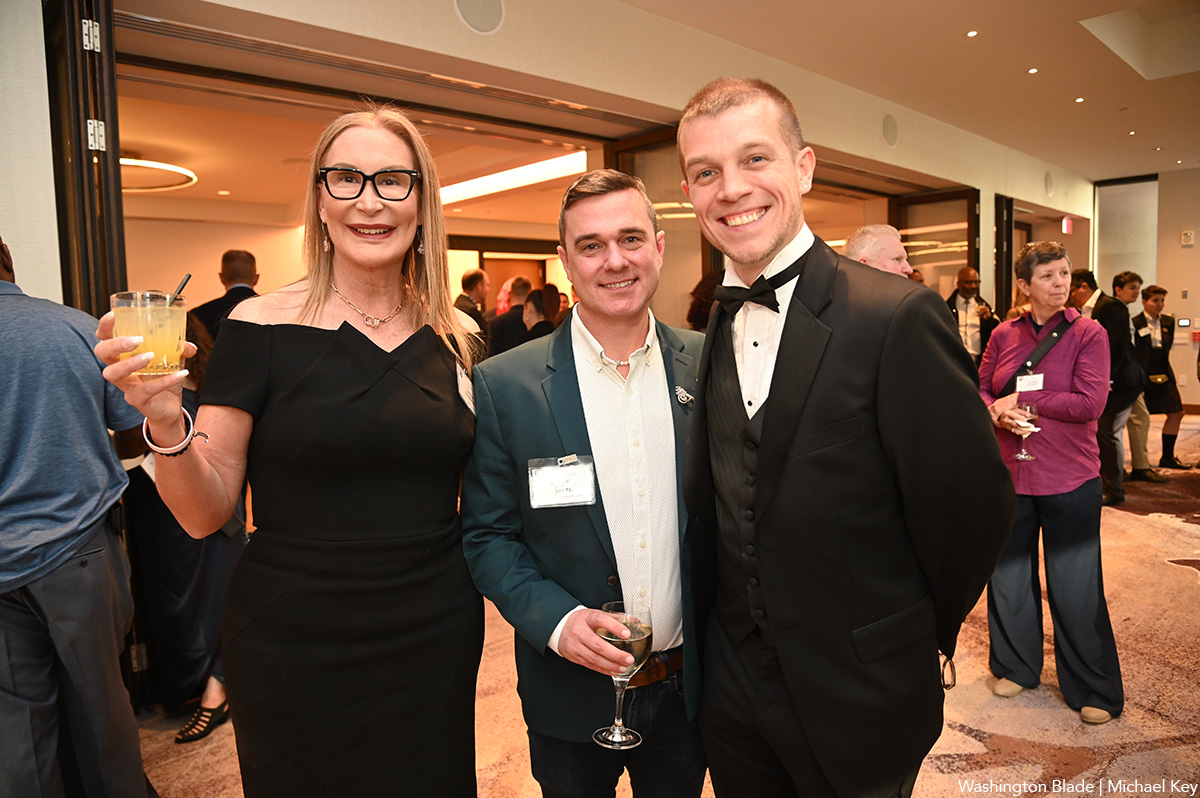
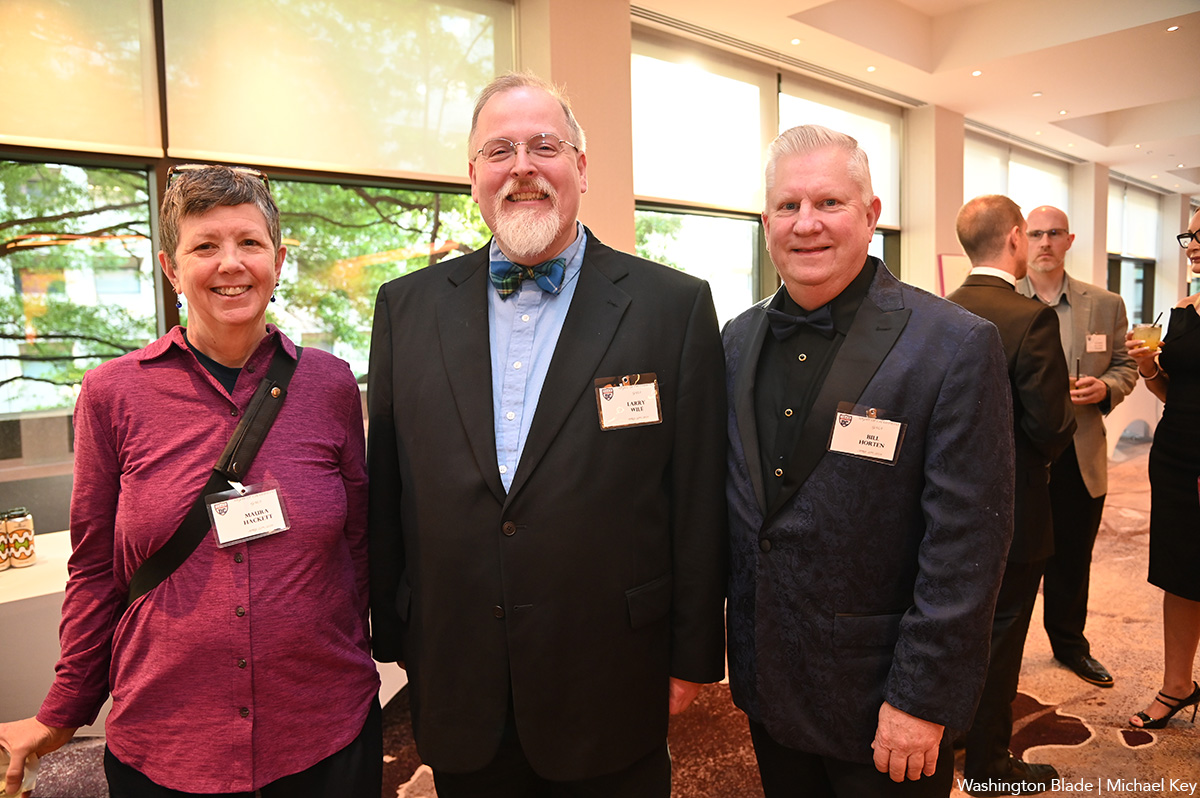
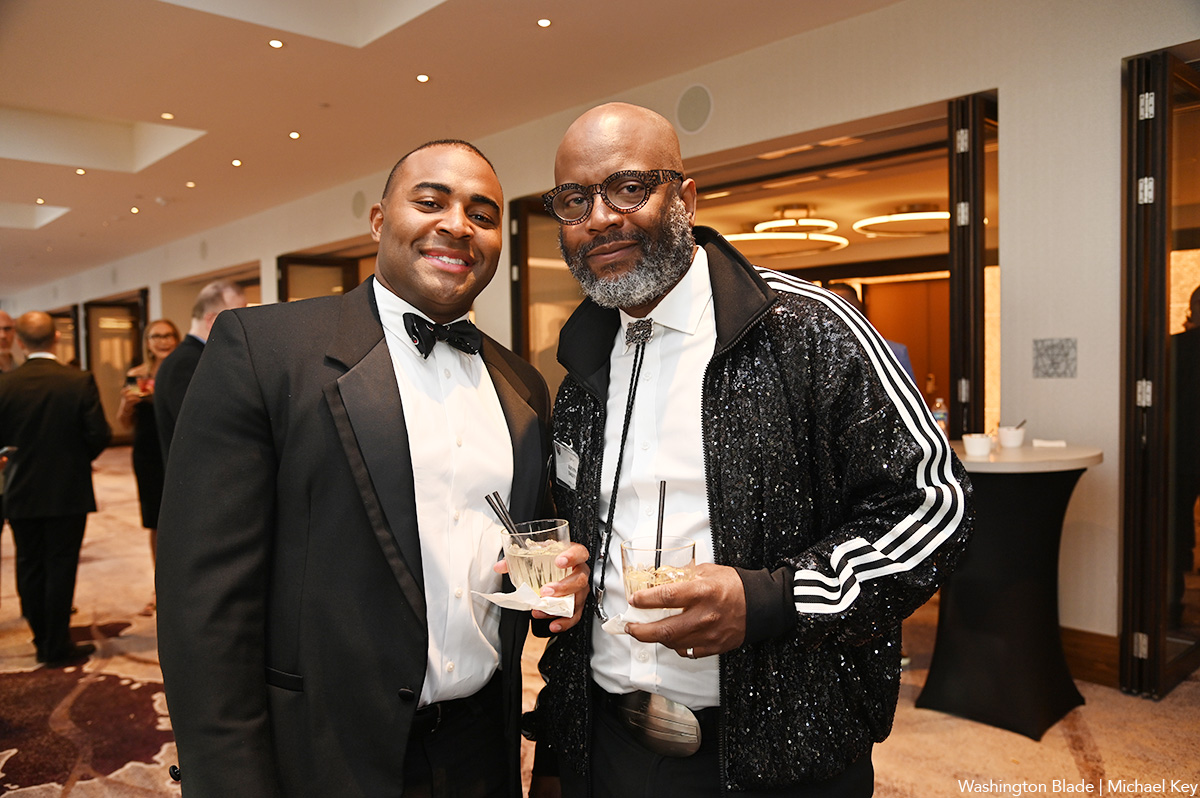
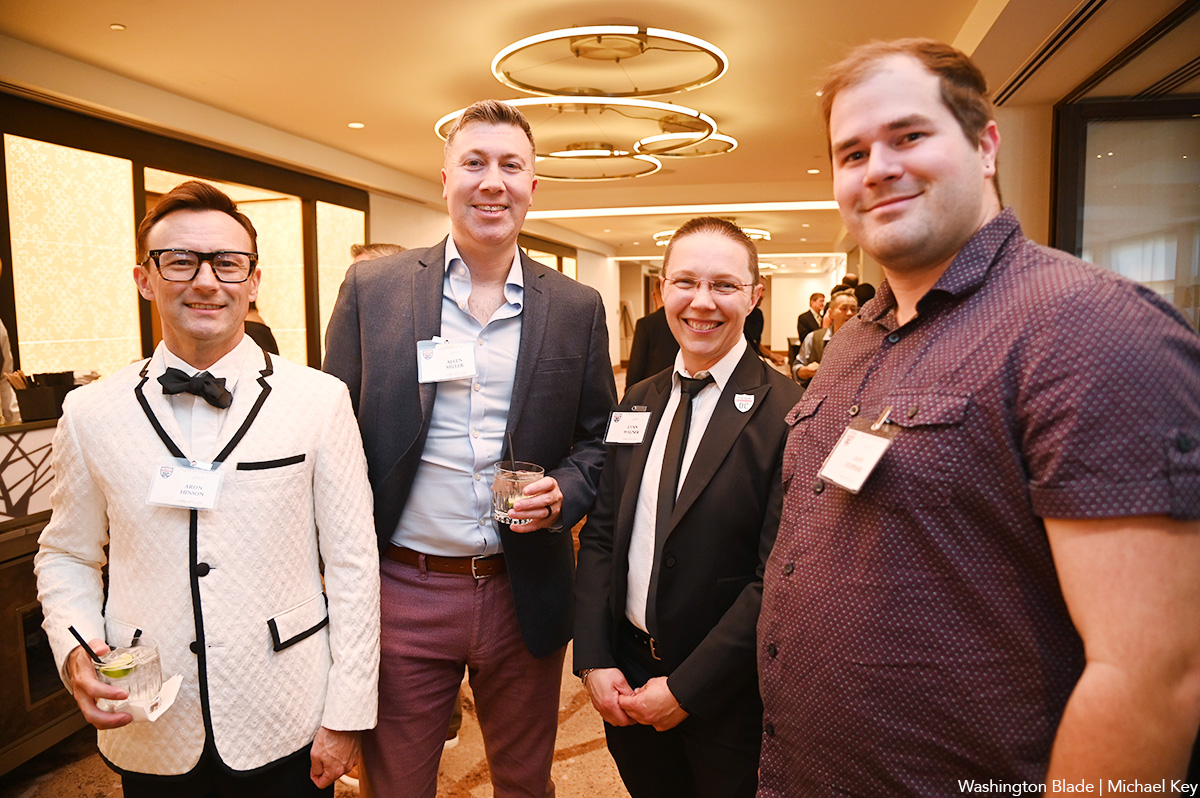
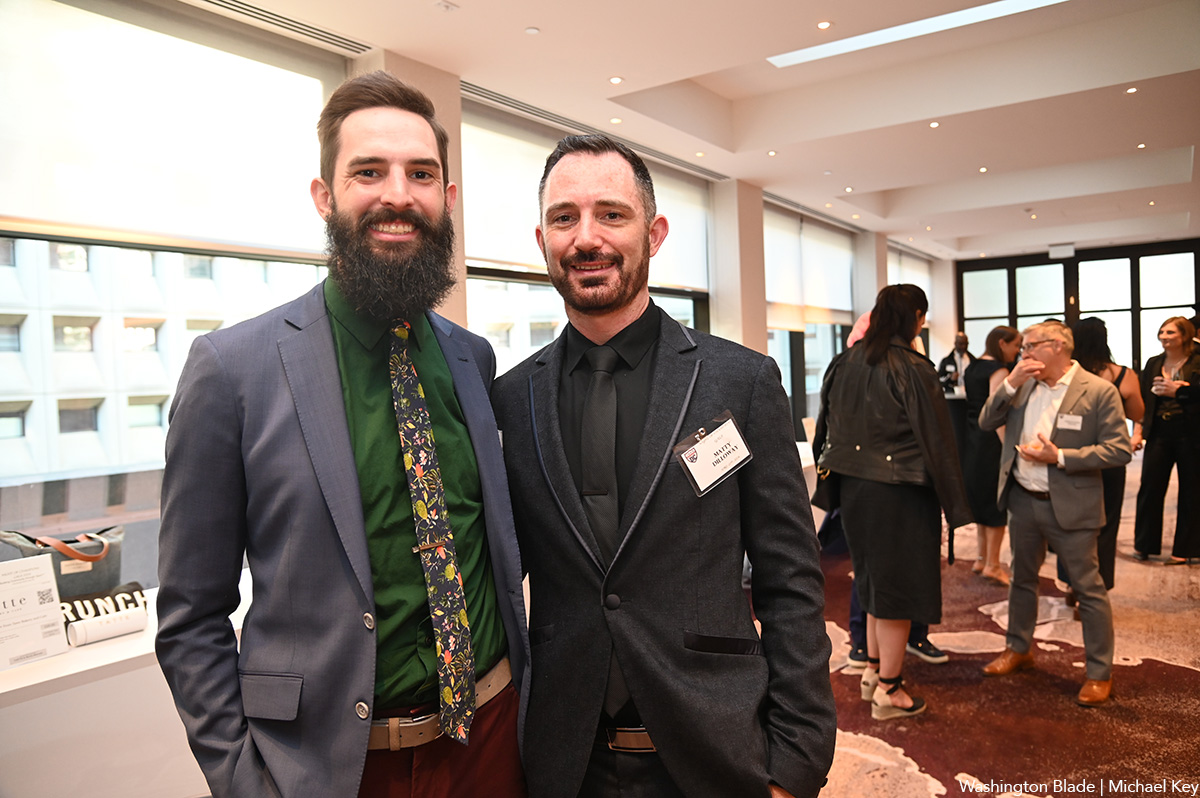
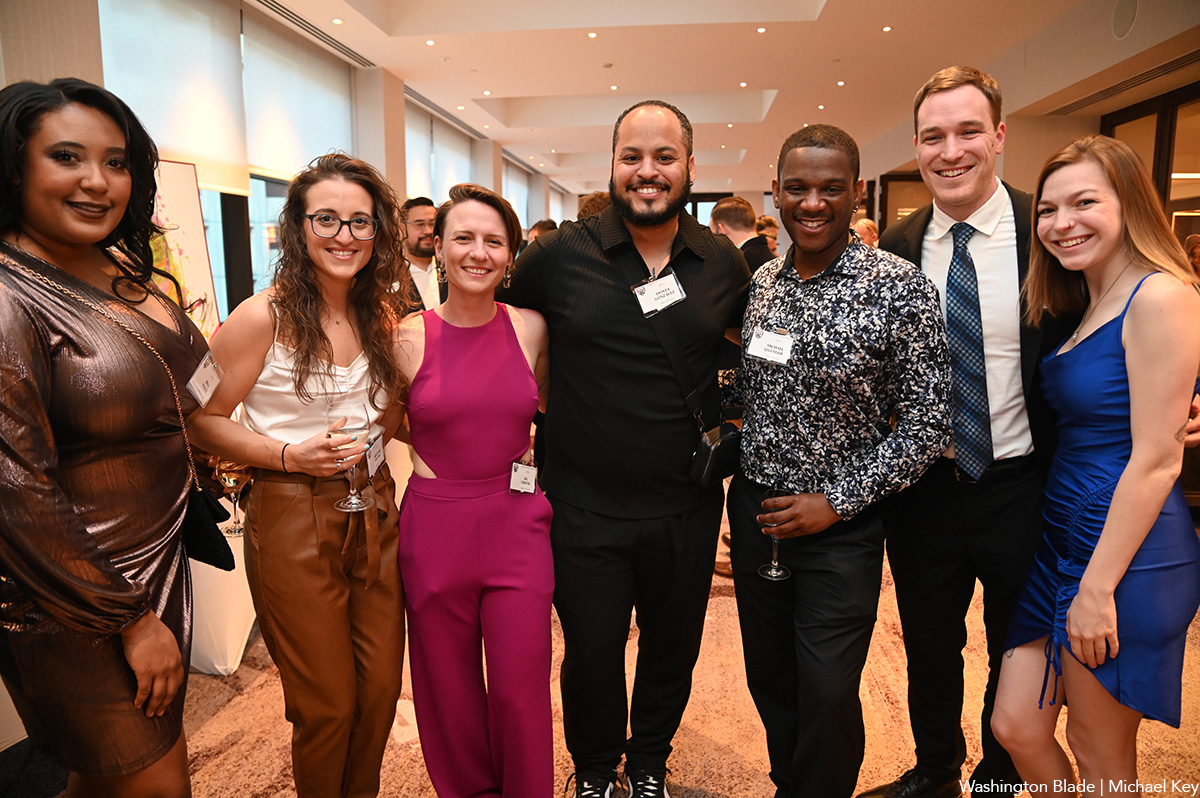
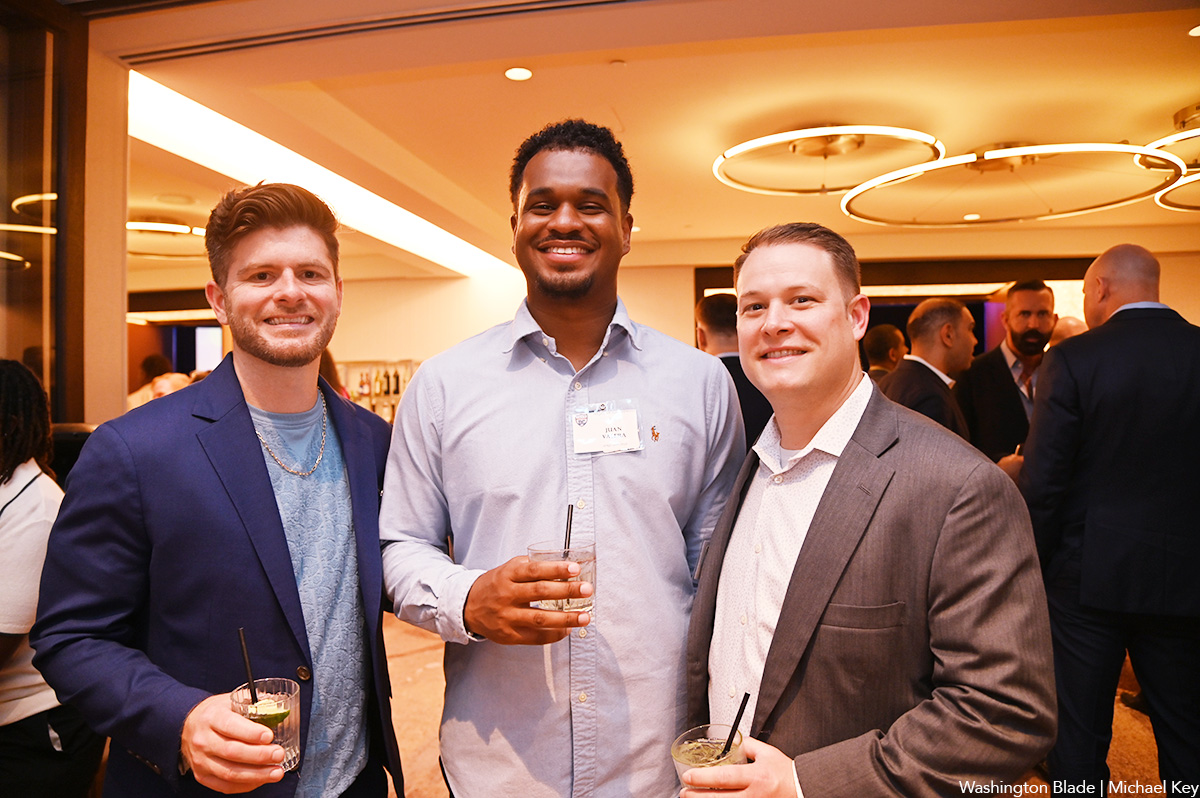
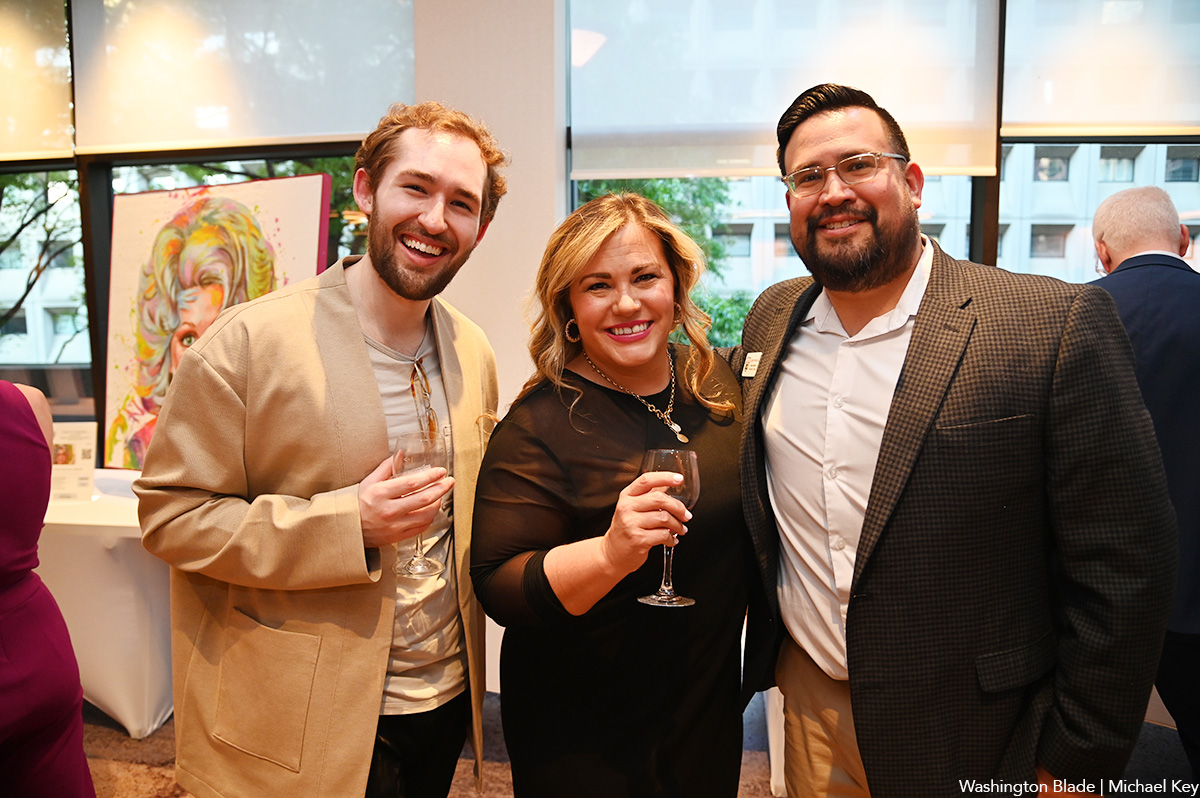
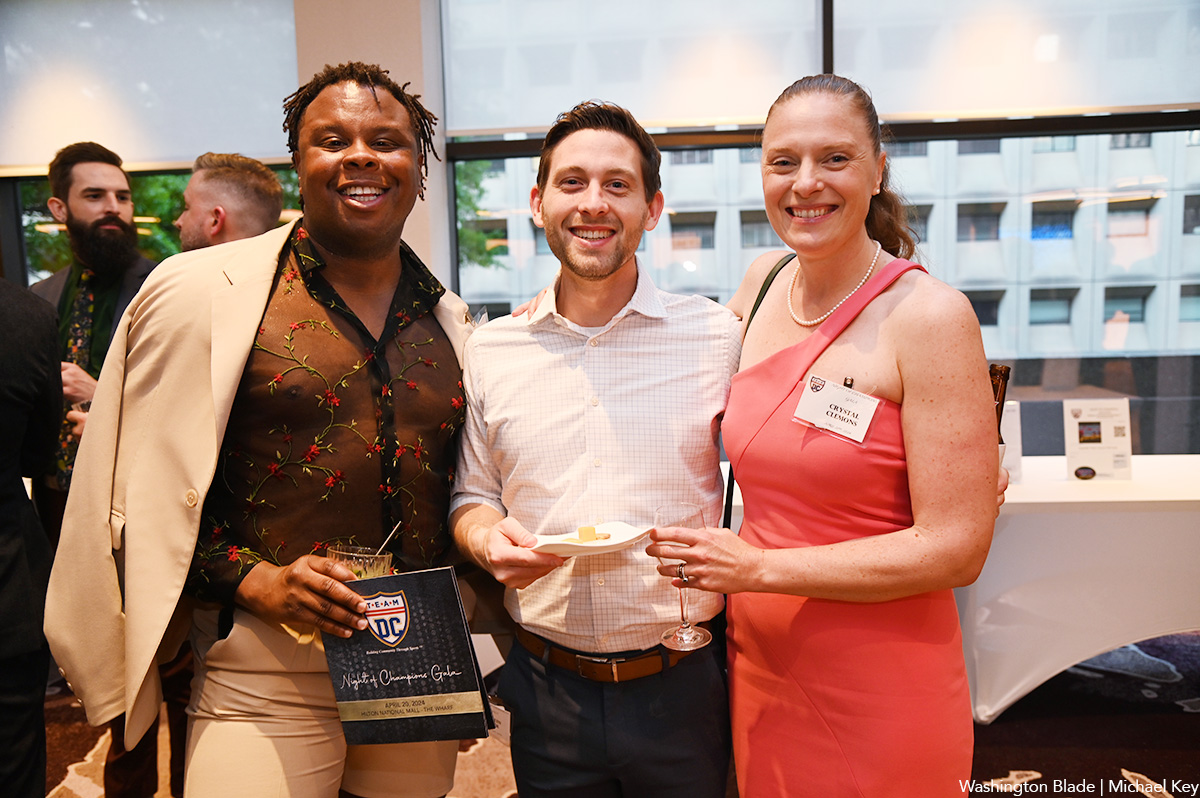
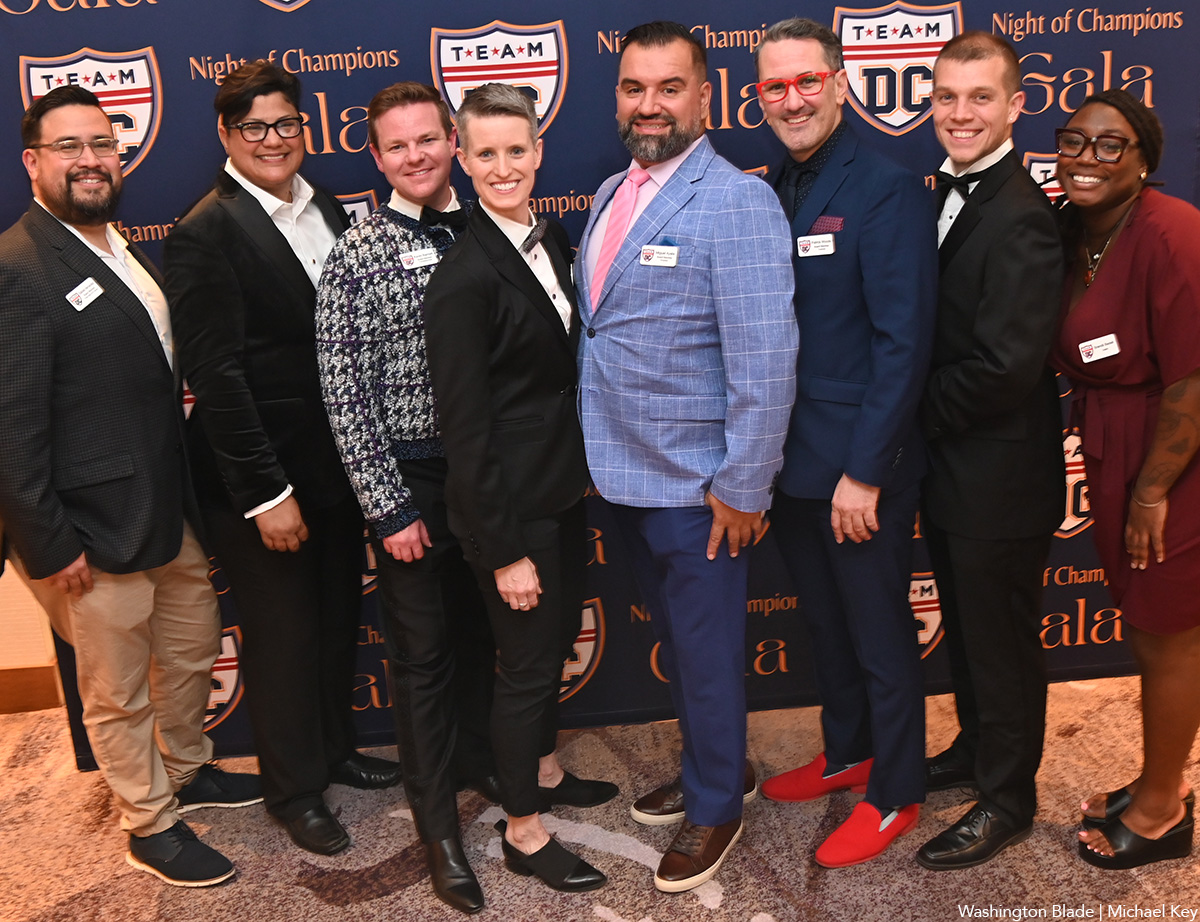
Team DC, the umbrella organization for LGBTQ-friendly sports teams and leagues in the D.C. area, held its annual Night of Champions Awards Gala on Saturday, April 20 at the Hilton National Mall. The organization gave out scholarships to area LGBTQ student athletes as well as awards to the Different Drummers, Kelly Laczko of Duplex Diner, Stacy Smith of the Edmund Burke School, Bryan Frank of Triout, JC Adams of DCG Basketball and the DC Gay Flag Football League.
(Washington Blade photos by Michael Key)
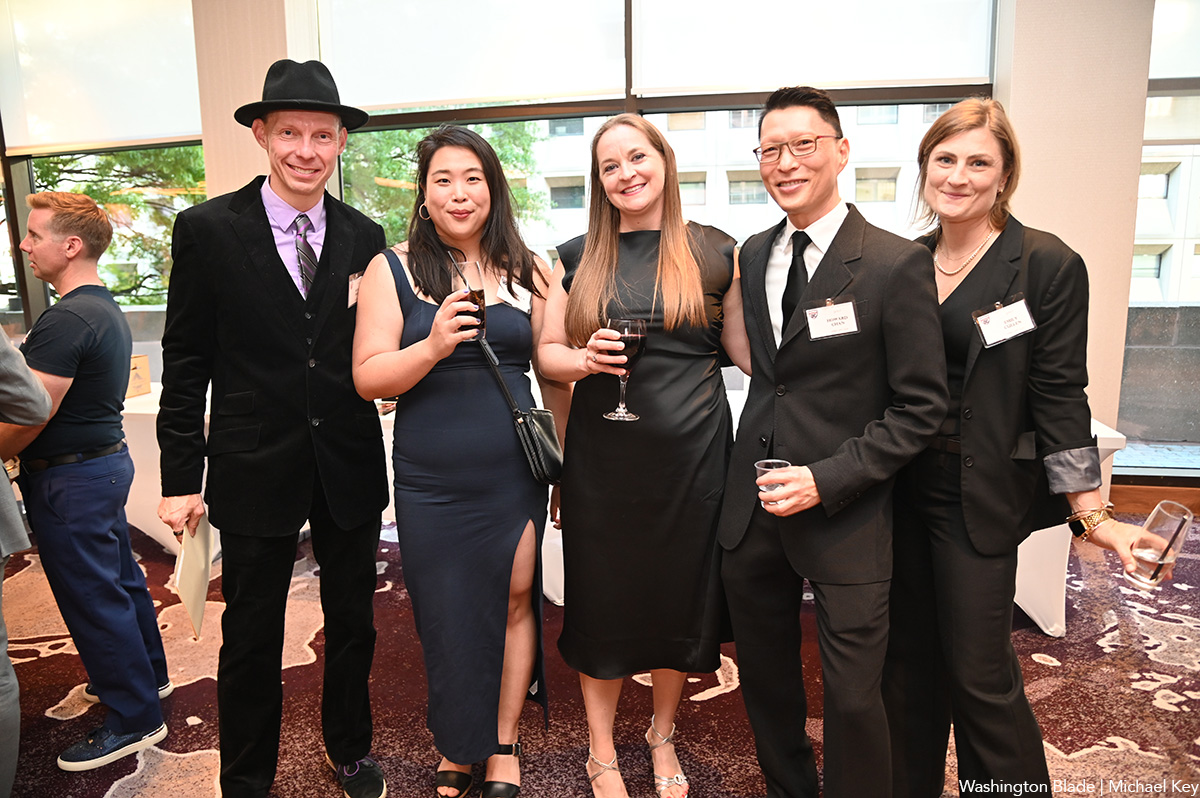
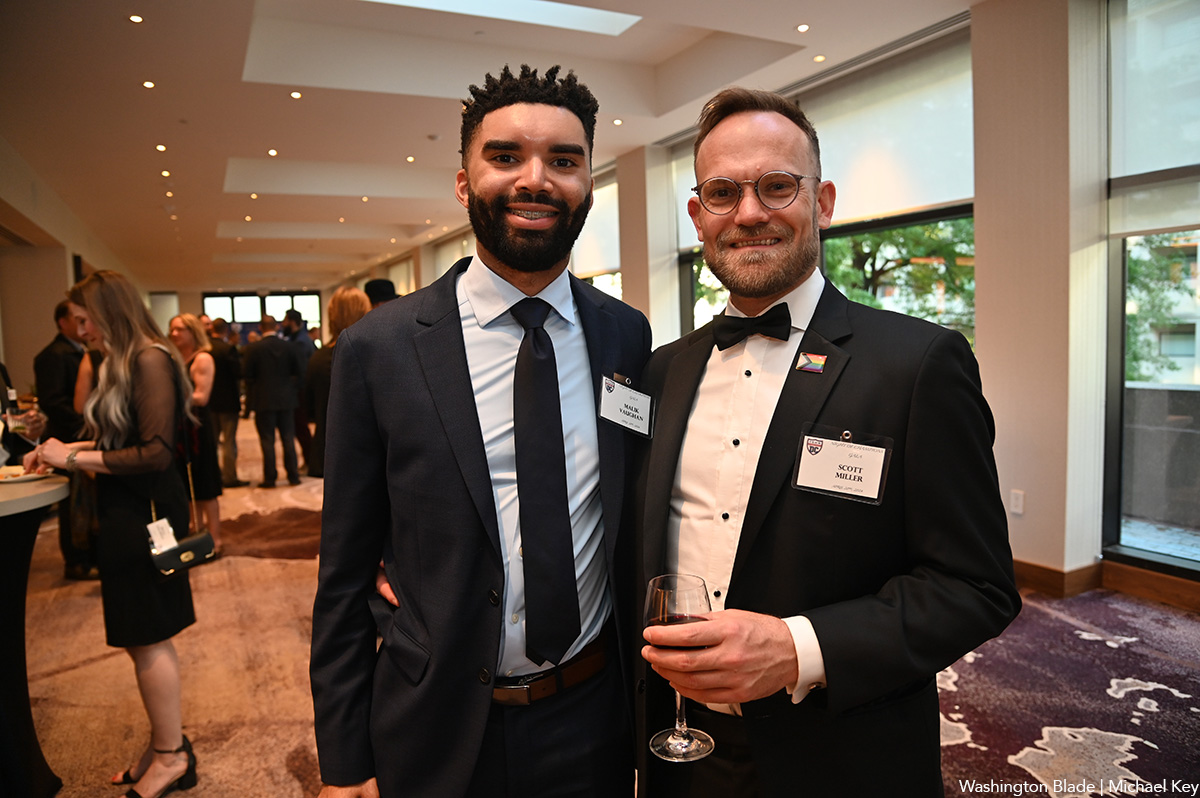
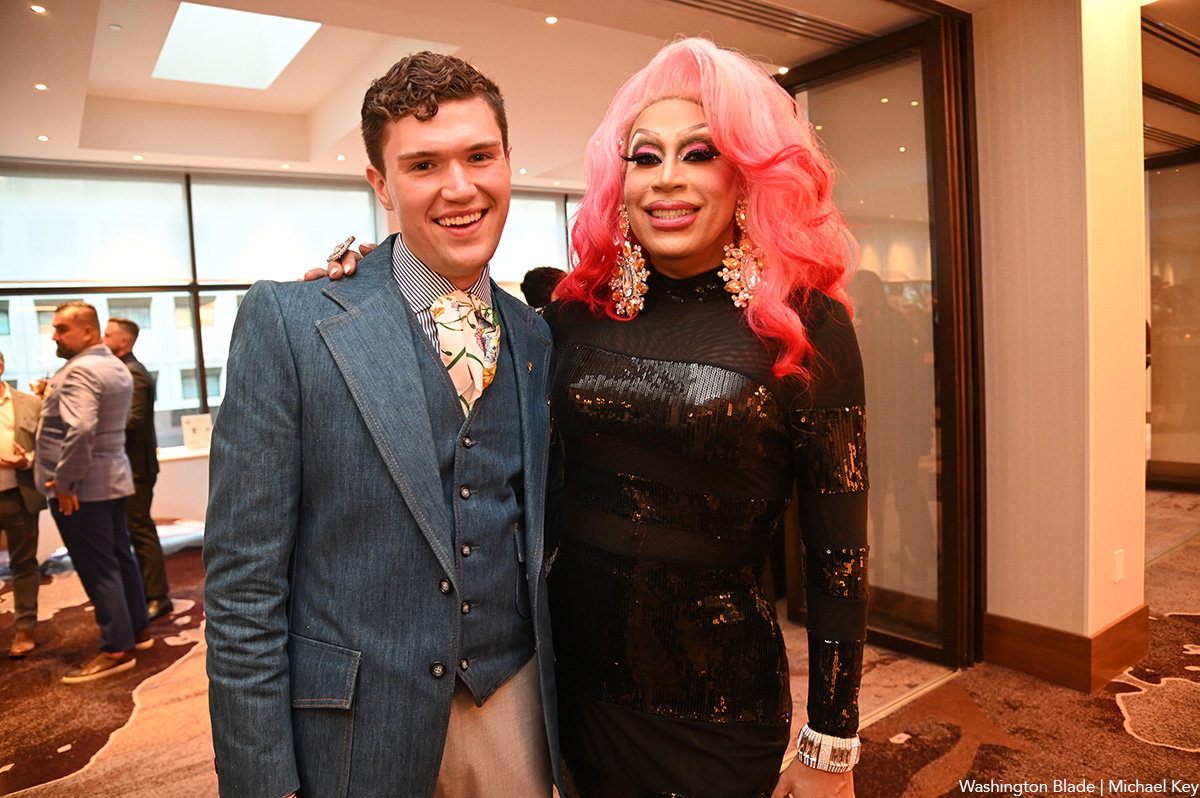
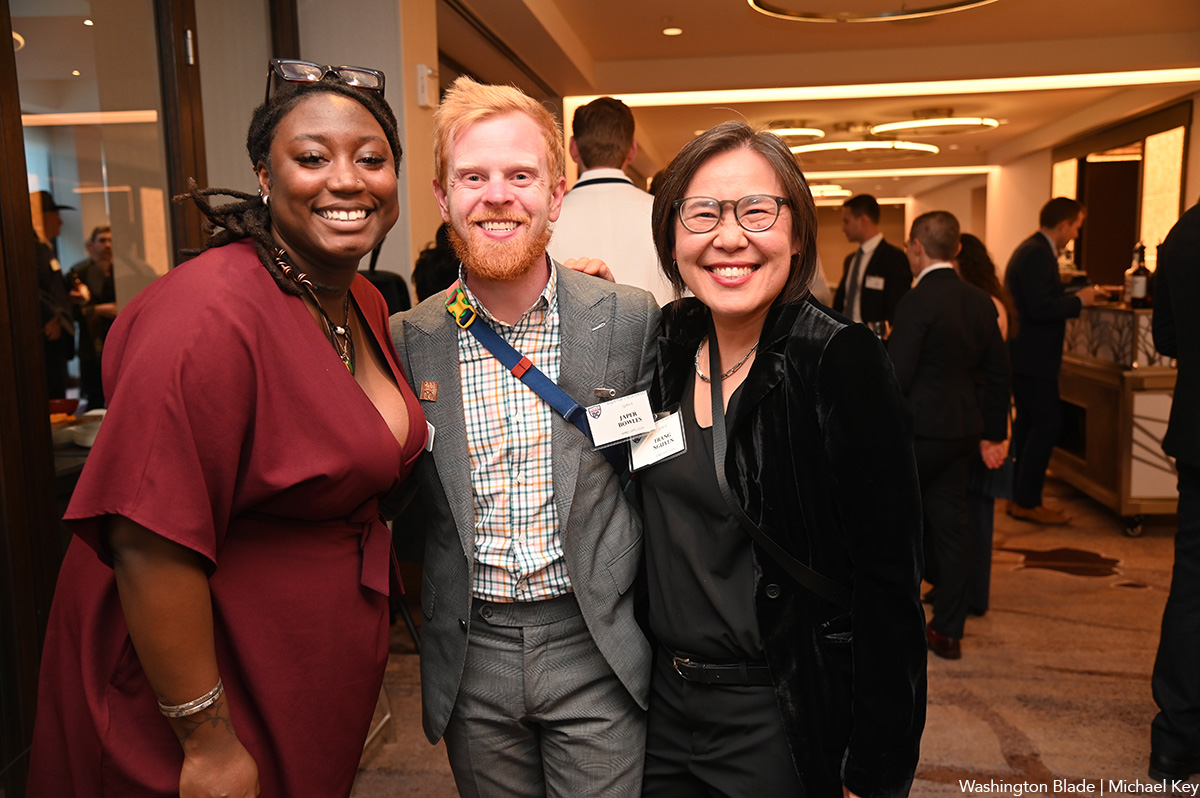

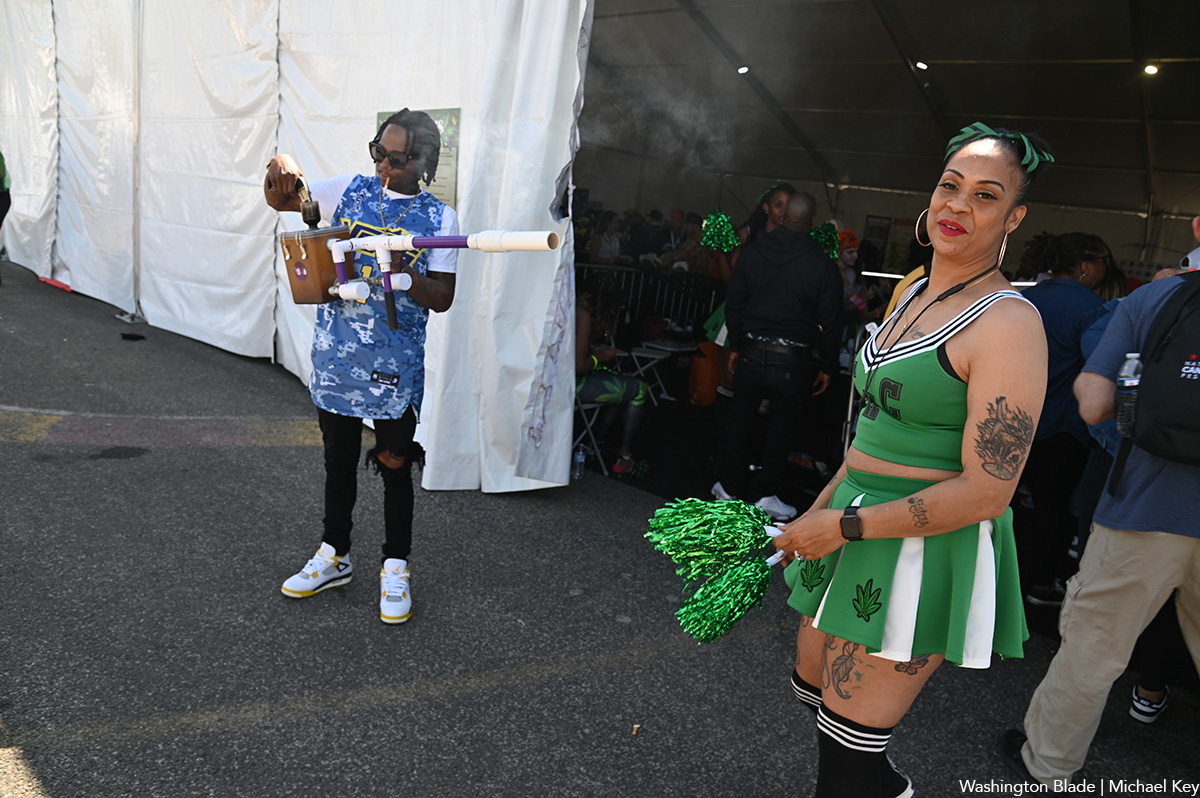
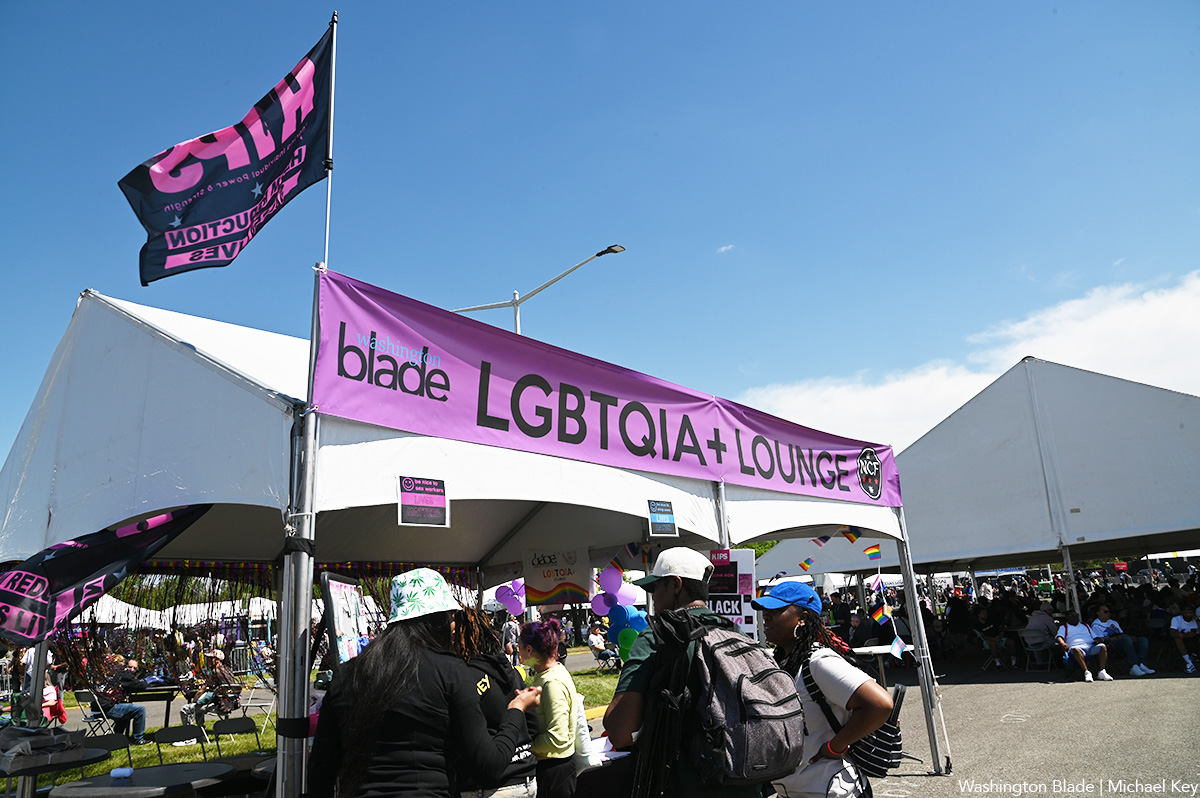
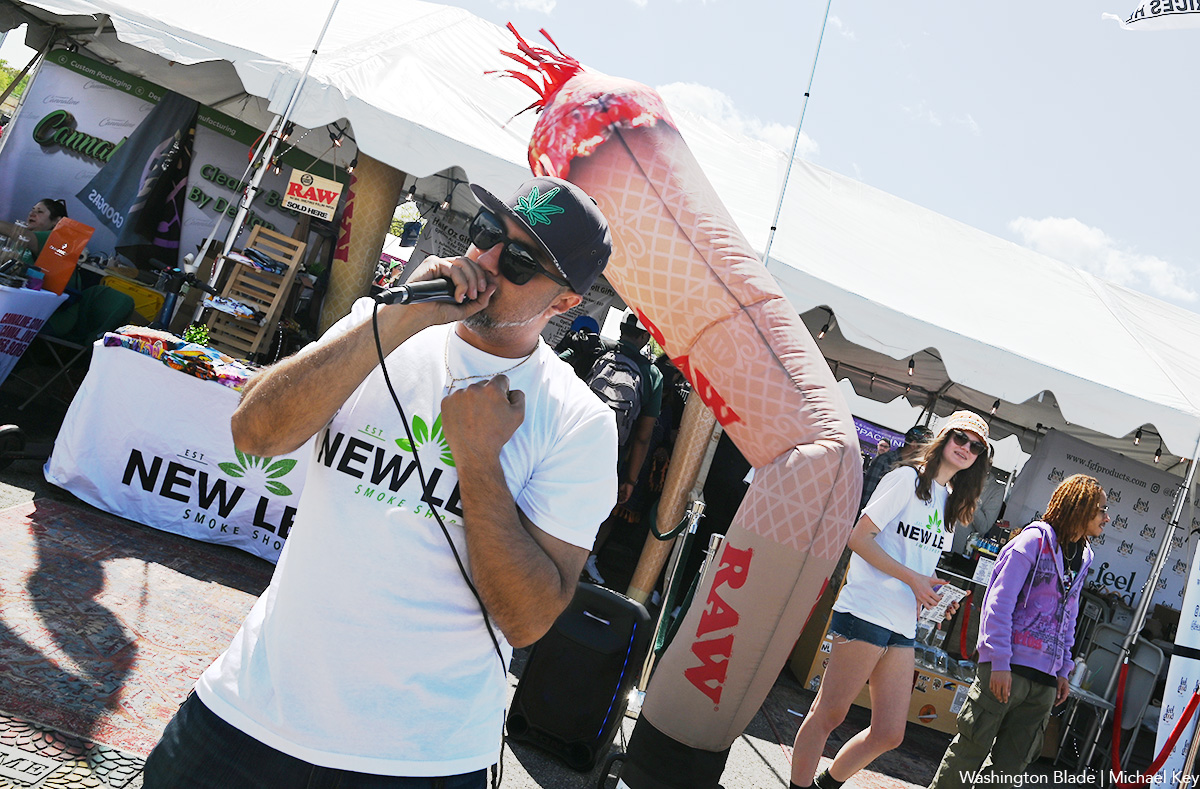
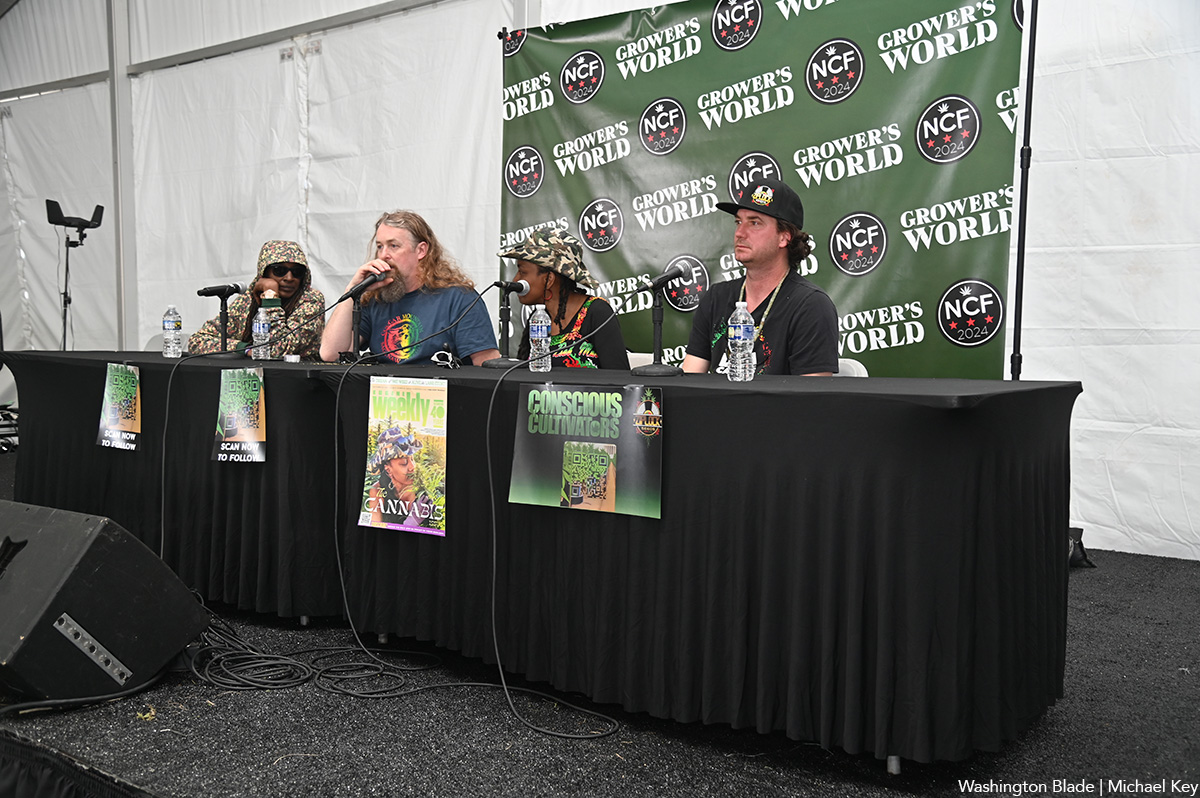
The 2024 National Cannabis Festival was held at the Fields at RFK Stadium on April 19-20.
(Washington Blade photos by Michael Key)
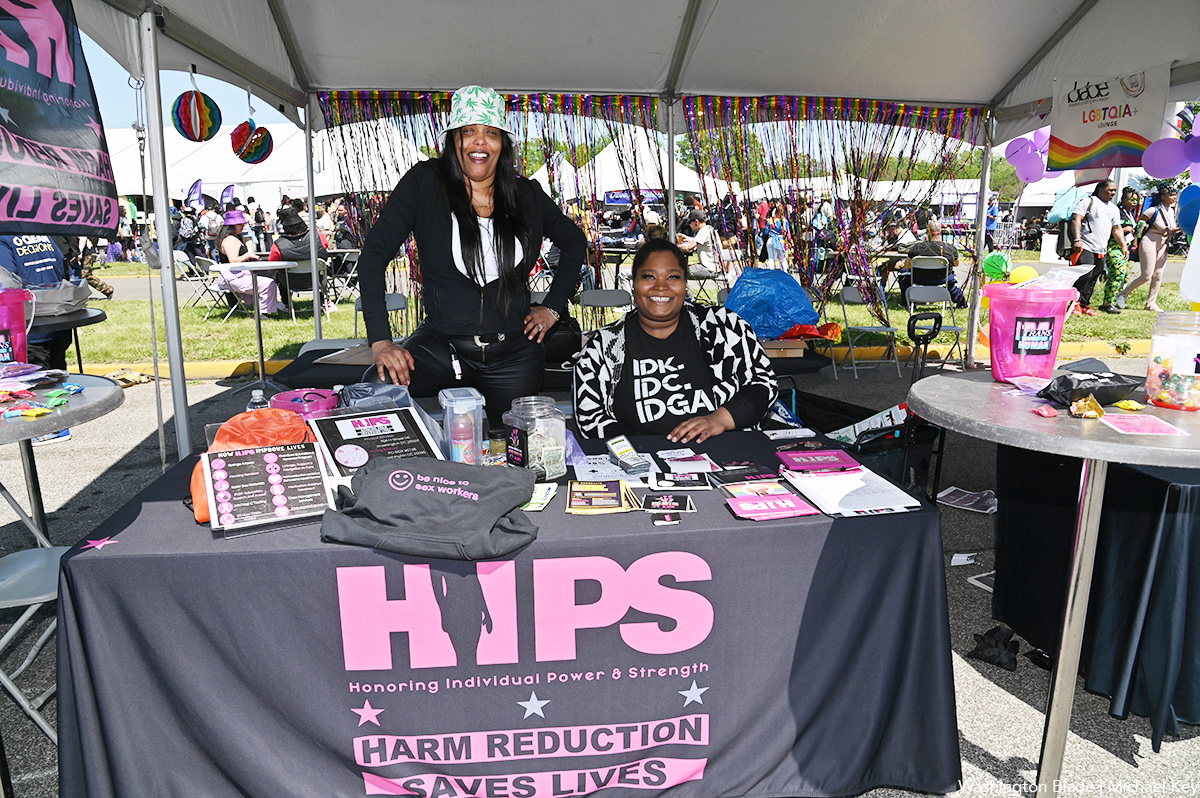
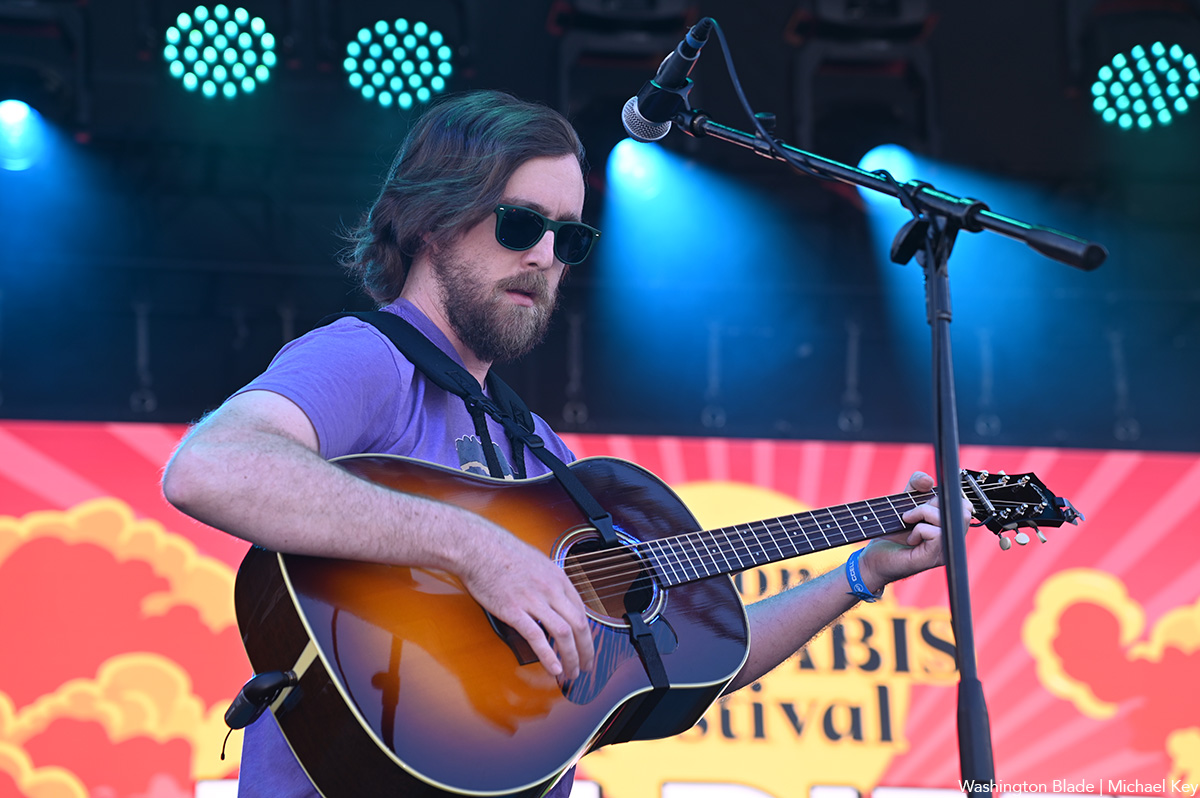
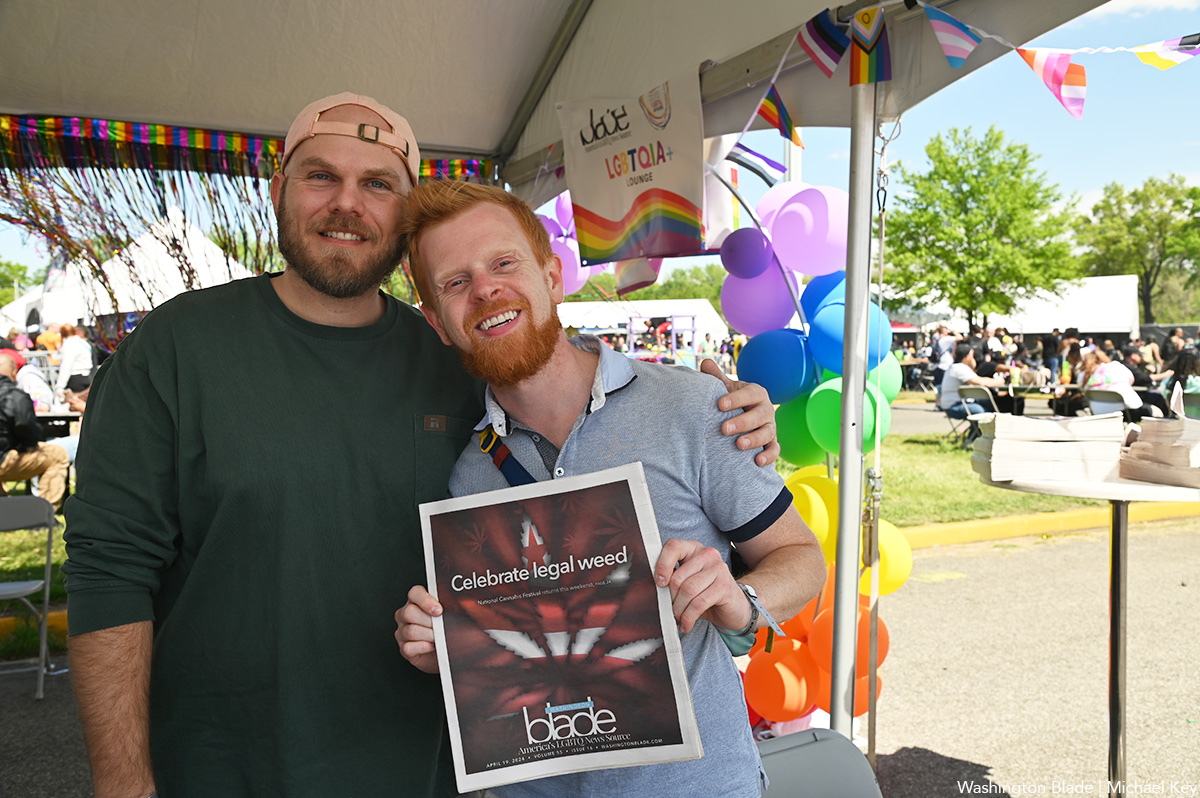



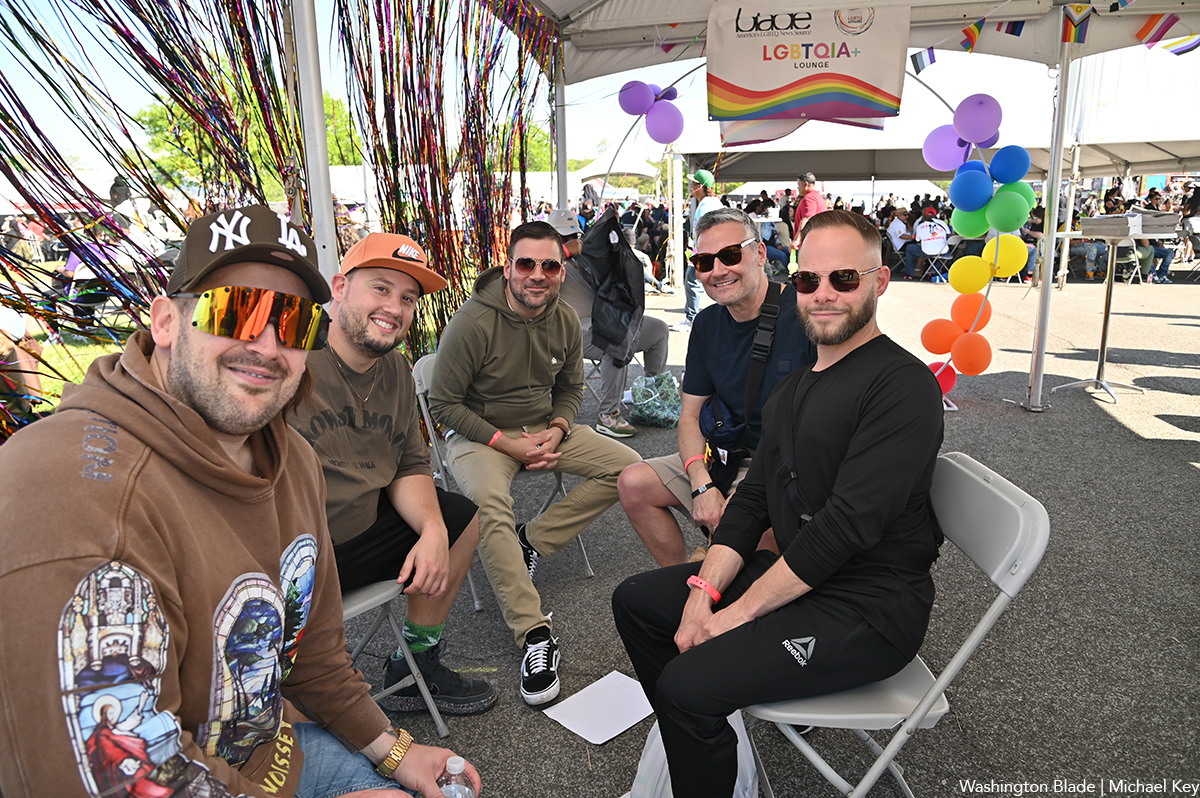
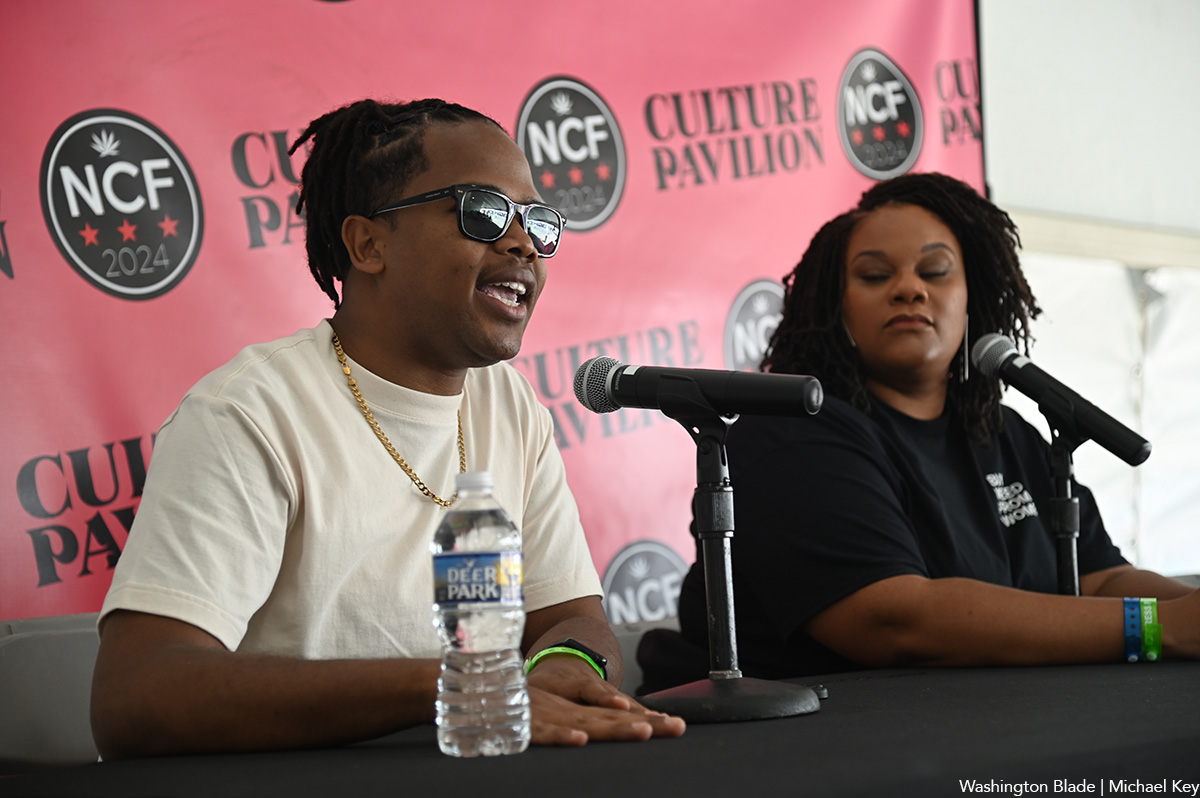
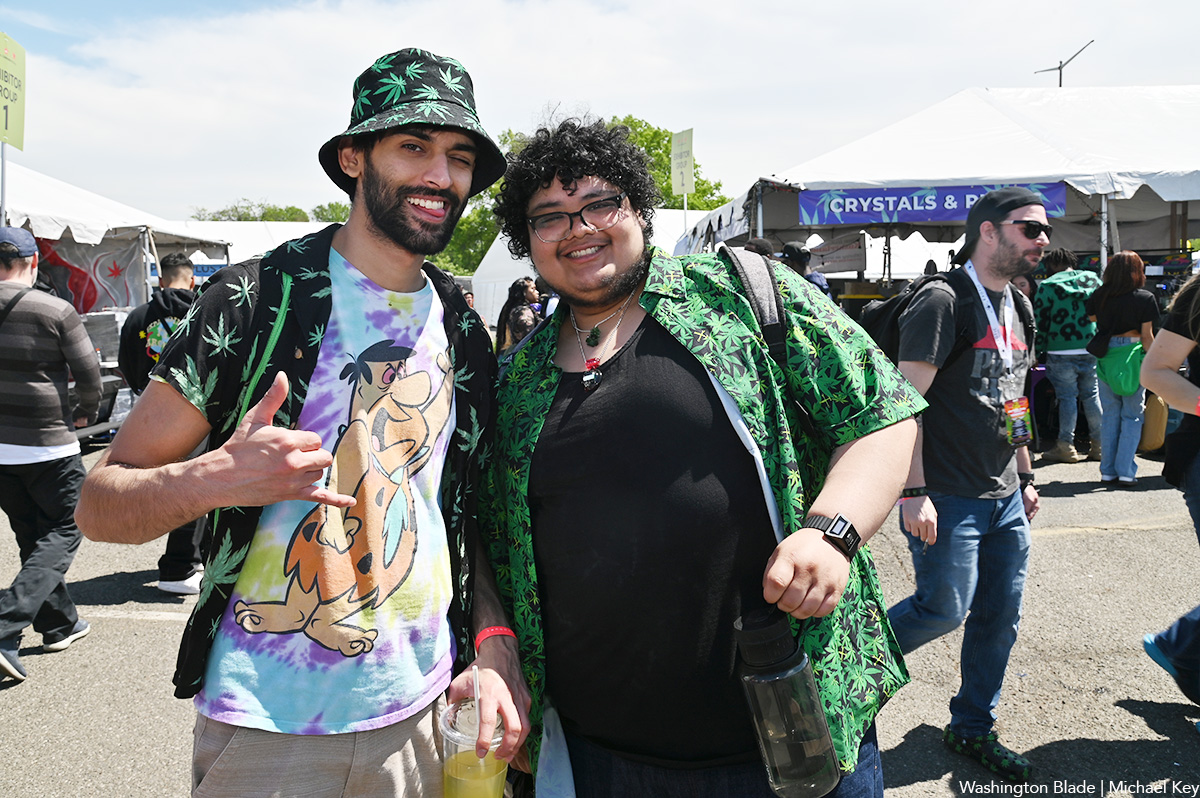
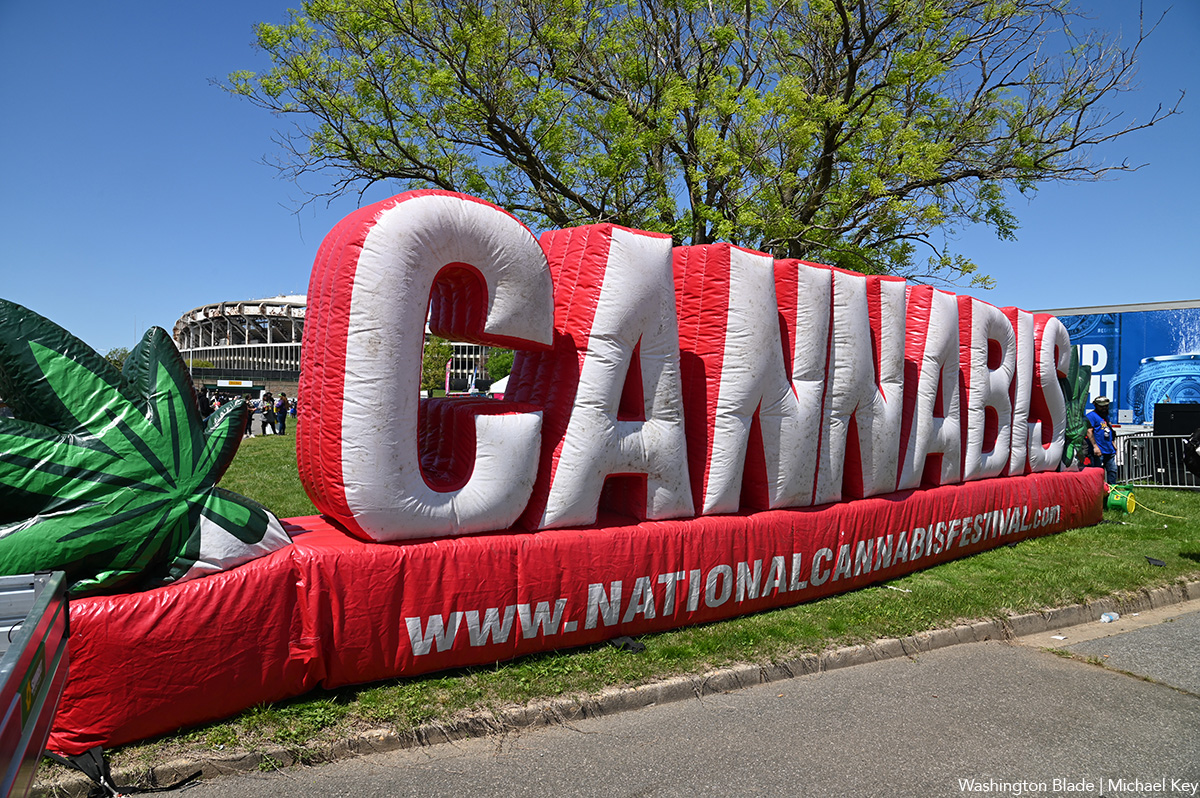

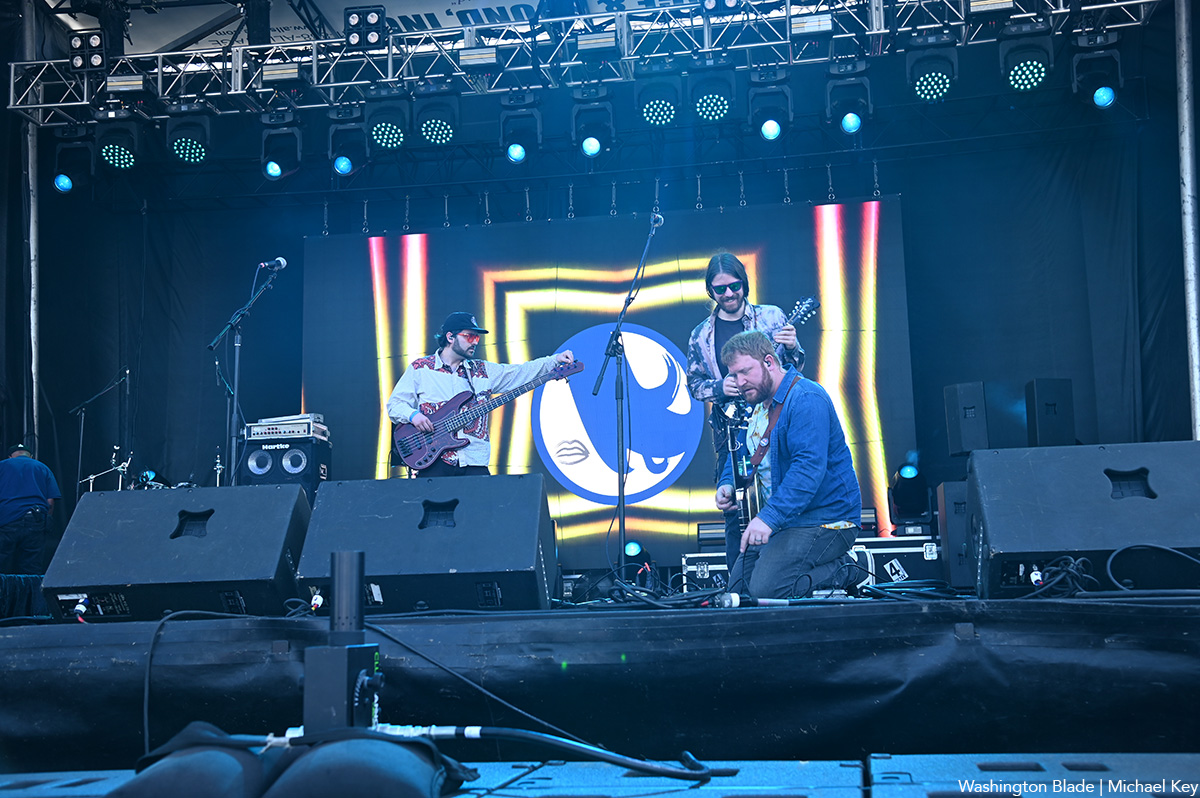
Covering the @NatlCannaFest at RFK Stadium for @WashBlade . Stop by the LGBTQ+ booth and pick up a paper if you are here. pic.twitter.com/is7hnsaPns
— Michael Patrick Key (@MichaelKeyWB) April 20, 2024
Theater
‘Amm(i)gone’ explores family, queerness, and faith
A ‘fully autobiographical’ work from out artist Adil Mansoor
‘Amm(i)gone’
Thorough May 12
Woolly Mammoth Theatre
641 D St., N.W.
$60-$70
Woollymammoth.net
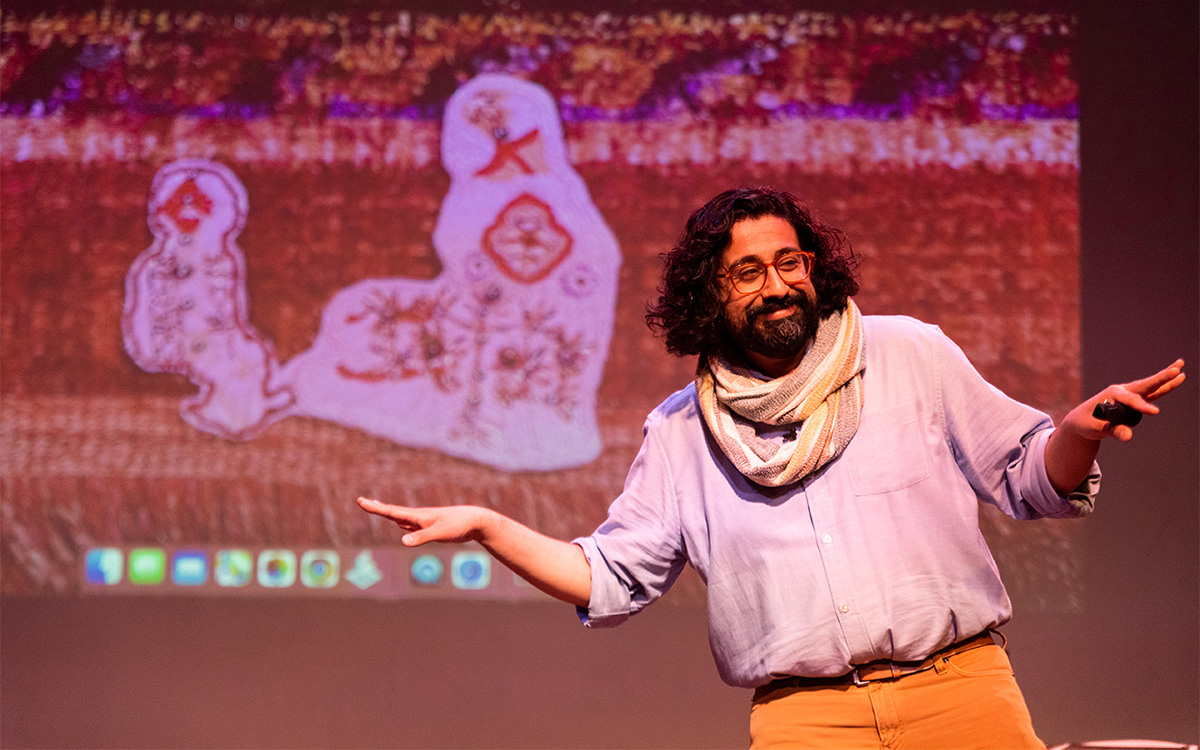
“Fully and utterly autobiographical.” That’s how Adil Mansoor describes “Amm(i)gone,” his one-man work currently playing at Woolly Mammoth Theatre.
Both created and performed by out artist Mansoor, it’s his story about inviting his Pakistani mother to translate Sophocles’s Greek tragedy “Antigone” into Urdu. Throughout the journey, there’s an exploration of family, queerness, and faith,as well as references to teachings from the Quran, and audio conversations with his Muslim mother.
Mansoor, 38, grew up in the suburbs of Chicago and is now based in Pittsburgh where he’s a busy theater maker. He’s also the founding member of Pittsburgh’s Hatch Arts Collective and the former artistic director of Dreams of Hope, an LGBTQ youth arts organization.
WASHINGTON BLADE: What spurred you to create “Amm(i)gone”?
ADIL MANSOOR: I was reading a translation of “Antigone” a few years back and found myself emotionally overwhelmed. A Theban princess buries her brother knowing it will cost her, her own life. It’s about a person for whom all aspirations are in the afterlife. And what does that do to the living when all of your hopes and dreams have to be reserved for the afterlife?
I found grant funding to pay my mom to do the translation. I wanted to engage in learning. I wanted to share theater but especially this ancient tragedy. My mother appreciated the characters were struggling between loving one another and their beliefs.
BLADE: Are you more director than actor?
MANSOOR: I’m primarily a director with an MFA in directing from Carnegie Mellon. I wrote, directed, and performed in this show, and had been working on it for four years. I’ve done different versions including Zoom. Woolly’s is a new production with the same team who’ve been involved since the beginning.
I love solo performance. I’ve produced and now teach solo performance and believe in its power. And I definitely lean toward “performance” and I haven’t “acted” since I was in college. I feel good on stage. I was a tour guide and do a lot of public speaking. I enjoy the attention.
BLADE: Describe your mom.
MANSOOR: My mom is a wonderfully devout Muslim, single mother, social worker who discovered my queerness on Google. And she prays for me.
She and I are similar, the way we look at things, the way we laugh. But different too. And those are among the questions I ask in this show. Our relationship is both beautiful and complicated.
BLADE: So, you weren’t exactly hiding your sexuality?
MANSOOR: In my mid-20s, I took time to talk with friends about our being queer with relation to our careers. My sexuality is essential to the work. As the artistic director at Dreams of Hope, part of the work was to model what it means to be public. If I’m in a room with queer and trans teenagers, part of what I’m doing is modeling queer adulthood. The way they see me in the world is part of what I’m putting out there. And I want that to be expansive and full.
So much of my work involves fundraising and being a face in schools. Being out is about making safe space for queer young folks.
BLADE: Have you encountered much Islamophobia?
MANSOOR: When 9/11 happened, I was a sophomore in high school, so yes. I faced a lot then and now. I’ve been egged on the street in the last four months. I see it in the classroom. It shows up in all sorts of ways.
BLADE: What prompted you to lead your creative life in Pittsburgh?
MANSOOR: I’ve been here for 14 years. I breathe with ease in Pittsburgh. The hills and the valleys and the rust of the city do something to me. It’s beautiful, it’ affordable, and there is support for local artists. There’s a lot of opportunity.
Still, the plan was to move to New York in September of 2020 but that was cancelled. Then the pandemic showed me that I could live in Pittsburgh and still have a nationally viable career.
BLADE: What are you trying to achieve with “Amm(i)gone”?
MANSOOR: What I’m sharing in the show is so very specific but I hear people from other backgrounds say I totally see my mom in that. My partner is Catholic and we share so much in relation to this.
I hope the work is embracing the fullness of queerness and how means so many things. And I hope the show makes audiences want to call their parents or squeeze their partners.

After Biden signs TikTok ban its CEO vows federal court battle

Malcolm Kenyatta could become the first LGBTQ statewide elected official in Pa.

Bowser budget proposal calls for $5.25 million for 2025 World Pride

White House debuts action plan targeting pollutants in drinking water

Health care for Marylanders with HIV is facing huge cuts this summer

Daniel Zamudio murderer’s parole request denied

State Department releases annual human rights report

‘Amm(i)gone’ explores family, queerness, and faith

Joe Vogel campaign holds ‘Big Gay Canvass Kickoff’