Health
Whitman-Walker preparing for ‘fiscal cliff’ cuts
‘Neighbors in Need’ hopes to raise more than $200,000 by Dec. 31
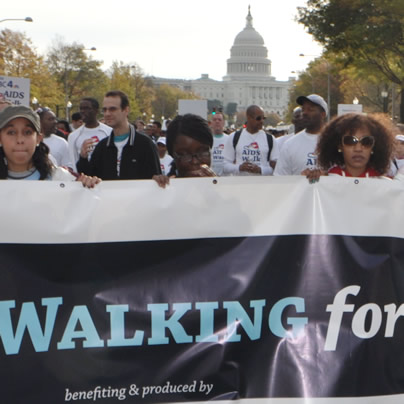
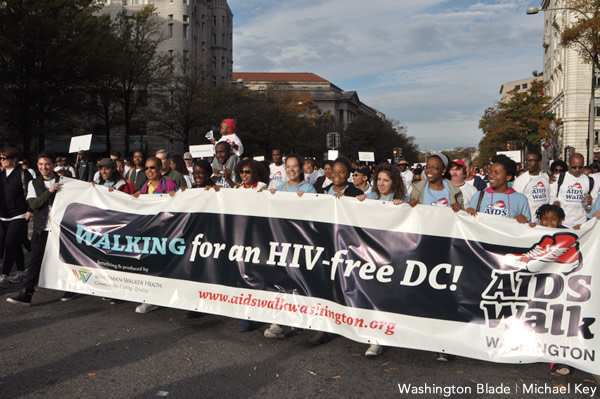
AIDS Walk 2012 (Washington Blade photo by Michael Key)
A D.C. HIV/AIDS service organization has launched a campaign designed to offset a potential decrease in federal funding if a deal is not reached by the end of the year to avoid the so-called “fiscal cliff.”
The Neighbors in Need Campaign Whitman-Walker Health launched earlier this month hopes to raise $200,000 by Dec. 31 to mitigate potential cuts to the slightly more than $3.1 million it receives in Ryan White Care Act funds for HIV/AIDS prevention efforts. Whitman-Walker also receives more than $200,000 in funding from grants, and the federal and district governments for its STD clinic, which is the largest in the city.
“It’s not this kind of mass appeal around Whitman-Walker, the sky is falling or any of that,” Don Blanchon, executive director of Whitman-Walker, told the Washington Blade in a Nov. 19 interview at his 14th Street, N.W., office. “It’s we have some things we know that won’t get covered long-term that are likely to get hit by any federal reduction, whether it’s the sequestration or if it’s some deal on the deficit long-term. But we’re just trying to get ahead of it. We’re trying to make a really good and strong appeal to people now.”
Whitman-Walker launched the campaign less than a month after the HIV/AIDS service organization held the 26th annual AIDS Walk Washington in downtown D.C.
The event, which Blanchon told the Blade he hopes will net $1 million by the end of the year, has raised slightly more than $900,000. Whitman-Walker’s 2012 budget is $26 million — Blanchon noted the organization has had a budgetary gain for three consecutive years.
“It’s the first time in years that we’ve had three consecutive years where we’ve had an operating gain,” he said. “The real issue is getting enough funding in through this appeal to help us start next year in a good place and be able to basically offset any of the reductions that may come from the feds.”
Whitman-Walker Director of Development David Chalfant sought to further personalize the campaign.
“This is a measured approach to making us secure on things we know could be in jeopardy,” he said. “We’re all community here in D.C. and we have to be a strong community to have good health to take care of each other. In addition to raising the money that we need to be secure, it’s about reminding each other that if your neighbor came and knocked on your door and asked you for something that was so easy for you to do, you wouldn’t shut your door on them. You’d help them. This campaign is that knock on your door asking you to do something you can easily do.”
As the Blade reported last month, more than an estimated 12,000 people with HIV/AIDS in the country could lose access to drugs and programs if Capitol Hill lawmakers and the White House fail to reach an agreement by Dec. 31 to avoid across-the-board spending cuts and tax increases under the Budget Control Act of 2011 that President Obama signed.
The AIDS Institute noted in a congressional letter that sequestration would cut funding to the CDC’s HIV prevention programs by $64 million, Ryan White-funded HIV/AIDS initiatives by $196 million, AIDS research programs at the National Institutes of Health by $251 million and the Housing Opportunities for People with AIDS by $27 million. These four federal HIV/AIDS programs would see a $538 million reduction if a deal is not reached.
The president met with House Speaker John Boehner (R-Ohio) and other congressional leaders at the White House on Nov. 16. They are scheduled to meet again after Thanksgiving.
Blanchon said he feels there is a 50 percent chance an agreement will not be reached before the deadline. Chalfant added Washingtonians will understand through the Neighbors in Need program that Whitman-Walker continues to provide quality care to those with HIV/AIDS.
“The quality costs real money and it costs money beyond any of the grants and funding relationships have,” he said. “The money we get from the community is what truly helps us give excellent care — providing a mentor to a newly diagnosed HIV-positive person to having a phone number call 24/7 and talk you out of a dark place or help explain something or whatever that may be. Those things cost real money and that’s what we’re asking our community to help pay for.”



Health
UNAIDS to commemorate Zero Discrimination Day’s 10th anniversary
UN agency urges global action to protect human rights

As the world marks the 10th anniversary of Zero Discrimination Day; UNAIDS is sounding the alarm on the increasing threats to human rights, calling for renewed efforts to protect the rights of all individuals as a fundamental step towards ensuring health for everyone.
Established by UNAIDS a decade ago, Zero Discrimination Day aims to promote equality and fairness regardless of gender, age, sexuality, ethnicity or HIV status. The progress achieved over the past years is now in jeopardy, however, due to rising attacks on the rights of women, LGBTQ people and other marginalized communities.
UNAIDS Executive Director Winnie Byanyima emphasized the critical link between protecting human rights and safeguarding public health.
“The attacks on rights are a threat to freedom and democracy and are harmful to health,” she said in a press release. “Stigma and discrimination obstruct HIV prevention, testing, treatment and care and hold back progress towards ending AIDS by 2030. It is only by protecting everyone’s rights that we can protect everyone’s health.”
Despite challenges, there has been notable progress.
At the onset of the AIDS pandemic more than 40 years ago, two-thirds of countries criminalized consensual same-sex sexual relations. They are now decriminalized in two-thirds of countries. An additional 38 countries around the world have pledged to end HIV-related stigma and discrimination, contributing to positive changes that include 50 million more girls attending school compared to 2015.
To sustain and enhance these advancements; UNAIDS urges global support for women’s rights movements, LGBTQ rights, racial justice, economic justice, climate justice and peace initiatives. By standing with communities advocating for their rights, the U.N. aims to reinforce the collective effort towards a more inclusive and equitable world.
Zero Discrimination Day is observed on March 1.
Events and activities that will take place around the world throughout the month will serve as reminders of the essential lesson and call to action: Protecting everyone’s health is synonymous with protecting everyone’s rights.
“Through upholding rights for all, we will be able to achieve the Sustainable Development Goals and secure a safer, fairer, kinder and happier world — for everyone,” said Byanyima.
Health
New CDC report finds transgender women at higher risk for HIV
More than 1,600 people in seven cities surveyed
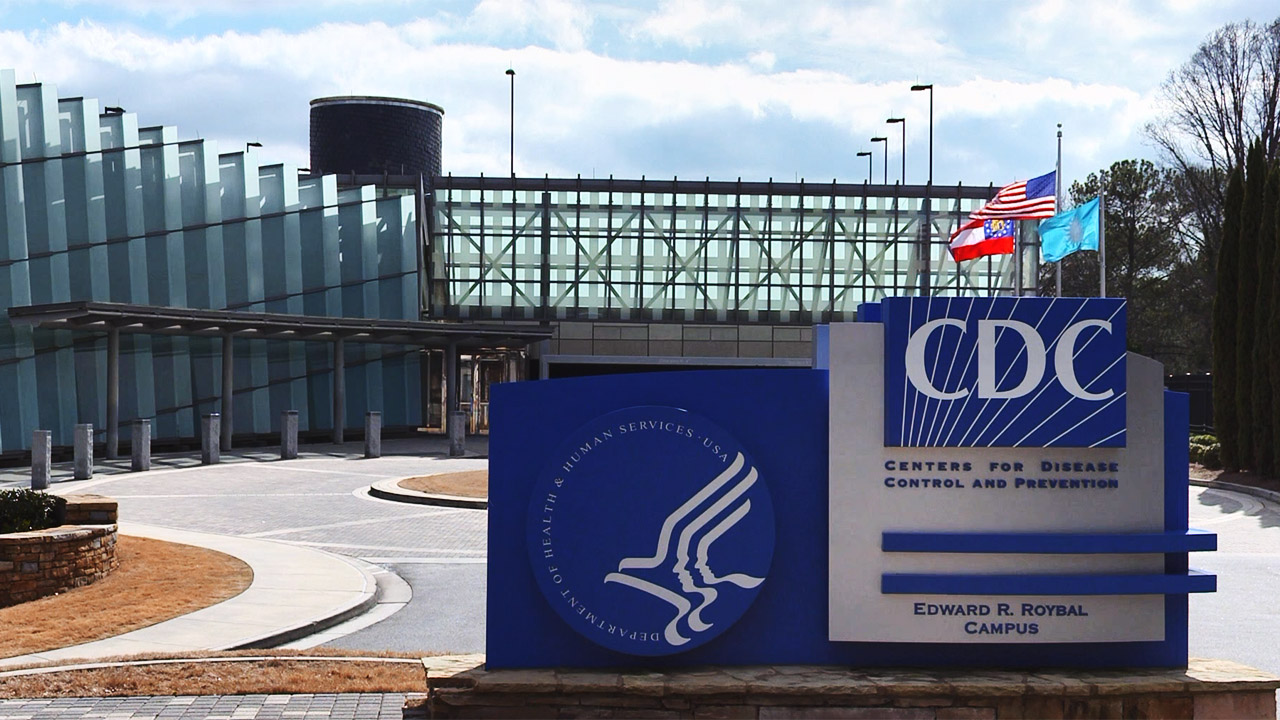
The Centers for Disease Control and Prevention issued a new study report this week that revealed that restricted by employment and housing discrimination and lack of access to needed gender-affirming healthcare for transgender women increasing the risk of contracting HIV.
Researchers reviewed data from a 2019-2020 survey, the National HIV Behavioral Surveillance Among Transgender Women, which found that the demographics of HIV/AIDS have been disproportionally high, especially among Black and Latina trans women, who had experienced employment and housing discrimination coupled with lack of access to gender-affirming healthcare.
The Jan. 25 Morbidity and Mortality Weekly Report was based on data studies of more than 1,600 trans women in seven major urban locales. Participants from Atlanta, Los Angeles, New Orleans, New York, Philadelphia, San Francisco and Seattle were chosen by referrals from people and community-based organizations who knew or were part of the local population of trans women.
The study’s researchers noted: “Employment discrimination occurs at the overlapping nexus of poverty, homelessness, incarceration, health insurance, disability, food insecurity and survival sex work. These issues are interconnected.”
The study stated that trans women’s inability to access quality healthcare, including gender-affirming treatment or access to PrEP, and can expose them to potential incarceration as many turn to “survival sex work” and violence, which increases the risk of contracting HIV.
The study’s author’s pointed out: “When economically marginalized transgender women are refused employment, this refusal cyclically contributes to economic hardships. This analysis …demonstrates the importance of transgender women working and living with dignity and without fear of unfair treatment.”
Health
A Whole New Perspective on Well-Being
The Mather’s team recognizes that everyone’s wellness journey is completely unique to their life experiences and influences.

It’s easy to spot the distinctive, elegant silhouette of The Mather, a Life Plan Community for those 62+ opening this spring in Tysons, Virginia. What is not apparent to the naked eye is The Mather’s unique wellness philosophy, which is literally built into the community.
The Mather’s team recognizes that everyone’s wellness journey is completely unique to their life experiences and influences.
Nature is one of the important factors that contribute to well-being. So The Mather is incorporating biophilic design—a design approach to facilitate access to nature or things that replicate natural patterns. This can include interior spaces with sightlines to a garden, choosing natural wood and stone as interior materials, or incorporating fragrant flowers and plants indoors to spark memories and provide tactile opportunities such as gardening.

“Providing biophilic design within interior settings connects residents to the natural world,” says Mary Leary, CEO and President of Mather, the organization behind The Mather. “Research shows that a connection to nature provides positive benefits to mental states and overall well-being. At The Mather, biophilic design is the intersection of buildings and programs with nature in an urban setting.”
“The Mather is attracting a diverse group of older adults,” says Mary. “As a result, we aim to incorporate wellness practices from around the world, including Wyda movement theory of the Celtic Druids, which helps people achieve harmony with nature and contentment through mindfulness.” This holistic regenerative approach is similar to Qi Gong and yoga, while born in a different part of the world. Mather Institute has a special focus on mindfulness to support older adults’ practice of present moment awareness, which can lead to increased overall well-being, compassion, and joy.
A very different example of a wellness offering at The Mather is the Gharieni Welnamis spa wave bed, which uses computer-controlled vibrational therapy and audio frequencies to train the brain to relax. “The bed increases mindfulness, concentration, and creativity—all of which support our mission of creating Ways to Age Well,SM” says Mary.
These and other personalized ways to wellness will ensure that residents of The Mather can choose from seemingly countless ways to focus on their well-being. In other words, the sky’s the limit!

After Biden signs TikTok ban its CEO vows federal court battle

Malcolm Kenyatta could become the first LGBTQ statewide elected official in Pa.

Bowser budget proposal calls for $5.25 million for 2025 World Pride

White House debuts action plan targeting pollutants in drinking water

Health care for Marylanders with HIV is facing huge cuts this summer

Daniel Zamudio murderer’s parole request denied

State Department releases annual human rights report

‘Amm(i)gone’ explores family, queerness, and faith

Joe Vogel campaign holds ‘Big Gay Canvass Kickoff’