
Arts & Entertainment
Reimagining ‘Les Miz’
Screen adaptation of Broadway warhorse flawed but worthy


Anne Hathaway in a scene from ‘Les Miserables.’ (Photo courtesy of Universal Studios)
By the time the credits roll on Tom Hooper’s cinematic adaptation of the stage musical “Les Misérables,” the audience is well acquainted with every inch of Hugh Jackman’s face.
Sometimes, that’s a good thing. You hear every word plainly and you share every emotion that passes across that expressive face. But the obsessive close-ups highlight the melodramatic aspects of the story and downplay the complex web of relationships and themes that structure the source material.
The movie adaptation is based on the sprawling 1862 novel by Victor Hugo, via the incredibly popular 1987 musical version by Claude-Michel Schönberg, Alan Boublil and Herbert Kretzmer. The screenplay, which trims the material to two-and-a-half hours, is by William Nicholson. It’s essentially the story of Jean Valjean, an ex-convict who spent 19 years in prison for stealing a loaf of bread to feed his sister’s starving children.
Newcomer Samantha Banks as Éponine is the standout performer of the all-star ensemble cast. Her rendition of the new Broadway standard “On My Own” is deeply moving and beautifully delivered. Sung as the lovelorn Éponine wanders the rainy streets of Paris serving as a go-between for Marius and Cosette, the song is an example of Hooper’s work at its finest. The intimacy of the camera work matches the intimacy of the musical moment and the nuances of Banks’ fine acting.
On the opposite end of the emotional spectrum, Sacha Baron Cohen and Helena Bonham Carter bring some badly needed comic relief to the movie as the cynical Thénardiers. “Master of the House,” a comic inventory of the many ways they fleece their unwary guests, is a delightful counterpoint to the otherwise earnest proceedings. Their highly effective performances flesh out both the couple’s considerable charm and their significant menace.
The three leads (Hugh Jackman as Jean Valjean, Russell Crowe as Javert and Anne Hathaway as Fantine) also offer strong performances, but their impact is lessened to various degrees by their limitations as performers and by Hooper’s work as director. Hooper made movie musical history by having the actors sing live on the set instead of lip-synching to a pre-recorded soundtrack. This often brings an emotional intensity to the material, but sometimes undermines the musical demands of Schönberg’s intricate and complicated score.
For example, Crowe subtly humanizes Javert, capturing his stern ruthlessness as well as his profound belief in how human and divine justice interact in an orderly society. Hooper highlights these moments with some stunning cinematography: Javert’s duel with Valjean in the thrilling “Confrontation” at Fantine’s deathbed, his unfeeling horseback rides among the poor of Paris and especially his delivery of “Stars” while pacing on the ramparts high above the city.
But there’s a critical problem with his vocal performance as Javert. While Crowe has a pleasant singing voice (he’s been the lead singer for several bands), he’s not the Broadway belter the role requires. He has pitch and rhythm problems in the opening scenes and in his big solo numbers, his vocal performances fall flat. This robs his excellent work of much of its power. These problems could probably have been worked out in the studio, possibly even with the discreet use of some dubbing.
Hathaway’s performance of the iconic “I Dreamed A Dream” brings out the considerable pathos of the number, but misses the larger dramatic point. Hathaway has an unexpectedly powerful singing voice that matches her rich talents as an actor, but Hooper lets her get lost in the melodrama of the moment, missing the crucial spirit of defiance that underscores the number and propels Fantine into her final act of rebellion against her cruel fate.
Jackman offers a stirring performance as Jean Valjean. He rises to the vocal challenges of the role with apparent ease and resists the temptation to turn Valjean into a one-dimensional saint. Yet his fine performance is frequently undermined by Hooper’s relentless close-ups, which tear the character out of his cinematic context, and Hooper’s continually swirling cameras, which pull focus from Jackman’s extraordinary acting and singing.

Sports
Bisexual former umpire sues Major League Baseball for sexual harassment
Brandon Cooper claims female colleague sexually harassed him

A fired former umpire is suing Major League Baseball, claiming he was sexually harassed by a female umpire and discriminated against because of his gender and his sexual orientation.
Brandon Cooper worked in the minor league Arizona Complex League last year, and according to the lawsuit he filed Wednesday in federal court in Manhattan, he identifies as bisexual.
“I wanted my umpiring and ability to speak for itself and not to be labeled as ‘Brandon Cooper the bisexual umpire,’” he told Outsports. “I didn’t want to be labeled as something. It has been a passion of mine to simply make it to the Major Leagues.”
But that didn’t happen. Instead of being promoted, he was fired. His suit names MLB and an affiliated entity, PDL Blue, Inc., and alleges he had endured a hostile work environment and wrongful termination and/or retaliation because of gender and sexual orientation under New York State and New York City law.
“Historically the MLB has had a homogenous roster of umpires working in both the minor and major leagues,” Cooper claims in his suit. “Specifically, to date there has never been a woman who has worked in a (regular) season game played in the majors, and most umpires are still Caucasian men. To try to fix its gender and racial diversity issue, defendants have implemented an illegal diversity quota requiring that women be promoted regardless of merit.”
Cooper claims former umpire Ed Rapuano, now an umpire evaluator, and Darren Spagnardi, an umpire development supervisor, told him in January 2023 that MLB had a hiring quota, requiring that at least two women be among 10 new hires.
According to the suit, Cooper was assigned to spring training last year and was notified by the senior manager of umpire administration, Dusty Dellinger, that even though he received a high rating in June from former big league umpire Jim Reynolds, now an umpire supervisor, that women and minority candidates had to be hired first.
Cooper claims that upon learning Cooper was bisexual, fellow umpire Gina Quartararo insulted him and fellow umpire Kevin Bruno by using homophobic slurs and crude remarks. At that time, Quartararo and Cooper worked on the same umpiring crew and being evaluated for possible promotion to the big leagues.
This season, Quartararo is working as an umpire in the Florida State League, one of nine women who are working as minor league umpires.
Cooper said he notified Dellinger, but instead of taking action against Quartararo, he said MLB ordered Cooper to undergo sensitivity training. According to his lawsuit, he was also accused of violating the minor league anti-discrimination and harassment policy.
Cooper’s suit says he met with MLB Senior Vice President of Diversity, Equity and Inclusion Billy Bean — who the Los Angeles Blade reported in December is battling cancer.
The lawsuit says at that meeting, Bean told the umpire that Quartararo claimed she was the victim, as the only female umpire in the ACL. Cooper said he told Bean Quartararo regularly used homophobic slurs and at one point physically shoved him. He also claims that he has video evidence, texts and emails to prove his claim.
But he said his complaints to Major League Baseball officials were ignored. His lawsuit said MLB passed him over for the playoffs and fired him in October. He said of the 26 umpires hired with Cooper, he was the only one let go.
Through a spokesperson, MLB declined to comment on pending litigation. Quartararo has also not publicly commented on the lawsuit.
a&e features
Eastern Shore chef named James Beard Finalist
Harley Peet creates inventive food in an inclusive space
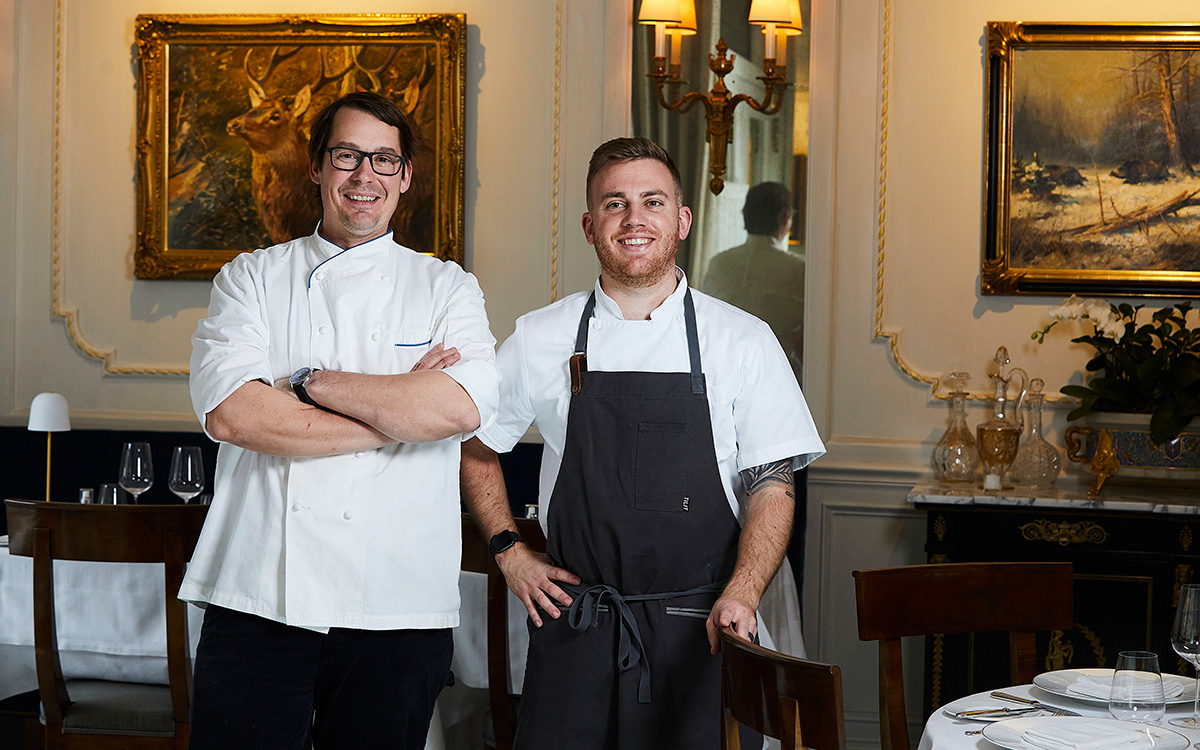
In a small Eastern Shore town filled with boutiques, galleries, and the occasional cry of waterfowl from the Chesapeake, Chef Harley Peet is most at home. In his Viennese-inflected, Maryland-sourced fine-dining destination Bas Rouge, Peet draws from his Northern Michigan upbringing, Culinary Institute of America education, and identity as a gay man, for inspiration.
And recently, Peet was named a James Beard Finalist for Best Chef: Mid-Atlantic – the first “Best Chef: Mid-Atlantic” finalist representing the Eastern Shore.
Peet, after graduation from the Culinary Institute of America, took a position as sous chef at Tilghman Island Inn, not far from Bas Rouge. Falling in love with the Eastern Shore, he continued his passion for racing sailboats, boating, gardening, and fishing, and living his somewhat pastoral life as he opened Bas Rouge in 2016 as head chef, a restaurant part of the Bluepoint Hospitality group, which runs more than a dozen concepts in and around Easton, Md.
Coming from a rural area and being gay, Peet knew he had his work cut out for him. He was always aware that the service and hospitality industry “can be down and dirty and rough.”
Now as a leader in the kitchen, he aims to “set a good example, and treat people how I want to be treated. I also want to make sure if you’re at our establishment, I’m the first to stand up and say something.”
The Bas Rouge cuisine, he says, is Contemporary European. “I’m inspired by old-world techniques of countries like Austria, Germany, and France, but I love putting a new spin on classic dishes and finding innovative ways to incorporate the bounty of local Chesapeake ingredients.”
His proudest dish: the humble-yet-elevated Wiener Schnitzel. “It is authentic to what one would expect to find in Vienna, down to the Lingonberries.” From his in-house bakery, Peet dries and grinds the housemade Kaiser-Semmel bread to use as the breadcrumbs.
Peet works to support the LGBTQ community inside and outside of the kitchen. “I love that our Bluepoint Hospitality team has created welcoming spaces where our patrons feel comfortable dining at each of our establishments. Our staff have a genuine respect for one another and work together free of judgment.”
Representing Bluepoint, Peet has participated in events like Chefs for Equality with the Human Rights Campaign, advocating for LGBTQ rights.
At Bas Rouge, Peet brings together his passion for inclusion steeped in a sustainability ethic. He sees environmental stewardship as a way of life. Peet and his husband have lived and worked on their own organic farm for several years. Through research in Europe, he learned about international marine sourcing. Witnessing the impacts of overfishing, Peet considers his own role in promoting eco-friendly practices at Bas Rouge. To that end, he ensures responsible sourcing commitments through his purveyors, relationships that have helped create significant change in how people dine in Easton.
“I have built great relationships in the community and there’s nothing better than one of our long-standing purveyors stopping in with a cooler of fresh fish from the Chesapeake Bay. This goes especially for catching and plating the invasive blue catfish species, which helps control the species’ threat to the local ecosystem.
Through his kitchen exploits, Peet expressed a unique connection to another gay icon in a rural fine-dining restaurant: Patrick O’Connell, of three Michelin starred Inn at Little Washington. In fact, Peet’s husband helped design some of O’Connell’s kitchen spaces. They’ve both been able to navigate treacherous restaurant-industry waters, and have come out triumphant and celebrated. Of O’Connell, Peet says that he “sees [his restaurants] as canvas, all artistry, he sees this as every night is a show.” But at the same time, his “judgment-free space makes him a role model.”
Being in Easton itself is not without challenges. Sourcing is a challenge, having to either fly or ship in ingredients, whereas urban restaurants have the benefit of trucking, he says. The small town “is romantic and charming,” but logistics are difficult – one of the reasons that Peet ensures his team is diverse, building in different viewpoints, and also “making things a hell of a lot more fun.”
Reflecting on challenges and finding (and creating) space on the Eastern Shore, Peet confirmed how important it was to surround himself with people who set a good example, and “if you don’t like the way something is going … move on.”
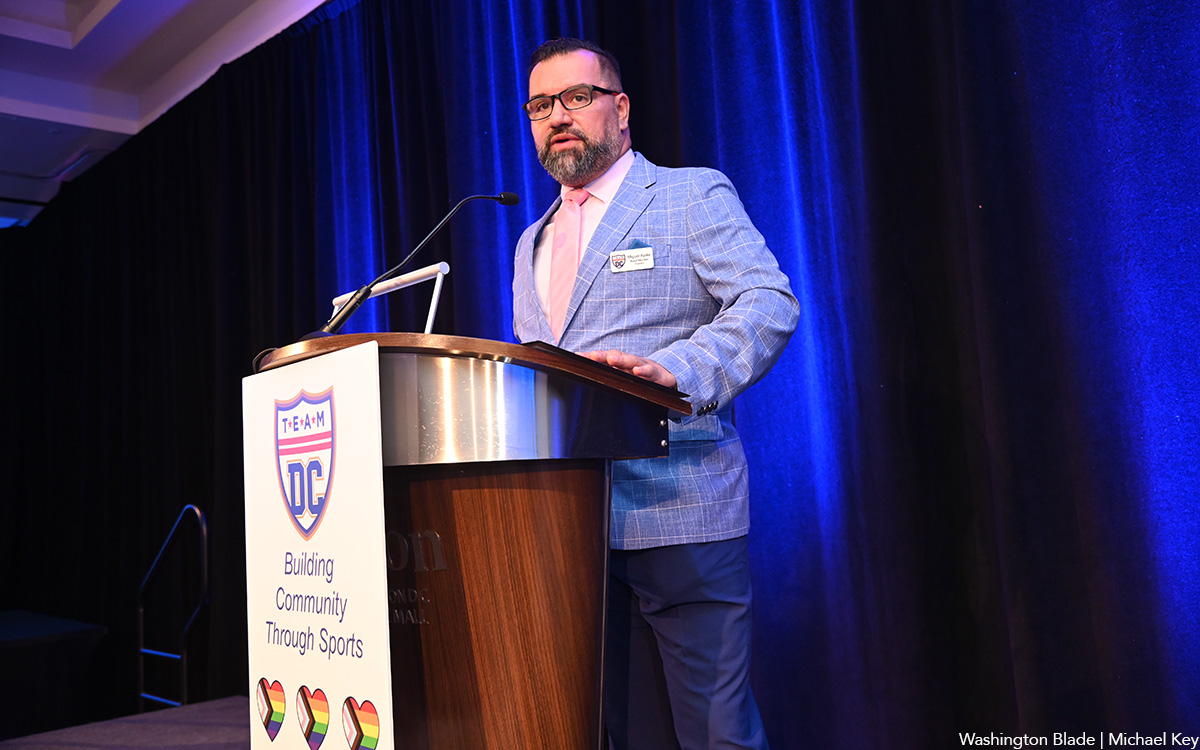
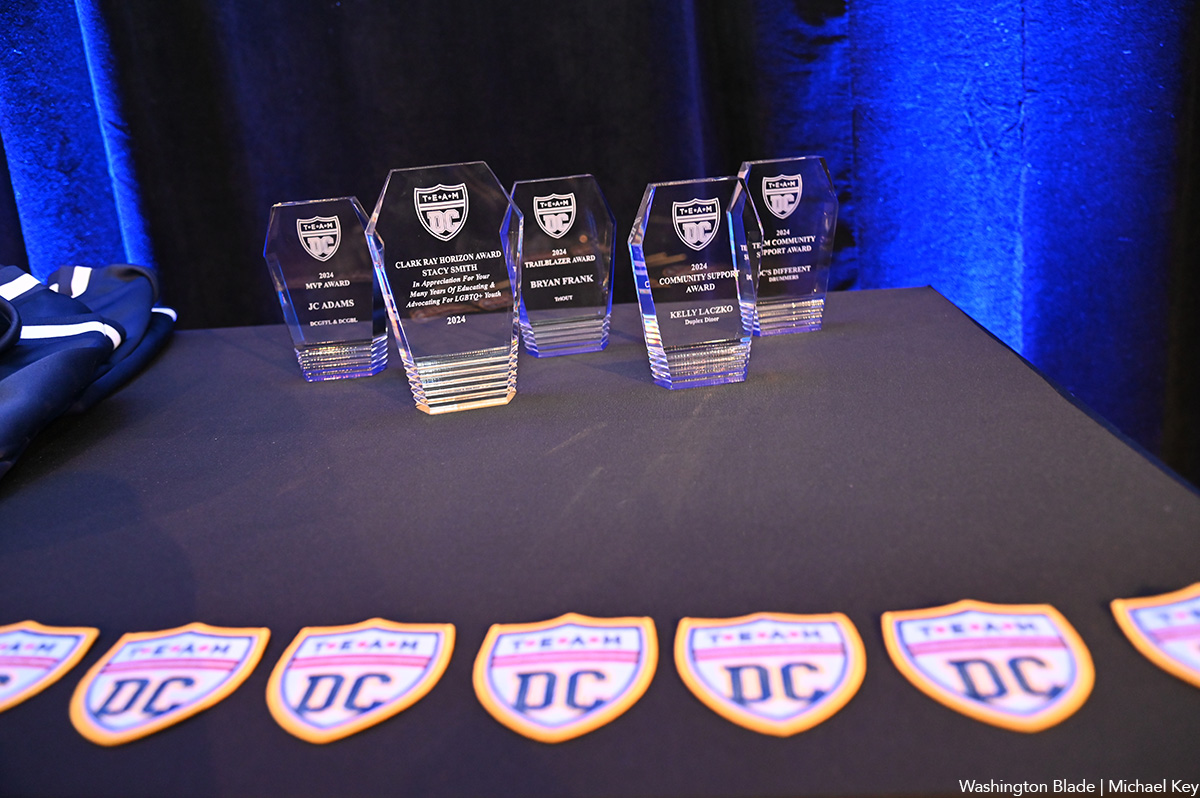
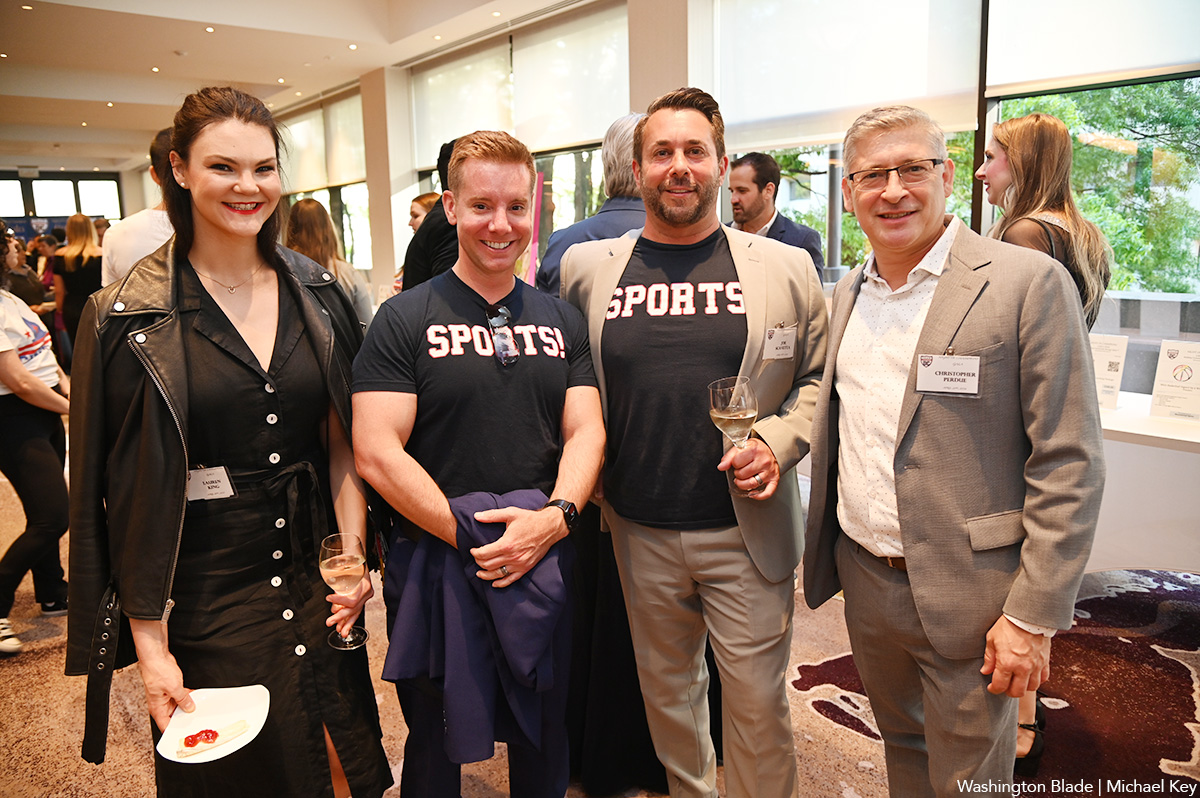
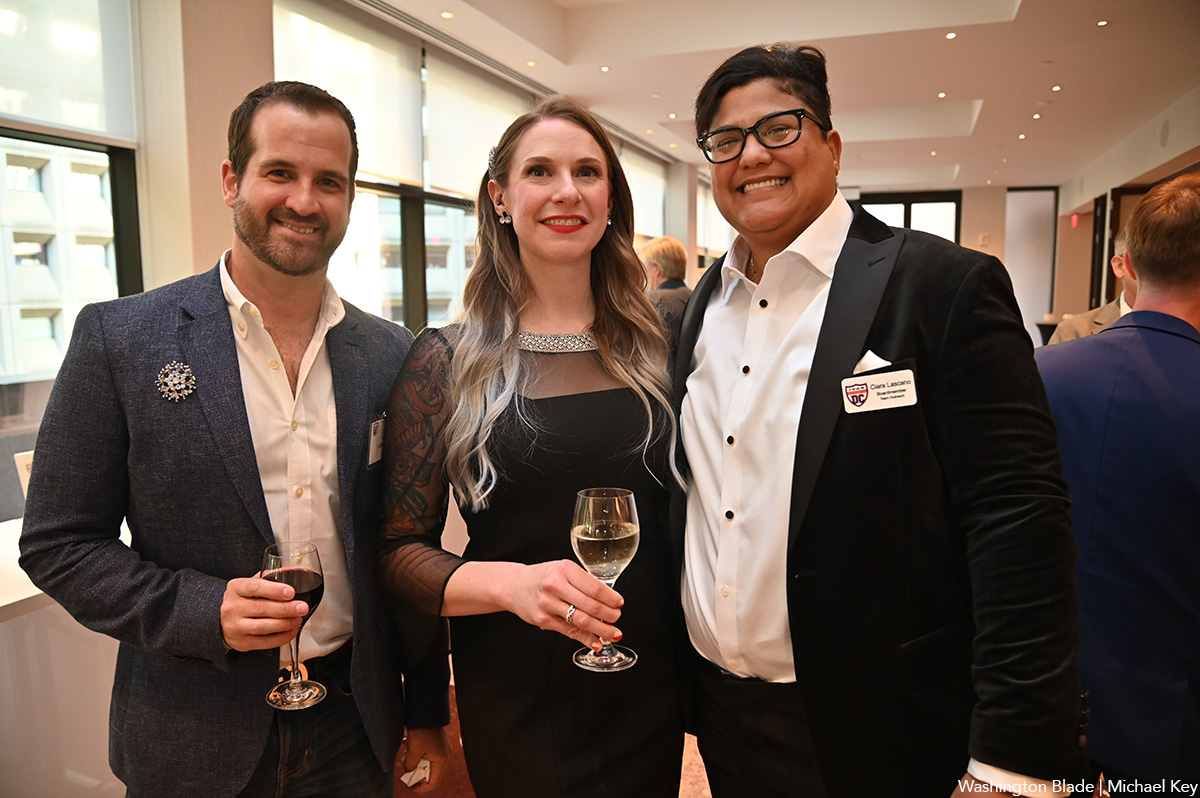
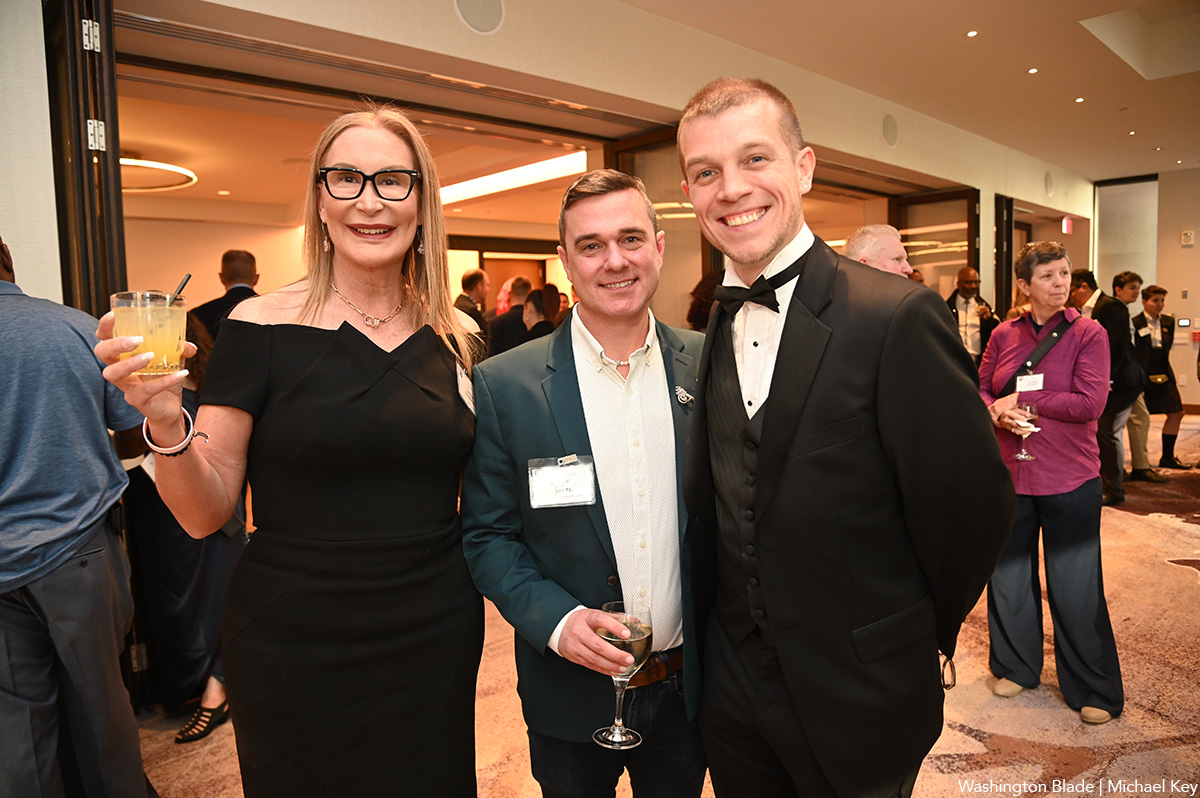
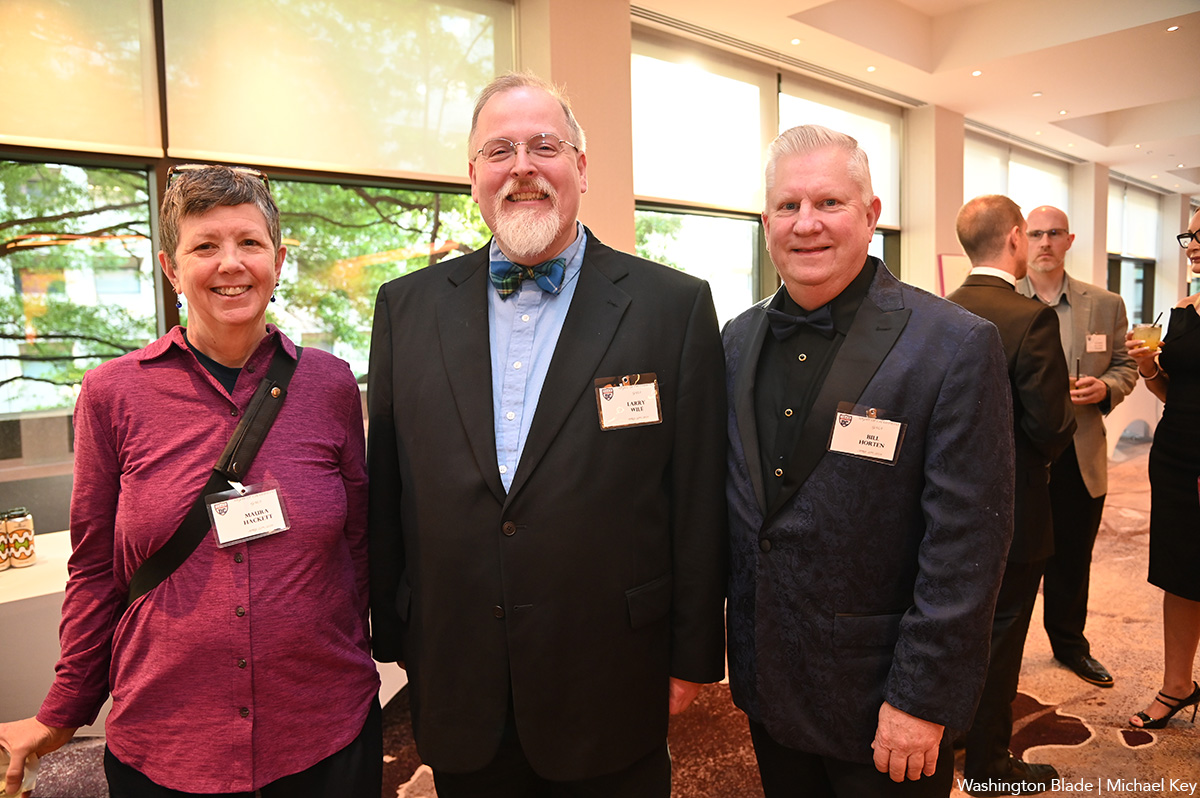
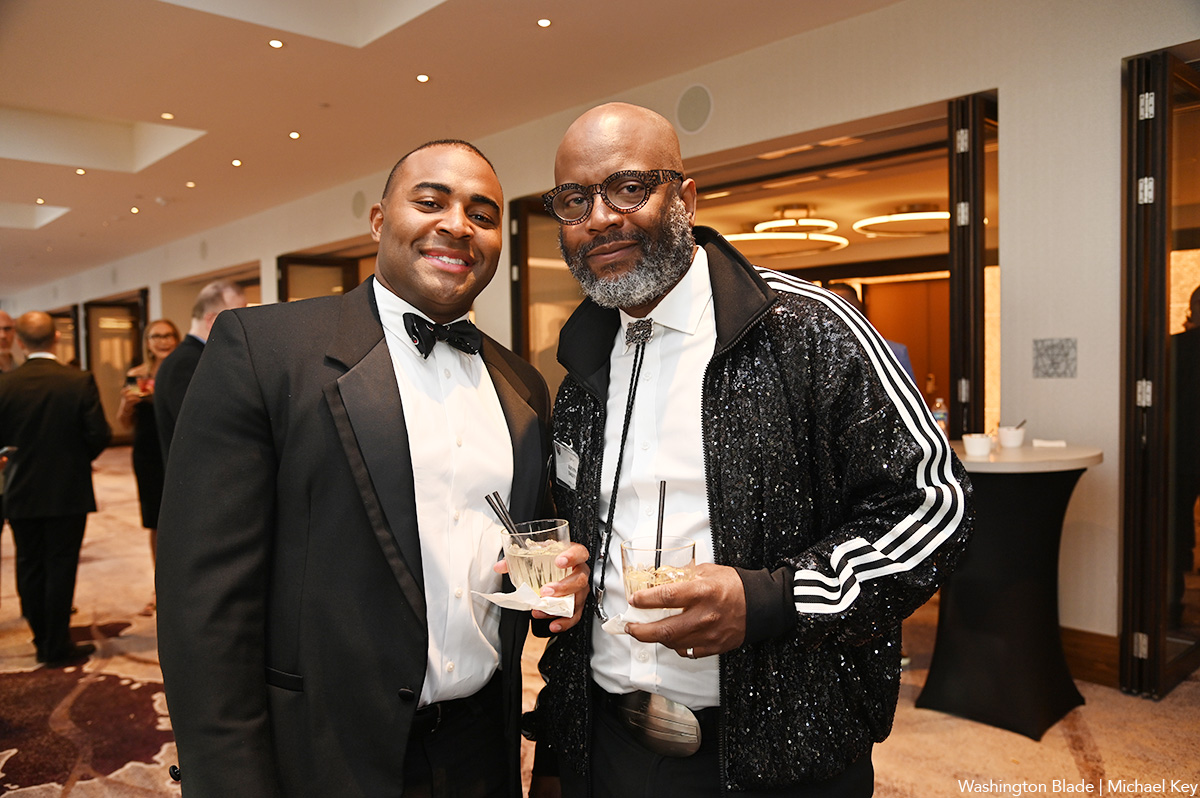
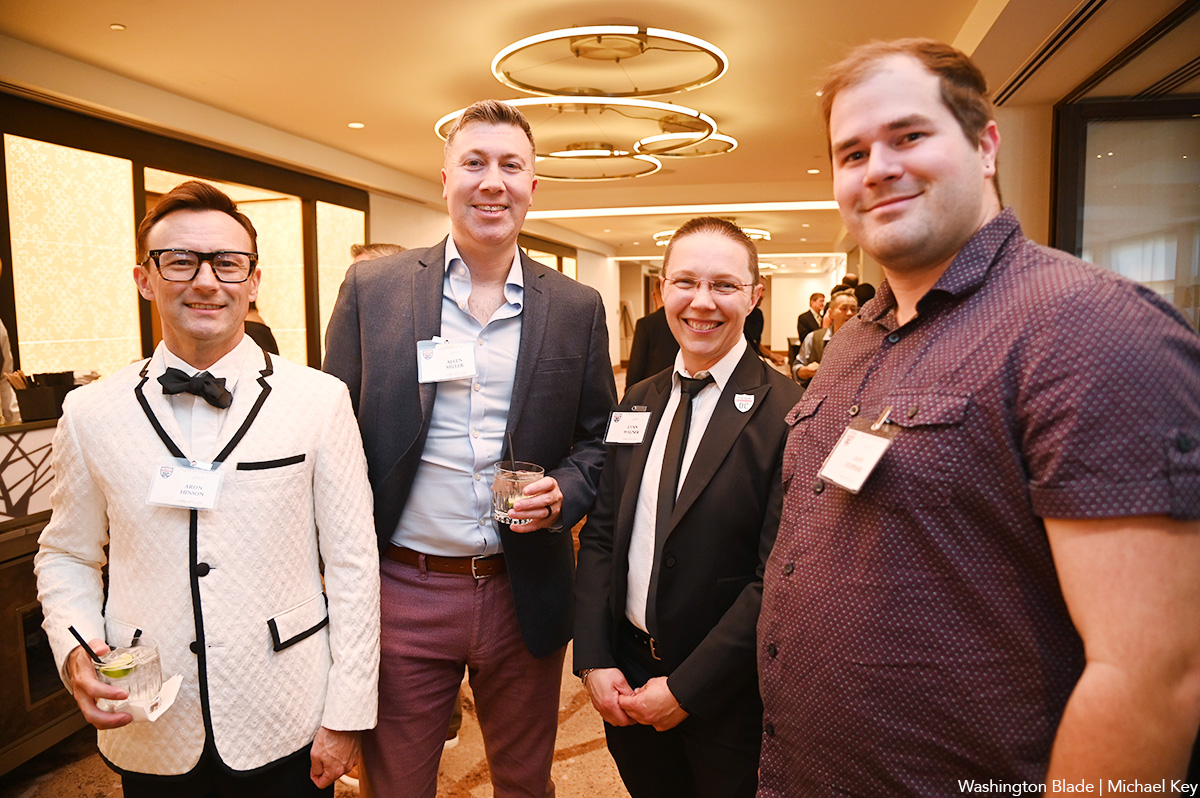
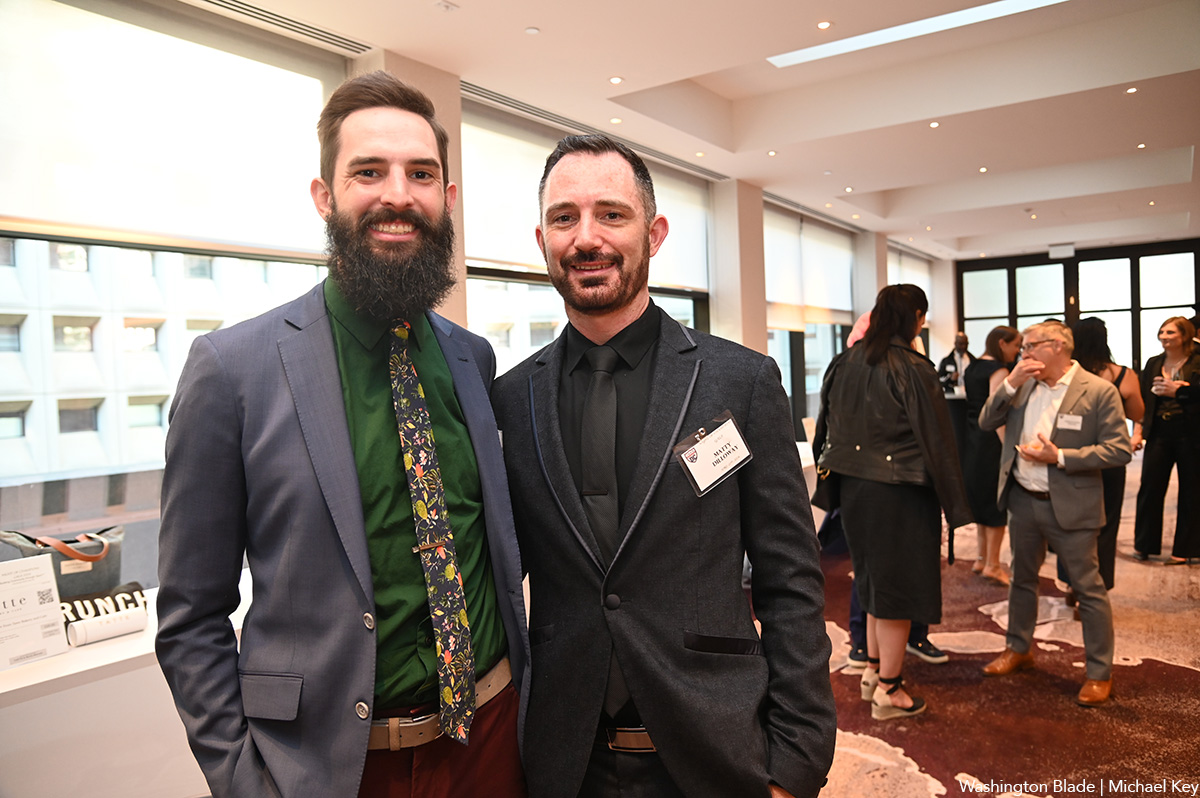
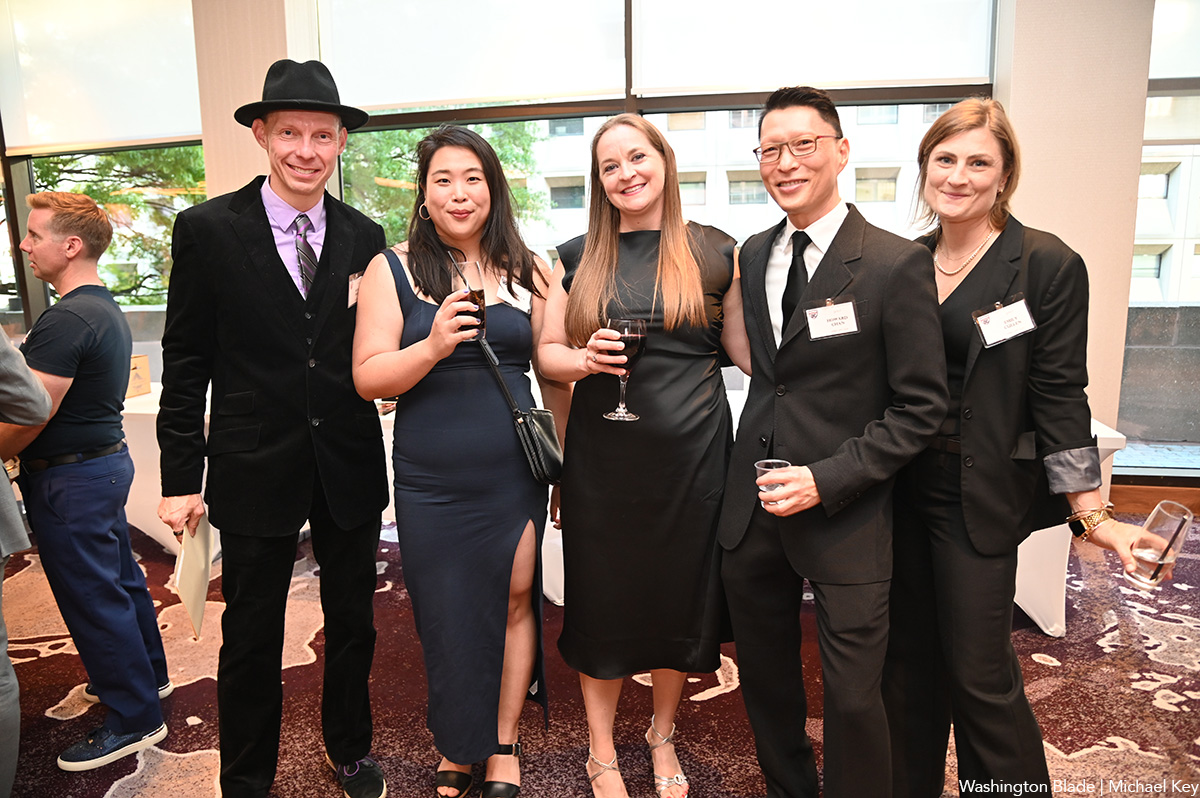
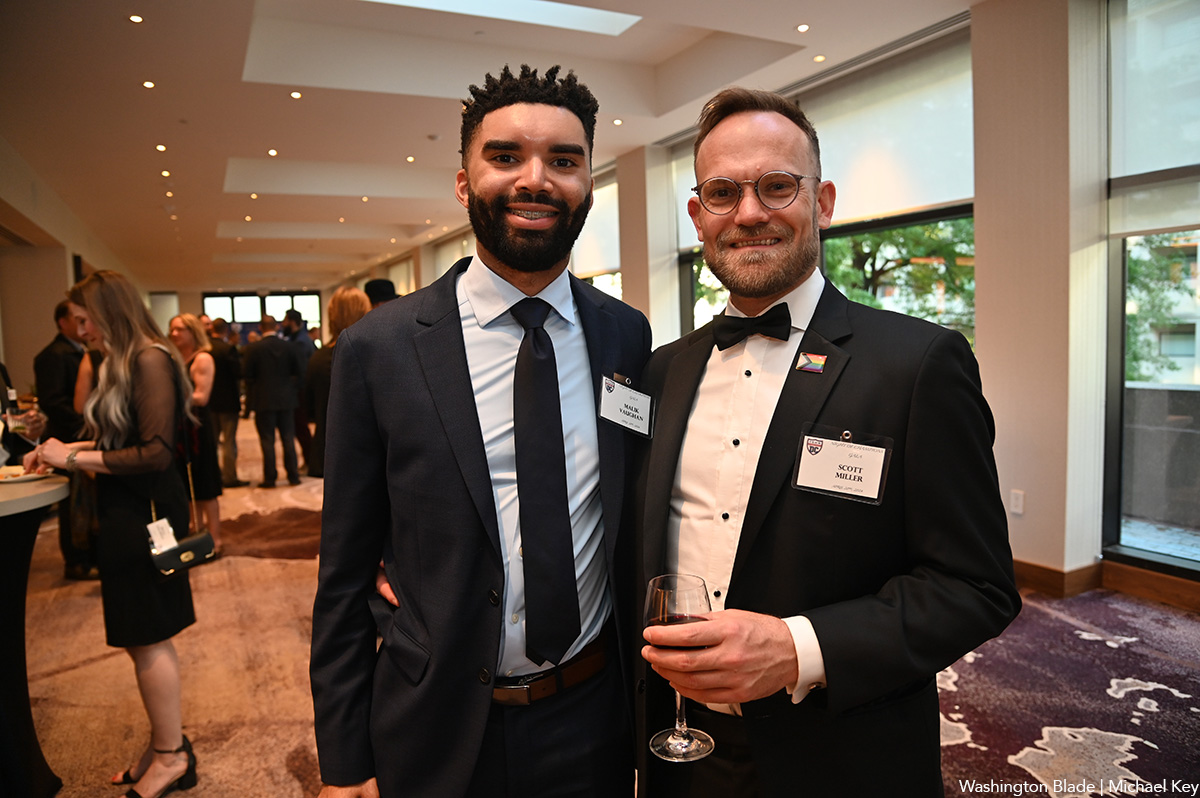
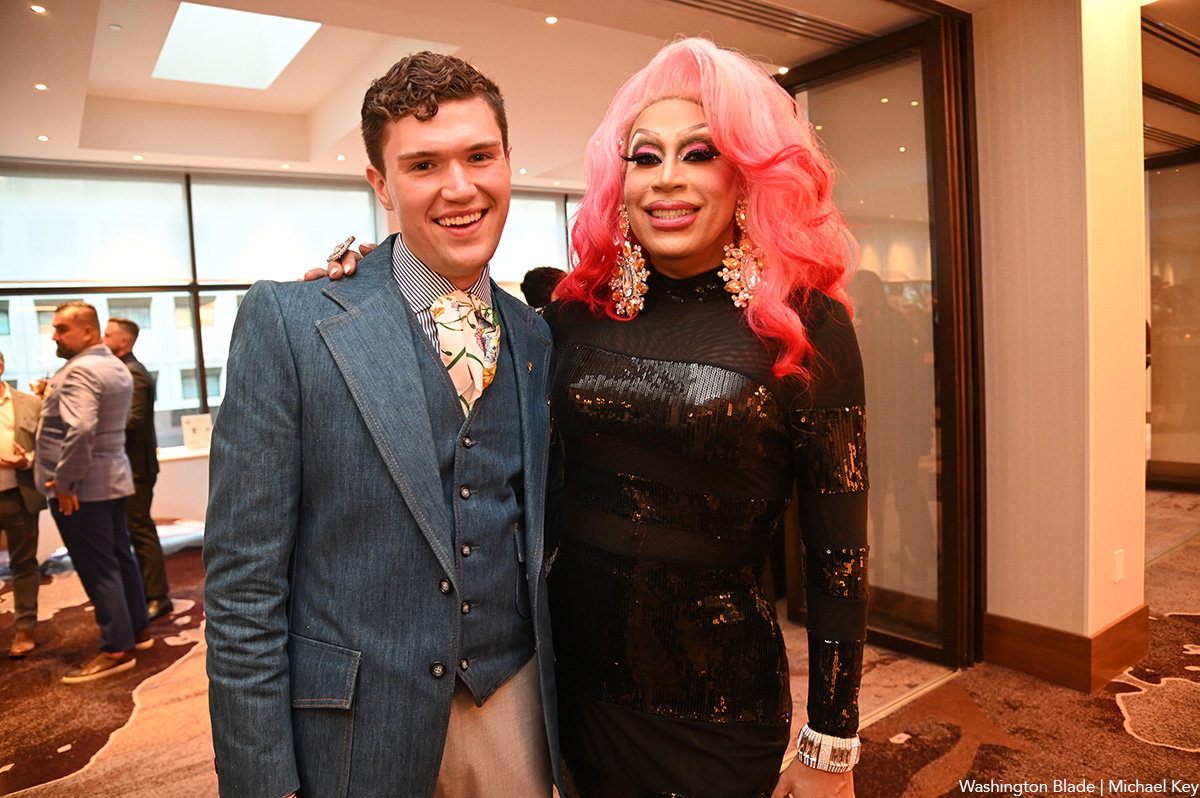
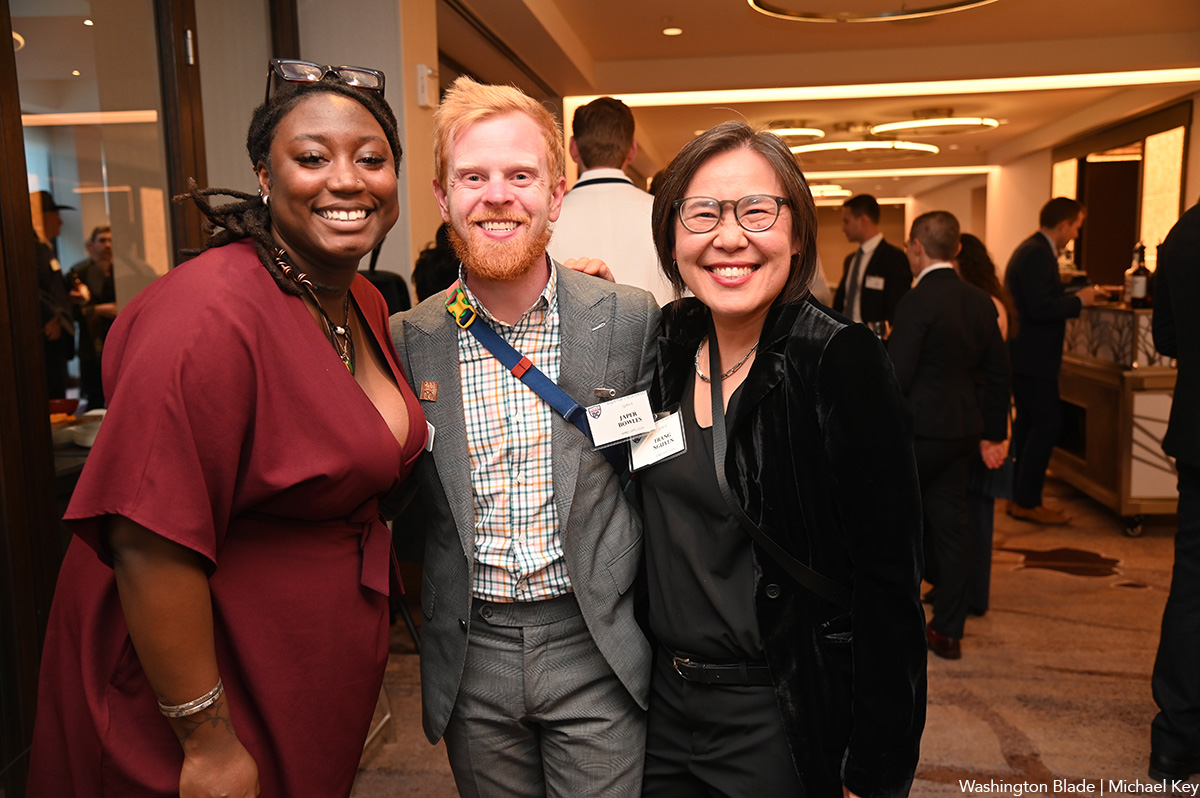
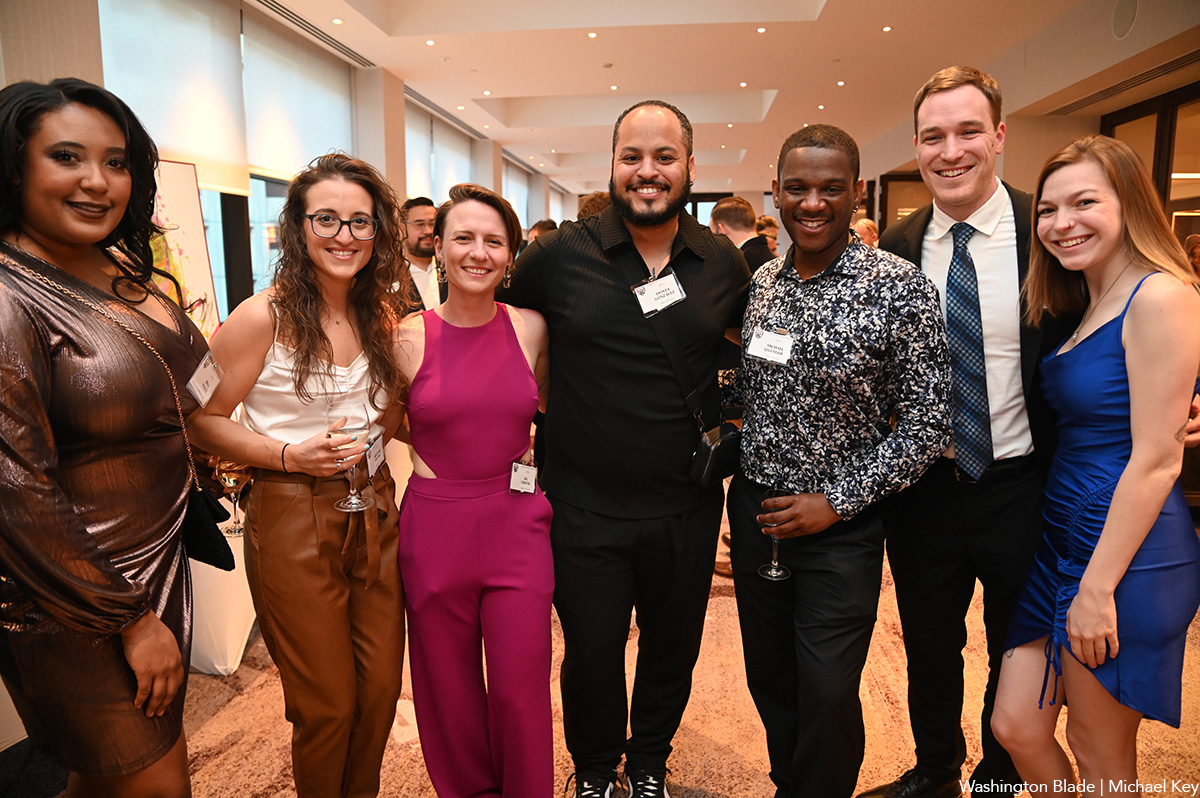
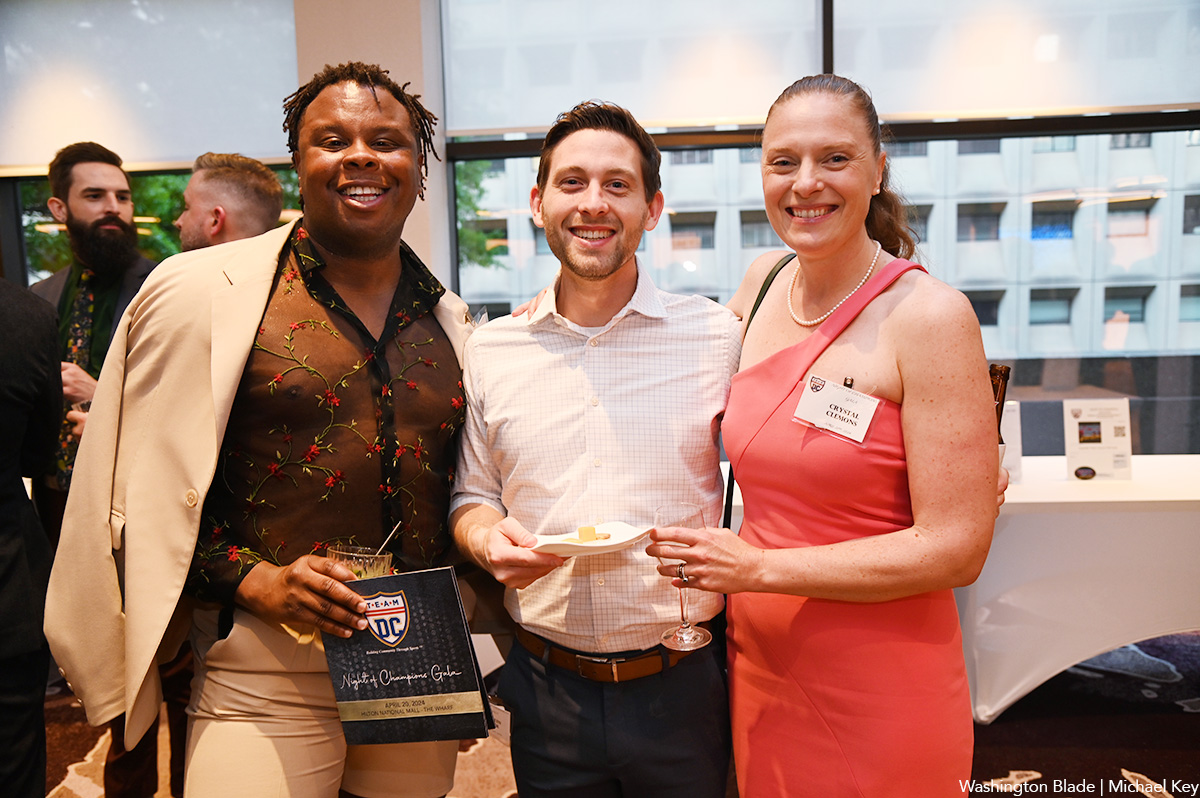
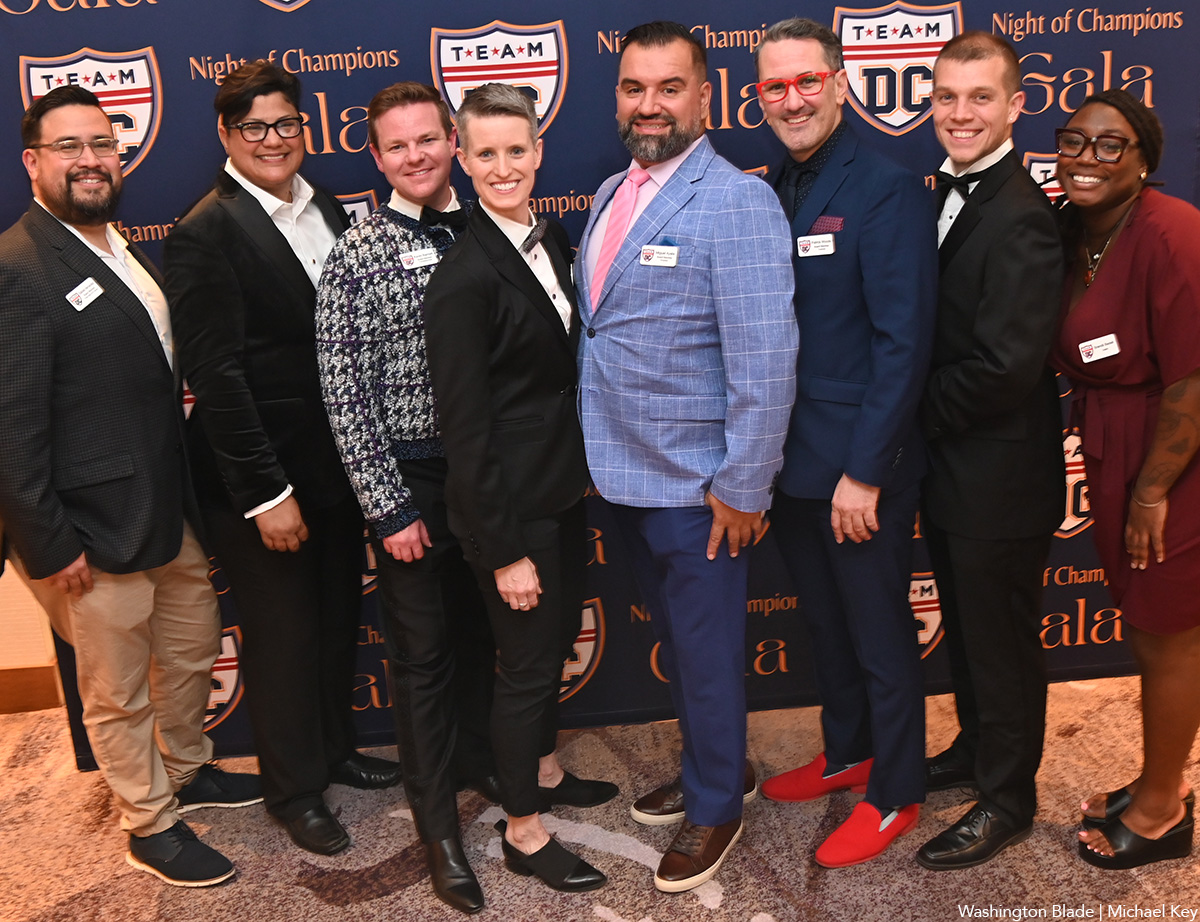
Team DC, the umbrella organization for LGBTQ-friendly sports teams and leagues in the D.C. area, held its annual Night of Champions Awards Gala on Saturday, April 20 at the Hilton National Mall. The organization gave out scholarships to area LGBTQ student athletes as well as awards to the Different Drummers, Kelly Laczko of Duplex Diner, Stacy Smith of the Edmund Burke School, Bryan Frank of Triout, JC Adams of DCG Basketball and the DC Gay Flag Football League.
(Washington Blade photos by Michael Key)





Bisexual former umpire sues Major League Baseball for sexual harassment

Argentina government dismisses transgender public sector employees

Eastern Shore chef named James Beard Finalist

Fact: The next president will be Biden or Trump

Catching up with the asexuals and aromantics of D.C.

State Department releases annual human rights report

Joe Vogel campaign holds ‘Big Gay Canvass Kickoff’

Smithsonian staff concerned about future of LGBTQ programming amid GOP scrutiny

White House debuts action plan targeting pollutants in drinking water

Maine governor signs transgender, abortion sanctuary bill into law
-
 State Department2 days ago
State Department releases annual human rights report
-
 Maryland4 days ago
Joe Vogel campaign holds ‘Big Gay Canvass Kickoff’
-
 Politics3 days ago
Smithsonian staff concerned about future of LGBTQ programming amid GOP scrutiny
-
 The White House1 day ago
White House debuts action plan targeting pollutants in drinking water