
National
Court attorney argues House GOP can’t defend DOMA
Jackson also asserts justices lack standing to hear case
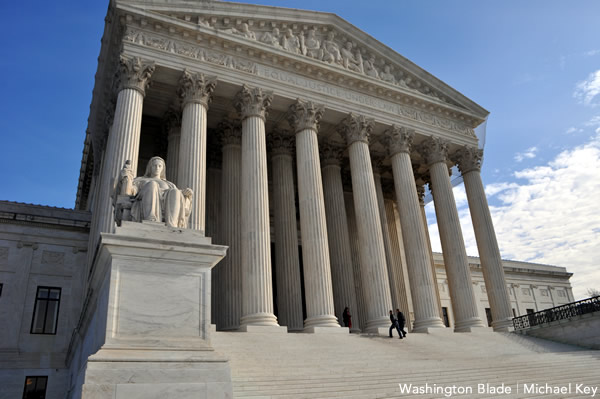
Vicki Jackson asserts the Supreme Court doesn’t have jurisdiction to consider DOMA (Washington Blade file photo by Michael Key)
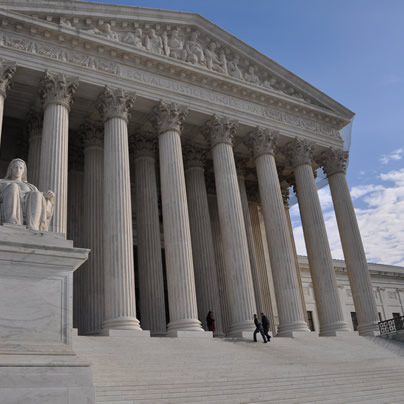
A court-appointed attorney made her debut arguments Thursday on why House Republicans are unable to participate in pending litigation challenging the Defense of Marriage Act — while also asserting the Supreme Court lacks jurisdiction to hear the case.
In a 40-page legal brief filed on Thursday, Vicki Jackson, a Harvard law professor, lays out several reasons for why the House Bipartisan Legal Advisory Group — as well as the Justice Department — don’t have standing in the case.
Jackson provides four major reasons for why BLAG, a House panel that voted 3-2 along party lines to take up defense of DOMA after the Obama administration declined to defend the law, doesn’t have standing under Article III to defend DOMA.
They are 1) BLAG’s generalized claim of injury is insufficient; 2) one chamber alone lacks standing to assert an injury to Congress; 3) BLAG wasn’t authorized to represent the views of the U.S. House; and 4) legal precedent under the case of Chadha v. INS deprives BLAG of standing.
“Where one house declines to participate (as the Senate did here), Congress has not spoken, much less asserted any injury that this Court would be able to determine,” Jackson said. “It is, after all ‘a Congress’ that is ‘vested’ by the Constitution with ‘all legislative Powers herein granted.'”
But Jackson also argues that the Justice Department, which appealed the district court ruling against DOMA to the U.S. Second Circuit Court of Appeals, also doesn’t have standing in the case. Instead of appealing the case, Jackson says the Obama administration should have refunded plaintiff Edith Windsor the $363,000 she paid in estate taxes as a result of DOMA. As a consequence of invalidating this appeal, Jackson determines that the Supreme Court doesn’t have jurisdiction to consider whether DOMA is constitutional on a nation-wide basis.
Jackson offers four reasons: 1) legal precedent under Chadha v. INS doesn’t support the Supreme Court’s jurisdiction; 2) the Justice Department’s effort to obtain a decision with which it agrees presents no case or controversy; 3) even if Article III were found, “prudential standing considerations” confirm the court’s lack of jurisdiction; 4) a prevailing party is barred from being able to appeal a case.
“The United States, though nominally a defendant below and a petitioner here, is in fact in agreement with both Windsor and the court below,” Jackson writes. “Its only real interest here is in obtaining a precedent from a higher court. This interest, by the party ‘attempting to invoke the federal judicial power’ … is insufficient for Article III.”
Jackson was hired by the Supreme Court on Dec. 11 to argue before the court that neither BLAG nor the Obama administration are able to participate in litigation before the Supreme Court shortly after it announced they intended to review the constitutionality of DOMA and California’s Proposition 8.
Doug NeJaime, who’s gay and a law professor at Loyola Law School, said the brief is interesting not only because of arguments made over BLAG’s lack of standing, but because Jackson asserts the Supreme Court doesn’t have jurisdiction to review the case.
“It does seem very significant that the brief argues not only that BLAG does not have standing but also, more interestingly, that the Court does not have jurisdiction because the executive branch agrees with Windsor and the decision below,” NeJaime said. “If the Court does not have jurisdiction, that would mean we would not get a ruling on the merits of Section 3 of DOMA with nationwide applicability.”




Pennsylvania
Malcolm Kenyatta could become the first LGBTQ statewide elected official in Pa.
State lawmaker a prominent Biden-Harris 2024 reelection campaign surrogate
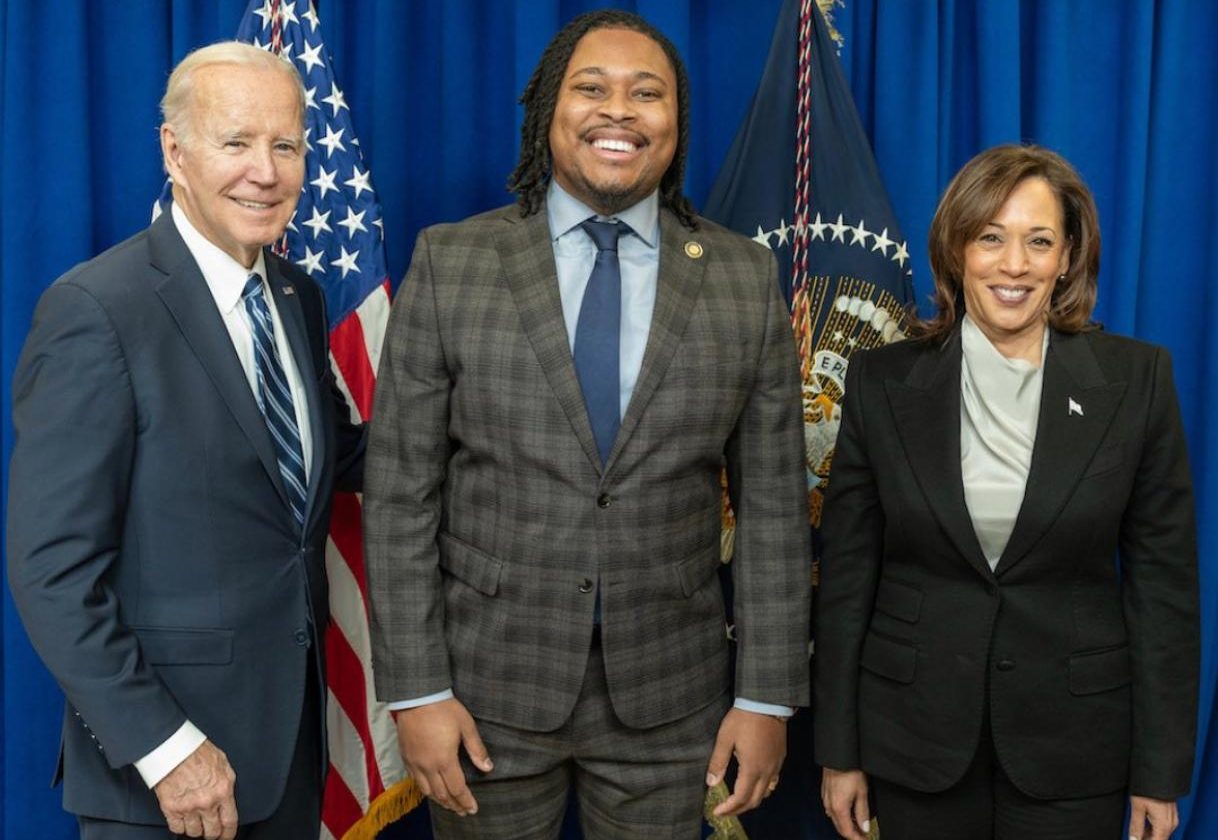
Following his win in the Democratic primary contest on Wednesday, Pennsylvania state Rep. Malcolm Kenyatta, who is running for auditor general, is positioned to potentially become the first openly LGBTQ elected official serving the commonwealth.
In a statement celebrating his victory, LGBTQ+ Victory Fund President Annise Parker said, “Pennsylvanians trust Malcolm Kenyatta to be their watchdog as auditor general because that’s exactly what he’s been as a legislator.”
“LGBTQ+ Victory Fund is all in for Malcolm, because we know he has the experience to win this race and carry on his fight for students, seniors and workers as Pennsylvania’s auditor general,” she said.
Parker added, “LGBTQ+ Americans are severely underrepresented in public office and the numbers are even worse for Black LGBTQ+ representation. I look forward to doing everything I can to mobilize LGBTQ+ Pennsylvanians and our allies to get out and vote for Malcolm this November so we can make history.”
In April 2023, Kenyatta was appointed by the White House to serve as director of the Presidential Advisory Commission on Advancing Educational Equity, Excellence and Economic Opportunity for Black Americans.
He has been an active surrogate in the Biden-Harris 2024 reelection campaign.
The White House
White House debuts action plan targeting pollutants in drinking water
Same-sex couples face higher risk from environmental hazards

Headlining an Earth Day event in Northern Virginia’s Prince William Forest on Monday, President Joe Biden announced the disbursement of $7 billion in new grants for solar projects and warned of his Republican opponent’s plans to roll back the progress his administration has made toward addressing the harms of climate change.
The administration has led more than 500 programs geared toward communities most impacted by health and safety hazards like pollution and extreme weather events.
In a statement to the Washington Blade on Wednesday, Brenda Mallory, chair of the White House Council on Environmental Quality, said, “President Biden is leading the most ambitious climate, conservation, and environmental justice agenda in history — and that means working toward a future where all people can breathe clean air, drink clean water, and live in a healthy community.”
“This Earth Week, the Biden-Harris Administration announced $7 billion in solar energy projects for over 900,000 households in disadvantaged communities while creating hundreds of thousands of clean energy jobs, which are being made more accessible by the American Climate Corps,” she said. “President Biden is delivering on his promise to help protect all communities from the impacts of climate change — including the LGBTQI+ community — and that we leave no community behind as we build an equitable and inclusive clean energy economy for all.”
Recent milestones in the administration’s climate policies include the U.S. Environmental Protection Agency’s issuance on April 10 of legally enforceable standard for detecting and treating drinking water contaminated with polyfluoroalkyl substances.
“This rule sets health safeguards and will require public water systems to monitor and reduce the levels of PFAS in our nation’s drinking water, and notify the public of any exceedances of those levels,” according to a White House fact sheet. “The rule sets drinking water limits for five individual PFAS, including the most frequently found PFOA and PFOS.”
The move is expected to protect 100 million Americans from exposure to the “forever chemicals,” which have been linked to severe health problems including cancers, liver and heart damage, and developmental impacts in children.
An interactive dashboard from the United States Geological Survey shows the concentrations of polyfluoroalkyl substances in tapwater are highest in urban areas with dense populations, including cities like New York and Los Angeles.
During Biden’s tenure, the federal government has launched more than 500 programs that are geared toward investing in the communities most impacted by climate change, whether the harms may arise from chemical pollutants, extreme weather events, or other causes.
New research by the Williams Institute at the UCLA School of Law found that because LGBTQ Americans are likelier to live in coastal areas and densely populated cities, households with same-sex couples are likelier to experience the adverse effects of climate change.
The report notes that previous research, including a study that used “national Census data on same-sex households by census tract combined with data on hazardous air pollutants (HAPs) from the National Air Toxics Assessment” to model “the relationship between same-sex households and risk of cancer and respiratory illness” found “that higher prevalence of same-sex households is associated with higher risks for these diseases.”
“Climate change action plans at federal, state, and local levels, including disaster preparedness, response, and recovery plans, must be inclusive and address the specific needs and vulnerabilities facing LGBT people,” the Williams Institute wrote.
With respect to polyfluoroalkyl substances, the EPA’s adoption of new standards follows other federal actions undertaken during the Biden-Harris administration to protect firefighters and healthcare workers, test for and clean up pollution, and phase out or reduce use of the chemicals in fire suppressants, food packaging, and federal procurement.
Maine
Maine governor signs transgender, abortion sanctuary bill into law
Bomb threats made against lawmakers before measure’s passage
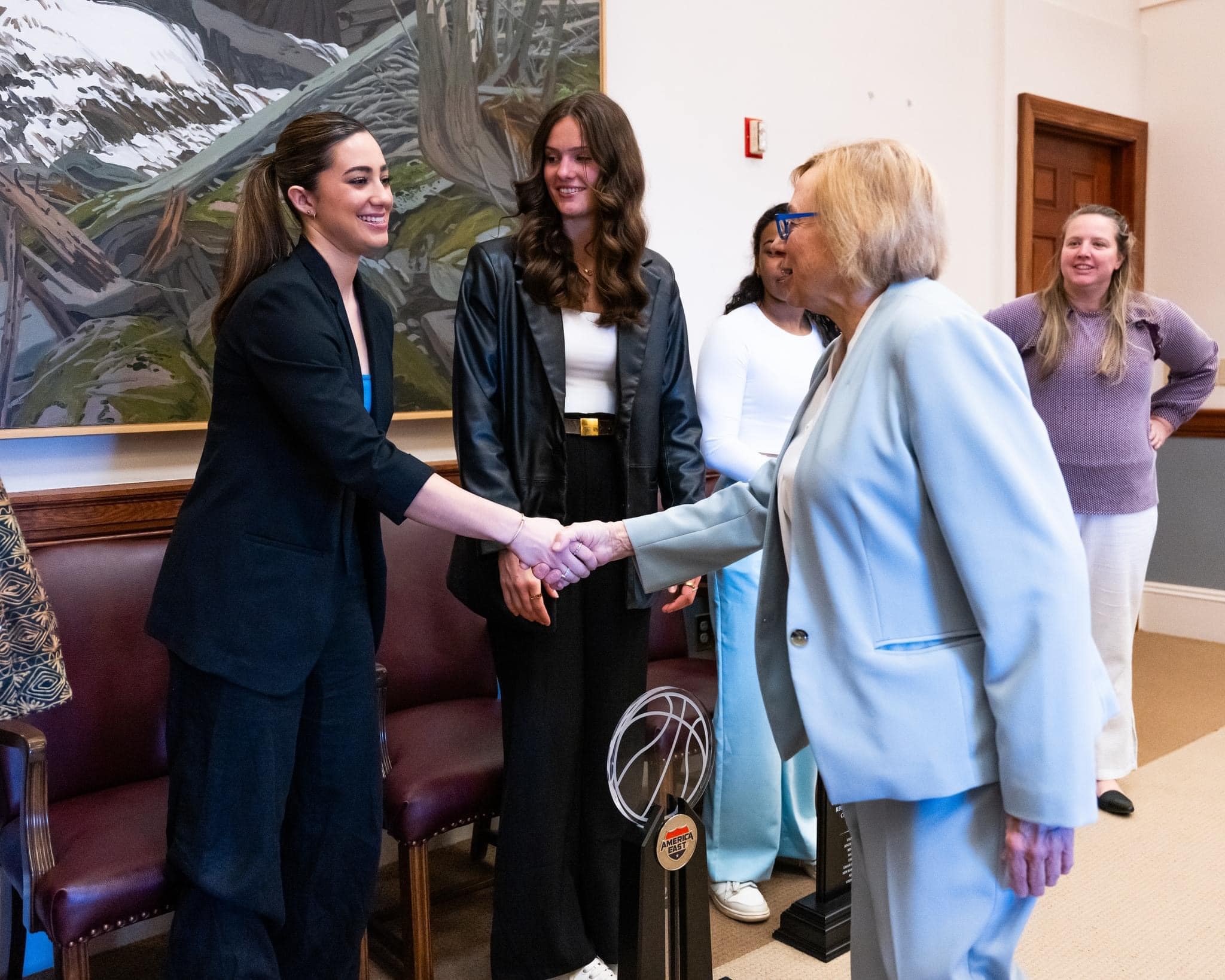
BY ERIN REED | On Tuesday, Maine Gov. Janet Mills signed LD 227, a sanctuary bill that protects transgender and abortion providers and patients from out-of-state prosecution, into law.
With this action, Maine becomes the 16th state to explicitly protect trans and abortion care in state law from prosecution. This follows several bomb threats targeting state legislators after social media attacks from far-right anti-trans influencers such as Riley Gaines and Chaya Raichik of Libs of TikTok.
An earlier version of the bill failed in committee after similar attacks in January. Undeterred, Democrats reconvened and added additional protections to the bill before it was passed into law.
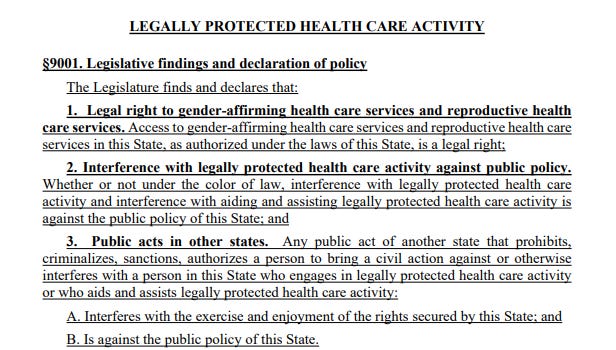
The law is extensive. It asserts that gender-affirming care and reproductive health care are “legal rights” in Maine. It states that criminal and civil actions against providers and patients are not enforceable if the provision or access to that care occurred within Maine’s borders, asserting jurisdiction over those matters.
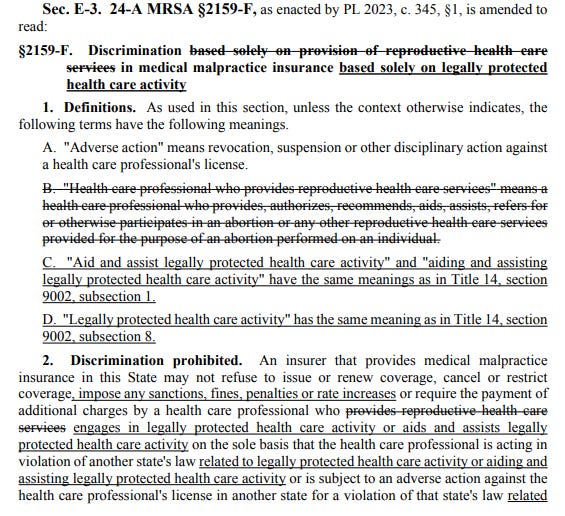
It bars cooperation with out-of-state subpoenas and arrest warrants for gender-affirming care and abortion that happen within the state. It even protects doctors who provide gender-affirming care and abortion from certain adverse actions by medical boards, malpractice insurance, and other regulating entities, shielding those providers from attempts to economically harm them through out-of-state legislation designed to dissuade them from providing care.
You can see the findings section of the bill here:
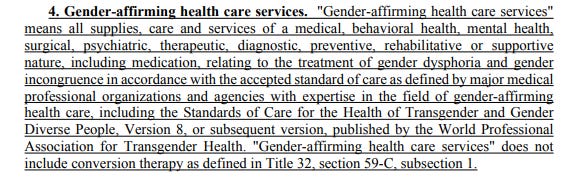
The bill also explicitly enshrines the World Professional Association of Transgender Health’s Standards of Care, which have been the target of right-wing disinformation campaigns, into state law for the coverage of trans healthcare:
The bill is said to be necessary due to attempts to prosecute doctors and seek information from patients across state lines. In recent months, attorneys general in other states have attempted to obtain health care data on trans patients who traveled to obtain care. According to the U.S. Senate Finance Committee, attorneys general in Tennessee, Indiana, Missouri, and Texas attempted to obtain detailed medical records “to terrorize transgender teens in their states … opening the door to criminalizing women’s private reproductive health care choices.”
The most blatant of these attempts was from the attorney general of Texas, who, according to the Senate Finance Committee, “sent demands to at least two non-Texas entities.” One of these entities was Seattle Children’s Hospital, which received a letter threatening administrators with arrest unless they sent data on Texas patients traveling to Seattle to obtain gender-affirming care.
Seattle Children’s Hospital settled that case out of court this week, agreeing to withdraw its Texas business registration in return for Texas dropping its investigation. This likely will have no impact on Seattle Children’s Hospital, which has stated it did not treat any youth via telemedicine or in person in Texas; the hospital will be able to continue treating Texas youth who travel outside of Texas to obtain their care. That settlement was likely compelling due to a nearly identical law in Washington that barred out-of-state investigations on trans care obtained solely in the state of Washington.
The bill has faced a rocky road to passage. A similar bill was debated in January, but after coming under intense attack from anti-trans activists who misleadingly called it a “transgender trafficking bill,” the bill was voluntarily withdrawn by its sponsor.
When LD 227 was introduced, it faced even more attacks from Gaines and Libs of TikTok. These attacks were followed by bomb threats that forced the evacuation of the legislature, promising “death to pedophiles” and stating that a bomb would detonate within a few hours in the capitol building.
Despite these threats, legislators strengthened both the abortion and gender-affirming care provisions and pressed forward, passing the bill into law. Provisions found in the new bill include protecting people who “aid and assist” gender-affirming care and abortion, protections against court orders from other states for care obtained in Maine, and even protections against adverse actions by health insurance and malpractice insurance providers, which have been recent targets of out-of-state legislation aimed at financially discouraging doctors from providing gender-affirming care and abortion care even in states where it is legal.
See a few of the extensive health insurance and malpractice provisions here:
Speaking about the bill, Gia Drew, executive director of Equality Maine, said in a statement, “We are thrilled to see LD 227, the shield bill, be signed into law by Gov. Mills. Thanks to our pro equality and pro reproductive choice elected officials who refused to back down in the face of disinformation. This bill couldn’t come into effect at a better time, as more than 40 percent of states across the country have either banned or attempted to block access to reproductive care, which includes abortions, as well as transgender healthcare for minors. Thanks to our coalition partners who worked tirelessly to phone bank, lobby, and get this bill over the finish line to protect community health.”
Destie Hohman Sprague of the Maine Women’s Lobby celebrated the passage of the bill despite threats of violence, saying in a statement, “A gender-just Maine ensures that all Mainers have access to quality health care that supports their mental and physical wellbeing and bodily autonomy, including comprehensive reproductive and gender-affirming care. We celebrate the passage of LD 227, which helps us meet that goal. Still, the patterns of violence and disinformation ahead of the vote reflected the growing connections between misogyny, extremism, and anti-democratic threats and actions. We must continue to advocate for policies that protect bodily autonomy, and push back against extremist rhetoric that threatens our states’ rights and our citizens’ freedoms.”
The decision to pass the legislation comes as the Biden administration released updated HIPAA protections that protect “reproductive health care” from out-of-state prosecutions and investigations.
Although the definition of “reproductive health care” is broad in the new HIPAA regulations, it is uncertain whether they will include gender-affirming care. For at least 16 states, though, gender-affirming care is now explicitly protected by state law and shielded from out-of-state legislation, providing trans people and those seeking abortions with protections as the fight increasingly crosses state lines.
****************************************************************************

Erin Reed is a transgender woman (she/her pronouns) and researcher who tracks anti-LGBTQ+ legislation around the world and helps people become better advocates for their queer family, friends, colleagues, and community. Reed also is a social media consultant and public speaker.
******************************************************************************************
The preceding article was first published at Erin In The Morning and is republished with permission.

Bisexual former umpire sues Major League Baseball for sexual harassment

Argentina government dismisses transgender public sector employees

Eastern Shore chef named James Beard Finalist

Fact: The next president will be Biden or Trump

Catching up with the asexuals and aromantics of D.C.

State Department releases annual human rights report

Joe Vogel campaign holds ‘Big Gay Canvass Kickoff’

Smithsonian staff concerned about future of LGBTQ programming amid GOP scrutiny

White House debuts action plan targeting pollutants in drinking water

Maine governor signs transgender, abortion sanctuary bill into law
-
 State Department2 days ago
State Department releases annual human rights report
-
 Maryland4 days ago
Joe Vogel campaign holds ‘Big Gay Canvass Kickoff’
-
 Politics3 days ago
Smithsonian staff concerned about future of LGBTQ programming amid GOP scrutiny
-
 The White House1 day ago
White House debuts action plan targeting pollutants in drinking water