World
French lawmakers approve gay marriage, adoption bill
France’s National Assembly approved measure by 329-229 vote margin


More than 100,000 people marched through the streets of Paris on Jan. 29 in support of the bill. (Photo by Guillaume Bonnet/All Out)
The 329-229 vote capped off a marathon debate on the proposal that began on Jan. 29.
Opponents and supporters of same-sex marriage and gay adoption also staged a number of demonstrations through the streets of Paris over the last few months that drew hundreds of thousands of people.
“Today France took an important first step on the path for full equality for all citizens,” Brian Ellner, who directed the Human Rights Campaign’s efforts in support of New York’s same-sex marriage bill that Gov. Andrew Cuomo signed into law in June 2011, told the Washington Blade immediately after the vote. He is among the more than 100,000 people who took part in a Jan. 27 demonstration in the French capital in support of the bill. “We all look forward to final passage of the law and the impact it will have around the globe, including here in the United States.”
Belgium, Denmark, the Netherlands and Spain are among the European countries that allow same-sex couples to marry.
The British House of Commons last week overwhelmingly approved a bill that would allow gays and lesbians to tie the knot in England and Wales — a parliamentary committee on Tuesday debated the proposal. Scottish lawmakers in the coming weeks are also expected to consider the issue.
“This is a historic moment for France,” Andre Banks, executive director of All Out, which delivered 200,000 signatures in support of the proposal to lawmakers and ministers, said. “French polls overwhelmingly demonstrate French people are in favor of marriage for gays and lesbians. I hope the French Senate passes the bill swiftly.”
The French Senate is expected to begin debating the proposal on April 2.



Hungary
Charges against Budapest mayor for organizing Pride march dropped
Country’s new government took office last month

Hungarian authorities on Thursday dropped charges against Budapest Mayor Gergely Karácsony over his role in organizing the city’s 2025 Pride march.
Karácsony spoke at the event, even though then-Prime Minister Viktor Orbán’s government banned it.
More than 100,000 people defied the ban and participated in the march that took place on June 28, 2025. The Associated Press notes the Budapest Chief Prosecutor’s Office in January charged Karácsony with “organizing the unlawful assembly despite a prohibition order.”
Karácsony, who has been Budapest’s mayor since 2019, described himself as a “proud defendant” after his indictment.
“It seems that in this country, this is the price you pay if you stand up for your own freedom and the freedom of others,” he said in a statement, according to the AP. “If anyone thinks they can ban me, deter me, or prevent me and my city from doing so, they are gravely mistaken.”
Budapest is Hungary’s capital and largest city.
Prime Minister Péter Magyar took office last month after his center-right Tisza party ousted Orbán’s Fidesz-KDNP coalition in elections that took place on April 12.
Hungarian police on May 29 announced they will allow the Budapest Pride march to take place this year.
The European Union’s top court, the EU Court of Justice, days after Orbán’s ouster struck down Hungary’s anti-LGBTQ propaganda law that MPs approved in 2021. The BBC notes Hungarian authorities cited the decision in their decision to drop the charges against Karácsony.
Authorities in Pécs, a city near Hungary’s border with Croatia, have also dropped charges against Géza Buzás-Hábel, who organized a 2025 Pride event.
Hungary
Hungarian authorities lift Budapest Pride ban
Country’s new government took office last month
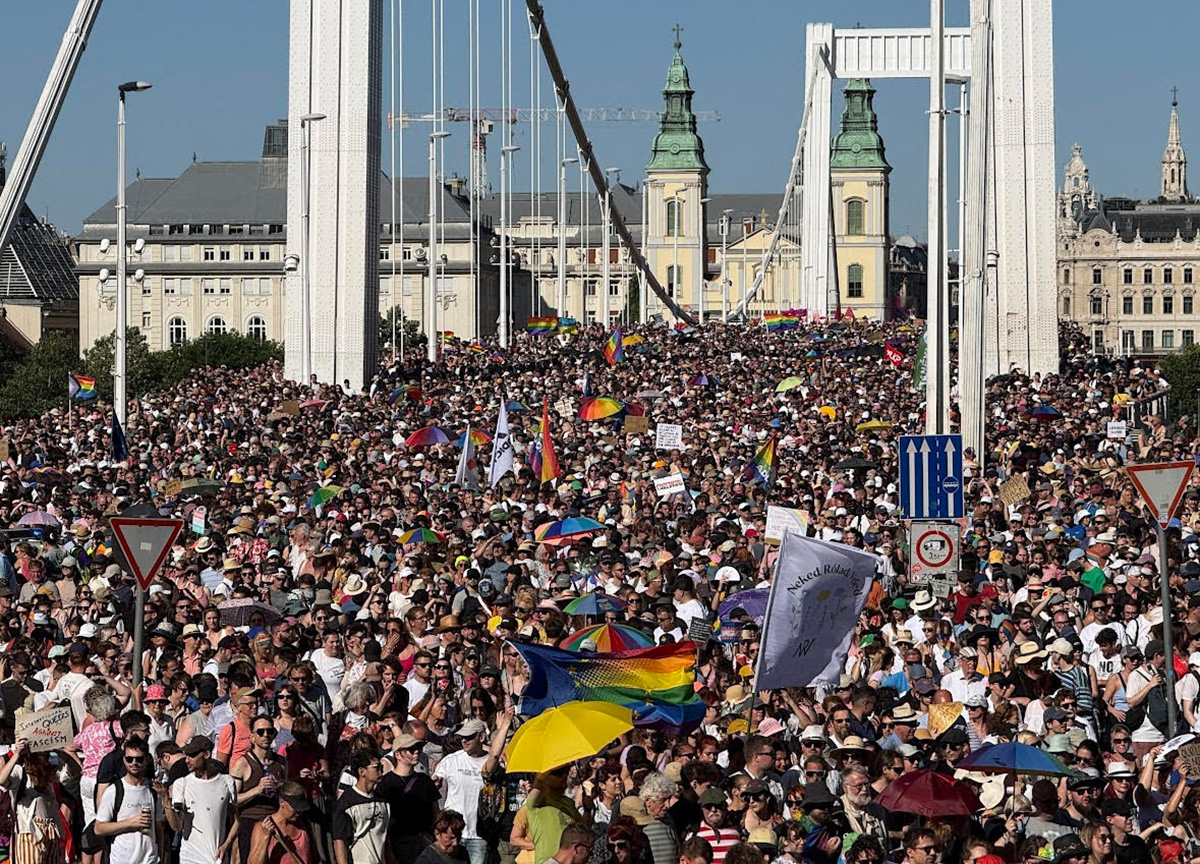
Hungarian police on May 29 announced they will allow the annual Budapest Pride march to take place.
“The Budapest Metropolitan Police has approved the 2026 Budapest Pride Parade and also has issued restrictive orders in relation to three counter-demonstrations,” a Budapest Metropolitan Police spokesperson told Politico.
Budapest is Hungary’s capital and largest city.
Hungarian lawmakers last year passed a bill that banned Pride events and allowed authorities to use facial recognition technology to identify participants. MPs later amended the Hungarian constitution to ban public LGBTQ events.
More than 100,000 people defied the ban and participated in last year’s Budapest Pride parade. The event became one of the largest protests against then-Prime Minister Viktor Orbán and his government since he took office in 2010.
Prime Minister Péter Magyar took office last month after his center-right Tisza party ousted Orbán’s Fidesz-KDNP coalition in elections that took place on April 12. The European Union’s top court, the EU Court of Justice, days after Orbán’s ouster struck down Hungary’s anti-LGBTQ propaganda law that MPs approved in 2021.
The EU on May 29 announced it will release more than €16 billion ($18.59 billion) in funds to Hungary that it withheld while Orbán was in office.
The Budapest Pride march will take place on June 27.
“We will march freely in fresh air for our rights, for the democratic Hungary,” said Budapest Pride on its Facebook page.
Colombia
Claudia López comes up short in Colombian presidential election
Former Bogotá mayor would have been country’s first lesbian head of government
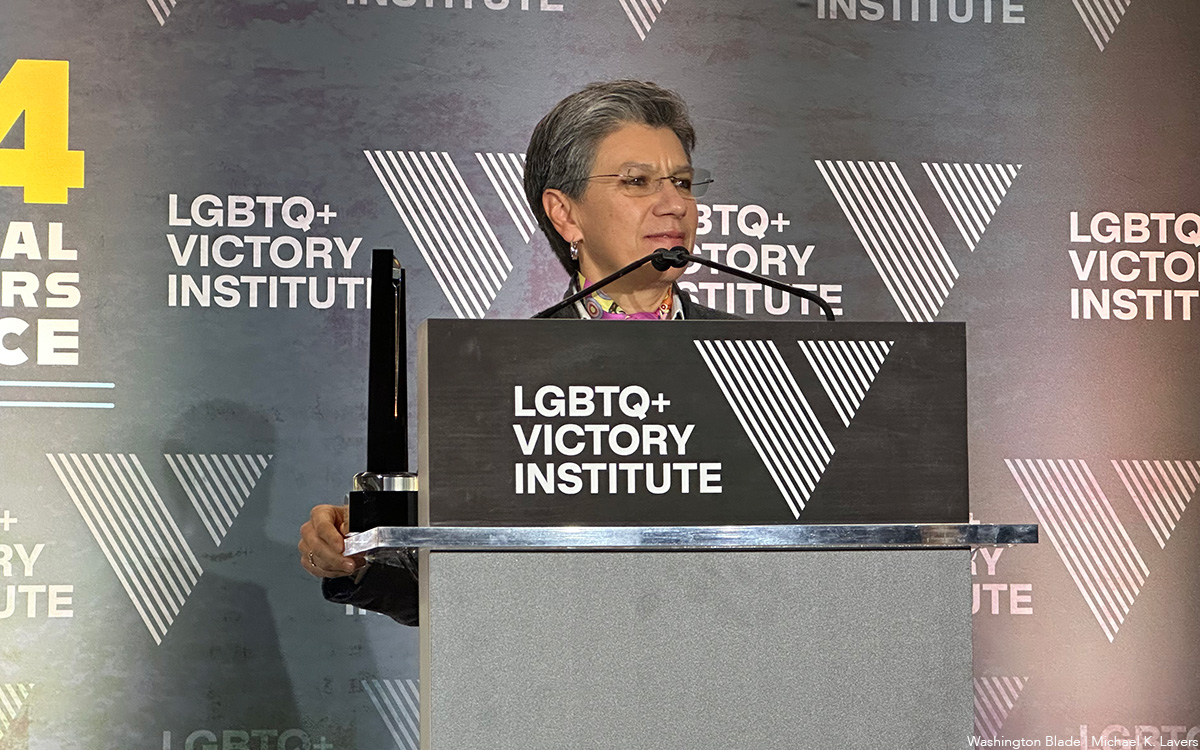
Former Bogotá Mayor Claudia López on Sunday finished fifth in the first round of Colombia’s presidential election.
López, a centrist who ran as an independent, received 225,517 votes. This figure is .95 percent of the total votes cast.
López was the Colombian capital’s mayor from 2020-2023. She was a member of the Colombian Senate from 2014-2018. López, whose wife is outgoing Colombian Sen. Angélica Lozano, would have become the country’s first female and first lesbian president if she would have won the election.
The LGBTQ+ Victory Institute honored López in D.C. in 2024.
“We need to listen to each other again, we need to have a coffee with each other again, we need to touch each other’s skin,” she told the Washington Blade during an interview. She hadn’t yet declared her candidacy, and did not specifically discuss her plans to run.
Runoff to take place June 21
Abrelardo de la Espriella, a far-right lawyer who has praised U.S. President Donald Trump and Salvadoran President Nayib Bukele, on Sunday finished first with 43.74 percent of the vote. Senator Iván Cepeda, a member of outgoing President Gustavo Petro’s Historic Pact party, came in second with 40.9 percent of the vote.
Neither men received a majority of votes. A runoff between them will take place on June 21.

PHOTOS: Fairfax City Pride

EXCLUSIVE: Pelosi reflects on four decades of LGBTQ advocacy

D.C. prepares to party as Pride celebrations kick off Saturday

David Archuleta, Monroe Alise named D.C. Pride parade marshals

Hundreds of thousands expected to attend D.C. Pride events

Ogles faces bipartisan backlash over anti-gay social media post

Gallup finds LGBTQ support among Americans is dropping

PHOTOS: Shepherdstown Pride Parade

Charges against Budapest mayor for organizing Pride march dropped