Living
The skinny on ‘RuPaul’s Drag Race’
Mystique on being voted off Logo’s hit show and the need for ‘big girl’ role models

Mystique Summers Madison from “RuPaul’s Drag Race,” whose real name is Donté Sims, competed for top queen in season two of the Logo reality series but was eliminated in the third episode.
This self-proclaimed “pageant queen” from Bedford, Texas wants you to know that big girls can do everything skinny girls can and she recently made a stop in Washington, D.C. to prove it. A curvaceous beauty, Mystique Summers Madison brought her own brand of “charisma, uniqueness, nerve and talent” and left an impression on many of the viewers that the most important part of being a performer is to stay true to one’s self. The Washington Blade talked to Mystique about RuPaul’s show, her competitors and how it feels to represent “big girls” everywhere.
Washington Blade: How did Donté Sims, aka Mystique Summers Madison, land a spot on “RuPaul’s Drag Race”?
Mystique: I had been doing drag for five years and there was a casting call in Dallas for the first season but I decided to wait and see what the show was all about. Then, when there was a casting call for the second season, I went for it and submitted my paperwork and video and they got back to me about two months later.
Blade: Two months is a long time to wait, what was the next step in the process?
Mystique: Well … all applicants need to have a psychological evaluation before they would cast you.
Blade: What exactly was involved with that? What did they ask you to get evaluated for?
Mystique: [Laughs] Well, I had to sit down with a psychologist and I guess I got the seal of approval. Although, [laughs] I still don’t understand how I managed to get it.
Blade: What was it like meeting the other contestants for the first time?
Mystique: I’m used to Texas pageant drag, which is more makeup and costumes. When I met the rest of the contestants it was more female realness.
Blade: You were eliminated in this season’s third episode, losing to Raven when you had to “Lip sync for your life” to “I Hear You Knockin'” by Wynonna Judd. How do you feel you handled the elimination?
Mystique: After the lip sync, RuPaul needed to think about the decision so she was gone for about 20 minutes and then came back and I was the one to go. Honestly, it was [like] a big sigh of relief because I was able to get back to real life and communicating with the real world.
Blade: Things got pretty heated with a few of the contestants prior to your elimination. At one point it looked like the wigs were going to come off and punches thrown. Let’s talk for a minute about your “I’m from Chicago!” interaction with fellow contestant Morgan McMichaels, as seen via “RuPaul’s Drag Race: Untucked.” Was it as confrontational as the cameras made it appear?
Mystique: It was actually worse than the viewers saw! The camera crews missed a lot of it when it was happening but at this point I don’t have any issues about it.
Blade: After your elimination, who were you pulling for to win?
Mystique: Well the person I wanted to win was already eliminated — Pandora Boxx. I really feel Pandora should have stayed but you never really know what the judges were looking for or wanted.
Blade: Casting calls have begun for the third season and it looks like several of D.C.’s drag performers are submitting tapes. What is your advice to applicants?
Mystique: The best advice I can give would be to stay true to yourself. Go on the show as “you” and leave the same way because you shouldn’t change who you are to try and win a competition.
Blade: The first season of “Drag Race” didn’t include the “Untucked,” behind-the-scenes show. Do you feel this was a good addition to your season?
Mystique: I think they came up with the idea of “Untucked” to show how catty things behind the scenes really were. I know it was brought on for my season but I don’t know if it will be brought on for the next one. They cast such strong personalities this season so they kind of knew there would be drama and wanted to catch it on film because they knew it would bring in the viewers.
Blade: There is going to be another spin off show called “RuPaul’s Drag U.” Will you be involved?
Mystique: No, the performers from my season on “Drag U” will be JuJu, Pandora, Raven and Morgan McMichaels.
Blade: Bebe Zahara Benet won the first season yet other performers such as Ongina and Shannel seemed to get more attention. Why do you feel that is?
Mystique: Well the winner really is under lock and key and has to do what the show says. It’s almost better not to win because then you can travel and get booked and just do your own thing.
Blade: How much of what the audience saw was spin created by the producers?
Mystique: There is a lot of editing of course. It’s sometimes two or three days of footage condensed down to one hour. So when it was edited, the storylines can be skewed to make the story smoother.
Blade: How much do the contestants actually interact with RuPaul?
Mystique: The amount of interaction the viewers see on TV is about how much we actually interacted with Ru.
Blade: You said on the show that you represented all the “big girls” out there. Do you feel there is a stigma attached to the full-figured drag performers?
Mystique: Well, I went on the show just as myself and I was classified as representing the “big girls” because I said it once and it just caught on. I received a lot of e-mails and Facebook messages from different people thanking me for showing that the big girls can be sexy and that it took a lot of courage to compete against the skinny girls. If I’m helping other people out there then I think that’s great.
Real Estate
D.C.’s housing reality: Cautious optimism meets landlord strain
Cost of living remains a major problem
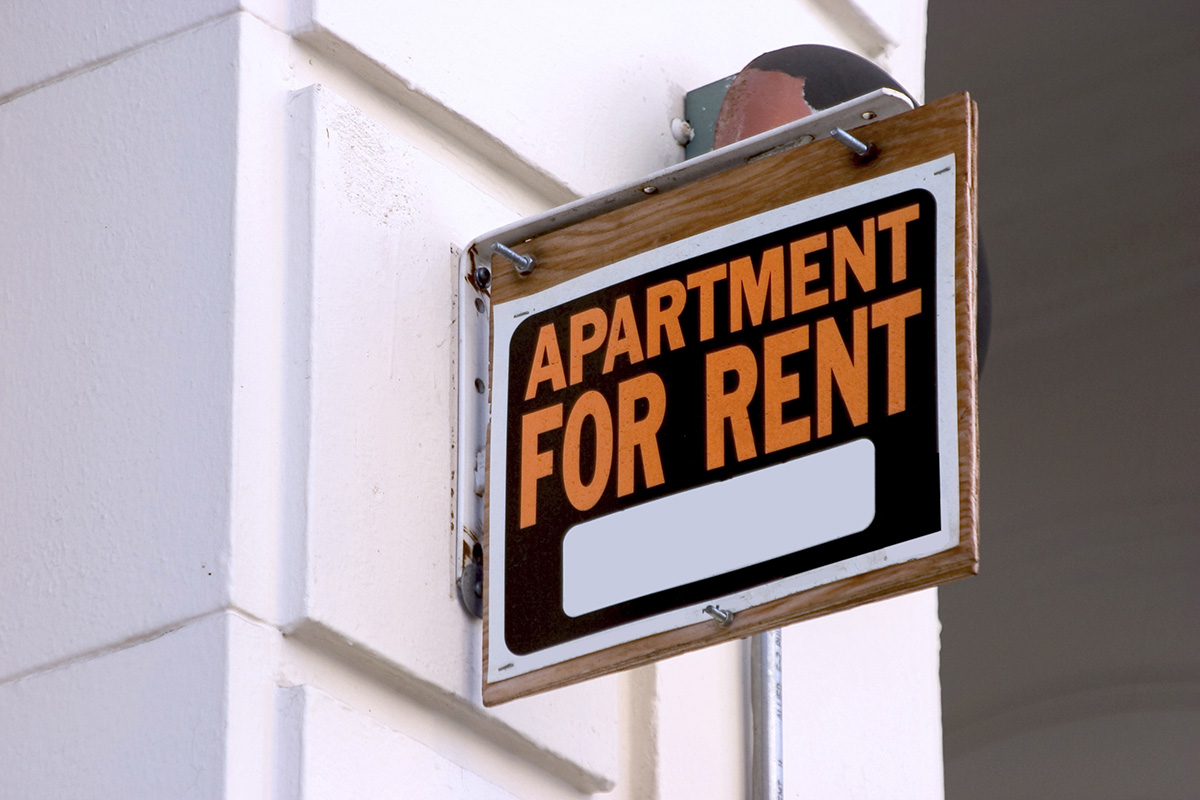
Washington has long prided itself on stability. Anchored by the federal government and buoyed by a highly educated workforce, the District has historically weathered economic uncertainty better than most cities.
But beneath that stability, cracks have been showing since January 2025.
I was having a conversation with a prospective client the other day and offered him a candid assessment of the District’s economic outlook. Simply put, structural challenges have been shaping the city’s future, a new mayoral election, and more that blends cautious optimism with clear concern about the changes ahead.
For one, the long-term shift toward remote and hybrid work continues to reshape the city in ways many people still underestimate. There has been a change in the rhythm of downtown D.C., reduced daytime foot traffic for local businesses, and created uncertainty for commercial real estate owners and the neighborhoods that depended on those workers every day.
At the same time, the cost of living in the District continues to rise at a pace that many residents are struggling to absorb. Even residents with strong incomes are becoming more cautious about spending and relocation decisions.
Landlords are feeling those pressures as well. Many smaller housing providers are operating in an environment where expenses continue to rise faster than revenue while the regulatory environment has grown increasingly complex. For some rental owners, especially those with older buildings or only a few rental units, the math is making it harder to cover costs, much less generate passive income.
There is also growing concern about the District government’s own financial outlook. Significant budget pressures and spending cuts are being had in a more serious way than many Washingtonians are used to hearing. As uncertainty in federal employment affects local tax revenue and consumer confidence, how will the city fund services, infrastructure, housing programs, and public safety priorities in the years ahead?
At the same time, consumer confidence feels noticeably down than it did even a few years ago. People are taking longer to make decisions, whether that means signing a lease, purchasing a home, renovating a property, or expanding a business. That hesitation creates a slower-moving marketplace where caution often replaces momentum.
Despite all this, Washington has proven remarkably resilient over time. The city continues to attract talented professionals, international investment, universities, healthcare institutions, and industries tied to government, law, technology, and public policy. Neighborhoods continue to evolve, and demand for well-managed rental housing remains strong in the core areas of the city.
Unlike other major cities driven by private industry, federal employment and contracting are two of the main pillars of Washington’s economy. That reliance has long insulated the region from deep recessions. But it also creates vulnerability when federal activity slows.
D.C.’s economy is far more interconnected and interdependent than many people fully appreciate. Between significant federal layoffs, the District’s high unemployment rate, and broader economic uncertainty, there are a number of warning signs that property owners should be paying close attention to. When federal hiring slows or contracts tighten, the impact extends well beyond government workers themselves. It affects restaurants, retail, housing, and countless other sectors tied to the District’s economic activity.
Brookings Institution has documented how job losses in higher-income sectors can disproportionately impact urban economies—precisely because those workers drive local spending.
Research from the Urban Institute supports this view, noting that federal workforce disruptions can quickly ripple through the region’s economy. For landlords and renters alike, those ripples are already being felt. Renters see many more properties on the market which gives them leverage on negotiating discounts in rent or special incentives. Housing providers, already squeezed by the reality of a weak economy and strong regulations face lowering rents and income.
For years, affordability has been one of D.C.’s most persistent challenges. Much of that pressure has been driven by strong job growth and sustained demand for housing at a pace that new housing inventory has struggled to match. That imbalance has steadily pushed rents and home prices higher, leaving many residents financially stretched.
Recent multifamily housing data suggests the market is already beginning to adjust. Developers delivered more than 15,000 apartment units across the Washington metropolitan area over the past year, and several industry reports have noted that elevated supply levels, combined with slower demand growth, have contributed to softer occupancy levels and downward pressure on rents in portions of the region. CoStar, CBRE, and Northmarq have all reported rising vacancy rates across segments of the D.C. multifamily market as newly delivered Class A inventory continues entering the pipeline at a time when hiring growth has moderated and federal workforce uncertainty has increased.
At the same time, several economists and housing analysts have cautioned that the District’s affordability challenges are deeply structural and unlikely to disappear quickly. The Joint Center for Housing Studies of Harvard University has repeatedly identified Washington among the nation’s more cost-burdened metropolitan areas, particularly for renters, while Zillow data continues to show housing costs consuming a substantial percentage of household income for many residents.
From my own perspective as a property manager working directly in the market every day, I believe we are beginning to see the early stages of a market recalibration rather than a collapse. Anecdotally, there appears to be more competition among larger apartment buildings than there was several years ago, particularly in neighborhoods where substantial new inventory has recently delivered. That does not necessarily mean dramatic rent declines are coming, but it does suggest that the imbalance between supply and demand may be moderating somewhat after years of sustained upward pressure on pricing.
Even if prices soften, affordability will remain a long-term challenge.
Regulation and the Realities of Tenant Turnover
The same rental owner I spoke with pointed to regulatory hurdles as a major source of hesitation to continue renting out his property, given past bad experiences with tenants and excessive costs to prepare the rental for a new tenant.
For many small property owners, the cumulative weight of regulation, maintenance costs, and market uncertainty is becoming harder to bear. Clients of mine have described feeling overwhelmed, not just financially, but emotionally. What was once a source of pride has, in some cases, become a source of stress.
We’re seeing more small landlords sell their rental homes, questioning whether it’s worth staying in the market. That’s a significant shift from even five or ten years ago. The National Multifamily Housing Council has noted that regulatory complexity often disproportionately impacts smaller landlords, who lack the resources of larger firms.
Some are choosing to sell. Others are simply trying to hold on. The result is the same – less rental housing for DC residents.
A Shift From Pride to Disillusionment
Perhaps the most striking theme is the emotional shift described by the property owner. For some, owning property in D.C., once a milestone achievement, has become a source of disillusionment. They cited financial losses, regulatory frustration, and a growing sense of political alienation.
There are also broader concerns about:
- The decline of small multifamily ownership
- Rising foreclosures in certain segments
- Increased consolidation by larger institutional landlords
If small landlords continue to exit the market, it changes the entire housing ecosystem. You lose diversity in housing options, and that can have long-term consequences for affordability. It also robs families of having homes large enough to live in.
Politics and Policy: A System at a Standstill?
The political environment has obviously been a key factor shaping the city’s housing future. Following the 2026 elections, a lack of significant leadership change may result in continued policy stagnation.
Without meaningful policy shifts, we’re likely to see more of the same: continued and increasing pressure on landlords and not enough study and focus on policies to increase housing supply by first stopping those property owners fleeing the District’s extreme tenant friendliness. The D.C. City Council remains central to these decisions, with advocacy groups continuing to push for expanded tenant protections. The importance of balance cannot be understated: ensuring protections for renters while maintaining a viable environment for housing providers.
Taken together, these dynamics point to a housing system at a crossroads.
D.C. must find a way to balance:
- Tenant protections
- Housing affordability
- Landlord sustainability
- Long-term investment in housing supply
What’s Next?
D.C. isn’t going anywhere. The question is how it adapts. If we can find the right balance, there’s a path forward, but it’s going to take time and thoughtful policy decisions. For landlords, that path will require adaptability and engagement. For renters, it may mean gradual rather than immediate relief. For policymakers, it presents a clear challenge: create a system that works for everyone.
Scott Bloom is owner and senior property manager of Columbia Property Management. Contact him via ColumbiaPM.com.
Real Estate
Introducing Next-Generation Assisted Living & Memory Support.
Now Available in Tysons: Kokua at The Mather

We have good news for those seeking assisted living or memory support for a loved one: a fresh, hospitality-driven approach to care is now available in the heart of Tysons, Virginia. Kokua at The Mather opened in fall 2025 and provides residents with collaborative care as well as everyday possibilities for creativity, purpose, and connection.
For a limited time, Kokua is welcoming new residents with exclusive move-in incentives.
“Kokua is a Hawaiian word meaning ‘To extend help to others without expecting anything in return,’” explains Brandon Davidson, Administrator. “If you’re seeking support for a loved one, Kokua is worth a closer look. We take an individualized approach to care, with evidence-based practices provided by a dedicated, interdisciplinary team.”

LIMITED-TIME OPPORTUNITY
“At Kokua, we focus on the individual. We blend care with our research-driven approach to deliver personalized wellness tailored to residents’ needs and preferences,” says Davidson.
Residents enjoy the freedom to choose from enriching programs, meaningful social opportunities with experiences such as sensory walks, meditation, acupuncture, Reiki, songwriting workshops, poetry readings, Sensory Symphony Swim, and more.
Assisted Living in Ādar
Ādar means “respect”, and Kokua delivers. Comfortable residential living is combined with caring assisted living services, enabling residents to remain as independent as possible. Each one-bedroom apartment home (ranging in size up to nearly 900 square feet) offers generous space and thoughtful design, complemented by assistance with daily living tasks and emergency response systems for peace of mind.
Memory Support in Miran
Miran means “peaceful”—another pillar in the Kokua way of life. Private suites are designed for those with mild to moderate Alzheimer’s disease, dementia, or similar cognitive conditions. “Our person-centered approach embraces individual strengths and needs, with an interdisciplinary team that includes a staff member in attendance 24 hours a day to assist with event reminders and activities of daily living,” says Davidson. “Residents have access to a variety of opportunities to connect, express, and explore their potential through social events, wellness programs, creative arts, and more.”
Kokua offers the next generation of care in these areas, with a commitment to highly personalized service.

INSPIRED AMENITIES & BOUTIQUE SERVICE
Nestled in a lively urban neighborhood, Kokua incorporates biophilic design that brings the outside in to enhance health and wellbeing.
Throughout Kokua, residents enjoy a collection of thoughtfully designed spaces and top-shelf hospitality in an upscale community. Beautifully appointed gathering spaces create flexible opportunities for wellness, connection, and everyday enjoyment. A spacious outdoor terrace, demonstration kitchens, art and music studios, and more are used for an array of programs and are available to residents and their visitors. Multiple restaurants offer chef-prepared cuisine with flexible, open-hour service.
“Here at Kokua, we’re offering the next generation of care in Ādar and Miran, and it’s available to the public for a limited time,” says Davidson. Now is an ideal time to explore the personalized care and quiet luxury that Kokua at The Mather has to offer.
For more information, download a brochure at www.themathertysons.com/kokua. To schedule a visit or for additional details, contact Kokua at [email protected] or (571) 282.3650.

At my stage of life — “somewhere between 40 and death,” as the iconic line goes in the musical “Mame” — I want some pampering. A lot of pampering.
Luckily, for anyone who constantly craves a soothing spa, steam room or sauna, there’s the completely updated Mercedes S-Class. This flagship sedan is now so full of glitz, glamour, and gee-whiz gadgetry, it gives new meaning to the term “auto erotica.”
Does this make the S-Class a “gay” ride? For me, any vehicle that pushes my buttons like this one is a Kinsey 6.
MERCEDES S-CLASS
$122,000 (est.)
MPG: 21 city/31 highway
0 to 60 mph: 4.3 seconds
Trunk space: 19 cu. ft.
PROS: Exceptional comfort. Ultra-quiet cabin. Cutting-edge safety.
CONS: Price climbs fast. Tech learning curve. Sportier competitors.
The S-Class continues to define what luxury really means, with a bolder silhouette, larger grille, and striking, next-gen LED headlights. There’s also an optional illuminated Mercedes star on the hood. Overall, nearly 2,700 parts are new or improved, so more than 50 percent of this vehicle has been updated. An extreme makeover, to be sure.
At the same time, this latest S-Class leans harder into intelligence and electrification than ever before. Under the hood, a range of turbocharged inline-six and V8 engines — paired with mild-hybrid systems — deliver power in a way that seems almost edited for smoothness. Braking is solid and strong, too, but never abrupt. All the engineering is fine-tuned and intentional.
Yes, the top-of-the line S580 version is more expensive, almost $140,000. But it’s also blisteringly fast, zipping from 0 to 60 mph in just 3.9 seconds. That’s as lickety-split swift as a Lamborghini Revuelto supercar, which has a starting MSRP of $610,000 and can easily exceed — yowza! — $800,000.
Colors? There are 150 to choose from for the exterior and 400 for the interior. You can even customize the illuminated door sills, interior stitching and wheel accents.
And the ride quality? Sublime. Adaptive air suspension reads the road constantly, leveling out imperfections before they even register. Rear-axle steering enhances maneuverability, making this full-sized sedan feel surprisingly nimble in tight spaces. On the highway, the S-Class simply glides like a private yacht on the calmest of seas — extremely quiet, composed and completely unbothered.
Whenever you slide inside, the cabin immediately sets the tone. A massive OLED digital display — the same high-def technology used for cinematic viewing and gaming monitors — anchors the dashboard, running the latest MBUX infotainment interface. Highly customizable, this software allows for advanced voice commands that feel natural, not forced. And an augmented-reality navigation system takes your route and overlays it onto live camera feeds. It’s intuitive — mostly, as there is a learning curve for all this cutting-edge gear. Overall, though, such amenities make older setups feel like dial-up internet.
A Burmester surround-sound stereo is available in 3D or 4D, with up to 31 speakers, 1,690 watts and tactile transducers in the seats that vibrate and pulse with the music. Those seats are, of course, extremely comfortable. And the seatbelts? These are now heated.
Let’s not forget the latest cabin air-filtration system, which can remove ultra-fine particles to deliver air quality that rivals medical environments. Clean air, yes, but even this seems like a special treat. It’s like being swaddled in couture, not ready-to-wear.
And lastly, there’s the rear-seat area, which — to be honest — is where the S-Class really shines. Executive packages offer multi-contour reclining seats with rapid heating and ventilating, heated armrests and massage functions. You can opt for a footrest, which ups the glam factor to give you a calf massage. Dual 13.1-inch display screens come with their own remote controls. There’s also a video-conferencing feature, to help transform the rear cabin into a fully connected mobile office. For me, it feels less “back seat” and more “private lounge.”
Even in fiction, high-tech luxury carries weight. Tony Stark helped cement the idea that state-of-the art vehicles can be aspirational, not just practical. The magical S-Class fits right into that narrative — minus the flying suit (for now).


PHOTOS: Fairfax City Pride

EXCLUSIVE: Pelosi reflects on four decades of LGBTQ advocacy

D.C. prepares to party as Pride celebrations kick off Saturday

David Archuleta, Monroe Alise named D.C. Pride parade marshals

Hundreds of thousands expected to attend D.C. Pride events

Ogles faces bipartisan backlash over anti-gay social media post

Gallup finds LGBTQ support among Americans is dropping

PHOTOS: Shepherdstown Pride Parade

Charges against Budapest mayor for organizing Pride march dropped