
National
Polis pledges to take the lead on ENDA
Gay Colo. lawmaker mulls bid for Democratic caucus vice chair

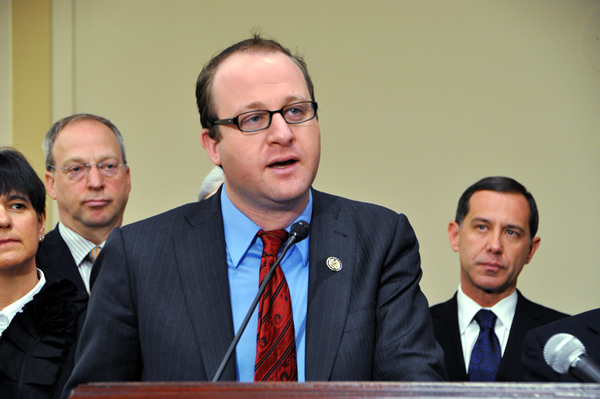
Rep. Jared Polis has pledged to become the lead sponsor of ENDA in the next Congress (Blade file photo by Michael Key)
A Colorado congressman who’s set to become the most senior openly gay member of the U.S. House is pledging to take the lead on perhaps the most high-profile piece of pro-LGBT legislation: the Employment Non-Discrimination Act.
Rep. Jared Polis (D-Colo.) said during a Washington Blade interview on Tuesday that he intends to become the chief sponsor of ENDA following the retirement of gay Rep. Barney Frank (D-Mass.), who’s championed the bill since 2007.
“I plan on introducing the Employment Non-Discrimination Act in the next session,” Polis said. “Across our country, gays and lesbians face discrimination in the workplace and lose their jobs and their livelihood. It’s wrong and it’s got to end. People shouldn’t be fired in this country just because of who they date in their private life.”
In addition to taking the lead on ENDA, Polis said he’ll remain the chief sponsor of another pro-LGBT measure called the Student Non-Discrimination Act — legislation based on Title IX that would prohibit the bullying and discrimination of LGBT students in school.
Polis said he still wants to see President Obama issue an executive order requiring federal contractors to institute LGBT-inclusive non-discrimination policies. The White House said Obama wouldn’t issue the directive at this time in April, but it’s unclear where that stands in the wake of Election Day.
“I, of course, believe that the White House should move forward with preventing discrimination toward contractors,” Polis said. “That’s always been my position.”
Polis became the first public official to go on record in support of the executive order when he told the Blade during an interview in March 2011 that he’s behind the idea.
And Polis has other goals. He’s weighing a run for a seat in the House Democratic leadership as vice chair of the Democratic caucus — and his win would be another milestone because no member of the LGBT community has ever been elected to House leadership.
“I’m still looking at doing that,” Polis said. “I think it would be great to have more diversity in our caucus leadership. There’s never been a member of the LGBT community in caucus leadership.”
But Polis said he isn’t certain if he’ll make the bid and is waiting to see what positions other House Democrats are seeking. One lingering question is whether House Minority Leader Nancy Pelosi (D-Calif.) will continue her role as head of the caucus.
“A lot of members of the caucus are waiting to see who’s returning and who’s running for the different positions, so until that’s known, there’s no definitive candidacy, but I certainly have been talking to a lot of members about it and I’ve got a lot of encouragement from them,” Polis said.
House Democrats are set to vote on caucus leaders on Nov. 29. The vice chair ranks just below the House Democratic caucus chair. In addition to other duties, the vice chair has a seat on the Steering & Policy Committee, which assigns committee membership to Democrats and advises them on policy decisions.
The current vice chair of the House Democratic caucus is Rep. Xavier Becerra (D-Calif.), but he’s expected to leave that role to pursue the position as caucus chair. Polis may have competition if he launches a bid to replace him. Other names that have been mentioned as possibilities as vice chair are Reps. Joe Crowley (D-N.Y.) and Barbara Lee (D-Calif.).
But as far as movement on pro-LGBT bills, Polis was pessimistic — either during the lame duck session or next year at the start of the 113th Congress — as long as Republicans remain in control of the House. Polis said the votes may actually be present in the Republican-controlled House to pass LGBT bills, but the problem is Republican leadership prevents the measures from coming to the floor.
“We have bipartisan support whether it’s ending workplace discrimination or my Student Non-Discrimination Act or housing non-discrimination,” Polis said. “Those would be very close votes if they were put to the House as a whole, but Republican leadership has refused to allow those bills to even advance to the floor.”
One possible way to skirt House leadership would be to move pro-LGBT bills to the floor via a discharge petition. If a majority of House members sign a discharge petition for any particular bill, it would go to the floor regardless of the desire of House leadership. Polis acknowledged that route as a possibility, but was skeptical about its chances.
“We can certainly file one,” Polis said. “Certainly in my time in Congress and long before it, there has never been a successful discharge petition … There certainly hasn’t been one in my time, or in the immediate past before my time.”
That last successful discharge petition was more than 10 years ago for the Bipartisan Campaign Reform Act, which later became known as McCain-Feingold, in 2001.
But the situation in the Democratic-controlled Senate is a different story. As in the 111th Congress, which saw a Senate committee vote on the Respect for Marriage Act and a hearing on ENDA, Polis said some progress could be made on pro-LGBT bills in that chamber — and possibly a successful floor vote on some bills.
“You’d have to ask a senator about that, but I think they could forge a majority of senators to move forward on passing the bill out of the Senate,” Polis said. “That doesn’t mean that [House Speaker John] Boehner or [House Majority Leader Eric] Cantor would take it up in the House, but at least we’d have it on record as passing the Senate.”
Despite the divided government, one initiative that may see progress in the 113th Congress is comprehensive immigration reform. House Speaker John Boehner has signaled he may be willing to work on this legislation in the wake of Republican losses and the party’s poor showing among Latino voters on Election Day.
LGBT advocates are interested in comprehensive immigration reform and are seeking a provision enabling gay Americans to sponsor their foreign partners seeking residency in the United States. Standalone legislation that would address this issue is known as the Uniting American Families Act.
But Polis, who’s also been a leading advocate for comprehensive immigration reform, said he’s unsure at this time what provisions could be made part of the bill and whether the legislation would include the pro-gay language sought by LGBT immigration advocates.
“At this point, besides a few words of encouragement from Speaker Boehner, I really don’t know what an immigration package would look like,” Polis said. “I’ve long been active on this issue and would love to see comprehensive immigration reform, but we need to see what the Republicans are willing to agree to and we haven’t even seen the starting point for that discussion even.”
CORRECTION: An initial version of this article said Joe Donnelly was in contention as House Democratic vice chair. The Blade regrets the error.





U.S. Supreme Court
US Supreme Court rules Idaho to enforce gender care ban
House Bill 71 signed in 2023


BY MIA MALDONADO | The U.S. Supreme Court has allowed Idaho to enforce House Bill 71, a law banning Idaho youth from receiving gender-affirming care medications and surgeries.
In an opinion issued Monday, the U.S. Supreme Court granted the state of Idaho’s request to stay the preliminary injunction, which blocked the law from taking effect. This means the preliminary injunction now only applies to the plaintiffs involved in Poe v. Labrador — a lawsuit brought on by the families of two transgender teens in Idaho who seek gender-affirming care.
Monday’s Supreme Court decision enforces the gender-affirming care ban for all other trans youth in Idaho as the lawsuit remains ongoing in the Ninth Circuit Court of Appeals.

The American Civil Liberties Union and the ACLU of Idaho, both of whom represent the plaintiffs, said in a press release Monday that the ruling “does not touch upon the constitutionality” of HB 71. The groups called Monday’s ruling an “awful result” for trans Idaho youth and their families.
“Today’s ruling allows the state to shut down the care that thousands of families rely on while sowing further confusion and disruption,” the organizations said in the press release. “Nonetheless, today’s result only leaves us all the more determined to defeat this law in the courts entirely, making Idaho a safer state to raise every family.”
Idaho Attorney General Raúl Labrador in a press release said the state has a duty to protect and support all children, and that he is proud of the state’s legal stance.
“Those suffering from gender dysphoria deserve love, support and medical care rooted in biological reality,” Labrador said. “Denying the basic truth that boys and girls are biologically different hurts our kids. No one has the right to harm children, and I’m grateful that we, as the state, have the power — and duty — to protect them.”
Recap of Idaho’s HB 71, and what led to SCOTUS opinion
Monday’s Supreme Court decision traces back to when HB 71 was signed into law in April 2023.
The law makes it a felony punishable for up to 10 years for doctors to provide surgeries, puberty-blockers and hormones to trans people under the age of 18. However, gender-affirming surgeries are not and were not performed among Idaho adults or youth before the bill was signed into law, the Idaho Capital Sun previously reported.
One month after it was signed into law, the families of two trans teens sued the state in a lawsuit alleging the bill violates the 14th Amendment’s guarantee of equal protection under the law.
In late December, just days before the law was set to take effect in the new year, U.S. District Judge B. Lynn Winmill blocked the law from taking effect under a preliminary injunction. In his decision, he said he found the families likely to succeed in their challenge.
The state of Idaho responded by appealing the district court’s preliminary injunction decision to the Ninth Circuit, to which the Ninth Circuit denied. The state of Idaho argued the court should at least enforce the ban for everyone except for the plaintiffs.
After the Ninth Circuit’s denial, the Idaho Attorney General’s Office in February sent an emergency motion to the U.S. Supreme Court, the Idaho Press reported. Monday’s U.S. Supreme Court decision agrees with the state’s request to enforce its ban on trans health care for minors, except for the two plaintiffs.
******************************************************************************************

Mia Maldonado joined the Idaho Capital Sun after working as a breaking news reporter at the Idaho Statesman covering stories related to crime, education, growth and politics. She previously interned at the Idaho Capital Sun through the Voces Internship of Idaho, an equity-driven program for young Latinos to work in Idaho news. Born and raised in Coeur d’Alene, Mia moved to the Treasure Valley for college where she graduated from the College of Idaho with a bachelor’s degree in Spanish and international political economy.
******************************************************************************************
The preceding piece was previously published by the Idaho Capital Sun and is republished with permission.
The Idaho Capital Sun is the Gem State’s newest nonprofit news organization delivering accountability journalism on state politics, health care, tax policy, the environment and more.
We’re part of States Newsroom, the nation’s largest state-focused nonprofit news organization.
Kansas
Kansas governor vetoes ban on health care for transgender youth
Republican lawmakers have vowed to override veto
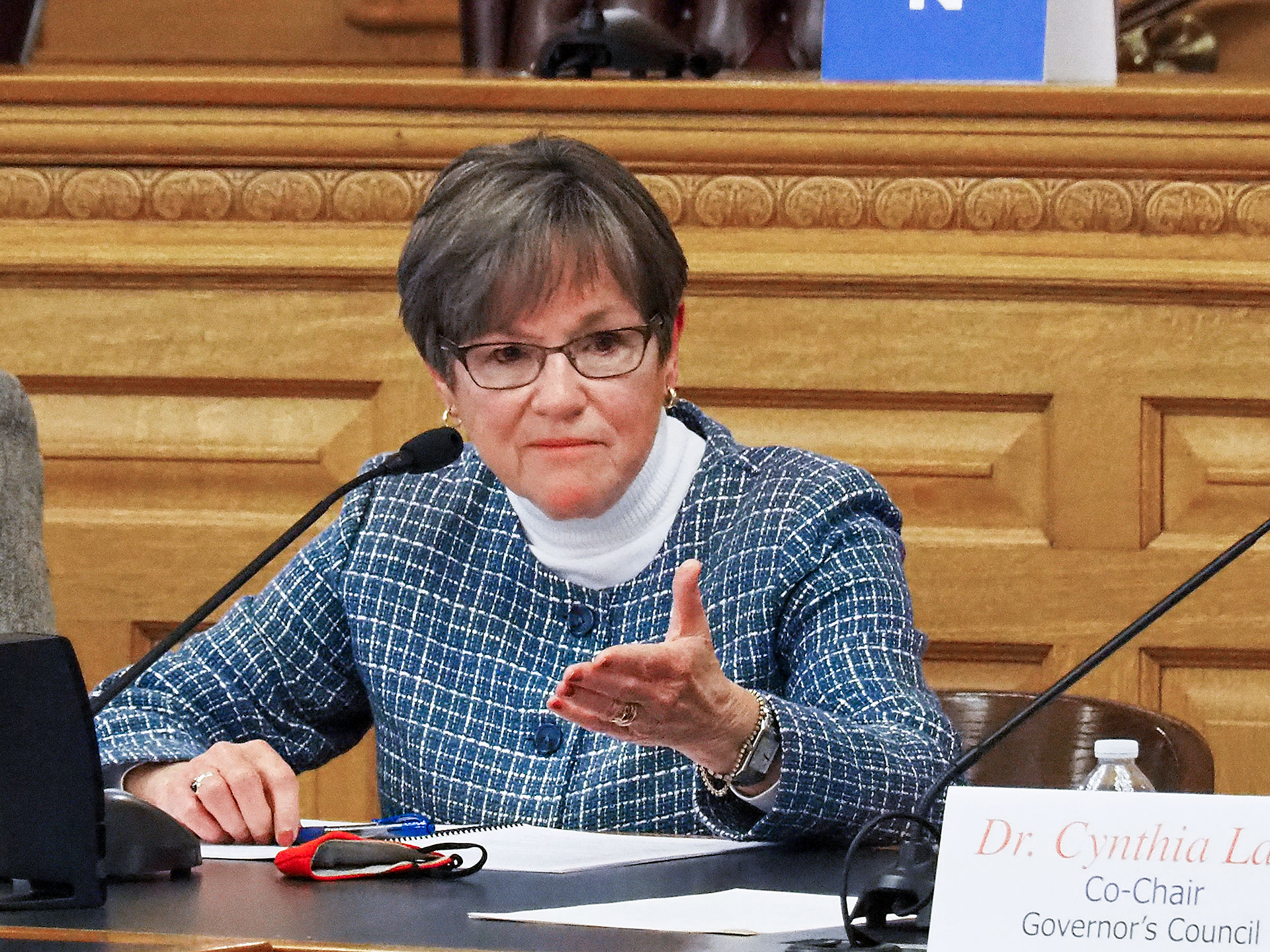

BY TIM CARPENTER | Gov. Laura Kelly flexed a veto pen to reject bills Friday prohibiting gender identity health care for transgender youth, introducing a vague crime of coercing someone to have an abortion and implementing a broader survey of women seeking abortion that was certain to trigger veto override attempts in the Republican-led House and Senate.
The decisions by the Democratic governor to use her authority to reject these health and abortion rights bills didn’t come as a surprise given her previous opposition to lawmakers intervening in personal decisions that she believed ought to remain the domain of families and physicians.
Kelly said Senate Bill 233, which would ban gender-affirming care for trans minors in Kansas, was an unwarranted attack on a small number of Kansans under 18. She said the bill was based on a politically distorted belief the Legislature knew better than parents how to raise their children.
She said it was neither a conservative nor Kansas value to block medical professionals from performing surgery or prescribing puberty blockers for their patients. She said stripping doctors of their licenses for serving health interests of patients was wrong. Under the bill, offending physicians could be face lawsuits and their professional liability insurance couldn’t be relied on to defend themselves in court.
“To be clear, this legislation tramples parental rights,” Kelly said. “The last place that I would want to be as a politician is between a parent and a child who needed medical care of any kind. And, yet, that is exactly what this legislation does.”
Senate President Ty Masterson (R-Andover) and House Speaker Dan Hawkins (R-Wichita) responded to the governor by denouncing the vetoes and pledging to seek overrides when legislators returned to the Capitol on April 26. The trans bill was passed 27-13 in the Senate and 82-39 in the House, suggesting both chambers were in striking distance of a two-thirds majority necessary to thwart the governor.
“The governor has made it clear yet again that the radical left controls her veto pen,” Masterson said. “This devotion to extremism will not stand, and we look forward to overriding her vetoes when we return in two weeks.”
Cathryn Oakley, senior director of the Human Rights Campaign, said the ban on crucial, medically necessary health care for trans youth was discriminatory, designed to spread dangerous misinformation and timed to rile up anti-LGBTQ activists.
“Every credible medical organization — representing over 1.3 million doctors in the United States — calls for age-appropriate, gender-affirming care for transgender and nonbinary people,” Oakley said. “This is why majorities of Americans oppose criminalizing or banning gender-affirming care.”
Abortion coercion
Kelly also vetoed House Bill 2436 that would create the felony crime of engaging in physical, financial or documentary coercion to compel a girl or woman to end a pregnancy despite an expressed desire to carry the fetus to term. It was approved 27-11 in the Senate and 82-37 in the House, again potentially on the cusp of achieving a veto override.
The legislation would establish sentences of one year in jail and $5,000 fine for those guilty of abortion coercion. The fine could be elevated to $10,000 if the adult applying the pressure was the fetuses’ father and the pregnant female was under 18. If the coercion was accompanied by crimes of stalking, domestic battery, kidnapping or about 20 other offenses the prison sentence could be elevated to 25 years behind bars.
Kelly said no one should be forced to undergo a medical procedure against their will. She said threatening violence against another individual was already a crime in Kansas.
“Additionally, I am concerned with the vague language in this bill and its potential to intrude upon private, often difficult, conversations between a person and their family, friends and health care providers,” the governor said. “This overly broad language risks criminalizing Kansans who are being confided in by their loved ones or simply sharing their expertise as a health care provider.”
Hawkins, the House Republican leader, said coercion was wrong regardless of the circumstances and Kelly’s veto of the bill was a step too far to the left.
“It’s a sad day for Kansas when the governor’s uncompromising support for abortion won’t even allow her to advocate for trafficking and abuse victims who are coerced into the procedure,” Hawkins said.
Emily Wales, president and CEO of Planned Parenthood Great Plains Votes, said HB 2436 sought to equate abortion with crime, perpetuate false narratives and erode a fundamental constitutional right to bodily autonomy. The bill did nothing to protect Kansas from reproductive coercion, including forced pregnancy or tampering with birth control.
“Planned Parenthood Great Plains Votes trusts patients and stands firmly against any legislation that seeks to undermine reproductive rights or limit access to essential health care services,” Wales said.
Danielle Underwood, spokeswoman for Kansas for Life, said “Coercion Kelly” demonstrated with this veto a lack of compassion for women pushed into an abortion.
The abortion survey
The House and Senate approved a bill requiring more than a dozen questions be added to surveys of women attempting to terminate a pregnancy in Kansas. Colorful debate in the House included consideration of public health benefits of requiring interviews of men about reasons they sought a vasectomy birth control procedure or why individuals turned to health professionals for treatment of erectile dysfunction.
House Bill 2749 adopted 81-39 in the House and 27-13 in the Senate would require the Kansas Department of Health and Environment to produce twice-a-year reports on responses to the expanded abortion survey. The state of Kansas cannot require women to answer questions on the survey.
Kelly said in her veto message the bill was “invasive and unnecessary” and legislators should have taken into account rejection in August 2022 of a proposed amendment to the Kansas Constitution that would have set the stage for legislation further limiting or ending access to abortion.
“There is no valid medical reason to force a woman to disclose to the Legislature if they have been a victim of abuse, rape or incest prior to obtaining an abortion,” Kelly said. “There is also no valid reason to force a woman to disclose to the Legislature why she is seeking an abortion. I refuse to sign legislation that goes against the will of the majority of Kansans who spoke loudly on Aug. 2, 2022. Kansans don’t want politicians involved in their private medical decisions.”
Wales, of Planned Parenthood Great Plains Votes, said the bill would have compelled health care providers to “interrogate patients seeking abortion care” and to engage in violations of patient privacy while inflicting undue emotional distress.
Hawkins, the Republican House speaker, said the record numbers of Kansas abortions — the increase has been driven by bans or restrictions imposed in other states — was sufficient to warrant scrutiny of KDHE reporting on abortion. He also said the governor had no business suppressing reporting on abortion and criticized her for tapping into “irrational fears of offending the for-profit pro-abortion lobby.”
******************************************************************************************

Tim Carpenter has reported on Kansas for 35 years. He covered the Capitol for 16 years at the Topeka Capital-Journal and previously worked for the Lawrence Journal-World and United Press International.
The preceding story was previously published by the Kansas Reflector and is republished with permission.
******************************************************************************************
The Kansas Reflector is a nonprofit news operation providing in-depth reporting, diverse opinions and daily coverage of state government and politics. This public service is free to readers and other news outlets. We are part of States Newsroom: the nation’s largest state-focused nonprofit news organization, with reporting from every capital.
Colorado
Five transgender, nonbinary ICE detainees allege mistreatment at Colo. detention center
Advocacy groups filed complaint with federal officials on April 9

Five transgender and nonbinary people who are in U.S. Immigration and Customs Enforcement custody at a privately-run detention center in Colorado say they continue to suffer mistreatment.
The Rocky Mountain Immigrant Advocacy Network, the National Immigration Project and the American Immigration Council on April 9 filed a complaint with the Department of Homeland Security’s Offices for Civil Rights and Civil Liberties, Immigration Detention Ombudsman and Inspector General and ICE’s Office of Professional Responsibility on behalf of the detainees at the Aurora Contract Detention Facility near Denver.
Charlotte, one of the five complainants, says she spends up to 23 hours a day in her room.
She says in the complaint that a psychiatrist has prescribed her medications for anxiety and depression, but “is in the dark about her actual diagnoses because they were not explained to her.” Myriah and Elsa allege they do not have regular access to hormones and other related health care.
Omar, who identifies as trans and nonbinary, in the complaint alleges they would “start hormone replacement therapy if they could be assured that they would not be placed in solitary confinement.” Other detainees in the complaint allege staff have also threatened to place them in isolation.
“They have been told repeatedly that, if they started therapy, they would be placed in ‘protective custody’ (solitary confinement) because the Aurora facility has no nonbinary or men’s transgender housing unit,” reads the complaint. “This is so, despite other trans men having been detained in Aurora in the past, so Omar is very likely receiving misinformation that is preventing them from accessing the treatment they require.”
Omar further alleges staffers told them upon their arrival that “they had to have a ‘boy part’ (meaning a penis) to be assigned to” the housing unit in which other trans people live. Other complainants say staff have also subjected them to degrading comments and other mistreatment because of their gender identity.
“Victoria, Charlotte and Myriah are all apprehensive about a specific female guard who is assigned to the housing unit for transgender women at Aurora,” reads the complaint. “Victoria has experienced this guard peering at her through the glass on the door of her form. Charlotte, Myriah and the other women in her dorm experienced the same guard making fun of them after they complained that she had confiscated all of their personal hygiene products, like their toothbrushes and toothpaste, and replaced them with menstrual pads and tampons, which she knows they do not need.”
“She said something to them like, ‘If you were real women, you would need these things,'” reads the complaint. “The same guard told them that they had to ask her for their personal hygiene products when they wanted to use them, stripping them of their most basic agency.”
Victoria, who has been in ICE custody for more than two years, also says she does not have regular access to hormones. Victoria further claims poor food, lack of access to exercise and stress and anxiety because of her prolonged detention has caused has made her health deteriorate.
The GEO Group, a Florida-based company, operates the Aurora Contract Detention Facility.
Advocates for years have complained about the conditions for trans and nonbinary people in ICE custody and have demanded the agency release all of them.
Roxsana Hernández, a trans Honduran woman with HIV, on May 25, 2018, died in ICE custody in New Mexico. Her family in 2020 sued the federal government and the five private companies who were responsible for her care.
Johana “Joa” Medina Leon, a trans Salvadoran woman, on June 1, 2019, passed away at a Texas hospital four days after her release from ICE custody. Kelly González Aguilar, a trans Honduran woman, had been in ICE custody for more than two years until her release from the Aurora Contract Detention Center on July 14, 2020.
ICE spokesperson Steve Kotecki on Friday told the Blade there were 10 “self-identified transgender detainees” at the Aurora Contract Detention Center on April 11. The facility’s “transgendered units” can accommodate up to 87 trans detainees.
A 2015 memorandum then-ICE Executive Associate Director of Enforcement and Removal Operations Thomas Homan signed requires personnel to allow trans detainees to identify themselves based on their gender identity on data forms. The directive, among other things, also contains guidelines for a “respectful, safe and secure environment” for trans detainees and requires detention facilities to provide them with access to hormone therapy and other trans-specific health care.
“U.S. Immigration and Customs Enforcement (ICE) is committed to ensuring that all those in its custody reside in safe, secure and humane environments,” said Kotecki. “ICE regularly reviews each case involving self-identified transgender noncitizens and determines on a case-by-case basis whether detention is warranted.”
The complaint, however, states this memo does not go far enough to protect trans and nonbinary detainees.
“ICE’s 2015 guidance has some significant flaws,” it reads. “It fails to provide meaningful remedies for policy violations. It does not acknowledge the challenges that nonbinary people face when imprisoned by ICE and the lack of such guidance explains why the needs of nonbinary people are largely misunderstood and unmet.”
“Further, the language used to describe people who are TNB is not inclusive and does not reflect terminology adopted by the community it is meant to describe,” adds the complaint. “Although this list is not exhaustive, it addresses some of the primary concerns voiced by the complaints.”

Indian political parties for the first time include LGBTQ rights in election platforms

Ugandan activists appeal ruling that upheld Anti-Homosexuality Act

US Supreme Court rules Idaho to enforce gender care ban

Reenactment of first gay rights picket at White House set for April 17

Preserving our tapestry: Navigating European elections, empowering queer women and the imperative of safe spaces

Netanyahu must go!

Day of [no] silence, a call to speak out against anti-LGBTQ+ hate

Five transgender, nonbinary ICE detainees allege mistreatment at Colo. detention center

Congolese lawmaker introduces anti-homosexuality bill

Four LGBTQ candidates running for delegate to Democratic National Convention from D.C.
-
 Opinions5 days ago
Netanyahu must go!
-
 LGBTQ Non-Profit Organizations5 days ago
Day of [no] silence, a call to speak out against anti-LGBTQ+ hate
-
 Colorado3 days ago
Five transgender, nonbinary ICE detainees allege mistreatment at Colo. detention center
-
 Africa1 day ago
Congolese lawmaker introduces anti-homosexuality bill