
a&e features
LGBTQ and cannabis activists say histories long intertwined
Overlap of efforts goes back to ‘80s in California during AIDS peak
Marijuana legalization is often seen as a criminal justice issue. In 2017 alone, more than 600,000 people were arrested on marijuana violations and advocates across the country are pushing for its decriminalization to reduce arrest rates.
But many say the legalization of pot is also an LGBT issue. Not only are LGBT people more likely to use marijuana, but the initial push for medical marijuana legalization in the U.S. started in response to the AIDS epidemic.
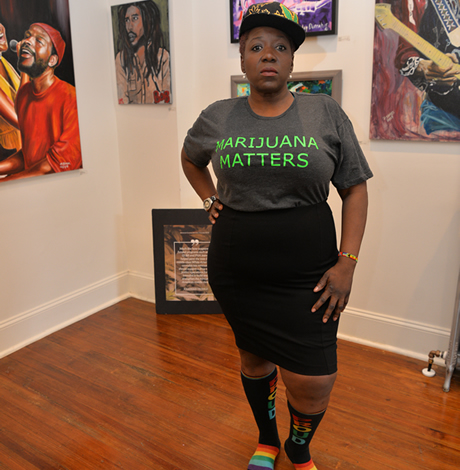
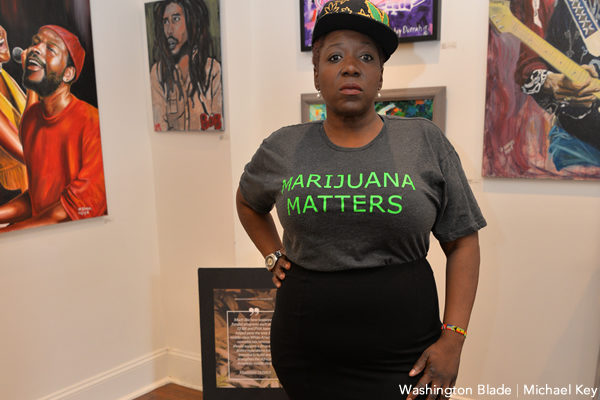
Khadijah Tribble, an HIV and cannabis activist who studied marijuana policy at the Harvard Kennedy School and now leads a social enterprise organization called Marijuana Matters, says she saw an intersection between the LGBTQ community, the HIV epidemic and marijuana legalization in her research.
“The LGBTQ community out in California were the first main activists pushing for medicinal marijuana laws,” Tribble says.
This push came in the early 1990s, says Paul Scott, a longtime marijuana and HIV activist and current president of the Los Angeles Black Gay Pride Association.
Scott lived in San Francisco in 1994.
“The AIDS crisis was so damaging at the time,” he remembers. But the northern Californian city was “progressive” in addressing it.
“Marijuana was just part of the treatment,” Scott says. “It helped alleviate some of the symptoms of AIDS and the horrible cocktails they put them on initially, which were almost proving as deadly as the virus was.”
According to Scott, “a guy named Dennis Peron worked with City Hall, got the District Attorney of San Francisco involved, and got the ball rolling.”
Peron, whose partner Jonathan West died of AIDS in 1990, sold weed in The Castro to men with HIV. In 1991, he gathered support for Proposition P in San Francisco. The resolution, which passed with 79 percent of the vote, demanded the state government allow marijuana for medicinal use. Peron went on to start the San Francisco Cannabis Buyers Club and in 1996, co-authored California Proposition 215. The proposition, which passed and remains in place today, permits the use of medical marijuana in the state.
“We had all these other diseases that marijuana helps for. But it wasn’t until the visual effect of young white men dying in the hospitals with AIDS that it shook the conscience of America and began to change the law,” Scott says. “It wasn’t because of black folks getting arrested. It wasn’t because it was the right thing to do. For the first time, this country saw young white men dying and sprung into action to do something.”
More than 20 years after 1996, Scott and Tribble both believe marijuana legalization remains an LGBT issue today.
“For me, marijuana matters in the LGBTQ community because it always has,” Tribble says.
“It’s still an LGBT issue because it’s still not accessible to everybody everywhere,” Scott says. “HIV/AIDS is still high in black populations in the South. And they can’t get pot. They still have to break laws. So absolutely it is.”
Tribble also says the criminalization of marijuana disproportionately affects some LGBTQ people.
“Any prohibition on civil liberties tends to impact marginalized communities the most,” she says. “When you have identities that have been systematically discriminated — your gender, your sexuality — you are primed to be more marginalized by marijuana laws. If you are a cisgender white male, you are the least likely to be stopped for marijuana. If you are a person of color who is trans, you are more likely to be stopped, more likely to do time and the time will be longer.”
The sale of marijuana remains illegal in D.C., but private use is no longer outlawed.
However, in some states, such as California, Colorado, Maine and others, selling weed is now legal. As the number of these states rises, some hope marijuana will bring new business opportunities for LGBT people.
“I am an LGBT-owned business in the cannabis community,” Tribble says. “Because LGBT people have been marginalized in the prohibition, LGBT communities should be privileged when we talk about access to employment, access to entrepreneurship opportunities.”
Amber Senter is the co-founder and executive director of Supernova Women, a group of women of color in the cannabis industry. She also hopes marijuana legalization will increase LGBT business ownership but worries the reality may look different.
“When cannabis started out, it was for people who weren’t seen as normal in society,” Senter, who’s queer, says. “So in the beginning, you had a lot of obviously LGBT people.”
“Now with everything moving toward being corporate, they’re pushing everyone who was in it before out,” she says. “There will be more opportunities overall, so there will be more opportunities for LGBT people. But at the same time, the culture is not the same.”
Scott holds a similar opinion on the issue. He got into the marijuana business early, starting the second cannabis club in the U.S. He then decided to open another in a primarily black area of Los Angeles when he moved to the city.
“I want to say yes,” Scott says on whether legalization will bring more opportunities for LGBT people. “I think there’s a small window. I think I was lucky enough to create that window. But I’m being pragmatic here and once it becomes legal, it’s competitive. And if you don’t have the money, you won’t have the business.”



a&e features
What to expect at the 2024 National Cannabis Festival
Wu-Tang Clan to perform; policy discussions also planned
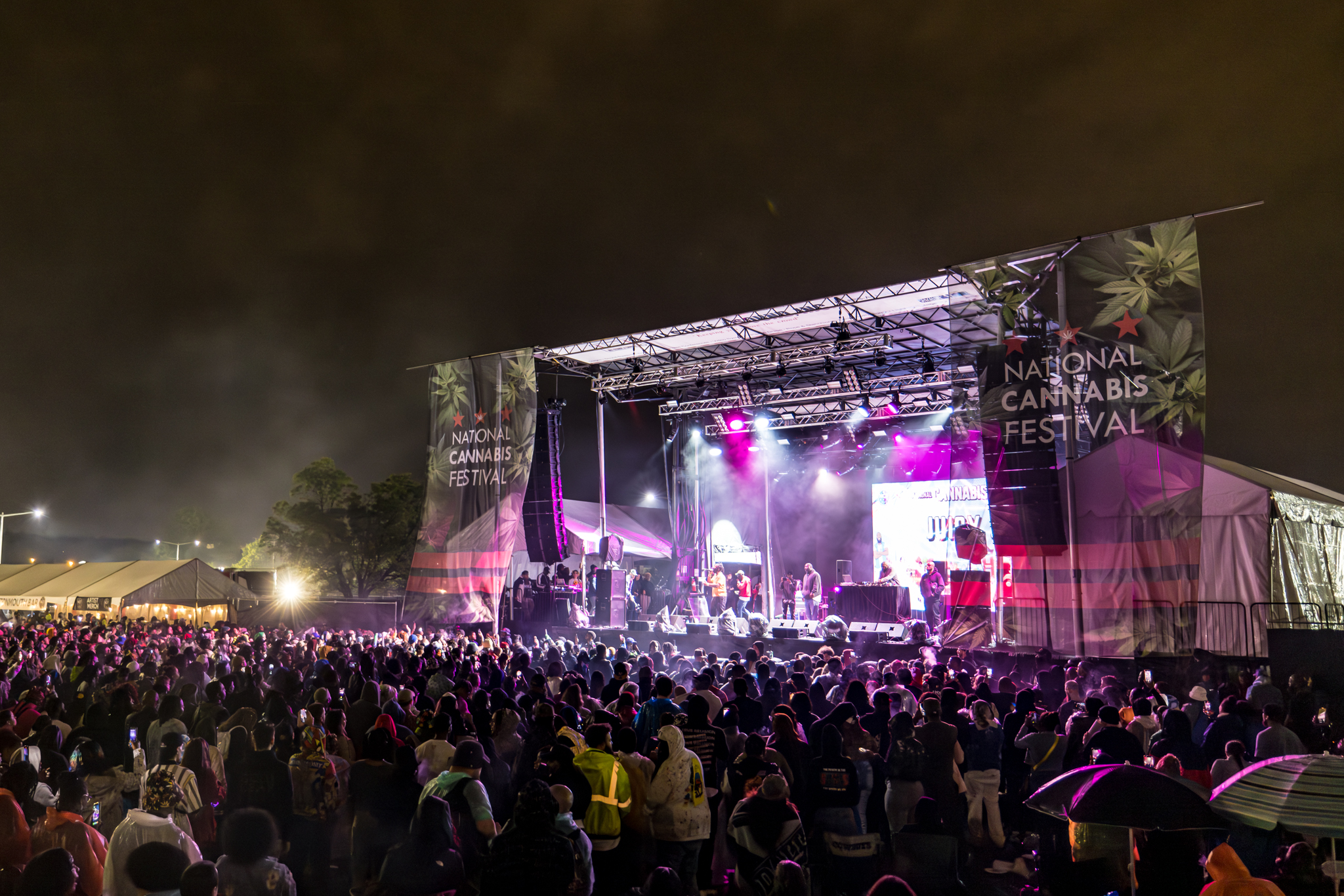
(Editor’s note: Tickets are still available for the National Cannabis Festival, with prices starting at $55 for one-day general admission on Friday through $190 for a two-day pass with early-entry access. The Washington Blade, one of the event’s sponsors, will host a LGBTQIA+ Lounge and moderate a panel discussion on Saturday with the Mayor’s Office of LGBTQ Affairs.)
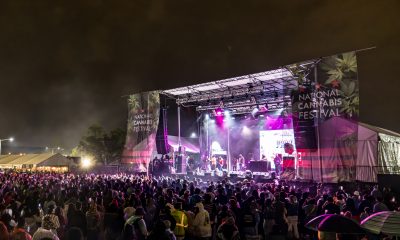
With two full days of events and programs along with performances by Wu-Tang Clan, Redman, and Thundercat, the 2024 National Cannabis Festival will be bigger than ever this year.
Leading up to the festivities on Friday and Saturday at Washington, D.C.’s RFK Stadium are plenty of can’t-miss experiences planned for 420 Week, including the National Cannabis Policy Summit and an LGBTQ happy hour hosted by the District’s Black-owned queer bar, Thurst Lounge (both happening on Wednesday).
On Tuesday, the Blade caught up with NCF Founder and Executive Producer Caroline Phillips, principal at The High Street PR & Events, for a discussion about the event’s history and the pivotal political moment for cannabis legalization and drug policy reform both locally and nationally. Phillips also shared her thoughts about the role of LGBTQ activists in these movements and the through-line connecting issues of freedom and bodily autonomy.
After D.C. residents voted to approve Initiative 71 in the fall of 2014, she said, adults were permitted to share cannabis and grow the plant at home, while possession was decriminalized with the hope and expectation that fewer people would be incarcerated.
“When that happened, there was also an influx of really high-priced conferences that promised to connect people to big business opportunities so they could make millions in what they were calling the ‘green rush,'” Phillips said.
“At the time, I was working for Human Rights First,” a nonprofit that was, and is, engaged in “a lot of issues to do with world refugees and immigration in the United States” — so, “it was really interesting to me to see the overlap between drug policy reform and some of these other issues that I was working on,” Phillips said.
“And then it rubbed me a little bit the wrong way to hear about the ‘green rush’ before we’d heard about criminal justice reform around cannabis and before we’d heard about people being let out of jail for cannabis offenses.”
“As my interests grew, I realized that there was really a need for this conversation to happen in a larger way that allowed the larger community, the broader community, to learn about not just cannabis legalization, but to understand how it connects to our criminal justice system, to understand how it can really stimulate and benefit our economy, and to understand how it can become a wellness tool for so many people,” Phillips said.
“On top of all of that, as a minority in the cannabis space, it was important to me that this event and my work in the cannabis industry really amplified how we could create space for Black and Brown people to be stakeholders in this economy in a meaningful way.”
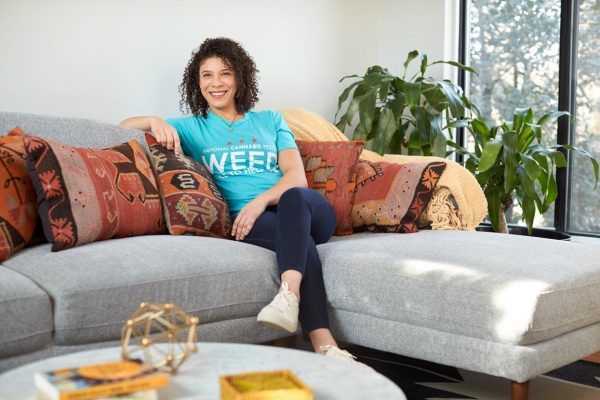
“Since I was already working in event production, I decided to use those skills and apply them to creating a cannabis event,” she said. “And in order to create an event that I thought could really give back to our community with ticket prices low enough for people to actually be able to attend, I thought a large-scale event would be good — and thus was born the cannabis festival.”
D.C. to see more regulated cannabis businesses ‘very soon’
Phillips said she believes decriminalization in D.C. has decreased the number of cannabis-related arrests in the city, but she noted arrests have, nevertheless, continued to disproportionately impact Black and Brown people.
“We’re at a really interesting crossroads for our city and for our cannabis community,” she said. In the eight years since Initiative 71 was passed, “We’ve had our licensed regulated cannabis dispensaries and cultivators who’ve been existing in a very red tape-heavy environment, a very tax heavy environment, and then we have the unregulated cannabis cultivators and cannabis dispensaries in the city” who operate via a “loophole” in the law “that allows the sharing of cannabis between adults who are over the age of 21.”
Many of the purveyors in the latter group, Phillips said, “are looking at trying to get into the legal space; so they’re trying to become regulated businesses in Washington, D.C.”
She noted the city will be “releasing 30 or so licenses in the next couple of weeks, and those stores should be coming online very soon” which will mean “you’ll be seeing a lot more of the regulated stores popping up in neighborhoods and hopefully a lot more opportunity for folks that are interested in leaving the unregulated space to be able to join the regulated marketplace.”
National push for de-scheduling cannabis
Signaling the political momentum for reforming cannabis and criminal justice laws, Wednesday’s Policy Summit will feature U.S. Sens. Raphael Warnock (D-Ga.), Jeff Merkley (D-Ore.), Elizabeth Warren (D-Mass.), and Chuck Schumer (D-N.Y.), the Senate majority leader.
Also representing Capitol Hill at the Summit will be U.S. Congresswoman Eleanor Holmes Norton (D-D.C.) and U.S. Reps. Earl Blumenauer (D-Ore.) and Barbara Lee (D-Calif.) — who will be receiving the Supernova Women Cannabis Champion Lifetime Achievement Award — along with an aide to U.S. Rep. David Joyce (R-Ohio).
Nationally, Phillips said much of the conversation around cannabis concerns de-scheduling. Even though 40 states and D.C. have legalized the drug for recreational and/or medical use, marijuana has been classified as a Schedule I substance since the Controlled Substances Act was passed in 1971, which means it carries the heftiest restrictions on, and penalties for, its possession, sale, distribution, and cultivation.
The U.S. Department of Health and Human Services formally requested the drug be reclassified as a Schedule III substance in August, which inaugurated an ongoing review, and in January a group of 12 Senate Democrats sent a letter to the Biden-Harris administration’s Drug Enforcement Administration urging the agency to de-schedule cannabis altogether.
Along with the Summit, Phillips noted that “a large contingent of advocates will be coming to Washington, D.C. this week to host a vigil at the White House and to be at the festival educating people” about these issues. She said NCF is working with the 420 Unity Coalition to push Congress and the Biden-Harris administration to “move straight to de-scheduling cannabis.”
“This would allow folks who have been locked up for cannabis offenses the chance to be released,” she said. “It would also allow medical patients greater access. It would also allow business owners the chance to exist without the specter of the federal government coming in and telling them what they’re doing is wrong and that they’re criminals.”
Phillips added, however, that de-scheduling cannabis will not “suddenly erase” the “generations and generations of systemic racism” in America’s financial institutions, business marketplace, and criminal justice system, nor the consequences that has wrought on Black and Brown communities.
An example of the work that remains, she said, is making sure “that all people are treated fairly by financial institutions so that they can get the funding for their businesses” to, hopefully, create not just another industry, but “really a better industry” that from the outset is focused on “equity” and “access.”
Policy wonks should be sure to visit the festival, too. “We have a really terrific lineup in our policy pavilion,” Phillips said. “A lot of our heavy hitters from our advocacy committee will be presenting programming.”
“On Saturday there is a really strong federal marijuana reform panel that is being led by Maritza Perez Medina from the Drug Policy Alliance,” she said. “So that’s going to be a terrific discussion” that will also feature “representation from the Veterans Cannabis Coalition.”
“We also have a really interesting talk being led by the Law Enforcement Action Partnership about conservatives, cops, and cannabis,” Phillips added.
Cannabis and the LGBTQ community
“I think what’s so interesting about LGBTQIA+ culture and the cannabis community are the parallels that we’ve seen in the movements towards legalization,” Phillips said.
The fight for LGBTQ rights over the years has often involved centering personal stories and personal experiences, she said. “And that really, I think, began to resonate, the more that we talked about it openly in society; the more it was something that we started to see on television; the more it became a topic in youth development and making sure that we’re raising healthy children.”
Likewise, Phillips said, “we’ve seen cannabis become more of a conversation in mainstream culture. We’ve heard the stories of people who’ve had veterans in their families that have used cannabis instead of pharmaceuticals, the friends or family members who’ve had cancer that have turned to CBD or THC so they could sleep, so they could eat so they could get some level of relief.”
Stories about cannabis have also included accounts of folks who were “arrested when they were young” or “the family member who’s still locked up,” she said, just as stories about LGBTQ people have often involved unjust and unnecessary suffering.
Not only are there similarities in the socio-political struggles, Phillips said, but LGBTQ people have played a central role pushing for cannabis legalization and, in fact, in ushering in the movement by “advocating for HIV patients in California to be able to access cannabis’s medicine.”
As a result of the queer community’s involvement, she said, “the foundation of cannabis legalization is truly patient access and criminal justice reform.”
“LGBTQIA+ advocates and cannabis advocates have managed to rein in support of the majority of Americans for the issues that they find important,” Phillips said, even if, unfortunately, other movements for bodily autonomy like those concerning issues of reproductive justice “don’t see that same support.”
a&e features
Juliet Hawkins’s music defies conventional categorization
‘Keep an open mind, an open heart, and a willingness to evolve’
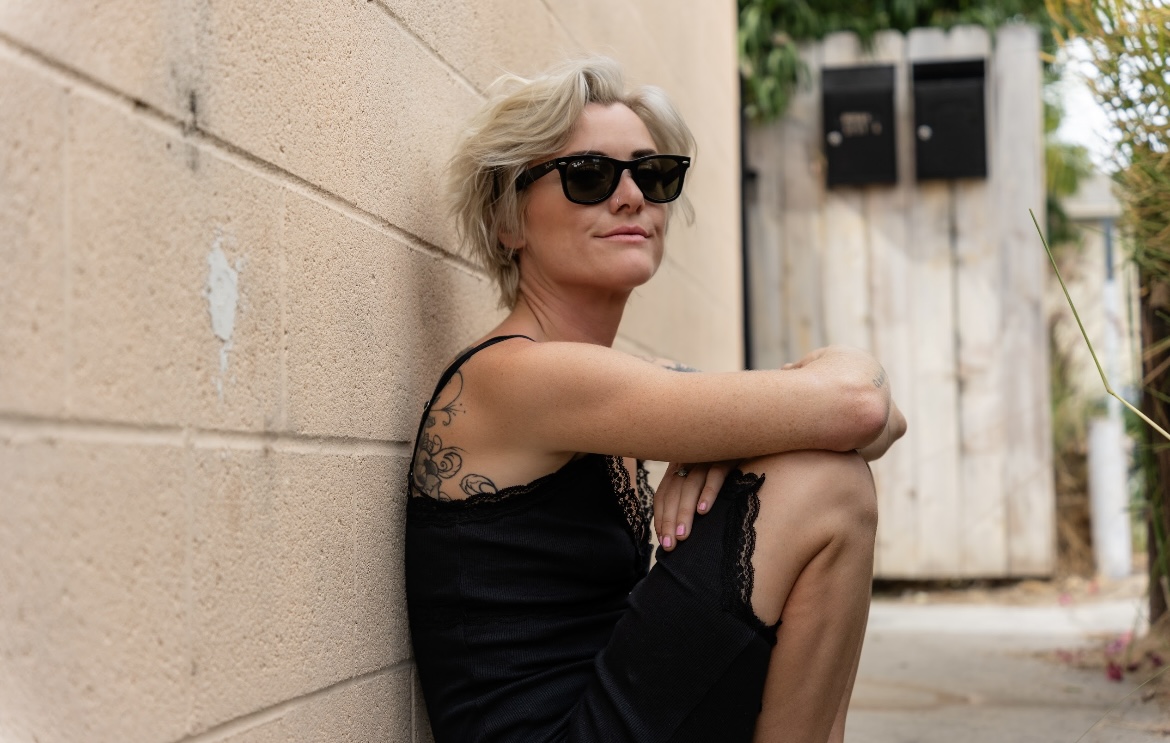
LONG BEACH, Calif. – Emerging from the dynamic music scene of Los Angeles, Juliet Hawkins seamlessly integrates deeply soulful vocals with contemporary production techniques, crafting a distinctive sound that defies conventional categorization.
Drawing inspiration from the emotive depth of Amy Winehouse and weaving together elements of country, blues, and pop, Hawkins’ music can best be described as a fusion–perhaps best termed as soulful electronica. Yet, even this characterization falls short, as Hawkins defines herself as “a blend of a million different inspirations.”
Hawkins’s musical palette mirrors her personae: versatile and eclectic. Any conversation with Hawkins makes this point abundantly clear. She exhibits the archetype of a wild, musical genius while remaining true to her nature-loving, creative spirit. Whether recording in the studio for an album release, performing live in a studio setting, or playing in front of a live audience, Hawkins delivers her music with natural grace.
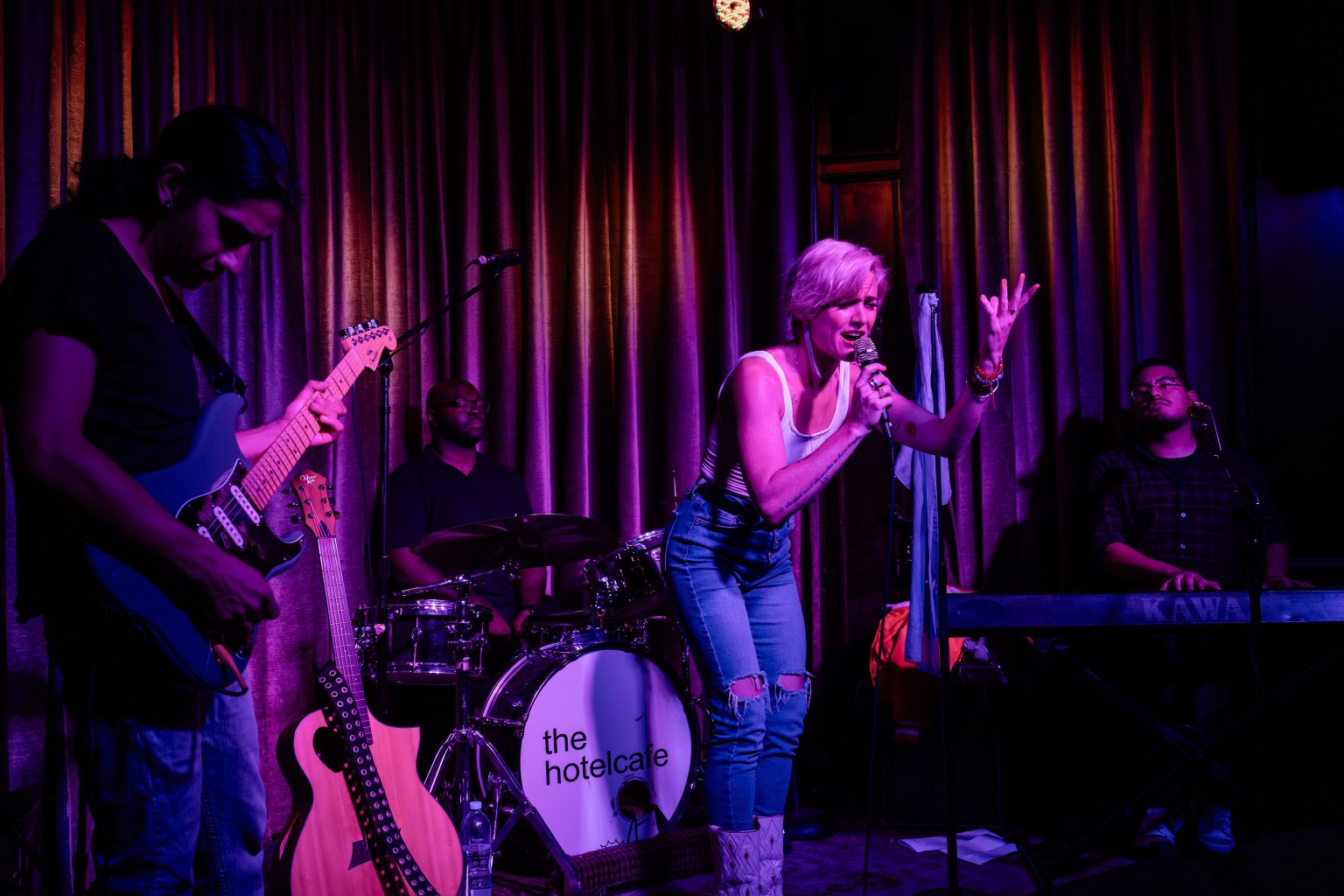
However, Hawkins’s musical journey is far from effortless. Amid personal challenges and adversity, she weaves her personal odyssey of pain and pleasure, transforming these experiences into empowering anthems.
In a candid interview with the Blade, Hawkins spoke with profound openness and vulnerability about her past struggles with opiate and heroin addiction: “That was 10 years ago that I struggled with opiates,” she shared. Yet, instead of letting her previous addiction define her, Hawkins expressed to the Blade that she harbors no shame about her past. “My newer music is much more about empowerment than recovery,” she explained, emphasizing that “writing was the best way to process trauma.”
Despite her struggles with addiction, Hawkins managed to recover. However, she emphasizes that this recovery is deeply intertwined with her spiritual connection to nature. An illustrative instance of Hawkins’ engagement with nature occurred during the COVID pandemic.
Following an impulse that many of us have entertained, she bought a van and chose to live amidst the trees. It was during this period that Hawkins composed the music for her second EP, titled “Lead with Love.”
In many ways, Hawkins deep spiritual connection to nature has been profoundly shaped by her extensive travels. Born in San Diego, spending her formative years in Massachusetts, and later moving to Tennessee before returning to Southern California, she has broadened her interests and exposed herself to the diverse musical landscapes across America.
“Music is the only thing I have left,” Hawkins confides to the Blade, highlighting the integral role that music has in her life. This intimate relationship with music is evident in her sultry and dynamic compositions. Rather than imitating or copying other artists, Hawkins effortlessly integrates sounds from some of her favorite musical influences to create something new. Some of these influences include LP, Lucinda Williams, Lana Del Rey, and, of course, Amy Winehouse, among others.
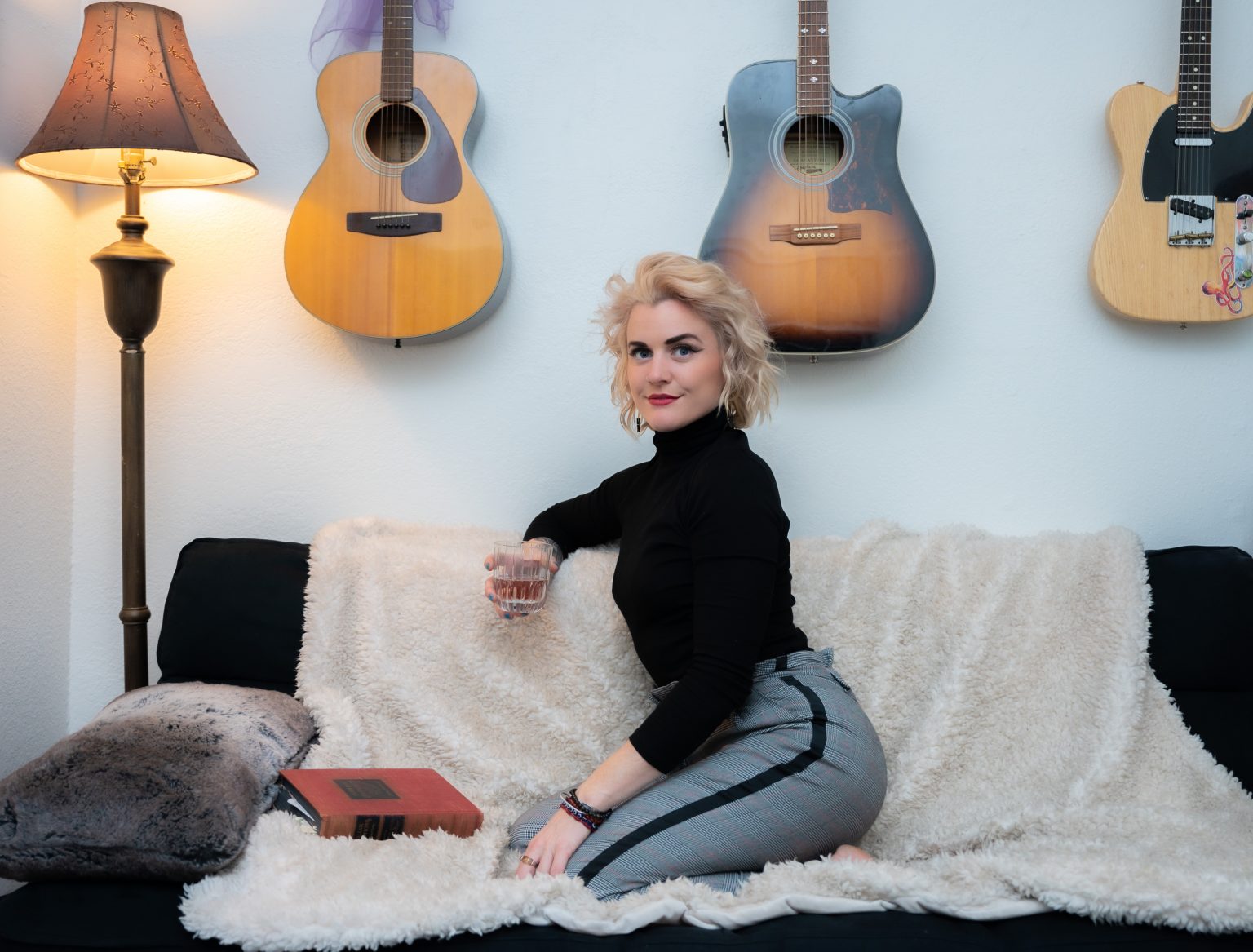
Hawkins has always been passionate about music—-she began with piano at a young age, progressed to guitar, and then to bass, eagerly exploring any instrument she could get her hands on. However, instead of following a traditional path of formalized lessons and structured music theory, Hawkins told the Blade that she “has a hard time following directions and being told what to do.”
This independent approach has led her to experiment with various genres and even join unexpected groups, such as a tribute band for Eric Clapton and Cream. While she acknowledges that her eclectic musical interests might be attributed to ADHD, she holds a different belief: “Creative minds like to move around.”
When discussing her latest musical release — “Stay True (the live album)” which was recorded in a live studio setting — Hawkins describes the experience as a form of improvisation with both herself and the band:
“[The experience] was this divine honey that was flowing through all of us.” She explains that this live album was uncertain in the music’s direction. “For a couple of songs,” Hawkins recalls, “we intuitively closed them out.” By embracing creative spontaneity and refusing to be constrained by fear of mistakes, the live album authentically captures raw sound, complete with background chatter, extended outros, and an extremely somber cover of Ozzy Osbourne’s “Crazy Train” coupled with a slow piano and accompanied strings.
While “Stay True” was a rewarding experience for Hawkins, her favorite live performance took place in an unexpected location—an unattended piano in the middle of an airport. As she began playing Beethoven’s “Moonlight Sonata”, Hawkins shared with the Blade a universal connection we all share with music: “This little girl was dancing as I was playing.”
After the performance, tears welled in Hawkins’ eyes as she was touched by the young girl’s appreciation of her musicianship. Hawkins tells the Blade, “It’s not about playing to an audience—it’s about finding your people.”
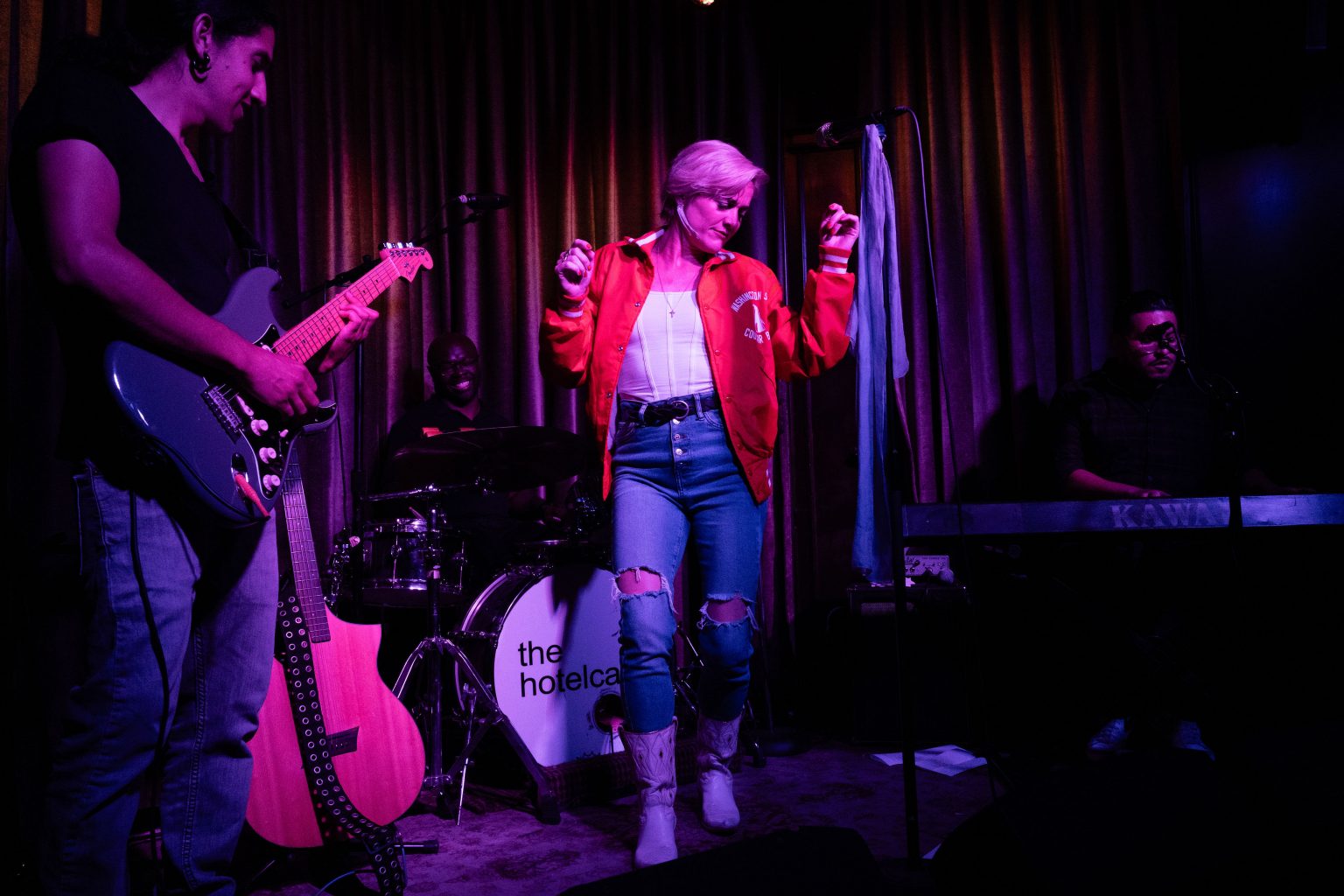
What sets Hawkins apart as an artist is her ability to connect with her audience in diverse settings. She highlights EDC, an electronic dance music festival, as a place where she unabashedly lets her “freak flag” fly and a place to connect with her people. Her affinity for electronic music not only fuels her original pop music creations, but also inspires her to reinterpret songs with an electronic twist. A prime example of this is with her electronic-style cover of Tal Bachman’s 90’s hit, “She’s So High.”
As an openly queer woman in the music industry, Hawkins is on a mission to safeguard artistic integrity. In songs like “My Father’s Men,” she bares her vulnerability and highlights the industry’s misogyny, which often marginalizes gender minorities in their pursuit of artistic expression.
She confides to the Blade, “The industry can be so sexist, misogynist, and oppressive,” and points out that “there are predators in the industry.” Yet, rather than succumbing to apathy, Hawkins is committed to advocating for gender minorities within the music industry.
“Luckily, people are rising up against misogyny, but it’s still there. ‘My Father’s Men’ is a message: It’s time for more people who aren’t just white straight men to have a say.”
Hawkins is also an activist for other causes, with a fervent belief in the preservation of bodily autonomy. Her self-directed music video “I’ll play Daddy,” showcases the joy of embracing one’s body with Hawkins being sensually touched by a plethora of hands. While the song, according to Hawkins, “fell upon deaf ears in the south,” it hasn’t stopped Hawkins from continuing to fight for the causes she believes in. In her interview, Hawkins encapsulated her political stance by quoting an artist she admires:
“To quote Pink, ‘I don’t care about your politics, I care about your kids.’”
When Hawkins isn’t writing music or being a champion for various causes, you might catch her doing the following: camping, rollerblading, painting, teaching music lessons, relaxing with Bernie (her beloved dog), stripping down for artsy photoshoots, or embarking on a quest to find the world’s best hollandaise sauce.
But at the end of the day, Hawkins sums up her main purpose: “To come together with like-minded people and create.”
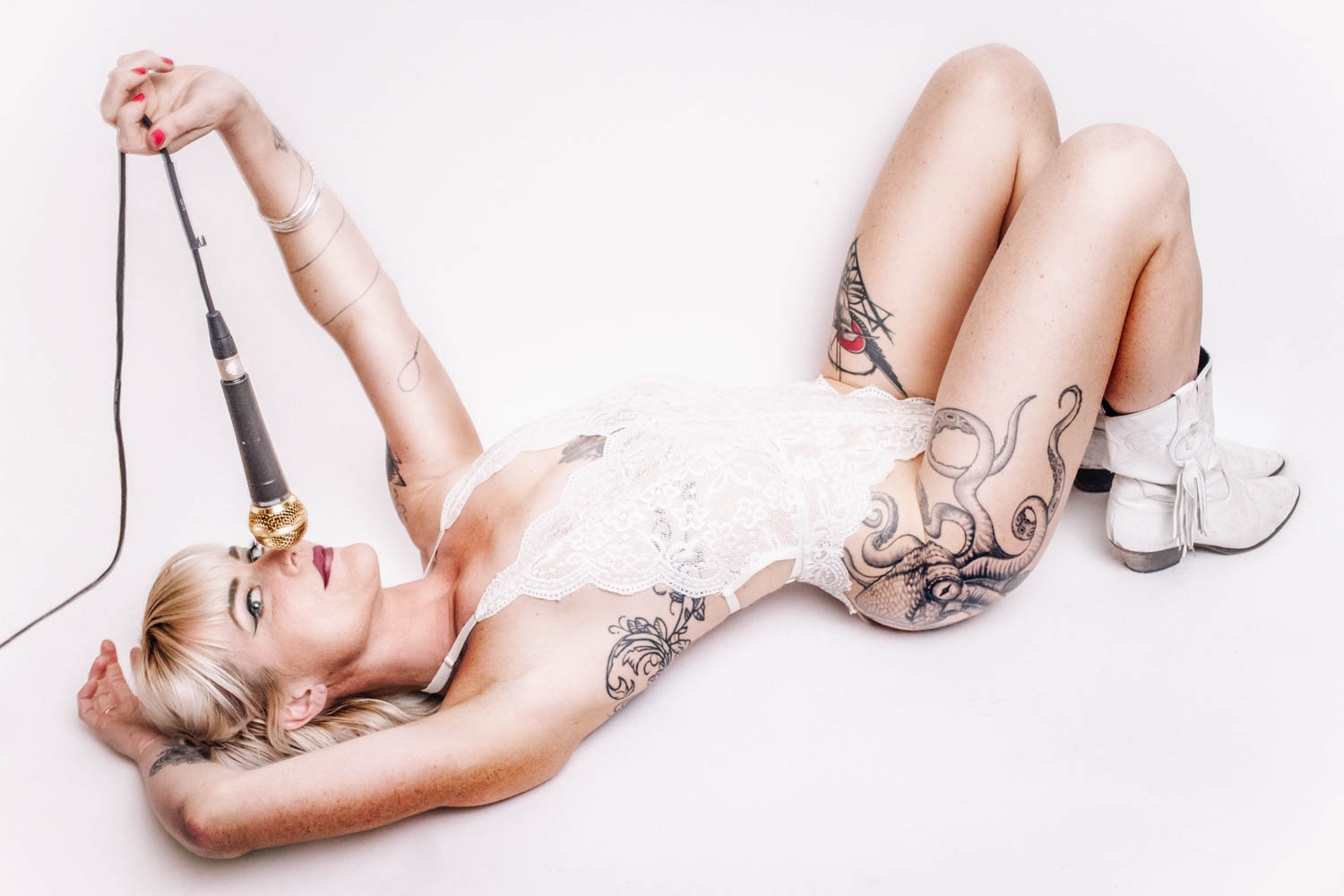
Part of this ever-evolving, coming-of-age-like journey includes an important element: plant-based medicine. Hawkins tells the Blade that she acknowledges her previous experience with addiction and finds certain plants to be useful in her recovery:
“The recovery thing is tricky,” Hawkins explains, “I don’t use opiates—-no powders and no pills—but I am a fan of weed, and I think psilocybin can be helpful when used at the right time.” She emphasizes the role of psychedelics in guiding her towards her purpose. “Thanks for psychedelics, I have a reignited sense of purpose … Music came naturally to me as an outlet to heal.”
While she views the occasional dabbling of psychedelics as a spiritual practice, Hawkins also embraces other rituals, particularly those she performs before and during live shows. “I always carry two rocks with me: a labradorite and a tiger’s eye marble,” she explains.
a&e features
Lavender Mass and the art of serious parody in protest
Part 3 of our series on the history of LGBTQ religion in D.C.
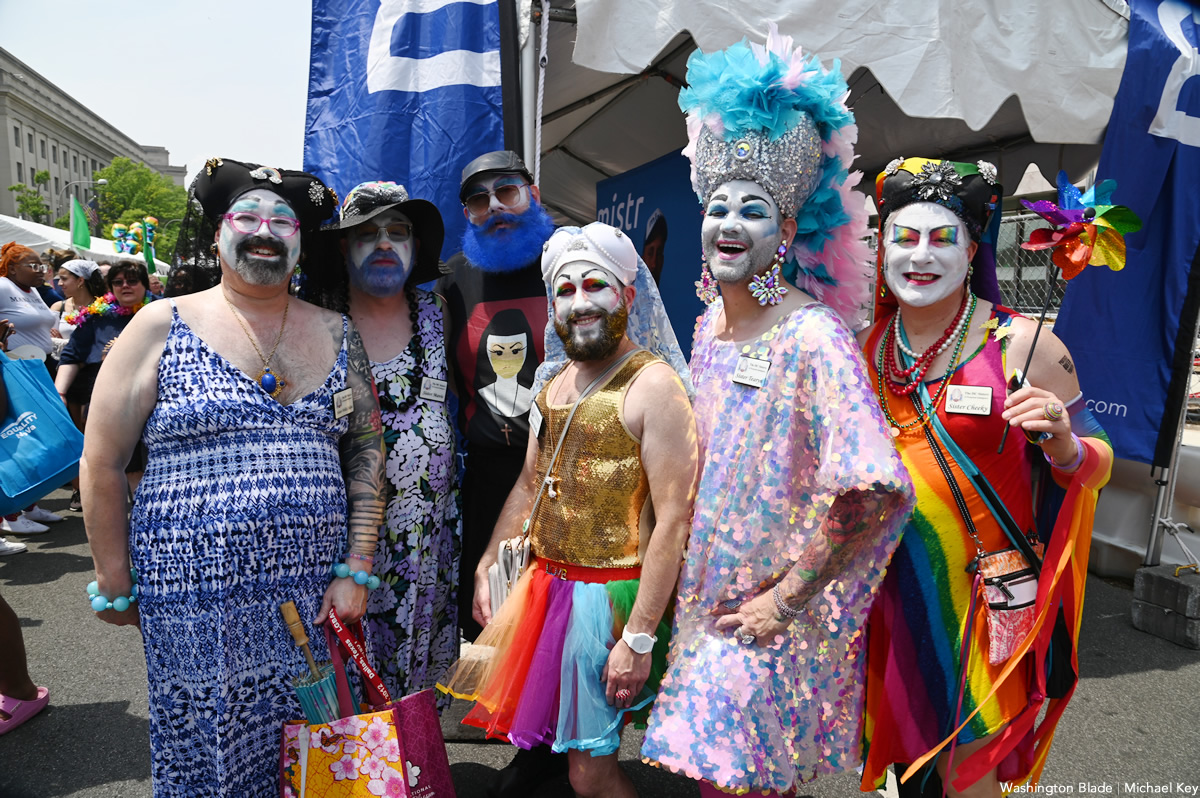
(Editor’s note: Although there has been considerable scholarship focused on LGBTQ community and advocacy in D.C., there is a deficit of scholarship focused on LGBTQ religion in the area. Religion plays an important role in LGBTQ advocacy movements, through queer-affirming ministers and communities, along with queer-phobic churches in the city. This is the final installment of a three-part series exploring the history of religion and LGBTQ advocacy in Washington, D.C. Visit our website for the previous installments.)
Six sisters gathered not so quietly in Marion Park, Washington, D.C. on Saturday, October 8, 2022. As the first sounds of the Women’s March rang out two blocks away at 11 am, the Sisters passed out candles to say Mass on the grass. It was their fifth annual Lavender Mass, but this year’s event in particular told an interesting story of religious reclamation, reimagining a meaningful ritual from an institution that seeks to devalue and oppress queer people.
The D.C. Sisters are a chapter of the Sisters of Perpetual Indulgence, an organization of “drag nuns” ministering to LGBTQ+ and other marginalized communities. What first began as satire on Easter Sunday 1979 when queer men borrowed and wore habits from a production of The Sound of Music became a national organization; the D.C. chapter came about relatively late, receiving approval from the United Nuns Privy Council in April 2016. The D.C. Sisters raise money and contribute to organizations focused on underserved communities in their area, such as Moveable Feast and Trans Lifeline, much like Anglican and Catholic women religious orders.
As Sister Ray Dee O’Active explained, “we tend to say we raise funds, fun, and hell. I love all three. Thousands of dollars for local LGBTQ groups. Pure joy at Pride parades when we greet the next generation of activists. And blatant response to homophobia and transphobia by protest after protest.” The Lavender Mass held on October 8th embodied their response to transphobia both inside and outside pro-choice groups, specifically how the overturn of Roe v. Wade in June 2022 intimately affects members of the LGBTQ+ community.
As a little history about the Mass, Sister Mary Full O’Rage, shown wearing a short red dress and crimson coronet and veil in the photo above developed the Lavender Mass as a “counterpart” or “counter narrative” to the Red Mass, a Catholic Mass held the first Sunday of October in honor Catholics in positions of civil authority, like the Supreme Court Justices. The plan was to celebrate this year’s Lavender Mas on October 1st at the Nuns of the Battlefield Memorial, located right across the street from the Cathedral of St. Matthew the Apostle, where many Supreme Court Justices attend the Red Mass every year.
As Sister Mary explained, this year “it was intended to be a direct protest of the actions of the Supreme Court, in significant measure their overturning of reproductive rights.”
Unfortunately, the October 1st event was canceled due to heavy rain and postponed to October 8th at the recommendation of Sister Ruth Lisque-Hunt and Sister Joy! Totheworld. The focus of the Women’s March this year aligned with the focus of the Lavender Mass—reproductive rights—and this cause, Sister Mary explained, “drove us to plan our Lavender Mass as a true counter-ritual and protest of the Supreme Court of who we expected to attend the Red Mass,” and who were protested in large at the Women’s March.
The “Lavender Mass was something that we could adopt for ourselves,” Sister Mary spoke about past events. The first two Masses took place at the Lutheran Church of the Reformation, right around the corner from the Supreme Court. The second Mass, as Sister Mary explained, celebrated Justice Ruth Bader Ginsburg; “we canonized her.” Canonization of saints in the Catholic Church also takes place during a Mass, a Papal Mass in particular.
During the COVID-19 pandemic, the Sisters moved the Mass outside for safety, and the third and fourth Masses were celebrated at the Nuns of the Battlefield Memorial. “It celebrates nuns, and we are nuns, psycho-clown nuns,” Sister Mary chuckled, “but we are nuns.” After the Mass, the Sisters would gather at a LGBTQ+ safe space or protest at the Catholic Church or Supreme Court. Although they often serve as “sister security” at local events, working to keep queer community members safe according to Sister Amore Fagellare, the Lavender Mass is not widely publicly advertised, out of concern for their own.
On October 8th, nine people gathered on the grass in a circle—six sisters, myself, and two people who were close with professed members—as Sister Mary called us to assemble before leading us all in chanting the chorus to Sister Sledge’s 1979 classic song “We Are Family.”
Next, novice Sister Sybil Liberties set a sacred space, whereby Sister Ruth and Sister Tearyn Upinjustice walked in a circle behind us, unspooling pink and blue ribbons to tie us together as a group. As Sister Sybil explained, “we surround this sacred space in protection and sanctify it with color,” pink for the choice to become a parent and blue for the freedom to choose not to be a parent but also as Sybil elaboration, in recognition of “the broad gender spectrum of people with the ability to become pregnant.” This intentional act was sought to fight transphobia within the fight for reproductive rights.
After singing Lesley Gore’s 1963 song “You Don’t Own Me,” six speakers began the ritual for reproductive rights. Holding out our wax plastic candles, Sister Sybil explained that each speaker would describe a story or reality connected to reproductive rights, and “as I light a series of candles for the different paths we have taken, if you recognize yourself in one of these prayers, I invite you to put your hand over your heart, wherever you are, and know that you are not alone – there is someone else in this gathered community holding their hand over their heart too.”
The Sisters went around the circle lighting a candle for those whose stories include the choice to end a pregnancy; those whose include the unwanted loss of a pregnancy or struggles with fertility; those whose include the choice to give birth, raise or adopt a child; those whose include the choice not to conceive a child, to undergo forced choice, or with no choice at all; those who have encountered violence where there “should have been tenderness and care;” and those whose reproductive stories are still being written today.
After each reading, the group spoke together, “may the beginnings and endings in our stories be held in unconditional love and acceptance,” recalling the Prayer of the Faithful or General Intercessions at Catholic Masswhere congregations respond “Lord, hear our prayer” to each petition. Sister Sybil closed out the ritual as Sister Mary cut the blue and pink ribbons between each person, creating small segments they could take away with them and tie to their garments before walking to the Women’s March. The Sisters gathered their signs, drums, and horns before walking to Folger Park together into the crowd of protestors.
At first glance, the Lavender Mass may appear like religious appropriation, just as the Sisters themselves sometimes look to outsiders. They model themselves after Angelican and Catholic women religious, in dress—they actively refer to their clothing as “habits,” their organization—members must also go through aspirant, postulant, and novice stages to be fully professed and they maintain a hierarchical authority, and in action. Like white and black habits, the Sisters all wear white faces to create a unified image and colorful coronets, varying veil color based on professed stage. Sister Allie Lewya explained at their September 2022 meeting, “something about the veils gives us a lot of authority that is undue,” but as the Sisters reinforced at the Women’s March, they are not cosplayers nor customers, rather committed clergy.
As such, the Sisters see their existence within the liminal spaces between satire, appropriation, and reimagination, instead reclaiming the basis of religious rituals to counter the power holders of this tradition, namely, to counter the Catholic Church and how it celebrates those in positions of authority who restrict reproductive rights. Similarly, the Lavender Mass is modeled after a Catholic or Anglican Mass. It has an intention, namely reproductive rights, a call to assemble, setting of a sacred space, song, chant, and prayer requests. It even uses religious terminology; each section of the Mass is ended with a “may it be/Amen/Awen/Ashay/aho.”
While this ritual—the Lavender Mass—appropriates a religious ritual of the Catholic Church and Anglican Church, this religious appropriation is necessitated by exclusion and queerphobia. As David Ford explains in Queer Psychology, many queer individuals retain a strong connection to their faith communities even though they have experienced trauma from these same communities. Jodi O’Brien builds on this, characterizing Christian religious institutions as spaces of personal meaning making and oppression. This essay further argues that the fact this ritual is adopted and reimagined by a community that the dominant ritual holder—the Catholic Church—oppressed and marginalized, means that it is not religious appropriation at all.
Religious appropriation, as highlighted in Liz Bucar’s recent book, Stealing My Religion (2022), is the acquisition or use of religious traditions, rituals, or objects without a full understanding of the community for which they hold meaning. The Sisters, however, fully understand the implications of calling themselves sisters and the connotations of performing a ritual they call a “Mass” as women religious, a group that do not have this authority in the Catholic Church. It is the reclamation of a tradition that the Sisters of Perpetual Indulgence understand because some were or are part of the Catholic Church.
Some sisters still seek out spiritual meaning, but all also recognize that the Catholic Church itself is an institution that hinders their sisters’ access and actively spreads homophobia and transphobia to this day. As such, through the Lavender Mass, the sisters have reclaimed the Mass as a tool of rebellion in support of queer identity.
Just as the Sisters recognize the meaning and power of the ritual of a Mass, along with the connotations of being a sister, the Lavender Mass fulfilled its purpose as a ritual of intention just as the Sisters fulfill public servants. “As a sister,” Sister Ruth dissected, “as someone who identifies as a drag nun, it perplexes people, but when you get the nitty gritty, we serve a similar purpose, to heal a community, to provide support to a community, to love a community that has not been loved historically in the ways that it should be loved.
The Sisters’ intentionality in recognizing and upholding the role of a woman religious in their work has been well documented as a serious parody for the intention of queer activism by Melissa Wilcox. The Lavender Mass is a form of serious parody, as Wilcox posits in the book: Queer Nuns: Religion, Activism, and Serious Parody(2018). The Mass both challenges the queerphobia of the Catholic Church while also reinforcing the legitimacy of this ritual as a Mass. The Sisters argue that although they would traditionally be excluded from religious leadership in the Catholic Church, they can perform a Mass. In doing so, they challenge the role that women religious play in the Catholic Church as a whole and the power dynamics that exclude queer communities from living authentically within the Church.
By reclaiming a tradition from a religious institution that actively excludes and traumatizes the LGBTQ+ community, the Lavender Mass is a form of religious reclamation in which an oppressed community cultivates queer religious meaning, reclaims a tradition from which they are excluded, and uses it to fuel queer activism (the fight for reproductive rights). This essay argues that the Lavender Mass goes one step further than serious parody. While the Sisters employ serious parody in their religious and activist roles, the Lavender Mass is the active reclamation of a religious tradition for both spiritual and activist ends.
Using the celebration of the Mass as it was intended, just within a different lens for a different purpose, this essay argues, is religious reclamation. As a collection of Austrian and Aotearoan scholars explored most recently in a chapter on acculturation and decolonization, reclamation is associated with the reassertion and ownership of tangibles: of rituals, traditions, objects, and land. The meaning of the Lavender Mass comes not only from the Sisters’ understanding of women religious as a social and religious role but rather from the reclamation of a physical ritual—a Mass—that has specific religious or spiritual meaning for the Sisters.
When asked why it was important to call this ritual a “Mass,” Sister Mary explained: “I think we wanted to have something that denoted a ritual, that was for those who know, that the name signifies that it was a counter-protest. And you know, many of the sisters grew up with faith, not all of them Catholics but some, so I think ‘Mass’ was a name that resonated for many of us.”
As Sister Ray said, “my faith as a queer person tends to ostracize me but the Sisters bring the imagery and language of faith right into the middle of the LGBTQ world.” This Lavender Mass, although only attended and experienced by a few of the Women’s March protests, lived up to its goal as “a form of protest that is hopefully very loud,” as Sister Millie Taint advertised in the Sisters’ September 2022 chapter meeting. It brought religious imagery and language of faith to a march for reproductive rights, using a recognized model of ritual to empower protestors.
The Lavender Mass this year, as always, was an act of rebellion, but by situating itself before the Women’s March and focusing its intention for reproductive rights, the Sisters’ reclaimed a religious ritual from a system of authority which actively oppressed LGBTQ+ peoples and those with the ability to become pregnant, namely the Catholic Church, and for harnessing it for personal, political, and spiritual power. In essence, it modelled a system of religious reclamation, by which a marginalized community takes up a religious ritual to make its own meaning and oppose the religious institution that seeks to exclude the community from ritual participation.
Emma Cieslik will be presenting on LGBTQ+ Religion in the Capital at the DC History Conference on Friday, April 6th. She is working with a DC History Fellow to establish a roundtable committed to recording and preserving this vital history. If you have any information about these histories, please reach out to Emma Cieslik at [email protected] or the Rainbow History Project at [email protected].

Walking the pathway to national cannabis legalization

The Rare Book Fair is coming to D.C.

Montgomery County police chief discusses arrest of trans student charged with planned school shooting

Calendar: April 19-25

Lambda Legal praises Biden-Harris administration’s finalized Title IX regulations

Congolese lawmaker introduces anti-homosexuality bill

Reenactment of first gay rights picket at White House draws interest of tourists

Out in the World: LGBTQ news from Europe and Asia

Ariz. governor vetoes anti-transgender, Ten Commandments bill

Reenactment of first gay rights picket at White House set for April 17
-
 Africa5 days ago
Congolese lawmaker introduces anti-homosexuality bill
-
 District of Columbia1 day ago
Reenactment of first gay rights picket at White House draws interest of tourists
-
 World5 days ago
Out in the World: LGBTQ news from Europe and Asia
-
 Arizona1 day ago
Ariz. governor vetoes anti-transgender, Ten Commandments bill