National
Democrats are trying to disqualify trans candidates. Here’s how
Jordan Korgood suspended Mass. Governor’s Council candidacy after opponent questioned residency
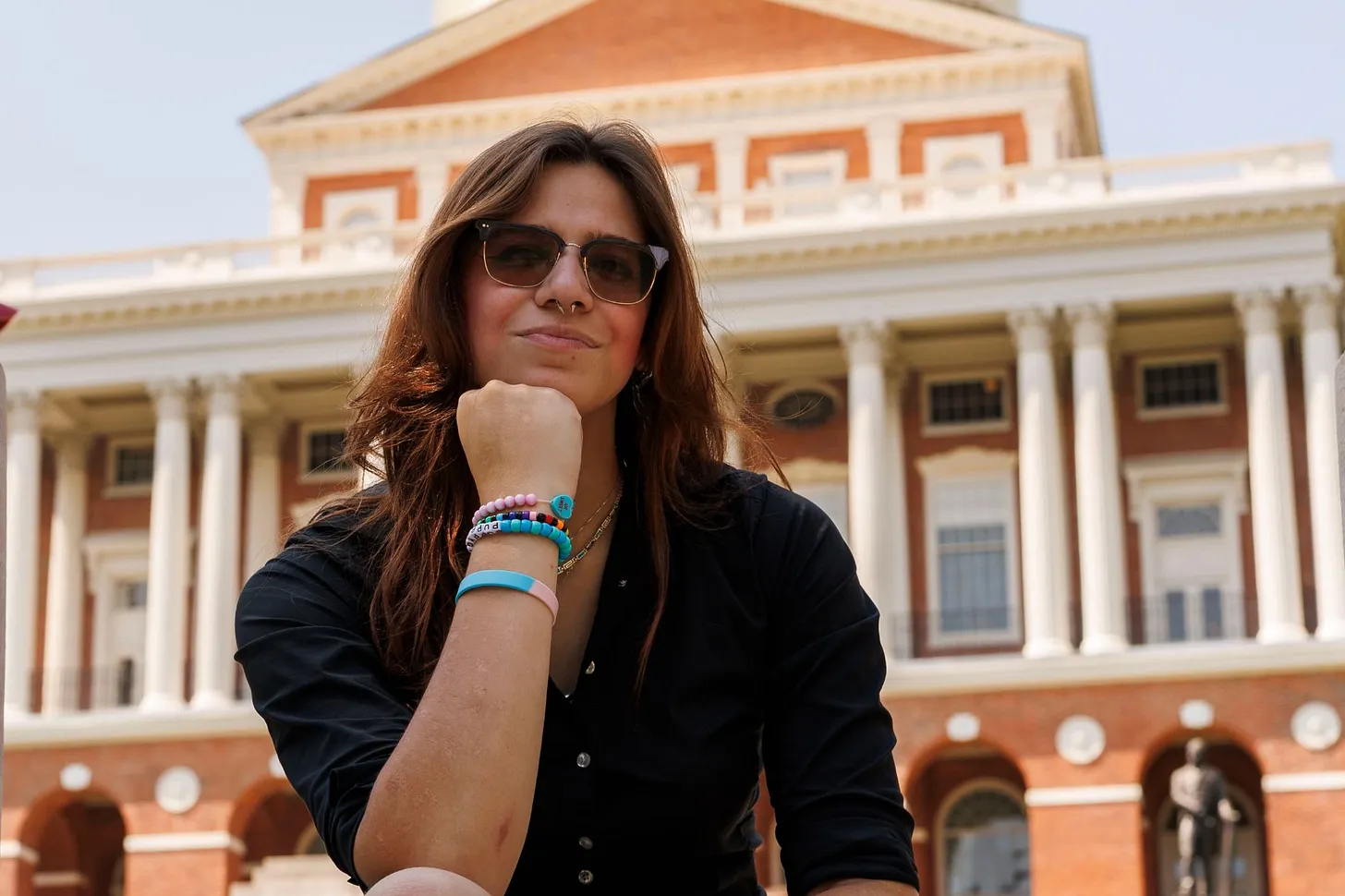
Uncloseted Media published this article on July 14.
By HOPE PISONI | Jordan Korgood has come a long way. In 2023, she ran into financial difficulties while studying at Northeastern University in Boston and ended up unhoused. Ordinary shelters are hotbeds of discrimination and mistreatment for transgender women like her, and the only trans shelter was full. So for five months, she slept in her car, in public libraries and anywhere she could find in order to continue her studies and campus activism.
Korgood, now 24, started a bid in March for a seat on Massachusetts Governor’s Council, a state board tasked with approving judicial candidates. Despite running against an incumbent who has been in office for 41 years, she secured key endorsements from local Democrats and racked up more than 7,000 Instagram followers, the equivalent of nearly one-tenth of primary voters during the last election cycle.
But last month, her momentum was ripped away. It started when Ronald Iacobucci, one of her opponents, noticed that she was still registered to vote in the 2024 election with an old New York address. He proceeded to file an objection with the state, alleging that Korgood didn’t meet the five-year residency requirement. While Korgood has lived in Massachusetts since 2019, she didn’t have a valid address to register in the state while she was unhoused. So she used her mother’s address, where she had lived before moving.
In an email to Uncloseted Media, Iacobucci wrote: “Because serious questions have arisen concerning compliance with those requirements, an objection was appropriate so the matter can be reviewed through the lawful process established by the commonwealth. This objection was nothing personal, it was always about the integrity of the process.”
While most residency challenges like this fail in Massachusetts, the State Ballot Law Commission disqualified Korgood on June 18. While she initially attempted to appeal the decision, the financial and logistical burden became too much — she estimates it drained about 40 percent of her campaign funds. So on July 10, Korgood suspended her campaign.
“I am incredibly frustrated that this is what I have to do at this point,” Korgood told Uncloseted Media. “I’ve spent thousands of hours, I’ve sacrificed my own mental health, my social life, friendships, my professional aspirations and advancement to work on this campaign, and this is how they’re ruling.”
“These are cherry-picking remote issues to target specific individuals,” Eliot Tracz, assistant professor of law at New England Law Boston, told Uncloseted Media. “They’re legitimate laws, but what they’re looking for is a selective application.”
Korgood isn’t the only trans candidate facing barriers. While a 2025 report by the LGBTQ+ Victory Institute found that trans representation among elected officials has increased by over 700 percent since 2017, candidates still face major hurdles.
Uncloseted Media found examples of trans candidates running for public office in Ohio and Michigan who have been threatened with disqualification over challenges to their eligibility. Often, the challenges come from their primary opponents: fellow Democrats.
“It should be voters, not political opponents, who decide who represents them,” Daniel Hernandez, vice president of political programs at the LGBTQ+ Victory Fund, a nonprofit supporting queer candidates for public office, told Uncloseted Media. “This is not a legitimate way to fight — if you have a disagreement on policy, that’s one thing, but to try and target trans people just because of who they are is completely unacceptable, especially in a Democratic primary.”
A growing strategy
The first widely publicized eligibility challenge against a trans candidate Uncloseted Media identified took place in Stark County, Ohio, in 2024. The Stark County Board of Elections, which has the same chairman as the county’s Democratic Party, disqualified Vanessa Joy, a trans woman who was running for a seat in the state legislature. The board cited an obscure state law requiring candidates who changed their name in the last five years to list their former name on candidacy petitions — in Joy’s case, her deadname.
“The original spirit of the law I kind of agree with,” Joy told Uncloseted Media. “But there’s hardly any information about this law ever being enforced.”
Days later, Arienne Childrey and Bobbie Arnold, two other trans candidates, had their eligibility challenged based on this law. While both candidates were cleared to run, that wasn’t the case for Joy, who never made it on the ballot.
Tom Sutton, a political science professor at Baldwin Wallace University, told Spectrum News 1 he had never seen this law enforced in his 30 years of study. At the time, the relevant forms didn’t include a space to list former names, an omission that has since been corrected.
“The only way to find out about it was to dig deep into all of the additional documents on their website,” says Joy. “They used this law against me.”
Similar challenges cropped up in Michigan this year. Joanna Whaley, a trans woman running for a seat in the state legislature, faced a legal complaint from her Democratic primary opponent Frank Liberati, who claimed in April that she should have filed campaign paperwork under her deadname.
“Because both the original and amended affidavits of identity filed by ‘Joanna Michelle Whaley’ contain FALSE statements, she/he cannot be certified to appear on the Aug. 4, 2026, primary election ballot,” the complaint argues.
The county clerk denied the challenge, which deadnames Whaley, because she had legally changed her name. Liberati’s complaint was widely condemned, with the Michigan Legislative LGBTQ+ Caucus calling it “meritless” and “transphobic.”
“It completely backfired on him,” Whaley told Uncloseted Media. “We tripled our cash on hand within a week because of the support that we’ve gotten from our community, and actually are in a stronger position now to win this race.”
While Whaley benefited from the challenge, that’s not the norm. Toni Mua, a trans woman running for a seat in the Michigan legislature, received a complaint from political activist Robert Davis in April who alleged that she also should have run under her deadname.
One of Mua’s opponents, Democrat Arthur Harrington, had discussed the challenge with Davis before it was filed, according to DeNiro Jones, Harrington’s former campaign manager. Jones told Uncloseted Media he sat in on a meeting between the two where they discussed the plan.
Jones also sent Uncloseted Media a screenshot of what he says is a text thread that Harrington sent him. In the screenshot, Davis tells Harrington, “The transgender candidate will be eliminated,” and Harrington responds that “Toni also won’t have the money to fight it.” Those texts were from April 22, two days before Davis filed the challenge.
In an email to Uncloseted Media, Davis called this story “baseless and meritless” and referred to Mua as “an illegitimate candidate seeking attention.”
“A candidate who happens to identify as transgender clearly violated Michigan Election Law and should not have been allowed to appear on the ballot,” Davis wrote. “A person’s sexual orientation nor identity played no part in the litigation seeking to have the person who filed a false affidavit of identity properly removed from the ballot.”
Arthur Harrington did not reply to multiple requests for comment. But in a June statement to Michigan Advance, he denied allegations that he was involved in Davis’s challenge.
These legal fights cost a lot. Korgood paid her lawyer $5,000. And while Mua defeated her challenge, she also had to use an estimated 40 percent of her campaign funds, or $10,000, to fight it.
In its opinion rejecting Davis’s challenge of Mua’s candidacy, the state court of appeals wrote, “Plaintiff misreads the statute … The Court of Claims did not err by concluding that Mua complied with the law or that the Wayne County Clerk did not err in rejecting plaintiff’s challenge.”
“I had to leave my job to run for this open seat,” Mua told Uncloseted Media. “It truly pisses me off, because [Democrats] have always said that they were better than this, and it’s showing truly where their support lies.”
Quinn Allred, executive director at Let Us Lead, a youth-focused voting rights nonprofit, finds these eligibility challenges from Democrats “despicable.”
“Instead of saying ‘trans people shouldn’t be running,’ [they’re entering] into this respectability politics and saying ‘oh, it’s actually because the names don’t match up, or it’s because of this residency law,’” Allred told Uncloseted Media. “[It’s a] special brand of cowardice that it takes for a Democrat to target a queer person who is also running for office.”
Uneven enforcement
While challenges to candidates’ residency aren’t uncommon in Massachusetts, they usually fail, according to Western Mass Politics & Insight, a long-running blog by local political and legal analysts.
The blog says most officials with authority over elections have a “great reluctance … to remove an individual from the ballot.” This makes Korgood’s removal unusual.
And while the State Ballot Law Commission says it considers many factors when determining a candidate’s residency and “no factor standing alone can be dispositive,” it largely cited Korgood’s voter registration in its decision despite other evidence that supports her eligibility, including apartment leases and membership in city programs.
“While there’s an undertone of legitimacy to some of those claims, it’s very selective,” Tracz says. “Most of us, when we move to a new state, don’t bother to go through the process of getting rid of our registration to vote in the prior state.”
Throughout history, Massachusetts candidates who faced similar challenges have been left on the ballot. These include former Massachusetts Gov. Mitt Romney, who received a tax credit in Utah reserved for primary residences, and Brockton, Mass., mayoral candidate Hamilton Rodrigues, who had gotten his voter registration in Brockton removed and hadn’t voted in the city for over 10 years.
Months after Joy’s disqualification in Ohio, the Mahoning County Board of Elections struck down a similar challenge against Republican Tex Fischer, a cisgender man who changed his legal name. They allowed him to stay on the ballot.
Tracz says a judge would likely find selective enforcement like this questionable.
“[That rule is] applicable to any candidate, and the question then becomes ‘Is this only being enforced against a select group of candidates?’” he says. “Why are we only investigating a specific type of candidate? I think that will give some courts pause.”
Making existing challenges worse
Trans candidates face hurdles beyond eligibility challenges. A June report from the LGBTQ+ Victory Institute found that nearly two-thirds of LGBTQ candidates face in-person harassment and nearly 80 percent of them face online harassment.
“Whether it’s threats of violence, coordinated harassment campaigns, attempts to remove people from the ballot, the cumulative effect is the same: public service becoming more difficult and less accessible to the LGBTQ community,” says Hernandez of the Victory Fund.
Whaley says the increased attention from Liberati’s challenge brought even more harassment her way. She says she reports death threats to the police weekly and has a security detail at every public appearance. Security has become her second-largest campaign expense, and for good reason; in October, her team intervened when a man wearing a Make America Great Again hat followed her around with a gun at a No Kings rally.
“At the end of the day, I want to get home to tuck my kids in bed,” Whaley says. “We could be using that money for other things, but we’re having to use it to just keep me alive.”
Eligibility challenges distract from the candidates’ policies. Childrey remembers one woman telling her she couldn’t vote for her because she’s “only about the rainbow people.”
“Most of what [I’m] talking about is affordability, funding for our public schools … bread and butter issues,” Childrey told Uncloseted Media. “There is an assumption, because we’re trans, that that’s all it is.”
Barriers also pile up intersectionally. Nearly one-third of trans people experience homelessness at some point in their lives, a rate eight times higher than the general population. This means barriers for unhoused people disproportionately affect trans candidates.
“Trans youth, trans people of color, students, those who are unhoused like [Korgood] was, or who are disabled or low-income — those barriers only compound,” Allred says.
What could change?
Zein Murib, a political science professor at Fordham University, says these incidents demonstrate the need for more leniency with official documentation, arguing that a candidate’s deadname or legal sex aren’t relevant information. Today, 45 states accept common-law names, or the name a person uses in everyday life regardless of their ID, for other legal procedures, and Whaley says this should apply to campaigns as well.
Besides these policy changes, Allred says LGBTQ advocacy groups should allocate more funds to defend trans candidates from eligibility challenges. And Hernandez says that more people should condemn these tactics and show support for those targeted.
“We need to make sure that we set the expectation that everyone … is rejecting these tactics that are disproportionately burdening our trans candidates,” he says. “We have to call it out when we see it, and we have to make sure that we are not just letting candidates fight these fights themselves.”
Mua says that she doesn’t see a future for herself or other trans people with the Democrats unless the party stands up for them. “I refuse to put myself into a party where I don’t see my safety and protection being vital.”
While Korgood says she is saddened by this outcome, she doesn’t intend for her political career to end.
“I’m incredibly proud of what we were able to accomplish, and while I am beyond disappointed and frustrated that this is how this is ending, I am so grateful that I earned the support and the attention of thousands of people in this race.”
Uncloseted Media also reached out to the Stark and Mahoning County Boards of Elections as well as the office of the Secretary of State in Ohio, and the Elections division of the Secretary of the Commonwealth of Massachusetts, under which the State Ballot Law Commission serves. None replied.


Texas
Pride In Dallas was a weekend of unabashed joy for Texas’s queer community
City came together to uplift its historic LGBTQ population

Pride arrived for a second time this year in Dallas with the local community coming together for a few more days to uplift their LGBTQ neighbors.
It was a weekend of fun inclusivity that this city is no stranger to; Dallas currently boasts the sixth-largest population of LGBTQ individuals in the U.S. While Texas at large has dealt with many discriminatory attacks, this city hasn’t faltered in showing off its unabashed pride. It isn’t without battle scars, of course, but this was a chance to remind not only residents, but the entire country: we are still here. Dallas’s LGBTQ population is currently louder and prouder than ever. And, as any of the many attendees will tell you, they plan to only get stronger — and so much more queer — every single day.
While the weekend was stacked with a myriad of activities, ranging from charity drag shows to mural unveilings, the true highlight of the weekend was Oak Lawn Live. Inspired by Market Days — an annual Chicago festival where a chunk of the city becomes a queer street fair— the Cedar Springs Merchant Association developed this event as a sprawling sign of support for the local LGBTQ population. Hosted in the “gayborhood” of Oak Lawn, it featured multiple streets of vendors, special deals from the area’s many eateries, and performances from pop stars like Daya. Even under the day’s intense heat, these streets were filled with attendees excited to flaunt their pride, with Volunteer Organizer Peter Pepper emphasizing, “This event brings the community together and reminds people: [Oak Lawn] is not just a bunch of bars. This gay neighborhood exists as a place where people can feel safe. And so, above anything else, this event is meant to remind people that we exist as a gayborhood, and that we are here for people. It’s entertainment, it’s safety, it’s community, and it’s diversity.”
It was a mission that showed in every moment of Oak Lawn Live, whether you were fighting the heat while dancing at its many stages or keeping cool with friends at one of the participating restaurants. It was those restaurants, in fact, that revealed one of the best parts of this Pride In Dallas: how amazing it was for the local economy. Because while other celebrations would have nearby establishments shut down for the day, all the ones around Oak Lawn joined in on the LGBTQ-themed festivities with fun deals and activations. This was by design, said Lee Daugherty, owner of the Oak Lawn bar ‘Alexandre’s’ and member of the Cedar Springs Merchant Association. He explained, “The merchant association is designed to encourage economic impact.”
“Not only to promote economic activity, but to make sure that businesses are promoted,” the man continued. “So they can reinvest in the community and stay here. Because a vacant storefront helps no one.” He detailed how queer residents have always shaped Dallas’s economy, one that the Association works to make inclusive and sustainable for all. It was a fact that made the entire celebration all the more meaningful, with folks understanding how the fun of this weekend would translate into better finances for queer people across the city.
All of this combined to make the Saturday of Pride In Dallas a bright day for the countless LGBTQ folks in attendance. It was so exuberant, in fact, that even out-of-towners could feel it, with one of those being the iconic podcast host herself, TS Madison. Pride In Dallas power partner Unleashed LGBTQ, run by Wesley Smoot, arranged this fun podcast taping.
The trans actress and “RuPaul’s Drag Race” judge stopped by the celebration for a live taping of her renowned podcast, “Outlaws,” where she interviewed many of Dallas’s drag royalty. Known for her cutting honesty, it didn’t take long for TS to call out the elephant in the room — namely, how Texas has seen numerous attacks against the LGBTQ community in recent months.
For non-locals, it may seem strange to have so many folks partying while there were active fights against their rights happening across the state. But Madison understood the importance of moments like these even amidst hardship, stressing, “There’s been so much going on, but we’re still here, celebrating pride … that means a lot to me, because what it lets me know is: our fight will never stop. We will never stop resisting. In the face of this political climate, in the face of turmoil, we will never, ever stop existing.”
With those words, she aptly characterized the joyous strength that came out in full force for Sunday’s Cedar Springs Pride Parade. While it only took up two streets — there was a larger parade hosted earlier this year — these blocks were packed with LGBTQ and allied locals alike. They all gathered behind the barricades, whooping in joy and stretching out their hands to the cavalcade of groups rolling by only a few feet away from them, with this parade perfectly encapsulating the communal joy of this city’s vibrant LGBTQ community.
Suffice it to say, this past Pride In Dallas was one of the city’s best LGBTQ celebrations yet. It was a weekend of fun, of laughter, and an important reminder of the strength that happens when we join together. Because Dallas knows that things aren’t easy right now. But as long as we take the time for moments like this and remind ourselves why we continue to fight, this city, and the historic queerness it holds, will always be here — standing Texas strong.
Special thanks to Virgin Hotel Dallas for the perfect stay. From check-in to check-out, it was true style!
National
Man charged in Mall of America shooting plot inspired by Pulse massacre: report
Suspect exchanged hundreds of messages, pledged loyalty to ISIS
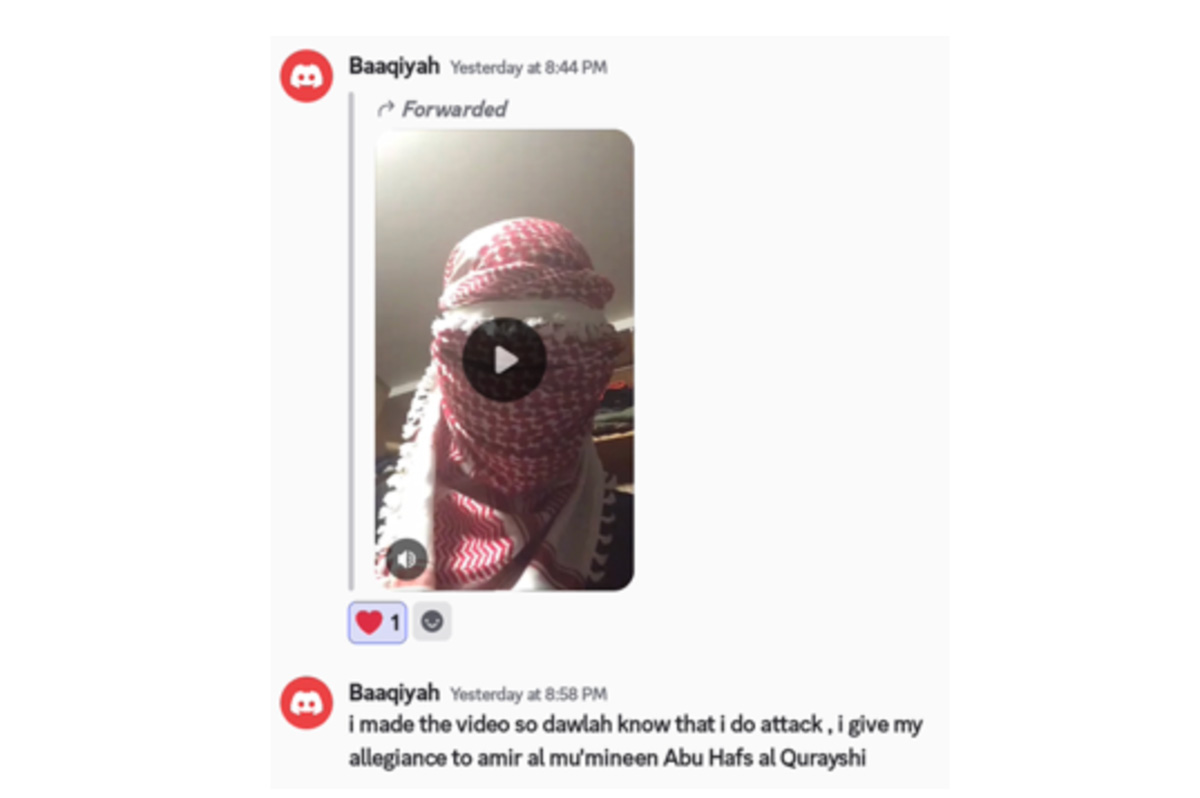
The U.S. Department of Justice charged Sheikhdoon Abdullahi Mohamud, 18, of Richfield, Minn., on Oct. 7 with one count of knowingly receiving a firearm and ammunition in order to commit a federal crime of terrorism. Mohamud allegedly planned to carry out a mass-casualty attack in support of ISIS, inspired in part by the Pulse nightclub massacre that took place on June 12, 2016 when then-29-year-old Omar Mateen murdered 49 people and wounded 58 – one of the deadliest mass shootings in U.S. history, and the deadliest targeting the LGBTQ+ community.
According to a DOJ statement release, Mohamud was arrested on Oct. 6 by the FBI, which had arranged to sell him an AK-47 assault rifle, magazines, and ammunition through an undercover FBI employee. Mohamud was arrested shortly after paying $600 in cash and taking possession of those items; he reaffirmed his intention to shoot people at the Mall of America during the transaction.
“Mohamud allegedly sought to carry out a mass-casualty shooting at the Mall of America, expressing a desire to emulate some of the most horrific ISIS-inspired attacks in the United States, including the atrocities at Pulse Nightclub and 2025 New Year’s Day attack in New Orleans,” said Assistant Attorney General for National Security John A. Eisenberg in the statement by the DOJ. “The National Security Division will continue to work closely with the FBI and Joint Terrorism Task Force to track down and prosecute ISIS-inspired terrorists in the United States.”
According to the complaint, beginning on or about December 2024, Mohamud had exchanged hundreds of messages through multiple social media and messaging apps with a confidential source, and expressed a desire to travel to Somalia to join a designated foreign terrorist organization to fight on their behalf.
The defendant stated many times that if he was unable to travel overseas because of a lack of funds, he planned to carry out a mass-casualty event in Minnesota in support of ISIS.
According to the DOJ, “In July 2026, Mohamud sent messages discussing his intent to carry out a mass-casualty shooting attack at the Mall of America because he claimed it was owned by Jews. He wrote that [he] wanted to kill 30 to 60 people so no one would go there.”
“During the course of his communications, Mohamud stated that he wanted to commit an attack similar to those of the Pulse Nightclub mass-shooting in Orlando, the Bondi Beach mass-shooting in Australia, and the New Year’s Day vehicle-ramming attack in New Orleans.”
This case is being prosecuted by Trial Attorney Ryan White of the National Security Division’s Counterterrorism Section and Assistant U.S. Attorney Benjamin Bejar for the District of Minnesota.
California
Calif. GOP gubernatorial candidate ad ‘disgusting attempt to exploit lesbian intimacy’
Activists, anti-LGBTQ religious leaders criticized Steve Hilton spot

Two women sit on a bed, a Pride flag hanging behind them. One is nervous; the other tells her to be calm and that she’ll do “all the work.” The music swells. The two hold hands and — fill out a ballot voting for Steve Hilton?
This is the new advertisement from the Hilton gubernatorial campaign that is drawing rebuke from both sides of the aisle, but for very different reasons.
Jorge Reyes Salinas, the communications director at Equality California, said the ad was an insult to the queer community.
“This ad is a disgusting attempt to exploit lesbian intimacy for political attention,” he said. The advertisement plays on media tropes that Salinas says “reduce lesbian and bisexual women … to sexual entertainment,” rather than showing them as well-rounded characters. “Any group of the LGBTQ+ community deserves the same dignity and respect as everyone else,” he said.
The ad is truly hyper-sexualized. It ends with one woman telling the other, “Now lick it.” The two pause and stare before she reveals an envelope to send the ballot, and large text pops up saying, “Just try it!”
Salinas characterized the ad as a desperate attempt to get attention from a candidate who is trailing far behind in the polls in heavily Democratic California. The Democratic candidate Xavier Becerra, who is endorsed by Equality California, holds a 25-point lead over Hilton according to recent polling by the UC Berkeley Institute of Governmental Studies.
Conservatives have also criticized the ad.
Influential evangelical Pastor Jack Hibbs thought the ad was distasteful and said, “lesbianism among college girls and some high school girls that right now is an actual pandemic of social ill.” Republican attorney general candidate Michael Gates said it undermines “the sanctity of the relationship between parents and their children.” This criticism is rather confusing because although the ad features two relatively young women, they both appear to be adults, not minors.
“The comments from Pastor Jack Hibbs should be criticized because there is nothing wrong with two women being attracted to each other,” Salinas said. “We’re calling out the ad’s stereotypes, while also rejecting the homophobia in the response to it … by other Republicans.”
The backlash from Hilton’s own party and supporters shows that an advertisement full of queer innuendo was ill-considered, considering the national GOP’s attacks on LGBTQ people in recent years. Hilton himself has been campaigning against transgender girls and women competing in school sports and using locker rooms that correspond with their gender identity. This context might be why Hilton’s political base responded to the ad just as poorly as the liberal voters he was attempting to court.
Hilton says the ad is part of a new series rolling out before Election Day, showing stereotypical California liberal archetypes voting for Hilton. He claims these ads are authentically filmed with real actors, as opposed to being A.I. generated, like many of his previous ads. One other advertisement has been released so far by the campaign showing a man at a spiritual retreat also being swayed to vote for Hilton, although it is notably absent of sexual innuendo.
Caleb Kaufman is a California Local News Fellow placed with the Los Angeles Blade. The California Local News Fellowship is a state-funded initiative to support and strengthen local news reporting. Learn more about it at fellowships.journalism.berkeley.edu/cafellows.

Dawn Huggins reflects on year-long reign as Miss Adams Morgan

How Orville Peck healed his inner child through ‘Street Fighter (2026)’

DC Center celebrates a decade of its art gallery

Calendar: October 16-22

D.C. Mayor’s Office of LGBTQ Affairs celebrates 20th anniversary

Annie Andrews denounces trans athletes after Trump targets her

On Republican Long Island, gay Democrat Chris Gallant bets on public service over politics

Report: LGBTQ exclusion costs Japanese economy billions a year

‘Governments that attack LGBTQ+ rights learn from each other’
Center Arts Gallery celebration, auction to take place on Oct. 17
-

 2026 Midterm Elections5 days ago
Annie Andrews denounces trans athletes after Trump targets her
-
2026 Midterm Elections5 days ago
On Republican Long Island, gay Democrat Chris Gallant bets on public service over politics
-
Japan5 days ago
Report: LGBTQ exclusion costs Japanese economy billions a year
-
Turkey4 days ago
‘Governments that attack LGBTQ+ rights learn from each other’