Arts & Entertainment
New ‘Carrie’ attempts to reinvent a classic for new generation
A tone that’s less horror than social commentary
The books of Stephen King have had a rocky relationship with the movies.
Adaptations of the horror icon’s work have had an impressive track record on both big screen and small, earning success and critical acclaim across five decades. Some films based on his work – like “Misery,” “Stand by Me,” “The Shawshank Redemption,” and this year’s earlier “The Long Walk” – have reached the level of “prestige” cinema, earning award glory and finding their way onto critics’ “Best of the Year” lists. Many others, though, have landed at the opposite end of the spectrum, like “Children of the Corn,” “Maximum Overdrive,” and “The Dark Tower,” all of which are frequently featured in “Worst of All Time” lists instead.
There’s also King’s own vocal criticism of adaptations he doesn’t like, most famously around Stanley Kubrick’s 1980 film of “The Shining,” which has come to be hailed as a cinematic masterpiece but continues to be a sore spot for the author himself over the alterations Kubrick made to his book; his dissatisfaction with that project led directly to his own creation of a miniseries of the novel, which remained faithful to his original storyline. In the years since, other King novels have made it to television; some, like “The Stand,” have benefitted from the nuance made possible by long-form storytelling; others have suffered from a lack of it.
Despite the hit-or-miss history of Stephen King on the screen, however, he has always remained popular, and is now arguably more so than ever. This is why we have a new adaptation of his debut novel – “Carrie,” published in 1974 – streaming on Amazon Prime; and though King himself served as one of its executive producers, his fans may not entirely love what has been done with it.
Developed and spearheaded by Mike Flanagan – himself a popular horror creator, responsible not only for previous King adaptations (“Gerald’s Game,” “Doctor Sleep,” and “The Life of Chuck,” among others) and a string of successful Netflix series (“The Haunting of Hill House,” “The Haunting of Bly Manor,” and “Midnight Mass”), it updates and expands the original novel considerably. It’s still centered on its title character, whose reclusive upbringing combines with her growing telekinetic abilities (along with the torments she endures from her domineering mother and her schoolmates) to trigger a horrific catastrophe at her high school prom, but it allows the scope to widen for a deeper look into the “backstories” of other characters, as well as invoking themes around certain social issues – online bullying, dysfunctional family relationships, school violence, conspiracy theories, exploitation of tragedy by the media – which have become exacerbated in the 50 years since King wrote the book.
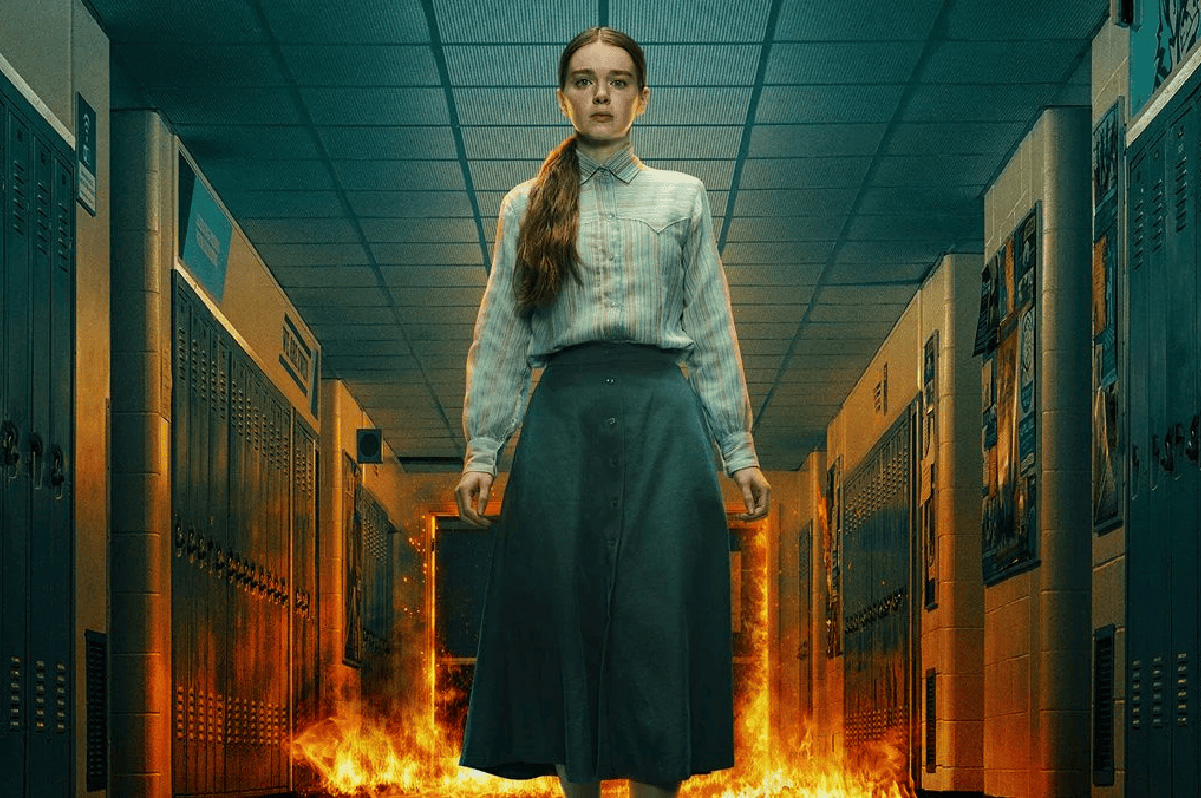
In this re-crafted version, Carrie White (Summer H. Howell) and her mother Margaret (Samantha Sloyan) have been secluded from the outside world for years, their existence kept secret until the “accidental” death of her father (Tahmoh Pennikett) leads to their discovery. Forced to participate in society, Carrie is enrolled in the local high school, while Margaret takes a job at the local big-box store. For her part, Carrie is eager enough to explore beyond the confines of home, but she quickly becomes the target of “mean girl” ringleader Chris (Alison Thornton) who seems bent on making her life miserable. There are others who offer more sympathetic treatment – new friend Sue (Siena Agudong) and her boyfriend Tommy (Joel Oulette), gym teacher Rita (Amber Midthunder), guidance counselor Mr. Moron (Tim Bagley), and others – but her struggle to fit in is not made any easier by her mother’s continued interference in her school life.
Of course, we all know what happens. Even for those who never read the original book, Brian DePalma’s 1976 screen version, starring Sissy Spacek as Carrie and Piper Laurie as her monstrous mother, is a pop culture touchstone for anyone who grew up with it, and it remains one of the few King screen adaptations to remain controversy-free in terms of appreciation by fans and critics alike. There’s no need to worry about spoiling the ending – even Flanagan’s series opens with news coverage of the “Black Prom’s” aftermath, so the story is essentially a flashback from the very beginning.
Yet “Carrie” is, as King originally wrote it, a streamlined and compelling tale that expertly and relentlessly builds suspense through the single-minded simplicity of its narrative. It’s an exercise in watching the dominos lined up methodically before the climax of seeing them all fall down in a spectacular catharsis of gore, devastation, and yes, horror. That’s the whole point – and that’s also why Flanagan’s expanded framework becomes a bit of a problem by the series’ midpoint.
In weaving new storylines around the oppressively isolated narrative of Carrie’s experience – extended explorations of toxic teen behavior, romantic relationships between various other characters, and even the inclusion of a subplot involving witch-hunters and a cult – this new vision of the story offers a depth that is absent from the original book and movie, giving us insight that humanizes and even invites sympathy for figures we would not otherwise have felt deserve it; it incorporates larger themes about society, politics, and all the other divisive issues that trickle down into the way we treat each other in private. These things might make this “Carrie” feel like a bigger story, but they make for a tone that’s less “horror” than social commentary; and frankly, with the out-of-control behavior of high schoolers dominating so much screentime, it sometimes feels like we’ve accidentally tuned into an episode of “Euphoria” by mistake.
That’s not to say Flanagan’s “Carrie” isn’t a worthwhile watch. He brings to it the same inclusive, compassionate generosity of spirit – highlighting feminist themes, incorporating queer characters, honing in on the power of kindness in a world of cruelty – that he brought to his previous adaptations of vintage horror tales. He even gives Margaret White, so hateful in King’s book and so operatically deranged in DePalma’s film, the benefit of the doubt, focusing on the motherly love and protection that drives her abusive behavior to help us understand that this is her tragedy, too.
Many viewers will surely appreciate these efforts; many others, who might prefer the operatically deranged Margaret White of the original to the softened version offered here, will not. For those who go in hoping to relive the thrills of the original, who both want and need the over-the-top American gothic horror they know, Flanagan’s changes might be a few steps too far – and while the original story’s terse and streamlined narrative doesn’t give us time to examine the fine points, keeping us locked with Carrie into her private hell, this one gives us room to reflect, diffusing the tension and denying us the satisfaction of the clear-cut horror fantasy we expect.
Even so, with excellent performances and production values all around, it’s a grade-A binge-watch that makes us appreciate the high-tone camp of DePalma’s version – and King’s original novel – with renewed fondness. Besides, it’s Halloween, so how can you resist?




Theater
Out actor on his 25-year love affair with ‘Mamma Mia’
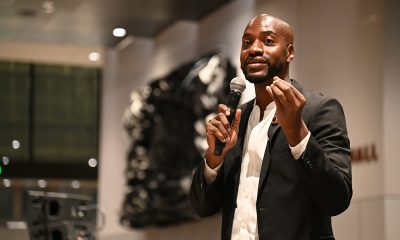
Victor Wallace plays Sam in National Theatre production

‘Mamma Mia!’
Through Nov. 15
National Theatre
1321 Pennsylvania Ave., N.W.
tickets start at $59
broadwayatthenational.com
For nearly 25 years, out actor Victor Wallace has been a big part of “Mamma Mia!”
A staple wherever hit shows are performed, the high energy juke box musical is based on songs recorded by Swedish mega-pop group ABBA. The romantic tale unfolds on an idyllic Greek Island where young bride-to-be Sophie is holding her wedding. Secretly, she’s invited a trio of men from her mother’s past, hoping that one of the three will prove to be her undetermined biological father.
Wallace came to the show as Sky, Sophie’s good-looking groom, in Las Vegas as part of the highly regarded Mandalay Bay production. Not many years later, Wallace embarked on playing an older “Mamma Mia!” character – the appealing yet regretful Sam Carmichael, a successful architect and divorced father of two (and possibly Sophie’s dad) — in numerous tours and stints on Broadway.
And now, he’s brought Sam to D.C.’s National Theatre (through Nov. 15), attracting many theatergoers eager for a repeat experience, and for some, their first time.
“I’m always surprised to learn that there are ‘Mamma Mia!” virgins out there,” says Wallace, 53. “Maybe that’s because of the show’s success, or because it’s been a part of my life for so long.”
While not touring, the handsome lyric baritone is based in his native Wisconsin. “It doesn’t make sense to keep an apartment in New York when you’re always on the road,” he says.
WASHINGTON BLADE: Frequently actors, especially those in long running shows, are asked “how do you keep it fresh?” Well, how do you?
VICTOR WALLACE: For me, I really do like ABBA’s music. I’m the type of person who can put a song on repeat for hours on end. That helps a lot. And it doesn’t hurt that “Mamma Mia!” is a fun show.
BLADE: During a break from “Mamma Mia!” you spent two weeks at Coachella Valley Repertory, playing Bruce, the closeted family man and predator in “Fun Home.” Not a warm and fuzzy guy.
WALLACE: That was different, a darker place for sure, but a great part for an actor. I don’t bring the heaviness home, I can leave that onstage, but I don’t know about doing that for months on end.
BLADE: How is it you made a quick transition from Sky to Sam in “Mamma Mia!”
WALLACE: It was all about timing. At 29, I was cast as Sky a little late, and at 34, I was a young Sam. I powdered my hair, and now I’m trying to cover the gray.
I’ve played Sam for almost 20 years. Naturally, my perspective has changed. In the beginning, I couldn’t imagine having a 20-year-old but now it’s easier.
BLADE: Were some other tours squeezed in over the years?
WALLACE: Yes, “Les Miz” and “Phantom.” I like the big ones. They’re great for my 401K.
BLADE: But it’s mostly been “Mamma Mia!” Were you always a fan?
WALLACE: Ever since I first heard ABBA on the car radio when I was a kid. For me, “Winner Takes It All” was an instant favorite. I’ve always gravitated toward the ballads.
As Sam, I sing “SOS,” “Loving Me Loving You,” and the lesser known “Our Last Summer.”
BLADE: Do you have any thoughts on the show’s staying power?
WALLACE: The movie franchise has helped. So has the gay following with “Dancing Queen” and ABBA nights at gay bars. The film “Muriel’s Wedding” [the titular lead played by Toni Collette was obsessed with ABBA] gave it a good push.
BLADE: What about “Mamma Mia!” is especially appealing to queer audiences?
WALLACE: In addition to the great music and dancing, I think it’s the themes of friendship and chosen family. While pretty universal, I feel these strike a real chord with queer theatergoers.
BLADE: Aside from your charm and talent, why do the producers keep asking you back?
WALLACE: When you’re dependable, solid, and consistent you build a reputation. But I will say this, I had to reach out to be a part of the 25th anniversary after the pandemic. And that was after I’d closed the Broadway show as Sam at the Broadhurst. I put my ego aside and sent in a reel. Sometimes you have to be the squeaky wheel.
BLADE: Eight shows a week, year after year, it must be a lot.
WALLACE: Sure, some days are harder than others. When your mindset is a little off, your body knows what to do. It’s about getting through those two hours and 40 minutes, and you’re good.
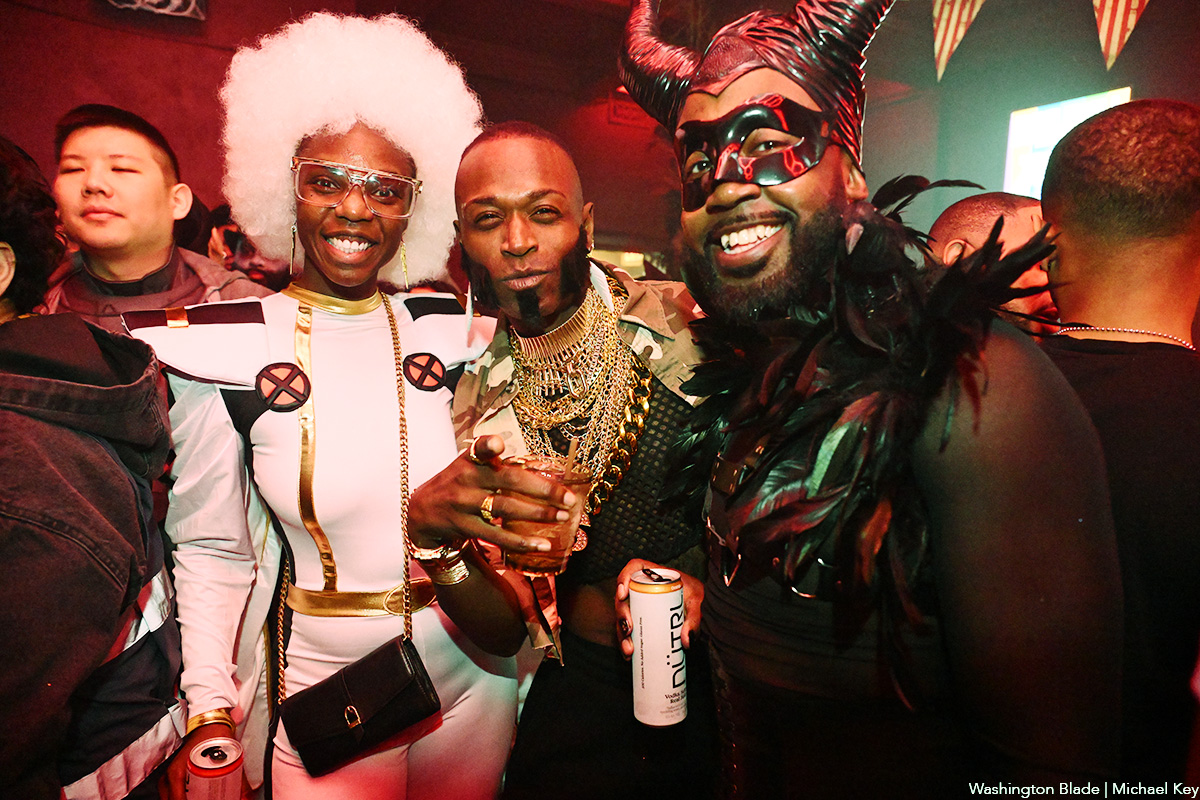
Crush Dance Bar (2007 14th Street, N.W.) was packed on Saturday night for a Halloween costume contest.
(Washington Blade photos by Michael Key)


a&e features
Meet the talented makeup artist behind Broadway’s ‘Rocky Horror’
Sterling Tull remains true to characters while imbuing them with her own eclectic style
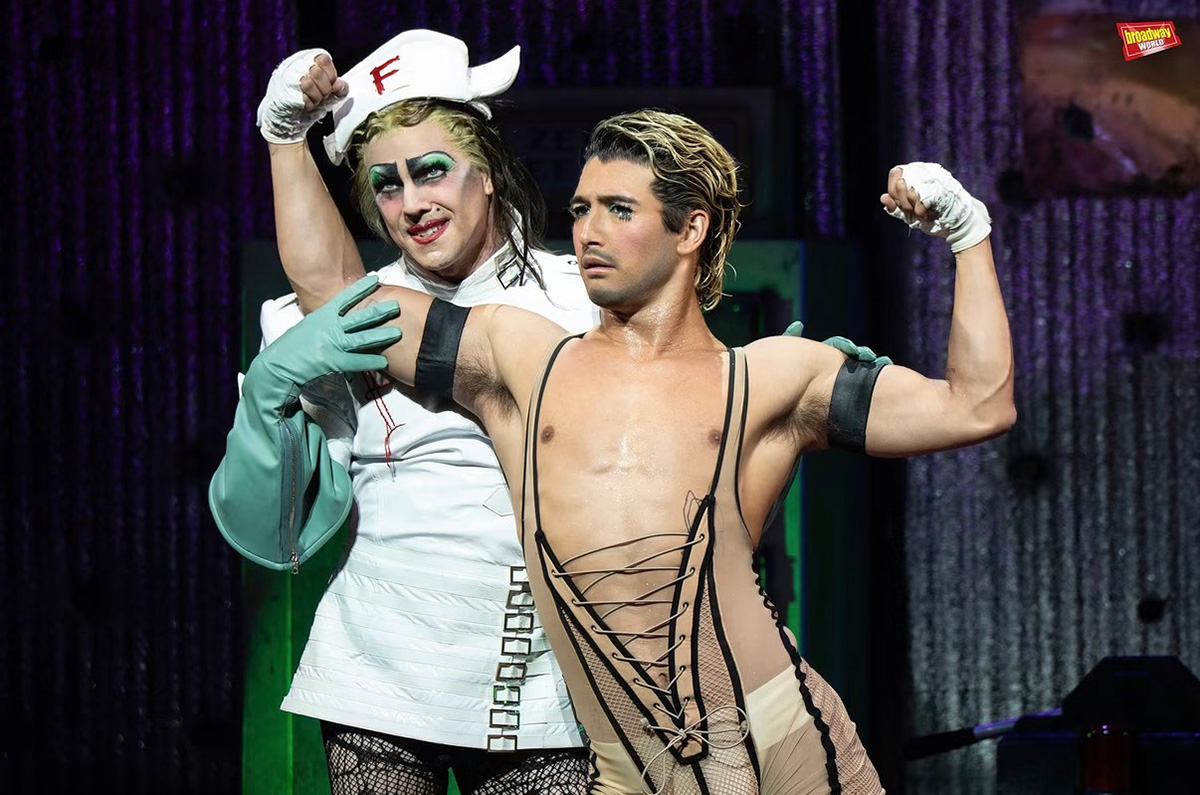
NEW YORK – Before Sterling Tull was creating the makeup for “The Rocky Horror Show” Broadway revival, its mad scientist, Dr. Frank-N-Furter, was watching over her bedroom from a poster on the wall. Purchased by her mother, the poster hung there from the time Tull was 13 until she was 18, offering a glimpse into a world where self-expression was something to celebrate.
Now, as makeup designer and makeup artist for the Broadway show, Tull, a queer transgender artist, brings that world to life eight shows a week.
“Sometimes it doesn’t feel real,” Tull tells the Blade. “I would’ve killed for this job, and I know many others would have too, so I feel very, very lucky and blessed.”
The opportunity arrived in a fittingly theatrical fashion: on Halloween night. Tony-nominated costume designer David Reynoso reached out to interview Tull for the production. Given the incredible opportunity, Tull couldn’t believe what she was reading. “I thought the email was fake at first, ” she explained. “It turns out it wasn’t!”
From there, things fell into place. The email led to an interview, and the interview led to a job, giving Tull the opportunity to translate a deeply personal attachment into an artistic vision. Long before joining the production, she had found something in “Rocky Horror” that extended beyond its eclectic style and audacious characters: a community in which she could recognize herself.
“Over the years, I grew into the culture of Rocky Horror and felt safe in the community,” Tull tells the Blade. “It let me understand that I wasn’t so different, and that, as a little Mormon kid, I could be myself.”
That commitment to being herself now informs the faces audiences encounter onstage. Her challenge was to preserve the characters’ immediate recognizability while allowing for her own artistic spin. Familiarity offers the starting point – Tull uses makeup to make it her own. “I wanted to honor the source material and what fans are expecting from a production of this size with huge audacious makeup looks that capture Club Kid New York culture, New Romantics, English trad goth, and 1970s Studio 54 sleaze,” she tells the Blade.
The designs took shape through collaboration with Reynoso, hair designer Albee Alvarado, director Sam Pinkleton, and associate makeup designer Vee Sadiku, whom Tull affectionately calls her “best friend” and “work wife.” Yet even with that support, sharing her vision came with its own uncertainty. Tull explains, “I would say the scariest part is just hoping that both your collaborators and fans like what you’re creating.”
Behind the performance, however, is time, precision, and a practice shaped by attention to detail. Tull works at the theater six days a week, applying makeup to actors in a way that would be difficult for any makeup artist. She tells the Blade, “The makeup is incredibly ephemeral and applied in a time span that would challenge any makeup artist.”
None of Tull’s work is about ego or adding another credit to her resume. It is about honoring a performance and creating a moment for people to come together, laugh, and enjoy themselves. She respects all those involved, especially the actors who bring the show to life. “It is so important to respect where the actors are every day while honoring the integrity of the work,” Tull says.
Ultimately, the show will end, and the makeup will come off. The next performance will bring another round at the makeup table. Yet that temporary nature gives Tull’s work an intimacy: The world that once helped a young “Rocky Horror” fan feel welcome is now something she helps bring to life for others, one face at a time.
“The Rocky Horror Show” continues through May 30 at Studio 54 theater in Manhattan. Follow Sterling on IG: @SterlingTullNYC.

Out actor on his 25-year love affair with ‘Mamma Mia’

Comings & Goings

Stephen Miller, key architect of anti-LGBTQ policies, named White House chief of staff

Escritora trans venezolana reivindica una fe sin exclusiones ante la visita del papa a Sudamérica

Baltimore lawmaker’s ex-treasurer charged with theft of $87K in campaign cash

Meet the talented makeup artist behind Broadway’s ‘Rocky Horror’

Sarah McBride returns to Congress after historic first term

Chris Pappas elected to U.S. Senate

Election watch parties to take place throughout DMV

Supreme Court weighs religious exemptions to LGBTQ nondiscrimination protections in Colo. preschool case
-

 a&e features5 days ago
Meet the talented makeup artist behind Broadway’s ‘Rocky Horror’
-
2026 Midterm Elections4 days ago
Sarah McBride returns to Congress after historic first term
-
2026 Midterm Elections4 days ago
Chris Pappas elected to U.S. Senate
-
Local5 days ago
Election watch parties to take place throughout DMV