Federal Government
EXCLUSIVE: Democrats seek answers on EEOC settlement affecting LGBTQ workers
Bobby Scott and Mark Takano want clarification on anti-discrimination protections

The U.S. Equal Employment Opportunity Commission agreed in August to a settlement with the Christian Employers Alliance that could limit the agency’s ability to pursue certain workplace discrimination claims involving gender identity. Now, Democratic lawmakers are questioning how far the agreement reaches — and whether it could constrain the commission’s enforcement decisions for years to come.
The Washington Blade obtained an early version of a letter from U.S. Reps. Bobby Scott (D-Va.), the ranking member of the House Education and the Workforce Committee, and Mark Takano (D-Calif.), raising concerns about the settlement and its potential implications for workplace protections.
The agreement stems from a lawsuit the CEA filed challenging the Biden-Harris administration’s EEOC guidance on workplace harassment; including protections involving gender identity, pronouns, dress codes, and access to bathrooms and other facilities. The CEA argued that the guidance infringed on its members’ religious rights.
Under the settlement, the EEOC agreed not to pursue certain charges based on gender identity discrimination against the CEA and its member organizations. The agreement also covers future CEA members, provided the alleged conduct occurred while the employer was a member of the organization, raising questions about whether employers could receive protections from agency enforcement by joining the alliance.
Two Democratic congressional aides familiar with the EEOC’s work and workplace protections, who spoke to the Blade on the condition that they remain anonymous, said the agreement could restrict the commission’s ability to pursue discrimination complaints and potentially tie the hands of future administrations.
“They’re sort of swearing not to go after it and not exercising their own discretion, but they’re also purporting to bind future administrations with respect to exercising that discretion,” one aide said.
The aide said the agreement raises constitutional questions about whether the current administration can limit how future administrations exercise the EEOC’s enforcement authority.
In their letter to EEOC Chair Andrea R. Lucas, Scott and Takano question the legal authority for an agreement that they say would prevent future administrations from pursuing certain claims. They cite a 1986 Justice Department legal opinion concerning settlement agreements that constrain the discretion of future administrations and ask Lucas to explain the legal basis for the EEOC’s decision.
The lawmakers also ask whether the commission has entered into similar agreements, whether other federal agencies were consulted and whether the EEOC believes there are limits to its authority to make such commitments.
Scott also criticized the EEOC’s handling of workplace discrimination involving transgender and nonbinary people, arguing that the commission has failed to uphold its responsibilities under federal law.
“Discrimination against transgender and nonbinary people is a serious and ongoing issue. A recent survey found that despite the Bostock decision, 27 percent of transgender people experienced workplace discrimination in the past year. The EEOC was created under Title VII of the Civil Right Act of 1964 and charged with addressing discrimination against workers. Yet, under Chair Lucas’s leadership, the EEOC has abdicated this responsibility under the law when it comes to transgender and nonbinary workers,” said Scott.
The commission’s fiscal year 2026 litigation filings also reflect a shift in its enforcement priorities. The agency’s lawsuits largely tracked its National Enforcement Plan, which emphasizes religious discrimination, alleged anti-American bias, protections for women and purportedly unlawful diversity, equity, and inclusion practices.
The EEOC filed 16 religion-based lawsuits, pursued several cases involving alleged discrimination against majority-group members and continued to bring pregnancy and sex discrimination claims. However, its filings included no lawsuits brought on behalf of LGBTQ employees, underscoring questions about how the commission is prioritizing workplace discrimination claims under Lucas’s leadership. The filings suggest the NEP has served as a roadmap for the agency’s litigation decisions, rather than merely a statement of policy priorities.
The letter raises a further concern: whether the agreement could allow employers to obtain protection from certain discrimination claims simply by joining the CEA.
The congressional aides questioned what safeguards would prevent employers from joining the alliance primarily to shield themselves from discrimination claims, rather than because of a genuine commitment to the organization’s stated religious principles.
“What kind of oversight is going to exist to even ensure that these future employers who join […] could just lie, right?” one aide said, questioning whether employers could claim to share the CEA’s beliefs while seeking liability protection.
The aides also raised concerns about the financial incentives the agreement could create for the organization as it recruits new members.
“It’s more than a little gross that this alliance is attracting other employers to join their alliance and making a buck off of workers’ discriminations, you know, complaints not being adjudicated by EEOC,” one aide said.
Scott and Takano are asking the EEOC to explain what requirements employers must meet to qualify for CEA membership and what safeguards will ensure they continue to meet those criteria. They also want to know how the agency will handle complaints involving multiple forms of alleged discrimination when only some fall within the settlement’s terms.
The agreement does not prevent workers from filing complaints with the EEOC, according to the congressional aides. Workers may also retain the ability to pursue private lawsuits. But the aides said employees could lose the commission’s support in cases the settlement prevents it from pursuing.
“They will still have the right to bring private lawsuits, they just won’t have the EEOC in their corner,” one aide said.
The lawmakers are seeking answers about what happens when an employee files a complaint against a CEA-member employer and the employer claims the case is covered by the settlement. They ask how quickly the EEOC would issue a right-to-sue notice in such circumstances and whether workers would be told that the settlement was the reason the agency did not pursue their cases.
The letter also asks whether the EEOC has developed — or plans to develop — notices explaining when an investigation is closed or partially closed because of the agreement.
The aides said the agreement’s precise scope remains unclear, including how it could affect complaints involving conduct beyond the specific issues challenged in the CEA’s lawsuit. They also questioned whether its implications could extend to other forms of sex-based discrimination, such as discrimination based on an employee’s appearance or failure to conform to gender stereotypes.
“The scope of this seems really big. Well, actually, it seems undefined, which is really the scary part,” one aide said.
The lawmakers are also seeking information about the role of EEOC Chief of Staff Shannon Royce, who, according to the letter, was CEA president when the organization filed its lawsuit. They ask whether Royce participated in the settlement process, whether she recused herself and whether the commission will provide records of relevant communications and meetings.
Scott and Takano are requesting quarterly reports on the number of investigations involving the CEA and its members that the EEOC closes because they fall within the settlement’s terms. The aides said the letter is intended to establish a record of the lawmakers’ concerns and signal that they intend to continue scrutinizing the agreement.
One aide warned that the settlement could contribute to a broader chilling effect on LGBTQ workers.
“I think this is one more move by this administration to shove people back in the closet,” the aide said.
The Blade contacted the EEOC on Friday seeking comment on the settlement’s implications for workplace protections and responses to the questions raised by Scott and Takano. The EEOC has yet to respond.




2026 Midterm Elections
Record number of LGBTQ lawmakers elected to Congress in midterms
17 LGBTQ candidates prevail in historic year
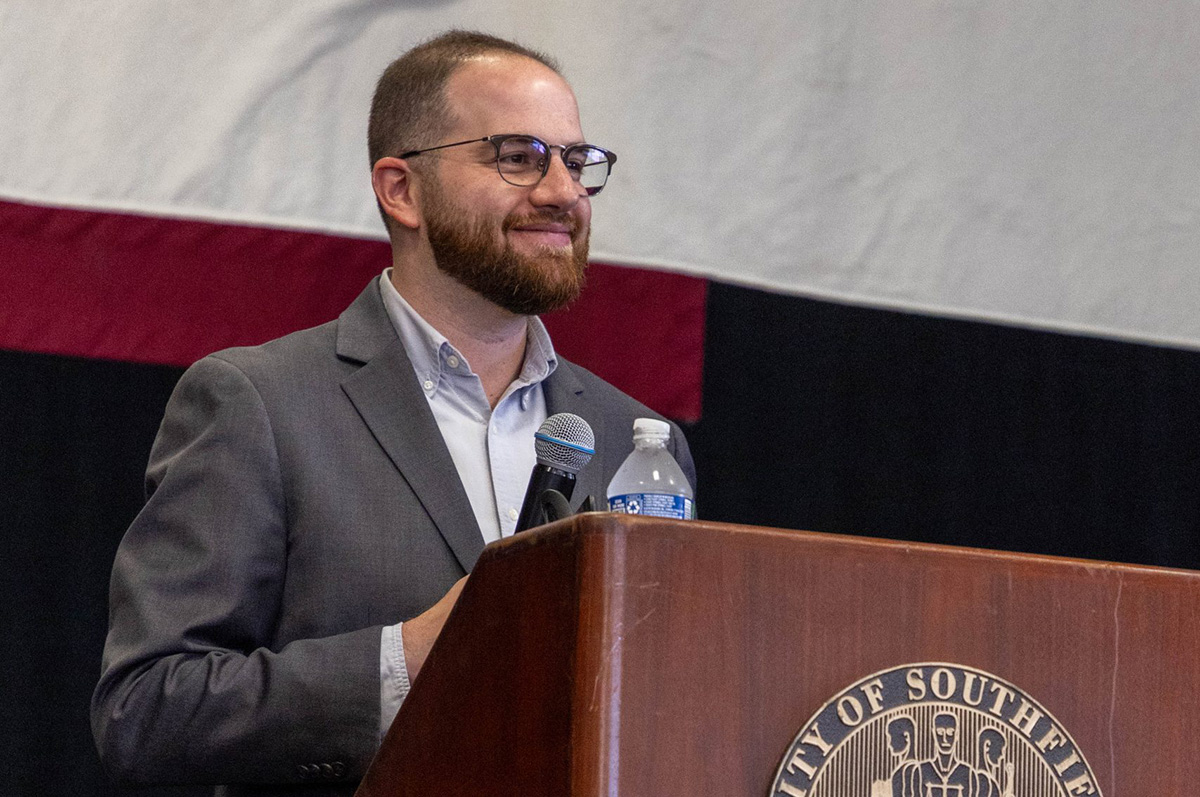
The next Congress will include a record number of LGBTQ+ lawmakers elected to Capitol Hill, with 17 of the 18 LGBTQ+ candidates who ran for federal office securing their seats.
The New Lawmakers
U.S. Senate:
Chris Pappas — New Hampshire
New Hampshire Congressman Chris Pappas has become the first openly gay man elected to the U.S. Senate. Former Republican Sen. John E. Sununu held the Senate seat for the Granite State from 2003 to 2009 but failed to win it back.
Pappas won the Democratic-held battleground state, receiving 56% of the vote to Sununu’s 42%.
Pappas ran his campaign on several issues that proved important during this midterm election cycle, including affordability, reining in corruption across levels of government and protecting LGBTQ rights. He spoke with the Blade last week on his goals for his Senate run while addressing the historic nature of his election.
U.S. House of Representatives:
Cait Conley — NY-17
Cait Conley has defeated incumbent Republican Congressman Mike Lawler in New York’s 17th Congressional District, flipping the Hudson Valley seat for Democrats. Conley, a former Army officer who served six overseas deployments and worked on the National Security Council, campaigned on lowering costs for working families, expanding affordable housing and protecting access to health care.
NBC’s unfinished tally of the votes has Conley leading Lawler 52.2% to 47.7%, with approximately 61% of the vote reported.
There were some problems with malfunctioning voting machines in Westchester County, a largely blue area, that delayed ballot scanning and, consequently, the call for the seat, The Gothamist reported last night. Despite some of the machines not working properly, Lawler conceded the race.
Jeremy Moss — MI-11
Michigan State Sen. Jeremy Moss won election to the U.S. House, defeating Republican Ethan Baker in Michigan’s 11th Congressional District.
Moss won 60.9% of the vote to Baker’s 36.8%, according to election results confirmed by the Associated Press. Moss, who served as president pro tempore of the Michigan Senate and was the state’s first openly gay senator, campaigned on lowering health care costs, addressing affordability, protecting LGBTQ rights and holding the Trump administration accountable.
He will represent Michigan’s 11th Congressional District, a seat currently held by Democrat Haley Stevens, who surprised large swaths of the country by revoking her endorsement of Abdul El-Sayed, after losing the Senate primary.
The Blade interviewed Moss earlier in his campaign, when he emphasized his commitment to the people of Michigan and his determination to stand against Trump and MAGA Republicans in Congress.
JoAnna Mendoza — AZ-06
Marine veteran JoAnna Mendoza is highly likely to defeat Republican incumbent Juan Ciscomani in Arizona’s 6th Congressional District, flipping the highly competitive southern Arizona seat for Democrats.
The New York Times’ results showed Mendoza with 53% of the vote, compared with Ciscomani’s 45%. At the time of publishing, 88% of votes had been accounted for, which is why no outlet had outright declared Mendoza the official winner yet. Most news outlets wait until more of the vote is accounted for.
Mendoza campaigned on lowering costs for working families, creating good-paying jobs, strengthening health care access, protecting veterans’ benefits and addressing border security and immigration. She also emphasized restoring accountability and trust in government.
Marni von Wilpert — CA-48
San Diego City Council member Marni von Wilpert led Republican Jim Desmond in California’s 48th Congressional District, a competitive race for an open seat previously held by retiring Republican Congressman Darrell Issa.
Early results reported by CBS8 show von Wilpert leading Desmond by nearly 20 points, with von Wilpert holding 59.4% to Desmond’s 40.6%. This San Diego seat was among the competitive races Democrats targeted as they sought to expand their House majority.
Von Wilpert campaigned on lowering the cost of living, expanding affordable housing and health care, protecting reproductive freedom and LGBTQ rights, and holding federal immigration officials accountable.
Scott Wiener — CA-11
California State Sen. Scott Wiener is expected to win the open congressional seat in California’s 11th District, succeeding former House Speaker Nancy Pelosi. Wiener faced off against fellow Democrat Connie Chan, a San Francisco supervisor, in the race to represent the heavily Democratic district.
Associated Press results reported by The New York Times showed Wiener leading Chan 55.4% to 44.5%.
Wiener campaigned on expanding LGBTQ rights, protecting transgender Americans, lowering health care and housing costs, and reforming federal immigration enforcement. He also made passing the Equality Act a central part of his campaign platform. However, he faced issues at the beginning of his campaign, particularly surrounding the Palestinian-Israeli war, when the Jewish state senator initially refused to call what was happening a genocide, leading to some fragmented support within the Democratic Party.
J.D. Ford — IN-05
Indiana State Sen. J.D. Ford defeated Republican incumbent Victoria Spartz in Indiana’s 5th Congressional District, flipping the seat for Democrats.
Ford received approximately 51.7% of the vote to Spartz’s 48.3%, according to Associated Press results reported by The New York Times, with nearly all votes counted.
Ford, Indiana’s first openly LGBTQ state legislator, campaigned on lowering health care and housing costs, protecting Medicaid, addressing affordability and holding the federal government accountable. He also supported passing the Equality Act to establish federal LGBTQ nondiscrimination protections.
Janelle Sarauw — U.S. Virgin Islands
Former Virgin Islands Sen. Janelle Sarauw led the race to become the territory’s next delegate to the U.S. House of Representatives, defeating independent candidate Shelley Moorhead.
Unofficial territorial election results showed Sarauw receiving 13,029 votes to Moorhead’s 3,586, representing approximately 76.9% and 21.2% of votes cast for the office, respectively.
Sarauw campaigned on improving health care access, protecting Medicaid funding, lowering prescription drug costs, strengthening veterans’ services and modernizing the Government Employees’ Retirement System (GERS). She also emphasized securing stronger federal representation for the U.S. Virgin Islands.
In a statement on her Facebook page Wednesday morning, Sarauw said her heart was “heart overflowing with gratitude.”
“I love these islands with every fiber of my being, and as I prepare to carry our voices, our stories, our struggles, and our aspirations to Washington, D.C., I do so with a full heart, a humble spirit, and an abiding faith in what we can accomplish together.”
Incumbents
Sarah McBride — DE-AL
Delaware’s incumbent U.S. Representative Sarah McBride was reelected to the U.S. House of Representatives on Tuesday, defeating Republican challenger Joseph Arminio. McBride is the first openly transgender person elected to Congress.
The Associated Press called the race for McBride on election night shortly after polls closed. The New York Times shows her with approximately 64% of the vote, with Arminio holding 35%, with 95% of ballots counted.
Earlier this year, during a forum attended by both candidates, Arminio misgendered McBride multiple times and was subsequently asked to leave.
McBride campaigned on a range of issues, including affordability, health care access, immigration, reproductive health care and workers’ rights.
Earlier this year, the Washington Blade interviewed McBride, who discussed her goals for the future while reflecting on her first year in Congress.
“We need to deliver universal child care, a higher minimum wage, Medicare for all who want it, and millions of new homes. Winning the next election is not the end; we have to continue building toward a durable majority.”
Following the announcement of her win, McBride put out a statement on social media about her campaign’s main messaging in the face of Republicans’ unrelenting attacks on people like her.
“Yesterday, Delaware clearly rejected the politics of hate in favor of a politics of hope,” she wrote on instagram.
Robert Garcia — CA-42
California’s incumbent U.S. Representative Robert Garcia won reelection to another term representing the state’s 42nd Congressional District, defeating Republican challenger Brian Burley.
New York Times/AP election results showed Garcia receiving approximately 60% of the vote to Burley’s 40%.
Garcia, the former mayor of Long Beach, has focused on infrastructure, transportation, education and LGBTQ rights during his time in Congress. In the current Congress, Garcia served as the ranking member of the House Oversight Committee, where he pushed for additional investigations into the Trump-Vance administration, including its handling of the Epstein files. Following Democrats’ victories, Garcia is positioned to take over as chair of the House Oversight Committee, giving him greater authority to investigate the numerous allegations and controversies facing the president.
Becca Balint — VT-AL
Vermont’s incumbent U.S. Rep. Becca Balint won reelection to a third term in Congress, defeating Republican challenger Gerald Malloy.
The Associated Press called the race for Balint on election night. At the time, she had 65% of the Green Mountain State’s vote, compared to Malloy’s 30%.
Balint, a former teacher and Vermont state senator, centered her campaign on affordability, housing, mental health and protecting democracy. She also criticized Trump’s tariffs and the war in Iran, arguing that both were contributing to higher costs for Americans.
Emily Randall — WA-06
Washington’s incumbent U.S. Representative Emily Randall won reelection to represent the state’s 6th Congressional District, defeating Republican challenger Teresa Fox.
The AP and The New York Times called the race for Randall, whose 64% share of the vote put her securely ahead of Fox’s 35% in the Olympic Peninsula, the Kitsap Peninsula and most of the city of Tacoma.
Randall, who previously served in the Washington state Senate, made expanding access to affordable health care a central part of her campaign. She also focused on lowering costs for working families and protecting access to essential services.
Eric Sorensen — IL-17
Illinois’s incumbent U.S. Rep. Eric Sorensen won reelection to a third term in Congress, defeating Republican challenger Dillan Vancil.
The Associated Press called the race for Sorensen with approximately 70% of the vote counted. Sorensen held 60% of the vote.
Sorensen, a former television meteorologist, centered his campaign on lowering costs for working families. His priorities also included protecting health care access, supporting rural communities and addressing the economic challenges facing residents of western Illinois.
Mark Pocan — WI-02
Wisconsin’s incumbent U.S. Rep. Mark Pocan won reelection to another term representing the state’s 2nd Congressional District. Pocan ran unopposed in the general election, securing another term representing the Madison-area district.
Pocan, who has served in Congress since 2013, has focused on health care affordability, workers’ rights and LGBTQ equality. He also serves as co-chair of the Congressional Equality Caucus and is a member of the House Appropriations Committee, where he is expected to hold more leadership power in the new congressional term.
Mark Takano — CA-39
California’s incumbent U.S. Rep. Mark Takano won reelection to another term representing the state’s 39th Congressional District, defeating Republican challenger Steve Manos.
AP election results showed Takano receiving 65.3% of the vote to Manos’s 34.7%.
Takano has made health care and veterans’ issues central to his congressional work. He has also been an advocate for LGBTQ equality and serves as co-chair of the Congressional Equality Caucus.
Ritchie Torres — NY-15
New York’s incumbent U.S. Representative Ritchie Torres won reelection to another term representing the Bronx’s 15th Congressional District.
The New York Times showed Torres receiving 76.89% of the vote, with Republican challenger Stylo Sapaskis receiving 10.64%.
Torres, who previously served on the New York City Council, has centered his congressional work on housing, economic development, education and public safety.
Sharice Davids — KS-03
Kansas incumbent U.S. Rep. Sharice Davids won reelection to another term representing the state’s 3rd Congressional District, defeating Republican challenger Eric Jenkins.
According to New York Times and AP election results, Davids received 59.6% of the vote to Jenkins’ 38.4%.
Davids, a former White House fellow and attorney, centered her campaign on agriculture, lowering costs and expanding access to health care. She has also emphasized supporting Kansas businesses and working families.
2026 Midterm Elections
Democrats take control of Congress in historic rebuke of Donald Trump
‘Voters delivered a resounding message: equality wins’
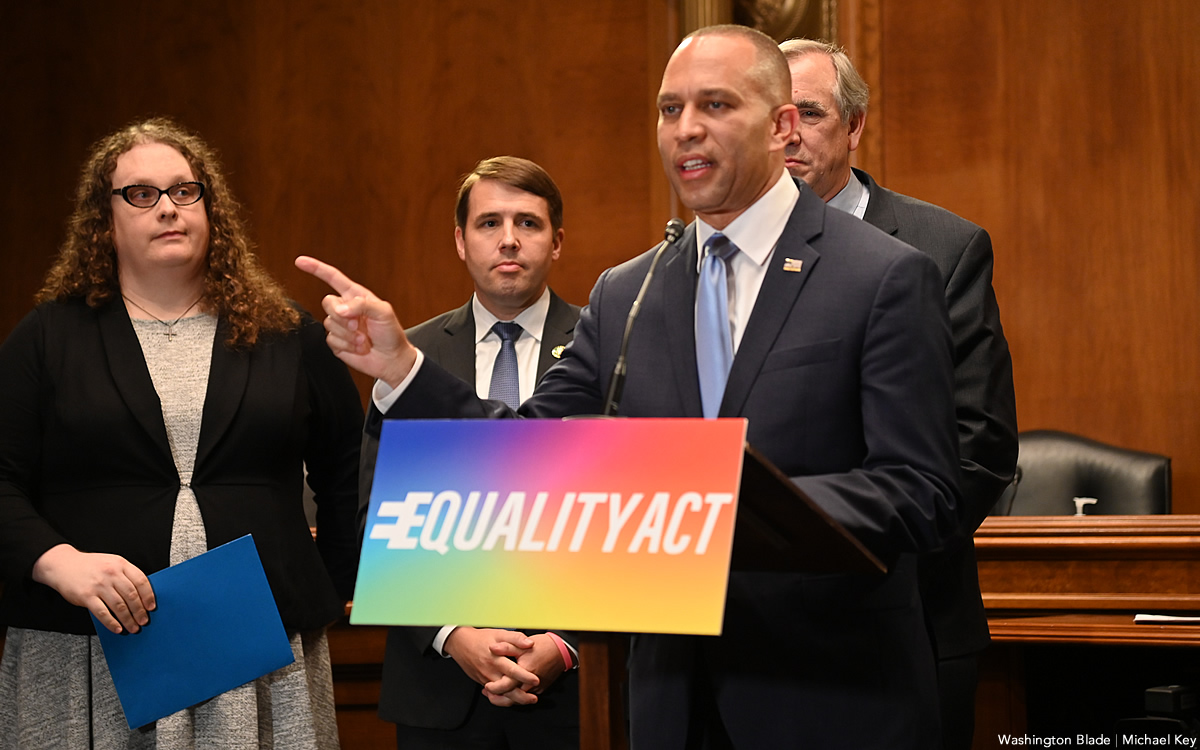
Midterm elections are traditionally viewed as a check on the party in control of the White House. With Republicans holding control of all three branches of government, President Donald Trump was able to advance his agenda with few congressional obstacles.
From getting the United States involved in a war in Iran to imposing tariffs that have increased the cost of everyday goods, Trump has faced mounting criticism over his priorities, including his insistence on pursuing vanity projects in the nation’s capital rather than addressing issues affecting most American voters.
Following the midterm elections, both chambers of Congress will now be controlled by the Democratic Party.
Affordability was a key issue in this year’s midterms. As Americans watched Trump receive a brand-new Air Force One from a foreign government and continue a war that has directly affected everyday costs, particularly gasoline and groceries, voters delivered a devastating and historic rebuke to the president and his party.
Republicans spent $305 million on advertisements, compared with $256 million spent by Democrats, in competitive Senate, House and gubernatorial races between Oct. 23 and 29, according to The Washington Post, which analyzed data from AdImpact, a political advertising tracking firm.
Republican attempts to use LGBTQ issues as culture-war talking points appeared to be less effective in 2026 than they were in 2024.
This year’s advertisements targeting transgender people primarily focused on two policies: transgender athletes’ participation in women’s and girls’ sports and gender-affirming medical care, particularly surgery, for minors.
Despite Republican efforts to make LGBTQ identity a political liability, the midterm elections resulted in a historic number of LGBTQ candidates being elected to federal office.
Chris Pappas, the senator-elect from New Hampshire, will become the first openly gay man elected to the U.S. Senate, joining Sen. Tammy Baldwin (D-Wis.), an out lesbian who has held her seat since 2012. Meanwhile, a record number of LGBTQ representatives have been elected and reelected to the U.S. House. They include Sarah McBride, the first openly transgender member of Congress, who retained Delaware’s seat; JD Ford, who flipped Indiana’s seat; and Cait Conley, who defeated incumbent Mike Lawler.
Following the election results, LGBTQ advocacy groups celebrated Democratic victories and the election of several LGBTQ candidates.
The Human Rights Campaign (HRC), the largest LGBTQ advocacy organization in the United States, issued a statement following Democrats’ securing control of both chambers of Congress.
“Tonight, voters delivered a resounding message: equality wins. After two years of MAGA Republicans waging a culture war, wasting taxpayer dollars attacking LGBTQ+ people, and spending $340 million on anti-trans ads while families suffered, voters have had enough,” said HRC President Kelley Robinson.
“In a historic rebuke, voters didn’t just reject LGBTQ+ hate, they have elected a historic number of LGBTQ+ elected officials. Chris Pappas is the first-ever out gay man elected to the U.S. Senate, and JoAnna Mendoza, Cait Conley, and Jeremy Moss will join Sarah McBride, who won by a huge margin, in the U.S. House — and that’s just the start. Virginia reaffirmed that love is love. Missouri rejected an anti-trans, anti-abortion ballot measure. And we are seeing victories up and down the ballot across the country,” she added. “The message from LGBTQ+ voters could not be any more clear: Our rights are not up for debate, our community will not be a political punching bag, and we are not going anywhere.”
Emily Wagner, a communications official with the Transgender Freedom Alliance, also weighed in on the results, arguing that the relentless anti-transgender advertising Republicans ran across the country failed to deliver the electoral results they sought.
“Massive anti-trans spending failed to prevent important Democratic victories. Republicans spent nearly $400 million on anti-trans ads altogether—and still lost key races to candidates who pushed back,” Wagner said in an email. “These victories reinforce TFA’s research: candidates can answer attacks effectively by speaking confidently about shared values, addressing voters’ concerns, and challenging their opponents’ priorities without abandoning transgender people.”
There were early predictions that a Democratic “blue sprinkle,” or even a modest wave, could serve as a check on Trump’s power by installing Democratic lawmakers in a Congress over which he had previously exercised significant influence. Instead, the results amounted to a blue tsunami.
Democrats won several states Trump carried by double digits in 2024, as voters voiced their disapproval of the president.
Democrats flipped seven previously Republican-held seats, including in Iowa, Kansas, Maine, North Carolina, South Carolina, Ohio and Texas. Some of those states had gone decades without electing a Democratic leader.
The seismic shift in federal power has also prompted changes in Republican leadership. Speaker Mike Johnson (R-La.) told his staff during a phone call Wednesday morning that he will not remain Republican leader in the new Congress, according to four sources on the call cited by NBC News. Republicans are scheduled to hold an internal election to select their candidate for the position next week, on Nov. 10.
With control of the House and expanded oversight powers, more LGBTQ Democrats could also be positioned to take on leadership roles in the new Congress.
Incumbent Congressman Robert Garcia (D-Calif.) is poised to become chair of the House Oversight Committee, giving him greater authority to investigate the Trump-Vance administration, subpoena officials and oversee federal agencies.
Garcia responded to the confirmation of Democratic control with a two-word statement: “Lawyer up.”
2026 Midterm Elections
Democrats projected to win Senate majority, opening door to LGBTQ legislation
U.S. Sen-elect Chris Pappas (D-N.H.) is gay
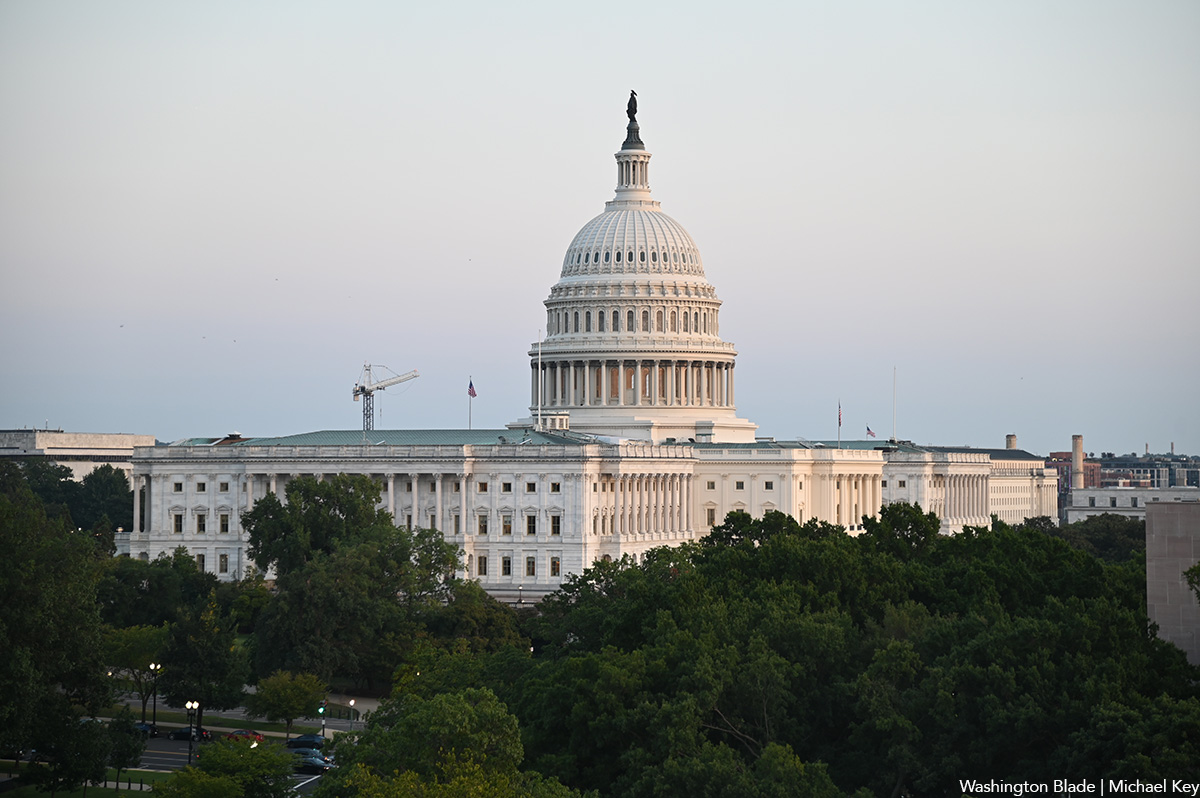
The U.S. Senate has flipped to Democratic control.
Democrats will control of the Senate after flipping the minimum four Republican-held seats, giving the party control of both chambers of Congress and a majority in the legislative branch, according to NBC.
The Senate, the upper legislative body, holds 100 seats, two for every state, and oversees several important functions of the federal government, including confirming judicial and Cabinet appointments.
There will now be two openly LGBTQ members of the Senate: freshly elected Chris Pappas of New Hampshire, who is gay, and Tammy Baldwin of Wisconsin, who is a lesbian.
With greater control over federal legislation, Democrats could have an opportunity to advance measures such as the Equality Act, which would expand federal protections against discrimination based on sexual orientation and gender identity.
During the campaign, President Donald Trump repeatedly referred to South Carolina Democratic Senator-elect Annie Andrews using the anti-transgender slur “Tranny Annie,” while emphasizing culture war issues, including trans participation in sports and gender-affirming care.
Democrats, meanwhile, have centered their campaigns on the growing affordability crisis as somatic issues, including the Ukrainian-Russian war, Palestinian-Israeli war, and the war in Iran.

‘Jellicle Ball’ projection designer’s next project is in D.C.

Comings & Goings

West Hollywood creates registry for polyamorous relationships

LGBTQ community responds with support after shooting at gay-owned VIDA Fitness

LGBTQ+ Victory Institute to honor Dutch prime minister at D.C. conference

Sabrina Bruce becomes first trans person elected in Fairfax County

Anti-trans ballot measures pass in four states, setting up new legal battles

At least 29 known LGBTQ ANC candidates win election

British appellate court strikes down Trinidad and Tobago sodomy law

Gay congressman attends D.C. LGBTQ election celebration
-

 Virginia5 days ago
Sabrina Bruce becomes first trans person elected in Fairfax County
-
2026 Midterm Elections5 days ago
Anti-trans ballot measures pass in four states, setting up new legal battles
-
District of Columbia5 days ago
At least 29 known LGBTQ ANC candidates win election
-
Trinidad and Tobago5 days ago
British appellate court strikes down Trinidad and Tobago sodomy law