National
LGBTQ+ Religious Archives Network celebrates 25th anniversary
Organization collects oral histories, curates online exhibitions and more
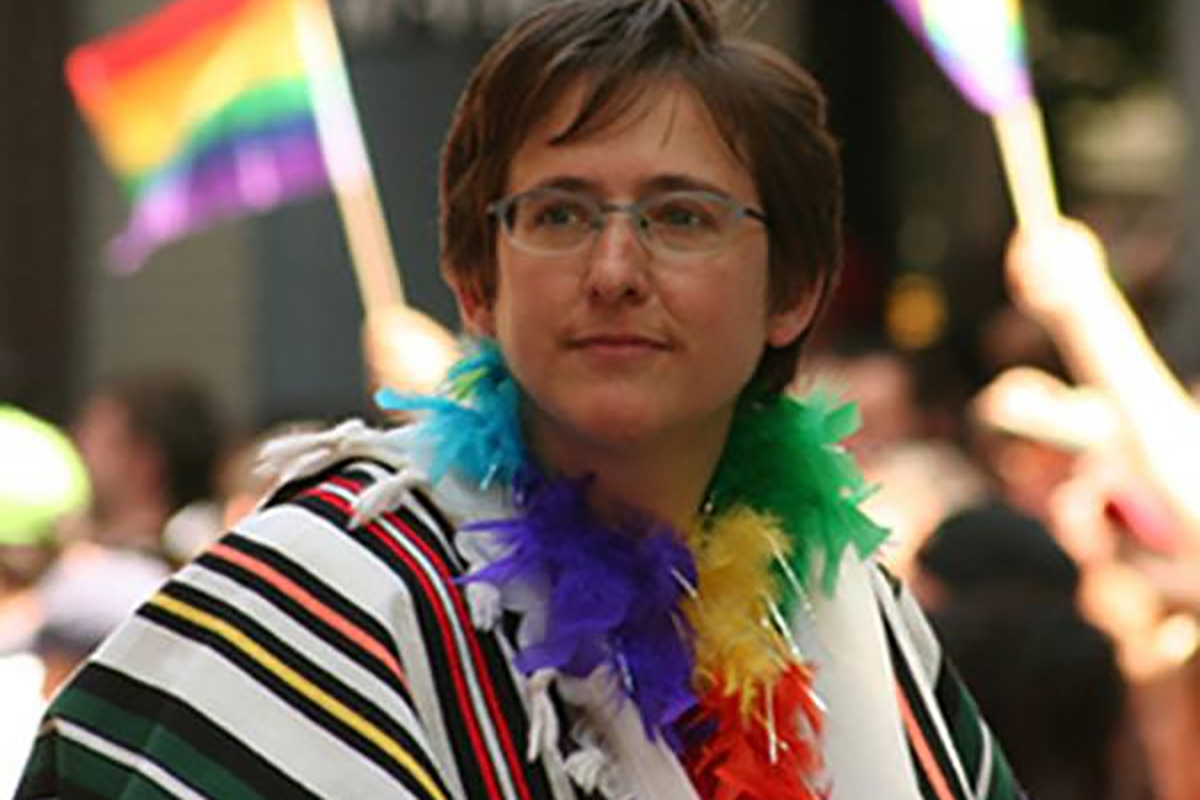
The LGBTQ+ Religious Archives Network (LGBTQ-RAN) celebrated their 25th anniversary on Sunday with an online gala remembering five “Sacred Rebels,” key leaders who fought for LGBTQ+ inclusion within religious institutions and the creation of LGBTQ-led faith communities, alongside three changemarkers currently leading the charge.
Originally founded back in 2001, LGBTQ-RAN began as a project created by the Chicago Theological Seminary and later a program at the Center for LGBTQ & Gender Studies in Religion based out of the Pacific School of Religion up until 2020. In 2020, LGBTQ-RAN became an independent organization that not only collects oral histories, curates online exhibitions and hosts programs but also connects researchers with archival collections across the country and provides a vital “archiving toolkit” to people eager to share their histories.
LGBTQ-RAN has long recognized key trailblazers during its annual gala, and this year, the organization honored Rev. Dr. William Johnson, Mx. Chris Paige, M.Div, Rev. Irene Monroe, Rabbi Sharon Kleinbaum, and Rev. Dr. Nancy Wilson.
Rodney McKenzie Jr. recognized the monumental weight of this moment. “I’m sitting here thinking about what it was like being a little Black gay boy growing up in a holiness church in Dallas, Texas. I needed the voices of the folks who are here today. [The voices] being represented really transformed me and supported me in seeing I can be bold. I can be who I am, as a gay person and as a person of faith, and that now is our moment.”
Amid the rise of Christian fascism in religious organizations and governmental offices, he hoped that the stories of people knitting these two identities together–faith and queerness–and those who resist systems of oppression will give us communion. “Keep in mind that remembering will nourish us,” MacKenzie Jr. said, “that remembering will nourish us, strengthen us, and embolden us as we strive for a community in a world where we have equality, justice, and we’re loved.”
Rev. Loey Powell, the first openly lesbian ordained within the United Church of Christ (UCC), started off the night by recognizing her long-time friend Rev. William R. Johnson, the first openly gay minister in the UCC. His ordination back in June 1972 is the subject of the acclaimed documentary A Position of Faith directed by Michael Rhodes. Powell first met Johnson while she was attending graduate school at the Pacific School of Religion, and then continued working together when she joined the UCC Gay Caucus that Johnson founded.
“Bill, you have always been a rebel with a cause, and your persistence and your brilliance has shaped not just the UCC, but so many other denominations and faith traditions,” Powell said, “and your rebelliousness is also sacred because of the ways you have extended God’s love and grace so broadly.”
Johnson appeared on the Zoom call that night to personally thank LGBTQ-RAN and its Executive Director Mark Bowman for the honor and recognizing its importance as a repository of queer religious histories. “Over 25 years, the Religious Archives Network has grown into an impressive and vital resource. Especially in these oppressive, reactionary times, we must safeguard our collective memory and documented work as religious queer activists,” Johnson said.
Next, Rev. Louis Mitchell, Co-founder and Executive Director of Transfaith/Interfaith Working Group, introduced Mx. Chris Page, M.Div. When Mitchell and Page created Transfaith, Mitchell acknowledged there was nothing holding space for trans spirituality. Page changed that by creating an online gathering space that later evolved into the national organization “that was designed to create systemic change, support pure connections, and offer educational and support resources to Abrahamic faith practitioners,” Mitchell explained.
But that was just the beginning. “We recognize that this limitation left out a lot of our community who had faith and energetic practices outside of that very narrow window. … By making space to be multi-tradition, multiracial, and multi-gender, we were invited to know love and support folks who had journeyed in the margins of the margins of the margins.” Mitchell acknowledges that much Page created continues to be go unacknowledged but hoped this recognition would be the beginning of a long-due appreciation.
But Page was quick to acknowledge that they “came out into a world that so many of these other honorees and others present made possible.”
As trans rights remain under fire by the current administration, Page offered words of wisdom learned from years as a trans religious organizer, namely how all of us have inalienable emotional, bodily, and spiritual needs. “Each of us has basic spiritual needs to belong, to be seen for who we truly are, to make meaning out of our own stories, to experience transcendence, to experience wonder and awe, drawing from wisdom traditions, so I’m looking back on this honor and also looking forward into the future with these values in mind.”
“As sacred rebels, we must remember to be grounded in this moment, while always remembering that our connections to one another have always and always will transcend our current condition,” Page said.
On this note, the LGBTQ-RAN recognized three changemakers currently doing the work to push for faith-based LGBTQ+ inclusion and activism. The first to be recognized was Rev. Dr. Adalfie Johnson, a senior pastor at the Community Church of Washington, DC United Church of Christ and a program specialist for the DC Public Schools, followed by Dr. Samuel Ernest, a recent Ph.D. graduate from Yale who founded Homodoxy, a small press for gay, queer, and trans theology and literature. Finally, LGBTQ-RAN recognized Sapna Pandya, an activist creating safe spaces to prevent future harm to communities of color.
Dr. Carter Heyward went on to recognize Rev. Irene Monroe, an ordained minister and well-known WGBH Monday segment host who talks about the role religion plays in discrimination against LGBTQ+. Heyward recognized Irene alongside Rev. William Barber. “Both are prophets, both bearers of courage and wisdom,” Heyward explained. “Rev. Irene’s accomplishments and awards reflect countless contributions over almost 50 years to justice for women, especially Black women, and queer people, especially lesbians, gays, and increasingly trans siblings in the churches, especially in the Black church, which Rev. Irene names as her village.”
But out of love for that village, she never shied away from confronting homophobia. “As a child of the Black Church,” Monroe said. “I wrestled with three questions that I was struggling trying to come out, and I still, although I’m out, struggle with it. These are the questions: why can’t we, as an African American community, tell the truth about our sexuality? What price do we pay in telling the truth, what role does the Black Church play in not telling the truth? What is the politics of silence that in many ways create a church on the down low?”
Throughout her career, Monroe brought “theology to the street,” writing and speaking about LGBTQ+ religious inclusion in progressive Christian magazines, on college lecture circuits, along with television and radio. Despite the fact that even today she continues to face homophobia, Monroe asserted that “as LGBTQ people, our lives are sacred and holy and sanctified too. It’s really all of this that keeps me wrestling,” she chuckled. “I saw my arms are too short to box with God, so I box with people in these homophobic churches.”
Journalist Eric Marcus went on to recognize and introduce Rabbi Sharon Kleinbaum, an American rabbi who served as the leader of Congregation Beit Simchat Torah–the largest LGBTQ+ synagogue in the world–for 32 years. She arrived at the synagogue in 1992 at the height of the AIDS crisis and provided steady and nurturing guidance and solidarity amid intense loss and change. Through her voice, Congregation Beit Simchat Torah became a voice for LGBTQ+ inclusion amid the rise of the far right in the United States.
Lastly, American minister and LGBTQ activist Rev. Darlene Garner recognized Rev. Elder Dr. Nancy Wilson, who served as the second Moderator and first woman of the Metropolitan Community Church from 2005 to 2016 following the denomination’s founder Rev. Elder Troy Perry. Under her leadership, she mobilized the church in support of gay marriage and the fight for legal protection against discrimination. Along with serving on President Obama’s Advisory Council on Faith-Based and Neighborhood Partnerships in 2011, she was the first openly gay clergy member to participate in a Presidential Inaugural Prayer Service in 2013.
Along with these four honorees and three changemakers, LGBTQ-RAN recognized its recently retired archivist Doris Malkmus. Malkmus spoke to how this archive opened her eyes to the world of LGBTQ+ religious activists. As she explained, “the important thing to remember is that back in the early 2000s, archives were not that welcoming to LGBTQ history, and academic archives weren’t interested in religious history at all.” LGBTQ-RAN was doing and continues to do something monumental in bridging that divide, not just in the recording of LGBTQ+ religious histories but acknowledging that queer religious communities have and continue to exist.
After the event formally ended, attendees were invited to join Zoom breakout rooms for after-hour parties featuring the honorees and their introducers, today’s changemakers, and LGBTQ-RAN staff including Bowman and Board Chair Dr. Sharon Groves.
Mackenzie Jr. closed out the event by recognizing “the number of LGBTQ folks and friends who are praying right now for this organization. We’re praying for the voices who are praying for the radical welcoming understanding of who God is and what God is and that they are loved, and that they are accepted and that they are what God has desired. These stories tonight, these ministries, this work, is exactly what they’re hoping for.”



California
West Hollywood creates registry for polyamorous relationships
New legal rights for those with multiple partners
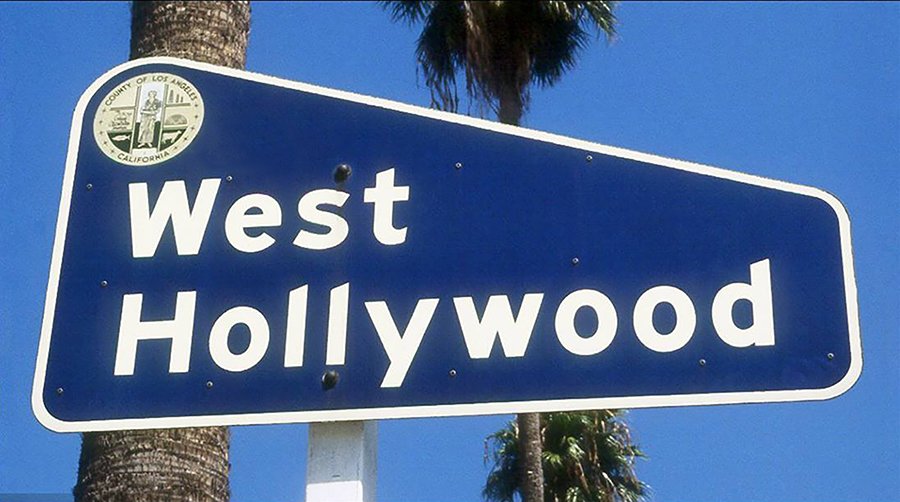
The West Hollywood City Council voted unanimously on Nov. 2 to create a registry for those in “multi-partner domestic relationships.”
The measure gives those in polyamorous relationships the same legal rights afforded to monogamous couples. Those include visitation rights in hospitals and jails in West Hollywood and certain tenant protections.
In 1985, West Hollywood became the first city in the nation to recognize domestic partnerships between same-sex couples. Within a few decades, legal recognition of same-sex couples extended to many cities and states and in 2015 marriage equality was legalized nationally. Now, advocates for polyamory say that WeHo is starting another trend toward recognizing other non-nuclear family structures.
“The new law not only gives polyamorous unions legal recognition, I think it also gives people permission to imagine a future together and to plan their lives openly,” said Christina Fialho, president of Rewrite the BiLine, a non-profit organization that works to expand queer media representation that advocated for the measure. She hopes that as time passes, more cities and states will pass legislation that legally recognizes those outside of traditional monogamous relationships. “This is the first of many more wins to come, and we hope to see more cities adopt similar ordinances,” Fialho said. A few cities in Massachusetts also currently recognize multi-partner relationships.
Fialho said the growing prevalence of non-monogamous relationships will help create demand for more legal recognition. “In the United States, consensual non-monogamy is actually as common as owning a cat,” Fialho said, which amounts to around 5 percent of the population. They are particularly prevalent among LGBTQ people, with around “50 percent of LGBTQ+ people” having been in “consensually non-monogamous relationships,” according to Fialho.
Megan Katz, a West Hollywood resident and librarian is part of that 50 percent. Katz has practiced polyamory for years and is currently in a committed marriage while also dating outside of it. She views the ordinance as a major victory. “It is one more step toward legitimizing nontraditional relationships and specifically polyamorous relationships,” Katz said.
Katz does not plan on immediately using the registry, as one of her relationships “is not established enough,” but she “very much appreciates that the city is taking these steps.”
Katz considers herself lucky that she has not experienced much personal discomfort or discrimination due to her polyamorous relationship. “With my personal, private communities, and even just my personal circles, I really have not had any problems,” she said. But she thinks the ordinance will help curb larger cultural stigmas around polyamory and non-monogamy.
“I am polyamorous and I am very comfortable with that, but it’s not a concept that’s very well known culturally and is sort of vilified or looked down upon,” she said. “There’s nothing wrong with it when you’re engaged in it ethically.”
2026 Midterm Elections
Quinnie Pérez becomes first openly transgender person elected in Fla.
Candidate won seat on Orange County Soil and Water Conservation District
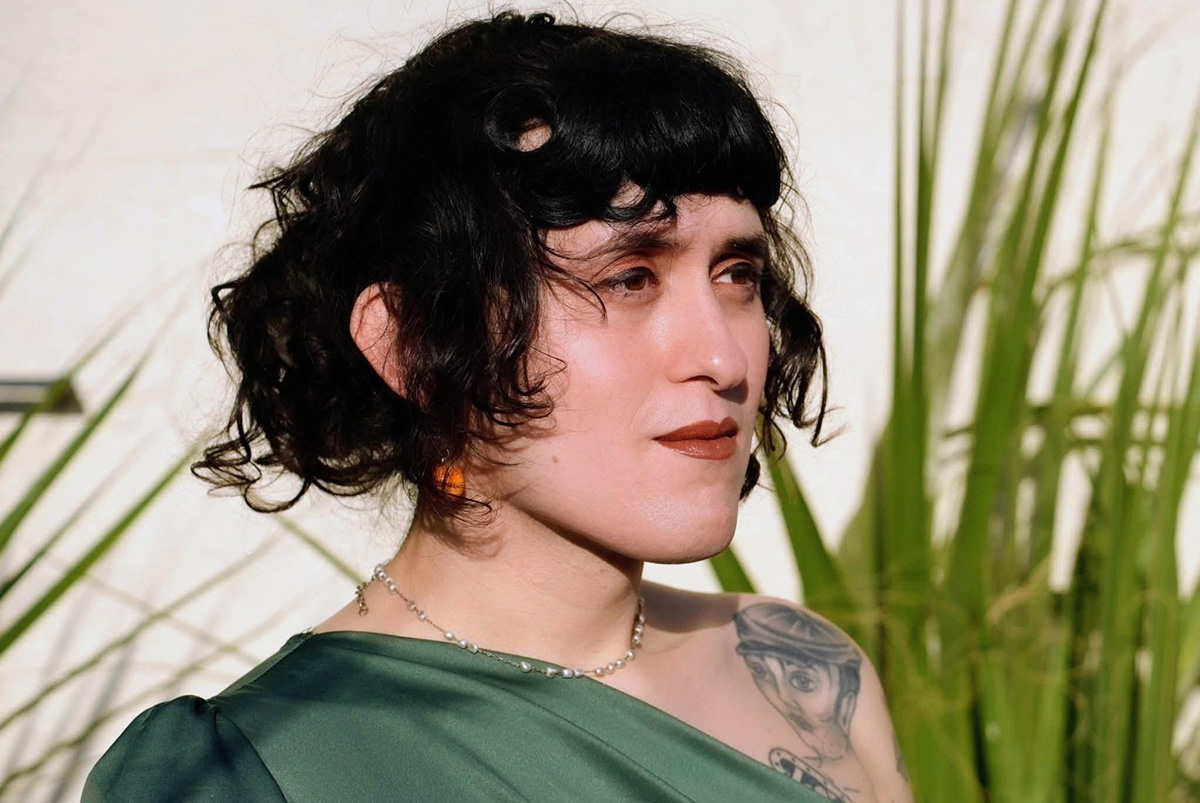
Quinnie Pérez on Nov. 3 made history when she became the first openly transgender woman elected to public office in Florida.
Pérez, 32, won a seat on the Orange County Soil and Water Conservation District. She previously worked for Equality Florida, a statewide LGBTQ rights group, as a paid intern.
Pérez on Tuesday during a virtual post-election briefing that Equality Florida organized noted anti-trans forces in the state ran $200 million worth of transphobic ads during this campaign cycle. Pérez raised around $6,000 for her campaign, but noted “we still defeated that rhetoric.”
“Money doesn’t win, hate doesn’t win,” she said. “We’re just going to keep winning.”
Pérez also said she ran for working people who are struggling in Florida.
“They don’t want to hear any full-blown rhetoric about trans people, LGBTQ+ people,” she said. “People just want to be able to afford their food, be able to afford their housing, and just be able to live another day while managing inflation and other issues around the state and our country.”
The LGBTQ+ Victory Fund also endorsed Pérez.
She will take office in January.
New Hampshire
Chris Pappas’s election to the Senate is a proud moment for N.H., the country
This reporter grew up in Manchester, N.H.

I interviewed now-U.S. Sen.-elect Chris Pappas (D-N.H.) on Oct. 26, eight days before he became the first openly gay man elected to the U.S. Senate.
His husband, Vann Bentley, appeared at his campaign events and in his ads.
Pappas said he “campaigned authentically as myself” during his ultimately successful bid to succeed retiring U.S. Sen. Jeanne Shaheen (D-N.H.). Pappas also talked with me about the importance of New Hampshire voters electing an openly gay man to represent them in the U.S. Senate.
“I’m really proud of who I am, but [I am] more proud of the fact that New Hampshire embraces people from different walks of life,” he said. “This is a state that fundamentally believes that everyone should be able to be themselves, and we’re stronger when everyone has the same rights and responsibilities.”
Pappas added he is “leading a life today that I didn’t think was possible when I was growing up here just a few decades ago.”
“This is a sign of how far we’ve come,” he said.
Pappas and I both grew up in Manchester, the state’s largest city, and are roughly the same age. I graduated from Manchester Memorial High School — Pappas attended Manchester Central High School, which was my high school’s crosstown rival in sports. His family owns the Puritan Backroom, a Manchester restaurant that claims to have invented chicken tenders. (Spoiler alert: they are delicious!)
I came out in 2001 after I finished my freshman year at the University of New Hampshire. My family and friends in New Hampshire and elsewhere thankfully accepted me for who I am. I still, however, wanted to move away from a place that I found too conservative and too provincial. I moved to Brooklyn, N.Y., shortly after I graduated from UNH in 2004. I met my now husband in D.C. in 2010, and I moved here the following year.
I do not regret the decision to move away from New Hampshire, but I must confess my home state has made me proud over the last 25 years.
• Now-retired New Hampshire Bishop V. Gene Robinson in 2003 became the first openly gay bishop in the Episcopal Church
• New Hampshire in 2009 became the first state in the country to extend marriage rights to same-sex couples legislatively
• The state’s nondiscrimination law includes gender identity
“That’s an important sign that here in the Live Free or Die State we take freedom very seriously and we need to be taking it seriously all across the country,” Pappas told me, referring to New Hampshire’s marriage equality and trans rights law. “That’s why we need federal representations who will take on that fight as well.”
Pete Buttigieg finished second in the 2020 New Hampshire Democratic presidential primary, losing to U.S. Sen. Bernie Sanders (I-Vt.) by a 1.32 percent margin. Pappas on Nov. 3, 2026, made history when he defeated former U.S. Sen. John E. Sununu (R-N.H.) in one of the most important races in this year’s midterm elections.
New Hampshire on Election Day made this native Granite Stater proud.

‘Jellicle Ball’ projection designer’s next project is in D.C.

Comings & Goings

West Hollywood creates registry for polyamorous relationships

LGBTQ community responds with support after shooting at gay-owned VIDA Fitness

LGBTQ+ Victory Institute to honor Dutch prime minister at D.C. conference

Sabrina Bruce becomes first trans person elected in Fairfax County

Anti-trans ballot measures pass in four states, setting up new legal battles

At least 29 known LGBTQ ANC candidates win election

British appellate court strikes down Trinidad and Tobago sodomy law

Gay congressman attends D.C. LGBTQ election celebration
-

 Virginia5 days ago
Sabrina Bruce becomes first trans person elected in Fairfax County
-
2026 Midterm Elections5 days ago
Anti-trans ballot measures pass in four states, setting up new legal battles
-
District of Columbia5 days ago
At least 29 known LGBTQ ANC candidates win election
-
Trinidad and Tobago5 days ago
British appellate court strikes down Trinidad and Tobago sodomy law