
Brazil
VIDEO: Interview with executive director of VoteLGBT (Institute for Full Citizenship) in Brazil
Second round of presidential election taking place on Sunday
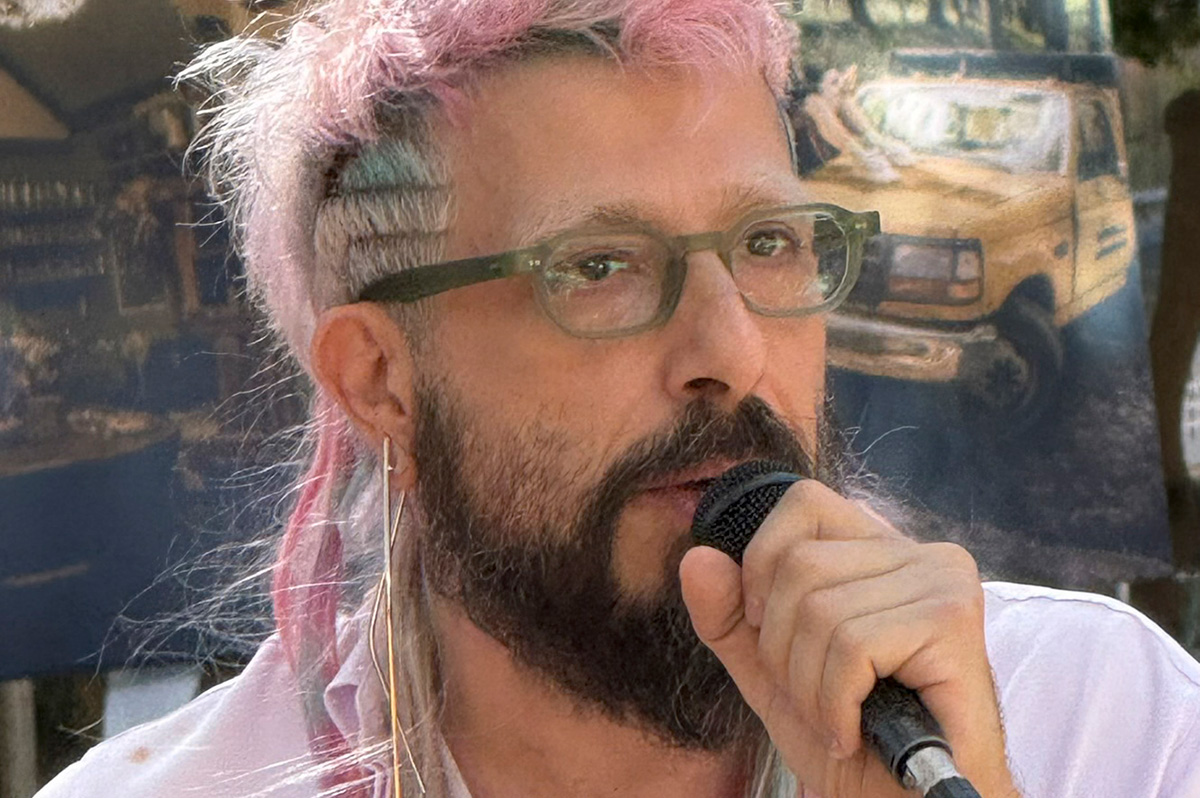
The Washington Blade on Monday spoke with Gui Molhallem, the executive director of VoteLGBT (Institute for Full Citizenship), a group that seeks to increase LGBTQ and intersex representation in Brazilian politics.
Molhallem pointed out 35 LGBTQ candidates won their respective races in the Oct. 4 election. They include Natal Municipal Councilwoman Thabatta Pimenta, a member of the Green Party who became the first transgender woman from northeast Brazil elected to represent Rio Grande do Norte state in the country’s Chamber of Deputies.
Congresswoman Erika Hilton, a travesti member of the leftist Socialism and Liberty (PSOL) party on Oct. 4 won re-election with nearly 1.6 million votes, the most any female member of Congress has received in Brazilian history. Guilherme Cortes, a bisexual PSOL member from São Paulo state, and Rick Azevedo, a gay PSOL member from Rio de Janeiro state, are among the candidates who won their respective Chamber of Deputies races.

Samanda de Lula, a lesbian member of the leftist Workers’ Party, will represent Rio Grande do Norte in the Brazilian Senate.
Molhallem pointed out there will be 14 openly LGBTQ members of Congress once the candidates who won their races on Oct. 4 take office in February. This number is the highest of any country in the Americas.
President Luiz Inácio Lula da Silva will face off against Sen. Flávio Bolsonaro in the second round of the presidential election on Sunday after neither man received at least 50 percent of the vote on Oct. 4.

Lula, who leads the Workers’ Party, in 2022 defeated Bolsonaro’s father, then-President Jair Bolsonaro, in that year’s presidential election.
The Brazilian Supreme Court last year sentenced Jair Bolsonaro — who repeatedly targeted LGBTQ Brazilians and other groups while in office — to more than 27 years in prison for his role in an attempted coup that saw thousands of his supporters storm the Congress, presidential palace, and the Supreme Court itself on Jan. 8, 2023. Jair Bolsonaro is currently serving his sentence at his home in Brasília, the country’s capital, because of his poor health.
His son has pledged to pardon him if he becomes the country’s next president.
(Video by Michael K. Lavers for the Washington Blade)






Brazil
Lula defeats Flávio Bolsonaro in second round of Brazilian presidential election
First round took place on Oct. 4

Brazilian President Luiz Inácio Lula da Silva on Sunday defeated Sen. Flávio Bolsonaro in the second round of the country’s presidential election.
Lula beat Bolsonaro by a 51.79-48.21 percent margin with 100 percent of the votes counted. CNN Brasil declared Lula the winner shortly after 9 p.m. local time (8 p.m. ET.)
The runoff took place after neither man received a majority of votes in the first round that took place on Oct. 4.
Bolsonaro in the first round defeated Lula by a 47.03-45.16 percent margin. Several polls
The Brazilian Supreme Court on Sunday extended voting for two hours after voters in Bahia state in northeast Brazil had issues with public transportation that was to have taken them to their respective polling places and bad weather in the southern part of the country. Bolsonaro had called for them to be “annulled,” but later backtracked after his own right-wing Liberal Party acknowledged the results.
Congresswoman Erika Hilton, a travesti member of the leftist Socialism and Liberty (PSOL) party who won re-election on Oct. 4 with nearly 1.6 million votes, the most any female member of Congress has received in Brazilian history, was among those with Lula after he won the runoff. Natal Municipal Councilwoman Thabatta Pimenta, a member of the Green Party who became the first transgender woman from northeast Brazil elected to represent Rio Grande do Norte state in the country’s Chamber of Deputies on Oct. 4, and other LGBTQ elected officials also celebrated the incumbent president’s victory.
Bolsonaro’s father is former President Jair Bolsonaro.
Lula, who leads the Workers’ Party, in 2022 defeated Jair Bolsonaro in that year’s presidential election.
The Brazilian Supreme Court last year sentenced Jair Bolsonaro — who repeatedly targeted LGBTQ Brazilians and other groups while in office — to more than 27 years in prison for his role in an attempted coup that saw thousands of his supporters storm the Congress, presidential palace, and the Supreme Court itself on Jan. 8, 2023. Jair Bolsonaro is currently serving his sentence at his home in Brasília, the country’s capital, because of his poor health.
His son had pledged to pardon him if he were to become Brazil’s next president.
Brazil
Transgender woman elected to Brazilian Chamber of Deputies
Thabatta Pimenta is first trans person from northeast Brazil elected to Congress

SÃO PAULO — Voters in Brazil’s Rio Grande do Norte state on Sunday elected a transgender woman to the country’s Chamber of Deputies.
Natal Municipal Councilwoman Thabatta Pimenta, who is a member of the Green Party, won with 92,743 votes. She is the first trans woman from northeast Brazil elected to the country’s Congress.
Pimenta became emotional when she was speaking to her supporters after she won. Her brother Ryan, who has cerebral palsy, was by her side.
“This victory belongs to the people of Rio Grande do Norte,” she said. “It is a victory built from the ground up … the people themselves rose up, and you saw the result: today they elected the first female travesti federal deputy from northeast Brazil.”
Pimenta will join Erika Hilton, a travesti member of the leftist Socialism and Liberty (PSOL) party who was a sex worker before her election to the São Paulo Municipal Council, and Duda Salabert, a trans woman and fellow PSOL member from Minas Gerais state, in the Chamber of Deputies.
Hilton on Sunday won re-election with 1,596,472 votes, the most any female member of Congress has received in Brazilian history. Dudabert also won re-election with 215,192 votes.
“Thank you Minas Gerais,” said Dudabert on social media after she won re-election.
❤️ REELEITA!!! Obrigada Minas Gerais! Com muito trabalho, aumentamos nossa votação! Muito orgulho em ser, pela segunda eleição consecutiva, a terceira candidatura mais votada de Minas Gerais para o cargo de deputada federal. E mostramos novamente que é possível fazer uma campanha “lixo zero”- sem imprimir santinhos, bandeiras ou adesivos. Muito feliz! Obrigada Minas ! Obrigada Brasil
— Duda Salabert 5️⃣0️⃣5️⃣0️⃣ (@DudaSalabert) October 5, 2026
Five openly bisexual Chamber of Deputies candidates also won their races on Sunday.
• Guilherme Cortez, a PSOL member in São Paulo state
• Dandara Tonatzin, a member of President Luiz Inácio Lula da Silva’s Workers’ Party in Minas Gerais
• Anielle Franco, a Workers’ Party member in Rio de Janeiro state
• Maria Marighella, a Workers’ Party member in Bahia state
• Giovana Mondardo, a Brazilian Communist Party member in Santa Catalina state
Fabio Félix, a gay PSOL member of the Chamber of Deputies who represents the Federal District in which Brasília, the country’s capital, is located won re-election with 224,224 votes. Rick Azevedo, a gay PSOL member from Rio de Janeiro state, won his Chamber of Deputies race.
Daiana Santos, a lesbian Brazilian Communist Party member who represents Rio Grande do Sul state in the Chamber of Deputies, won re-election with 114,315 votes.
Two lesbian women won their Chamber of Deputies campaigns.
• Rosa Amorin, a Workers’ Party member from Pernambuco state
• Bella Gonçalves, a Workers’ Party member from Minas Gerais who is a member of the Belo Horizonte Municipal Council
Samanda de Lula, a lesbian Workers’ Party member, will represent Rio Grande do Norte in the Brazilian Senate.
Rio de Janeiro Municipal Councilwoman Mônica Benício, who is a PSOL member, came up short in her bid for the Senate. Her then-partner, Rio de Janeiro Municipal Councilwoman Marielle Franco, and her driver, Anderson Gomes, were assassinated on March 14, 2018.
Fabiano Contarato, a gay senator from Espíritu Santo who is a member of the Workers’ Party, also lost his re-election bid.
“I receive the election results with respect and serenity,” he said on social media. “The popular will is sovereign, and democracy must always be respected.”
Jean Wyllys is a gay former member of the Chamber of Deputies who previously represented Rio de Janeiro state. He resigned in 2019 and fled Brazil after he received death threats. Wyllys this year ran to represent São Paulo state in the Chamber of Deputies, but he did not win his race.
VoteLGBT, an organization that seeks to increase LGBTQ representation in Brazilian politics, noted 529 openly LGBTQ candidates ran in the election. The group on Sunday more than 30 of them won their races across the country.
Natasha Ferreira, a Workers’ Party member, became the first travesti elected to public office in Rio Grande do Sul when she won a seat in the state’s Legislative Assembly. Voters in other states across the country also elected more than 20 LGBTQ candidates to their respective Legislative Assemblies.
• Keka Bagno, a bisexual PSOL member, was elected to the Federal District Legislative Chamber
• Açucena, a lesbian Workers’ Party member, was elected to the Espíritu Santo Legislative Assembly
• Fabricio Rosa, a gay Workers’ Party member, was elected to the Goiás Legislative Assembly
• Iza Lourença, a bisexual PSOL member, was elected to the Minas Gerais Legislative Assembly
• Tiago Botelho, a gay Workers’ Party member, was elected to the Minas Gerais Legislative Assembly
• Flávio Brasileiro, a gay Workers’ Party member, was elected to the Paraíba Legislative Assembly
• Dani Balbi, a trans Brazilian Communist Party member, was elected to the Rio de Janeiro Legislative Assembly
• Verônica Lima, a lesbian Workers’ Party member, was elected to the Rio de Janeiro Legislative Assembly
• Dani Monteiro, a bisexual PSOL member, was elected to the Rio de Janeiro Legislative Assembly
• Jean Volpato, a gay Workers’ Party member, was elected to the Santa Catarina Legislative Assembly
• Linda Brasil, a trans PSOL member, was elected to the Sergipe Legislative Assembly
• Sofia Favero, a trans PSOL member, was elected to the São Paulo Legislative Assembly
• Paula Nunes dos Santos, a bisexual PSOL member, was elected to the São Paulo Legislative Assembly
• Ediane Maria, a bisexual PSOL member, was elected to the São Paulo Legislative Assembly
• Monica das Pretas, a bisexual PSOL member, was elected to the São Paulo Legislative Assembly
• Duda Hidalgo, a bisexual Workers’ Party member, was elected to the São Paulo Legislative Assembly
• Rodrigo Mar, a bisexual Workers’ Party member, was elected to the São Paulo Legislative Assembly
• Thainara Faria, a bisexual Workers’ Party member, was elected to the São Paulo Legislative Assembly
• Keit Lima, a bisexual PSOL member, was elected to the São Paulo Legislative Assembly
Lula and Sen. Flávio Bolsonaro, whose father is former President Jair Bolsonaro, will face off in the presidential election’s second round on Oct. 25.
Brazil
Lula, Flávio Bolsonaro to face off in second round of Brazilian presidential election
Neither man received at least 50 percent of the vote on Sunday
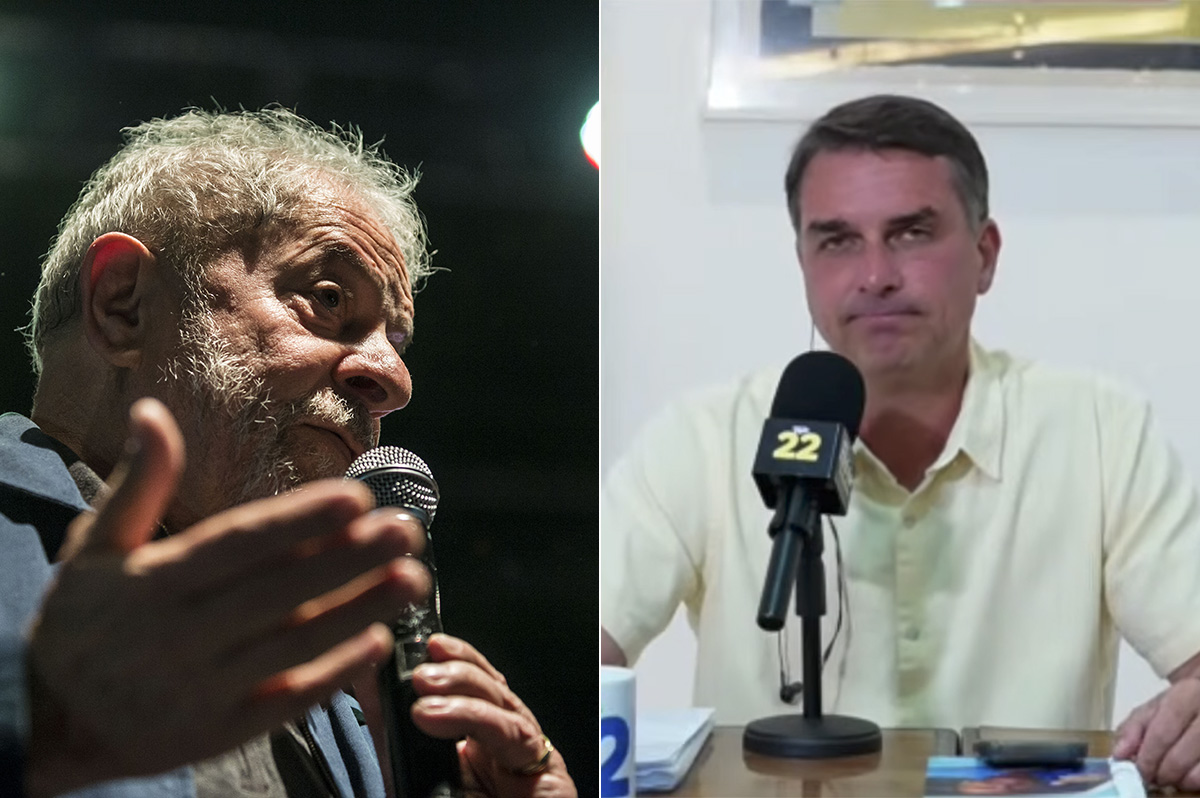
SÃO PAULO — President Luiz Inácio Lula da Silva will face off against Sen. Flávio Bolsonaro in the second round of Brazil’s presidential election on Oct. 25 after neither man received more than 50 percent of the vote in the first round that took place on Sunday.
Bolsonaro was ahead of Lula by a 47.03-45.16 percent margin with 100 percent of the vote counted.
Lula in 2022 defeated Bolsonaro’s father, then-President Jair Bolsonaro, in that year’s presidential election.
The Brazilian Supreme Court last year sentenced Bolsonaro — who repeatedly targeted LGBTQ Brazilians and other groups while in office — to more than 27 years in prison for his role in an attempted coup that saw thousands of his supporters storm the Congress, presidential palace, and the Supreme Court itself on Jan. 8, 2023. Bolsonaro is currently serving his sentence at his home in Brasília, the country’s capital, because of his poor health. His son has pledged to pardon him if he becomes the country’s next president.
Lula, who leads Brazil’s leftist Workers’ Party, was Brazil’s president from 2003-2010.
Sergio Moro, a judge who Jair Bolsonaro later tapped as his government’s Justice and Public Security Minister, in 2017 sentenced Lula to 9 1/2 years in prison after his conviction on money laundering and corruption charges that stemmed from Operation Car Wash.
The Supreme Court in November 2019 ordered Lula’s release.
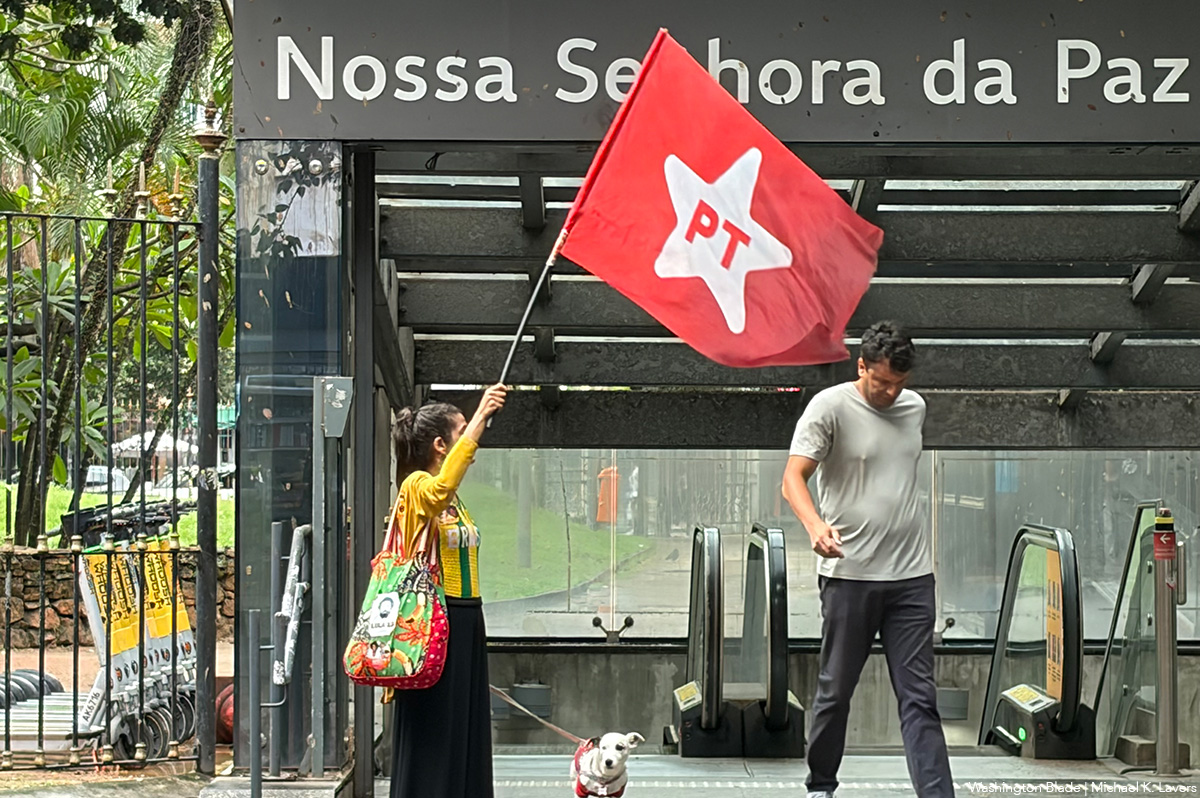
VoteLGBT, an organization that seeks to increase LGBTQ representation in Brazilian politics, noted 529 openly LGBTQ candidates ran in this year’s election. More than 100 of them are either transgender or travesti.
The Washington Blade will cover the results of these races when they become available.

‘Jellicle Ball’ projection designer’s next project is in D.C.

Comings & Goings

West Hollywood creates registry for polyamorous relationships

LGBTQ community responds with support after shooting at gay-owned VIDA Fitness

LGBTQ+ Victory Institute to honor Dutch prime minister at D.C. conference

Queerness in Islam: a history the media often ignores

Articles of impeachment filed against Hegseth

Sabrina Bruce becomes first trans person elected in Fairfax County

Anti-trans ballot measures pass in four states, setting up new legal battles

At least 29 known LGBTQ ANC candidates win election
-

 Religion5 days ago
Queerness in Islam: a history the media often ignores
-
U.S. Military/Pentagon5 days ago
Articles of impeachment filed against Hegseth
-
Virginia4 days ago
Sabrina Bruce becomes first trans person elected in Fairfax County
-
2026 Midterm Elections4 days ago
Anti-trans ballot measures pass in four states, setting up new legal battles