
Federal Government
Midterms could put LGBTQ lawmakers in committee chairmanships
Mark Takano and Tammy Baldwin could gain additional power in Congress

Currently, Republicans hold a majority across the federal government, with control of the White House and both chambers of Congress, alongside a conservative majority on the U.S. Supreme Court. That control has allowed the Trump-Vance administration to pursue an aggressive policy agenda with relatively few obstacles from Congress.
But if current polling and estimates hold up, the upcoming midterm elections could mark the beginning of the end of President Donald Trump’s unchecked influence over federal policymaking, particularly within the legislative branch.
While the White House and Supreme Court are expected to remain under conservative control, Democrats could flip enough seats to take control of the U.S. House of Representatives. Such a shift would not immediately reverse the Trump-Vance administration’s policies, but it would give Democrats a new set of tools to challenge the administration, investigate its actions, and potentially create opportunities to protect LGBTQ rights at the federal level.
Beyond passing legislation, Congress has several other powers that could prove particularly consequential if Democrats regain control of the House. Committee leadership, investigative authority, oversight of federal agencies, and control over government funding could all become important points of leverage during what could be a contentious lame-duck period of the Trump presidency.
Members of Congress serve on a wide range of committees and subcommittees covering everything from finances and foreign relations to agriculture and veterans affairs. While membership on these committees gives lawmakers a role in shaping policy, leadership positions carry considerably more authority.
For LGBTQ lawmakers, a Democratic House and Senate could provide an opportunity to move into influential leadership positions, giving them greater authority over the committees responsible for investigating the administration, reviewing federal spending, and shaping policies affecting LGBTQ people.
House of Representatives
If Democrats succeed in the midterms, the number of openly LGBTQ members of the House of Representatives could grow from 12 to as many as 17. Such an increase would mean more openly LGBTQ lawmakers in positions to push back against the Trump-Vance administration’s policies.
A Democratic takeover of the House could put several openly LGBTQ lawmakers in positions to influence investigations, legislation, and funding decisions that could have direct consequences for the administration’s LGBTQ policy agenda.
House Oversight Committee
California Congressman Robert Garcia, the ranking member of the House Oversight Committee, is among the LGBTQ lawmakers who could assume a particularly powerful role if Democrats regain control.
The House Oversight Committee is one of the most consequential committees in Congress, with broad authority to investigate the operations of the federal government, examine potential misconduct, and scrutinize actions taken on behalf of the United States, including those of the executive branch. Its work can bring government activities into the public eye and put pressure on federal officials to answer questions about their decisions.
The committee’s chair, currently U.S. Rep. James Comer (R-Ky.), also holds significant investigative authority. The chair is one of only three House committee chairs with the authority to issue subpoenas without a committee vote or consultation with the ranking member.
If Democrats win control of the House, they would be able to select their own committee chair. All signs point to Garcia being a leading candidate for the position.
That change could have major implications for the Trump-Vance administration. As chair, Garcia would be positioned to launch investigations into a range of constitutional and ethical questions surrounding the administration’s use of executive power.
Potential areas of scrutiny include Trump’s ties to the Epstein files, which Republicans have continued to downplay, and questions surrounding the president’s financial interests, including his cryptocurrency ventures and the substantial sums of money he has reportedly made while in office.
The committee could also examine how the administration has used its authority against political opponents and individuals it considers disloyal, including the ongoing disputes surrounding the release of information related to Epstein and the treatment of Republicans who have broken with the president.
For LGBTQ Americans, the potential shift in leadership could mean greater scrutiny of the administration’s efforts to roll back federal protections and restrict the rights of transgender people. Although oversight investigations would not automatically reverse those policies, they could force administration officials to explain their decisions, expose internal processes, and establish a public record of the administration’s actions.
Garcia has consistently emphasized the importance of holding the Trump-Vance administration accountable, including with an interview with the Washington Blade late last year. His potential elevation from ranking member to chair would give him significantly more authority to pursue that goal.
The Blade reached out to Garcia’s office for comment on whether he is interested in taking on the leadership position. His office referred the Blade to the House Oversight Committee, which did not respond to a request for comment.
House Committee on Veterans’ Affairs
Rep. Mark Takano, a California Democrat and the ranking member of the House Veterans’ Affairs Committee, could also gain significant influence if Democrats take control of the chamber.
The committee oversees legislation and federal programs affecting U.S. military veterans, including the services and benefits available to those who have served in the armed forces. As chair, Takano would have a direct role in reviewing legislation, advancing new bills and amendments, and determining which issues receive the committee’s attention.
That authority could become particularly important as the Trump-Vance administration continues its efforts to remove trans people from military service.
The administration’s policies have raised questions about what happens to trans service members who are forced out of the military, including whether they will receive appropriate separation benefits and government-funded access to medical care.
If Takano becomes chair, he could use the committee’s legislative and oversight authority to examine how the administration is implementing its policies and what those decisions mean for trans veterans and service members. In the past Takano has been outspoken about his disdain for this approach of removing benefits for LGBTQ military members and vetterans.
While a Democratic-controlled committee would not necessarily be able to overturn the administration’s military policies on its own, it could scrutinize the treatment of affected service members and push for legislation addressing their benefits and care.
That could offer some form of congressional recourse at a time when the future of trans service members remains uncertain.
House Appropriations Committee
Congressman Mark Pocan of Wisconsin could also play an important role through the House Appropriations Committee, which oversees federal spending and determines how government funds are allocated. Pocan is currently a senior member of the House Appropriations Committee but could be given a leadership role in November.
Appropriations is one of the most powerful committees in Congress because of its authority over government funding. Federal agencies need money to carry out their work, and the Appropriations Committee helps determine how much funding they receive. Through its control over spending legislation, the committee can influence how agencies operate and place limits on what the federal government can finance.
For LGBTQ advocates, that authority could create another avenue for challenging the Trump-Vance administration’s agenda, which has directly targeted inclusive measures previously supported by the federal government. These include diversity, equity, and inclusion initiatives intended to provide opportunities to people who may face additional barriers because of their race, socioeconomic status, or gender.
A Democratic-led appropriations process could give lawmakers greater power to establish positive funding decisions for federal LGBTQ related programs and protections. It could also provide opportunities to challenge spending priorities that support the administration’s efforts to roll back LGBTQ-inclusive policies, including the significant cuts the Trump-Vance administration has made to HIV and AIDS funding, which disproportionately affects LGBTQ people.
Pocan’s potential role would be especially significant because changes in federal policy are not always determined by legislation alone. Funding decisions can shape the scope of programs, how agencies implement their priorities, and which initiatives receive the resources necessary to operate.
Even if Democrats cannot immediately reverse the administration’s policies, control over appropriations could give them a way to place pressure on the White House and limit certain actions through the federal budget process.
Pocan’s team did not respond to requests for comment before publication.
House Committee on Small Business
A source familiar with House LGBTQ leadership told the Blade that U.S. Rep. Sharice Davids of Kansas may be seeking a new leadership opportunity if Democrats regain control of the House.
Davids has been making it known that she would like to play a role on the House Small Business Committee. The committee addresses issues affecting the country’s small business community, including legislation intended to support small businesses and strengthen their protections.
Davids had written a letter in September announcing her intention to get the top democratic position for the House Small Business Committee.
“Kansas’ Third District is home to more than 16,000 small businesses and nearly 177,000 small business employees, and my voice in representing these Main Streets – and my background in running my own small business – would be valuable atop the panel,” Davids said in her letter. “At a time when the President’s reckless tariffs and war with Iran are wreaking havoc on costs and worsening consumer confidence, I am eager to lead this Committee and help steward sound economic policies that help Americans and achieve district-focused wins for the panel’s members.”
For LGBTQ business owners, the committee’s work could intersect with broader questions about economic opportunity, workplace protections, and the treatment of LGBTQ people in the private sector. However, Davids’s precise role and the extent of any potential leadership responsibilities remain to be determined.
Her team confirmed she is still interested in the position when the Blade reached out for comment.
Senate
Across the Capitol, the path to committee leadership in the U.S. Senate is somewhat different. Seniority and party leadership play a larger role in determining which lawmakers receive influential assignments.
Senate Minority Leader Chuck Schumer of New York has already made clear that he intends to continue leading Senate Democrats, with the goal of turning his minority leadership into majority leadership once again. In an interview with the Associated Press earlier this month, Schumer stated unequivocally that he is running for another term as leader.
Committee assignments and leadership opportunities would still depend on the outcome of the elections, internal party decisions, and the rules governing each committee, but Schumer would play a larger role in determining who receives committee leadership positions if Democrats regain control.
Committee on Appropriations
U.S. Sen. Tammy Baldwin of Wisconsin, who holds several committee assignments, could be seeking a leadership role on the Senate Appropriations Committee, according to a source familiar with LGBTQ leadership within the Senate who spoke with the Blade.
More specifically, the source said Baldwin is interested in a role on the Agriculture, Rural Development, Food and Drug Administration, and Related Agencies Subcommittee.
The subcommittee oversees federal funding for a broad range of programs, including agricultural initiatives, rural development, and the Food and Drug Administration. Its work gives members a role in determining how federal resources are distributed across those areas.
A leadership position would give Baldwin greater influence over the subcommittee’s priorities and spending decisions. Even in her current role as a member of the subcommittee, Baldwin has been a staunch supporter of “clean” spending bills that explicitly require the removal of anti-LGBTQ riders that many Republicans have attempted to attach to essential legislation at the last minute.
As Democrats look toward the midterms, the question is not simply whether they can win enough seats to change the balance of power in Congress. It is also which lawmakers would be positioned to use that power, and how they might deploy it to challenge the administration’s policies.


2026 Midterm Elections
Record number of LGBTQ lawmakers elected to Congress in midterms
17 LGBTQ candidates prevail in historic year
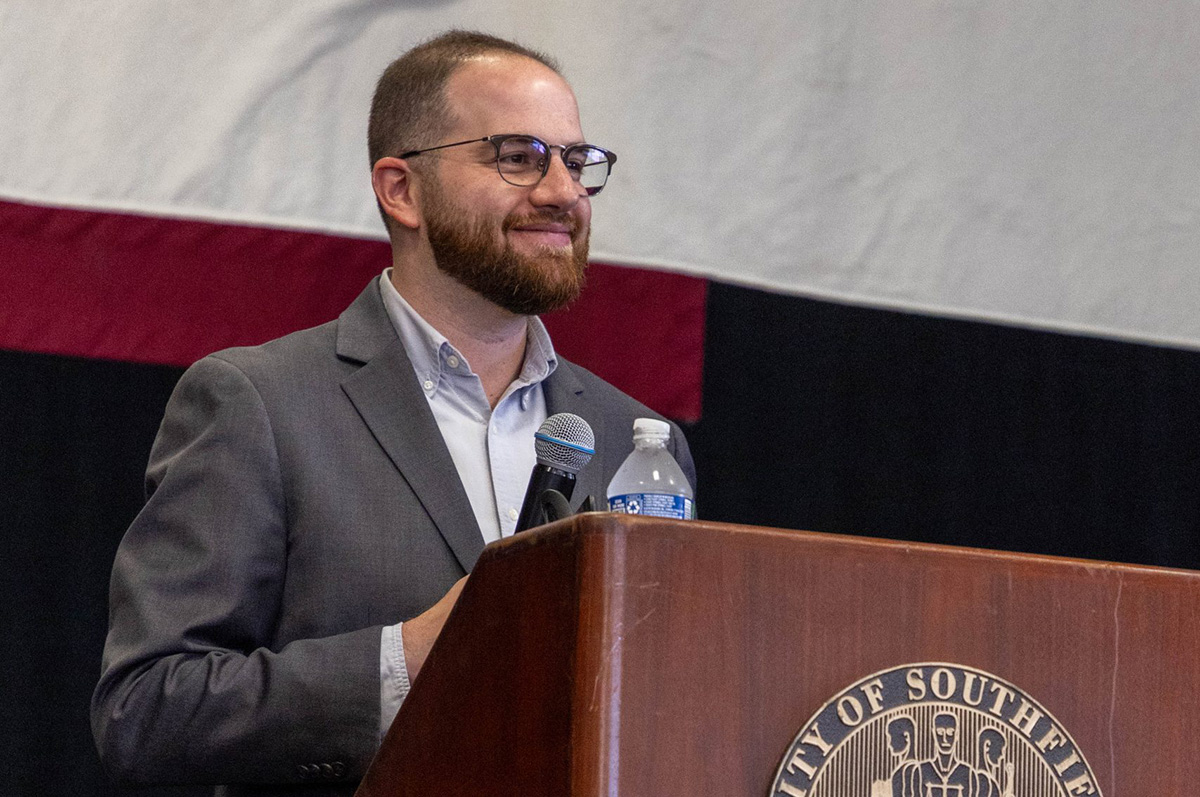
The next Congress will include a record number of LGBTQ+ lawmakers elected to Capitol Hill, with 17 of the 18 LGBTQ+ candidates who ran for federal office securing their seats.
The New Lawmakers
U.S. Senate:
Chris Pappas — New Hampshire
New Hampshire Congressman Chris Pappas has become the first openly gay man elected to the U.S. Senate. Former Republican Sen. John E. Sununu held the Senate seat for the Granite State from 2003 to 2009 but failed to win it back.
Pappas won the Democratic-held battleground state, receiving 56% of the vote to Sununu’s 42%.
Pappas ran his campaign on several issues that proved important during this midterm election cycle, including affordability, reining in corruption across levels of government and protecting LGBTQ rights. He spoke with the Blade last week on his goals for his Senate run while addressing the historic nature of his election.
U.S. House of Representatives:
Cait Conley — NY-17
Cait Conley has defeated incumbent Republican Congressman Mike Lawler in New York’s 17th Congressional District, flipping the Hudson Valley seat for Democrats. Conley, a former Army officer who served six overseas deployments and worked on the National Security Council, campaigned on lowering costs for working families, expanding affordable housing and protecting access to health care.
NBC’s unfinished tally of the votes has Conley leading Lawler 52.2% to 47.7%, with approximately 61% of the vote reported.
There were some problems with malfunctioning voting machines in Westchester County, a largely blue area, that delayed ballot scanning and, consequently, the call for the seat, The Gothamist reported last night. Despite some of the machines not working properly, Lawler conceded the race.
Jeremy Moss — MI-11
Michigan State Sen. Jeremy Moss won election to the U.S. House, defeating Republican Ethan Baker in Michigan’s 11th Congressional District.
Moss won 60.9% of the vote to Baker’s 36.8%, according to election results confirmed by the Associated Press. Moss, who served as president pro tempore of the Michigan Senate and was the state’s first openly gay senator, campaigned on lowering health care costs, addressing affordability, protecting LGBTQ rights and holding the Trump administration accountable.
He will represent Michigan’s 11th Congressional District, a seat currently held by Democrat Haley Stevens, who surprised large swaths of the country by revoking her endorsement of Abdul El-Sayed, after losing the Senate primary.
The Blade interviewed Moss earlier in his campaign, when he emphasized his commitment to the people of Michigan and his determination to stand against Trump and MAGA Republicans in Congress.
JoAnna Mendoza — AZ-06
Marine veteran JoAnna Mendoza is highly likely to defeat Republican incumbent Juan Ciscomani in Arizona’s 6th Congressional District, flipping the highly competitive southern Arizona seat for Democrats.
The New York Times’ results showed Mendoza with 53% of the vote, compared with Ciscomani’s 45%. At the time of publishing, 88% of votes had been accounted for, which is why no outlet had outright declared Mendoza the official winner yet. Most news outlets wait until more of the vote is accounted for.
Mendoza campaigned on lowering costs for working families, creating good-paying jobs, strengthening health care access, protecting veterans’ benefits and addressing border security and immigration. She also emphasized restoring accountability and trust in government.
Marni von Wilpert — CA-48
San Diego City Council member Marni von Wilpert led Republican Jim Desmond in California’s 48th Congressional District, a competitive race for an open seat previously held by retiring Republican Congressman Darrell Issa.
Early results reported by CBS8 show von Wilpert leading Desmond by nearly 20 points, with von Wilpert holding 59.4% to Desmond’s 40.6%. This San Diego seat was among the competitive races Democrats targeted as they sought to expand their House majority.
Von Wilpert campaigned on lowering the cost of living, expanding affordable housing and health care, protecting reproductive freedom and LGBTQ rights, and holding federal immigration officials accountable.
Scott Wiener — CA-11
California State Sen. Scott Wiener is expected to win the open congressional seat in California’s 11th District, succeeding former House Speaker Nancy Pelosi. Wiener faced off against fellow Democrat Connie Chan, a San Francisco supervisor, in the race to represent the heavily Democratic district.
Associated Press results reported by The New York Times showed Wiener leading Chan 55.4% to 44.5%.
Wiener campaigned on expanding LGBTQ rights, protecting transgender Americans, lowering health care and housing costs, and reforming federal immigration enforcement. He also made passing the Equality Act a central part of his campaign platform. However, he faced issues at the beginning of his campaign, particularly surrounding the Palestinian-Israeli war, when the Jewish state senator initially refused to call what was happening a genocide, leading to some fragmented support within the Democratic Party.
J.D. Ford — IN-05
Indiana State Sen. J.D. Ford defeated Republican incumbent Victoria Spartz in Indiana’s 5th Congressional District, flipping the seat for Democrats.
Ford received approximately 51.7% of the vote to Spartz’s 48.3%, according to Associated Press results reported by The New York Times, with nearly all votes counted.
Ford, Indiana’s first openly LGBTQ state legislator, campaigned on lowering health care and housing costs, protecting Medicaid, addressing affordability and holding the federal government accountable. He also supported passing the Equality Act to establish federal LGBTQ nondiscrimination protections.
Janelle Sarauw — U.S. Virgin Islands
Former Virgin Islands Sen. Janelle Sarauw led the race to become the territory’s next delegate to the U.S. House of Representatives, defeating independent candidate Shelley Moorhead.
Unofficial territorial election results showed Sarauw receiving 13,029 votes to Moorhead’s 3,586, representing approximately 76.9% and 21.2% of votes cast for the office, respectively.
Sarauw campaigned on improving health care access, protecting Medicaid funding, lowering prescription drug costs, strengthening veterans’ services and modernizing the Government Employees’ Retirement System (GERS). She also emphasized securing stronger federal representation for the U.S. Virgin Islands.
In a statement on her Facebook page Wednesday morning, Sarauw said her heart was “heart overflowing with gratitude.”
“I love these islands with every fiber of my being, and as I prepare to carry our voices, our stories, our struggles, and our aspirations to Washington, D.C., I do so with a full heart, a humble spirit, and an abiding faith in what we can accomplish together.”
Incumbents
Sarah McBride — DE-AL
Delaware’s incumbent U.S. Representative Sarah McBride was reelected to the U.S. House of Representatives on Tuesday, defeating Republican challenger Joseph Arminio. McBride is the first openly transgender person elected to Congress.
The Associated Press called the race for McBride on election night shortly after polls closed. The New York Times shows her with approximately 64% of the vote, with Arminio holding 35%, with 95% of ballots counted.
Earlier this year, during a forum attended by both candidates, Arminio misgendered McBride multiple times and was subsequently asked to leave.
McBride campaigned on a range of issues, including affordability, health care access, immigration, reproductive health care and workers’ rights.
Earlier this year, the Washington Blade interviewed McBride, who discussed her goals for the future while reflecting on her first year in Congress.
“We need to deliver universal child care, a higher minimum wage, Medicare for all who want it, and millions of new homes. Winning the next election is not the end; we have to continue building toward a durable majority.”
Following the announcement of her win, McBride put out a statement on social media about her campaign’s main messaging in the face of Republicans’ unrelenting attacks on people like her.
“Yesterday, Delaware clearly rejected the politics of hate in favor of a politics of hope,” she wrote on instagram.
Robert Garcia — CA-42
California’s incumbent U.S. Representative Robert Garcia won reelection to another term representing the state’s 42nd Congressional District, defeating Republican challenger Brian Burley.
New York Times/AP election results showed Garcia receiving approximately 60% of the vote to Burley’s 40%.
Garcia, the former mayor of Long Beach, has focused on infrastructure, transportation, education and LGBTQ rights during his time in Congress. In the current Congress, Garcia served as the ranking member of the House Oversight Committee, where he pushed for additional investigations into the Trump-Vance administration, including its handling of the Epstein files. Following Democrats’ victories, Garcia is positioned to take over as chair of the House Oversight Committee, giving him greater authority to investigate the numerous allegations and controversies facing the president.
Becca Balint — VT-AL
Vermont’s incumbent U.S. Rep. Becca Balint won reelection to a third term in Congress, defeating Republican challenger Gerald Malloy.
The Associated Press called the race for Balint on election night. At the time, she had 65% of the Green Mountain State’s vote, compared to Malloy’s 30%.
Balint, a former teacher and Vermont state senator, centered her campaign on affordability, housing, mental health and protecting democracy. She also criticized Trump’s tariffs and the war in Iran, arguing that both were contributing to higher costs for Americans.
Emily Randall — WA-06
Washington’s incumbent U.S. Representative Emily Randall won reelection to represent the state’s 6th Congressional District, defeating Republican challenger Teresa Fox.
The AP and The New York Times called the race for Randall, whose 64% share of the vote put her securely ahead of Fox’s 35% in the Olympic Peninsula, the Kitsap Peninsula and most of the city of Tacoma.
Randall, who previously served in the Washington state Senate, made expanding access to affordable health care a central part of her campaign. She also focused on lowering costs for working families and protecting access to essential services.
Eric Sorensen — IL-17
Illinois’s incumbent U.S. Rep. Eric Sorensen won reelection to a third term in Congress, defeating Republican challenger Dillan Vancil.
The Associated Press called the race for Sorensen with approximately 70% of the vote counted. Sorensen held 60% of the vote.
Sorensen, a former television meteorologist, centered his campaign on lowering costs for working families. His priorities also included protecting health care access, supporting rural communities and addressing the economic challenges facing residents of western Illinois.
Mark Pocan — WI-02
Wisconsin’s incumbent U.S. Rep. Mark Pocan won reelection to another term representing the state’s 2nd Congressional District. Pocan ran unopposed in the general election, securing another term representing the Madison-area district.
Pocan, who has served in Congress since 2013, has focused on health care affordability, workers’ rights and LGBTQ equality. He also serves as co-chair of the Congressional Equality Caucus and is a member of the House Appropriations Committee, where he is expected to hold more leadership power in the new congressional term.
Mark Takano — CA-39
California’s incumbent U.S. Rep. Mark Takano won reelection to another term representing the state’s 39th Congressional District, defeating Republican challenger Steve Manos.
AP election results showed Takano receiving 65.3% of the vote to Manos’s 34.7%.
Takano has made health care and veterans’ issues central to his congressional work. He has also been an advocate for LGBTQ equality and serves as co-chair of the Congressional Equality Caucus.
Ritchie Torres — NY-15
New York’s incumbent U.S. Representative Ritchie Torres won reelection to another term representing the Bronx’s 15th Congressional District.
The New York Times showed Torres receiving 76.89% of the vote, with Republican challenger Stylo Sapaskis receiving 10.64%.
Torres, who previously served on the New York City Council, has centered his congressional work on housing, economic development, education and public safety.
Sharice Davids — KS-03
Kansas incumbent U.S. Rep. Sharice Davids won reelection to another term representing the state’s 3rd Congressional District, defeating Republican challenger Eric Jenkins.
According to New York Times and AP election results, Davids received 59.6% of the vote to Jenkins’ 38.4%.
Davids, a former White House fellow and attorney, centered her campaign on agriculture, lowering costs and expanding access to health care. She has also emphasized supporting Kansas businesses and working families.
2026 Midterm Elections
Democrats take control of Congress in historic rebuke of Donald Trump
‘Voters delivered a resounding message: equality wins’
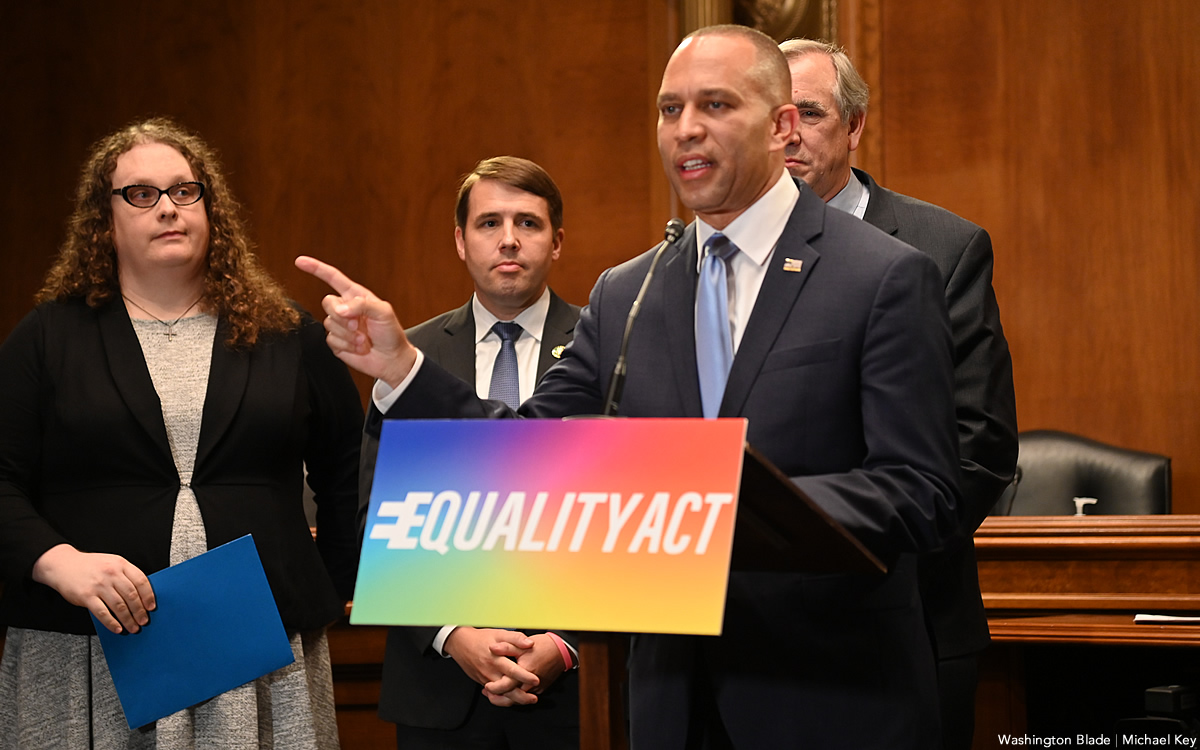
Midterm elections are traditionally viewed as a check on the party in control of the White House. With Republicans holding control of all three branches of government, President Donald Trump was able to advance his agenda with few congressional obstacles.
From getting the United States involved in a war in Iran to imposing tariffs that have increased the cost of everyday goods, Trump has faced mounting criticism over his priorities, including his insistence on pursuing vanity projects in the nation’s capital rather than addressing issues affecting most American voters.
Following the midterm elections, both chambers of Congress will now be controlled by the Democratic Party.
Affordability was a key issue in this year’s midterms. As Americans watched Trump receive a brand-new Air Force One from a foreign government and continue a war that has directly affected everyday costs, particularly gasoline and groceries, voters delivered a devastating and historic rebuke to the president and his party.
Republicans spent $305 million on advertisements, compared with $256 million spent by Democrats, in competitive Senate, House and gubernatorial races between Oct. 23 and 29, according to The Washington Post, which analyzed data from AdImpact, a political advertising tracking firm.
Republican attempts to use LGBTQ issues as culture-war talking points appeared to be less effective in 2026 than they were in 2024.
This year’s advertisements targeting transgender people primarily focused on two policies: transgender athletes’ participation in women’s and girls’ sports and gender-affirming medical care, particularly surgery, for minors.
Despite Republican efforts to make LGBTQ identity a political liability, the midterm elections resulted in a historic number of LGBTQ candidates being elected to federal office.
Chris Pappas, the senator-elect from New Hampshire, will become the first openly gay man elected to the U.S. Senate, joining Sen. Tammy Baldwin (D-Wis.), an out lesbian who has held her seat since 2012. Meanwhile, a record number of LGBTQ representatives have been elected and reelected to the U.S. House. They include Sarah McBride, the first openly transgender member of Congress, who retained Delaware’s seat; JD Ford, who flipped Indiana’s seat; and Cait Conley, who defeated incumbent Mike Lawler.
Following the election results, LGBTQ advocacy groups celebrated Democratic victories and the election of several LGBTQ candidates.
The Human Rights Campaign (HRC), the largest LGBTQ advocacy organization in the United States, issued a statement following Democrats’ securing control of both chambers of Congress.
“Tonight, voters delivered a resounding message: equality wins. After two years of MAGA Republicans waging a culture war, wasting taxpayer dollars attacking LGBTQ+ people, and spending $340 million on anti-trans ads while families suffered, voters have had enough,” said HRC President Kelley Robinson.
“In a historic rebuke, voters didn’t just reject LGBTQ+ hate, they have elected a historic number of LGBTQ+ elected officials. Chris Pappas is the first-ever out gay man elected to the U.S. Senate, and JoAnna Mendoza, Cait Conley, and Jeremy Moss will join Sarah McBride, who won by a huge margin, in the U.S. House — and that’s just the start. Virginia reaffirmed that love is love. Missouri rejected an anti-trans, anti-abortion ballot measure. And we are seeing victories up and down the ballot across the country,” she added. “The message from LGBTQ+ voters could not be any more clear: Our rights are not up for debate, our community will not be a political punching bag, and we are not going anywhere.”
Emily Wagner, a communications official with the Transgender Freedom Alliance, also weighed in on the results, arguing that the relentless anti-transgender advertising Republicans ran across the country failed to deliver the electoral results they sought.
“Massive anti-trans spending failed to prevent important Democratic victories. Republicans spent nearly $400 million on anti-trans ads altogether—and still lost key races to candidates who pushed back,” Wagner said in an email. “These victories reinforce TFA’s research: candidates can answer attacks effectively by speaking confidently about shared values, addressing voters’ concerns, and challenging their opponents’ priorities without abandoning transgender people.”
There were early predictions that a Democratic “blue sprinkle,” or even a modest wave, could serve as a check on Trump’s power by installing Democratic lawmakers in a Congress over which he had previously exercised significant influence. Instead, the results amounted to a blue tsunami.
Democrats won several states Trump carried by double digits in 2024, as voters voiced their disapproval of the president.
Democrats flipped seven previously Republican-held seats, including in Iowa, Kansas, Maine, North Carolina, South Carolina, Ohio and Texas. Some of those states had gone decades without electing a Democratic leader.
The seismic shift in federal power has also prompted changes in Republican leadership. Speaker Mike Johnson (R-La.) told his staff during a phone call Wednesday morning that he will not remain Republican leader in the new Congress, according to four sources on the call cited by NBC News. Republicans are scheduled to hold an internal election to select their candidate for the position next week, on Nov. 10.
With control of the House and expanded oversight powers, more LGBTQ Democrats could also be positioned to take on leadership roles in the new Congress.
Incumbent Congressman Robert Garcia (D-Calif.) is poised to become chair of the House Oversight Committee, giving him greater authority to investigate the Trump-Vance administration, subpoena officials and oversee federal agencies.
Garcia responded to the confirmation of Democratic control with a two-word statement: “Lawyer up.”
2026 Midterm Elections
Democrats projected to win Senate majority, opening door to LGBTQ legislation
U.S. Sen-elect Chris Pappas (D-N.H.) is gay
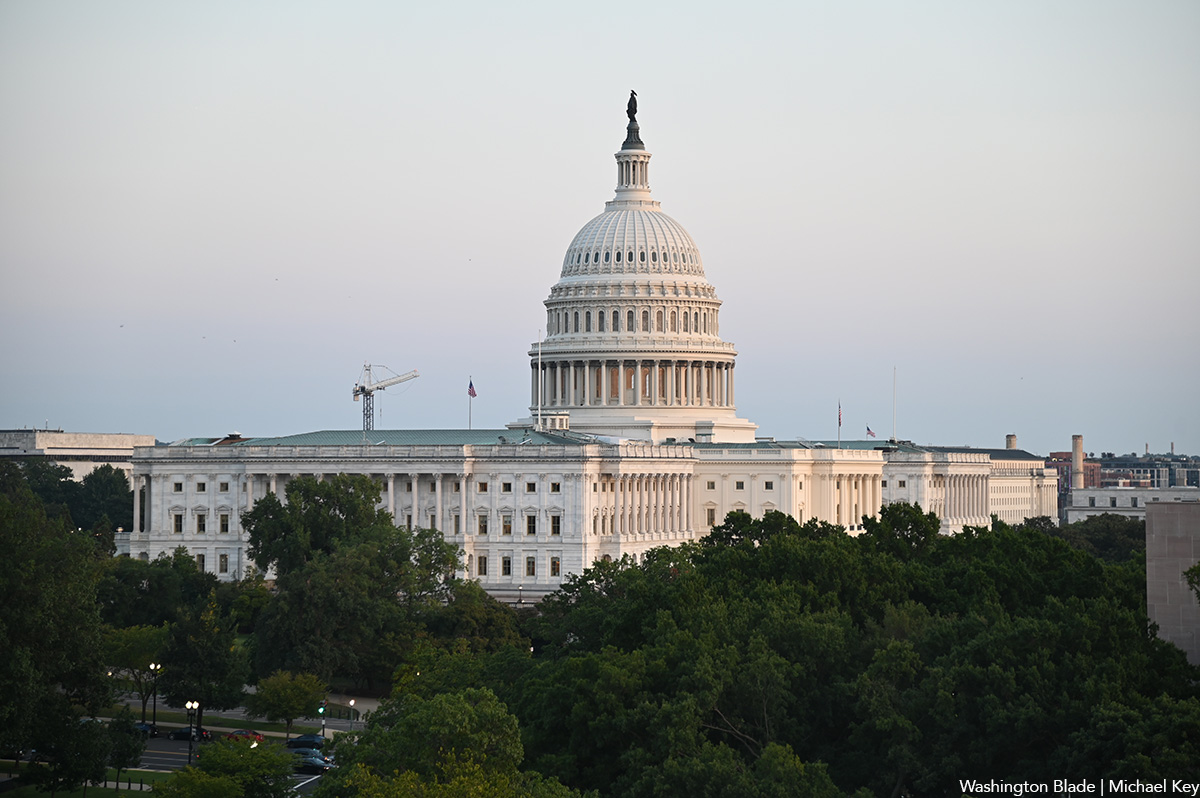
The U.S. Senate has flipped to Democratic control.
Democrats will control of the Senate after flipping the minimum four Republican-held seats, giving the party control of both chambers of Congress and a majority in the legislative branch, according to NBC.
The Senate, the upper legislative body, holds 100 seats, two for every state, and oversees several important functions of the federal government, including confirming judicial and Cabinet appointments.
There will now be two openly LGBTQ members of the Senate: freshly elected Chris Pappas of New Hampshire, who is gay, and Tammy Baldwin of Wisconsin, who is a lesbian.
With greater control over federal legislation, Democrats could have an opportunity to advance measures such as the Equality Act, which would expand federal protections against discrimination based on sexual orientation and gender identity.
During the campaign, President Donald Trump repeatedly referred to South Carolina Democratic Senator-elect Annie Andrews using the anti-transgender slur “Tranny Annie,” while emphasizing culture war issues, including trans participation in sports and gender-affirming care.
Democrats, meanwhile, have centered their campaigns on the growing affordability crisis as somatic issues, including the Ukrainian-Russian war, Palestinian-Israeli war, and the war in Iran.

Anti-trans ballot measures pass in four states, setting up new legal battles

British appellate court strikes down Trinidad and Tobago sodomy law

At least 29 known LGBTQ ANC candidates win election

Sabrina Bruce becomes first trans person elected in Fairfax County

Queerness in Islam: a history the media often ignores

Stephen Miller, key architect of anti-LGBTQ policies, named White House chief of staff

Baltimore lawmaker’s ex-treasurer charged with theft of $87K in campaign cash

Escritora trans venezolana reivindica una fe sin exclusiones ante la visita del papa a Sudamérica

Out actor on his 25-year love affair with ‘Mamma Mia’

Comings & Goings
-

 White House4 days ago
Stephen Miller, key architect of anti-LGBTQ policies, named White House chief of staff
-
Maryland5 days ago
Baltimore lawmaker’s ex-treasurer charged with theft of $87K in campaign cash
-
Noticias en Español5 days ago
Escritora trans venezolana reivindica una fe sin exclusiones ante la visita del papa a Sudamérica
-
Theater4 days ago
Out actor on his 25-year love affair with ‘Mamma Mia’