Alabama
Democracy Forward sues Alabama over restrictions on books featuring trans characters
Some argue the policy will limit young readers’ access to LGBTQ stories.

Democracy Forward has filed a lawsuit against the Alabama Public Library Service (APLS), challenging a state regulation that restricts public libraries from purchasing books for young readers that contain material related to transgender people and gender identity.
The lawsuit was filed on behalf of a group of authors– Christyl “Kit” Rosewater, Page Powars, Phoenix McDonald – and Read Freely Alabama, a non-profit dedicated to protecting against censorship in Alabama. Rosewater spoke to the Blade days before the lawsuit went public. Rosewater’s young adult novel, “Buried Feelings,” features a transgender character and is advertised to readers under 18.
The APLS was established to coordinate library services and provide funding to municipalities and counties across Alabama. However, the lawsuit alleges that the agency has instead used its authority over state funding to pressure libraries into removing and restricting access to books based on the content preferences of its unelected Executive Board members.
At the center of the lawsuit is Ala. Admin. Code §520-2-2-.03(2)(j), which requires libraries receiving state funding to relocate materials deemed “inappropriate for children or youth” to adult-only sections. The regulation also requires libraries to adopt written purchasing criteria preventing the acquisition of materials advertised for readers under 18 that contain obscenity, sexually explicit content or other material deemed inappropriate for young people.
Initially, the regulation did not define what constituted inappropriate material. The APLS subsequently amended its rules to specifically include “any materials regarding transgender procedures, gender ideology, or the concept of more than two biological genders.”
Under the amended rule, libraries must remove or relocate materials containing such content to adult sections to remain eligible for state funding.
The lawsuit argues that the regulation unfairly targets transgender people and restricts minors’ access to constitutionally protected materials. It also contends that the rule is unconstitutionally vague and overbroad because it does not establish clear boundaries for what libraries can purchase or retain.
The complaint notes that APLS Executive Board Chairman John Wahl has suggested the definition could extend beyond the listed examples to include “excessive violence” and “excessive drug use.”
The plaintiffs argue that the regulation could also implicate widely recognized literary works, including Louisa May Alcott’s “Little Women,” which features a character expressing disappointment about not being born a boy; William Shakespeare’s “The Merry Wives of Windsor,” which includes a male character disguising himself in women’s clothing; and David Levithan’s “Every Day,” which follows a genderless spirit inhabiting different people’s bodies.
Rosewater said she has experienced book censorship before, including canceled author events, but the Alabama regulation presented an opportunity to challenge a statewide policy rather than respond to individual incidents.
“I feel like in all of the other circumstances that I’ve learned, a book was already pulled from a library or I had a classroom visit canceled,” Rosewater told the Washington Blade. “It felt like something I had to just deal with the reaction and move forward. But with the policy in Alabama, I also was learning about all of the really great work that Democracy Forward was doing pushing back on other policies in other states.”
With the help of her publisher, Penguin Random House, Rosewater connected with Democracy Forward to challenge the regulation.
She said the statewide implications made the fight particularly important, warning that policies restricting books in one state can influence library decisions elsewhere.
“It’s not enough to have the book available for purchase in a state if it’s not going to be available to be checked out as a public resource,” she said. “States influence each other all the time. Like library policies, policies influence other librarians, and there’s this chill factor that happens even in states that don’t have the policies already enacted.”
“Buried Feelings” is a young adult romance told from the perspective of Ivy, a queer cisgender girl, whose love interest, Cam, is a transgender boy. The story follows their relationship as Cam transitions and the two navigate how their feelings for one another evolve. Set in San Francisco, the novel also incorporates LGBTQ history, including the legacy of Harvey Milk and the city’s lesser-known queer history.
Rosewater said she wanted to write a story exploring how people can grow together while their identities and experiences change.
The book has been named a Gold Standard Selection by the Junior Library Guild and received a starred review from Publishers Weekly. Rosewater emphasized that the novel contains no depictions of sexual activity and argued that its challenge has nothing to do with explicit content.
“It’s really important for me to have the public know– and to have readers know – this is truly being challenged for one person’s identity, and for no smut content in the book,” she said. “There’s none of it.”
Rosewater said the book was written for LGBTQ readers, transgender young people and allies seeking to better understand transgender experiences.
She hopes the lawsuit draws attention to what she described as the harmful conflation of transgender identities with age-inappropriate content. She also emphasized that challenging the regulation is about preserving families’ ability to decide which books their children can access.
“Nobody is saying you need to read my book, you need to read this person’s book. It’s about having the freedom and the choice to do so, and specifically, we’re talking about the freedom of families,” she said. “Caregivers and parents should be able to be the ones who decide which books their kids have access to. It shouldn’t be a decision made by this distant party of people, right? But then kind of imposed on the state as a whole.”
The restrictions have also created financial consequences for Rosewater, who said public libraries play an important role in introducing readers to authors and their work. Although library patrons can borrow books for free, libraries purchase copies for their collections, creating sales opportunities for authors and publishers.
Rosewater said losing access to library collections means losing opportunities to reach readers who might otherwise discover her work and purchase future books.
“Anytime my book gets censored anywhere, that’s at least one connection to a reader that I’ve lost, and it adds up,” she said. “It’s impactful beyond being just heartbreaking. It really sort of limits the scope of my role as an author.”
She also warned that restrictions on library acquisitions can discourage other libraries and schools from purchasing challenged books, further limiting their circulation.
For young transgender readers, Rosewater said access to stories featuring characters like Cam can help them understand their identities and feel less isolated.
“When you don’t see yourself reflected in media, you come to believe that that part of you, it doesn’t validate,” she said. “It deprives kids of community. It deprives kids of support. It deprives kids of knowing that they’re wonderful as they are, and nothing is wrong with them.”
Rosewater added that books featuring transgender characters can also help other young readers develop empathy and understanding.
“I want to fight as hard as I can to keep transgender characters in stories because we need to see them whether you identify as transgender or gender queer or not,” she said.
The Alabama Public Library Service responded to a Blade inquiry but declined to comment.



Alabama
Ala. mayor, pastor dies by suicide after far-right website published pictures of trans persona
F.L. “Bubba” Copeland was elected in Smiths Station
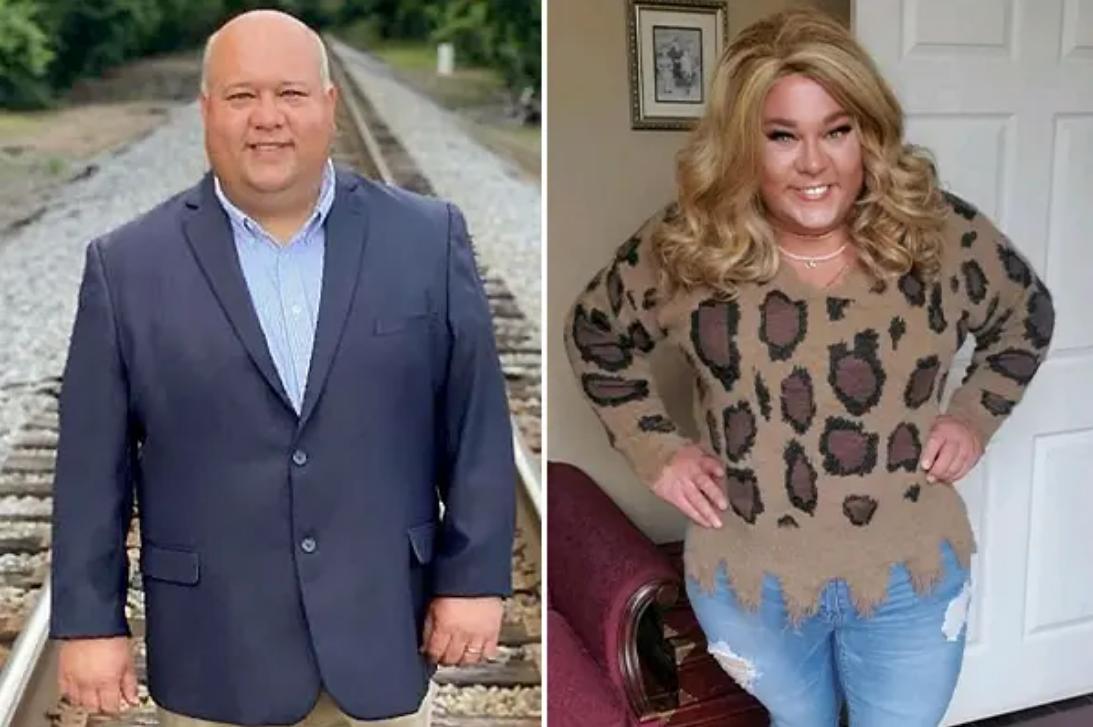
F.L. “Bubba” Copeland was the duly elected mayor of Smiths Station, a town in Lee County, Alabama. It is part of the neighboring Columbus, Ga., metropolitan area. Copeland was also pastor of the First Baptist Church of Phenix City, which sits across the Chattahoochee River from Columbus.
By all accounts “Bubba,” as he was known in this small town of 6,756, was very popular, respected and beloved but early Nov. 3 he died by suicide after a far-right publication published photos and a story detailing the pastor-mayor’s private and secret life.
Lee County Sheriff Jay Jones told media outlets that Copeland, a married father of three, “took his own life” around 5 p.m. According to the sheriff, at around 4:15 p.m. CT, his deputies received information regarding the mayor needing a possible welfare check. Deputies found Copeland in the Beulah community area, where a slow pursuit began. Officials say the mayor turned onto Lee Road and pulled over. When he exited his vehicle, he produced a handgun and used it to take his own life.
The tragic death of the pastor-mayor stemmed from an article published by writer Craig Monger on the far-right wing media website 1819 News earlier in the week. 1819 News is a website that was once owned by the Alabama Policy Institute, a conservative group that is staunchly anti-LGBTQ and has filed multiple lawsuits against same-sex marriage.
Monger’s article disclosed Copeland’s secret online social media alter persona Brittini Blaire Summerlin, which listed Copeland self labeled as a “transitioning” transgender woman. Monger went on to publish screenshots of other photos and entries including some photos that 1819 News alerted readers with the caution: “WARNING: EXPLICIT PHOTOS.”
Copeland told Monger that he could confirm that he operated the various social media accounts and it was him who was featured in the photos. He claimed it was only a means of “getting rid of stress” and called the postings a “hobby” and a “fantasy.” The pastor-mayor said his erotica and transgender persona was “purely fiction.”
According to Monger, after the interview, Copeland promptly deleted the accounts and asked them not to be made public due to his family and position as a Baptist pastor.
The day the article was published online, that evening Copeland delivered a sermon from the pulpit at his church telling his congregation:
“The article is not who or what I am … I apologize for any embarrassment caused by my private and personal life that has become public. This will not cause my life to change. This will not waiver my devotion to my family, serving my city, serving my church,” Copeland said.
He then read from the 23rd Psalm telling parishioners, “God will always protect you, take care of you,” Copeland said. “He will see you through anything, absolutely anything.”
WTVM in Columbus reported that reacting to the news of Copeland’s suicide, some people in the community said they were saddened by the news in so many ways.
“Things that were obviously private came out publicly and quite frankly unexpectedly. I can’t imagine, again, what that must be like for the mayor, his family and for anyone who’s been affected by this,” said Kris Patton. “Probably the most heart-wrenching thing about it is the effect that it is going to be on the community.”
“What he did in his personal life… his business, you know,” said Jennifer Schmitt.
Reaction from the Christian anti-LGBTQ right groups, however, was unsympathetic.
“We have become aware of the alleged unbiblical behavior related to the pastor of the First Baptist Church of Phenix City. We are praying for the leaders of the church family as they seek to determine the truth concerning these accusations. As the people of God, we pray for the pastor and his family as well. We are in consultation with the Russell Baptist Association’s leadership as they endeavor to assist the First Baptist family during this critical time of need,” the Alabama Baptist State Convention and Alabama Baptist State Board of Missions said in a statement to the Alabama Baptist, a news outlet for the state’s Baptist churches.
Former Phenix City Schools Superintendent Larry DiChiara angrily posted on his personal Facebook page:
“I am so angry right now and heartbroken. I witnessed a good man be publicly ridiculed and crucified over the last few days to the point that he just took his own life today. I just want to ask you people who thought it humorous to publicly ridicule him, ‘Are you happy now?’ What crime did he commit?”
Prominent South Florida pastor and Biblical scholar Kevin M. Young posted on X, formerly Twitter: “This pastor committed suicide not too far from here today. We must end LGBTQ+ persecution.”
Hemant Mehta, who authors the progressive website the Friendly Atheist, researched Copeland prior to learning of his suicide on Friday. Mehta noted; “There’s a story making the rounds about an Alabama preacher/mayor who secretly dresses in drag and adopts the persona of a trans woman on social media. The problem? It’s not clear he’s a hypocrite. If he’s not a bigot, why is he being outed?”
Mehta and others who dug into Copeland’s background found absolutely no evidence of anti-LGBTQ animus from the pastor-mayor’s social media and other sources. Mehta writes:
“As far as I can tell, there’s no evidence that Copeland himself has ever participated in those right-wing attacks. I have yet to see a sermon clip where he rails against drag queens or trans people. I can’t find a single policy he’s promoted as mayor that would make life worse for the LGBTQ community. (All of those things may exist, to be clear, but I haven’t found them yet.)
The article in 1819 News never once mentions a single example of his hypocrisy … which seems like an odd omission given the way the article is framed. If this was a slam-dunk story, all those images of Copeland dressing as a woman would be followed by screenshots of, say, his anti-LGBTQ social media posts. But you won’t find anything like that in the article.
If there’s no proof of hypocrisy, then why the hell is this a story?!”
Alabama
Ala. extends ban on transgender female athletes to universities
Republican Gov. Kay Ivey signed bill on Tuesday
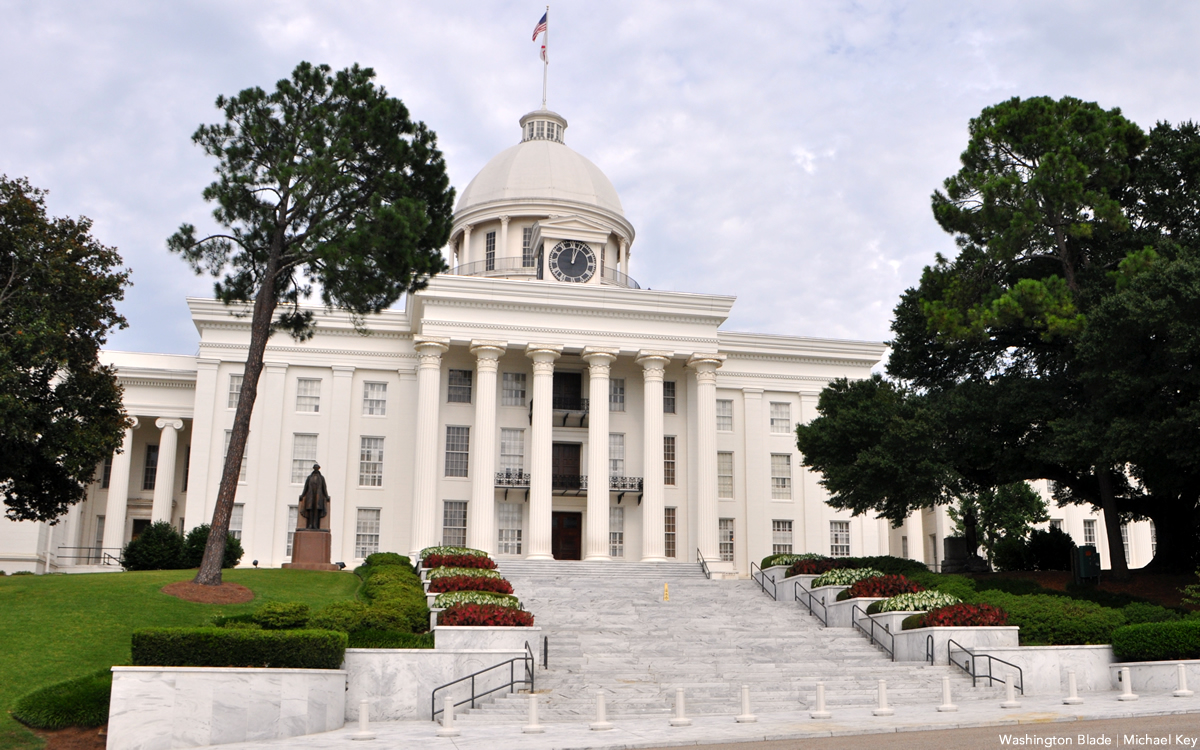
Governor Kay Ivey on Tuesday signed House Bill 261, which limits transgender students to playing sports in public colleges and universities only with “their biological sex assigned at birth.”
“Look, if you are a biological male, you are not going to be competing in women’s and girls’ sports in Alabama. It’s about fairness, plain and simple,” said Ivey in a statement released by her office.
House Bill 261 was approved 26-4 in the Alabama Senate and 83-5 in the House of Representatives. In the vote in the House more than a dozen lawmakers abstained from the vote.
Ivey had previously signed legislation in 2021 banning trans female athletes from competing in K-12 girls sports. At the time she signed that bill the governor had noted that “Alabama remains committed to protecting female athletes at all levels and upholding the integrity of athletics.”
Carmarion D. Anderson-Harvey, Alabama state director of the Human Rights Campaign, said the legislation is part of a “systematic attack against LGBTQ+ people” in Alabama and elsewhere.
“In just two years, [Ivey] and extremist lawmakers in Alabama have passed four anti-LGBTQ+ bills. From dictating what bathrooms we can use to blatantly ignoring the actual problems in women’s sports, these politicians are making Alabama an increasingly hostile place for transgender people and the LGBTQ+ community as a whole,” Anderson-Harvey said.
Alabama
University of Alabama allows students to use “chosen names” on student ID
“Having something that accurately reflects who you are as a person and how you want to make sure that the world sees and respects you is obviously monumentally important, right?”

Students, faculty and campus members at University of Alabama are now able to put their preferred names on mobile Action Cards, which are the official campus ID cards, for free.
The university’s assistant director of communications Shane Dorrill wrote in email that this option, available on physical cards for several years, will be available online as well after a software update.
ACT Card communications specialist Courtney Petrizzi said the ACT Card office recognized the importance of having the feature, which was previously available on physical cards, on mobile ACT Cards.
“This change is an update that we created to reflect our campus community’s needs,” Petrizzi said.
The Action Card office announced this change on May 19. They updated the policy in partnership with UA Safe Zone, a resource center for LGBTQIA+ individuals and their allies on campus.
Eli Strong, one co-founder of UA Safe Zone said during an interview with AL, “Having something that accurately reflects who you are as a person and how you want to make sure that the world sees and respects you is obviously monumentally important, right?”
Strong is a transgender man who graduated from University of Alabama. He believed that this change is important because it’s a safety issue. It’s a way for the university to acknowledge people and a way for people to feel affirmed by the documentation they carry around each day.
“It’s an exploratory time where you should be focused on learning and not be focused on the fear of being misgendered or harassed because of who you are,” Will Thomas, one of the co-founders of the University of Alabama LGBTQ+ Alumni Association, claimed that affirming documentation can help students have a positive experience.
This policy change comes after a series of anti-gay lesigilations passed in Alabama, including the Don’t Say Gay amendment and transgender bathroom restrictions.
Campus members can use Action Cards for various daily needs, such as meal plans and dining dollars, building access, sporting and entertainment events and health center access.

Out actor on his 25-year love affair with ‘Mamma Mia’

Comings & Goings

Stephen Miller, key architect of anti-LGBTQ policies, named White House chief of staff

Escritora trans venezolana reivindica una fe sin exclusiones ante la visita del papa a Sudamérica

Baltimore lawmaker’s ex-treasurer charged with theft of $87K in campaign cash

Meet the talented makeup artist behind Broadway’s ‘Rocky Horror’

Sarah McBride returns to Congress after historic first term

Election watch parties to take place throughout DMV

Chris Pappas elected to U.S. Senate

Supreme Court weighs religious exemptions to LGBTQ nondiscrimination protections in Colo. preschool case
-

 a&e features5 days ago
Meet the talented makeup artist behind Broadway’s ‘Rocky Horror’
-
2026 Midterm Elections4 days ago
Sarah McBride returns to Congress after historic first term
-
Local5 days ago
Election watch parties to take place throughout DMV
-
2026 Midterm Elections4 days ago
Chris Pappas elected to U.S. Senate