Theater
At Shakespeare, a passionate portrayal of Frida Kahlo
One-woman show celebrates iconic Mexican painter
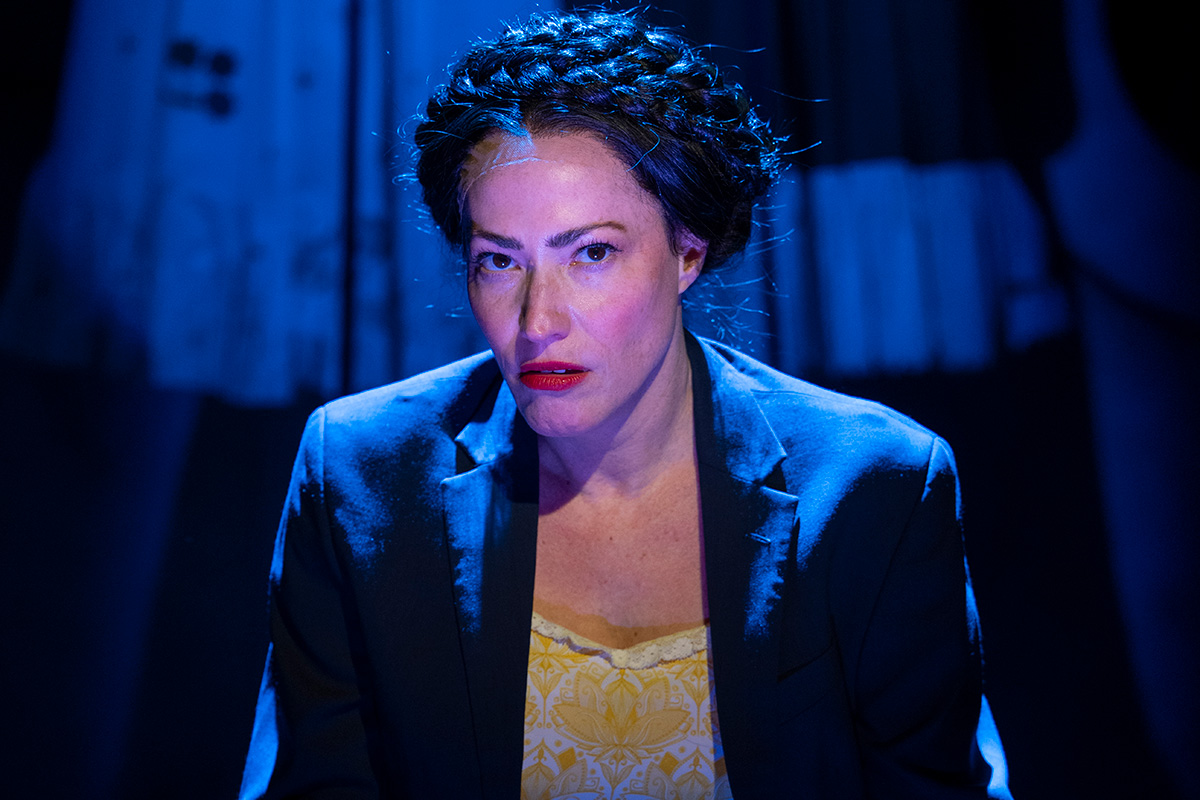
‘Frida…A Self Portrait’
Through Nov. 8
Shakespeare Theatre Company’s Klein Theatre
450 7th St., N.W.
tickets start at $49
Shakespearetheatrecompany.org
With her trademark unibrow and a wreath of dahlias woven into pinned black braids, Mexican painter Frida Kahlo was unmistakably herself; she lived life fearlessly. Despite being wracked with almost constant pain from childhood polio and a horrific bus crash in Mexico City at 18, she met challenges head on.
Her artistic talent was immense and irresistible. Over the years, she assembled an oeuvre of inimitable paintings, a blend of naïve folk art and magical realism, that today command record-breaking sums at auction.
It’s no wonder Kahlo, who was openly bisexual, dwells in the pantheon of queer icons. Beyond her paintings, she possessed an allure, a mix of vulnerability and strength, and a disregard for taboos. She turned suffering into art.
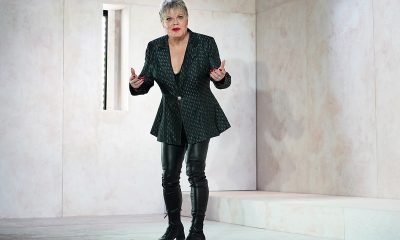
In “Frida…A Self Portrait,” written and performed by Vanessa Severo, the painter receives a passionately sympathetic portrayal. For Severo, who is Brazilian-American, Kahlo is both hero and kindred spirit (but no spoilers here).
Severo’s 75-minute pulsating one-woman show (she plays herself, Kahlo, and assorted others) is built around a smart framing device involving a fictional visit from a journalist with an architecture magazine. He’s made the trip ostensibly to learn about the unique La Casa Azul, the blue house built by Kahlo’s German father in 1904, three years before her birth.
It’s 1954, and Kahlo will soon die at just 47, leaving a collection of 55 self‑portraits out of her total of roughly 143 paintings. She’s happy to talk about her life, comparing the layers of wall paint to the emotional layering that first encouraged her to paint.
The journalist is thrilled to meet Kahlo. The painter is flattered, talkative, and a bit skeptical.
Joanie Schultz’s assured direction along with a uniformly inspired design team, allow for movement, sound, lighting, and clever design to heighten the storytelling.
Scenic designer Jacqueline Penrod anchors the stage with the suggestion of an outsized four poster bed; and she ingeniously uses three clotheslines hung with shirts, dresses, suits, and bedclothes (all designed by Katherine Davis) to introduce plot twists and characters.
When Severo slips into a dark suit hanging from the clothesline, she’s Kahlo’s stern father, and later she slides into half of a capacious suit and she’s Kahlo with her amorous and large husband Diego Rivera, the world-famous Mexican muralist.
This appealing puppetry calls for great coordination and quickness. Severo makes it look so easy.
Kahlo’s bisexuality isn’t addressed with words. Instead, Severo pulls on a man’s suit and dances with her lovers embodied by both cocktail dresses and men’s white dress shirts. The accompanying tango comes compliments of talented sound designer and composer Thomas Dixon.
And sadly, clutching cloth diapers and baby clothes to her midsection, she suggests the painful miscarriages she has endured. There’s more pain, an agonizing jolt, the result of past injuries and unsuccessful surgeries, followed by a self-administered, calm restoring dose of morphine.
Surprisingly, in spite of Kahlo’s proximity to Rivera and celebrated intimate friends (Leon Trotsky, Mexican movie star Dolores del Rio), there exists very little or no recording of Kahlo’s voice. So, Severo had to go on instinct and written description. The varied tones are wonderful. While chatting with the visiting journalist, she is at turns seductive, girlish angry, intense, and intelligent.
Paintings aren’t projected, but rather Severo recreates them (with the help of Rachael Cady’s moody lighting) by peering through a frame, painting her own reflection, or strapped and lying on a table. These are just a glimpse of Frida’s many self-portraits — here, more with action than tableau.
A steely woman by necessity, Kahlo has also been described as the life of the party. In life, she walked with difficulty, and had a pronounced limp. But here she moves gracefully, almost balletic.
And then, just when we’re really getting to know them, Severo and Kahlo exit, and leave us wanting more.



Theater
‘Jellicle Ball’ projection designer’s next project is in D.C.
Brittany Bland talks new show at Arena’s Kreeger Theater
‘Are You Now or Have You Ever Been?’
Through Dec. 6
Arena Stage
1101 6th St., S.W.
Arenastage.org
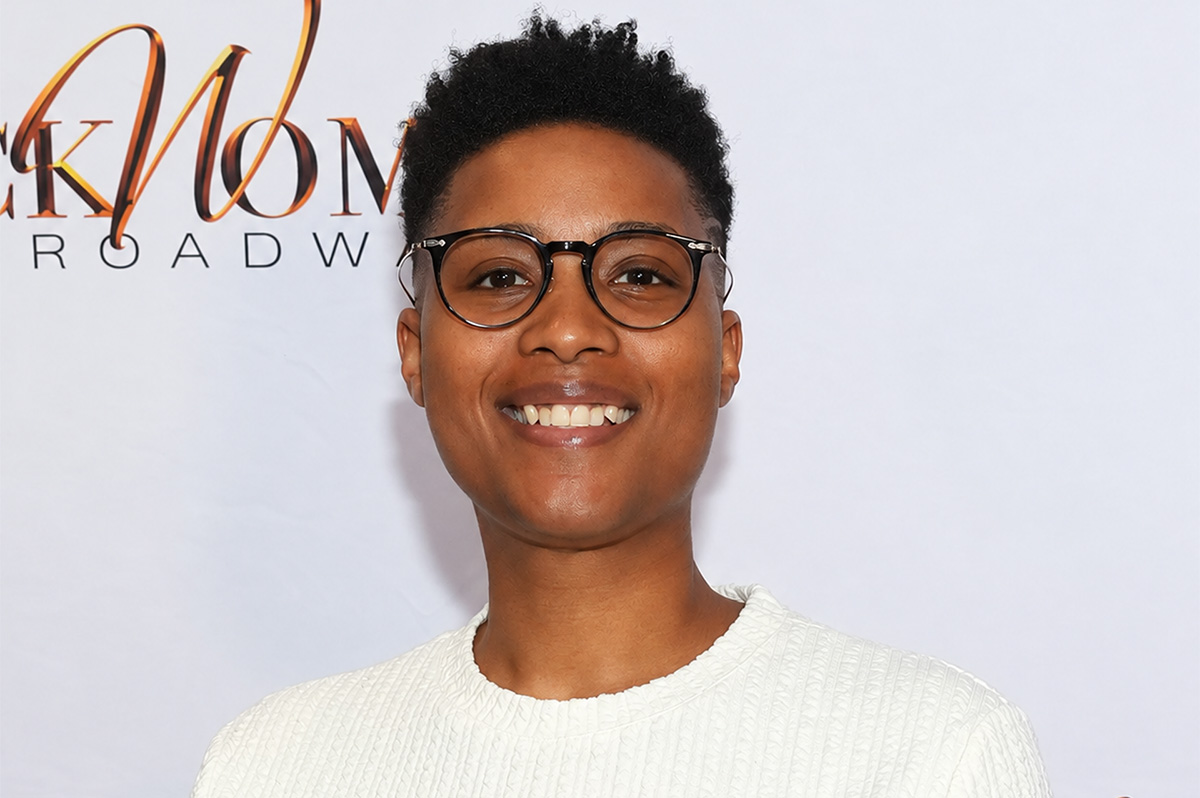
Brittany Bland was the first Black woman projection designer on Broadway; she made history with her work on “Cats: The Jellicle Ball.” She’s also queer.
The show started off-Broadway in 2024 and moved to Broadway in 2026 with Bland garnering great notices along the way. “Cats: The Jellicle Ball” is a take on Andrew Lloyd Webber’s classic musical “Cats,” reimagined through New York’s queer underground Ballroom culture
For her, the show was a joy: “Maybe the most joyous project that I ever worked on. It was fantastic.”
Bland (who’s known for blending storytelling, technology, and design to create immersive experiences) sought projection inspiration from, among other things, the 1990 ballroom flick “Paris is Burning,” focusing on its titles and fonts, “honoring the past while pushing a design into the future. It’s a way to acknowledge what has been before and presenting it in a new way.”
Currently, Bland’s projection work can be experienced at Arena Stage in Eric Bentley’s “Have You Now or Have You Ever Been?” After a hit revival in New York, the play is enjoying a D.C. run at Arena’s Kreeger Theater.
It’s about McCarthyism. This profoundly relevant docudrama (directed by Anna D. Shapiro) explores the House Un-American Activities Committee hearings (spanning roughly from 1947 through 1956), a frightening time when people lost careers for being erstwhile communists or just too left. The cast brings to life the words of iconic and accused artists like Arthur Miller, Jerome Robbins, Paul Robeson, Elia Kazan, and Lillian Hellman.
Bland’s projection research took her to the Library of Congress where she culled newspaper headlines and transcripts of testimony from the stacks; she also was moved by imagery from two particular documentary films.
What’s compelling to Bland about the play is how those in power were so willing to offer up American citizens as fodder for their own political gain, and then move on to newer and higher office. Then they blithely found a new target in the Civil Rights Movement. Today, she remarks, it’s furries or trans people.
“And it’s about how far people will go to demonize a community for their own gain. Seems we forgot. So that’s why shows like this are so good. You can see it unfold on stage before your eyes.”
Bland grew up in Alpharetta, Ga., (part of the Atlanta metropolitan area), and now splits her time between New York and Philadelphia.
She earned a bachelor’s degree in Technical Theater and Production from Catawba College in North Carolina, and an M.F.A. in Design from the Yale School of Drama in 2019.
While on a college trip to the UK, Bland saw “War Horse” at London’s National Theatre. It was a seminal moment for her: “I walked in by myself and was stunned. I hadn’t seen a lot of Broadway shows by then. ‘War Horse’ had video, iconic puppetry, and set design, all working together in the most beautiful way.”
Over the years, projection has become increasingly widespread. In fact, most Broadway shows have video: “Maybe Happy Ending,” “Sunset Boulevard,” “Oedipus.” And more recently, “Are You Now or Have You Ever Been?” “Ragtime,” and more.
While the changes in projection involve financial decisions, a larger part is that tech has become easier to do, she explains. It wasn’t that long ago that you had to have a huge projector that filled an entire room and was prone to overheating.
When Wendell K. Harrington – “the godmother of projection”– began her career in the late 1970s, says Bland, “she had to create and project big slides. It was physical work. She’s still around. Throughout her career, things have shifted incredibly.
“Tech has improved exponentially, and audiences are culturally more in tune with screens. Nowadays, having a robot play a character in a Broadway show is readily acceptable.”
For her next big gig, she revisits familiar territory with “XTRAVAGANZA,” an original musical that explores the birth of voguing and the New York ballroom scene at Baltimore’s Center Stage.
Does being queer affect Bland’s work?
“In hiring,” she says without hesitation. “As a queer person I hire diverse teams. I like to ensure representation, especially with shows that have queer content.
“When you’re someone who’s had to consider what it means to be ostracized from society and you’re doing a show about that, you’re starting with a different point of view and bring a certain way of thinking. It helps and it can be important.”
Theater
Out actor on his 25-year love affair with ‘Mamma Mia’
Victor Wallace plays Sam in National Theatre production

‘Mamma Mia!’
Through Nov. 15
National Theatre
1321 Pennsylvania Ave., N.W.
tickets start at $59
broadwayatthenational.com
For nearly 25 years, out actor Victor Wallace has been a big part of “Mamma Mia!”
A staple wherever hit shows are performed, the high energy juke box musical is based on songs recorded by Swedish mega-pop group ABBA. The romantic tale unfolds on an idyllic Greek Island where young bride-to-be Sophie is holding her wedding. Secretly, she’s invited a trio of men from her mother’s past, hoping that one of the three will prove to be her undetermined biological father.
Wallace came to the show as Sky, Sophie’s good-looking groom, in Las Vegas as part of the highly regarded Mandalay Bay production. Not many years later, Wallace embarked on playing an older “Mamma Mia!” character – the appealing yet regretful Sam Carmichael, a successful architect and divorced father of two (and possibly Sophie’s dad) — in numerous tours and stints on Broadway.
And now, he’s brought Sam to D.C.’s National Theatre (through Nov. 15), attracting many theatergoers eager for a repeat experience, and for some, their first time.
“I’m always surprised to learn that there are ‘Mamma Mia!” virgins out there,” says Wallace, 53. “Maybe that’s because of the show’s success, or because it’s been a part of my life for so long.”
While not touring, the handsome lyric baritone is based in his native Wisconsin. “It doesn’t make sense to keep an apartment in New York when you’re always on the road,” he says.
WASHINGTON BLADE: Frequently actors, especially those in long running shows, are asked “how do you keep it fresh?” Well, how do you?
VICTOR WALLACE: For me, I really do like ABBA’s music. I’m the type of person who can put a song on repeat for hours on end. That helps a lot. And it doesn’t hurt that “Mamma Mia!” is a fun show.
BLADE: During a break from “Mamma Mia!” you spent two weeks at Coachella Valley Repertory, playing Bruce, the closeted family man and predator in “Fun Home.” Not a warm and fuzzy guy.
WALLACE: That was different, a darker place for sure, but a great part for an actor. I don’t bring the heaviness home, I can leave that onstage, but I don’t know about doing that for months on end.
BLADE: How is it you made a quick transition from Sky to Sam in “Mamma Mia!”
WALLACE: It was all about timing. At 29, I was cast as Sky a little late, and at 34, I was a young Sam. I powdered my hair, and now I’m trying to cover the gray.
I’ve played Sam for almost 20 years. Naturally, my perspective has changed. In the beginning, I couldn’t imagine having a 20-year-old but now it’s easier.
BLADE: Were some other tours squeezed in over the years?
WALLACE: Yes, “Les Miz” and “Phantom.” I like the big ones. They’re great for my 401K.
BLADE: But it’s mostly been “Mamma Mia!” Were you always a fan?
WALLACE: Ever since I first heard ABBA on the car radio when I was a kid. For me, “Winner Takes It All” was an instant favorite. I’ve always gravitated toward the ballads.
As Sam, I sing “SOS,” “Loving Me Loving You,” and the lesser known “Our Last Summer.”
BLADE: Do you have any thoughts on the show’s staying power?
WALLACE: The movie franchise has helped. So has the gay following with “Dancing Queen” and ABBA nights at gay bars. The film “Muriel’s Wedding” [the titular lead played by Toni Collette was obsessed with ABBA] gave it a good push.
BLADE: What about “Mamma Mia!” is especially appealing to queer audiences?
WALLACE: In addition to the great music and dancing, I think it’s the themes of friendship and chosen family. While pretty universal, I feel these strike a real chord with queer theatergoers.
BLADE: Aside from your charm and talent, why do the producers keep asking you back?
WALLACE: When you’re dependable, solid, and consistent you build a reputation. But I will say this, I had to reach out to be a part of the 25th anniversary after the pandemic. And that was after I’d closed the Broadway show as Sam at the Broadhurst. I put my ego aside and sent in a reel. Sometimes you have to be the squeaky wheel.
BLADE: Eight shows a week, year after year, it must be a lot.
WALLACE: Sure, some days are harder than others. When your mindset is a little off, your body knows what to do. It’s about getting through those two hours and 40 minutes, and you’re good.
Theater
Dawn Huggins reflects on year-long reign as Miss Adams Morgan
38th annual pageant set for Halloween night
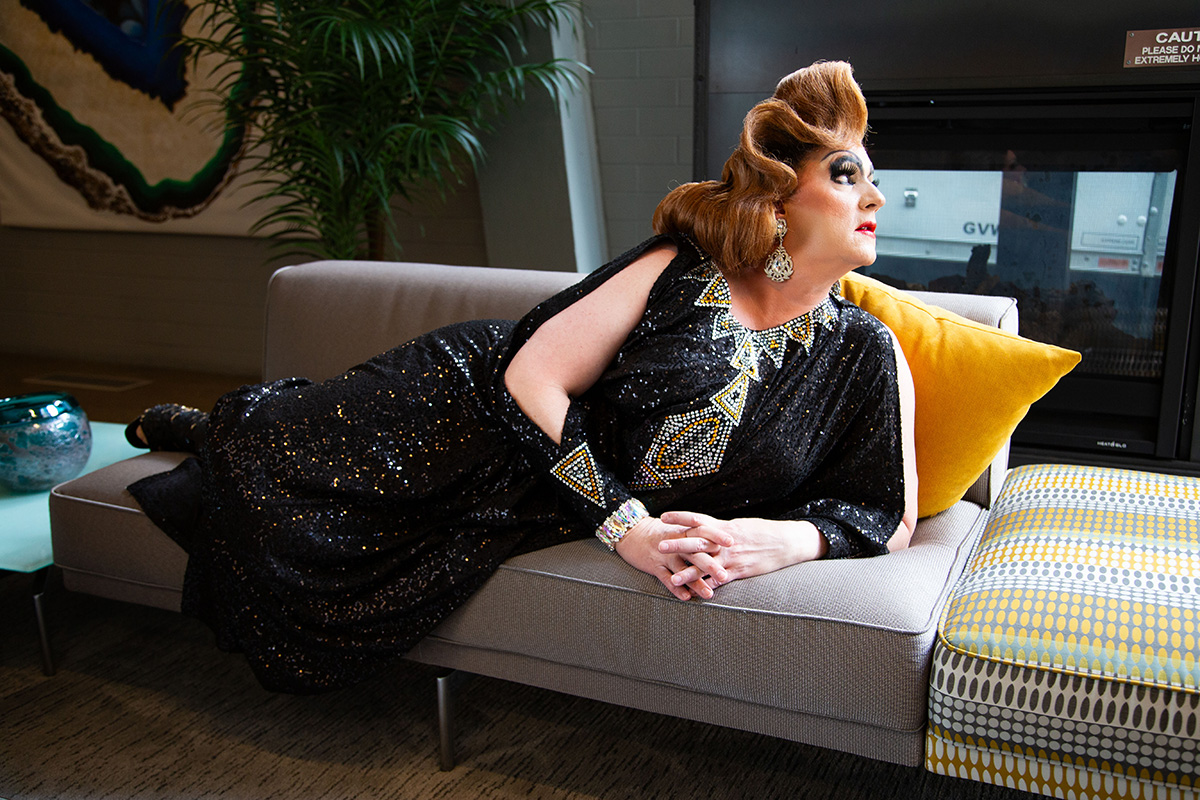
38th Annual Miss Adams Morgan Pageant
Saturday, Oct. 31
Washington Hilton
1919 Connecticut Ave., N.W.
thedupontsocialclub.com
On Halloween night at the Washington Hilton, the annual Miss Adams Morgan Pageant, D.C.’s largest and longest-running amateur drag competition, turns 38.
It also marks the end of HRH Dawn Huggins’s year-long reign as Miss Adams Morgan.
Joe Kuehne, the transformative performer who brings Dawn Huggins to life on stage, reviews the reign philosophically: “It’s funny, like most of life, the time flew by, and sometimes it didn’t. As a contestant, the preparation and planning can be a slog and then it’s all over before you know it.”
But, he adds, the time has been filled with creativity, community involvement, and innovation.
This year’s pageant is promised to run at a fast pace. The show kicks off with a mashup number starring Dawn Huggins along with several former queens. Dawn’s bit is a tribute to “The Shining.” Her carefully planned look is “haunted.”
Next, the seven contestants vying for the big title participate in the Parade of States (and U.S. territories). Their bios are read as they walk (doing whatever they wish with props of their choosing). The second half is performance (lip sync, comedic skits, etc.) and after several hours, a winner is selected by a panel of judges and the audience.
Prior to Dawn Huggins snatching the crown in October 2025, Kuehne wore numerous other pageant hats including “drag-wearing” attendee, contestant, and house videographer.
In 2006, Kuehne’s documentary short “Relative Freedom” (about his family’s reaction to his queerness) was screened at Reel Affirmations film festival. It caught the attention of that year’s reigning Miss Adams Morgan. She invited Kuehne to partner in adding video to the pageant. He accepted and had kept with it for two decades.
Inspired by the competitors and fun, he decided to give the pageant a shot. So, Dawn Huggins (“I’m a hugger, so the name fit.”) began competing, and won the title on her fifth try.
Putting on a dress and entertaining a ballroom full of people was never too much of a stretch for Kuehne. Prior to competing, he’d been a part of the audience in drag, and as a kid did community theater.
Over the years, Dawn has lip-synced (Brandi Carlile, Tory, Whitney, Mariah) and wooed the festive though not always easy-to-please throng with her clever comedy and camp. Last year for her winning number and skit, she did songs from “Wicked,” replacing the evil Wizard with Trump. “Not a huge leap,” she adds.
By day, Kuehne does marketing for tech companies: “In that role some of what I do is video production. The drag aspect doesn’t come up very often,” he deadpans. “But yes, the skillsets do overlap.”
Kuehne never thought of Dawn Huggins as a beautiful or polished queen; she was never meant to be that. He says, “I do my best to pull it together. But my goal is pure entertainment.”
Occasionally Dawn includes a message in what she does: “I try not to be too heavy handed about it. The second-year’s number was inspired by a person who, troubled by their sexuality, took their own life. Some of the audience members were moved, and that’s meaningful to me.”
Started in 1988 by a group of friends getting in drag and celebrating Halloween at Annie’s Paramount Steak House, the Miss Adams Morgan Pageant quickly ballooned into a storied tradition requiring a board and oversight.
Also in 1988, the Dupont Social Club was founded to not only encourage community but also help the pageant run things. Currently, Kuehne serves as the club’s V.P. of Social Events. Responsibilities include planning events, tracking attendance, and keeping things lively.
As both Queen and V.P., Kuehne is in a unique position to make things happen. During Dawn’s reign, the club created Sloppy Saturdays at Her Diner in Adams Morgan, a monthly happy hour fundraising event with performance tips and event donations going to support local LGBTQ+ nonprofits.
And now, as outgoing queen, HRH Dawn Huggins is charged with selecting the pageant’s charitable beneficiary.
She’s wisely chosen Whitman-Walker Legal Services. which provides free, comprehensive civil legal assistance to people living with HIV/AIDS, patients of Whitman-Walker Health, and members of the LGBTQ+ community across the greater Washington, D.C. region.
“With all that has and is going on, this feels like the right time to make that choice.”
Because the pageant has almost always taken place in October, it’s loosely tied to Halloween.
This year the show (themed “Something Wicked This Way Comes”) lands on Oct. 31, ticking all the boxes for pageant, drag show, and huge costume party.
On and offstage, you’re likely to see sequined gowns, ginormous hair, ermine robes alongside conceptual creations and comedic to dead serious style homages.
“What the contestants bring to the stage is pretty incredible, but sometimes that extraordinary creativity is surpassed by the audience members filling the ballroom, and we love that.”

‘Jellicle Ball’ projection designer’s next project is in D.C.

Comings & Goings

West Hollywood creates registry for polyamorous relationships

LGBTQ community responds with support after shooting at gay-owned VIDA Fitness

LGBTQ+ Victory Institute to honor Dutch prime minister at D.C. conference

Sabrina Bruce becomes first trans person elected in Fairfax County

Anti-trans ballot measures pass in four states, setting up new legal battles

At least 29 known LGBTQ ANC candidates win election

British appellate court strikes down Trinidad and Tobago sodomy law

Gay congressman attends D.C. LGBTQ election celebration
-

 Virginia5 days ago
Sabrina Bruce becomes first trans person elected in Fairfax County
-
2026 Midterm Elections5 days ago
Anti-trans ballot measures pass in four states, setting up new legal battles
-
District of Columbia5 days ago
At least 29 known LGBTQ ANC candidates win election
-
Trinidad and Tobago5 days ago
British appellate court strikes down Trinidad and Tobago sodomy law