U.S. Supreme Court
Supreme Court weighs religious exemptions to LGBTQ nondiscrimination protections in Colo. preschool case
Ruling expected by June 2027
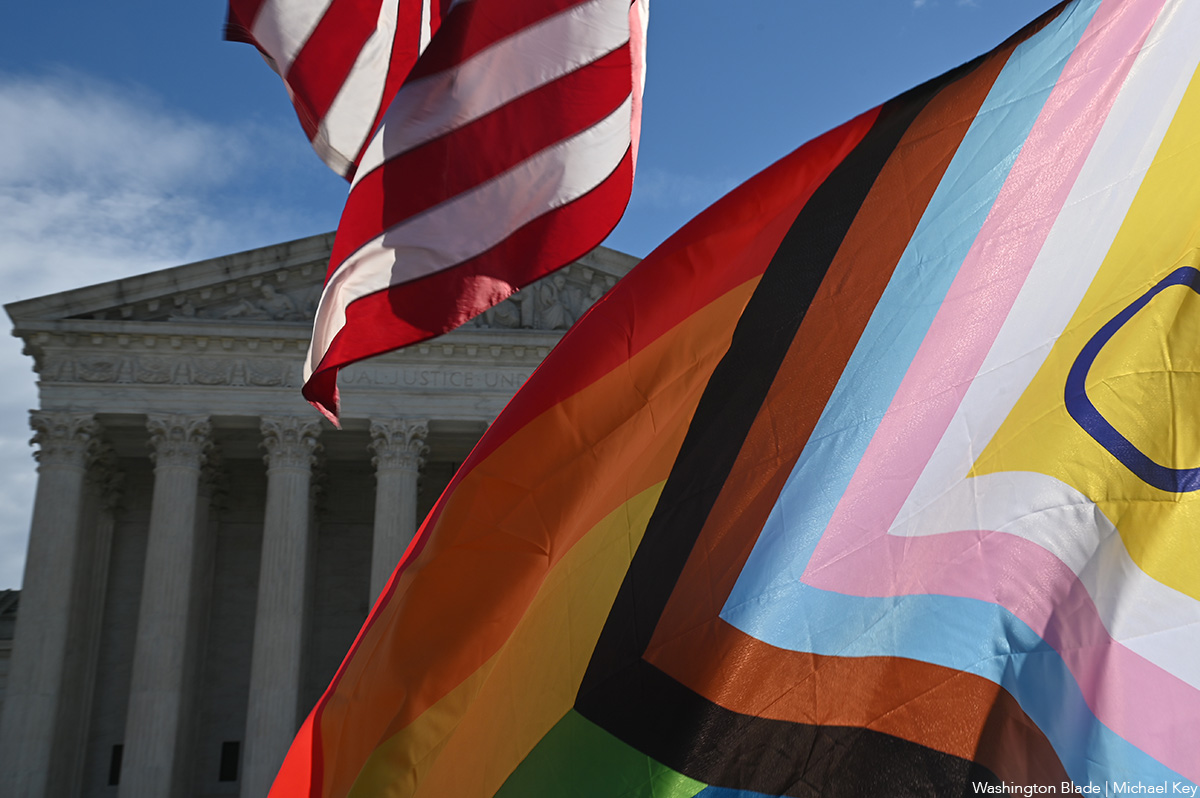
The U.S. Supreme Court heard oral arguments Tuesday in a case examining whether Colorado’s exclusion of religious preschools from a publicly funded education program violates the First Amendment’s guarantee of religious freedom.
In St. Mary Catholic Parish v. Roy, Catholic preschools in Colorado have brought the fight to the nation’s highest court, arguing that their exclusion from the state’s universal preschool program, including its public funding, amounts to religious discrimination that violates their First Amendment rights.
The Catholic schools want to participate in the program and receive public funding while maintaining admissions policies that require families to support Catholic teachings on marriage, sexuality, and gender. Those policies conflict with the program’s equal-opportunity requirements, which prohibit discrimination based on characteristics including sexual orientation and gender identity.
Under the program, Colorado provides 15 hours of preschool per week for eligible children through participating public and private providers. The program allows families to select their preferred preschool, provided the school meets certain requirements, including equal-opportunity standards. The benefit has been valued at approximately $6,000 per child annually, according to attorneys representing the Catholic schools.
The plaintiffs in the case include St. Mary Catholic Parish, St. Bernadette Catholic Parish, the Archdiocese of Denver, and two parents of preschool-aged children. They went to federal court to challenge the state’s policy, arguing that making the Catholic preschools’ participation in the universal preschool program contingent on accepting the equal-opportunity requirements amounts to unlawful religious discrimination.
They argue that the First Amendment requires Colorado to provide a religious exemption to the nondiscrimination requirements so the schools can participate in the program without compromising their religious beliefs.
The schools also argue that Colorado permits certain enrollment preferences for secular purposes while refusing to accommodate their religious admissions policies.
The 10th U.S. Court of Appeals ruled in favor of Colorado in September 2025, upholding the state’s equal-opportunity requirements.
The 10th Circuit acknowledged that the Supreme Court has consistently held that states cannot categorically exclude religious institutions from otherwise available public benefits because of their religious character. However, it determined that Colorado was not explicitly excluding the schools because they were religious institutions. Rather, the schools were ineligible because their admissions policies did not comply with the program’s nondiscrimination requirements.
In the state’s view, these schools can participate in the preschool program provided they abide by the same equal-opportunity requirements imposed on other participating providers. Colorado argued that its restrictions apply to enrollment policies and conduct across the program and are not specifically targeted at religious institutions or religious practices.
The case requires the Supreme Court to consider several previous decisions involving religious freedom and the government’s ability to enforce generally applicable laws.
In 1990, the Supreme Court held in Employment Division v. Smith that neutral, generally applicable laws do not violate the First Amendment’s Free Exercise Clause simply because they place a burden on someone’s religious practices.
The case involved two men who worked at a private drug rehabilitation organization and were fired after ingesting peyote, a hallucinogenic substance, during a religious ceremony of the Native American Church. Oregon subsequently denied them unemployment benefits because their drug use constituted work-related misconduct. The Supreme Court ruled that the state’s denial did not violate their First Amendment rights.
Another ruling relevant to this case is the Supreme Court’s 2020 decision in Espinoza v. Montana Department of Revenue. The court ruled that Montana could not exclude religious schools from a generally available scholarship program solely because of their religious status. The decision held that doing so violated the Constitution’s Free Exercise Clause.
Another significant precedent is Carson v. Makin, in which the Supreme Court ruled in 2022 that Maine could not exclude religious schools from its public tuition-assistance program simply because they provided religious instruction. The state’s requirement that participating private schools be “nonsectarian” violated the First Amendment’s Free Exercise Clause.
The 6-3 decision was opposed by three justices, who argued that the ruling would require taxpayers to fund religious education and undermine the separation between church and state.
The Supreme Court’s decision in St. Mary Catholic Parish v. Roy could further clarify how these precedents apply when states condition public funding on compliance with nondiscrimination requirements.
The court agreed to consider two specific questions: whether Colorado’s treatment of certain secular enrollment preferences undermines the general applicability of its nondiscrimination requirements under Employment Division v. Smith, and whether Carson v. Makin applies when the government does not explicitly exclude religious institutions from public benefits.
The ruling could have implications beyond Colorado’s preschool program, particularly for the ability of state and federal governments to enforce nondiscrimination requirements against religious organizations receiving public funding.
The Supreme Court is expected to issue a decision by the end of June 2027.
LGBTQ advocates weigh potential consequences
The Washington Blade spoke with Meg York, chief legal and policy officer of COLAGE, a national nonprofit organization that unites and supports people with LGBTQ parents. COLAGE filed an amicus brief in the case. York attended Tuesday’s oral arguments and discussed what she heard from the justices and the potential implications for LGBTQ families.
York emphasized that Colorado’s decision to include Catholic schools in its universal preschool program is an important distinction in the case, arguing that the dispute should not be characterized as a simple conflict between religious institutions and the state.
“Colorado explicitly chose to include Catholic schools in its universal pre-K program, so when we talk about the Catholic arguments, I think there’s maybe a false binary there that it’s one versus the other,” she told the Blade during a phone interview. “But in terms of the arguments raised by the petitioners or the respondents, I was listening to see if there was anybody who seemed to be kind of straying from what we typically expect in ideological lines, and I’m not sure that I heard that in this case.”
When asked how she interpreted the justices’ questions and what they could indicate about the eventual outcome, York said she saw some potential for the court to take a narrower approach that considers Colorado’s arguments.
“I do think that there were times at which I felt that some of the justices were potentially more receptive to really taking a more narrow approach to this case and really thinking about the arguments that Colorado was putting forward. I think there were some moments of hope. It’s hard when you’re in an oral argument. You hear some questions, but then there’s a lot of silence, too. It can be difficult to know which way certain folks are leaning or not.”
One of the central legal disputes involves whether Colorado’s equal-opportunity requirements are generally applicable or whether the state makes exceptions that could require it to accommodate religious admissions policies.
York disputed the characterization of the state’s provisions as exemptions, saying Colorado views them as measures intended to advance equal access rather than exceptions to its nondiscrimination requirements.
“I don’t think the state of Colorado was classifying them or framing them as exemptions as much as they were the kind of things that could advance their equal opportunity goals. So, you know, there were no exemptions to the nondiscrimination requirement, none at all. Colorado doesn’t give any exemptions to that. And so when they talk about schools that help serve low-income individuals or individuals with disabilities, those are all in furtherance of the equal opportunities that Colorado seeks to advance.”
The arguments also raised questions about how a ruling could affect nondiscrimination protections beyond the preschool program. Justices Ketanji Brown Jackson and Sonia Sotomayor raised concerns about how religious exemptions could affect laws designed to protect people based on characteristics such as sexual orientation and gender identity.
York pointed to those exchanges as particularly significant, questioning whether a broader interpretation of religious exemptions could subject more nondiscrimination laws to heightened constitutional scrutiny.
“Some of the concerns raised by Justice Jackson and also by Justice Sotomayor were about this idea of when you have protections or when you have a nondiscrimination law to protect people who have protected characteristics, that we’re not really in the business of determining whose belief is a sincerely held religious belief. So does that push everything to strict scrutiny? And I think there were some concerns about that.”
The case also puts two major lines of Supreme Court precedent under scrutiny: Employment Division v. Smith, the 1990 decision involving neutral, generally applicable laws, and Carson v. Makin, the 2022 decision prohibiting states from excluding religious schools from public benefits because of their religious instruction.
York noted that the justices grappled with how those decisions apply to Colorado’s program. She also emphasized that the Supreme Court declined to consider the plaintiffs’ separate request to overturn Employment Division v. Smith.
“In some ways, you have the petitioners who were kind of saying that the Carson line of cases is controlling, but then they were a little mushy in some of the cases being cited in that line of cases. We certainly heard the court grappling with what they consider when they’re considering Employment Division v. Smith. Does Carson make a reply here when you have very different circumstances under which that opinion was issued?”
For York, the case ultimately presents questions about how religious freedom and equal access can coexist, particularly when public funding is involved.
She said COLAGE believes LGBTQ families should be protected under nondiscrimination laws without requiring religious institutions to sacrifice their constitutional protections.
“My organization takes the position that religious freedom is something that we all value. Whether you are a specific religion or whether you are not religious, that is part of the freedoms that are guaranteed to us in the Constitution, and that’s something that benefits all of us. To that end, we feel that people with LGBTQ parents should be protected under the law, and that is exactly the heart of these nondiscrimination laws. And at the same time, that doesn’t mean that we need to sacrifice religious liberty or religious freedom to do so.”
York said she believes the case’s ultimate impact will depend heavily on how narrowly or broadly the justices write their decision.
“I don’t think it’s a foregone conclusion that they’re going to rule in favor of St. Mary or in favor of the petitioners, but even if they did, we could get a very narrow ruling that is incredibly specific and limited.”
LGBTQ organizations warn of consequences for families
Other LGBTQ advocacy organizations also warned that allowing religious preschools to participate in publicly funded programs while maintaining admissions policies that conflict with nondiscrimination requirements could have consequences for families beyond Colorado.
The National Women’s Law Center argued that a ruling in favor of the Catholic schools could undermine equal access to publicly funded education and potentially create a precedent for excluding other families.
“No four-year-old child should be denied preschool placement because their parents are gay or lesbian,” said Brian Dittmeier, director of LGBTQI+ equality at NWLC. “Marriage equality is the law of the land, and the court should not open the door to extreme arguments that seek to chip away at equal rights for same-sex couples. All families deserve access to affordable, high-quality early care and education, which is exactly why Colorado voters mobilized to expand early education access in their state through this universal and incredibly successful program.”
Dittmeier also said Colorado’s faith-based preschools have previously complied with nondiscrimination requirements and warned that allowing exceptions could leave same-sex families with fewer options.
“For years, Colorado’s faith-based preschools have had no trouble complying with nondiscrimination requirements as a common condition of receiving taxpayer funding to support their operations. Allowing discrimination in a state program specifically intended to achieve universal access is counter to Colorado voters’ intent and will leave same-sex families with fewer options to support their children. The same reasoning could later be used to turn away other children, including children of unmarried mothers or children whose parents are divorced. Such an outcome is unacceptable and will exacerbate the child care crisis in this country.”
The Human Rights Campaign similarly argued that public funding should not be used to discriminate against LGBTQ families.
“This case is straightforward — schools receiving public funds from a state universal preschool program cannot be allowed to use taxpayer dollars to leave LGBTQ+ families behind,” said HRC President Kelley Robinson. “As the arguments made clear today, Colorado’s non-discrimination requirement ensures no family can be denied a quality education simply for who they are — it is lawful and should be upheld. Exclusion has no place in our educational system.”
Lambda Legal and GLAD Law also filed a friend-of-the-court brief supporting Colorado.
During oral arguments, Colorado Deputy Solicitor General Helen Norton highlighted the practical consequences of allowing publicly funded schools to turn away families based on protected characteristics.
“Families are harmed when they’re turned away from the publicly-funded school that makes their lives work because of their protected class status,” Norton said. “Think of the parent who needs a school that opens at 7:00 A.M. so she can get the bus that takes her to work. Think of the parent who needs a school that will take all three of her kids so she doesn’t have to shuttle them among three different schools… For that parent to be turned away from those schools that make preschool possible for her family because of her protected status harms families and undermines Colorado’s interest.”
Karen Loewy, senior counsel and director of constitutional law practice at Lambda Legal, said religious schools can maintain their own admissions criteria when privately funded but should be required to follow state nondiscrimination laws when accepting taxpayer money.
“When the state pays schools to provide preschool programming, the schoolhouse door must be open to every family. While religious schools can set their own admissions criteria when they are privately funded, every school, religious or secular, that chooses to take taxpayer dollars is barred from discriminating in violation of Colorado law,” Loewy said. “No four-year-old should be turned away from a taxpayer-funded classroom because of who their parents are, including children of LGBTQ parents. Colorado’s requirements simply make sure public money isn’t used to discriminate, and the Constitution has long allowed states to set that condition.”
Archdiocese of Denver responds to concerns of LGBTQ discimination
The Blade also reached out to the Archdiocese of Denver for comment on its position in the case, particularly on how the ruling could affect LGBTQ families’ access to publicly funded educational programs.
The archdiocese responded by providing statements from some of the families involved in the case, who argued that they were fighting to end discrimination.
Dan and Lisa Sheley, Catholic parents of seven and Becket clients in the case, said, “Universal should mean everyone. Yet Colorado has barred families like ours from its universal preschool program simply because we chose a Catholic education for our children. We pray the Supreme Court will end this discrimination and hold Colorado to its word.”
Nicholas Reaves, senior counsel at Becket and lead attorney for the families and preschools, emphasized past decisions from the Supreme Court that sided with religious groups in disputes over public benefits. He argued that religious schools should not have to abandon their beliefs to receive those benefits.
“Colorado’s Catholics-need-not-apply rules make a mockery of our nation’s laws and commitment to religious freedom,” Reaves said. “The Supreme Court has been crystal clear: Americans don’t have to forfeit their faith to receive public benefits. We are confident that this discrimination won’t stand and that the court will hand Colorado yet another loss.”



U.S. Supreme Court
Supreme Court blocks White House anti-trans prison policy
Justices side with trans inmates who challenged Trump-Vance administration directive
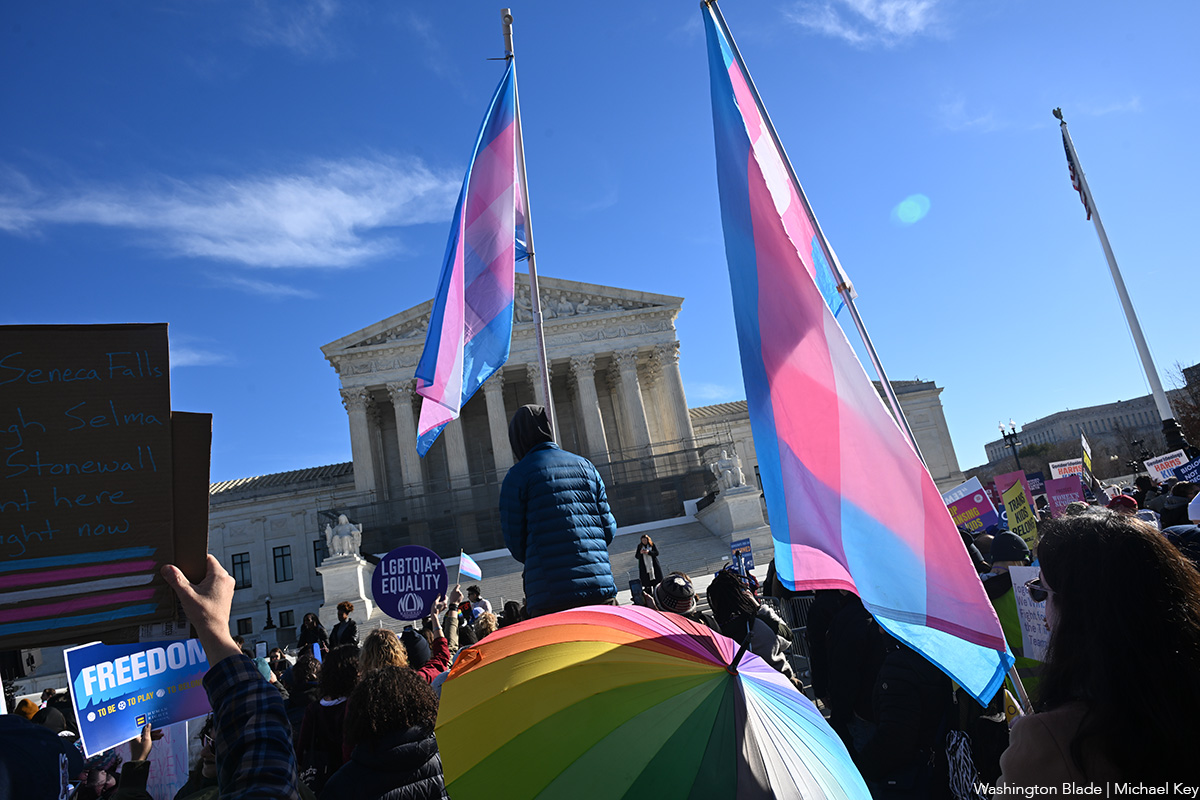
The U.S. Supreme Court has blocked a Trump-Vance administration policy that would have ended gender-affirming care for prisoners.
On Wednesday, the justices rejected an emergency application filed by the administration that would have allowed the Bureau of Prisons to restrict gender-affirming care for transgender inmates in federal prisons.
Three prisoners, Alishea Kingdom, Jas Kapule and Solo Nichols, have said they had been receiving hormone therapy for years as inmates and challenged the sudden policy change. They argued that the abrupt change to decades of policy would end treatment for nearly 1,000 people in custody. The assertion of security concerns within prisons, the American Civil Liberties Union told the Supreme Court, was odd “given that BOP has not pointed to a single security incident relating to its provision of this treatment over the past 30 years.”
According to the application, President Donald Trump’s order called on the Bureau of Prisons to revise its medical care policies so that federal funds aren’t spent “for the purpose of conforming an inmate’s appearance to that of the opposite sex.”
Two justices, Samuel Alito and Clarence Thomas, would have allowed the policy to be enforced but ultimately did not join the majority, marking a rare judicial win for trans people at the nation’s highest court.
This decision is in line with other anti-trans actions taken by the White House regarding inmate rights. In May, the Washington Blade first reported on letters from congressional Democrats condemning changes to official BOP policy regarding trans inmates to bring it in line with Trump’s Executive Order 14168, titled “Defending Women from Gender Ideology Extremism and Restoring Biological Truth to the Federal Government.”
The policy would require BOP staff to “refer to individuals by their legal name or pronouns corresponding to their biological sex,” ban the use of funds for any “items that align with transgender ideology,” and suspend clothing accommodations, pat-search accommodations, and support programs offered to trans individuals.
The BOP responded to the Blade’s request for additional information about its policy change, but BOP spokesperson Donald Murphy said the updated policy is “rooted in medical guidance” and “data-driven decision making,” despite the guidance running counter to what most doctors who specialize in trans health care would recommend.
In June, the court upheld state bans on trans athletes participating in women’s and girls’ sports. A year earlier, the court upheld state laws banning gender-transition treatments for trans youth.
The court has also allowed Trump to implement a ban on trans people serving in the military.
Human Rights Campaign President Kelley Robinson sent a statement to the Blade following the court’s decision.
“Today, trans people in federal prisons can keep getting the care they need. Denying access to critical medical care for incarcerated people simply because they are trans is discriminatory, cruel and flies in the face of our Eighth Amendment protections,” Robinson said via email. “Trump and MAGA extremists are obsessed with targeting our community and undermining access to essential healthcare, defying the recommendations of every major medical association in the country. This decision protects incarcerated trans people from the administration’s attempt to steamroll over constitutional rights for now, but the fight to uphold the dignity and respect our community deserves is far from over.”
The White House responded to the Blade’s request for comment on the decision, calling the order a “loss for common sense.”
“Since the President’s very first day in office, he has fought to halt the U.S. taxpayer funding of transgender mutilation of prison inmates, and the waste of taxpayer resources on so-called ‘social accommodations,'” White House spokeswoman Allison Schuster told the Blade. “This administration will continue to fight for bold action to stop the waste of taxpayer dollars, restore Gold Standard Science as the guiding principle of all health policy, and protect countless Americans from these dangerous, life-altering medical practices, especially those funded on the taxpayer’s tab.”
U.S. Supreme Court
Trump asks Supreme Court to allow restrictions on gender-affirming care in prisons
SCOTUS could further restrict rights of trans inmates
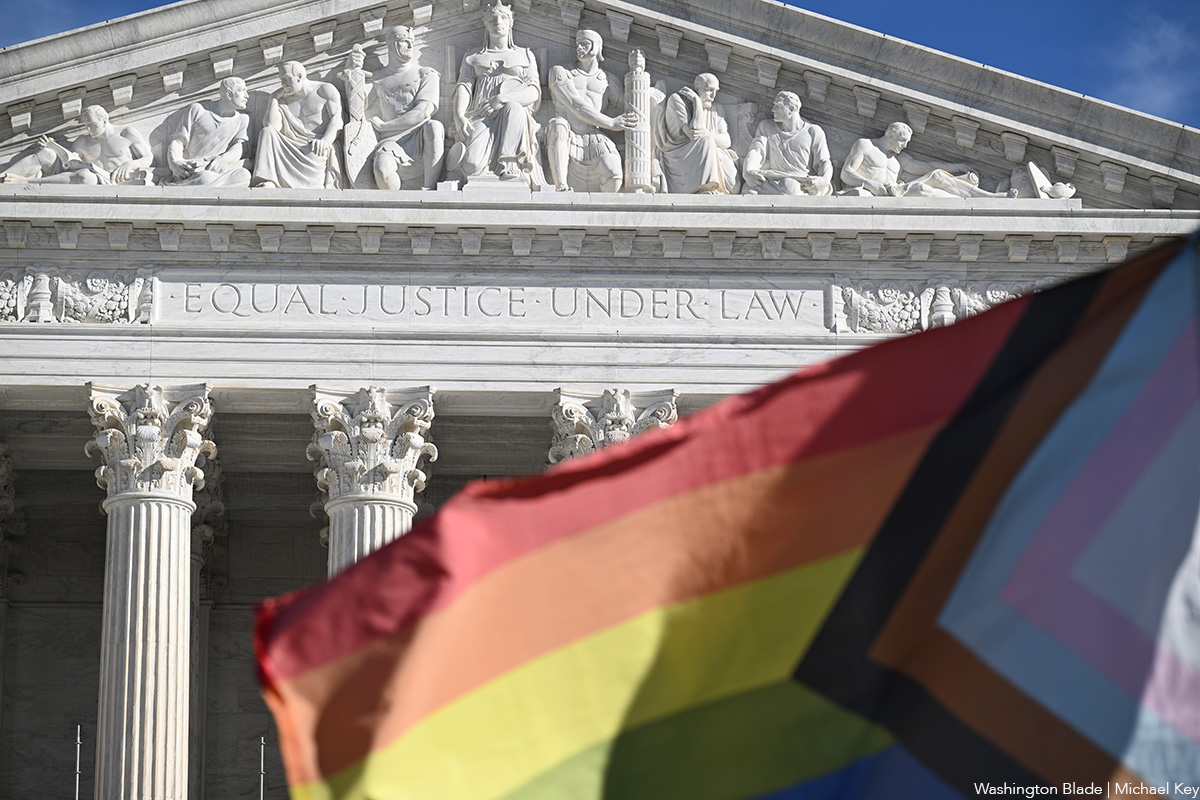
The Trump administration has asked the Supreme Court to allow its policy limiting gender-affirming treatment for federal inmates to take effect while a legal challenge plays out in court.
U.S. District Judge Royce Lamberth ordered the government to continue providing gender-affirming care, such as hormone therapy, which had become policy nearly a decade ago for inmates who were transitioning.
The Trump administration argues in its application that its policy restricting transgender rights was properly adopted and that the judge overstepped, posing nationwide “security and prison-administrative concerns.”
If allowed, the policy would halt surgeries, hormones and social accommodations such as wigs while allowing mental health therapy to continue as the legality of the policy reversal is litigated.
The government also argues in the application that the Bureau of Prisons had “determined that sex-trait-modification surgeries, hormone interventions in general, and social accommodations could no longer be justified as treatment for gender dysphoria.”
American Civil Liberties Union attorneys for the inmates said the policy is “a direct threat to the well-being of transgender people in federal custody and an open violation of their fundamental rights,” and said withholding necessary gender-affirming healthcare constitutes cruel and unusual punishment.
The Blade has covered the ongoing developments surrounding changes to Federal Bureau of Prisons transgender inmate policy that went into effect earlier in Trump’s term. The changes primarily focus on rolling back Biden-era protections for trans inmates.
Earlier this year, the Blade published a joint letter from multiple senators in response to the rollback of the policy. Multiple senators — including Edward Markey (D-Mass.), Jeffrey A. Merkley (D-Ore.) and Mazie K. Hirono (D-Hawaii) — sent a letter to Attorney General Todd Blanche and Federal Bureau of Prisons Director William Marshall III calling for them to reverse the policy change, saying it endangers inmates’ health and safety.
The senators described how the policy shift, along with President Trump’s Executive Order 14168, titled “Defending Women from Gender Ideology Extremism and Restoring Biological Truth to the Federal Government,” is forcing policy changes they argued are rooted more in political rhetoric than in medical research or evidence-based correctional practices.
Federal Bureau of Prisons responded to the Blade’s request for comment in May, declining to reconsider its transgender inmate policy.
The Blade reached out to the Federal Bureau of Prisons once again over the application to the Supreme Court, but did not hear back before publication.
U.S. Supreme Court
Supreme Court upholds state laws banning trans athletes from sports teams
Justices heard oral arguments in two cases in January
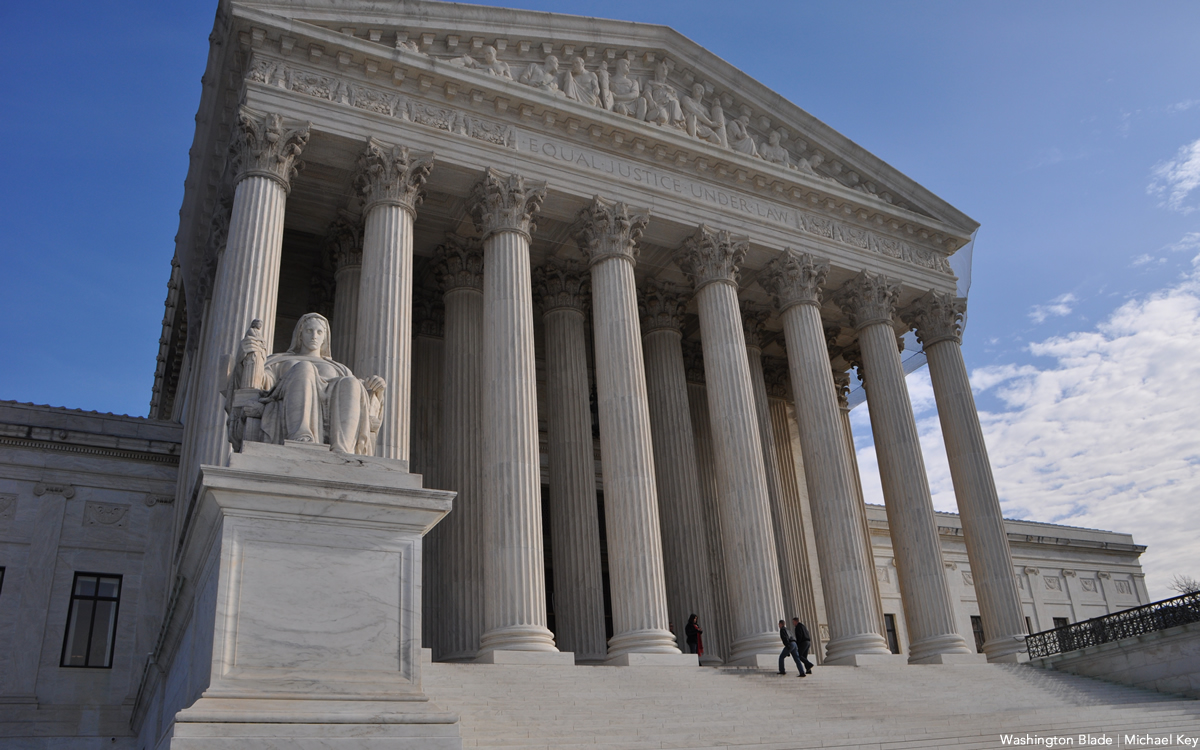
The U.S. Supreme Court on Tuesday upheld state laws that ban transgender athletes from school sports teams that correspond with their gender identity.
The justices in January heard oral arguments in two cases — Little v. Hecox and West Virginia v. B.P.J. — that challenged laws in Idaho and West Virginia respectively.
Both cases question the constitutionality of laws from both states that block trans girls from participating on girls’ teams at publicly funded schools — specifically if these bans violate the 14th Amendment’s Equal Protection Clause and Title IX. Since 2020, 27 states have banned transgender youth from playing school sports.
In a 6-3 decision made on party lines, the conservative justices asserted that laws prohibiting trans women and girls from participating in sports programs at publicly funded schools does not violate either constitutionally protected right. Notably the ruling does not require any state to categorically bar transgender girls from participating on girls’ sports teams, or transgender boys from participating on boys’ sports teams.
In the majority for the case, Justice Brett Kavanaugh delivered the opinion. It holds that schools can determine eligibility for women’s and girls’ sports teams based on biological sex. It also holds that West Virginia did not violate Title IX, which bars educational programs that receive federal funding from discriminating based on sex.
“Consistent with Title IX and the Equal Protection Clause, we hold that the States may maintain women’s and girls’ sports for biological females. They may determine eligibility for women’s and girls’ sports based on biological sex,” Kavanaugh wrote. “The Constitution and Title IX do not require an overhaul of women’s and girls’ sports throughout America.”
The Chief Justice John Roberts, along with Justices Clarence Thomas, Samuel Alito, Neil Gorsuch, and Amy Coney Barrett joined Kavanaugh’s majority opinion. It permissibly maintains female sports for biological females.
In his conclusion, Kavanaugh shares his belief of the importance of sports to women and girls but also a caution that “[n]o student-athlete on either side of the issue … deserves to be ostracized or vilified.”
Justice Sonia Sotomayor opinion was concurring in the judgment in part and dissenting in part. Justices Elena Kagan, and Ketanji Brown Jackson joined Sotomayor’s opinion.
In her dissent, Sotomayor explains that the majority opinion, while attempting to protect one groups Constitutional rights (those assigned women at birth), it puts another group’s constitutional rights (trans women) at its expense and in principle violates the Equal Protection Clause of the 14th Amendment.
“Because the majority, however, inflicts a hardship on those it disfavors without giving them the fair and full opportunity the Constitution requires to litigate their contentions, I respectfully dissent,” Sotomayor wrote, eventually pointing to how the states had evaluated issues of trans sports participants prior to these bans as evidence of general omission. “The ban eliminated this individualized approach in favor of categorical exclusion.”
She also pointed out that these rules to not equally exclude, further bolstering her argument that the majority opinion was not created with the truest sense of the Equal Protection Clause at its center.
“Teams “designated” for “females” “shall not be open to students of the male sex where selection for such teams is based upon competitive skill or the activity involved is a contact sport.” Teams “designated” for “males” do not have the same restriction.”
Jackson wrote in her dissent that this ban does explicitly allow for sex discrimination in any school or education program that receives federal funding.
“A transgender woman penalized for being perceived as aggressive has experienced discrimination ‘on the basis of sex’ just as much as a cisgender woman has, no matter that the transgender woman’s behavior matches expectations of her sex assigned at birth,” Jackson said. “Either way, the institution has imposed its gender-based expectations upon her. And either way, the institution may have violated Title IX.”
In West Virginia v. B.P.J., the case centers on B.P.J., a trans girl who was barred from competing on her school’s girls’ cross-country and track teams under West Virginia’s Save Women’s Sports Act, enacted in 2021. Under the law, it requires participation to be based on the athlete’s biological sex as indicated on their original birth certificate issued at the time of birth.
In Little v. Hecox, the details are slightly different, but ask the same 14th Amendment and Title IX questions but against Idaho’s Fairness in Women’s Sports Act. In this case Hecox, a trans woman and student at Boise State University wished to join the women’s cross-country team, but couldn’t under the law. She, with a cisgender athlete filed a suit against the governor, arguing the Equal Protection Clause of the 14th Amendment explicitly protects their rights to participate on the woman’s team.
Trans rights activists have criticized the highest court in the land’s decision, highlighting it legally allows for discrimination based on gender identity — something they argue is a foundational element of the spirit of the Equal Protection Clause.
Jennifer Levi, senior director of Transgender and Queer Rights at GLAD Law outright called the six conservative justices view of Equal Protection and Title IX as “wrong.”
“Today’s ruling gets it wrong. And it’s kids who will suffer for it. By upholding these blanket bans, the Supreme Court has allowed states to deny students even the chance to try out for a school team, simply because they are transgender,” Levi told the Washington Blade in a statement. “Policies that categorically bar students don’t advance fairness; they mandate exclusion.”
She continued, pointing out excluding some for the protection of others does not ensure fairness as the justices are arguing in their opinion.
“When a law bars every transgender girl regardless of age, hormones, or physiology, it isn’t about competitive fairness. It’s about keeping transgender kids out. We can protect women’s sports without doing that. Most of the country already does.”
Chris Erchull, senior staff attorney at GLAD Law, pointed out that while disappointing, the court does not mandate discrimination as the policy.
“This ruling does not require any state to follow West Virginia’s or Idaho’s cruel, overly-broad approach, and it does not mandate categorical bans on transgender students participating in school sports,” Erchull said. “It also leaves intact broader nondiscrimination protections for transgender students in education, including Title IX’s protections against sex discrimination for LGBTQ+ students. Discrimination has no place in our schools, and we can and should ensure that every student has the opportunity to learn, to thrive, and to know that they belong.”
Sasha Buchert, senior attorney and director of the Nonbinary and Transgender Rights Project at Lambda Legal, also emphasized the bad faith argument the majority opinion pushes for the sake of one exclusionary view of the Equal Protection Clause and Title IX.
“This ruling is deeply harmful for transgender women and girls who only asked for the ability to participate in sports with their peers,” Buchert said. “Countless studies have demonstrated the myriad benefits that come with participation in team sports. Now, one population, transgender youth and collegians, are targeted for specific and baseless discrimination. We will not be deterred and will continue to fight back to secure the equal participation that all youth, including transgender youth, deserve.”
Joshua Block, senior counsel for the American Civil Liberties Union’s LGBTQ & HIV Rights Project also echoed the lasting negative impact this ruling will have for trans Americans.
“This is a heartbreaking ruling for our clients and transgender girls like them who’ve asked for nothing more than the same opportunities afforded to their peers.” Block said. “The reality is that the equality of transgender women and girls takes nothing away from, and in fact promotes, the equality of all women and girls. We will continue to advance the fundamental principle that all young people deserve equal opportunity to thrive and succeed.”
Shannon Minter, legal director for the National Center for LGBTQ Rights, who himself is trans, issued a statement, reassuring that while upon face value the decision seems to undermine the rights of trans sports participants, it does not make that the rule.
“Today’s limited decision means that states and schools across the country still have the power to make reasonable rules to ensure fairness without banning all transgender girls,” said Minter. “Like other health or medical considerations in sports, reasonable policies for transgender student athletes rely on individual assessments rather than blanket bans. Every child deserves the chance to play sports with their friends and learn the lessons sports teach, including determination, resilience, and teamwork.”
Kelly O’Neill, an attorney for Legal Voice’s from Idaho also provided a statement to the Blade.
“It is profoundly unfair to deny a young person the benefits of teamwork and dedication because of who they are,” O’Neill said. “We should be removing barriers for girls and women in sports, not creating new ones.”
Human Rights Campaign President Kelley Robinson came to a similar conclusion.
“No kid — not my kid, not your kid, not any kid — deserves to be discriminated against. Yet this ruling is heartbreaking for transgender student athletes who are being forced to sit on the sidelines simply for who they are. When politicians convince the public that any girl could be ‘the wrong kind of girl,’ they invite harassment, intimidation, invasive questioning, or even an inspection of their body by a total stranger,” Robinson wrote in a statement shared with the Blade. “It’s sadly just the latest decision by the conservative justices on the Supreme Court to roll back protections for marginalized communities and create a second class citizenship for millions of people. We are sacrificing the dignity, privacy, and safety of America’s young people to solve a problem that was manufactured and exploited for political gain … We must continue this fight with full force until freedom, justice and equal opportunity are not flimsy promises, but nationwide guarantees.”
GLAAD President Sarah Kate Ellis, who presides over the world’s largest LGBTQ media advocacy organization, issued a statement on the ruling.
“This decision is at odds with the fundamental principles of fairness, freedom, and family that define our country and our communities. By allowing sweeping restrictions on a very small number of transgender students who simply wanted to participate in sports alongside their peers, the ruling creates an unnecessarily unfair playing field,” Ellis said. “Personal freedom and opportunity are best served when our legal protections expand access and guarantee safety for everyone. Today’s decision unfairly strips the rights of a few and threatens the ability of every girl and woman to play the sports they love.”
On the other side of the ideological isle, U.S. Sen. Jim Risch (R-Idaho) applauded the Supreme Court’s decision to uphold the state’s women and girl trans sport ban. In a statement the Republican called the court’s conservative view of as a win for “women, fairness, and the Gem State.”
“Idaho was the first state in the nation to ban biological men from competing in women’s sports and uphold the opportunities Title IX promised more than 50 years ago,” Risch said in a statement. “The Supreme Court’s decision affirms those protections and the generations of women who fought for fair, equal athletics.”

Out actor on his 25-year love affair with ‘Mamma Mia’

Comings & Goings

Stephen Miller, key architect of anti-LGBTQ policies, named White House chief of staff

Escritora trans venezolana reivindica una fe sin exclusiones ante la visita del papa a Sudamérica

Baltimore lawmaker’s ex-treasurer charged with theft of $87K in campaign cash

Meet the talented makeup artist behind Broadway’s ‘Rocky Horror’

Sarah McBride returns to Congress after historic first term

Election watch parties to take place throughout DMV

Chris Pappas elected to U.S. Senate

Supreme Court weighs religious exemptions to LGBTQ nondiscrimination protections in Colo. preschool case
-

 a&e features5 days ago
Meet the talented makeup artist behind Broadway’s ‘Rocky Horror’
-
2026 Midterm Elections4 days ago
Sarah McBride returns to Congress after historic first term
-
Local5 days ago
Election watch parties to take place throughout DMV
-
2026 Midterm Elections4 days ago
Chris Pappas elected to U.S. Senate