Health
Obama budget includes modest increase in AIDS funds
Spending plan calls for $105 million boost in drug program

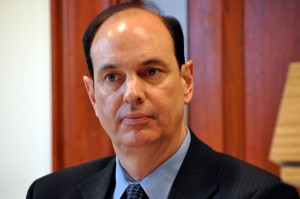
Carl Schmid, deputy executive director of the AIDS Institute (Blade file photo by Michael Key)
President Obama’s proposed budget for fiscal year 2012 drew praise from AIDS advocacy groups for its inclusion of small to modest funding increases in federal AIDS programs at a time when the White House and Congress are under great pressure to cut spending.
The proposed budget calls for a $105 million increase in the AIDS Drug Assistance Program, or ADAP, over the fiscal year 2010 spending level.
AIDS and LGBT advocacy groups have pushed hard for funding increases for the federal-state ADAP program as state contributions to the program have dried up due to the national recession, resulting in waiting lists for people who rely on the program for life-saving AIDS medication.
“We realize the resources of the federal government are severely constrained,” said Carl Schmid, deputy executive director of the AIDS Institute. “While the proposed funding levels are far from what is needed to provide the necessary care and treatment for people with HIV/AIDS or to significantly reduce the number of new infections, the AIDS Institute appreciates the budget requests and now urges the Congress to show a similar level of support.”
Schmid and Frank Oldham, president and CEO of the National Association of People With AIDS, expressed concern that Republican leaders of the House of Representatives are proposing cuts of close to 20 percent in federal AIDS programs for the fiscal year 2011 budget, which Congress has yet to finalize.
“The reality of the proposed cuts is that lower-income Americans living with HIV will not have access to the antiviral drugs that keep them healthy – and also make them less likely to pass the virus along to others,” Oldham said. “More people will get sick and die, and a disproportionate number of them will be poor and of color.”
Congress was expected to vote on a final version of the FY 2011 budget within the next few weeks. Last year, after Republicans and Democrats were unable to reach an agreement on the FY 2011 budget for most federal agencies, Congress approved a measure known as a continuing resolution, which keeps the government funded at fiscal year 2010 levels.
In a telephone news briefing on Tuesday, White House Domestic Policy Council Director Melody Barnes said the administration was involved in discussions with members of Congress to address the 2011 budget at the same time that the White House promotes its 2012 budget.
“With the budget that he put out yesterday…he has articulated the values that he has around this set of issues,” Barnes said of Obama’s intentions for the AIDS budget. “So I think his budget really stands as the backdrop and as the platform from which we will be operating as we move forward.”
Barnes added, “Obviously, there will be many conversations going forward about the budget and how we bring the current year to closure. But this [FY 2012] budget really articulates the framework that he believes should be the guiding set of principles.”
During the phone briefing, Jeff Crowley, director of the White House Office of National AIDS Policy, said the 2012 budget also reflects the president’s recently released National HIV/AIDS Strategy document. Crowley noted that strategy document, among other things, calls for targeting federal AIDS funds to population groups that are affected most by the disease, especially gay and bisexual men and people of color.
“People living with HIV should not have to live in fear that their life-saving medications could be taken away from them,” Crowley said.
“By increasing the annual fund by $105 million from early fiscal year 2010, when waiting lists in ADAPs first appeared, the president is demonstrating a strong commitment to standing with people living with HIV and working with states and others to bridge the gap in access to HIV medications until insurance coverage is expanded in 2014 through the Affordable Care Act.”
Crowley was referring to the sweeping health care reform bill initiated by Obama and passed by the Democratic-controlled House and Senate in 2009. With Republicans gaining control of the House this year, the House passed legislation calling for the repeal of the Affordable Care Act. The Senate, which remains under Democratic Party control, defeated the repeal legislation.
AIDS activists have said they remain hopeful that the Affordable Care Act’s provisions expanding health insurance coverage for low-income people will greatly reduce the need for people with HIV to rely on ADAP for their medication.
The president’s fiscal year 2012 budget includes these additional proposals for federal AIDS spending:
• An increase of $5 million over FY 2010 levels for early intervention and primary care service for people with HIV/AIDS under the Ryan White CARE Act.
• An increase of $58 million over FY 2010 for the U.S. Centers for Disease Control and Prevention (CDC) as a means of helping reach the goals of the National HIV/AIDS Strategy document’s call to reduce the number of new HIV infections in the U.S.
• An increase of $750 million above FY 2010 levels for medical research at the National Institutes of Health. Of this amount, $74 million would be allocated for AIDS and HIV prevention research. Crowley said the research would focus on developing an AIDS vaccine and new microbicides to prevent the AIDS virus from infecting people and on the discovery of improved drug therapies to prolong the lives of people with HIV.
• A $325 million funding allocation for the Housing Opportunities for People With AIDS, or HOPWA, at the Department of Housing and Urban Development—the same amount approved for the FY 2010 budget. HOPWA provides rent subsidies and other assistance to low-income people with HIV/AIDS.
Republican leaders said the Obama budget for FY 2012, which calls for $3.7 trillion in spending, is far too large and vowed to make sharp cuts when the budget undergoes the review and approval process on Capitol Hill in the coming weeks.
GOP leaders didn’t initially discuss the 2012 budget’s spending proposals on AIDS programs, but Capitol Hill observers expect House Republicans to make the same proposed cuts as those made for the fiscal year 2011 budget.
“HIV programs are so small a part of the federal budget – less than one tenth of one percent – that even eliminating them entirely will not materially reduce this year’s deficit,” Oldham said in a statement.
“But the proposed cuts will contribute to deficits in years to come, as Americans whose new infections this year could have been prevented for a few dollars come back next year, needing drugs and support services that will cost far more, for years to come,” he said.
During the White House phone news briefing, Barnes said the Obama budget for FY 2012 also calls for small increases in funding at the Justice Department’s civil rights division, which enforces the Mathew Shepard and James Byrd Jr. Hate Crime Prevention Act. The act authorizes the federal government to prosecute hate crimes targeting the LGBT community.





Cannabis Culture
LGBTQ people, weed, and mental health: what you need to know
Community uses marijuana at much higher rates than general population

Uncloseted Media published this story on May 7.
By SPENCER MACNAUGHTON | In 2025, the global cannabis market size was valued at nearly $103 billion. By 2034, that number is expected to explode by roughly 1,400 percent to more than $1.43 trillion.
In short, as an increasing number of countries legalize marijuana use, everyone is starting to consume a lot more weed. And LGBTQ people tend to use cannabis at much higher rates than the general population. One study found that 55 percent of lesbian and 45 percent of gay young adults use marijuana, compared to about 33 percent and 37 percent, respectively, of their straight counterparts.
As LGBTQ people face a mental health crisis, the mainstream stereotypes that depict weed as an antidote for anxiety, panic and depression aren’t painting the full picture. And that could be exacerbating the mental health struggles so many queer people, and especially youth, face.
Here’s what the research demonstrates about marijuana and its effects on mental health:
- Multiple studies suggest a link between marijuana use and an increased risk of mental health disorders, including schizophrenia, depression and anxiety in individuals who are genetically predisposed.
- One study found that daily marijuana use, especially among younger people, makes some individuals seven times more likely to develop psychosis.
The increase in higher-potency strains of marijuana could pose unknown risks. In 1995, the average content of Tetrahydrocannabinol (THC) in confiscated marijuana was less than 4 percent. In 2022, it was more than 16 percent. Researchers don’t know the full extent of the impact that these higher concentrations can have on mental health and especially on younger people whose brains are still developing.
- A systematic review of studies published between 2013 and 2025 found damning results for the mental health of young cannabis users:
They were 51 percent more likely to experience depression, 58 percent more likely to experience anxiety, between 50 and 65 percent more likely to experience suicidal ideation and 80 to 87 percent more likely to have attempted suicide.
- While the above stats paint a grim picture, there is also some research that suggests benefits of cannabis use:
- A 2025 systematic review found that “medicinal” weed showed some efficacy in relieving withdrawal symptoms of opioid use disorder. THC use has been associated with improvement of post-traumatic stress disorder symptoms, bipolar symptoms and sleep quality.
- Other studies found that THC administered in a controlled setting was associated with a decrease of symptoms and adverse effects for a range of mental health disorders, including schizophrenia, psychotic symptoms, and anorexia nervosa.
Beyond what we pulled from academia, there is an astounding lack of information about the interplay between weed and mental health. As we dive deeper into Mental Health Awareness Month, I hope advocacy organizations, influencers and news outlets ramp up their coverage of this important topic that affects the countless LGBTQ weed smokers, many of whom are already struggling.
Health
UPDATED: Trans-led HIV clinic in Portsmouth struggles amid funding cuts
As states across the U.S. cut funding for HIV care this small clinic in Va, is still fighting

Two years ago, Nyonna Byers, a transgender woman from Portsmouth, Va., founded Ending Transmission of Sexual Infections (ETSI) Health Clinic to support a community she saw struggling with rising HIV rates. Now, as costs continue to climb and funding for HIV healthcare initiatives is being cut across the United States, Byers says her transgender identity has made it harder to secure the financial support her clinic needs to survive.
Portsmouth, with just under 100,000 people, is right across the Elizabeth River from Norfolk.
“We’re an HIV-led organization here in Portsmouth, providing services throughout the Hampton Roads area,” Byers told the Blade. “As a trans-led organization—with me as the founder and executive director—I’ve received a lot of rejection when it comes to funding. That’s one of the main reasons why we’re struggling to keep the clinic open. Without funding, we can’t provide HIV treatment or care, and then we’re just a theoretical organization—we can’t be impactful in the community we serve.”
She said the data clearly shows a need for increased investment in HIV care in Portsmouth, but the response from leadership has not matched the urgency of the crisis.
“Portsmouth is one of the smallest cities with one of the highest HIV rates, and there are very few HIV-led organizations or clinics here. The need is urgent, but the response doesn’t match it. We’re doing the work on the ground, but we’re not getting the support to sustain it. That disconnect is what’s hurting people the most.”
That need, Byers explained, continues to grow as ETSI struggles to meet the financial demands of the life-saving work it provides.
Portsmouth has one of the highest HIV prevalence rates in Virginia, with roughly 736.9 cases per 100,000 people—a rate that exceeds both state and national averages.
“Leaders like the mayor and city council don’t focus on public health or social health. They focus more on development—building the city up physically—rather than investing in the health of the people. I’ve applied for funding multiple times and been denied. Every time I’ve asked for resources, I’ve been turned away.”
When asked why, Byers said the answer felt clear to her.
“I honestly believe I was denied funding because I’m trans. I told the mayor I was going to go public with it, because it’s not fair. We’re on the ground doing the work to end HIV, and we’re still not getting the support we need. That’s not just frustrating—it’s harmful.”
While she said local support has been lacking, Byers noted that the state has stepped in—though the funding still falls short of what is needed to sustain the clinic long term.
ETSI Health Clinic was included as a recipient of funding in the Virginia 2027–2028 Senate budget, receiving $50,000 per year from the Virginia General Fund. Byers specifically credited State Sen. Lillie Louise Lucas with helping secure that funding, which she said did not come from city leadership.
Byers shared that she has given up a lot to keep ETSI afloat, but the costs just keep coming.
“I’ve worked a lot of contracts—jobs paying $30 to $40 an hour—and poured that money into my clinic. But the downside is that I’m struggling personally. I’ve lost cars, I’ve lost a house—I’ve lost a lot to keep this clinic going. This work has cost me almost everything.”
She added that the impact of federal policy shifts is also being felt locally. As the Trump-Vance administration continues to roll back what it has described as unnecessary “DEI” spending, Byers said those decisions are affecting clinics like hers.
There was a time when the clinic was able to receive funding from Sentara Cares, the philanthropic program of Sentara Health, a not-for-profit healthcare system based in Virginia and North Carolina, but now they can’t.
“We had funding from Sentara Cares for three years, and it helped keep us going. Then when DEI initiatives started getting rolled back, that funding stopped. I was told directly that because of federal policy changes, they couldn’t fund the clinic. I broke down during that meeting, because it felt like they were really saying they couldn’t support us because of who we are.”
That lack of funding is compounded by broader gaps in healthcare access in the region. Portsmouth—the ninth most populous city in Virginia—does not have a hospital.
“There’s very limited access to care in Portsmouth. We don’t even have a hospital—people have to be transported to Norfolk. We’ve had high rates of syphilis, and the health department is only open a few days a week. A lot of people don’t trust it, and that leaves entire communities without care.”
Byers made it clear that this is more than a passion project for her—it is her life’s calling, and she would do nearly anything to keep it going.
“To be honest, I would go back to sex work before I let my clinic close. This is something I built from the ground up. I built this clinic with money I earned myself. I’m not going to let it disappear without a fight.”
She also pointed to gaps in education and outreach, which she says exacerbate HIV rates despite the availability of preventive measures.
“There’s almost no marketing or education about PrEP in the Hampton Roads area. If you go to places like D.C. or Atlanta, you see billboards and campaigns—but here, you don’t see anything. If people don’t see it, they don’t know about it. That lack of awareness is putting people at risk.”
It is also a deeply personal fight, she explained.
“I’ve lost friends to HIV. People say you can’t die from HIV anymore, but you can if you’re not in care. I’ve seen it firsthand, and that’s what motivates me to keep going. HIV doesn’t have to be a death sentence—but without support, it can become one.”
The Blade reached out to Portsmouth Mayor Shannon E. Glover for comment.
Glover disputed Byers’ claims that her clinic was treated unfairly, including her allegation that her transgender identity played a role in funding decisions.
“There’s no issue with Miss—with her and her organization. We have been in discussion, and quite frankly, the claims that she made as it relates to ‘we’re not treating her equitably and fairly because of her [being] transgender’ that is totally untrue,” Glover told the Blade via phone call. “I’ve talked to Miss Nyonna on a number of occasions, and that is categorically not true.”
Glover added that the city provides funding to various organizations and said he had directed Byers to seek support elsewhere.
“So I’m not understanding what her issues are,” he said. “But in any event, you know, we have funding that we provide to organizations. I’ve recommended other organizations to her. I’ve recommended that she go to the state where they have more flexibility with their budget and they could help her. So that’s what I’m prepared to tell you today. I’m not going to answer any questions. I just wanted to respond that her claim that we are mistreating her, not treating her fair, is totally untrue.”
To donate to ETSI, visit their donation page at ESTIhcvas.org/donate
Health
Housewives head to Capitol Hill to promote PrEP coverage
Bravo’s Real Housewives stars to lobby lawmakers for expanded PrEP access.

Stars from Bravo’s hit franchise “The Real Housewives” are heading to Capitol Hill next week to advocate for expanded access to HIV prevention and treatment.
On March 18, several well-known cast members — including NeNe Leakes, Phaedra Parks, Candiace Dillard Bassett, Erika Jayne, Luann de Lesseps, Melissa Gorga, and Marysol Patton — will travel to D.C. to participate in an advocacy event aimed at increasing awareness and coverage for pre-exposure prophylaxis, commonly known as PrEP.
The event, dubbed “Housewives on the Hill,” is being organized by MISTR, the nation’s largest telehealth platform focused on sexual health. The group’s founder and CEO, Tristan Schukraft, will join the reality television stars as they meet with lawmakers and legislative staff to discuss the importance of maintaining and expanding access to HIV prevention tools.
PrEP is a medication regimen that can, if taken properly, reduce the risk of contracting HIV through sex by up to 99 percent according to public health officials. Advocates say wider access to the medication — including through insurance coverage and telehealth services — is critical to reducing new HIV infections across the United States.
During their day on Capitol Hill, the Housewives are expected to meet with members of Congress and participate in conversations about federal policies affecting HIV prevention and treatment. Organizers say the reality stars will also share personal reflections about the continued impact of HIV on communities across the country and the importance of keeping prevention resources accessible.
The “Housewives on the Hill” event aims to use the cultural influence of the Bravo stars to spotlight HIV prevention efforts and encourage lawmakers to protect and expand access to lifesaving medication and treatment options. Organizers say the goal is simple: ensure that more Americans can access the tools they need to prevent HIV and maintain their sexual health.

Nine Russian LGBTQ groups deemed ‘extremist’ banned

D.C. Pride flag raising ceremony set for June 1

Still marching: Rev. Troy Perry and the ongoing fight for liberation

Introducing Next-Generation Assisted Living & Memory Support.

Cedric Neal on his juicy narrator role in ‘Pippin’

PHOTOS: Black Pride Opening Reception

Bree Fram’s congressional campaign ends but her fight continues

Peppermint made her mark on ‘Drag Race.’ Now, her advocacy is front and center

From Media Matters to massive queer ragers: the rise of Tara Dikhof

Why this Black Pride, I ranked Janeese Lewis George #1 for D.C. mayor
-

 Photos5 days ago
PHOTOS: Black Pride Opening Reception
-
2026 Midterm Elections3 days ago
Bree Fram’s congressional campaign ends but her fight continues
-
Celebrity News3 days ago
Peppermint made her mark on ‘Drag Race.’ Now, her advocacy is front and center
-
a&e features3 days ago
From Media Matters to massive queer ragers: the rise of Tara Dikhof