Arts & Entertainment
Strongly brewed ‘Tea’
Black gay performance piece gives author one-man tour de force
‘Sweet Tea’
Through Oct. 9
Signature Theatre
4200 Campbell Avenue, Arlington
703-820-9771
signature-theatre.org
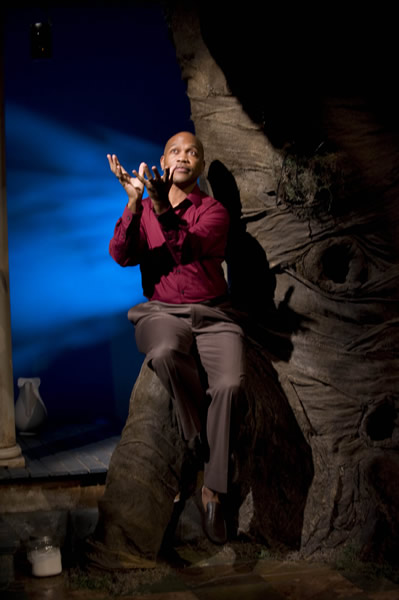
E. Patrick Johnson in ‘Sweet Tea,’ a pastiche-based performance piece on stage now at Signature. (Photo by Scott Suchman; courtesy Signature)
As a chubby little gay boy growing up in Hickory, N.C., E. Patrick Johnson staved off bullies by making them laugh. His specialty was imitations. The moment would-be tormentors planned to attack, Johnson typically averted imminent pain by breaking into an uncanny impersonation of a less-than-loved teacher.
Today Johnson, a performance artist and professor of performance studies and African-American studies at Northwestern University in Chicago, is neither class clown nor chubby, but mimicry remains an integral part of his skill set. In his one-person performance piece “Sweet Tea” — now in production at Signature Theatre — Johnson portrays himself as well as a dozen other gay black characters drawn from real life interview subjects. With names like Countess Vivian, Chaz/Chastity and D.C., the men Johnson brings to life are a part of the South that sometimes goes unnoticed.
Amiable and soft spoken offstage, Johnson says, “I can assure theatergoers that they haven’t seen this play before — these kind of gay black experiences have never been shared before in a theater. LGBT audiences in particular will connect with these men’s stories in ways that may even surprise themselves.”
Johnson’s desire to record black gay men’s stories was sparked on a visit to Washington back in 1995. “I was at a cookout for Us Helping US, and I became engrossed with a group of African-American gay men who were sitting around a table sharing experiences about growing up in the day in the South. Then and there, I vowed that when I had the time and the resources to collect these stories I would. I feel it’s important to create an archive of these never-before-documented lives.”
Eventually, Johnson followed through: In 2004, he took a sabbatical from Northwestern and began collecting narratives from 77 African-American gay men ages 19 to 92 from all the southern states as well as Oklahoma and Missouri (both of which had been slave states). In 2008, he published an oral-history anthology titled “Sweet Tea: Black Gay Men of the South.”
It was about a year into the project when Johnson realized that in addition to making a book, the interviews would also make a great performance. The material is rich and covers a wide range of topics: coming out, love and relationships, HIV/AIDS, bullying (Freddie recounts carrying a razor blade for protection), religion, mama drama, and of course sex (another character had sex with the entire football team in high school). Full of humor and poignancy, the tales are ultimately universal.
“In the past,” says Johnson, 44, “I’ve done staged readings of collected monologues in which I’d sit on a stool giving vocal impressions of different characters. But with ‘Sweet Tea’ it’s different — it’s a play and I fully embody the characters.”
“From the start, I intuitively knew that I was part of the ‘Sweet Tea’ story but it took me a while to understand that it’s my story too. While we were workshopping the play in Chicago, the show’s producer Jane Saks and others involved in the project agreed that I needed to interject my own story into the work. As it turned out, my own experiences are a through line: I’m in search of something and the other men help me to find it.”
Johnson has enjoyed electrifying rapport with audiences. He remembers a specific sold out performance of “Pouring Tea” (an earlier performance piece also comprised of gay black men’s stories) at the University of Pennsylvania.
“The crowd was mostly black and gay, and they were identifying with the show’s coming out stories, the church stories. The energy was unreal. We were levitating.”
His audiences at Signature will most likely be drawn primarily from a different demographic. Does that worry Johnson?
“I’ve been schooled about Signature’s blue-haired crowd, but I learned long ago never to make assumptions about audiences. I remember performing at the main library in downtown Mobile, Alabama, for a mostly white, straight crowd. During the post-show Q&A session, a minister thanked me for bringing the show to town. He approved of open talk about sexuality. After all, he said, God was there for the first wet vagina and the first erection. A hush fell over the room, and after what felt like an endless silence, I offered up an ‘Amen!’ It seemed right.”




Friday, October 9
Go Gay DC will host “Out in DC LGBTQ+ Community Social” at 7 p.m. at Hotel Zena. This is a chance to relax, new friends, and enjoy happy hour specials at this classic retro venue. Attendance is free and more details are available on Eventbrite.
Saturday, October 10
Go Gay DC will host “LGBTQ+ Community Brunch” at 11 a.m. at Freddie’s Beach Bar & Restaurant. This fun weekly event brings the DMV area LGBTQ+ community, including allies, together for delicious food and conversation. Attendance is free and more details are available on Eventbrite.
“Nellie’s DC Drag Brunch” will be at 12 p.m. at Nellie’s Sports Bar. Come get served like a queen by a queen. Join Sapphire Blue, Deja Diamond and their team of amazing drag performers for the most fun you’ll have all weekend. Tickets cost $58.51 and are available on Eventbrite.
Sunday, October 11
Spark Coffee Club will be at 12 p.m. at Spark Social. This is a laid-back daytime hangout built entirely around making new connections. Whether you’re new to the city, new to the community, or just looking to expand your social circle, this is an easy, low-pressure way to spark up a conversation with the person next to you. Come solo or with a friend — you never know who you might meet. For more details, visit Eventbrite.
Tuesday, October 13
Trans Discussion Group will be at 7 p.m. on Zoom. This event is intended to provide an emotionally and physically safe space for trans people and those who may be questioning their gender identity/expression to join together in community and learn from one another. For more details, email [email protected].
Coming Out Discussion Group will be at 7 p.m. on Zoom. This is a safe space to share experiences about coming out and discuss topics as it relates to doing so — by sharing struggles and victories the group allows those newly coming out and who have been out for a while to learn from others. For more details, visit the group’s Facebook.
Wednesday, October 14
Job Club will be at 6 p.m. on Zoom upon request. This is a weekly job support program to help job entrants and seekers, including the long-term unemployed, improve self-confidence, motivation, resilience and productivity for effective job searches and networking — allowing participants to move away from being merely “applicants” toward being “candidates.” For more information, email [email protected] or visit www.thedccenter.org/careers.
The DC LGBTQ+ Community Center will host “Movement for Healing” at 3 p.m. This trauma- and yoga therapy–informed class is designed to help guests gently reconnect with their body and their breath. Through mindful movement, somatic awareness, and grounding practices, guests will explore how to release tension, increase mobility, and cultivate a deeper sense of safety and ease within. For more details, visit the DC Center’s website.
Thursday, October 15
The DC LGBTQ+ Community Center’s Fresh Produce Program will be held all day at the Center. People will be informed on Wednesday at 5 p.m. if they are picked to receive a produce box. No proof of residency or income is required. For more information, email [email protected] or call 202-682-2245.
a&e features
Bar Betsie, inviting and intimate, marks one-year anniversary
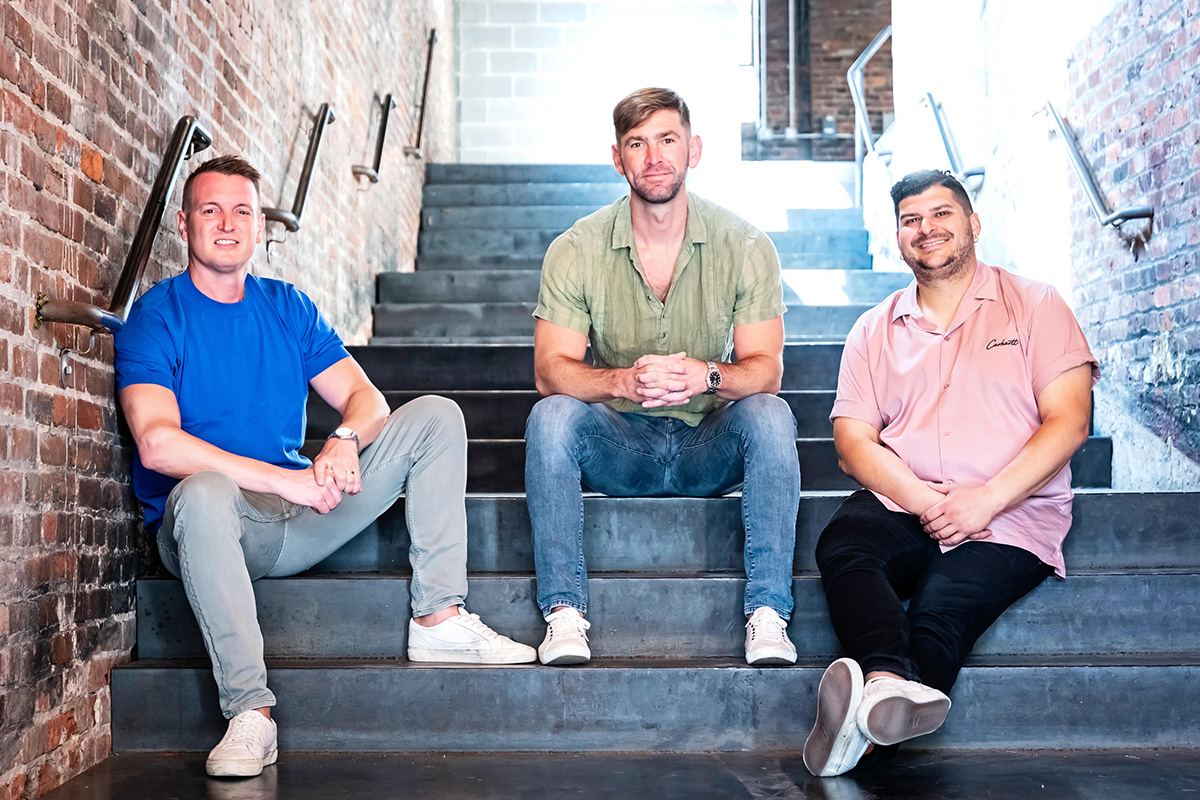
Not that a basic vodka-soda should ever dare to appear in print on the craft cocktail list at year-old Bar Betsie, but if it did, its name would be written in big black block letters, back-lit, on a marquee behind the 14-seat bar, with its ingredients – Tito’s, seltzer water – sitting visible on a shelf above.
Inviting and intimate, and with that arresting visual representation of cocktail ingredients along the wall, Bar Betsie has brought its vibes-forward approach to a dynamic corner of bustling Union Market. The sophomore effort from owners JP Sabatier, Ralph Brabham, and Drew Porterfield, the trio took a different tack at Bar Betsie than at their other, older (though not by much) 14th Street bar, Jane Jane.
Bar Betsie allowed Sabatier, Brabham, and Porterfield to expand their creativity. The three first connected several years ago, when JP was manager of Maydan and Brabham and Porterfield owned Beau Thai and BKK Cookshop. Immediately hitting it off, they dreamed of opening a bar together and in 2021, it became a reality, in the form of Jane Jane.
Featuring a short list of craft, rotating cocktails and shareable bar snacks, Bar Betsie is Jane Jane’s “grittier, edgier” sister. While Jane is named after Porterfield’s mother, Bar Betsie gets its moniker from Sabatier’s mom.
“While Jane Jane is going on a field trip, Bar Betsie feels like you’re skipping school,” says Brabham. Bar Betsie brings more of a party vibe, he says. They landed in the Union Market neighborhood after thinking through what a second bar might feel like: not a carbon copy, but an atmosphere unique to its physical space and surroundings. Union Market and its transitional nature translates to the bar’s interiors: its mood lighting regardless of time of day, the crushed-velvet booths, the blood-red curved curtains to the bathrooms and kitchen, and the air of timeless mystique contrast to the elevated, buttoned-up cocktail bar that is Jane Jane. No one would bat an eye if a cabaret broke out on top of the bar. When in Bar Betsie, they say, it’s as if the warm lighting cuts through the vibe (and the stories) of 50-year-old cigarette smoke in the air.
They decided to make the cocktail menu more concise: 12 to 15 signature drinks at a time. Tequila and mezcal lead the program (again, a nod to mom Betsie, who prefers agave-based liquors). Drinks rotate seasonally (a cocktail flip is happening this month) and are developed committee-style to ensure that the whole team has input. The Clover Cult has been especially popular, with bluecoat gin, raspberry, vermouth, and lemon, but passed through a high-speed blender that whips the drink into a frenzy: it’s a “yummy, sweet cocktail with foam with a beautiful pink color,” says Brabham.
Beers feature locally brewed options, like from DC Brau and Atlas, alongside a wine program featuring skin-contact wines. And hewing to that party-forward vibe, there’s a host of shooters like the blackberry firing squad with tequila and lime.
As for the food, Bar Betsie has a true kitchen, allowing Sabatier to stretch his cheffy wings (he attended the Culinary Institute of America). Bar snacks are plentiful, including Buffalo chicken dip, a giant pretzel with beer cheese, and chicken tinga nachos that are “fucking delicious” says Raplh. “We’re aiming for food that’s snacky, salty, crunchy, and tasty to pair with the drinks.” Guest chefs show up on Sundays for kitchen cameos.
Since opening Bar Betsie, the trio has welcomed some additional acclaim. They’ve begun to set up activations with other bars; last month, they held a pop-up at new cocktail den Frank’s Wild Years, and there’s an upcoming collaboration with Death &Co, the famed bar in Blagden.
Bar Betsie occupies a unique place in the city’s pantheon of drinking destinations. All three owners are gay, and yet this (like Jane Jane) is not a gay bar.
“We never hide who we are,” say Brabham and Porterfield. “There’s always the recognition of the community we come from, and love, and want to celebrate.”
They want people to know who they are and what they stand for, showing that by being inclusive and open in their support of the community. They work to ensure that the staff is diverse and inclusive as well. They also dropped an exclusive Easter egg: behind the medicine-cabinet mirrors in the bathroom is a video screen playing footage of drag queens either getting ready, fixing, or removing makeup and wigs. “It’s a little IYKYK moment, something fun and true to who we are as a queer-celebrating and owned space,” they say.
Movies
10 years later, we still can’t shake Barry Jenkins’s ‘Moonlight’
Landmark queer film returned to theaters this past weekend
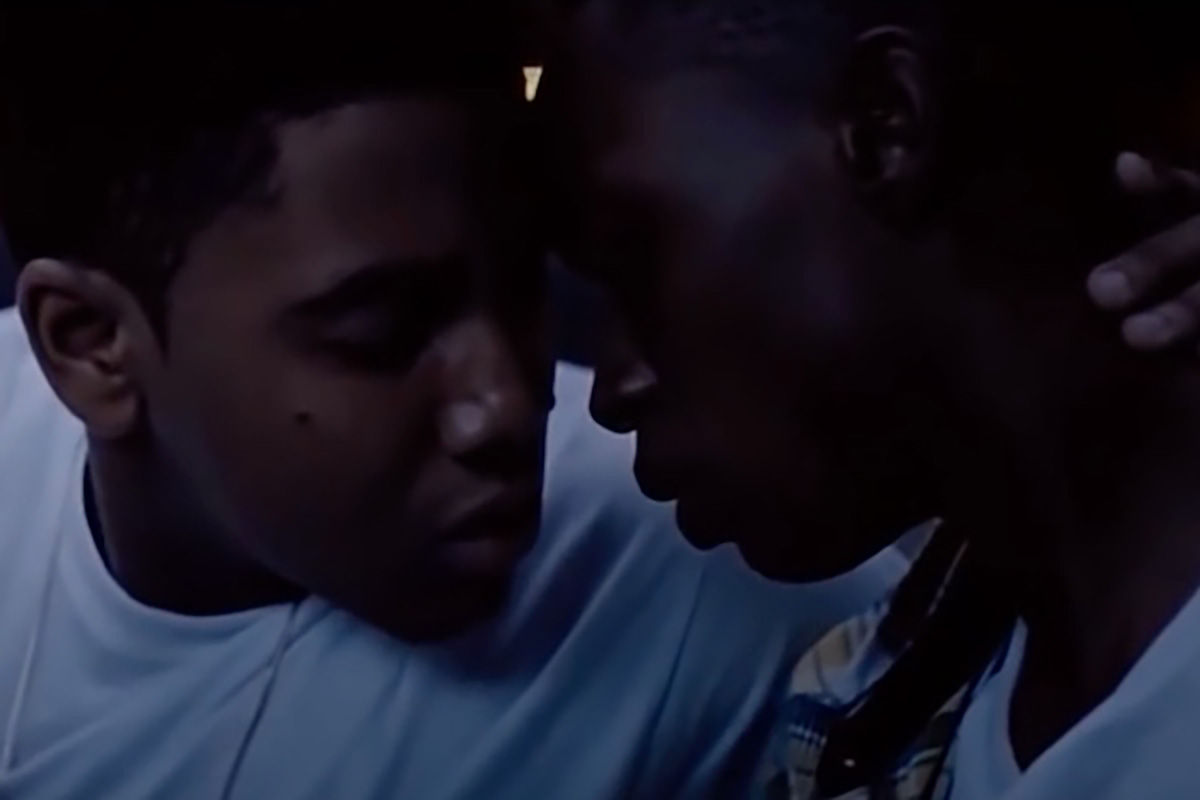
It all started back at the Telluride Film Festival, where “Moonlight” had its world premiere in 2016, kicking off a successful awards season run. It instantly became the year’s critical darling, and it wound up winning three Academy Awards, including Best Picture, Best Adapted Screenplay (for Jenkins), and Best Supporting Actor (for Mahershala Ali.)
But there’s a world where an independently made film like “Moonlight,” featuring an all-Black cast with mostly unknown actors, and a story exploring how queerness intersects with toxic masculinity and race, gets easily overlooked. The fact that the film won Best Picture on Hollywood’s biggest stage not only cemented its place in film history, but helped the story reach more Black and queer people.
Adapted from Tarell Alvin McCraney’s unproduced, autobiographical play “In Moonlight Black Boys Look Blue,” Jenkins follows a boy named Chiron, introduced to the audience as Little, over the course of three pivotal moments in his upbringing. Set in Miami, the film tracks Chiron’s days as an outcast struggling to make it through elementary school, to his first sexual encounter with another boy, to his adult days making a living as a drug dealer. Chiron suffocates while living with his abusive, drug-addicted mother (Naomie Harris) and eventually finds refuge and safety in the home of surrogate parents Juan (Ali) and Teresa (Janelle Monáe) as he struggles to reckon with his queerness.
Jenkins’s images instantly became iconic: Juan holding Little in the ocean, a moment reminiscent of a young boy’s baptism; Chiron resting his head on Kevin’s (André Holland) shoulder as the two reconcile their love for one another; Little looking back at the audience as the waves crash.
The film mainly features locals from Miami. One of the smartest choices Jenkins and his casting director, Yesi Ramirez, made when shaping out Chiron’s journey was casting three different actors (Alex Hibbert, Ashton Sanders, and Trevante Rhodes) to play the character as he physically comes of age. Jenkins deliberately never had the three actors meet despite portraying the same character — quite the atypical approach to casting.
“I wanted [that decision] to be a comment on the way of the world we live in, and how society has this effect on these young men who grow up in a community like the one depicted in the film,” Jenkins said in a Creative Screenwriting interview in February 2017. “To me, the best way to show that was to illustrate this change in the character, and what happens to the people who are playing him at each stage.”
In the decade since “Moonlight”’s release, dozens of filmmakers cite Jenkins as one of their biggest influences, including Joe Talbot (“The Last Black Man in San Francisco”). And you can see his film’s footprints all over “Nickel Boys, If I Go Will They Miss Me” and “Waves,” all films that use evocative imagery to tell grounded, Black-led stories.
To date, “Moonlight” remains the lowest-budget film to ever win Best Picture, made for a mere $1.5 million dollars. It was also the first film that A24, the indie distributor that was still building a name for itself back in 2016, fully financed and produced itself. “Moonlight” went on to gross over $60 million at the global box office, largely thanks to the Oscars platform.
In our current political and media landscape under the Trump-Vance administration, “Moonlight” has the potential to save even more lives. In the early days depicted in Chiron’s upbringing, he is taught to live with shame, to keep his head down at school. It’s all about survival. But by the end of the film, Chiron reconnects with Kevin and finds himself remembering all the emotions he felt after being touched by a man for the first time. It’s a small step, a small embrace, but a crucial one for Chiron to start coming to terms with himself.
Jenkins still gets emotional when watching scenes back from the film now. Speaking with Vanity Fair at this year’s Telluride Film Festival, where “Moonlight” screened for its 10th anniversary, Jenkins admitted he was a “crying mess” when revisiting the last 15 minutes of the film earlier in the year.
“Maybe over the next few months I’ll get some more understanding of it, but I think it was just how meaningful it was that we created this thing,” Jenkins said. “It’s not about the film itself, but just how meaningful it was that we actually did it.
In the decade since “Moonlight”’s release, Jenkins went on to direct another acclaimed film, “If Beale Street Could Talk,” and recently made “Mufasa: The Lion King.” He’s set to return to his more independent roots with “Be My Baby” starring Zendaya, which will also be distributed by A24, and an Alvin Ailey biopic. The Oscar winner continues to mentor emerging filmmakers and writers through the Sundance Labs, visiting colleges around the country to teach what he learned from making his breakout film.
Now that “Moonlight” is back in theaters, it’s the perfect opportunity for queer and Black people to experience this tender, intimate, nuanced film on the big screen. It’s a modern classic with the potential to continue making people feel seen and embraced for every aspect of their identity.

Physician: addiction doesn’t always look the way you think it does

Calendar: October 9-15

ICC unseals arrest warrants for Taliban officials accused of persecuting LGBTQ people, women

Bet Mishpachah participates in D.C. Oct. 7 commemoration ceremony

Man charged in Mall of America shooting plot inspired by Pulse massacre: report

PHOTOS: Winchester Pride

Evan Low is not the leader the Victory Fund needs at this moment

Transgender woman elected to Brazilian Chamber of Deputies

Bowser, Office of LGBTQ Affairs announce LGBTQ+ History Month events

Alianza para la Inclusión fortalece la defensa de derechos LGBTQ en Centroamérica
-

 Photos5 days ago
PHOTOS: Winchester Pride
-
Opinions5 days ago
Evan Low is not the leader the Victory Fund needs at this moment
-
Brazil5 days ago
Transgender woman elected to Brazilian Chamber of Deputies
-
District of Columbia5 days ago
Bowser, Office of LGBTQ Affairs announce LGBTQ+ History Month events