Local
Gay-Straight Alliance summit draws 130 students
Potomac event is first-of-its-kind in D.C. area
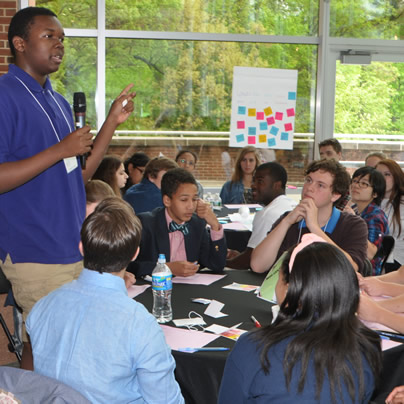
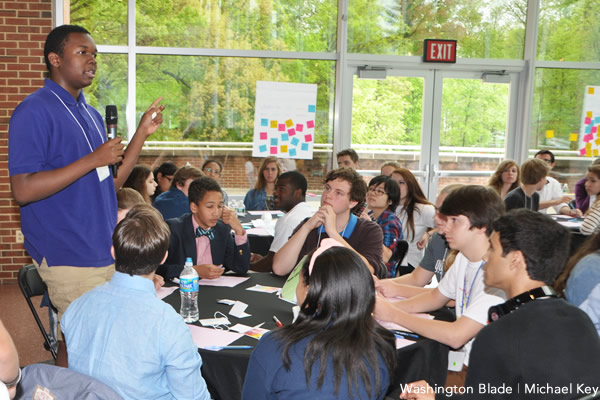
The Bullis School in Potomac hosted the first annual GSA Student Summit this week. (Washington Blade photo by Michael Key)
At least 130 students from 17 independent, private high schools and middle schools in the D.C. metro area met on Tuesday morning in what was billed as the region’s first annual Gay-Straight Alliance (GSA) Student Summit.
The event took place on the campus of the Bullis School in Potomac, Md., whose GSA group organized and hosted the gathering, according Bullis students and administrators.
“We just started the GSA this year, so I’m really proud of everybody who has been involved with this,” said Bullis 10th grader Sarah Holliday, who helped organize the summit.
“And seeing everybody come out here today is really heart-warming – that everybody still cares about this and wants to make a difference,” she said.
The New York-based Gay, Lesbian & Straight Education Network (GLSEN), which keeps track of and provides assistance to GSAs throughout the country, says 4,000 such groups have registered with GLSEN.
“Gay-Straight Alliances are student clubs that work to improve school climate for all students, regardless of sexual orientation or gender identity/expression,” a statement on the GLSEN website says.
“Found in all 50 states, the District of Columbia, Puerto Rico and U.S. military bases, GSAs have become one of the fastest-growing student clubs in the country,” the GLSEN statement says.
Among the schools represented by GSA members at Monday’s summit were Sidwell Friends School, Georgetown Day School, St. Albans School, National Cathedral School, and Edmund Burke School – all in D.C.
Others included Potomac School in McLean; St. Stephens and St. Agnes Schools in Alexandria; Landon School in Bethesda; and Connelly School of the Holy Child in Potomac.
The summit began with a plenary session in which Bullis Head of School Gerald Boarman welcomed both student participants and teachers and counselors that accompanied the students from their respective schools.
“It’s very important and apropos that at Bullis, where we are open in every way, embracing every individual who crosses through the hallways, that we’re hosting this event,” Boarman said.
“You are the participators,” he said. “You are the game changers. And I’m hoping you’ll take that not only as your mission but continue to do it throughout your years, not only in high school but in life.”
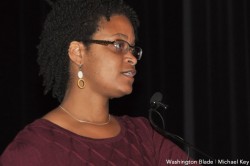
Tonia Poteat (Washington Blade photo by Michael Key)
Tonia Poteat, an assistant professor at Johns Hopkins University’s Bloomberg School of Public Health and an out lesbian, delivered the keynote speech at the summit.
Poteat, who holds a Ph.D. in public health, told of her involvement in AIDS prevention and education programs in Africa and of her work on behalf of LGBT rights causes in the U.S.
“We must challenge what is and think about what must be so that we can look at the social forces that created inequality and make a difference in them,” she said.
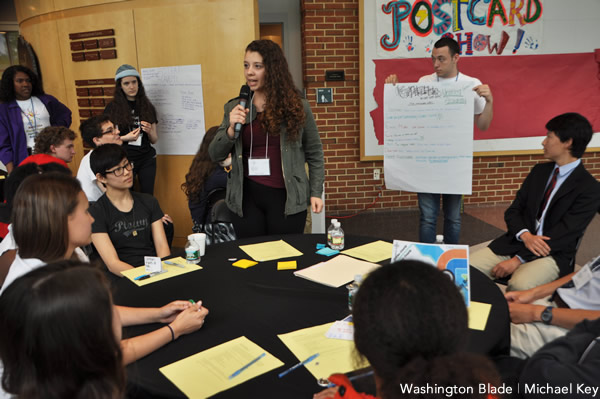
Following the plenary session the students met among themselves in two separate workshop sessions in which groups of about a dozen sat at conference tables to share ideas about operating GSAs.
Teachers, school counselors and administrators conferred separately at two conference tables to share their experiences in facilitating GSA groups at their respective schools.
Cathy Chu, youth leadership manager for SMYAL, the D.C.-based LGBT youth advocacy and service group, attended the summit as an observer. She told the gathering about SMYAL’s new initiative to help coordinate GSAs in the D.C. area.
SMYAL Executive Director Andrew Barnett said SMYAL is aware of about 77 GSAs in public schools in the D.C. metro area.
In interviews at the conclusion of the summit, nearly all of the students who spoke with the Blade said their respective schools were generally supportive of the school’s GSA.
Several of the students said their schools welcomed the annual GSA-initiated “Day of Silence” in which LGBT students and their straight allies remain silent in school and in all classes. The silence is intended to draw attention to anti-LGBT bullying and violence, which organizers say has had devastating effects on those targeted for such behavior.
“I think Bullis is a great GSA environment,” said Sean Watkinson, a Bullis senior. “The GSA has a huge impact on the school. We do a lot with the Day of Silence and there is just a lot of talk about it and we have a lot of support from the school as a whole.”
Some of the students said members of their school GSAs or other similar groups remain cautious about identifying themselves as gay.
Ian Dabney of Landon School of Bethesda said that school has a group called Ally Council, which has no “set member list” but tries to accomplish the same goals as a GSA.
“We don’t have meetings very often,” he said. “But we’re trying to get it going more often and get more people involved in it.”
Fellow Landon student Bobby Bolen, a freshman, said the Ally Council was intended to be “less structured than a GSA to make it less uncomfortable.”
Added Bolen, “You can go if you’re just an ally or if you’re gay – either one. It doesn’t make you choose. The term GSA makes some kids uncomfortable.”
When asked what the gay-straight breakdown was among GSA members at Bullis, junior Rayna Tyson said the group prefers not to press students into making those distinctions.
“No, especially when we have our meetings and we’re all getting together we don’t distinguish between who are the allies and like who is gay – like raise your hand if you’re gay?” she said.
“I think it is really about coming together and everyone being treated equally no matter what. We don’t have to put it out there,” she said. “It’s just great that people are here today who are gay, straight – it doesn’t matter. They are supportive and that’s what matters.”
(Washington Blade photo by Michael Key)



Rehoboth Beach
HISTORIC: Susan Stewart elected Rehoboth’s first out mayor
Thanks LGBTQ supporters and vows to protect city’s small town charm
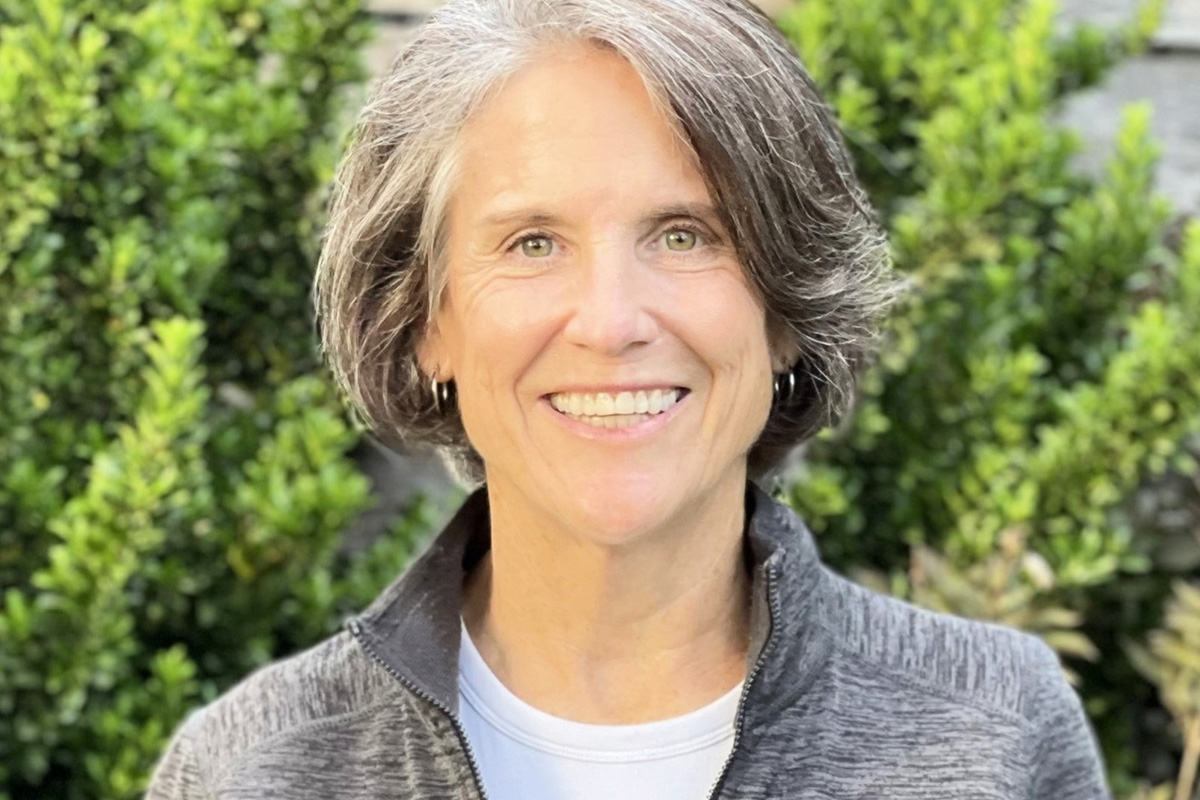
Residents of Rehoboth Beach elected City Commissioner Susan Stewart with 61% of the vote on Aug. 8, making her the city’s first openly gay mayor.
Stewart beat fellow commissioners Craig Their and Suzanne Goode in the race, as well as newcomer Jake Raak.
The final mayoral vote results were:
- Susan Stewart: 632
- Craig Their: 203
- Suzanne Goode: 177
- William “Jake” Raak: 23
“I’m very grateful because the LGBTQ+ community not only voted for me, but also supported me,” said Stewart.
Stewart said that she is particularly grateful for the support she received on social media from members of the LGBTQ+ community.
“I’ve had incredible support,” said Stewart.
Stewart said that her campaign showed her just how much residents of Rehoboth are engaged and care about the city.
“They really want to see what’s best for the community,” said Stewart.
Stewart spoke about the master planning initiative she has been working on as a commissioner, which she plans to continue as mayor.
“We’ve undertaken rewriting the commercial zoning code, and that’s foundational to the next step of the initiative,” said Stewart.
She said that she was proud of the results of charette week that was held last month where residents and business owners had the opportunity to speak with hired urban planners to give feedback for a zoning code update.
Stewart said that Rehoboth is at a tipping point as the city must find a way to balance the growth of the commercial district while improving the quality of life for residents.
“I don’t believe there needs to be tension between the business community and the residential experience,” said Stewart.
“I’m excited about a new master plan because we have a couple hotels coming, and we also have Clear Space Theatre looking for a new home, and we’re working with them,” said Stewart. “We want businesses to stay here.”
Stewart also said that she aims to embrace the concept of a ‘15-minute city,’ making the city much more accessible in terms of transportation in the downtown area for residents.
“The goal is to protect the small town charm and natural beauty of Rehoboth,” said Stewart. “I want to keep the momentum going.”
The Blade asked Stewart about any concerns she might have working with Commissioner Goode, whom she has criticized for sending inappropriate and offensive emails to city staff. Goode finished a distant third in the mayoral race and her husband fell short in his bid for a Commissioner’s seat. In that race, Jeffrey Goode received 239 votes; Patrick Gossett, who’s gay, received 813 votes and Mark Saunders 852. Saunders and Gossett will be sworn in next month.
“I’m really eager to move past this issue with Commissioner Goode,” said Stewart.
She said that she’s heard ‘loud and clear’ from the city that they want to move past this situation as best as they can while Goode remains in her seat as commissioner.
“There are no mechanisms for us to remove a sitting commissioner. Our laws don’t allow it,” said Stewart.
Stewart clarified that she has always focused on Goode’s behavior toward city staff.
“One thing I feel really passionate about is that the city employees have to know that they are heard. They are real people with real jobs, real professional reputations, and they’ve been harmed,” said Stewart.
The Blade also asked if Stewart had made a final decision on whom she plans to nominate to fill her Commissioner seat.
“I’m considering who to appoint and I have not made any final decisions,” said Stewart.
She noted that, as mayor, she only has the power to nominate a candidate and that the board of commissioners will have the final vote on whom to appoint to the board.
Stewart shared that she has received interest from a number of people and finds that to be a good sign.
“I think that’s a great sign because people want to serve. I’m eager to have someone in that seat who’s smart and has the best interests of the city,” said Stewart.
Stewart will be sworn in during the Board of Commissioners meeting on Sept. 18.
District of Columbia
D.C.’s Mary’s House For Older Adults names new executive director
Charlene Leach to succeed Imani Woody as leader of LGBTQ-supportive seniors home
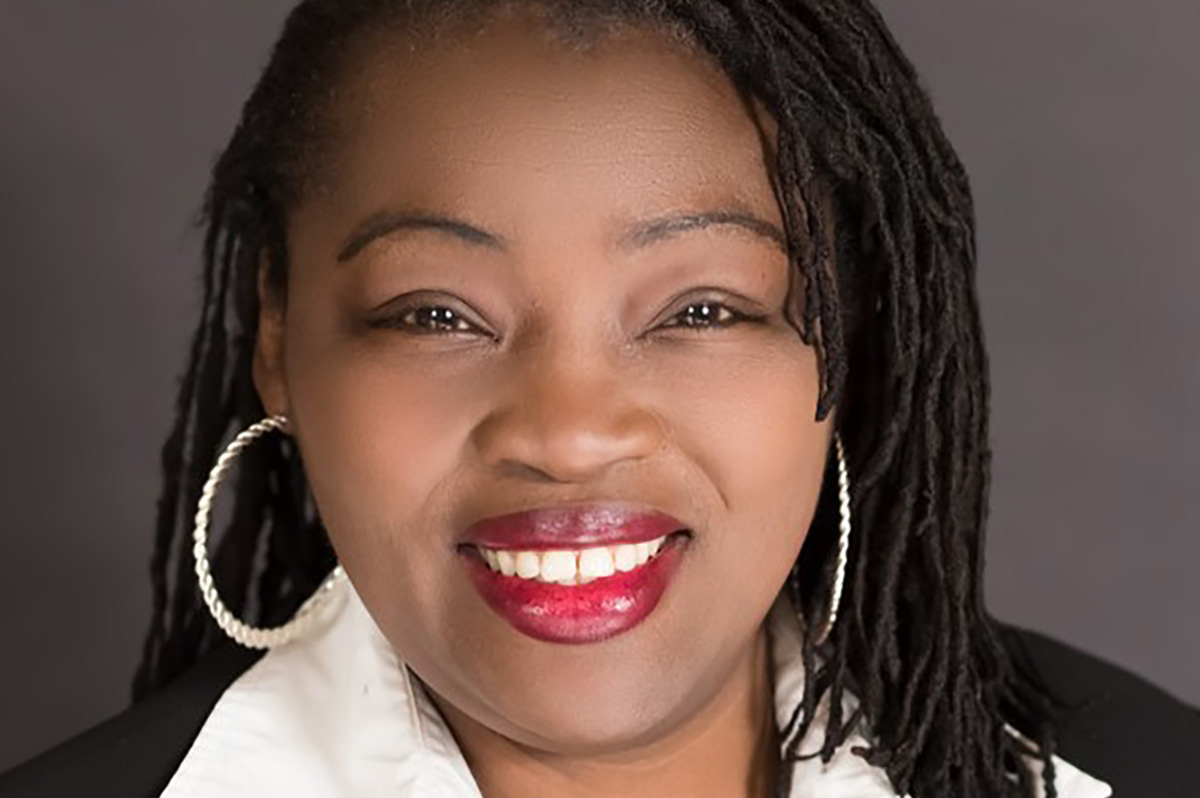
The board of directors of Mary’s House for Older Adults, the D.C.-based home dedicated to providing affordable housing for LGBTQ seniors, has announced it has named longtime nonprofit organization leader A. Charlene Leach as its new executive director.
Leach, who is now serving in the executive director’s position, is succeeding Dr. Imani Woody, the Mary’s House founding president and CEO, who announced her retirement from her official leadership role at Mary’s House on July 7.
Woody, who holds a PhD in Human Services, is credited with playing the lead role over many years in arranging both city and private funding needed to construct and operate the Mary’s House three-story building located at 401 Anacostia Road, S.E., in the city’s Fort DuPont neighborhood.
“With over three decades of nonprofit experience and 15 years serving as an executive director, Charlene brings a wealth of knowledge in organizational leadership, program development, and community engagement,” the Mary’s House board says in a statement.
“Her proven track record of building impactful programs and leading mission-driven organizations makes her uniquely suited to guide Mary’s House into its next phase of growth,” the statement continues. “Charlene is deeply aligned with the mission of Mary’s House and is committed to advancing its work to provide safe, inclusive housing and supportive services for LGBTQ+ older adults,” it says. “Under her leadership, the organization will continue to expand its impact while remaining grounded in the values that define our community.”
Leach’s LinkedIn page shows she has most recently served since 2022 as executive director of the African American AIDS Task Force in Minneapolis. Prior to that, it shows she served as executive director of the Fredericksburg Area Health and Support Services organization in Fredericksburg, Va., and before that as director of development for the D.C.-Baltimore area Women’s Collective.
Her LinkedIn page says she has been involved with Mary’s House as a volunteer and grant writer since 2016.
The newly built and enlarged Mary’s House, which opened in March 2025, with a grand opening ceremony held in May 2025 attended by D.C. Mayor Muriel Bowser, includes 15 single-occupancy residential apartments and more than 5,000 square feet of shared communal living space.
An earlier statement released by the Mary’s House board announcing Woody’s retirement said Woody would continue to be involved with the organization as a member of the board. The earlier statement and board’s more recent statement on July 29 announcing Leach’s appointment as executive director did not say whether the board plans to name someone else as president and CEO, the title that Woody held before her retirement. But the latest statement says Leach will be running Mary’s House’s day-to-day operations as Woody did.
Virginia
Doug Ollivant to face Eugene Vindman in Va. 7th Congressional District
Republican defeated challengers in Tuesday’s primary

Republican Doug Ollivant will face off against incumbent U.S. Rep. Eugene Vindman (D-Va.) in Virginia’s 7th Congressional District.
Ollivant defeated his Republican opponents in Tuesday’s primary. Vindman ran unopposed.
Vindman in 2024 ran to succeed then-Congresswoman Abigail Spanberger in the U.S. House of Representatives after she ran for governor. Spanberger succeeded Republican Gov. Glenn Youngkin in 2025.
U.S. Sen. Mark Warner (D-Va.) on Tuesday easily won his primary. All other Democratic incumbent members of Congress from Northern Virginia also won their respective primaries.

2 former NBA players launch cheap anti-trans stunt to exploit WNBA rules

Same-sex couples challenges India income tax law

HISTORIC: Susan Stewart elected Rehoboth’s first out mayor

Todd Blanche’s record on LGBTQ issues comes under scrutiny as he takes over DOJ

Don’t miss summer productions at Clear Space in Rehoboth Beach

Calendar: August 7-13

Greg Araki still wants your sex

Insured on paper, excluded in practice

Mr. Henry’s to host 60th anniversary party