Local
Butts out in the cold as Va. gay bar goes smoke free
There was fresh air, fresh faces and perhaps not quite so many raspy-voiced karaoke songs at Freddie’s Beach Bar & Restaurant last week as Virginia went smoke free.
Business hasn’t declined since the Dec. 1 changeover, and some patrons even said they were enticed back or came for the first time as a result of the smoking ban.
“It’s much more pleasant inside,” said Tom, a Crystal City man who declined to give his last name. A smoker, he has a non-smoking partner. The pair shuffled back and forth between the warmer entrance patio and the cold of winter’s first snow outside.
“I support the ban,” he said. “I’ve only lived in Virginia for three years. Before that I lived in New York City. They had the ban. Before that, Boston. They had the ban. It’s an incentive to smoke less.”
D.C. and Maryland banned smoking in bars and restaurants in 2006 and 2008, respectively. Freddie’s was the last remaining gay bar in the metro area to allow smoking.
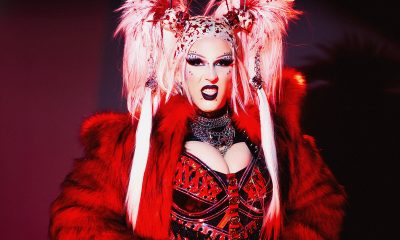
Not everyone at Freddie’s supports the ban. Ophelia Bottoms, Freddie’s Saturday night DJ and drag host reserved her anger for the Virginian government.
“It was forced on us,” she said. “I think it’s funny that we’re the tobacco state and you can’t smoke inside. I perform in the city and Maryland, this was the only place left to perform where you could still smoke.”
“Now it’s cold outside — really cold. When I’m not in drag it’s fine, but when it’s raining or snowing, it is not the best thing to go outside.”
On the first night of the ban, it rained, Bottoms said, so five people were forced to huddle in the doorway while people were trying to get into the venue.
Vince, a former Freddie’s employee who declined to provide his last name, said he enjoyed being able to smoke while he worked.
“I understand that non-smokers want to go somewhere that is smoke free, but as a smoker, we want somewhere that has a balcony or a patio with a roof,” he said. “I love Freddie’s, but I want to go somewhere that has a smoking area.”
Freddie Lutz, the establishment’s eponymous owner, said he’d have to check with the Health Department on what changes could be made to accommodate the displaced smokers.
“I have a lot of smoking clientele, and I’ve grown very fond of them over the years,” he said. “They’re not bad people, they just smoke. I really appreciate all of them and they’ve been loyal to me, faithful loyal customers.”
Returning that loyalty was “a work in progress” he said, beginning with small changes like moving ashtrays outside.
“There was a lot of that sort of talk [about a smoking deck] and the smokers were trying to think of ways we could get around it, we do the patio or something like that, but we really wanted to try this cold turkey.”
Virginia law would not permit Freddie’s former non-smoking patio to be converted to a smoking area as it is currently fitted, because of the flaps.
“If we do that, the flaps would have to be open. It could get cold. We could have heaters on, too, but that would be pretty costly,” Lutz said. It would also lose functionality as additional seating, he noted, due to the exposure.
Despite the complications, Lutz said he expected to see many new customers as a result of the changeover.
“I had a lot of people come to me and say, ‘We would go to your place or we’d go to your place more often but we just can’t stand the smoke.’ I think we’re going to get a lot of those people coming now, which is a great thing.”
Lutz said the smokers he talked to had accepted the change.
“Anyone would admit that it was an inevitability, it was going to happen. I don’t think we’re going to lose the smokers because where can they go? They can’t go to D.C.; they can’t go to Maryland.
“I’m an ex-smoker myself. I swore to myself I wouldn’t turn into one of those bitchy ex-smokers. I can relate and feel for the smokers and it’s unfortunate that it’s in the dead of winter. I know it’s difficult for them.”
Freddie’s manager Ray Martin confirmed that bar receipts were unchanged this week.
“For every customer that is maybe staying home and smoking now, more customers are coming out,” he said.
“Personally, I’m very pleased. My smoking has been cut down to a third of what it used to be. Every smoker out there really wishes they could quit.”
Customers who can’t stand to abandon either Freddie’s or their cigarettes could find hope in the bar owner’s plans to open another Freddie’s in another city, particularly in Florida.
“I’m down in Fort Lauderdale looking for a bar,” he said. “It is still smoking down here, interestingly enough. Freddie’s has been a smoking bar all this time so it wouldn’t bother me.
“I was actually surprised — pleasantly surprised — that Virginia did this. I thought they’d be the absolute last because they’re such a tobacco state, so now if we could just get them to legalize gay marriage, we’d be set.”


District of Columbia
D.C. Pride flag raising ceremony set for June 1
Mayor, council members to participate
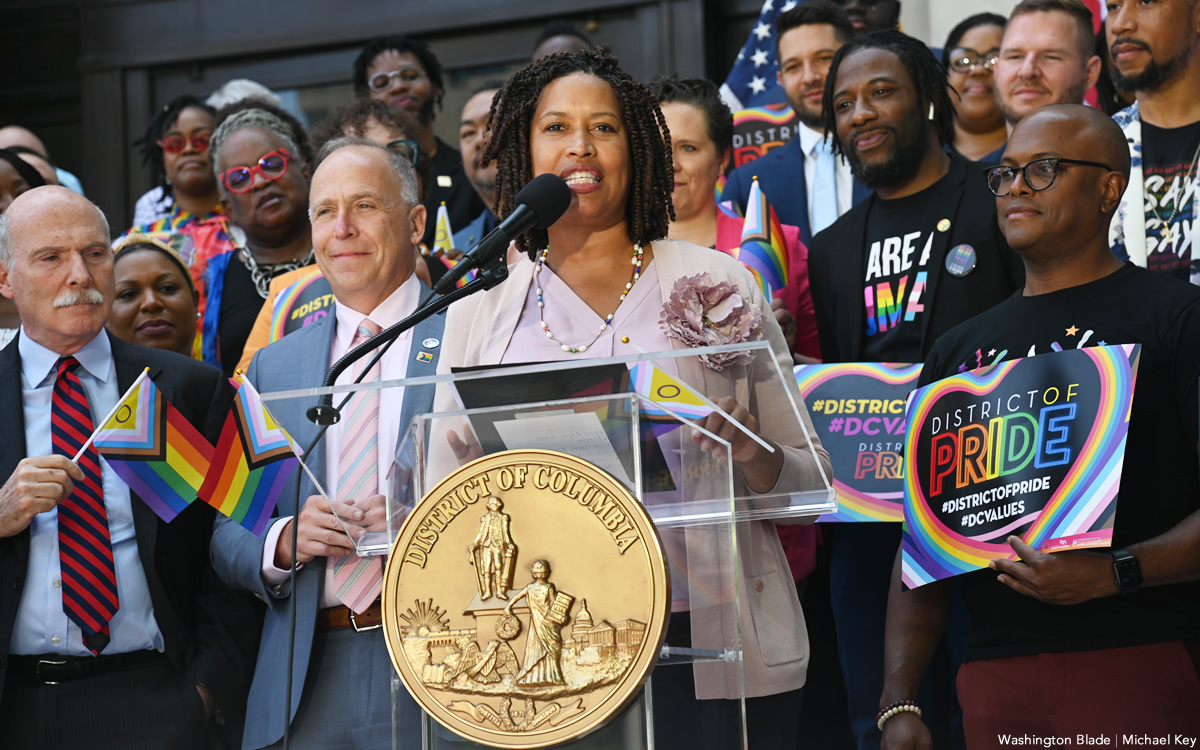
D.C. Mayor Muriel Bowser’s Office of LGBTQ Affairs is inviting the LGBTQ community and friends to attend the city’s annual Pride flag raising ceremony scheduled for 4 p.m. Monday, June 1, outside the John Wilson Building that serves as the D.C. City Hall.
Like in prior years, members of the D.C. Council and officials with the Office of LGBTQ Affairs were expected to join Bowser in delivering remarks on the front entrance steps at the Wilson Building before raising the Pride flag atop one of the tall flagpoles next to the building’s entrance.
Gaby Vincent, a spokesperson for the LGBTQ Affairs Office, said attendees of the flag raising ceremony will be invited to attend a reception immediately following the ceremony in the main lobby of the Wilson Building, which is located on Pennsylvania Avenue at 14th Street, N.W.
She said the reception will feature a DJ, dancing, and refreshments provided by the D.C. LGBTQ bar and café Spark Social House.
Vincent said the flag raising event will also mark the 20th anniversary of the opening of the D.C. Mayor’s Office of LGBTQ Affairs.
In its official announcement of the flag raising event the LGBTQ Affairs Office also announced it is hosting the 7th annual District of Pride Showcase event to be held Friday, June 17, at 7 p.m. at the Lincoln Theater.
The announcement says LGBTQ community members, families, and allies are also invited to walk with Bowser in the Capital Pride Parade scheduled for Saturday, June 20. It says the mayor’s parade contingent will assemble at 2 p.m. at the parade’s starting location at 14th and U Streets, N.W.
“As we also celebrate the 20th anniversary of the Mayor’s Office of LGBTQ Affairs, we invite residents, community members, families and allies to join us throughout June for moments of pride, connection, visibility, and joy,” the announcement says.
District of Columbia
‘Queer Love’ campaign launched to address domestic violence
D.C. event set for LGBTQ+ Domestic Violence Awareness Day on May 28
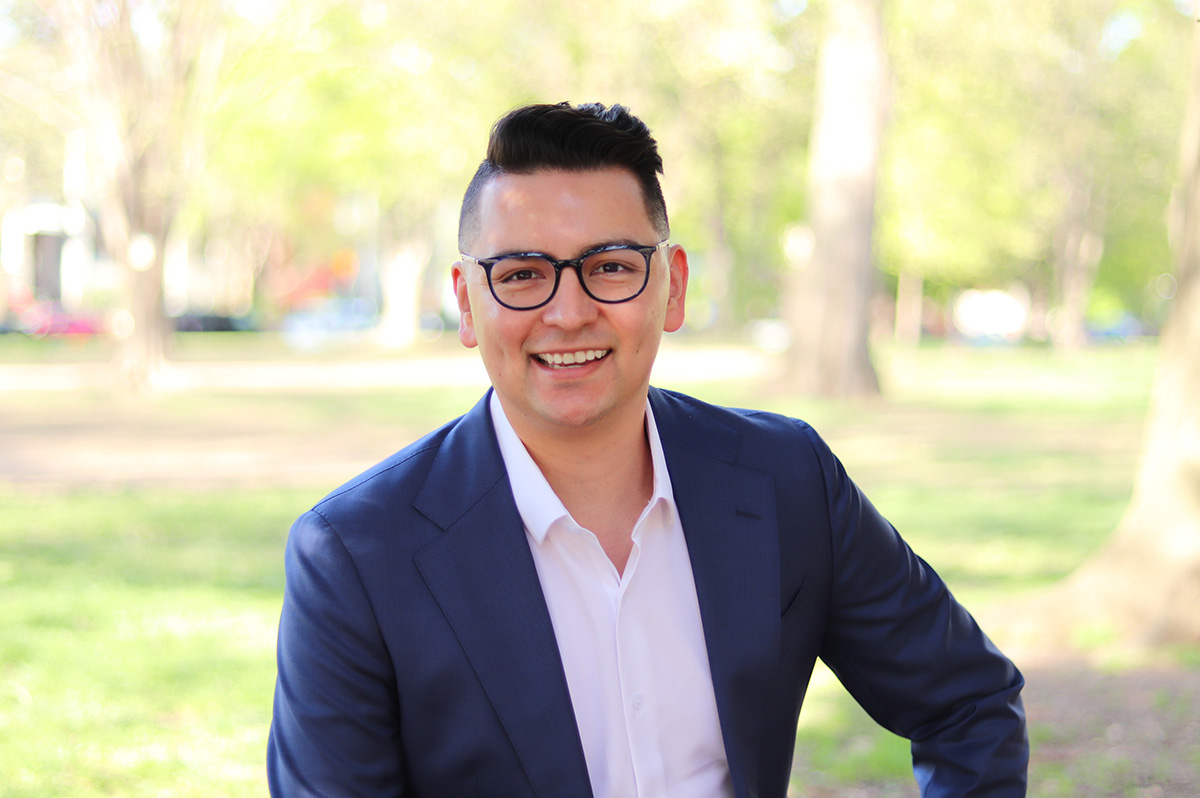
The D.C.-based Wanda Alston Foundation, which provides housing and support services for homeless LGBTQ youth, announced earlier this month that it has joined partner organizations to launch a Queer Love Shouldn’t Hurt campaign aimed at addressing domestic violence within the LGBTQ community.
In a May 18 statement, the Alston Foundation said the campaign involves a public awareness initiative leading up to LGBTQ+ Domestic Violence Awareness Day scheduled for May 28.
“Domestic and family violence in LGBTQ+ communities is real and too often invisible,” Cesar Toledo, the Alston Foundation’s executive director, said in the statement. “As a community, we do not talk about it enough, and that silence can leave survivors feeling isolated and alone,” he said. “We must break that silence.”
He added that culturally competent care for those impacted by domestic violence is available through a newly launched website, queerlove.org, “where people can safely access vital resources, educational toolkits, and support networks they need on their healing journey.”
The website announces one of the project’s first events, a Queer Love Community Social, was scheduled for Thursday, May 28, from 6-8 p.m. at the D.C. LGBTQ+ Community Center at 1827 Wiltberger St., N.W.
“Join us this LGBT+ Domestic Violence Awareness Day for a community social dedicated to visibility and survivor resilience,” the website statement says. “Let’s gather to strengthen our bonds, honor the path to healing, and share free resources,” it says of the May 28 event.
The website also announces a June 1 workshop called Empowering Survivors of LGBTQ+ Intimate Partner Violence, which it says will be presented by Jesse Wedell, an official with the D.C. LGBT+ Counseling Collaborative. The website provides an online form to register for the workshop upon which its location would be disclosed.
It identifies the partner organizations working with the Alston Foundation on the Queer Love Public Awareness Campaign as the LGBT+ Counseling Collaborative, Whitman-Walker Health, the D.C. LGBTQ+ Community Center, and Equality Chamber.
The resources and information provided by the project can be accessed at www.queerlove.org.
District of Columbia
Man accused of threatening to shoot D.C. bar employee after making anti-gay slurs
May 24 incident took place near Black Pride events on U Street
D.C. police on Sunday, May 24, at around 4:20 p.m. arrested a Maryland man for allegedly threatening to shoot an employee while using anti-gay slurs at Ben’s Next Door restaurant and bar at 1211 U St., N.W.
According to a statement released by police and a police incident report, the arrested man, identified as Delonte Fraley, 32, of Accokeek, Md., made the threats after the employee told a bartender not to serve the man alcohol.
“The suspect overheard the employee and threatened to shoot the employee and used homophobic slurs against the employee,” the police statement says. “When the employee left the restaurant for the day, the suspect was standing near the employee’s vehicle,” it says.
“The employee returned to the restaurant and called the police,” the statement continues. “The suspect was apprehended by responding officers,” it says.
The police statement says the arresting officers charged Fraley with Felony Threats (Hate/Bias).
D.C. Superior Court records show prosecutors with the Office of the U.S. Attorney for D.C., which prosecutes D.C. criminal cases, escalated the charge to Threatening to Injure or Kidnap a Person (Bias-Related Hate Crime).
The incident occurred during Memorial Day weekend when thousands of visitors and D.C. area LGBTQ advocates and supporters were attending D.C. Black Pride events held in locations across the city, including Black Pride parties hosted by LGBTQ bars in the U Street entertainment area near Ben’s Next Door.
Among the nearby LGBTQ bars hosting D.C. Black Pride events were Nellie’s Sports Bar and Thurst Lounge. Ben’s Next Door is located next to the popular longtime U Street eatery Ben’s Chili Bowl.
Court records show that Judge Robert R. Rigsby at a May 25 presentment hearing released Fraley on personal recognizance with a stay-away order — the details of which were not publicly disclosed pending a June 4 preliminary hearing.
A more detailed arrest affidavit filed in court by D.C. police says Fraley allegedly confronted the employee at Ben’s Next Door with anti-gay slurs on the day prior to his arrest.
“The complainant told the defendant that because he used homophobic slurs towards himself previously on May 23, 2026, and his hostess, as well as making threats to the complainant and calling him a faggot, he was unable to stay in the establishment,” the affidavit states.
It adds, “The defendant became irate stating, ‘I know where your Tesla is at. See me outside faggot, I will slap your ass’ and ‘I will shoot your ass.’” The affidavit says the complainant confirmed to police the Tesla referred to by Fraley was his vehicle. It says as the victim walked toward his car after getting off work, he saw Fraley standing directly in front of the car.
“The complainant stated he felt unsafe while the defendant was standing in front of his vehicle because he felt the defendant was capable of carrying out those threats,” says the affidavit. It says the victim then decided to return to the restaurant and call police without the defendant having seen him.
“The defendant was placed under arrest for Felony Threats Hate/Bias and was transported to the Third District Station for processing,” the affidavit concludes.
It couldn’t immediately be determined whether the victim identifies as LGBTQ or whether any of the Ben’s Next Door patrons had been involved with D.C. Black Pride.
“Established in 2008, Ben’s Next Door is a family-owned and operated restaurant and bar on U Street, Northwest in Washington, D.C.,” a statement on its website says. “As a Black-owned establishment, it’s our goal to deliver a warm, welcoming, familiar, and communal vibe to all guests,” the statement says.

D.C. Pride flag raising ceremony set for June 1

Still marching: Rev. Troy Perry and the ongoing fight for liberation

Introducing Next-Generation Assisted Living & Memory Support.

Cedric Neal on his juicy narrator role in ‘Pippin’

Dual endorsement for Independent Council-at-large: Patterson or Crawford

PHOTOS: Helen Hayes Awards

PHOTOS: Black Pride Pageant and Unity Ball

PHOTOS: Black Pride Opening Reception

From Media Matters to massive queer ragers: the rise of Tara Dikhof