Local
Obstacles in the aisle
Local couple overcomes adversity, enters Crate & Barrel wedding contest
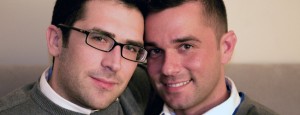
Washington residents Jonathan Howard (left) and Gregory Jones are hoping to strike it big in a Crate & Barrel-sponsored wedding contest. (Photos by Heather Lyons; courtesy of Howard and Jones)
It began as little more than a lark, but a Washington gay couple entered a Crate & Barrel wedding contest and have been shocked to find friends and allies have catapulted them to the top of a huge list of nearly 200 couples hoping to nab the top prize of a $100,000 company-sponsored wedding.
Jonathan Howard, who’s 29 and just 11 days younger than his partner, Gregory Jones, discovered the contest in a Crate & Barrel e-mail. They moved to D.C. together in 2008 and got engaged in October when Howard popped the question. They’re planning to take advantage of the District’s new same-sex marriage law, which went into effect this week, but having an extra $100,000 would obviously sweeten the deal.
Howard and Jones were in second place as of press time with 5,906 votes. They’d previously been in the lead. A Chicago police officer who was paralyzed in the line of duty, Densey Cole, is in first place with Mary Cole with 10,677 votes, but they may be disqualified — they’re already married, having wed in the hospital when he awoke from a coma following the May 2009 accident. They’re hoping for an ocean-side ceremony to renew their vows. The rules state couples entering the contest must be engaged.
Howard says it would be amazing if they win.
“It would be great for us but more than that for the community to really say, ‘Hey, we’re a normal couple and we’re getting married and it doesn’t matter if it’s two men,'” Howard says. “This company is supporting us and it’s a great story, it’s a great step for marriage equality but in a completely different venue, not political at all. I would be shocked and amazed and overwhelmed and overjoyed and it would be just great for everybody involved.”
So how did these two average Joes convince nearly 6,000 people to vote for them? A lot of it stems from a tragedy they only hinted at in their 100-word online bio. Howard made a lot of friends and contacts in the gay community following an August 2008 hate crime attack. He and three friends were in Boston, where he went to college and lived at the time, when it happened.
“We were walking home and a group of four guys pulled up to us in a car,” Howard says. “I turned around to see what the commotion was and the last thing I remember is hearing, ‘Die, faggot, die,’ as they stomped my head into the pavement.”
Howard says he’s lucky he wasn’t seriously hurt in the attack. His attacker, Fabio Brandao, eventually pleaded guilty but received a two-year suspended sentence that let him get by without any jail time, an outrage, Howard says.
He met hundreds of gay activists and friends after the attack and was friends with many of them on Facebook. When they heard he and Jones were soliciting votes, they rallied in support. The Gay & Lesbian Alliance Against Defamation wrote about the couple spurring more votes and Jones’ brother’s fiance in Chicago, Katie Lindner, went on a mini-crusade of sorts helping them get the word out. She’s working on a graduate degree in Chicago on new media and says the Facebook phenomenon is fascinating to observe.
“People kind of think of [Facebook] as this thing that doesn’t seem important, that wastes your time and fills your day, but it gives me chills to see how much support there’s been for them,” Lindner says. “It’s bigger than any one individual could achieve.”
“I think people see our story as a nightmare with a fairy tale ending,” Jones says. “We went through this horrible thing together and it made us better, stronger people and brought us closer to each other.”
Though the votes are important, it will ultimately be up to a panel of judges to decide who wins. Several prizewinners will be selected from among the top 50 vote getters by Crate & Barrel employees.
Is it realistic to hope the company might select a gay couple for one of the top prizes, even the $100,000 grand prize? Vickie Lang, manager of public relations and community affairs for Crate & Barrel, says it’s certainly possible and that the gay-friendly company is open to it.
“Ultimately our role is to be a resource to any couple celebrating a wedding, a commitment ceremony or any of that,” Lang says. “As part of that, we’re celebrating inclusiveness and we’re excited about that. … We’re looking for couples who really reflect the Crate & Barrel lifestyle, whether they’re same-sex couples or heterosexual couples.”
And just what is the “lifestyle”? Lang mentions “Timeless, classic, high quality, clean, vibrant and comfortable — things for a warm, approachable lifestyle.”
There’s been an ugly side to the contest, though. Anonymous Chicago blogger Detective Shaved Longcock, who knows and supports the Coles, wrote in comments that have since been removed from his blog: “A gay couple is giving Densey and Mary Cole a run for their money? Let’s really get the vote out for one of our own. … I am not politically correct and never will be. Period! I am not going to let this fruit loop couple beat one of our own!”
That posting inspired a litany of anti-gay anonymous posts against Howard and Jones including, “these are all guys who can’t please a woman,” “faggots deserve to die,” “Homos are as sick as child molesters and rapists,” “I hope they all catch HIV,” and more.
But there’s also been an upside. Jones says he’s heard from people who harassed him with anti-gay slurs in school who’ve now voted for he and Howard to win. One even apologized.
“I can’t even put it into words,” Jones says. “It’s a warm and amazing feeling.”
A handful of other same-sex couples are also in the contest. One couple, Ed and Erwin, who have two adopted sons, are facing Erwin’s terminal lung cancer and hope to wed before he dies. They have more than 1,000 votes.
If they win, Howard and Jones would like to wed on their anniversary — Oct. 10 (10/10/10). If not, they’ll likely bump to April 2011.
Regardless of how it turns out, they’re happy to have found each other and thrilled that they can marry in Washington.
“It is so affirming that this is our nation’s capital and this happening right here around people making our rights, laws and liberties,” Jones says. “It also makes a huge statement that Congress had the ability to veto this and they did not. It sends a really positive message that this needs to be accepted and that we are equal and deserve every right that every other couple in this country deserves.”
To vote, go to www.ultimateweddingcontest.com and register an e-mail address. Howard and Jones are couple number 22682.




District of Columbia
David Archuleta, Monroe Alise named D.C. Pride parade marshals
Honorees ‘live authentically’ and ‘power of sharing your story’

The Capital Pride Alliance has announced that David Archuleta and Monroe Alise will be the grand marshals for the Pride parade on June 20.
Ryan Bos, the Capital Pride Alliance’s president, said the two were chosen for the way that they exemplify the theme “Exist. Resist. Have the Audacity!”
Archuleta is the “American Idol” season 7 runner-up and a strong supporter of the LGBTQ community.
He grew up religious and has been clear about his struggle to reconcile his faith, identity, and self-expression. In 2021, he publicly came out and has since been a major voice for LGBTQ visibility and acceptance. This year, Archuleta published the memoir “Devout,” which details his lived experience as a closeted Mormon teenager.
Alise is a transgender advocate and a D.C. native.
She has appeared in the shows “P-Valley” and “The Chi.” She also grew a major online following through her social media series “I’m CLOCKABLE,” where she discusses topics such as dating, culture, and self-discovery from the perspective of a queer person.
“Together, they represent to live authentically and the power of sharing your story to create change,” Bos said in a statement.
As grand marshals, the two will kick off celebrations leading up to the parade and participate in it. Alise will join the Crack of Noon Parade Brunch from 12-3 p.m. at Viceroy Washington, alongside honorees such as D.C. Mayor Muriel Bowser.
The parade will kick off at 3 p.m. at the intersection of 14th and T Streets, N.W., before moving straight down 14th Street and ending at Pennsylvania Avenue at 7 p.m. The parade is free for anyone to watch at designated viewing areas.
More information about celebrations throughout Pride and the parade can be found at www.capitalpride.org.
District of Columbia
Hundreds of thousands expected to attend D.C. Pride events
Parade to take place on June 20
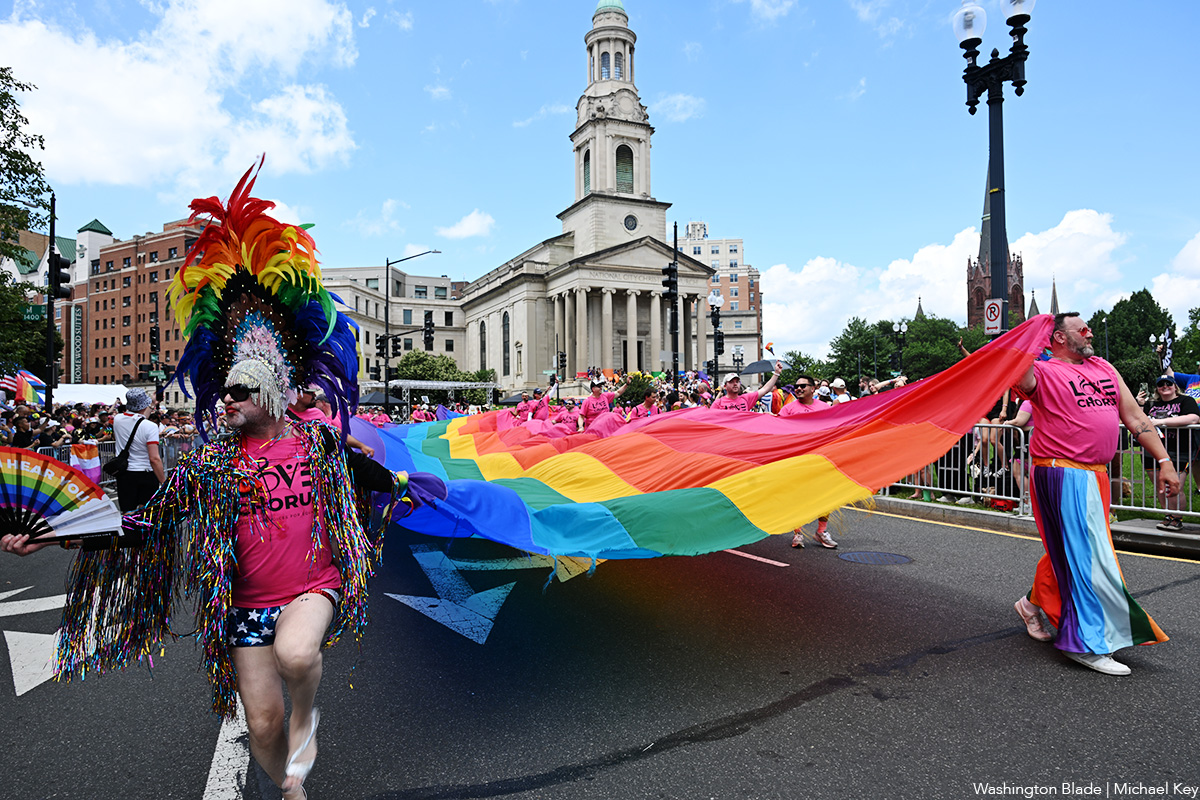
Hundreds of thousands of people are expected to attend Pride events in D.C. this month.
The Capital Pride Alliance is marking its 51st year with a full slate of events, including a parade, festival, concert, parties, and community events across the city. This year’s theme is “EXIST. RESIST. Have the Audacity!”
“Our audacity is our collective strength. Against the forces that try to diminish us, we must remain bold, courageous, visible and heard, in a world that questions our humanity and challenges our rights. Together, let’s have the audacity to live, thrive, be joyful, and proud!” Capital Pride Alliance said in a statement.
Capital Pride’s signature weekend events will center on the June 20 parade and June 21 festival and concert.
The parade and concert will not take place on the second weekend of June, as they have in the past, to avoid conflicts with America’s 250th anniversary celebration.
The parade route is expected to begin at 14th and T Streets, N.W., and end at Pennsylvania Avenue and 9th Street, N.W. Free viewing areas will be available, though reservations are required for seating at designated locations across the route.
Leading up to the parade, a family event will be hosted from 11 a.m. to 3 p.m. at Stead Park in Dupont Circle. Activities will include crafts, glitter tattoos, hair tinsel, photo ops, and an inflatable obstacle course. The event is free, but a prior reservation is required.
Crack of Noon Parade Brunch, a 21+ event featuring an all-you-can-eat buffet, will also take place earlier on June 20 at the Viceroy Washington at 1430 Rhode Island Ave., N.W.
The 17th Street Block Party, presented by Absolut, will also take place from noon to 10 p.m. on 17th Street in Dupont Circle. It will feature local food, an adult beverage garden, and other events.
On June 21, the Capital Pride Festival will run from noon to 10 p.m. on Pennsylvania Avenue The festival includes the Capital Pride Concert at Capitol Stage. The lineup of artists for the festival concert includes Maren Morris, queer rapper Leikeli47, Lisa Lisa, “Heated Rivalry” DJ Harrison, Tracy Young, and Myki Meeks.
“In a moment when LGBTQ+ people are being challenged across the country, the Capital Pride Concert is a space where our community is fully seen and heard,” said Capital Pride Alliance President Ryan Bos in a news release regarding the concert lineup.
Tickets to the concert are free, with exclusive pit and VIP experiences available for purchase.
The night will end with a “Capitol” Sunset Dance Party from 8-10 p.m., directly following the concert. It is available to all ages.
Other stages for concerts include the Monument and Dupont Dance Stage, with the artist lineup yet to be announced.
Three main parties will be available leading up to and during the parade: Riot!: The Official Pride Opening Party on June 19, featuring Bob the Drag Queen with a DJ set and headliner Myki Meeks. ELIX-Her on June 20 is a women-centered event at Decades and is 21+. On the same night, KINETIC: Toyland will feature headliner Alaska, “RuPaul’s Drag Race All Stars 2” winner.
Before the parade and festival weekend, community events, and celebrations will take place throughout the city.
The Washington Blade will host Pride on the Pier on June 13 from 4-9 p.m. at The Wharf. The free event will feature Pride365 Radio, a drag show with Venetian, DJ Chord, and dancing.
Capital Pride will have Night of Expression on June 10 at 7 p.m. at Busboys and Poets (14th and V streets). The event will feature an open mic and other performances.
Capital Pride Honors
Beyond its public celebrations, the Capital Pride Alliance will also recognize community leaders through its annual Capital Pride Honors program. This year’s honorees were selected based on how their work reflected the 2026 theme of Pride.
The winners were awarded at the Audacity Brunch: In Full Fuchsia, which is part of a fundraiser with Pride365, on Sunday.
Honorees included D.C. Del. Eleanor Holmes Norton, who received the Paving the Way Award; D.C. Mayor Muriel Bowser, who received the Key to Capital Pride Award; and the Heroes Award recipients Benjamin Coy, Charity Blackwell, Darryl Hamilton, Thea Kano, Kendall Martinez-Wright, and Lee Levingston Perine.
Dylan Drobish and Tyler Hack received the SaVanna Wanzer Visibility Award, while Patrick Magee and Judy Schloss were honored with the Bill Miles Award for Outstanding Volunteer Service.
Darrell Wood and Tyler Cargill received the Breaking Barriers: Community Impact Award, and Dai Nguyen received the Bernie Delia Award.
Maryland
‘Girlfriends’ wanted for murder in Silver Spring, Md.
Montgomery County police say two charged with killing mother of one of them
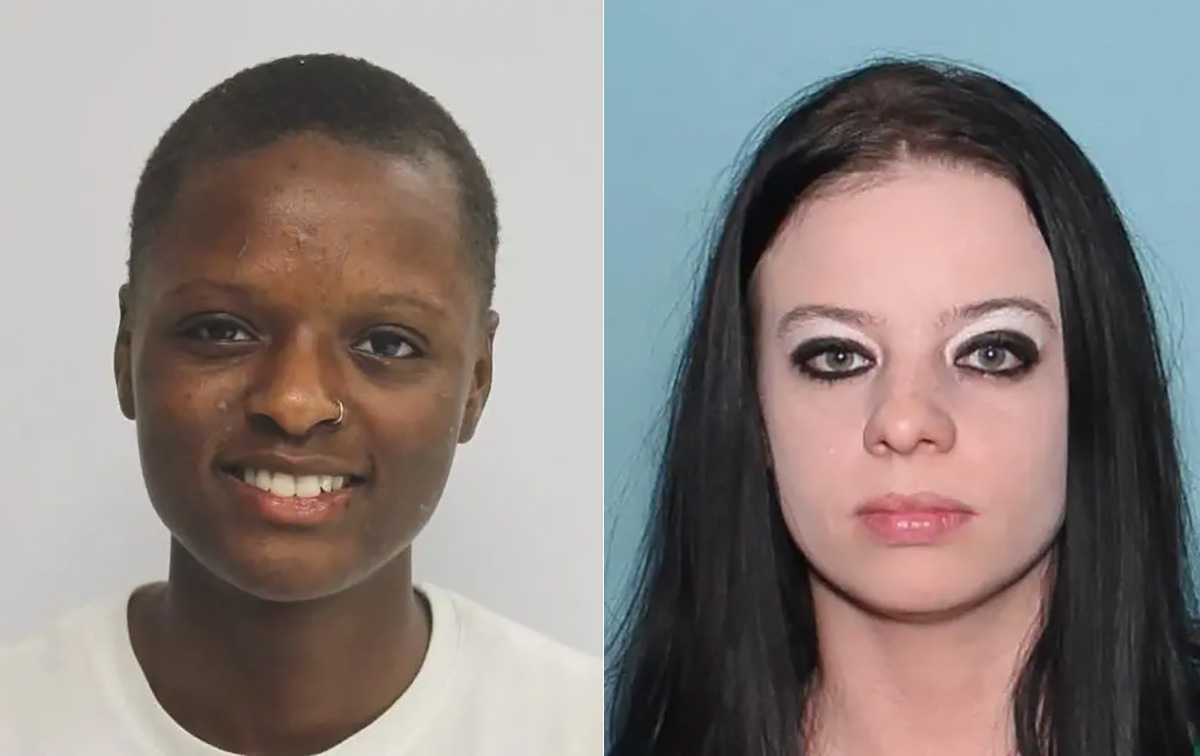
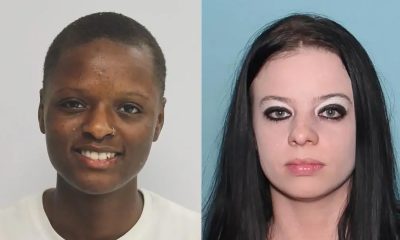
The Montgomery County, Md., Department of Police announced on June 4 that it is seeking the public’s help in locating two women, who they identify as a couple, who are charged with first-degree murder for allegedly killing the mother of one of them.
In a statement police identified the two women as Vanessa Tjongarero-Henderson of Clarksburg, Md., and her girlfriend Samantha Raebel of Phoenix, Ariz. The statement says the two are charged with the murder of Hilde Henderson, 67, the mother of Vanessa.
According to the statement, officers with the department’s 3rd District found Hilde Henderson deceased on Tuesday, May 26, 2026, at her home at the Charter House apartments in the 1300 block of Fenwick Lane in Silver Spring after being called to check on the resident’s welfare.
“Henderson was transported to the Office of the Chief Medical Examiner, where an autopsy was conducted,” the statement says. “The cause of death was ruled a homicide.”
It adds, “Through the course of the investigation, detectives identified Henderson’s daughter, Vanessa Tjongarero-Henderson and Vanessa’s girlfriend, Raeble, as the suspects.” It says detectives obtained an arrest warrant against the two women, charging both with first-degree murder.
“Anyone with information regarding the location of these suspects or this crime is asked to call 911 or to visit the Crime Solvers of Montgomery County, Md. website at crimesolversmcmd.org,” the statement says, or to call the tip line at 1-866-411-8477.
“Tips with information leading to an arrest may be eligible for a reward from $250 up to $10,000,” it says, adding that tips may remain anonymous.
A spokesperson for Montgomery County police didn’t immediately respond to a request from the Washington Blade for information not disclosed in the police statement, including the physical-medical cause of death for Hilde Henderson and whether detectives have determined a motive for the murder.

PHOTOS: Fairfax City Pride

EXCLUSIVE: Pelosi reflects on four decades of LGBTQ advocacy

D.C. prepares to party as Pride celebrations kick off Saturday

David Archuleta, Monroe Alise named D.C. Pride parade marshals