Arts & Entertainment
Calendar: Feb. 25
Concerts, exhibits, parties and more through next week
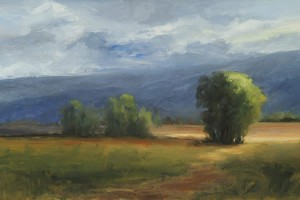
Betsy Forster's "After the Storm" is part of her exhibit, "Inspirations" at Touchstone Gallery.
Friday, Feb. 25
Beat City, a rock and roll lounge party for queer folks and their friends, is tonight from 9 p.m. to 2:30 a.m. upstairs at Chief Ike’s Mambo Room (1725 Columbia Rd., N.W.). There is no cover for this event and all attendees must be 21 or older.
Caliente Grande is tonight at Apex (1415 22nd St., N.W.) starting at 9 p.m. DJ Michael Brandon will be spinning the Latin dance party in the main hall. There is a $10 cover charge. Attendees must be 18 to enter, 21 to drink.
The D.C. Cowboys host Brodeo tonight at Remingtons (639 Pennsylvania Ave., S.E.) from 10 p.m. to 1 a.m. The party will feature country/western and disco/club music, live performances, giveaways, Jell-o shots and an auction.
DJ Chord Bezzera will be at Cobalt (1639 R St., N.W.) tonight at 10 p.m. as part of Club London. There will be free vodka drinks from 11 p.m. to midnight and attendees could win a roundtrip ticket to London.
Women in Their Twenties, a social discussion and dinner group, will be meeting tonight from 8 to 9 pm. at the D.C. Center (1318 U St., N.W.).
Lace Lounge (2214 Rhode Island Ave., N.E.) presents Social Climax tonight from 10 p.m. to 3 a.m. There is a $10 cover all night and free drinks before 11:30 p.m.
Saturday, Feb. 26
Burgundy Crescent Volunteers will be helping Food and Friends with food preparation and packing groceries today from 8 to 10 a.m. For more information, e-mail [email protected].
Lincoln Congregational Temple UCC presents “From Slavery to Freedom: An Historical Musical Perspective” performed by the Community Chorus of Washington today at 3:30 p.m. at Lincoln Congregational Temple (1701 11th St., N.W.).
Every fourth Saturday of the month, Green Lantern (1335 Green Court, N.W.) is hosting Jocks vs. Jocks from 10 p.m. to 2 a.m. Cover is $5 if wearing sports attire, $7 if not. There’s a trophy and cash prizes for the winning team.
Shift presents “Surrender. Your. Booty.” a celebration of its two year anniversary tonight at Cobalt (1639 R St., N.W.) from 10 p.m. to 3 a.m. The party will feature resident DJ MAJR and guest DJs Matt Bailer of Mixtape, Junebullet of She-Rex and Zack Rosen of Homo/Sonic. Brightest Young Things will be there judging pirate costumes and the best dressed will win two tickets to Kylie Minogue at the Patriot Center on April 30.
DJ Escape will be at Town (2009 8th St., N.W.)tonight. Music and videos downstairs will be by Wess. Drag show starts at 10:30 p.m. Doors open at 10 pm. Cover is $8 before 11 p.m. and $12 after. All attendees must be 21 or older.
Sunday, Feb. 27
Flip-Out, D.C.’s LGBT flip cup league, has its weekly games today at 5 p.m. at Cobalt (1639 R St., N.W.). For more information, visit flipoutdc.com.
Lace Lounge presents “Lyrics and Lace,” an open mic, live entertainment exhibition. Appetizers will be half off and there will be drink specials. The Coolats band will be performing an the show starts at 8 p.m. E-mail [email protected] to perform. Visit lacedc.com for more information.
The Catholic University of America presents “She Said/She Said” by Rebecca Gingrich-Jones. Tickets range from $3 to $15. For more information and to purchase tickets, visit drama.cua.edu/hartke-season.cfm.
Nellie’s (900 U St., N.W.) is hosting an Oscars watch party today starting at 5 p.m.
The D.C. Center presents “Glamour, Glitter and Gold,” its sixth annual Oscar celebration from 7 to 11:30 p.m. at Town (2009 8th St., N.W.). Tickets range from $20 for general admission to $50 for V.I.P.
Monday, Feb. 28
Bears do Yoga at Green Lantern (1335 Green Court N.W.) tonight at 6:30 p.m. Class lasts for an hour and serves as an introduction to yoga for people of all different body types and physical abilities. It’s taught by Michael Brazell. For more information, visit dccenter.org.
SAGE Metro D.C. is having its monthly meeting tonight from 7 to 8 p.m. at the D.C. Center (1318 U St., N.W.).
Tuesday, March 1
Join Burgundy Crescent Volunteers to help pack safer sex kits from 7 to 9 p.m. tonight at FUK!T’s new packing location Green Lantern, 1335 Green Ct., N.W.
Mautner Project presents SHE Circle, a wellness community by and for African-American lesbian and bisexual women, today from 6 to 7:30 p.m. at Unity Fellowship Church (502 Rhode Island Ave., N.W.). For more information and to RSVP, e-mail [email protected] or [email protected].
“A Room of Our Own,” an exhibit at Pepco Edison Place Gallery (702 8th St., N.W.) by the f11 Women’s Photography Collective opens today. The gallery is open from noon to 4 p.m. The exhibit will be on display through April 1.
Wednesday, March 2
The Tom Davaron Social Bridge Club will meet at 7:30 tonight at the Dignity Center, 721 8th St., S.E., (across from Marine Barracks) for social bridge. No partner is needed. Visit lambdabridge.com and click on “Social Bridge in Washington” for more information.
Bill Briggs and David Mariner invite executive directors of local LGBT organizations to join them for a local LGBT leader lunch today. The group will meet at the D.C. Center (1318 U St., N.W.) at noon and go to a local restaurant from there.
Touchstone Gallery (901 New York Ave., N.W.) has two exhibits opening today: “Inspiration” with paintings by Betsy Forster and “Surfaces” with paintings by Michelee Cormier. Forster paints landscapes, particularly uninhabited areas. Cormier “captures the deterioration of urban surfaces over time.” The gallery is open from 11 a.m. to 6 p.m. and the exhibits will be on display through March 27.
The D.C. Center (1318 U St., N.W.) presents a speech by Opening Horizons founders Tony and Christina Vanderveldt on polyamory, open relationships and swinging from 7 to 9 p.m.
Thursday, March 3
“Shear Madness,” a comedy whodunit, will be performed at the Kennedy Center Theater Lab (2700 F St., N.W.) at 5 and 8 p.m. “Madness” takes place in present-day Georgetown, in the Shear Madness Hair Styling Salon. Visit kennedy-center.org for more information and to purchase tickets.
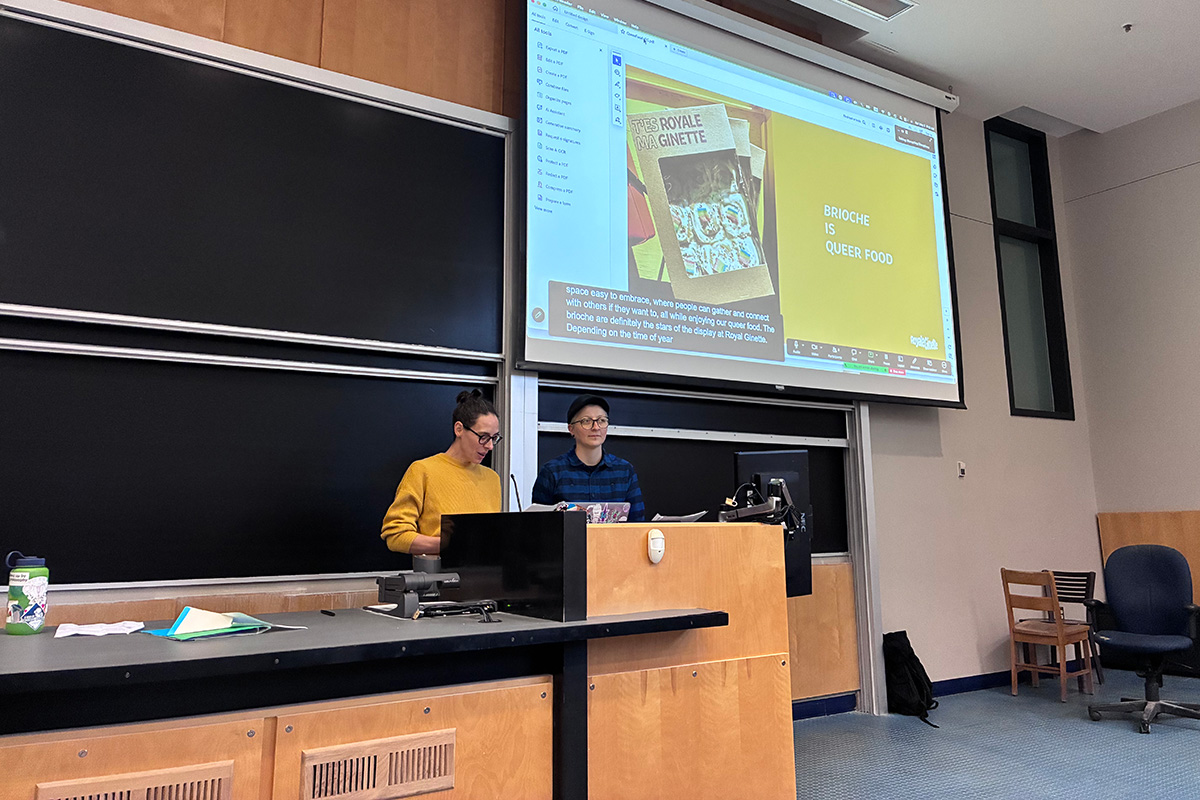
Just as humans have always had meals, queer humans, too, have enjoyed meals. Yet what is it that makes “queer food” distinct?
At the beginning of May in Montreal, the Queer Food Conference 2026 sought not to answer that question, but to further interrogate it. The conference united scholars, activists, artists, journalists, farmers, chefs, and other food industry professionals for three days of panels, workshops, discussions, and, yes, meals, in an inclusive, thoughtful, contemplative-yet-whimsical environment, taking a comprehensive view of the landscape of queer food.
The two organizers – Professor Alex Ketchum, at the Institute for Gender, Sexuality, and Feminist Studies of McGill University in Montreal, and Professor Megan Elias, Director of Food Studies & Gastronomy at Boston University – met in 2022 when Elias acted as a peer reviewer for Ketchum’s second book, “Ingredients for a Revolution,” a wide-ranging history of more than 230 feminist and lesbian-feminist restaurants, cafes, and coffeehouses from 1972 to the present in the US.
Elias, taken by the book and its exploration, invited Ketchum to speak at one of Elias’s courses, at which pastries were served and feminist bread making was baked into conversation. Elias floated the idea of co-organizing a queer food conference – and a hot 24 hours later, Ketchum said yes, with plans sketched out, from grants to topics to speakers. In parallel, the duo started to conceptualize “Queers at the Table,” a book based on their work (published last year).
The conference, the book, the research: their work is, in part, grounded in the question: What is queer food? True to queer theory, each has her own nuanced response as drivers of their research, challenging the traditional and looking beyond norms of food studies. Ketchum’s view is that it is grounded on food by and for the queer community, in specific histories, and especially in the labor behind the food. Elias posits that queer food is at the intersection of queerness and culinary studies, beyond gender norms and binaries, back to the societal basics of queer food as part of queer humans always having meals. “Queer food destabilizes assumptions about food, gender and sexuality, making space for a wider range of relationships to food,” she says.
The academics’ professed enthusiasm, however, rarely reached beyond small circles.
“I regularly attended big food studies conferences, but almost never saw presentations about gender identity beyond women’s roles,” says Elias about her prior work, and when her students would ask for additional literature about sexuality and food, results had been sparse. Ketchum echoed this gap: When she was in graduate studies, she received hesitation from leadership about her chosen field of study. By 2024, however, queer food as an area of study and practice had grown, whether in popular culture or well as in publishing, setting the stage for the first Queer Food Conference in 2024 in Boston. Their aim at that even was to launch the subfield of queer food studies into the mainstream, so that fellow academics, students, and those interested in the space could convene, “creating space for others to build,” says Ketchum. “People were enthusiastic.”
Once Ketchum and Elias published “Queers at the Table” in 2025 (notably, gay author John Birdsall also published a book examining queer identity through food last year, “What Is Queer Food?”), they laid the foundation for the 2026 conference in Montreal. This edition was an “embodied” conference, inclusive of various ontologies in queer food studies: theory, labor, art, taste, an interdisciplinary, expansive grounding.
Topics ranged from cookbooks and influencers to farming and land movements, bars and cafes, brewing and baking, history and sociology, writing and printmaking, healthcare and community, and centering marginalized – especially trans – voices.
Naturally, food was centered. The conference’s keynotes were not academics, but the chefs themselves who created the food with their own hands that attendees ate over the three days. “Not to disregard a pure academic space,” says Ketchum, “but to not have food in a room when we talk about food would be wild.”
Jackson Tucker, a Distinguished Graduate Fellow at the University of Delaware, said that “What I found [at the conference] was a genuinely diverse gathering: scholars who did grounded social research but also practitioners, organizers, and people who had never thought about an academic conference in their lives and didn’t need to. That mix is the soul of this whole project for me. Without the people who are out in the world doing queer food, the conference wouldn’t exist.”
Ketchum – her home being Montreal – also worked to fold in community-driven events so that attendees could get a taste of queer food in the city outside of classroom walls; for example, attendees participated in a collaborative evening pizza-making class at a queer-owned pizzeria.
The interdisciplinary nature of the conference led to sharing of research, thoughts, activities, and planning. There was a “value of bringing people together of different backgrounds, which leads to richer discussion,” she says.
Elias picked up on this theme: “I saw people bonding and connecting and believing in Queer Food Studies,” – one of the central goals that Ketchum noted, further legitimizing a nascent field. As both professors continue their research and leadership, they envision a continued layering of centering the queer experience and community through the shared value and study of food.
a&e features
Gay Men’s Chorus celebrates 45 years at annual gala
‘Sapphire & Sparkle’ Spring Affair held at the Ritz Carlton
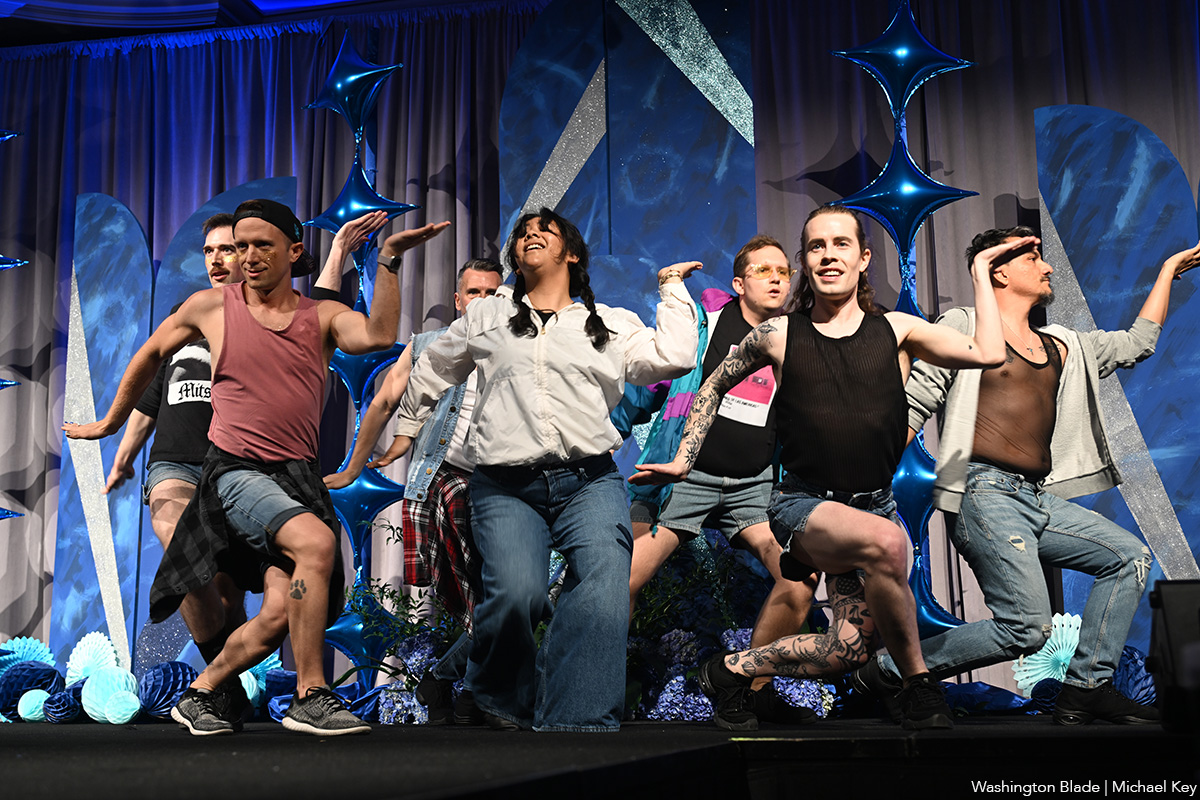
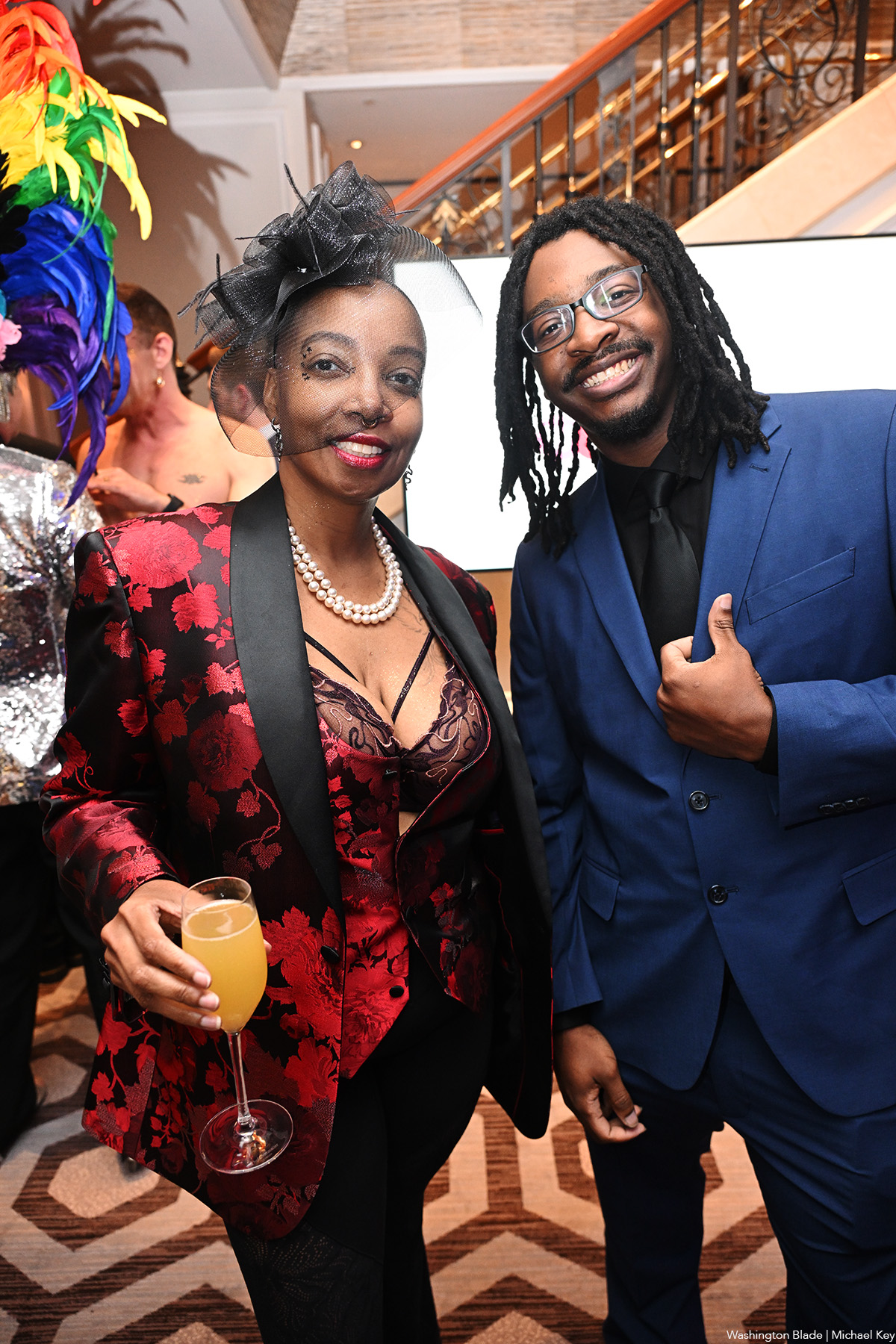
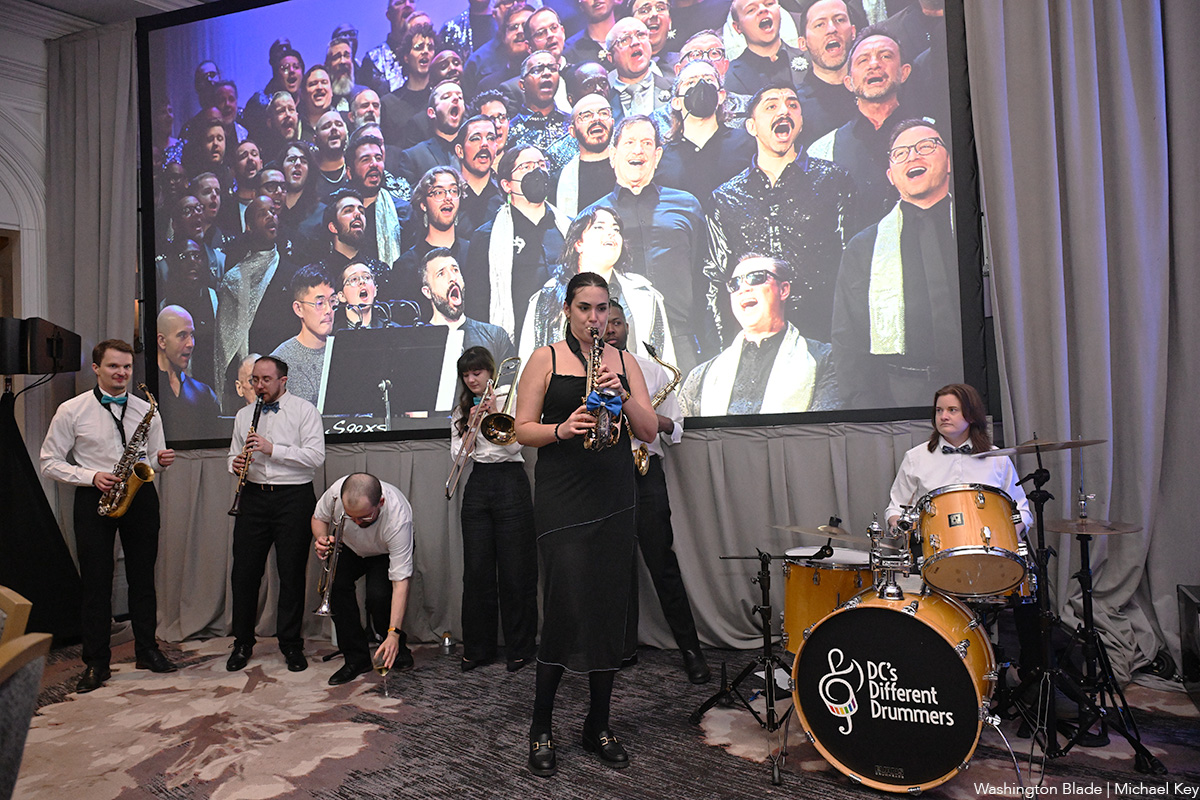
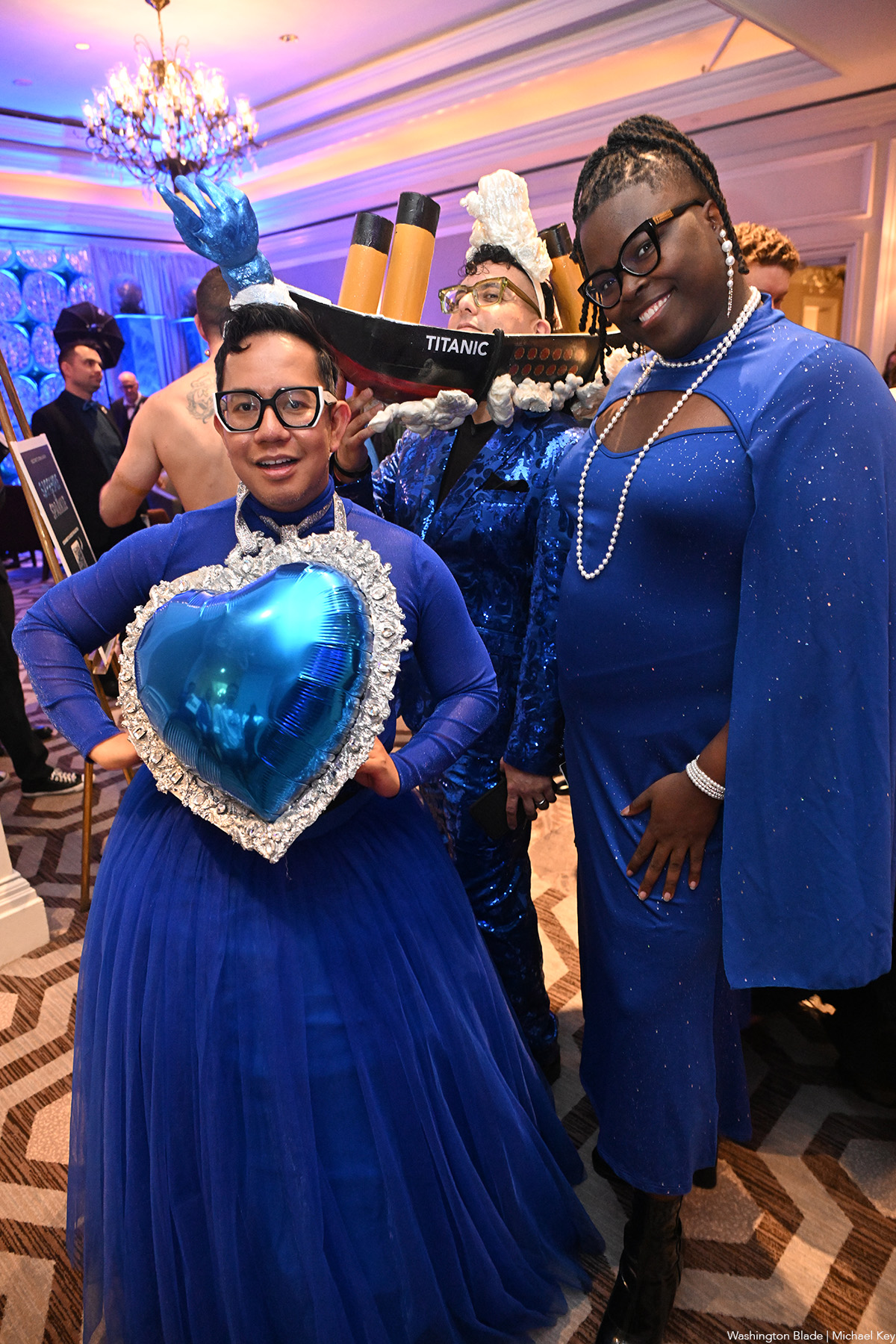
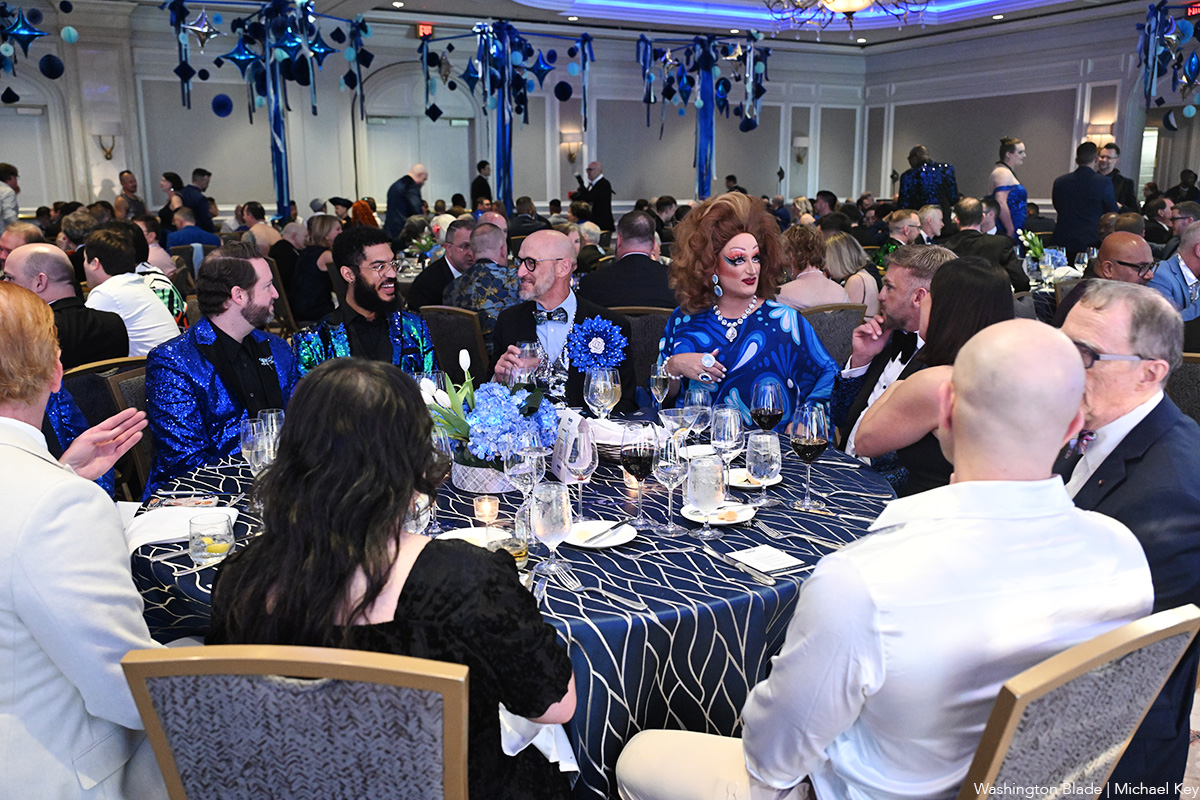
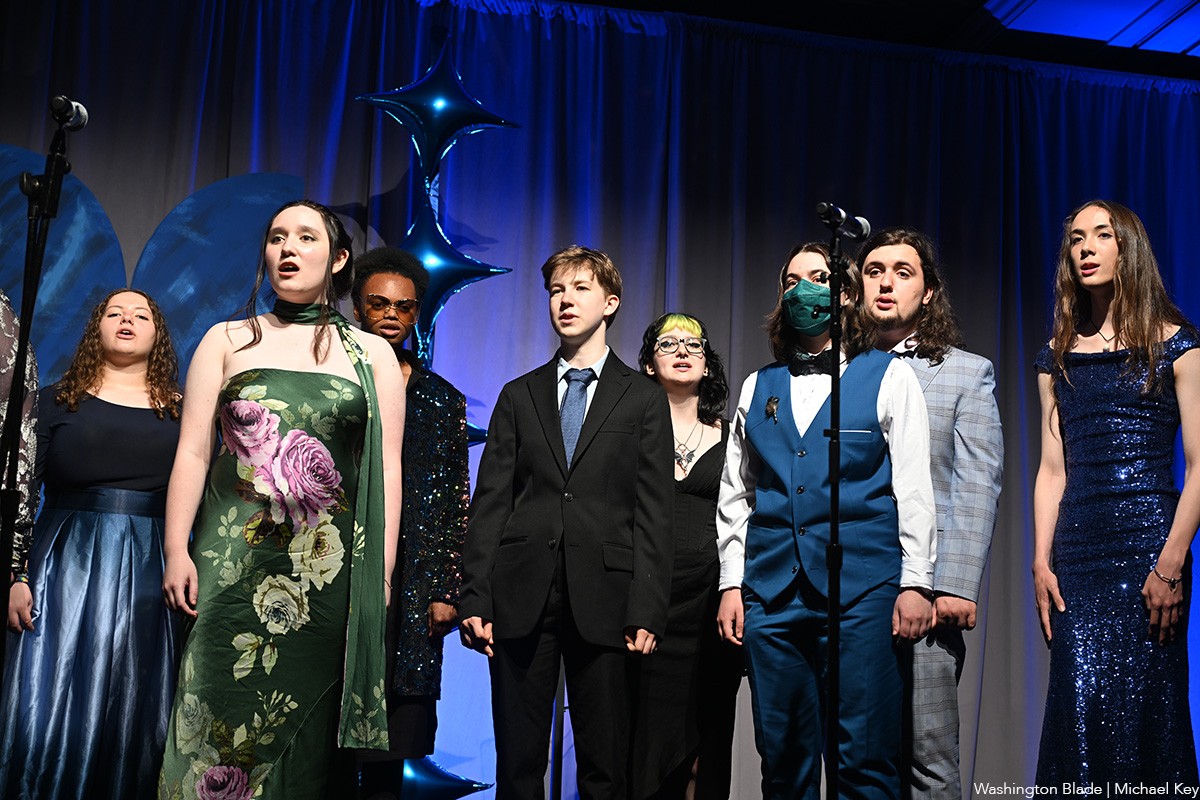
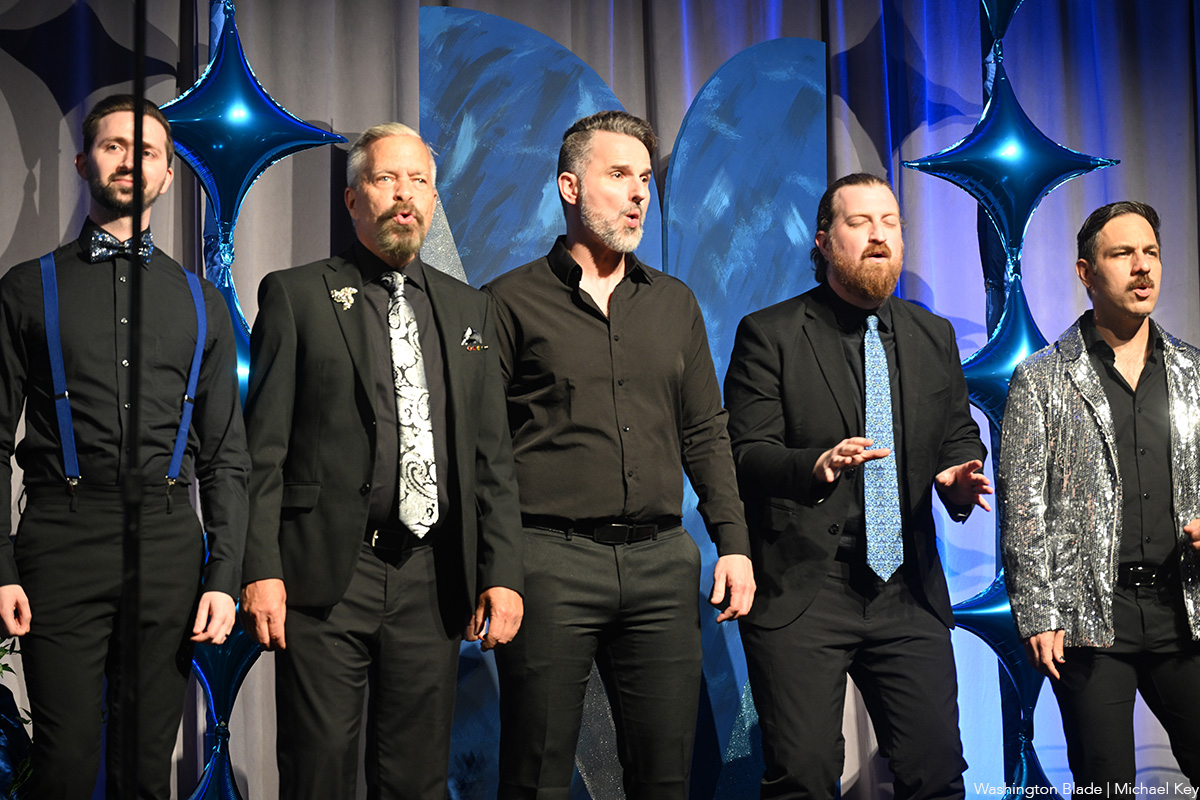
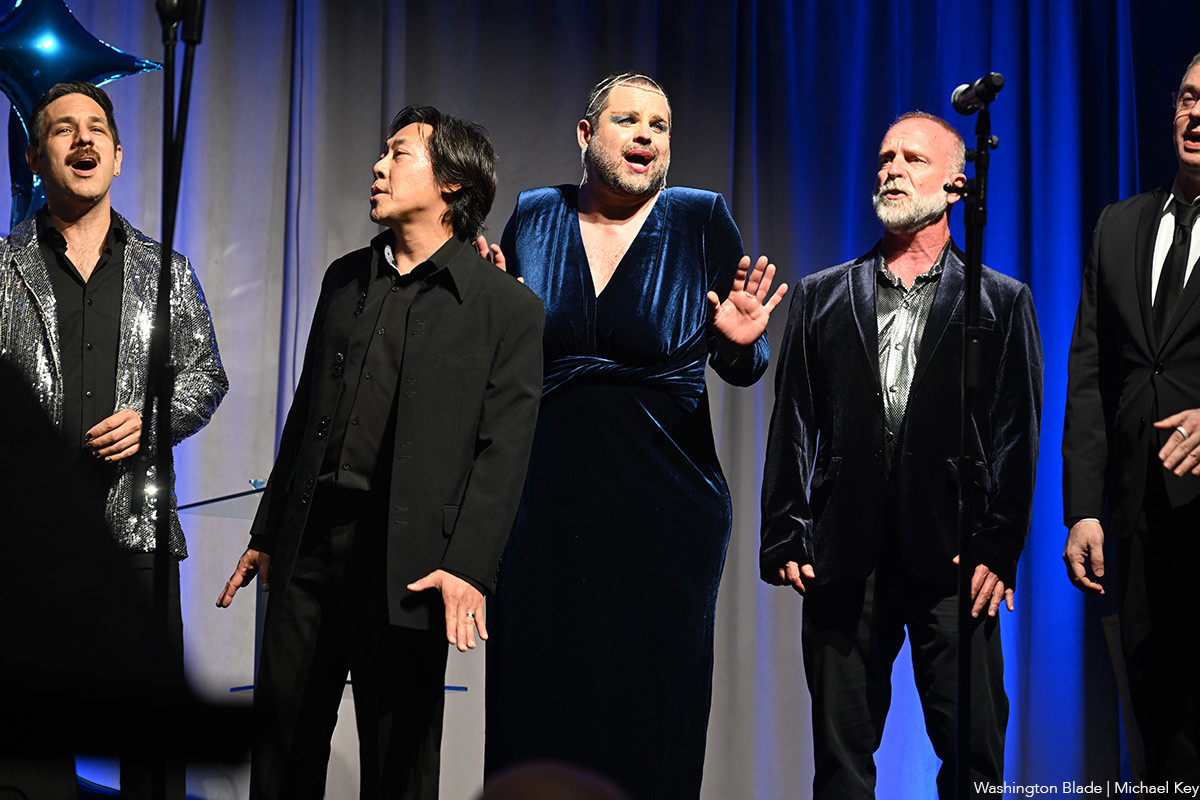
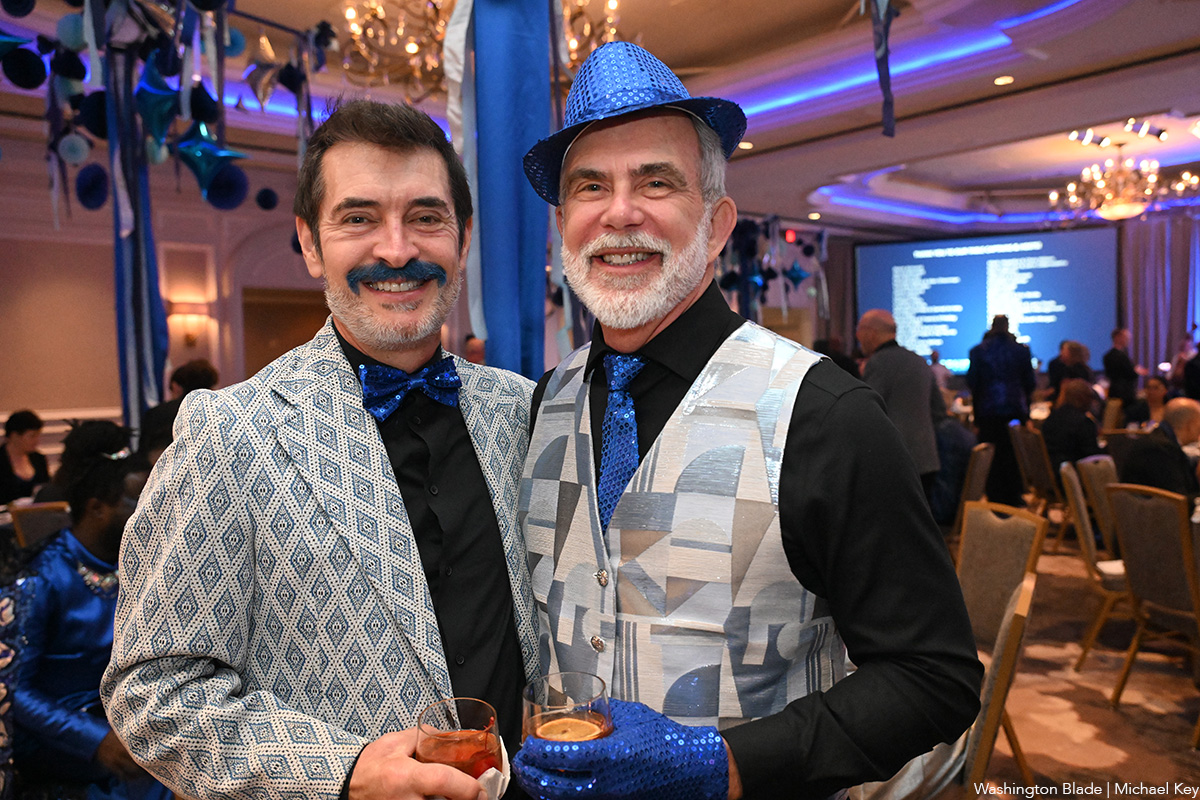
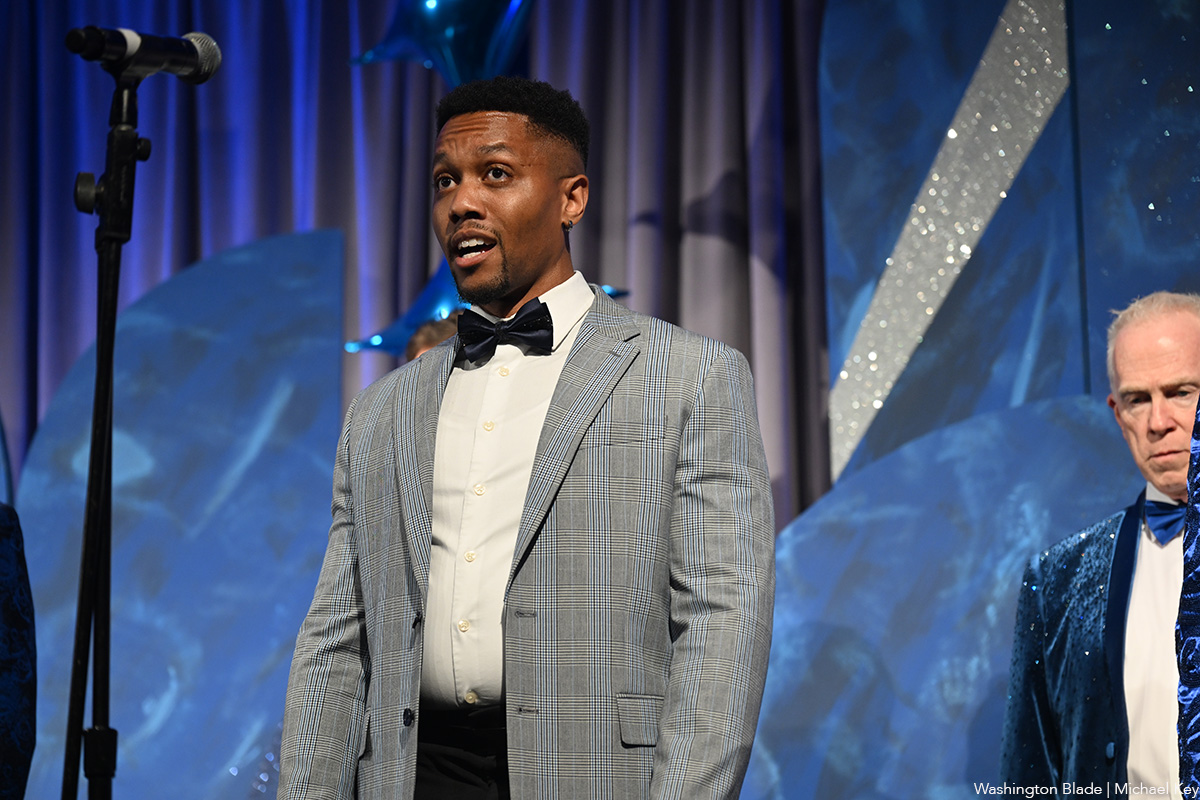
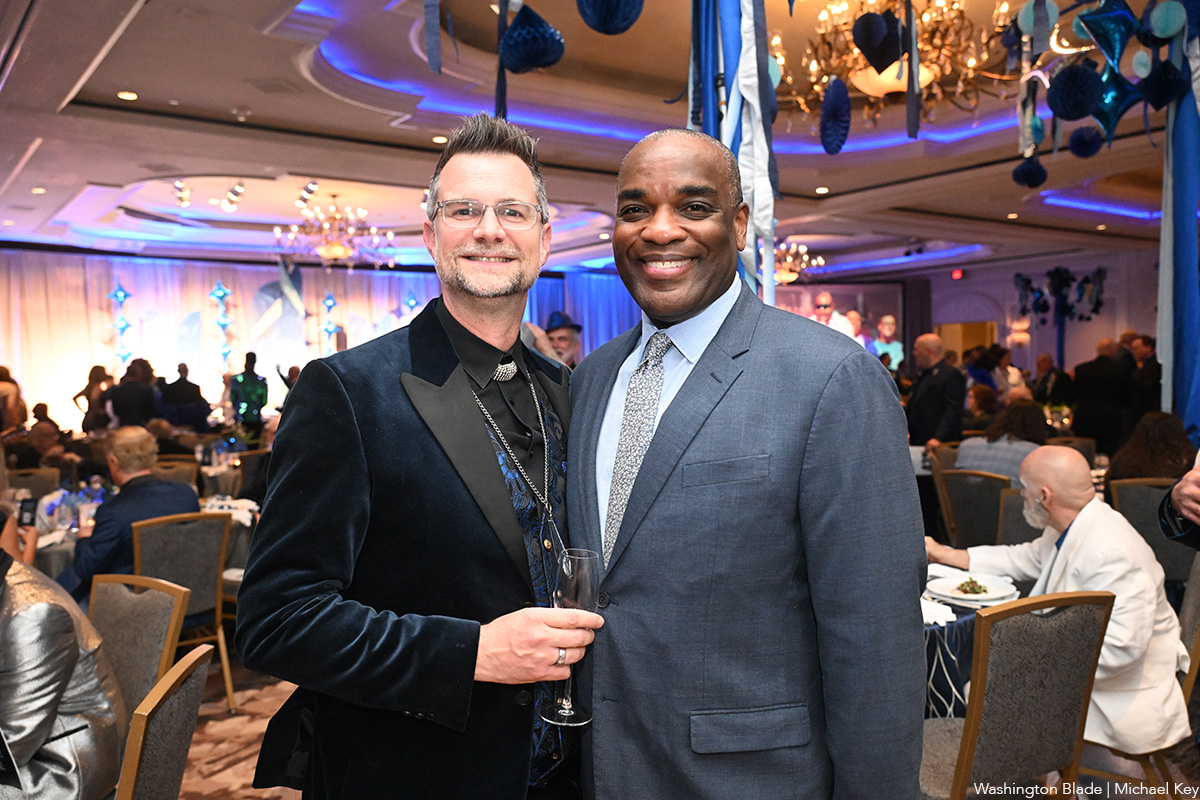
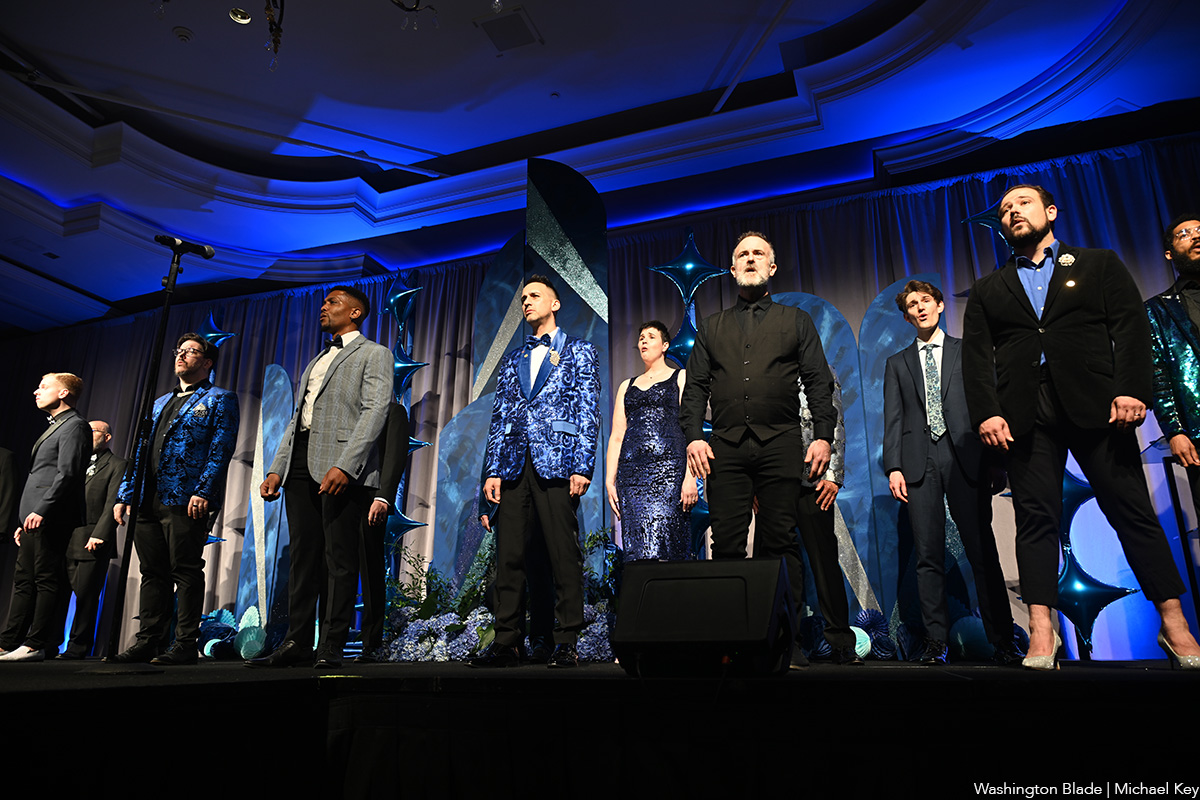
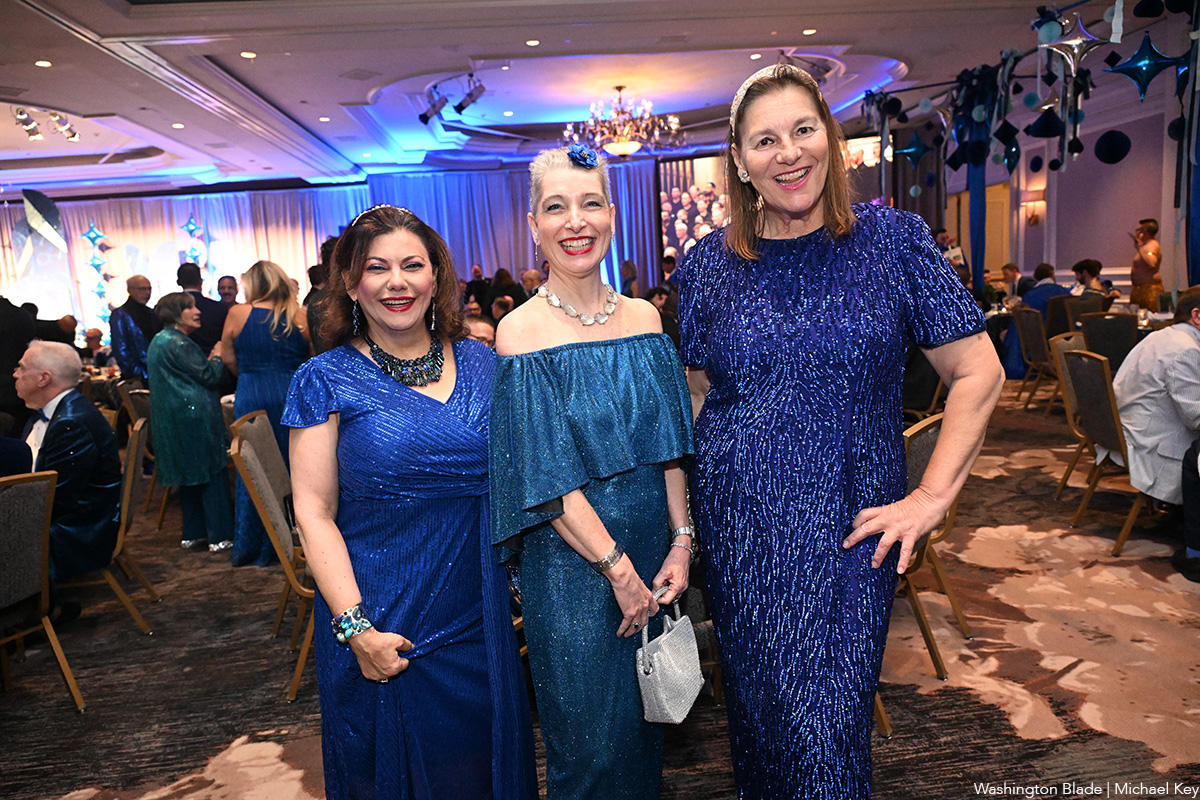
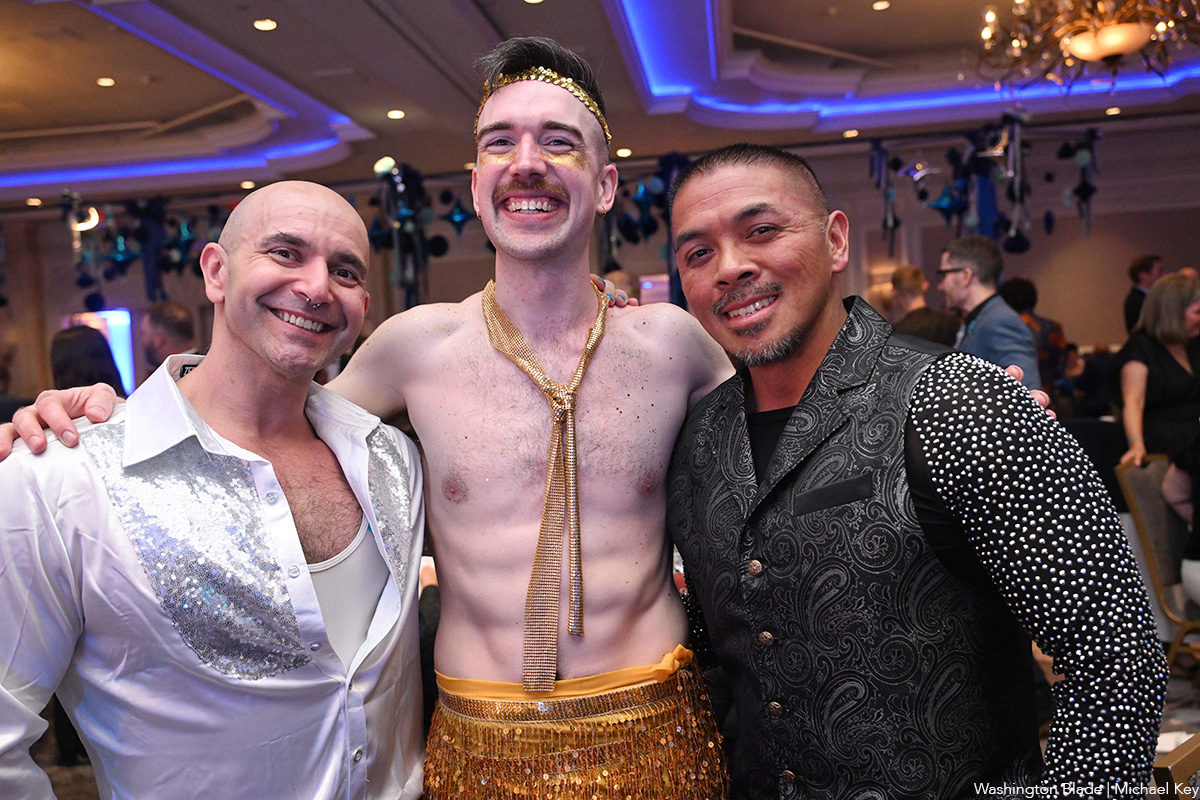
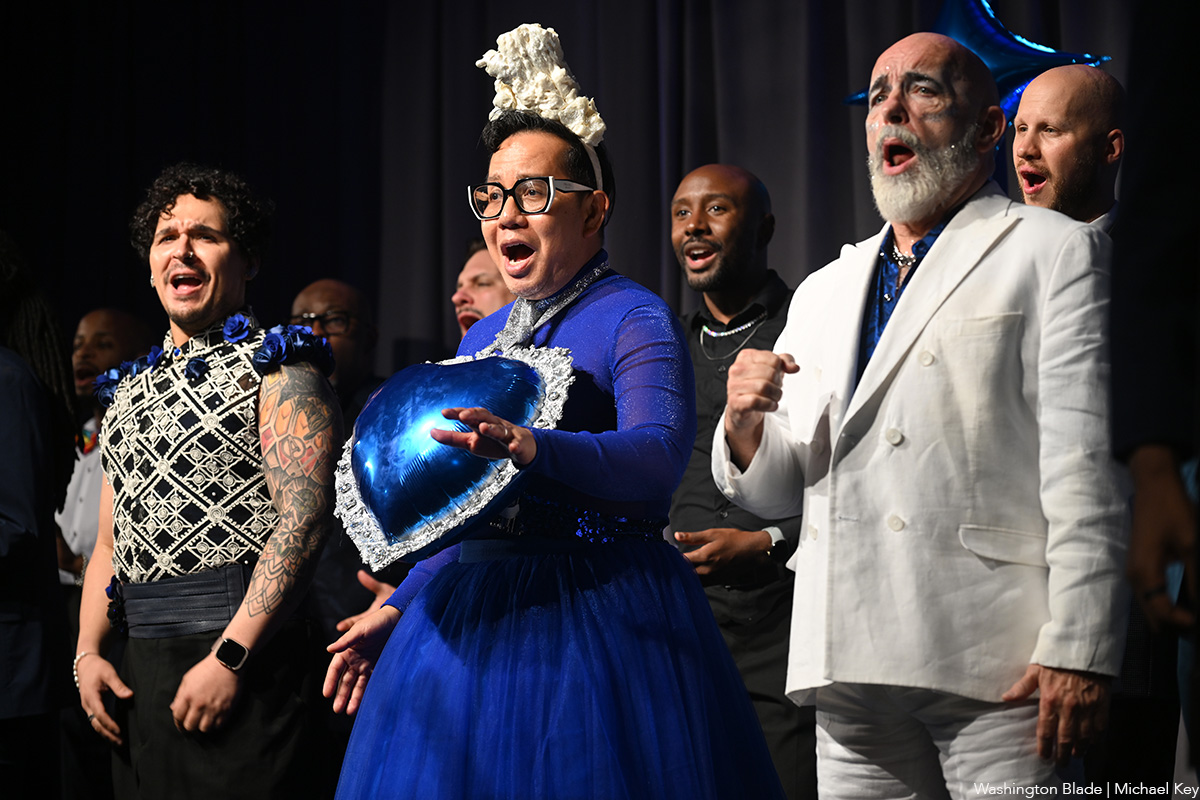
The Gay Men’s Chorus of Washington held the annual Spring Affair gala at the Ritz Carlton Washington, D.C. on Saturday. The theme for this year’s fete was “Sapphire & Sparkle.” The chorus celebrated 45 years in D.C. with musical performances, food, entertainment, and an awards ceremony.
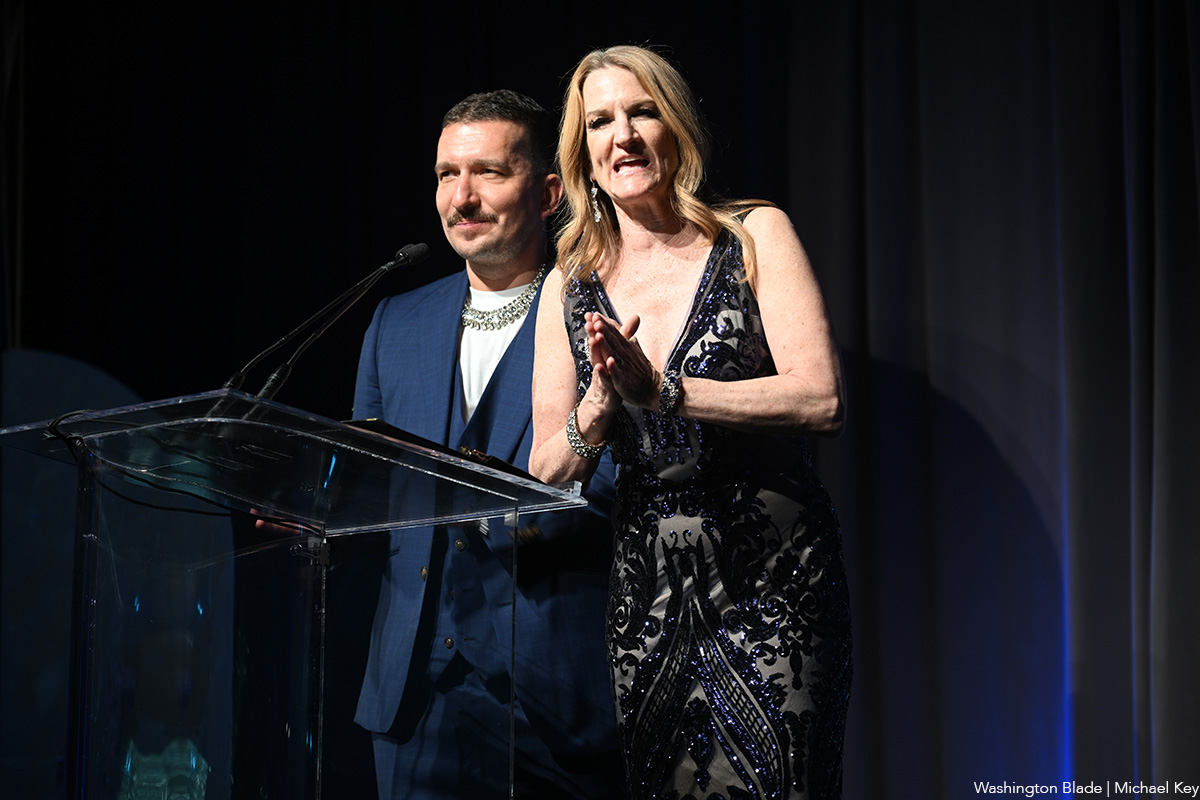
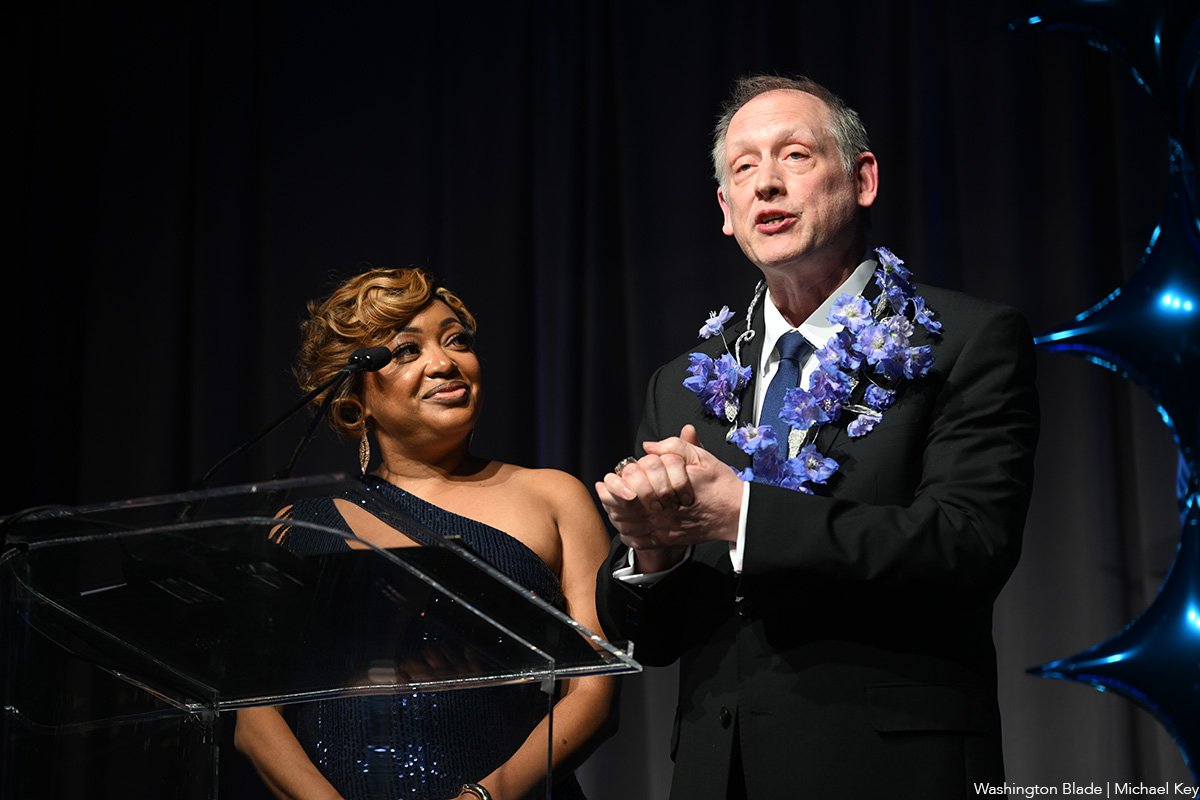
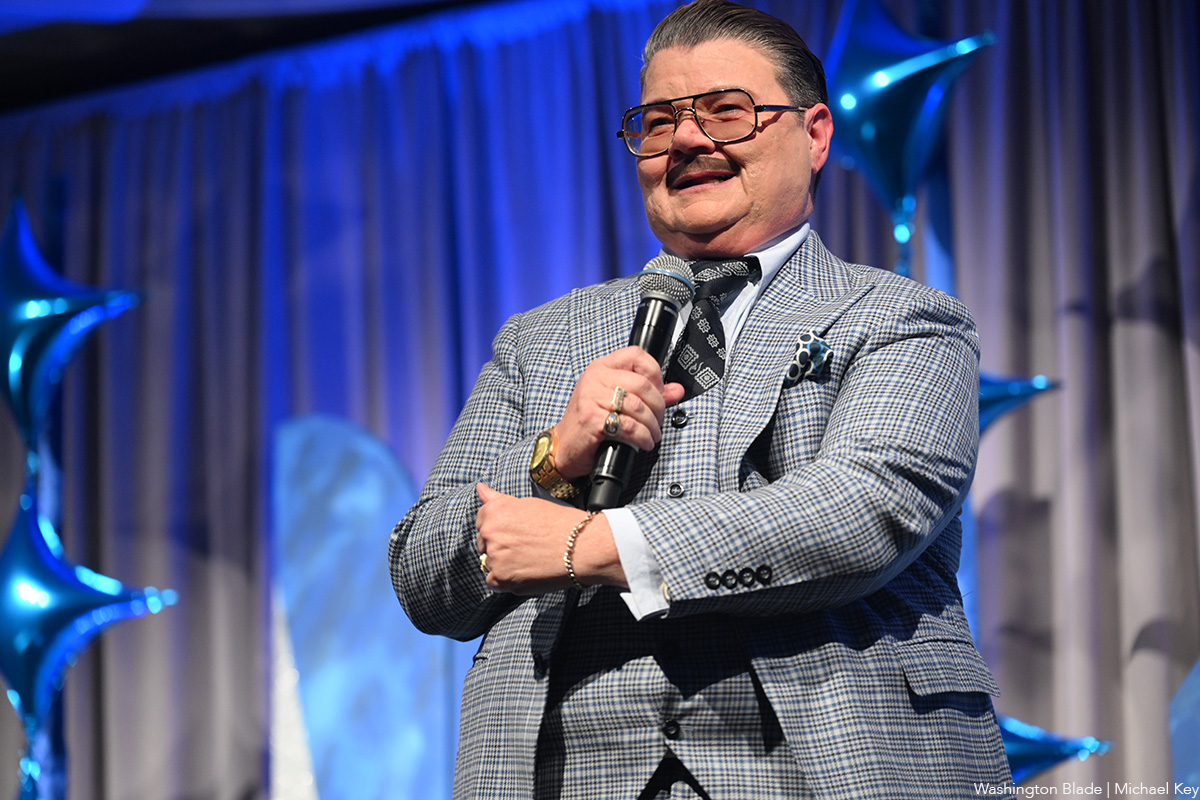
Gay Men’s Chorus of Washington Executive Director Justin Fyala and Artistic Director Thea Kano gave welcoming speeches. Opening remarks were delivered by Spring Affair co-chairs Tracy Barlow and Tomeika Bowden. Uproariously funny comedian Murray Hill performed a stand-up set and served as the emcee.
There were performances by Gay Men’s Chorus of Washington groups Potomac Fever, 17th Street Dance, the Rock Creek Singers, Seasons of Love, and the GenOUT Youth Chorus.
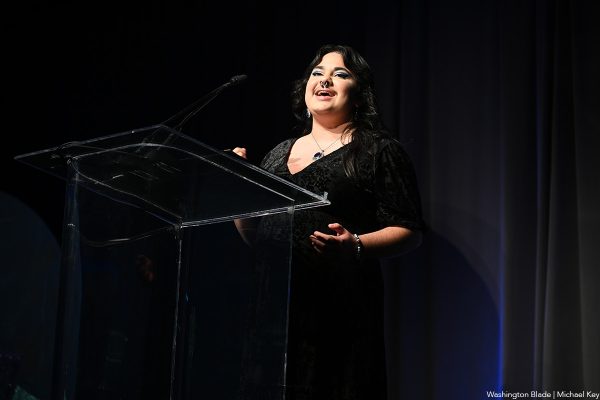
Anjali Murthy, a member of the chorus and a graduate of the GenOUT Youth Chorus, addressed the attendees of the gala.
“The LGBTQ+ community isn’t bound by blood ties: we are brought together by shared experience,” Murthy said. “Being Gen Z, I grew up with Ellen [DeGeneres] telling me through the TV screen that it gets better: that one day, it’ll all be okay. The sentiment isn’t wrong, but it’s passive. What I’ve learned from GMCW is that our future is something we practice together. It exists because people like you continue to show up for it, to believe in the possibilities of what we’re still becoming”
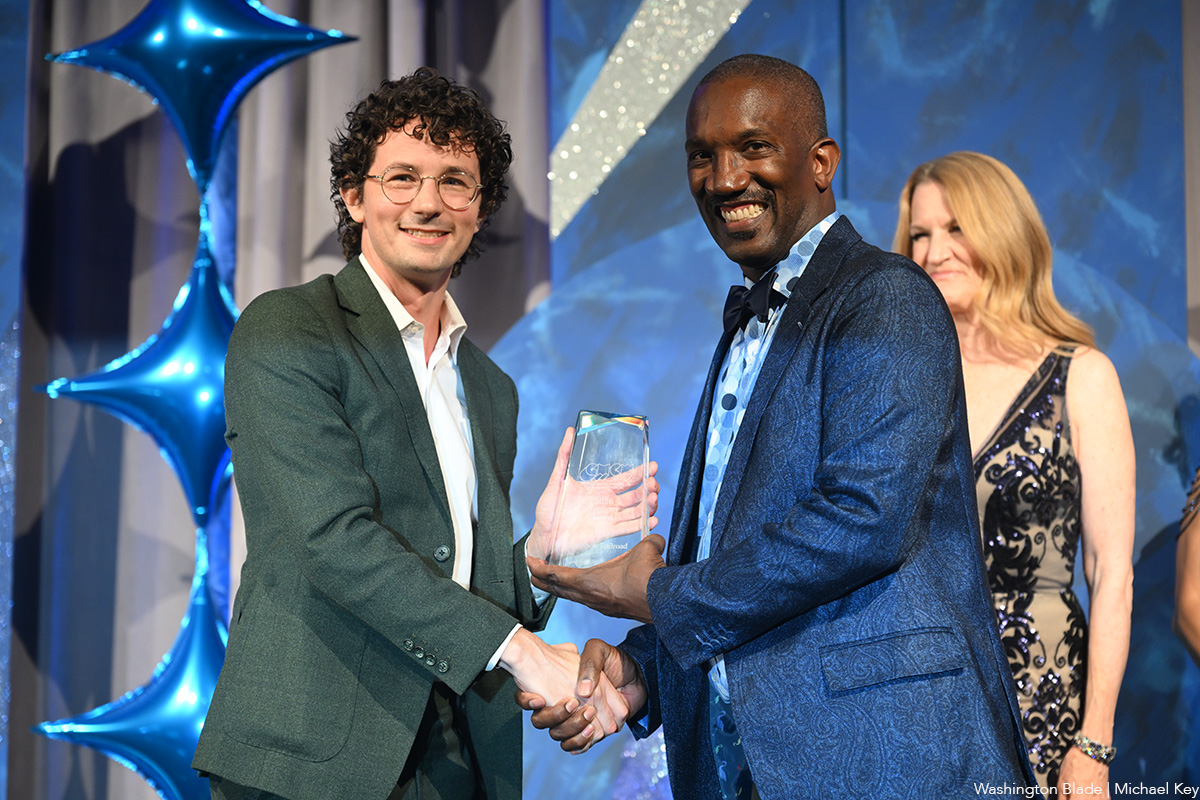
The event concluded with the presentation of the annual Harmony Awards. This year’s awardees included local drag artist and activist Tara Hoot, the human rights organization Rainbow Railroad as well as Rocky Mountain Arts Association Executive Director, Dr. Chipper Dean.
(Washington Blade photos and videos by Michael Key)











Equality Prince William Pride was held at the Harris Pavilion in Manassas, Va. on Saturday, May 16.
(Washington Blade photos by Landon Shackelford)


Elevated Living. Personalized Care.

Politicians, activists pay tribute to Barney Frank

Skipping Memorial Day crowds in Rehoboth Beach

What is queer food?

GLAA’s 2026 primary election ratings show candidates agree on basics

Disillusioned about democracy? Think of it as a community garden

Honey, have we been priced out of gay paradise?

IDAHOBiT a reminder we all must stand up against transphobia

PHOTOS: Blade Summer Kickoff Party