Living
10 key things to consider before you remodel
Planning early and getting direct information can save you headaches down the road

By SEAN GANEY
Whether you are a homeowner who is ready to update a home you have lived in for years, or are looking to remodel a new property, remodeling can transform your space to meet your specific style and needs. There are very few decisions that can impact your home life and the value of one of your biggest assets than selecting the right remodeler. So property owners should vet and select the right remodeler for their project with the same approach and care as they would when hiring other professionals such as a lawyer, an investment adviser or even a physician. Here are 10 key things to consider when hiring a remodeling company.
1. Seek an advocate
Unless you’re an expert, and have an enormous amount of time, you will need someone who is able to assemble and manage a team of professionals to work together on your behalf. Complex projects require input from numerous players, and may include an architect or designer, various engineers, landscape designer, lighting expert and others. Having one party who takes accountability and manages the entire process while looking after your interests is key to a successful remodeling experience.
2. Plan early
Government regulations and the permitting process for home remodeling are becoming increasingly restrictive and challenging. An experienced professional who understands the ever-changing requirements can help you to navigate through this process and is invaluable during the early stages of your project.
3. Find a good match
Ensure that your contractor has a track record of success with projects similar to your own. Ask specifically about projects of comparable complexity, magnitude and level of finish, or requiring special areas of expertise, such as green remodeling or historical restoration.
4. Get first-hand info
Check the remodeling company’s current references and visit recently completed projects to see first-hand if you are satisfied with the caliber of work. The best remodeling firms will be able to provide you with a list of raving fans who will welcome you into their homes. Also, check the company website for examples of recent client testimonials from some of your neighbors.
5. Explore options
“Paper is cheap.” Take as much time as you need to make sure the design addresses all of your priorities and needs. It is better to invest in design that is relatively inexpensive, versus having missed opportunities or costly changes during the construction phase. Look to the remodeler for advice on cost-effective ways to increase your home’s value, such as using durable materials, incorporating specialty items you may not know are available, and investing in green technologies that will pay off over time.
6. Be wise
Beware of offers and deals that appear too good to be true. Remodeling remains one of the most reported industries at the Better Business Bureau. Understanding exactly what you are getting for your investment and taking steps to ensure the remodeler will be able to provide service in the long-term is essential. Asking for bank references, researching employee tenure, and confirming that subcontractors have been paid on time can help you evaluate a company’s financial stability.
7. Prevent stress
Especially for larger or more complex projects, insist on a full-time onsite project supervisor to orchestrate the entire process and all the players involved. This will help to keep your project on schedule and surprises to a minimum.
8. Be firm
Insist that a detailed production schedule be tied to your contract, and hold the builder accountable for these deadlines. While it’s not commonly provided, ask for a written schedule guarantee with a penalty clause to ensure your satisfaction.
9. Double check
Warranties can vary greatly from one remodeler to another, so make sure you understand exactly what your builder will cover and for what duration after the completion of the project. Also ask about what resources are available to provide service if problems arise in the future.
10. Take advantage
Now is a great time to remodel! Compared to a few years ago, subcontractors are more readily available and their costs are significantly lower, enabling contractors to produce projects more efficiently and deliver greater value.
Sean Ganey is an architect and Project Leader for BOWA, an award-winning company specializing in the design and construction of luxury renovations and remodeling in the greater Washington D.C. area. Reach Sean at [email protected] or 703-734-9050 or visit www.bowa.com.
Real Estate
With gas prices soaring again, a staycation is a good plan
Home can be your personal retreat and your own private resort
When airfare costs more than your monthly utility bill and a weekend road trip requires a second mortgage just to fill the gas tank, many homeowners are discovering an unexpected luxury: the staycation.
A staycation isn’t settling for less—it’s reaping the benefits of one of the biggest investments you can make: your home. Much more than a place to sleep, it’s your personal retreat, your gathering place and, with a little preparation, your very own private resort.
Whether you own a single-family home, a townhouse, or a condo, creating a memorable staycation starts with appreciating what made you fall in love with your property in the first place.
Start with a home refresh. Think about checking into a beautiful vacation rental. It’s spotless, organized, and inviting. You can recreate that same feeling by spending a day preparing your home before your staycation officially begins.
Clear away clutter, deep clean the bathrooms and kitchen, wash the windows, and put fresh linens on every bed – even if you’re not expecting guests. Fluff the pillows, light a favorite candle, and place fresh flowers on the table. These small touches instantly make your home feel more luxurious.
If your budget allows, hiring a professional cleaning service can be one of the best staycation perquisites you make. After all, vacation should begin the moment you wake up and not after you’ve spent the day scrubbing floors.
Treat your staycation like a real trip. Set away messages on your phone and out of office notices on your email. Skip unnecessary chores for a few days. Giving yourself permission to relax may be the most valuable part of the entire experience.
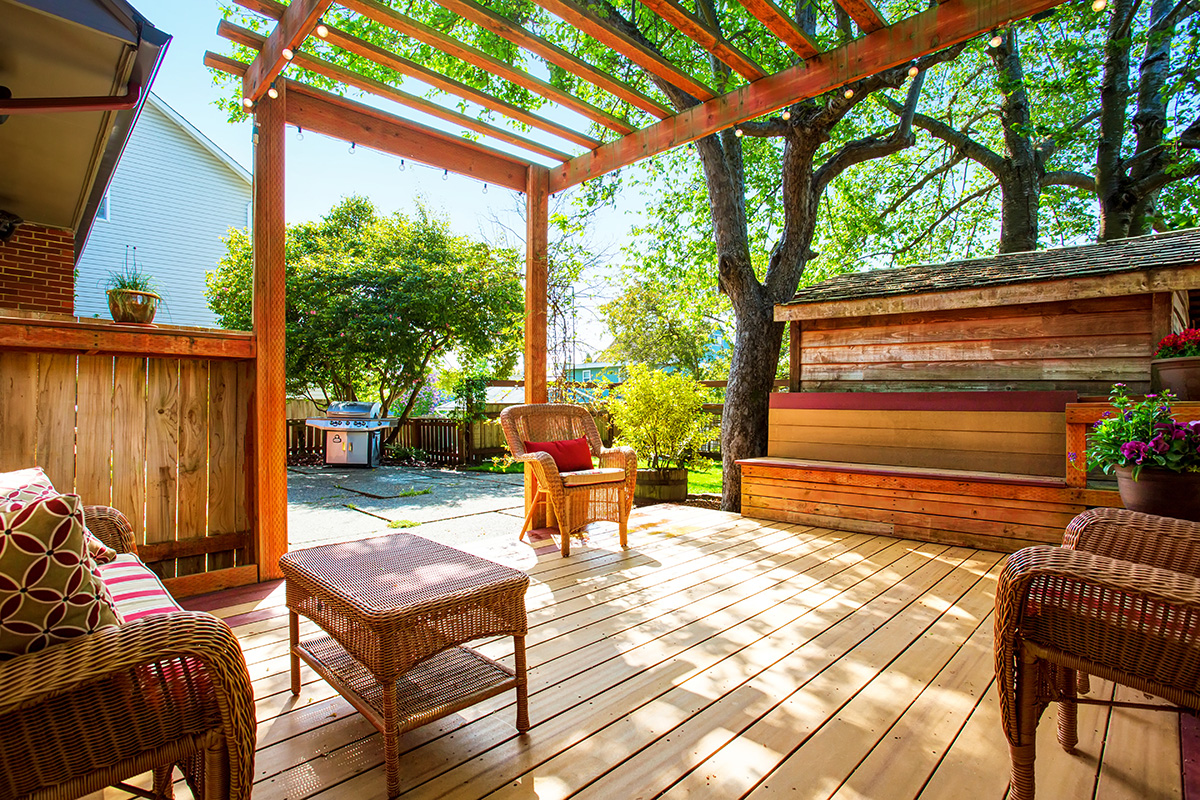
One of the greatest advantages homeowners have over travelers is private outdoor living space. Whether it’s a spacious backyard, a screened porch, a rooftop terrace, or a cozy condo balcony, these areas can become the centerpiece of your staycation.
Stringing lights and adding comfortable seating, colorful planters, and outdoor rugs can completely transform the atmosphere without spending thousands of dollars. Add a portable fire pit, a tabletop fountain, or a hammock, and suddenly your backyard starts competing with many resorts.
Host an evening cookout, organize a game night, invite neighbors over for dessert, or gather around the fire pit for conversation after sunset. These simple moments often become the memories we treasure most.
Inside, transform your family room into a home theater complete with popcorn and comfortable blankets. Turn your breakfast room into a morning coffee café. Designate a quiet reading corner where phones are prohibited. Create a spa-like bathroom with plush towels, candles, bath salts, and relaxing music.
One of the highlights of traveling is experiencing new food. Instead of dining out every night, create themed dinners inspired by your favorite destinations. Prepare homemade Italian pasta one evening, Caribbean grilled seafood another, or a backyard Texas barbecue over the weekend. For a touch of whimsy, dress the part.
Pair each meal with music and libations from the region and enjoy dinner outdoors whenever possible. Suddenly, your dining room becomes part of the vacation experience instead of just another place to eat.
Families with children can turn a staycation into an adventure by seeing their home through a child’s eyes. Set up a backyard camping experience with a tent, flashlights, and s’mores around the fire pit. Transform the living room into an indoor campground complete with sleeping bags and a movie under a blanket “fort.” Organize a backyard Olympics with relay races, water balloon tosses, scavenger hunts, or miniature golf using household items.
Encourage children to plan a family picnic in the backyard or on the patio, choose a theme for a movie marathon, or help prepare meals inspired by countries they’d like to visit someday. The goal is to create experiences your children will remember long after summer is over.
Enjoy the amenities you already pay for. Condominium communities and many planned neighborhoods offer amenities that residents often overlook.
Swimming pools, fitness centers, tennis and pickleball courts, walking trails, clubhouses, grilling stations, and community gardens are designed to enhance your lifestyle. During your staycation, make a point of exploring everything your community offers. You may discover you’ve been living beside your own private resort all along.
Real estate professionals often talk about resale value, appreciation, and return on investment. While those things certainly matter, there’s another return that’s harder to measure: the enjoyment you get from living in your home every day.
You don’t need a boarding pass to recharge. You don’t need a hotel reservation to make memories. Sometimes the perfect getaway is the one you already own.
Valerie M. Blake is a licensed Associate Broker in D.C., Maryland, and Virginia with RLAH @properties. Call or text her at 202-246-8602, email her at [email protected] or follow her on Facebook at TheRealst8ofAffairs.
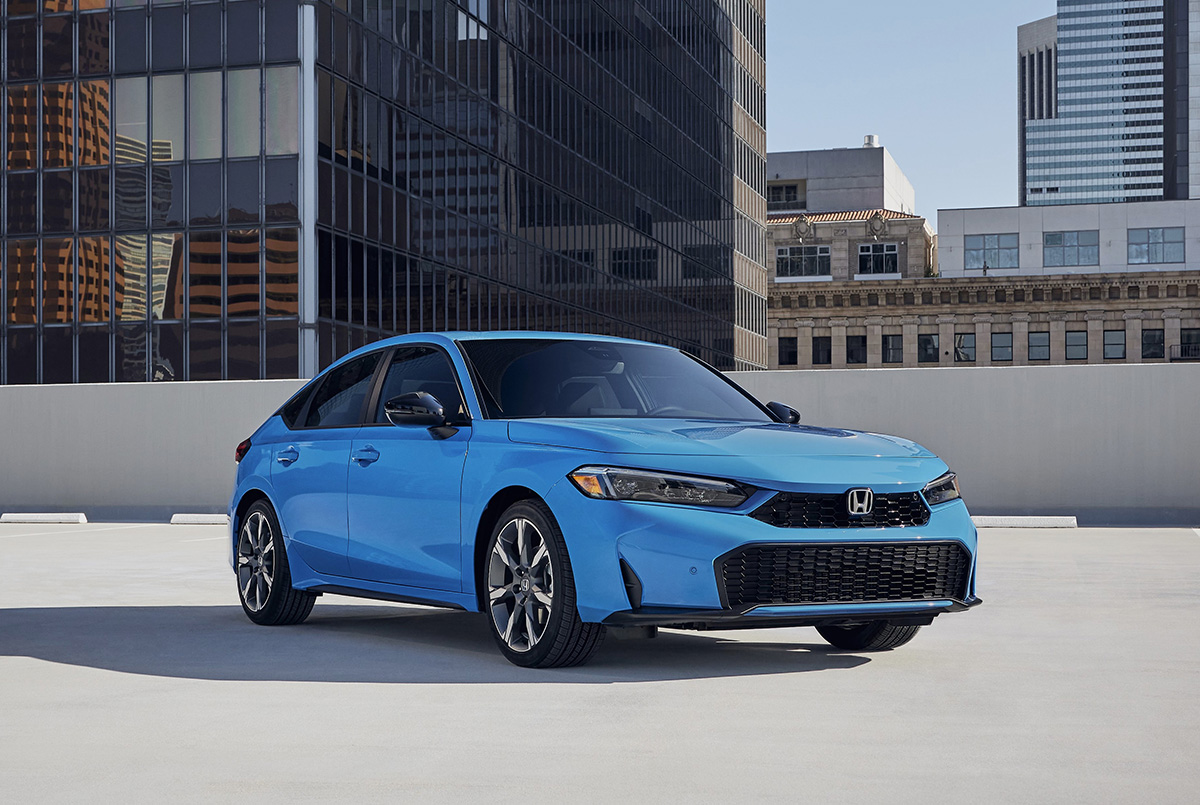
The latest Honda Civic hatchback and Subaru Impreza are two of the segment’s stars. Both offer sensible pricing, excellent utility and enough personality to avoid feeling like appliances.
The Civic is more polished. The Impreza, more rugged. Luckily, neither is trying to be obnoxiously flashy.
HONDA CIVIC
$28,000
MPG: 30 city/38 highway
0 to 60 mph: 8.9 seconds
Cargo space: 24.5 cu. ft.
PROS: Fuel efficient. Spacious cargo area. Good resale value.
CONS: No all-wheel drive. Fussy infotainment. Low rear headroom.
WHAT’S NEW: Only minor updates for 2026. The biggest change carries over from last year’s refresh: the addition of the hybrid, which has become a star performer.
The Honda Civic hatchback won’t scream for attention. It won’t arrive wearing sequins and carrying a smoke machine. It’s more like Nomi Marks from “Sense8”: intelligent, sophisticated and impressively capable.
The styling remains handsome and clean. Long hood. Low roofline. Crisp lines everywhere.Honda resisted the urge to make this vehicle look like a spaceship or an angry robot. That’s refreshing.
Inside, the dashboard is simple and elegant. The honeycomb air-vent treatment remains one of the coolest interior details in the segment. Materials feel expensive. Controls are easy to understand. And visibility is excellent.
I love how the cargo space is generous, with rear seats that fold flat. A bicycle, several suitcases or enough supplies for an ambitious weekend road trip fit without much hassle.
Then there’s the hybrid. The system produces a healthy amount of power while delivering fuel economy that borders on the absurd. Around town, handling feels smooth, quiet and surprisingly quick. You almost glide through traffic. The standard gasoline engine isn’t bad, but the hybrid is stellar.
The Civic also shines on twisty roads. Steering is precise. Body motions stay controlled. The suspension strikes a sweet balance between comfort and sportiness.
Biggest weakness? No all-wheel drive. For drivers in snowy climates, that’s not so good.
Still, the Civic’s stellar combination of efficiency, quality, and driving enjoyment remains incredibly hard to beat.
SUBARU IMPREZA
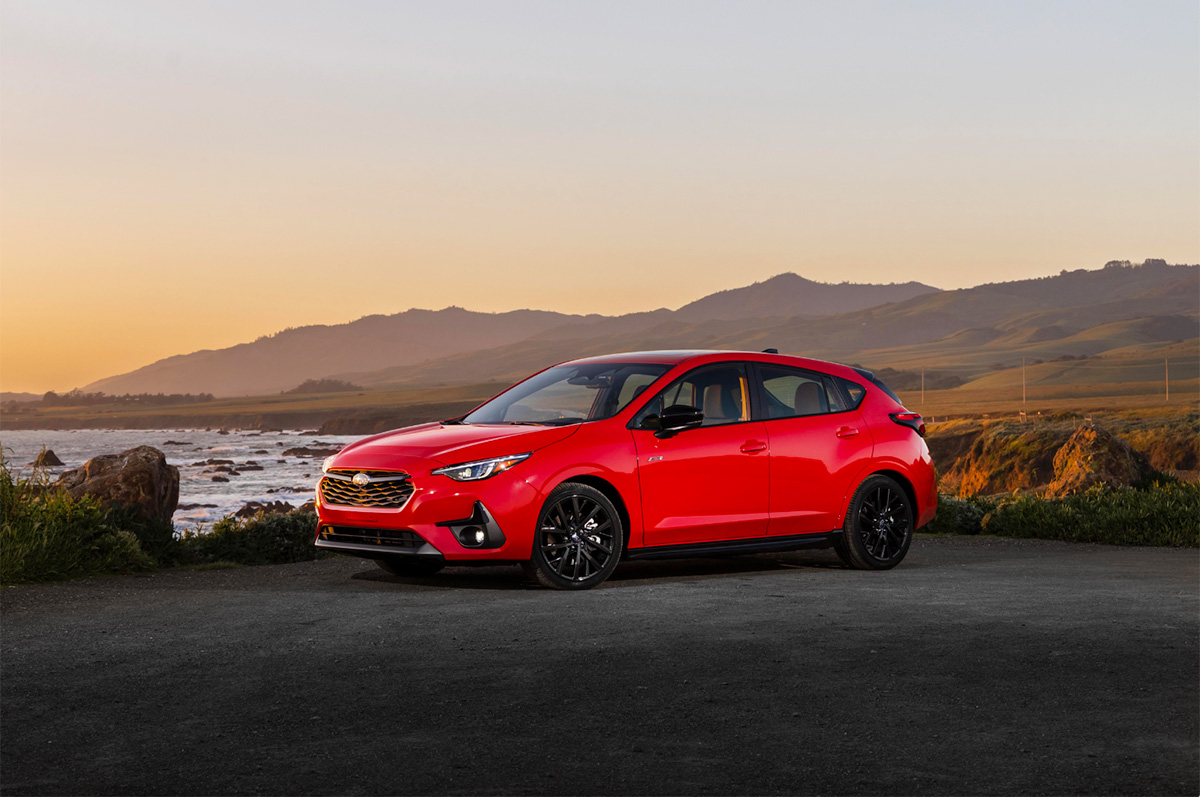
$27,000
MPG: 27 city/33 highway
0 to 60 mph: 8.5 seconds
Cargo space: 20.4 cubic feet
PROS: All-wheel drive. User-friendly tech. Safety cred.
CONS: No hybrid version. Some road noise. Modest cargo room.
WHAT’S NEW: The Impreza receives relatively minor updates for 2026. Subaru continues refining this hatchback rather than reinventing it.
If the Honda Civic is urbane, the Subaru Impreza is unfussy. There’s a kind of Kristen Stewart energy here. Cool without trying too hard.
The styling isn’t dramatic, but it works. This hauler appears ready to tackle rain, snow, dirt roads or an impromptu weekend escape.
And all-wheel drive comes standard on every Impreza. (Most competitors only offer front-wheel drive or include all-wheel drive as a pricey option.)
The result: Slippery roads simply don’t create much anxiety. The suspension absorbs bumps nicely. Long trips are comfortable. Visibility is great, thanks to relatively thin roof pillars and large windows.
I like how the cabin is functional rather than fancy. Materials don’t quite match the Civic’s upscale vibe, but everything feels sturdy. A large infotainment screen dominates the dashboard and generally works well, though some drivers may prefer more physical buttons.
Cargo space is respectable, and the design makes loading bulky items easy.
Performance depends heavily on trim. The base engine gets the job done, but nobody will confuse it for a sports car. The RS trim’s larger engine provides more power and makes the ride livelier. But even then, acceleration remains merely adequate.
The Impreza’s real appeal lies elsewhere, with a mix that few rivals can match: hatchback practicality, standard all-wheel drive, strong safety scores and reasonable pricing.
Perhaps that’s the key difference between these two hatchbacks. The Honda Civic impresses immediately. The Subaru Impreza grows on you.
Fortunately, choosing between them is less stressful than deciding who gets the last mimosa at brunch.
Real Estate
When buying a home, it’s decisions, decisions, decisions
Keeping notes on the process makes for an informed purchase

When looking to buy a home, there are lots of details to consider. Many of my clients would come to me and say, “Joe I want to buy a place, but I haven’t decided which neighborhood to buy in.” And the struggle was real. A few clients had everything decided from the color of the hallway walls to the cabinet handles and sometimes which three square blocks they wanted to look at.
But other clients were occasionally looking at properties in areas as distinct as Union Market/NOMA, Brookland, Logan Circle, and then we would even go across the river to look at a property in Shirlington or the Van Dorn areas of Virginia, which all have their own unique flavor and characteristics.
Sometimes clients would tell me, “I only want to look in Mount Pleasant or Adams Morgan.” Or, “don’t even show me any properties west of this street or south of that street.” My job wasn’t to convince people where to live. It was to just take the parameters they set for me and find as good of a property in that zone as I could, coordinate the showings and, if necessary, offer the strategy.
One can see that buyers often had more decisions to make than a seller. From a seller’s perspective, the house was where it was, and we just had to make the best of it. But working with a buyer could mean looking at five different neighborhoods, and then being a “thought partner” to help them figure out which were the top two or three areas they had seen, and then further distilling those down into what was available and weighing those options against each other.
One house could have the dream bathroom but also be located six blocks further from a Metro stop, walkable shopping and dining, and “just too far away from my friends.” Another house could have all the neighborhood options a client was looking for, but was just not in turnkey condition, and would require an additional $30,000 of upgrades once purchased to make it into the dream home they envisioned.
One activity I often asked buyers to do was to keep an active list in their heads of the properties they liked, and to keep a running rank of the top three. I often encouraged them to bring a notebook along on the journey where they could take notes and write down questions they thought of as they looked. It was an important decision, and sometimes the largest purchase of their lives. Why not take it a little seriously, and take notes? This could often help the buyer later when they felt it was time to decide.
The point here is, keeping a notebook handy can sometimes help a person with what feels like an overwhelming process. It provides a space to explore how one feels, jot down important details to remember, and then use that to make an informed decision.
Joseph Hudson is a referral agent with RLAH. Reach him at 703-587-0597 or [email protected].

PHOTOS: Lambda Legal in the Pines

Come showcase your singing, poetry talent

Taiwan’s government has failed to update process to change gender markers on ID documents

Calendar: July 31-August 6

BLADE ENDORSEMENT: Susan Stewart for mayor of Rehoboth Beach

D.C. summer theater offers something for every taste

Summer in the City: Free exhibits, movies, more fill D.C.’s calendar

With gas prices soaring again, a staycation is a good plan

Gary Sutton, known for ‘warmth and laughter,’ dies at 62

White House threatens Anne Arundel schools over gender identity policy
-

 Theater5 days ago
D.C. summer theater offers something for every taste
-
a&e features5 days ago
Summer in the City: Free exhibits, movies, more fill D.C.’s calendar
-
Real Estate5 days ago
With gas prices soaring again, a staycation is a good plan
-
Obituary4 days ago
Gary Sutton, known for ‘warmth and laughter,’ dies at 62