Local
Gay coach fired at VCU
Advocates renew call for Obama exec order on workplace bias
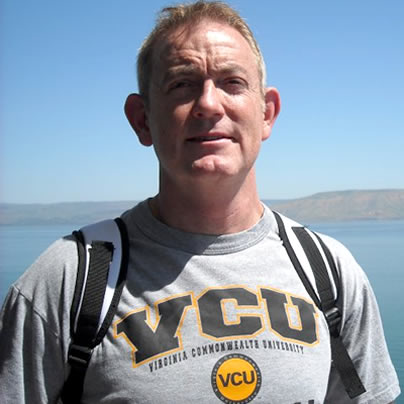
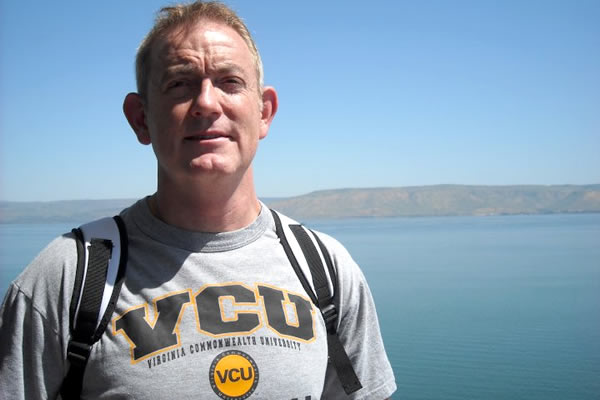
VCU women’s volleyball coach James Finley says he was fired because he’s gay. (Photo courtesy of Finley)
A women’s volleyball coach at Virginia Commonwealth University, who says he was fired last month because he’s gay, would have a far better chance of getting his job back if President Obama had issued a non-discrimination executive order for federal contractors.
That’s the assessment of Tico Almeida, president of the national LGBT advocacy group Freedom to Work.
“If the executive order were already in place, Coach [James] Finley could have the Department of Labor investigate whether federal contractor VCU allowed anti-gay animus to overshadow the fact that he led his team to a 25-6 winning record this season as well as a perfect graduation rate for his student athletes,” Almeida told the Blade in a statement.
Almeida said VCU would be a prime target for a discrimination investigation under such an executive order because it has received more than $40 million in contracts in recent years from such federal agencies as the National Institutes of Health, the Social Security Administration, and the Department of Defense.
“President Obama should sign the executive order today because every day that passes is another day in which taxpayer money can be squandered on anti-LGBT workplace harassment and discrimination,” he said.
Finley, 52, told the Blade he learned of his dismissal on Nov. 19 when the university’s recently hired athletic director, Ed McLaughlin, informed him he decided not to renew Finley’s contract as coach.
He said he filed a discrimination complaint with the university’s diversity office. The university’s personnel policy bans discrimination based on sexual orientation. A VCU spokesperson said the office has 45 days to investigate the complaint under university rules.
Another university spokesperson, Pamela Lepley, told Richmond news media outlets that McLaughlin’s decision not to renew Finley’s contract was “in compliance with appropriate VCU employment practices and policies.”
In his own statement, McLaughlin said he did not base his action on the fact that Finley is gay.
“It is unfortunate that Mr. Finley feels the decision not to renew his contract was based on anything other than previously stated concerns about the volleyball program,” he said.
Finley told the Blade McLaughlin told him his reason for not renewing the contract was a desire to take the volleyball program in a “different direction” in order to lift the program to “an elite level.”
Finley and his husband, John Sternlicht, an attorney, consider McLaughlin’s rationale for not renewing Finley’s contract a thinly veiled pretext.
The two say they believe the true motive was McLaughlin’s unwillingness to retain an openly gay man as coach of the VCU women’s volleyball team, despite the fact that Finley is credited by students, other coaches, and sports writers with having vastly improved the team and inspired its women players during his eight-year tenure as coach.
“The reality is they were below 500 [in their win-loss record] for 14 straight years prior to me coming here,” Finley said in a telephone interview.
In the years in which he served as coach, the team has had the highest winning percentage in women’s volleyball at VCU in the previous 20 years, he said.
“We had 25 wins with only six losses,” he said in discussing the current year. “We had our highest national ranking in program history.”
According to Finley, many university officials, students, and the athletic department staff have been fully accepting of him and Sternlicht. Many of his colleagues attended his and Sternlicht’s wedding celebration last year, he said
With that as a backdrop, Finley and Sterlicht said McLaughlin remained distant and unsupportive of Finley since the time McLaughlin was hired as athletic director in July of this year.
He never attended any of the women’s volleyball games at the university’s home court, never congratulated him or the players for their successful season, and appeared to turn and walk in another direction whenever the two crossed paths on campus, said Finley.
Sternlicht said evidence of anti-gay animus surfaced when it became known last month that McLaughlin demoted a woman staffer who was the only other out gay person in the athletic department.
According to the Commonwealth Times, Pat Stauffer, a 30-year employee at the VCU Athletics Department, was stripped of her title as Senior Women’s Administrator and given the new title of Senior Associate Athletic Director for Sport Administration.
Finley said any doubt about McLaughlin’s motive for firing him vanished in his own mind and in that of his supporters when his volleyball players told him McLaughlin said the university wants a coach who would “represent the university well.”
“What he was saying is I, as a gay man, can’t represent the university or the athletic program in a positive way,” Finley said.
Finley’s dismissal comes at a time when LGBT advocates in Virginia say they are uncertain over whether sexual orientation non-discrimination policies adopted by the state’s universities and colleges, including VCU, can be enforced.
Last year, Virginia Attorney General Kenneth Cuccinelli said the universities didn’t have legal standing to adopt such policies because sexual orientation discrimination is not prohibited under Virginia law.
For more than a year, Almeida and other LGBT advocates have been urging President Obama to sign an executive order requiring companies and other entities such as universities that receive federal contracts to adopt internal personnel policies banning employment discrimination based on sexual orientation and gender identity.
Existing federal civil rights laws already ban employment discrimination based on race, religion, sex and ethnicity, but those laws don’t apply to LGBT people. A bill pending in Congress known as the Employment Non-Discrimination Act, or ENDA, would add similar protections for LGBT people in federal law.
But ENDA remains stalled in the Republican-controlled U.S. House of Representatives, and Capitol Hill observers say it has no chance of passing unless Democrats regain control of the House in the 2014 elections.


District of Columbia
David Archuleta, Monroe Alise named D.C. Pride parade marshals
Honorees ‘live authentically’ and ‘power of sharing your story’

The Capital Pride Alliance has announced that David Archuleta and Monroe Alise will be the grand marshals for the Pride parade on June 20.
Ryan Bos, the Capital Pride Alliance’s president, said the two were chosen for the way that they exemplify the theme “Exist. Resist. Have the Audacity!”
Archuleta is the “American Idol” season 7 runner-up and a strong supporter of the LGBTQ community.
He grew up religious and has been clear about his struggle to reconcile his faith, identity, and self-expression. In 2021, he publicly came out and has since been a major voice for LGBTQ visibility and acceptance. This year, Archuleta published the memoir “Devout,” which details his lived experience as a closeted Mormon teenager.
Alise is a transgender advocate and a D.C. native.
She has appeared in the shows “P-Valley” and “The Chi.” She also grew a major online following through her social media series “I’m CLOCKABLE,” where she discusses topics such as dating, culture, and self-discovery from the perspective of a queer person.
“Together, they represent to live authentically and the power of sharing your story to create change,” Bos said in a statement.
As grand marshals, the two will kick off celebrations leading up to the parade and participate in it. Alise will join the Crack of Noon Parade Brunch from 12-3 p.m. at Viceroy Washington, alongside honorees such as D.C. Mayor Muriel Bowser.
The parade will kick off at 3 p.m. at the intersection of 14th and T Streets, N.W., before moving straight down 14th Street and ending at Pennsylvania Avenue at 7 p.m. The parade is free for anyone to watch at designated viewing areas.
More information about celebrations throughout Pride and the parade can be found at www.capitalpride.org.
District of Columbia
Hundreds of thousands expected to attend D.C. Pride events
Parade to take place on June 20
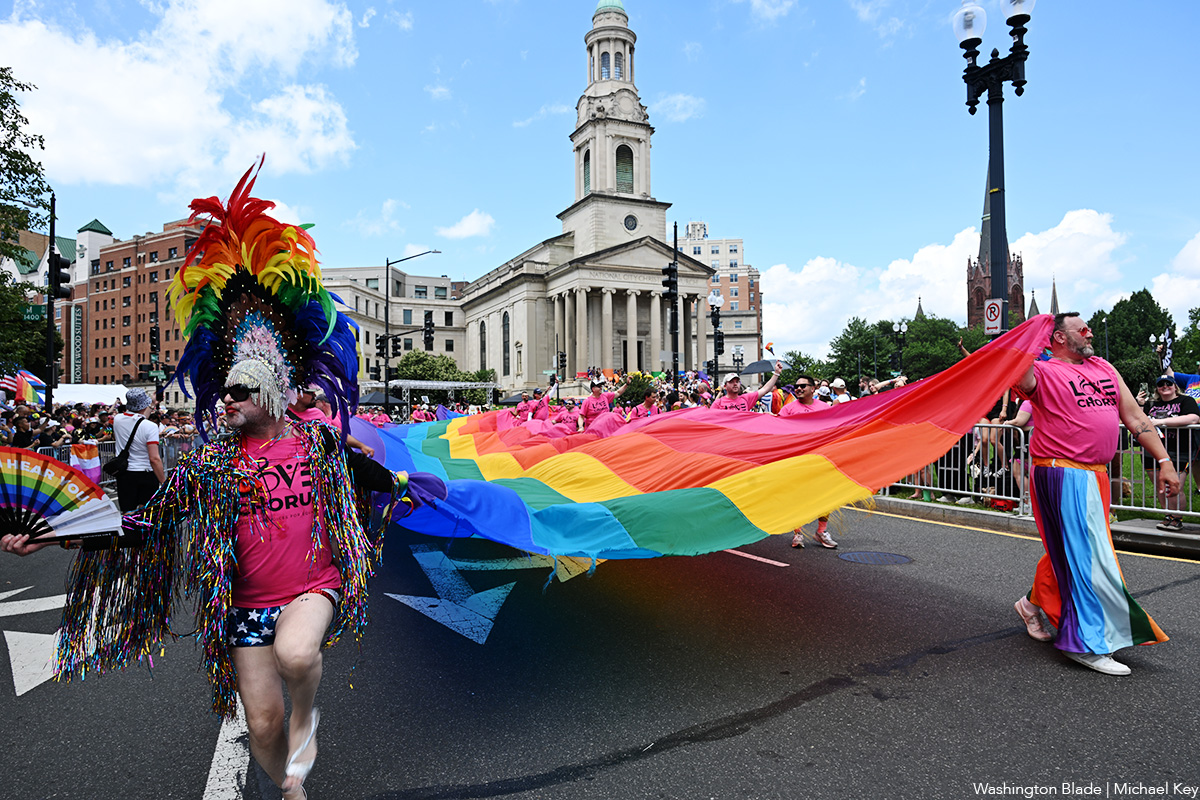
Hundreds of thousands of people are expected to attend Pride events in D.C. this month.
The Capital Pride Alliance is marking its 51st year with a full slate of events, including a parade, festival, concert, parties, and community events across the city. This year’s theme is “EXIST. RESIST. Have the Audacity!”
“Our audacity is our collective strength. Against the forces that try to diminish us, we must remain bold, courageous, visible and heard, in a world that questions our humanity and challenges our rights. Together, let’s have the audacity to live, thrive, be joyful, and proud!” Capital Pride Alliance said in a statement.
Capital Pride’s signature weekend events will center on the June 20 parade and June 21 festival and concert.
The parade and concert will not take place on the second weekend of June, as they have in the past, to avoid conflicts with America’s 250th anniversary celebration.
The parade route is expected to begin at 14th and T Streets, N.W., and end at Pennsylvania Avenue and 9th Street, N.W. Free viewing areas will be available, though reservations are required for seating at designated locations across the route.
Leading up to the parade, a family event will be hosted from 11 a.m. to 3 p.m. at Stead Park in Dupont Circle. Activities will include crafts, glitter tattoos, hair tinsel, photo ops, and an inflatable obstacle course. The event is free, but a prior reservation is required.
Crack of Noon Parade Brunch, a 21+ event featuring an all-you-can-eat buffet, will also take place earlier on June 20 at the Viceroy Washington at 1430 Rhode Island Ave., N.W.
The 17th Street Block Party, presented by Absolut, will also take place from noon to 10 p.m. on 17th Street in Dupont Circle. It will feature local food, an adult beverage garden, and other events.
On June 21, the Capital Pride Festival will run from noon to 10 p.m. on Pennsylvania Avenue The festival includes the Capital Pride Concert at Capitol Stage. The lineup of artists for the festival concert includes Maren Morris, queer rapper Leikeli47, Lisa Lisa, “Heated Rivalry” DJ Harrison, Tracy Young, and Myki Meeks.
“In a moment when LGBTQ+ people are being challenged across the country, the Capital Pride Concert is a space where our community is fully seen and heard,” said Capital Pride Alliance President Ryan Bos in a news release regarding the concert lineup.
Tickets to the concert are free, with exclusive pit and VIP experiences available for purchase.
The night will end with a “Capitol” Sunset Dance Party from 8-10 p.m., directly following the concert. It is available to all ages.
Other stages for concerts include the Monument and Dupont Dance Stage, with the artist lineup yet to be announced.
Three main parties will be available leading up to and during the parade: Riot!: The Official Pride Opening Party on June 19, featuring Bob the Drag Queen with a DJ set and headliner Myki Meeks. ELIX-Her on June 20 is a women-centered event at Decades and is 21+. On the same night, KINETIC: Toyland will feature headliner Alaska, “RuPaul’s Drag Race All Stars 2” winner.
Before the parade and festival weekend, community events, and celebrations will take place throughout the city.
The Washington Blade will host Pride on the Pier on June 13 from 4-9 p.m. at The Wharf. The free event will feature Pride365 Radio, a drag show with Venetian, DJ Chord, and dancing.
Capital Pride will have Night of Expression on June 10 at 7 p.m. at Busboys and Poets (14th and V streets). The event will feature an open mic and other performances.
Capital Pride Honors
Beyond its public celebrations, the Capital Pride Alliance will also recognize community leaders through its annual Capital Pride Honors program. This year’s honorees were selected based on how their work reflected the 2026 theme of Pride.
The winners were awarded at the Audacity Brunch: In Full Fuchsia, which is part of a fundraiser with Pride365, on Sunday.
Honorees included D.C. Del. Eleanor Holmes Norton, who received the Paving the Way Award; D.C. Mayor Muriel Bowser, who received the Key to Capital Pride Award; and the Heroes Award recipients Benjamin Coy, Charity Blackwell, Darryl Hamilton, Thea Kano, Kendall Martinez-Wright, and Lee Levingston Perine.
Dylan Drobish and Tyler Hack received the SaVanna Wanzer Visibility Award, while Patrick Magee and Judy Schloss were honored with the Bill Miles Award for Outstanding Volunteer Service.
Darrell Wood and Tyler Cargill received the Breaking Barriers: Community Impact Award, and Dai Nguyen received the Bernie Delia Award.
Maryland
‘Girlfriends’ wanted for murder in Silver Spring, Md.
Montgomery County police say two charged with killing mother of one of them

The Montgomery County, Md., Department of Police announced on June 4 that it is seeking the public’s help in locating two women, who they identify as a couple, who are charged with first-degree murder for allegedly killing the mother of one of them.
In a statement police identified the two women as Vanessa Tjongarero-Henderson of Clarksburg, Md., and her girlfriend Samantha Raebel of Phoenix, Ariz. The statement says the two are charged with the murder of Hilde Henderson, 67, the mother of Vanessa.
According to the statement, officers with the department’s 3rd District found Hilde Henderson deceased on Tuesday, May 26, 2026, at her home at the Charter House apartments in the 1300 block of Fenwick Lane in Silver Spring after being called to check on the resident’s welfare.
“Henderson was transported to the Office of the Chief Medical Examiner, where an autopsy was conducted,” the statement says. “The cause of death was ruled a homicide.”
It adds, “Through the course of the investigation, detectives identified Henderson’s daughter, Vanessa Tjongarero-Henderson and Vanessa’s girlfriend, Raeble, as the suspects.” It says detectives obtained an arrest warrant against the two women, charging both with first-degree murder.
“Anyone with information regarding the location of these suspects or this crime is asked to call 911 or to visit the Crime Solvers of Montgomery County, Md. website at crimesolversmcmd.org,” the statement says, or to call the tip line at 1-866-411-8477.
“Tips with information leading to an arrest may be eligible for a reward from $250 up to $10,000,” it says, adding that tips may remain anonymous.
A spokesperson for Montgomery County police didn’t immediately respond to a request from the Washington Blade for information not disclosed in the police statement, including the physical-medical cause of death for Hilde Henderson and whether detectives have determined a motive for the murder.

PHOTOS: Fairfax City Pride

EXCLUSIVE: Pelosi reflects on four decades of LGBTQ advocacy

D.C. prepares to party as Pride celebrations kick off Saturday

David Archuleta, Monroe Alise named D.C. Pride parade marshals