Local
Mayor honors ‘Sheroes’ of LGBT movement
3 women commended for service to local community
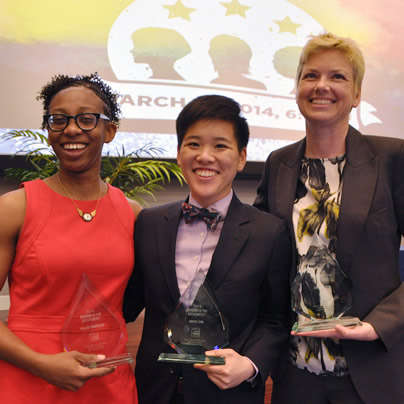
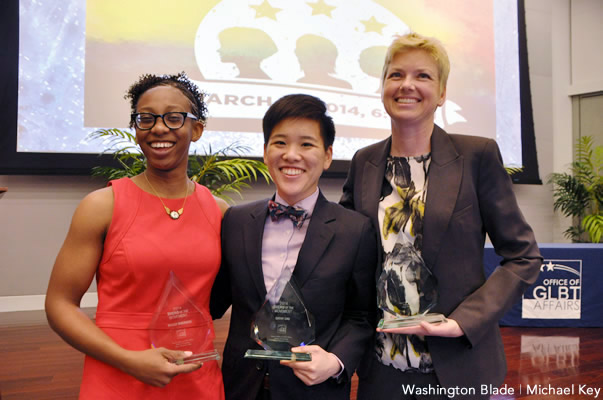
From left, Kelley Robinson of Planned Parenthood, Cathy Chu of SMYAL and Amy Nelson of Whitman-Walker Health received their Sheroes of the Movement awards at a ceremony in the Fannie Mae Conference Center on Friday. (Washington Blade photo by Michael Key)
On behalf of his Office of GLBT Affairs, D.C. Mayor Vincent Gray on March 21 presented the city’s 2014 Sheroes of the Movement Award to three women chosen for outstanding contributions to the “LGBT movement and community” of the District of Columbia.
In a ceremony at the federal Fannie Mae Conference Center on Wisconsin Avenue, N.W., Gray handed the awards to Cathy Chu, Youth Leadership Manager for the local LGBT youth advocacy and services group SMYAL; Amy Nelson, Supervising Attorney at Whitman-Walker Health’s Legal Services Program; and Kelley Robinson, Assistant Director for Youth Engagement at Planned Parenthood.
“The purpose of these awards is to honor Sheroes of the District of Columbia GLBT community for their achievement and community service during Women’s History Month,” said Earl Fowlkes, chair of the Mayor’s GLBT Advisory Committee, which selected this year’s honorees.
“These unsung Sheroes have contributed so much to our community and are often not recognized for their work in helping to make the District one of the most vibrant GLBT communities to live and work in the United States,” Fowlkes in a statement in the ceremony’s program book.
A statement released by the mayor’s office says the Office of GLBT Affairs organized this year’s 3rd annual Sheroes of the Movement Award program with the Mayor’s Office on Women’s Policy and Initiatives and the Mayor’s Office of Community Affairs.
The statement describes the 2014 awardees as “three lesbian, bisexual or queer women who have made significant contributions to the LGBT movement and community in the District.”
Chu, among other things, develops programs and training initiatives “designed to empower young LGBTQ-identified individuals in the District, Maryland and Virginia,” according to biographical information released by the mayor’s office. She also serves on the Steering Committees for the National Association of Gay-Straight Alliance Networks and Asian Pacific Islander Queer Sisters.
As part of her work at SMYAL, she facilitates the Women’s Leadership Institute, which provides a weekly discussion group and overnight retreats for more than 100 “young LGB women and gender non-conforming youth” in the D.C. area, information released by the mayor’s office says.
Nelson, an attorney, among other things, oversees Whitman-Walker Health’s client intake, supervises staff attorneys and represents clients — about half of whom are LGBT — in the areas of health care access, public benefits, consumer rights and workplace rights cases.
She is credited with playing the lead role in launching the city’s first Name and Gender Change Clinic to assist transgender people in updating their legal identity documents and personal records. In partnership with the local group TransLAW, the Name and Gender Change Clinic has served more than 270 clients and has trained more than 150 volunteers to carry out its services.
Among other things, Nelson has served on the board of Miriam’s House, a residence for HIV-positive, homeless women.
Robinson operates Planned Parenthood’s national youth and campus engagement programs known as the Planned Parenthood Generation, which is a project of the Planned Parenthood Federation of America, information released by the mayor’s office says.
“She is dedicated to cultivating, engaging, and supporting a broad, diverse network of young leaders, especially young people of color and LGBTQ youth,” a statement in the program book says. “Kelley has doubled Planned Parenthood’s campus presence over the last two years, for a total of 250 campus groups nationwide, nearly 100 teen advocacy programs and thousands of individual activists,” it says.
“It’s a real honor to be here,” Gray told the awards gathering. “I’ve said there’s a lot of people who have done a lot for the residents of the District of Columbia to bring about a level of understanding and acceptance that otherwise might not exist in the District of Columbia – maybe more so than any other city or state.”
Gray added, “We need to recognize people who work and do this kind of advocacy. I’m proud to be in a city that is a leader on the issues that are important to us…I want to again congratulate the honorees tonight.”
Kelley told the Blade after the ceremony that she was “so proud” to have been selected as an honoree.
“It is an incredible honor and I’m just honored and privileged to be able to do the work that I do every day working with young people, working with communities of color, working with queer folks,” she said.
Nelson said she, too, was “honored and humbled to be recognized along with” Chu and Robinson. “And I’m thrilled that the mayor and his office decided to honor us and create this event.”
Chu said after the ceremony that an important part of her work is to monitor the growing number of Gay-Straight Alliance groups or GSAs that students are forming in D.C.-area high schools as well as some middle schools.
“We definitely see growth. We know of 93 GSAs right now,” she said in both public and private schools in the D.C. metro area.



District of Columbia
Mary’s House founder, CEO retires
Dr. Imani Woody played leading role in opening DC’s first home for LGBTQ seniors
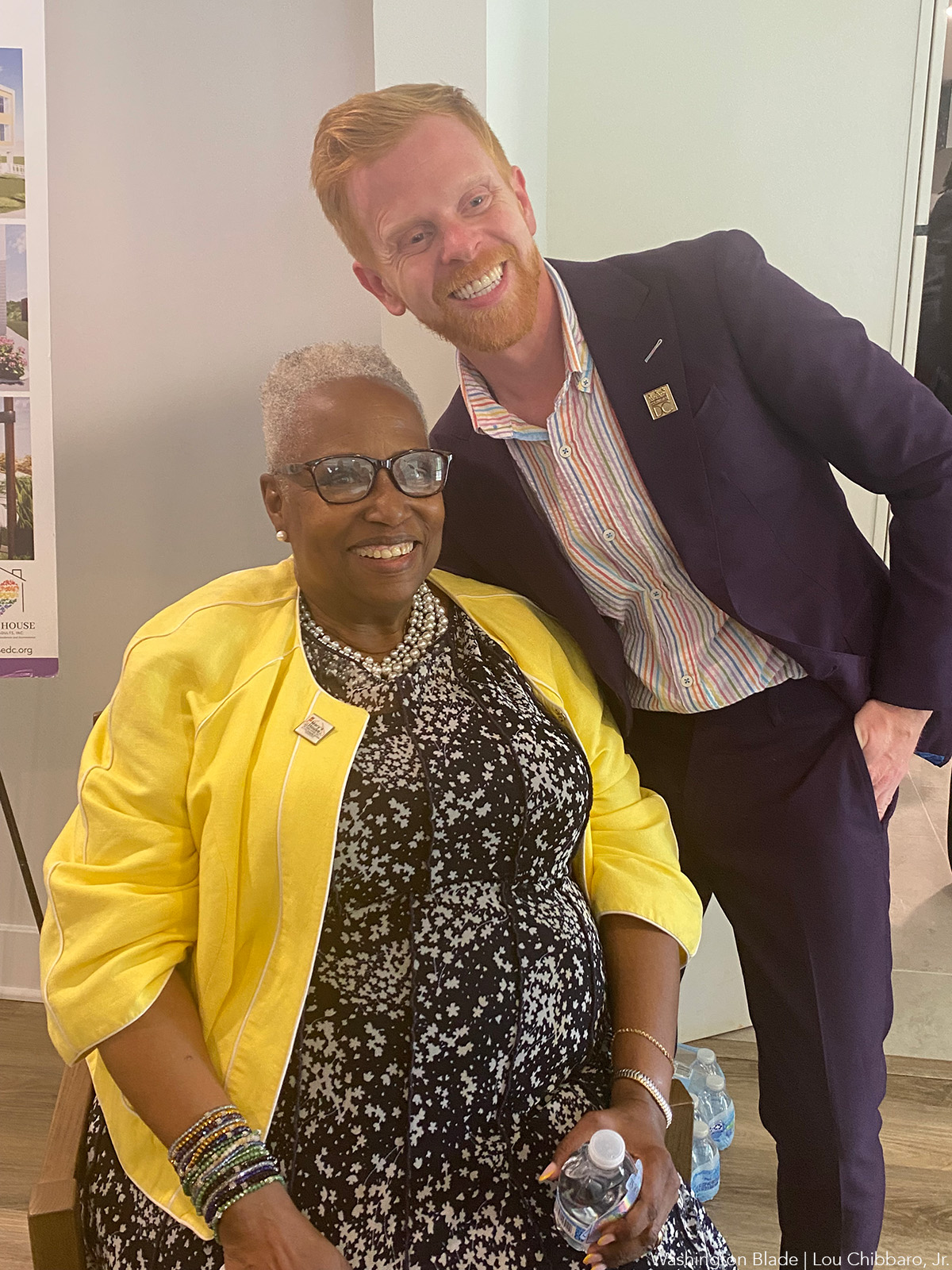
The board of directors for Mary’s House for Older Adults, DC’s first official home dedicated to providing affordable housing for LGBTQ seniors, announced on July 7 that its founding president and CEO, Dr. Imani Woody, has retired.
Woody, who holds a PhD in Human Services, is credited with playing a leading role over many years in arranging both city and private funding needed to construct and operate the Mary’s House three-story building located at 401 Anacostia Road, S.E., in the city’s Fort Dupont neighborhood.
The house, which opened in March 2025, with a grand opening ceremony held in May 2025, includes 15 single-occupancy residential units and more than 5,000 square feet of shared communal living space.
“It is with profound gratitude and hearts full of celebration that the board of directors of Mary’s House for Older Adults, DC (MHFOA) announces the retirement of our visionary founder, Dr. Imani Woody, from her role as president and CEO,” the Mary’s House board says in a statement.
“Dr. Woody’s journey with Mary’s House began with her vision and a kitchen table gathering of women with a bold, urgent, and loving vision: to create safe, affirming, affordable housing for LGBTQ/SGL older adults in Washington, DC,” the statement says.
It adds, “What started as a dream has grown into DC’s first affordable LGBTQ+/SGL affirming communal living space for adults 60 and over, a 15-room community residence at 401 Anacostia Road in Southeast Washington.”
The statement says Woody will continue to serve on Mary’s House board.
“The board will be sharing information about the leadership transition process in the coming weeks,” the statement continues. “We are committed to honoring Dr. Woody’s legacy by ensuring Mary’s House continues to thrive and grow in faithful service to LGBTQ/SGL elders experiencing housing insecurity and isolation.”
Maryland
Va., Md., advocates brace for next fight after Supreme Court sports ruling
Neither state has statewide ban on trans student athletes
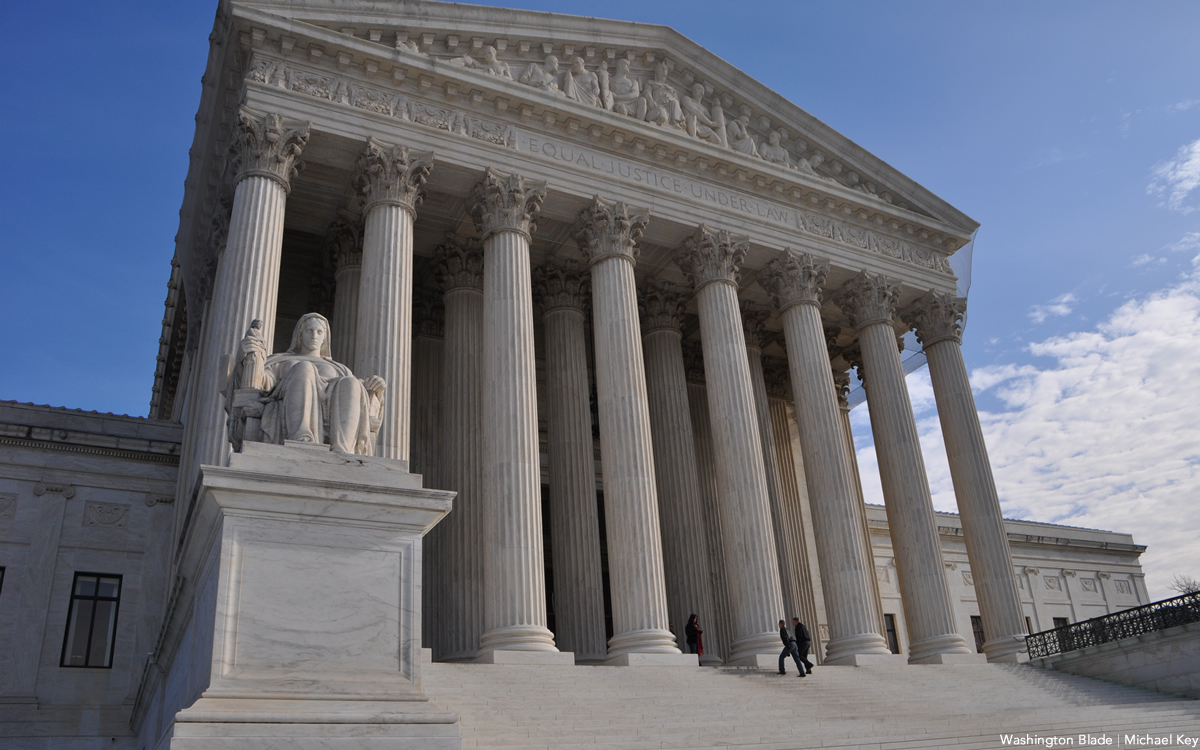
On June 30, the U.S. Supreme Court cleared the way for states to enforce laws barring transgender students from participating on school sports teams consistent with their gender identity, a decision LGBTQ advocates say could encourage additional restrictions across the country.
While neither Maryland nor Virginia currently has a statewide ban on trans student athletes, advocates say the decision could reshape future legislative battles and school policies throughout the region.
Directly following the case, attorneys for trans student athletes spoke out about the case and how detrimental it could be to students.
“This ruling is deeply harmful for transgender women and girls who only asked for the ability to participate in sports with their peers,” said Sasha Buchert, senior attorney and director of the Nonbinary and Transgender Rights Project for Lambda Legal, in a press release from the American Civil Liberties Union.
The next step is figuring out how states will move forward, specifically in Maryland and Virginia.
As of right now, neither state has bans on trans athletes in schools. The new Supreme Court decision also does not require states to enact bans, only that bans are allowed if states or school districts choose to enforce them.
According to the ACLU, 27 states have banned trans youth from participating in school sports since 2020. Most of these states also require sex testing, which the organization says is invasive for all female athletes.
Equality Virginia Executive Director Narissa Rahaman said that while she has heard a lot of frustration following the decision, people are ready to take action.
“Families, parents and youth have lived through disappointing changes to the Virginia Department of Education’s model policies for the treatment of transgender students, and the Virginia High School League’s decades-old policy that allowed transgender students an opportunity to play sports with their friends,” Rahaman said in a statement to the Washington Blade.
She believes they are not ready to give up this fight quite yet.
As of now, trans and nonbinary students are protected under Virginia law, and Rahaman wants that to continue.
“This ruling will likely embolden right-wing members of the General Assembly to pursue trans athlete bans, and we will continue to defeat every bill like we have the past five legislative sessions. Now is our time to be proactive,” Rahaman said.
She also calls upon Democratic Gov. Abigail Spanberger to defend trans youth in Virginia from what she describes as bullies and to continue to stand up to federal attacks on the trans community in general.
For trans students, Rahaman wants to ensure that they continue to know that they belong and have a place in school sports.
“To the transgender young people watching this decision unfold: you belong on your team, in your school, in your community, and here in Virginia. This ruling does not change that. A single Supreme Court decision cannot define your worth or your future,” Rahaman said.
For people who may be outside the community but want to help, she encourages them to speak with trans and nonbinary people in their community, befriend the families of youth to show their support, and continue to speak up on these issues when needed.
According to ACLU of Virginia, high schooler Eliza Munshi was told she could not compete on the girls’ track team because she was trans. To prove a point, she decided to compete with the boys.
She had previously competed on the girls’s track team before her Virginia school decided to enforce the ban demanded by President Donald Trump. With pink hair and pink makeup, she decided to continue her love for the sport alongside boys. According to Munshi, her entire community rallied for her.
“I did it to prove a point. I knew I could do it. I knew it wouldn’t phase me. My gender itself and that label has been the least important part of my transition: I want to look how I want to look. I want to dress how I want to dress. If you don’t like that, then that’s not my business,” Munshi said.
DOE has launched Title IX probe against Md. school districts
In the weeks leading up to the ruling, multiple Maryland school districts were included in a Title IX probe stating that not enforcing sex-based protections guaranteed by federal law. Currently, there have been no updates on the lawsuit or the district’s decisions.
According to the U.S. Department of Education, the federal probe is based on parent complaints that the school districts were violating a specific Trump-Vance administration addition to Title IX, stating it aligned the sex-based protections “with biological reality, not ideological fantasy.”
According to FreeState Justice, an LGBTQ advocacy group in Maryland, while this is a disappointing ruling to see, they will continue to fight for trans student-athletes in Maryland and want trans youth to know that they belong.
“Every young person deserves the opportunity to participate in school and community life without being singled out because of who they are. These decisions send a harmful message to transgender youth that they are somehow less deserving of that opportunity,” said Phillip Westry, the group’s executive director.
Westry wants to make sure the community knows that their commitment to the organization has not changed and will continue to provide the same legal services they have prior and to advance policy solutions, to ensure “every LGBTQ+ Marylander can live with dignity, safety, and equal opportunity.”
Another issue brought up by trans advocates is the issue of testing women to determine whether they are biologically female or not.
According to Human Rights Watch, as of 2023, World Athletics required cis women with increased testosterone levels to undergo medical procedures to have it reduced to avoid advantages. Other forms of “sex verification” may include genetic testing, screenings of an athlete’s anatomy or chromosomes.
However, this can become detrimental because not all women have ovaries, a uterus, or XX chromosomes, meaning cisgender women could potentially be included in these bans, depending on how the specific state plans to enforce them.
Maryland
Eastern Shore school board wants an 18-and-over rule for young adult books
Classics like ‘To Kill a Mockingbird’ and ‘Little Women’ might be off limits to most students

By LIZ BOWIE | Somerset County’s school board is considering barring students under the age of 18 from reading any young-adult literature in school libraries, essentially restricting all but 12th graders from checking out books written for teens and tweens.
The proposed policy also calls for the superintendent to discipline librarians if “adult” reading material appears in the children’s section.
The policy defines young adult as students over 18. “Young adults are not minors and books suitable for young adults shall be placed on a separate Young Adults library section to reflect age-appropriate literature,” a draft of the policy says.
The rest of this article can be read on the Baltimore Banner’s website.
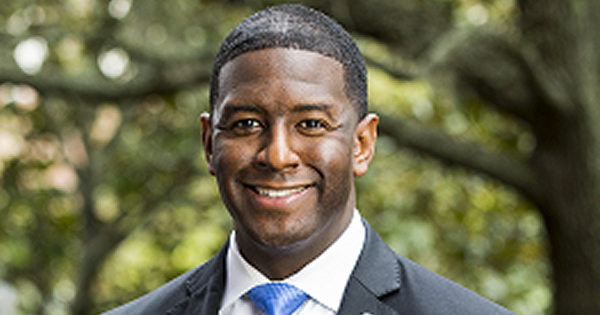
Former Fla. gubernatorial candidate Andrew Gillum arrested on drug charges

Dutch prime minister scheduled to open World Pride human rights conference

Philadelphia murder suspect remains at large

Mary’s House founder, CEO retires

Va., Md., advocates brace for next fight after Supreme Court sports ruling

‘My Favorite Sociopath’ debuts at Shepherdstown’s CATF

Under-the-radar Delaware beach towns smart buyers are targeting

In Trump’s divided America, Michael Weinstein’s AHF responds

Turkish authorities refuse to allow gay cruise to dock in country

When a church fears the rainbow
-

 Theater3 days ago
‘My Favorite Sociopath’ debuts at Shepherdstown’s CATF
-
Real Estate3 days ago
Under-the-radar Delaware beach towns smart buyers are targeting
-
Politics3 days ago
In Trump’s divided America, Michael Weinstein’s AHF responds
-
Turkey3 days ago
Turkish authorities refuse to allow gay cruise to dock in country