Local
Janice Moncier dies at 68
Award-winning activist, longtime D.C. resident
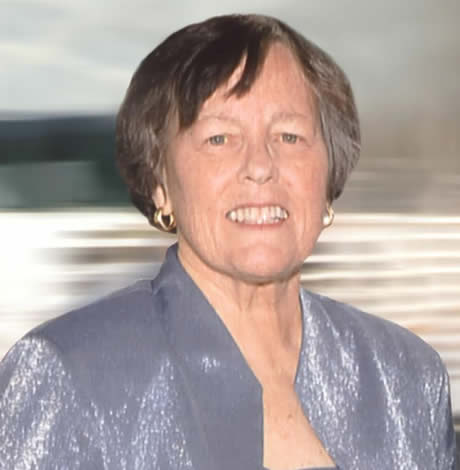
Janice L. ‘Jan’ Moncier
Janice L. “Jan” Moncier, a certified financial planner and longtime resident and neighborhood activist on Capitol Hill, died July 16 at the Washington Home and Community Hospices following a lengthy battle with breast cancer. She was 68.
According to information released by her partner of 33 years, Ann Norwood, the couple lived in D.C. since 1988, when they bought a Capitol Hill townhouse near Stanton Park that became their home.
“Jan’s interest in historic preservation led to a basement full of hardware, skylights, and door frames that she used to authentically restore elements of their 100-year-old Victorian row house,” according to a write-up prepared by Norwood.
“A dedicated neighborhood activist, Jan participated in neighborhood cleanups and ‘orange hat’ crime watches and advocated for years for the recent repaving of the alley behind their home,” the write-up says.
It says Moncier was born and raised in Tennessee on a small tobacco and dairy farm. She became an active member of the 4-H Club during her childhood years, pursuing many civic activities such as health, leadership and recreation projects.
She became a recognized athlete both in high school and at Wheaton College in Illinois, where she was inducted into its Hall of Fame for athletic achievement. She received a master’s degree in physical education at the University of Tennessee at Knoxville.
The write-up released by Norwood says Moncier went on to teach high school at U.S. Department of Defense schools in Iceland and Germany. Norwood said her partner later became a stockbroker for the E.F. Hutton Company in San Francisco. Norwood said that’s where the two met in 1981 while Norwood was completing her psychiatric residency with the U.S. Army at Letterman Army Medical Center.
The couple next moved to the Fort Hood, Texas, area where Moncier became a certified financial planner. The two moved to Washington in 1988.
In 1996, when she was first diagnosed with breast cancer, Moncier received support services from the Mautner Project, a D.C.-area lesbian health organization. The following year, after completing treatment, she became a Mautner volunteer and was recognized for her service to the group in 1999 by receiving its direct services award.
She retired from her job with the ICMA-RC retirement planning company for public-sector employees in 2008 for health reasons after her cancer returned, Norwood said.
“Jan was known for her extreme generosity, love of gardening, travel and women’s basketball; and her devotion to finding a good deal on Craigslist,” Norwood said in her write-up.
Moncier was predeceased by her parents, Mark and Bonnie Wilhoit Moncier; her sister, Sherry Rockstad; and her brother, David Moncier. She is survived by Norwood, her spouse; her brother-in-law Phil Rockstad; sister-in-law Margaret Moncier; her nephew Jonathan Moncier; and several aunts, uncles and cousins.
A memorial service is scheduled for Saturday, Aug. 9, at 1 p.m. at the Hill Center on Capitol Hill at 921 Pennsylvania Ave., S.E. in D.C. The family asks that memorial contributions be made to a favorite charity in lieu of flowers.






Maryland
White House threatens Anne Arundel schools over gender identity policy
District faces possible legal action or loss of federal funding

By JESSICA CALEFATI | The Trump-Vance administration on Monday threatened to punish Anne Arundel County’s school system with legal action or the loss of federal funding for allegedly withholding information about a student’s gender identity and transition from the child’s parents.
The U.S. Education and Justice Departments together determined that the suburban Maryland district treats students’ gender identities as confidential medical information that cannot be shared with parents, in violation of federal student privacy law, according to a news release. A federal lawsuit filed against the district earlier this month made similar claims.
“As a mother and a grandmother, it is unconscionable that any school district would hide the most sensitive information about children in their care from their own parents,” U.S. Secretary of Education Linda McMahon said in a statement. “This is not only an affront to basic moral principles, but also to parents’ rights under federal law.”
The rest of this article can be read on the Baltimore Banner’s website.
Virginia
Winsome Earle-Sears launches campaign against Va. marriage equality amendment
Former LG lost to Abigail Spanberger in 2025 gubernatorial race
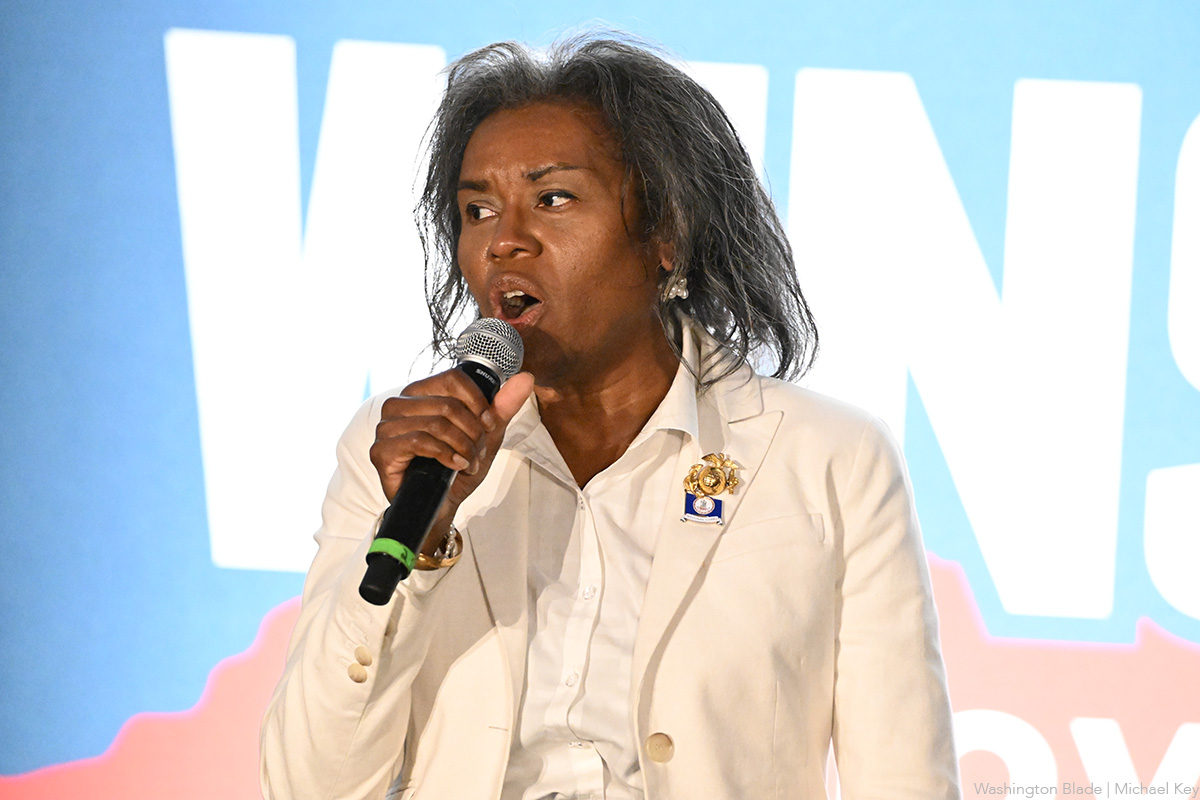
Less than a year after losing Virginia’s gubernatorial race, former Lt. Gov. Winsome Earle-Sears is campaigning across the state against constitutional amendments that would protect marriage equality and reproductive freedom.
She is launching a statewide “Life and Marriage Tour” ahead of November’s election.
Although same-sex couples can legally marry under the U.S. Supreme Court’s 2015 Obergefell v. Hodges decision, Virginia’s constitution still contains language that defines marriage as between one man and one woman. Supporters say removing the language would protect marriage equality should federal precedent change.
The original ban was written into the state constitution in 2006.
It has been hinted at in the past by Supreme Court Judge Clarence Thomas that he would consider revisiting Obergefell v. Hodges regarding contraception and marriage rights for same-sex couples. He stated this in his concurring opinion regarding the Dobbs v. Jackson ruling, which allows for state-level abortion bans.
Equality Virginia Executive Director Narissa Rahaman said removing the ban would bring the state’s constitution in line with existing law.
“20 years after banning marriage equality, it’s time for our commonwealth to fully complete our evolution — and finish the job on protecting marriage equality for all,” Rahaman said.
In an email to supporters, Earle-Sears said these amendments “raise serious concerns” and could alter principles about which Virginians care.
“That is why our efforts are focused not only on informing voters, but also encouraging them to carefully consider these proposals and vote NO on both amendments,” Earle-Sears said.
Virginia voters will consider three constitutional amendments this November.
Earle-Sears is campaigning for voters to reject two of them: the Virginia Remove Constitutional Same-Sex Marriage Ban Amendment and the Right to Reproductive Freedom Amendment.
A “Yes” vote on the Same-Sex Marriage Ban Amendment would include removing a provision that states marriage is between one man and one woman and prohibitng the state from denying a marriage license to two adults based on their sex, gender, or race, according to the Virginia Department of Elections.
In 2025, during debates against now Gov. Abigail Spanberger, Earle-Sears argued it is not discrimination to think that gay people should not be allowed to marry. She claims it conflicts with her faith.
According to ABC 8, in 2024 she wrote that she had a “moral opposition” to marriage equality, after former Gov. Glenn Youngkin, a Republican, signed a marriage equality bill that barred denying marriage licenses based on sex, gender, or race.
According to the Virginia Department of Elections, a “Yes” vote on the Reproductive Freedom amendment supports adding a section to the state constitution that would give Virginians the right to make and carry out decisions regarding reproductive healthcare, except in specific exemptions.
The Virginia Department of Elections wrote that if accepted, the amendment would allow the state government to pass laws to regulate abortion care in the third trimester of pregnancy, but require abortion care when it is medically needed to protect the life and health of the pregnant person or because the fetus is not viable.
During the 2025 election cycle, Earle-Sears was clear on her anti-abortion stance.
According to the Virginia Independent, she utilized campaign funds to donate to the Family Foundation of Virginia. The group is a faith-based, anti-abortion, and anti-in vitro fertilization non-profit.
The “Life and Marriage Tour” will include traveling throughout Virginia to speak with citizens, churches, community organizations, and local leaders. The exact locations have yet to be announced.
District of Columbia
D.C. Council approves increased funding for Mayor’s Office of LGBTQ Affairs
Increase attached to 2027 budget bill

The D.C. Council on July 14 gave final approval for the city’s fiscal year 2027 budget that includes an amendment calling for increasing the number and size of funding grants that the Mayor’s Office of LGBTQ Affairs provides for local organizations providing services for the LGBTQ community.
The amendment, called the “LGBTQ Community Grant Amendment Act of 2026,” was introduced earlier this year by D.C. Council member Zachary Parker (D-Ward 5), the Council’s only gay member.
The D.C. LGBTQ Budget Coalition called the Parker amendment “a historic measure that establishes the District’s most sustainable model for a vehicle for investing in LGBTQ communities.”
The Council approved the version of the FY 2027 budget bill with the attached Parker amendment in its first of two required votes on June 9. Shortly after voting unanimously to give final approval of an earlier version of the two-part budget measure on July 7 that includes the Parker amendment, the Council sent the bill to Mayor Muriel Bowser for her signature.
Bowser has expressed strong opposition to several provisions in the $22 billion budget measure passed by the Council that are unrelated to the Parker amendment regarding the Office of LGBTQ Affairs. The mayor has yet to say whether she will sign, veto, or choose not to sign the bill.
The latter option would allow the bill to become law if Congress does not choose to overturn it during its required 30-day legislative review period for all D.C. bills. Political observers believe the Council will vote to override a veto if Bowser chooses to veto the bill.
When contacted by the Washington Blade on July 22 to determine where the mayor stands on the budget bill, mayoral spokesperson Daniel Gleick said only, there was “no update on the budget just yet.”
Among other things, the Parker amendment calls for the Mayor’s Office of LGBTQ Affairs to issue a $980,000 grant in FY 2027 to a private, nonprofit organization in partnership with the office “for the purpose of supporting programs that promote the welfare of the lesbian, gay, bisexual, transgender, and questioning community.”
It would allocate $680,000 of that funding total from existing funds from the city’s community affairs grants program and calls for $200,000 in newly appropriated funds.
It says the organization selected would also initiate its own fundraising effort to expand the amount of funds beyond the amount the office would provide, enabling it to provide larger grants to a greater number of local LGBTQ organizations.
“The legislation arrives at a critical moment, as LGBTQ-serving organizations face unprecedented uncertainty,” the D.C. Budget Coalition said in its comment on the Parker amendment. “Growing demand for services is colliding with shrinking resources, federal attacks on LGBTQ programs, and ongoing threats to local funding streams,” the coalition’s statement says.
In what some observers have called a highly controversial action; the budget bill approved by the Council reverses and restores millions of dollars in budget cuts proposed by Bowser in the budget she submitted to the Council earlier this year.
Among other things, the Council’s budget preserves the current level of funding for housing vouchers, childcare, paid family leave, and other programs slated to be cut in the mayor’s proposed budget, according to a report by the Washington Post.
Bowser points out that the Council approved budget bill calls for using $150 million from the city’s reserve fund, which she and others have said could put the city in jeopardy in future years. The mayor has said the cuts were needed to prevent a major funding shortfall brought about by the action by Republicans in Congress to cut the city’s budget by over a billion dollars.

White House threatens Anne Arundel schools over gender identity policy

PHOTOS: Front Royal Pride

Dutch queen opens World Pride in Amsterdam

Gary Sutton, known for ‘warmth and laughter,’ dies at 62

With gas prices soaring again, a staycation is a good plan

Summer in D.C. brings sports, Restaurant Week, festivals, and more

No Pride without Disability Pride

Trump tries to scare Americans into not voting

2026 International AIDS Conference to take place in Rio