Arts & Entertainment
FALL ARTS 2016: Events
D.C. gay scene crammed with fall events
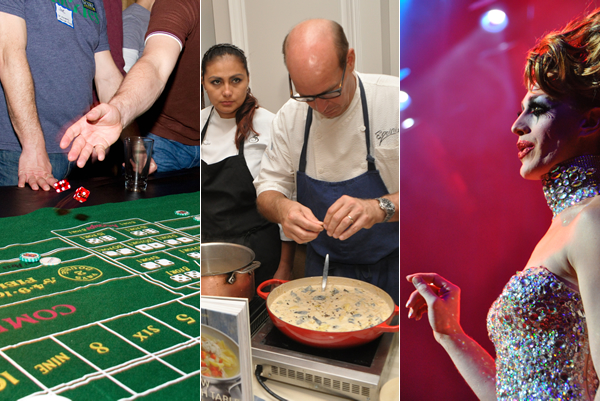
The D.C. gay scene is crammed with fall events. (Washington Blade photos by Michael Key and Pete Exis)
Some events don’t fit in our other fall arts categories. Here are a few to note.
AGLA, a Northern Virginia-based nonprofit LGBT group, has brunch at Freddie’s Beach Bar (555 S. 23rd St., Arlington, Va.) on Saturday, Sept. 17 from 11 a.m.-1 p.m. The group also has a picnic planned immediately following at Virginia Highlands Park (1600 S. Hayes St., Arlington, Va.). Bring something to grill. Details atagla.org.
The Team D.C. Night of Champions Awards Dinner is Saturday, Nov. 5 at Washington Hilton Hotel (1919 Connecticut Ave., N.W.). It starts with a cocktail reception and silent auction at 6 p.m. and the awards dinner at 7:30 p.m. Dress is business casual. Tickets are $100. Details at teamdc.org.
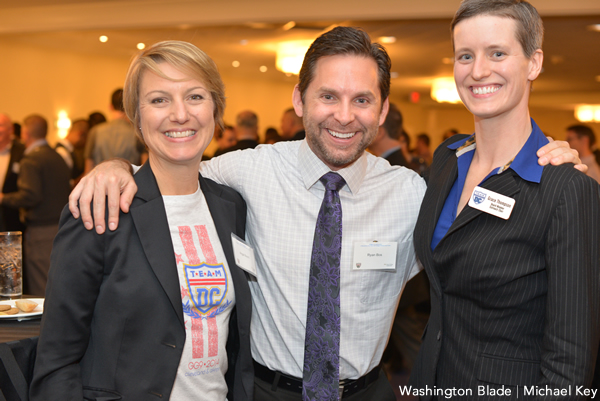
Team D.C. Night of Champions (Washington Blade file photo by Michael Key)
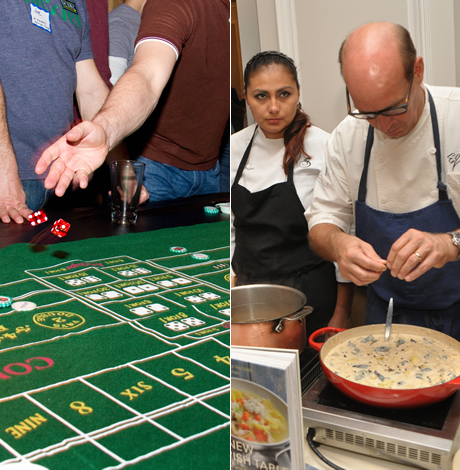
Team D.C. has its fall casino night on Saturday, Sept. 24. Details coming soon at teamdc.org.
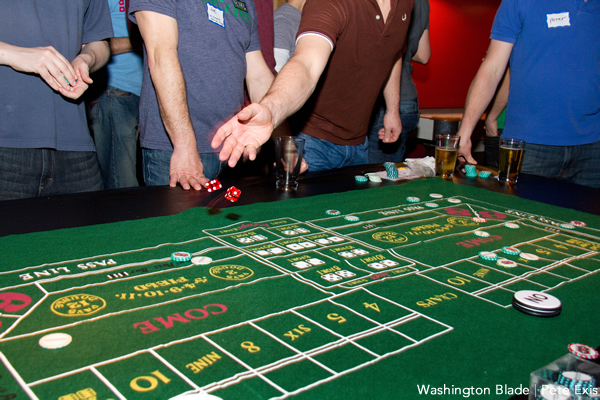
Team D.C. Casino Night (Washington Blade file photo by Pete Exis)
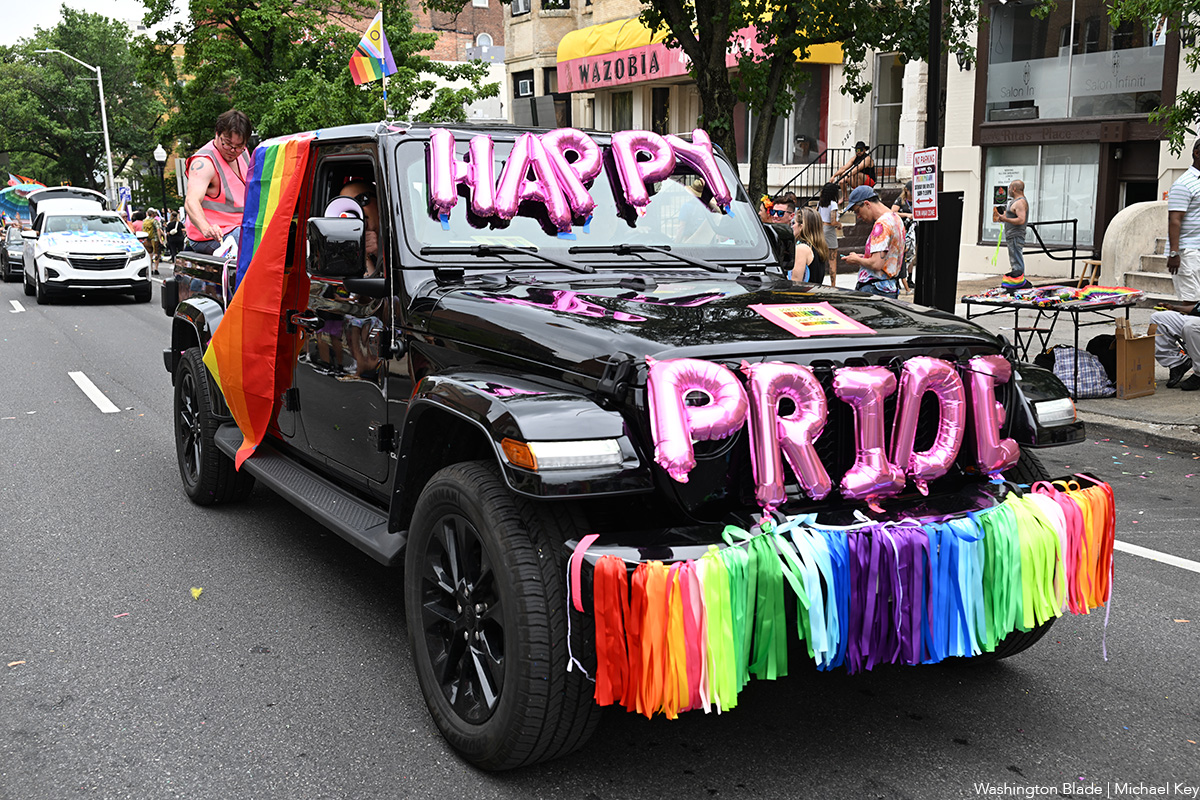
Pride Day at King’s Dominion is Saturday, Sept. 24 sponsored by Brother Help Thyself. Doors open at 10:30 a.m. Details at brotherhelpthyself.net.
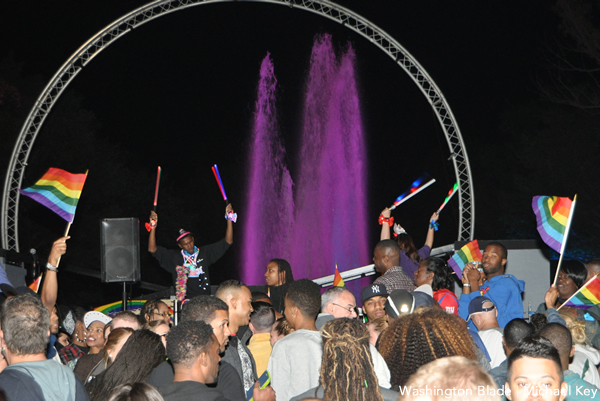
Pride Day at King’s Dominion (Washington Blade file photo by Michael Key)
Up for a weekend getaway? The Miss’d America Pageant, a drag contest, is Sept. 24 at the Borgata Atlantic City hosted by Caron Kressley. Details at missdamerica.org.
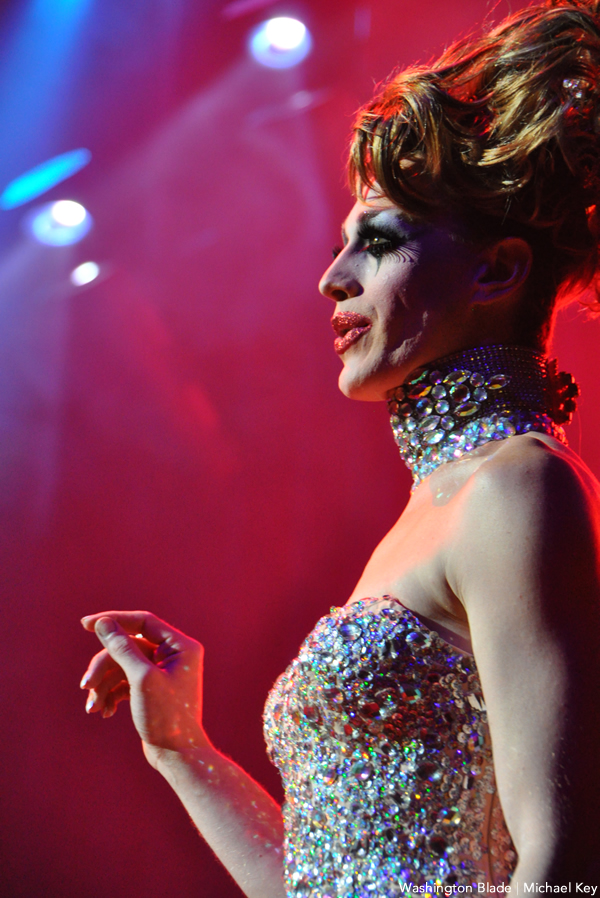
Miss’d America pageant (Washington Blade file photo by Michael Key)
Bisexual Pride Day is Friday, Sept. 23. No local events have been announced related to this.
National Gay Men’s HIV/AIDS Awareness Day is Tuesday, Sept. 27. Details at cdc.gov or aids.gov/awareness-days.
“Remington’s Reunion Show” will be held on Sunday, Sept. 25 at 8 p.m. at the Bachelor’s Mill (1104 8th St., S.E.). The event will be hosted by Tony Nelson and Maxine Blue. Details at bachelorsmill.com.
Rayceen’s Reading Room will be held on Monday, Sept. 26 at 7 p.m. at the Martin Luther King, Jr. Memorial Library (901 G St., N.W.) as a kickoff event for the library’s Banned Book Week. The event will include poetry, drama, book readings, author interviews and more. “The Ask Rayceen Show” continues its monthly installments on the first Wednesday of each month at the library in auditorium A5. Search for the show on Facebook for details.
“Celebrating the Soul of Justice” will be held on Thursday, Sept. 29 at 7:30 p.m. at Covenant Baptist United Church of Christ (3845 S. Capitol St., S.W.). It’s an annual worship service affirming black LGBT people of faith. Rev. Christine Wiley will preach. Details at manyvoices.org.
Northern Virginia Pride Festival is Saturday, Oct. 1 from noon-8 p.m. at the Bull Run Special Events Center in Centreville, Va. Details at novapride.org.
National Coming Out Day is Tuesday, Oct. 11. No local events have been announced.
CRACK presents “WERRRRRRK!” at Town Danceboutique (2009 8th St., N.W.) on Saturday, Sept. 17 at 10 p.m. Details at towndc.com.
Baltimore Black Pride will have its “Unsung Legends of Baltimore” event on Thursday, Oct. 6 from 8 p.m.-midnight at the Eubie Blake National Jazz Institute and Cultural Center (847 N. Howard St., Baltimore). Call Lonnie Walker at 443-522-8553 to purchase tickets ($50 in advance; $60 at the door). Baltimore Black Pride runsOct. 13-16. Details at centerforblackequity.org/
The fifth annual Human Rights Campaign Chefs for Equality event will be held on Wednesday, Oct. 26 at 6:30 p.m. at the Ritz-Carlton, West End (1150 22nd St., N.W.). Tickets are $200. Details at chefsforequality.org.
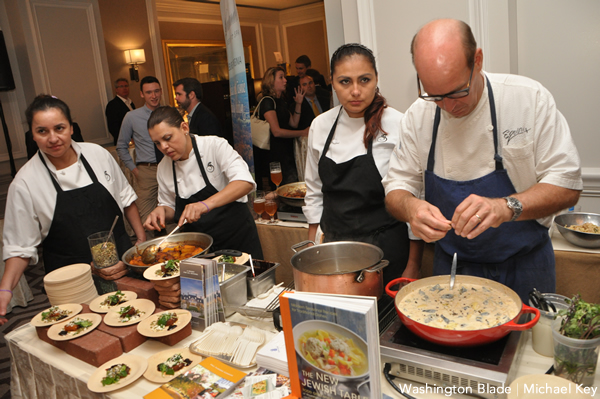
Chefs for Equality (Washington Blade file photo by Michael Key)
No information yet, but the Gertrude Stein Democratic Club will likely hold its 40th annual Leadership Awards in mid-to-late October. Check soon atsteindemocrats.org for more information.
The Blade will hold its 15th annual Best of Gay D.C. Awards on Thursday, Oct. 20 at Town Danceboutique (2009 8th St., N.W.). Details pending.
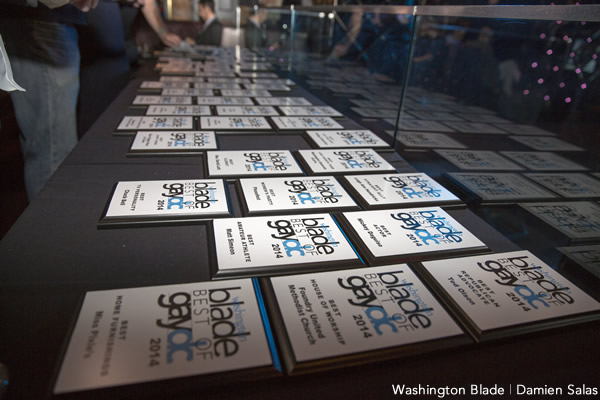
(Washington Blade file photo by Damien Salas)
The Walk & 5k to End HIV, the 30th anniversary of AIDS Walk Washington, will be held on Saturday, Nov. 12. Details at aidswalkwashington.org.
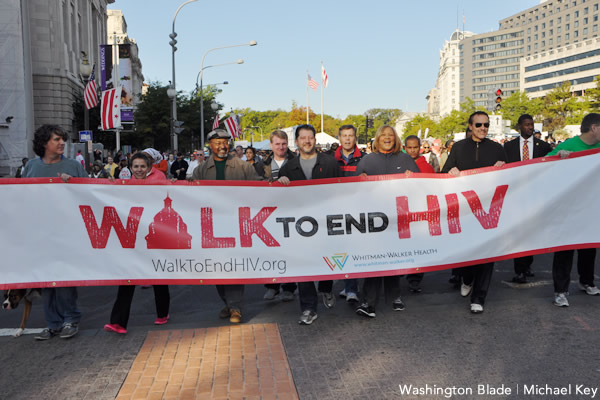
The Walk to End HIV (Washington Blade photo by Michael Key)
The 30th annual High Heel Race will be Tuesday, Oct. 25 on 17th Street. The event has its own Facebook page for details.
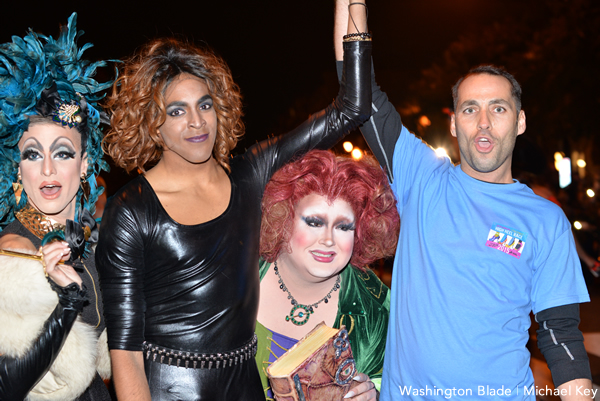
High Heel Race (Washington Blade file photo by Michael Key)
Us Helping Us will hold “A Passion for Living: a Night of Celebratory Giving” on Saturday, Oct. 29 from 6-11 p.m. in the Student Center Ballroom at the University of the District of Columbia (4200 Connecticut Ave., N.W.). Tickets are $125. Details at uhupil.org.
The Dulles Triangles, a social group in Virginia, have its 25th anniversary gala on Saturday, Nov. 19 from 7 p.m.-midnight at the Spectacular Ballroom at Sheraton Tysons Hotel (8661 Leesburg Pike, Tysons, Va.). Tickets are $50 for members; $60 for guests. Details at dullestriangles.com.
Trans Day of Remembrance is Sunday, Nov. 20. A service is usually held that evening at Metropolitan Community Church of Washington but details for this year’s service have not been announced yet. Check soon at thedccenter.org or on Facebook.
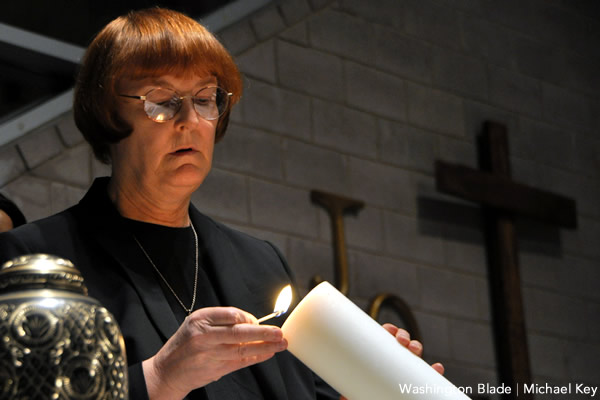
Transgender Day of Remembrance (Washington Blade file photo by Michael Key)
Movies
‘It’s Dorothy’ traces lasting influence of a cultural icon
Thoughtful and scholarly with a celebratory tribute to the character
There was a time, according to queer lore, when gay men referred to themselves as a “Friend of Dorothy” as a coded way of communicating their sexual orientation to each other without fear of “the straights” catching on. The reference, of course, is a winking nod to the love and affinity felt by the community toward the main character of L. Frank Baum’s 1900 novel “The Wonderful Wizard of Oz” – especially as personified by Judy Garland in the classic 1939 big screen musical version from MGM.
It may be that the origins of this phrase have been mythologized, exaggerated and/or retro-fitted to convey the underground nature of the queer community – as, indeed, is suggested in “It’s Dorothy!” (the new documentary from filmmaker Jeffrey McHale, now streaming on Peacock), which concerns itself with the enduring cultural legacy of this quintessentially American fictional heroine. But regardless of whether it truly served as a sort of “secret password,” it has come to be embraced as a part of the LGBTQ lexicon. As “campy” as the reference may be, being a “Friend of Dorothy” is now a proudly held communal watchword not just for gay men, but for an entire rainbow community – and McHale’s fizzy-yet-reverential exploration taps into all the reasons how and why this fictional Kansas farm girl has come to be a touchstone for so many by tracking her journey across popular culture over the 125 years since she first sprung to life in the pages of Baum’s timeless literary fantasy.
Calling on the commentary of cultural figures – writers, performers, and other artists whose paths have been, by fate or by personal design, have become associated with Dorothy’s legacy across pop culture, as well as the observations of scholars and historians that provide insight on the appeal that has made her into a sort of avatar for anyone who feels marginalized in a wild and self-contradictory world – and enriched by a plentiful trove of clips from the myriad incarnations through which she has become embedded into the American pop culture imagination, it’s a documentary that leans heavily into the notion that Baum’s timeless heroine remains relevant through her relatability. Given a minimum of descriptors by the author who created her and portrayed in the public imagination through a widely divergent array of social viewpoints, she represents a kind of “blank page” on which we can imprint ourselves; but at the same time, there is something about her – her nebulous status as presumed orphan, raised by an aunt and uncle who don’t quite understand her and thrust without warning into a world of contradictory rules and unfair expectations – that speaks directly to those who feel like outsiders, or who dream of freedom, acceptance, and personal agency beyond the proverbial rainbow.
Naturally, McHale imprints on Dorothy’s most iconic incarnation off the pages of Baum’s books; the cultural legacy of Dorothy cannot be separated from that of her most iconic representative – Garland, of course – and his documentary easily makes the case that, through her association with the character, this beloved actress who was constantly judged and frequently stigmatized throughout a career that took her through the heights of public success to the depths of personal heartbreak, all while living under the constant scrutiny of Hollywood’s publicity-and-propaganda machine. As a result, she somehow merged identities with her most famous role: Judy was Dorothy, but Dorothy was Judy, too. “It’s Dorothy” takes advantage of this almost mystical transfiguration to reflect on the qualities that make this pairing of actress and character so deeply complementary, while also using it to illuminate why the empathy which binds her with the queer community is so tightly connected to the qualities she shared with the non-descript but unforgettable character that would make her into an undisputed icon.
As famous as Garland’s Dorothy is, however, it’s not the end-and-be-all of Baum’s beloved heroine, and much of McHale’s movie turns its attention to the numerous other performers who have taken on the role throughout the decades, in various incarnations of the “Wizard of Oz” mythos – particularly through “The Wiz,” the 1974 Broadway musical that reframes and remolds the story (and Dorothy) through the lens of Black culture and experience, and other iterations that have emerged throughout pop culture as a testament to her enduring appeal. Indeed, the movie brings illumination to the way that Dorothy – and the “Oz” mythos in general – has become a touchstone within Black community culture as well, and how artists (like musician Rufus Wainwright, gay counterculture icon John Waters, comedian/actor Margaret Cho, comedian/writer/director Lena Waithe, and “Wicked” author Gregory Maguire, all of whom participate in the film’s conversation) have found inspiration in the character and her story, which has helped to shape their own creative lives.
Thoughtful and scholarly while also delivering a celebratory tribute to the character (and the outsider qualities which make her beloved by so many who can relate to her sense of longing and the call she feels to journey “Somewhere Over the Rainbow”), “It’s Dorothy” provides a respectful yet candid examination of the lasting impact of Baum’s iconic character and the world he created around her in our popular imagination, not just as queer people but as a larger American community. It’s an entertaining journey into cultural history, which connects the dots to give us insight on why Dorothy and her adventures continue to speak to us with such profound resonance. It’s also entertaining in a way that feels like a “guilty pleasure” but is validated by the reverence it exudes for its subject, and loaded with memorably evocative clips from movies, shows, and performances from across the decades; and while it may begin to feel a bit repetitive, at points, as it examines the various actresses who have played Dorothy over the years (and the meaning they have found in her that connects her to their own lives), it nevertheless maintains a sincerity of feeling that keeps us invested.
And just in case you might feel like the times are too somber for a nostalgic stroll down the “yellow brick road” of cultural memories, be aware that McHale also explores the ominous presence of the Wizard himself in these tales, a phony who pretends at power while hiding behind a benevolent mask to maintain it.
As if the “Wicked” movies didn’t make the point clearly enough, we’re in a world that’s a lot more Oz-like than we would like to imagine, and it’s hard not to wish we had the ability to go “home” simply by tapping our heels together in fabulous footwear. “It’s Dorothy!” conveys that longing in a way that feels light-hearted and joyful, and reminds us why being a “friend of Dorothy” has been and continues to be a resonant way of identifying ourselves in a world full of wizards, witches, and “twisters” that can carry us far away from home.
And if you want to follow it up with an impromptu rewatch of the 1939 classic, we wouldn’t blame you. It’s a movie that feels, to so many of us, like home – and there’s no place like it.
Arts & Entertainment
The very few queer highlights of the Oscars
Streisand’s live performance, a shocking tie, and more
LOS ANGELES — While Sunday’s Academy Awards saw the expected winners “One Battle After Another” and “Sinners” nab a collective 10 Oscars throughout the evening, dominating most of the major categories, there were a few moments for queer film fans to celebrate.
During the ceremony’s prolonged and emotional In Memoriam segment, which paid tribute to Robert Redford, Rob Reiner, and Catherine O’Hara, queer icon Barbra Streisand went on stage and gave a rare live performance of “The Way We Were” as a tribute to Redford, who died last September at the age of 83. Before singing, Streisand said, “Now, Bob had real backbone on and off the screen. He spoke up to defend freedom of the press, protect the environment, and encouraged new voices at his Sundance Institute — some of whom are up for Oscars tonight, which is so great. He was thoughtful and bold.”
Both “I Lied to You” from “Sinners” and “Golden” from “KPop Demon Hunters” were performed live; Alabama Shakes front woman Brittany Howard performed during the evening’s powerful rendition of “Sinners’” “pierce the veil” scene. “Golden” ended up winning the Best Original Song award.
One of the most shocking moments of the night arrived early on when Kumail Nanjiani presented the Best Live Action short category, which was a tie between “The Singers” and “Two People Exchanging Saliva” — only the seventh tie in Oscars history (one of which involved Streisand’s 1969 win for “Funny Girl”). The latter short, which is currently streaming on The New Yorker, is described as “a dystopian version of Paris where kissing is forbidden and purchases are made through small acts of violence” and follows the unexpected connection between two women.
When accepting the award, “Two People Exchanging Saliva” director and producer Natalie Musteata said: “Thank you to the Academy for supporting a film that is weird, and that is queer, and that is made by a majority of women!”
“One Battle After Another’s” editor, Andy Jurgensen (who collaborated with Paul Thomas Anderson on “Licorice Pizza” and “Phantom Thread”), kissed his husband before going on stage to accept his award for film editing. He said, “To my partner, Bill, who brings so much joy to my life every day.”
Overall, the 2026 award season did not feature many queer films or actors in the lineup, and that was reflected in both the Oscar nominees and eventual winners. Smaller award shows like the Gotham Awards and the Film Independent Spirit Awards provided opportunities for indies like “Sorry, Baby,” “Twinless,” and “Lurker” to get proper recognition. “One Battle After Another” won Best Picture and Best Director for Paul Thomas Anderson; “Sinners” star Michael B. Jordan won Best Actor; and “Hamnet’s” Jessie Buckley won Best Actress.
The annual fantasy, comics and science fiction convention Awesome Con was held at the Walter E. Washington Convention Center on March 13-15. Featured guests included openly gay actor, author and activist, George Takei. The convention included LGBTQ panels and a “Pride Alley” with LGBTQ-specific booths in the exhibit hall.
(Washington Blade photos by Michael Key)