Arts & Entertainment
Fans slam Disney for erasing ‘bisexual’ character Shang from ‘Mulan’ remake
the main love interest will be replaced


Shang in ‘Mulan’ ( Screenshot via YouTube)
“Mulan” fans aren’t happy with a notable casting change in Disney’s live-action remake.
Li Shang is Ping’s (Mulan disguised as a male soldier) commander in the army. Shang eventually grows to admire and respect Ping before learning that it is Mulan and falling in love with her.
Many fans have long hailed Shang as a bisexual character for his admiration for Mulan when she is both disguised as a man and later revealed to be a woman. The iconic Disney song “I’ll Make a Man Out of You” also features Shang attempting to train Ping for the army. Disney has stated that the remake will include music but it’s unclear if it will be a musical like the 1998 original.
In a casting call report posted on Twitter, it was revealed that Shang was being replaced by an original character, Chen Honghui. The character is an army recruit described as “Full of himself, with a mean, bullying streak to him.” He views Mulan (as Ping) as his rival and only stops hating her when he discovers she’s a woman. Then, Honghui falls in love with her.
saddened to report it’s basically been confirmed that li shang will not be in the live-action mulan.
the mulan casting call has been confirmed to be accurate. donnie yen was cast as “commander tung,” who is in the description for “chen honghui.”
rest in peace bisexual icon. pic.twitter.com/7El8TDhJg5
— nerdy (@nerdyasians) April 16, 2018
Fans of the film slammed Disney for erasing Shang from the remake and making the new character only warm up to Mulan once its revealed she is a woman.
lrt cannot even begin to describe how uninterested i am in disney turning mulan into a story about a guy who only respects mulan as a soldier and a rival when he thinks she’s a man and suddenly sees her as fuckable when he finds out she’s a woman
— Sas Batcii ? melbnova#42 (@sasbatcii) April 17, 2018
disney when they realized they accidentally made li shang bisexual by having him fall in love with mulan while he thought she was a boy and that there’s nothing they can say now to deny it or change that fact pic.twitter.com/FZWIYqDY8v
— gabi (@harleivy) April 12, 2018
i’m disgusted. disney is obviously still mad they accidentally made li shang bisexual, so they’re REMOVING ANY POSSIBILITY that “chen” is seen as bisexual. they make it clear he HATES mulan the whole time she’s presenting male. he bullies her up until he finds out she’s a woman. https://t.co/vsj5B9uDGp
— princess mizzy ? (@hellomizzyy) April 16, 2018
so the new character relentlessly bullies mulan bc she’s better than him until he find out she’s a girl, hoah fence but i hate him and our bisexual king li shang would never https://t.co/D0d0Z82CRY
— andile (@INDIEWASHERE) April 17, 2018
when u wanna support the upcoming mulan remake bc disney cast a gorgeous, talented actress who’s actually chinese to play mulan but they’re also replacing bisexual icon li shang with a random misogynistic dude who’ll overshadow mulan’s journey & add 0 good elements to the story pic.twitter.com/N88ZKz5am8
— gabi (@harleivy) April 17, 2018
li shang was only harsh on mulan (ping) at the beginning because ping appeared to be trouble and hold the troop back, but as mulan proved herself worthy in wits and combat on the battlefield the Bisexual Legend Li Shang saw ping as his equal (and also fell in love)
— it is i, the binchiest bi, (@ejnoodles) April 17, 2018
wait, so it’s official now that the live action mulan won’t have bisexual icon li shang in it? i’m gonna throw some hands if they even think about switching this shit up to leave out the king. pic.twitter.com/Z9veWbJRH7
— trinnie ???????? (@mixielot) April 14, 2018
Liu Yifei will star as Mulan, Jet Li as emperor of China, Gong Li as a witch and Donnie Yen as Commander Tung.
“Mulan” hits theaters in March 2020.







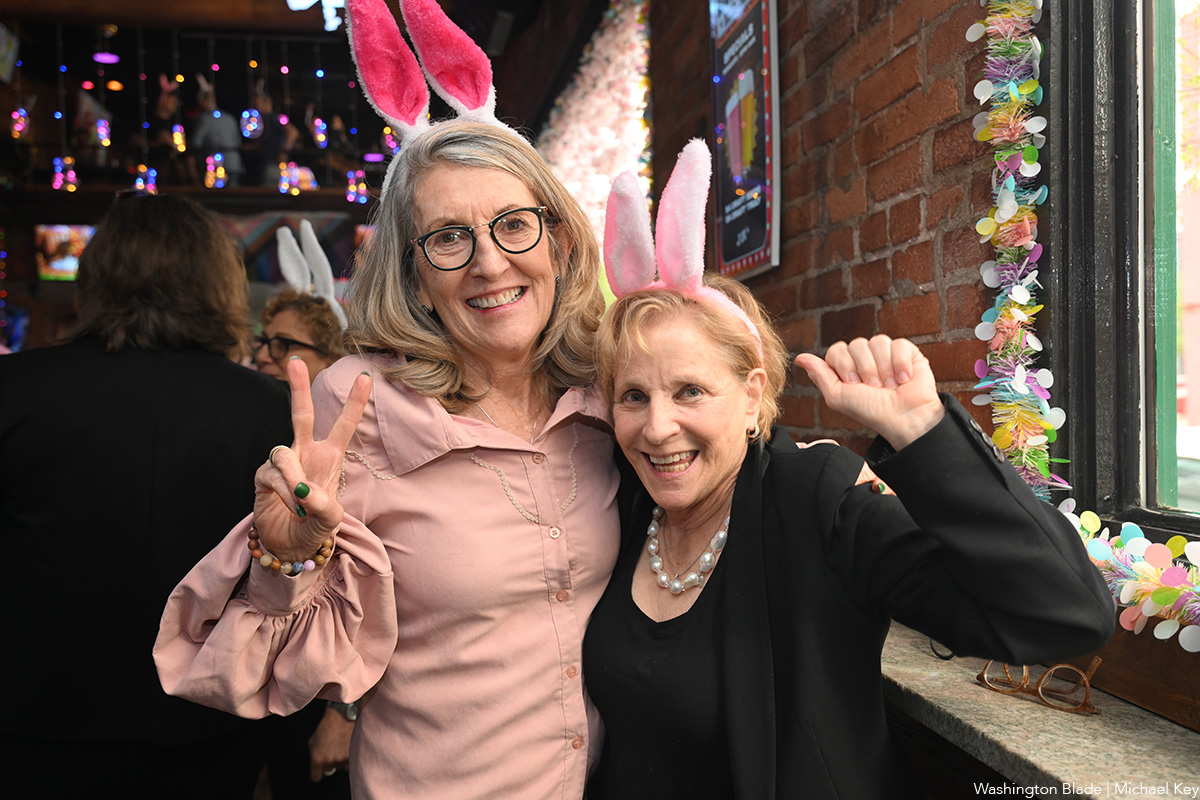
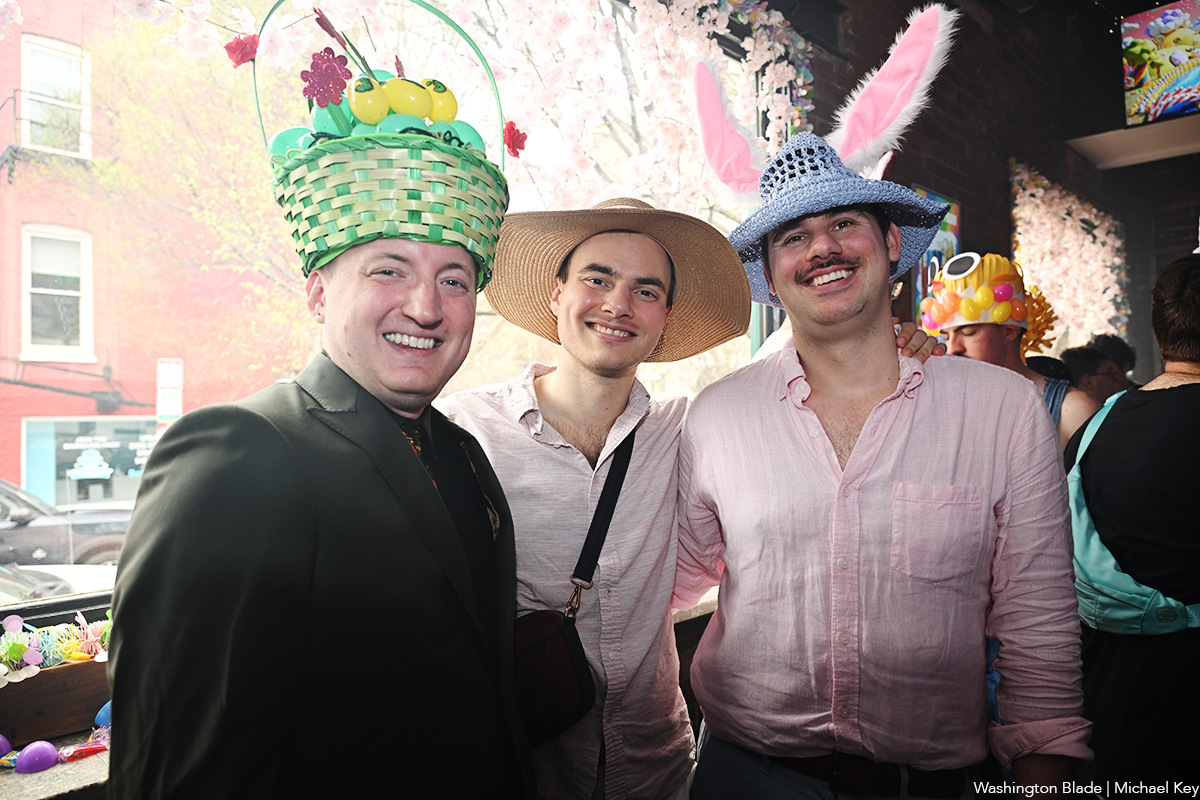
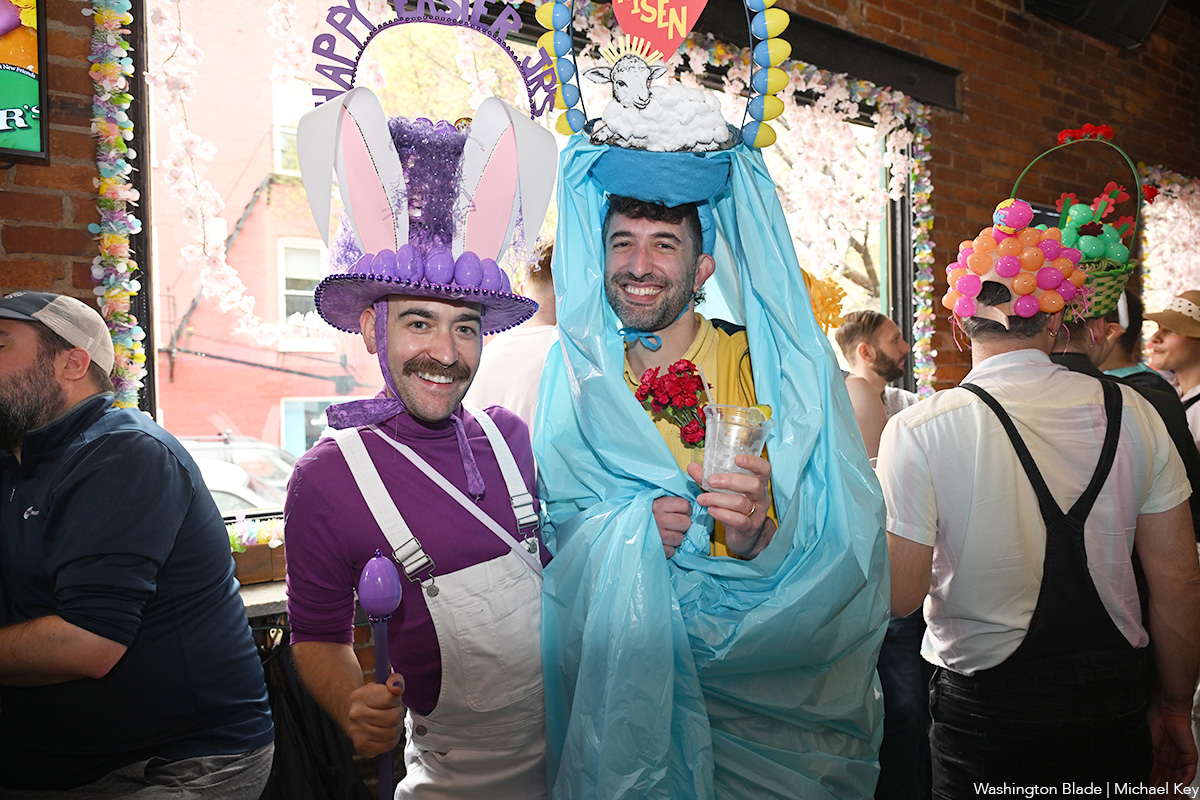
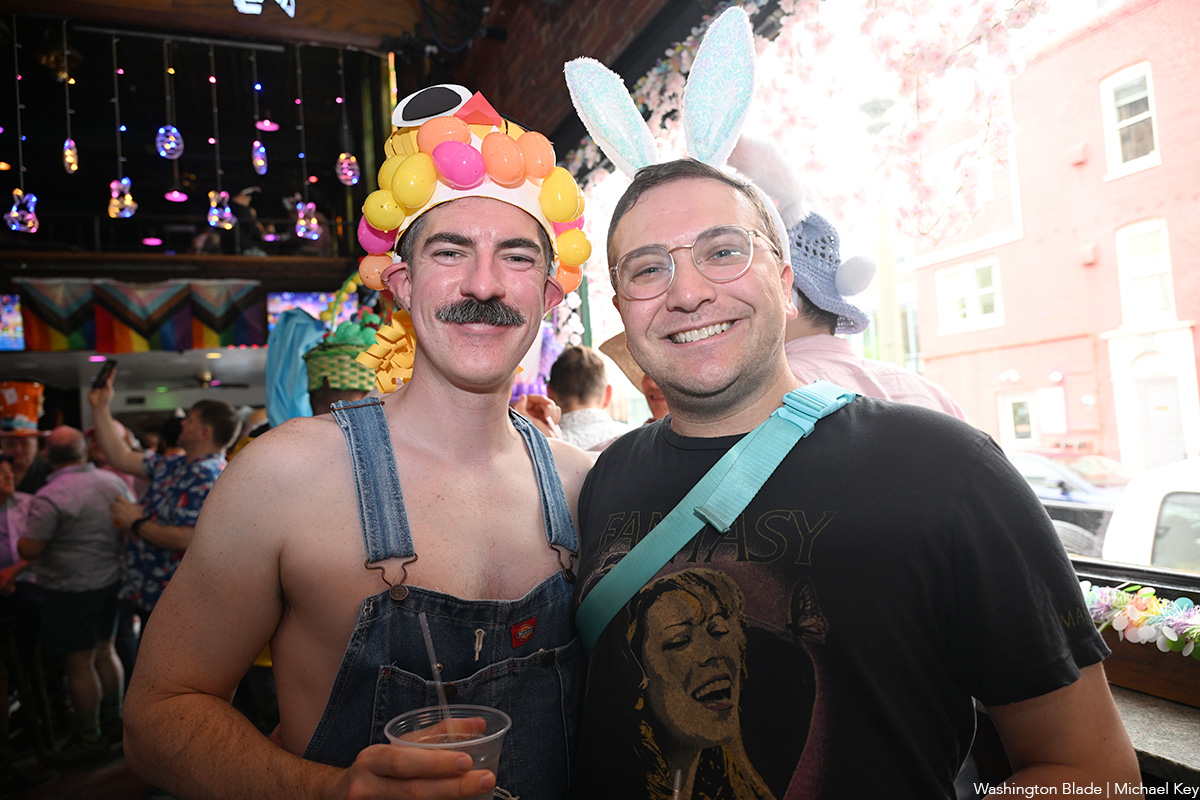
The Bonnet Ball was held at JR.’s Bar (1519 17th St., N.W.) on Sunday.
(Washington Blade photos and video by Michael Key)







Books
Risking it all for love during World War II
New book follows story of Black, gay expat in Paris
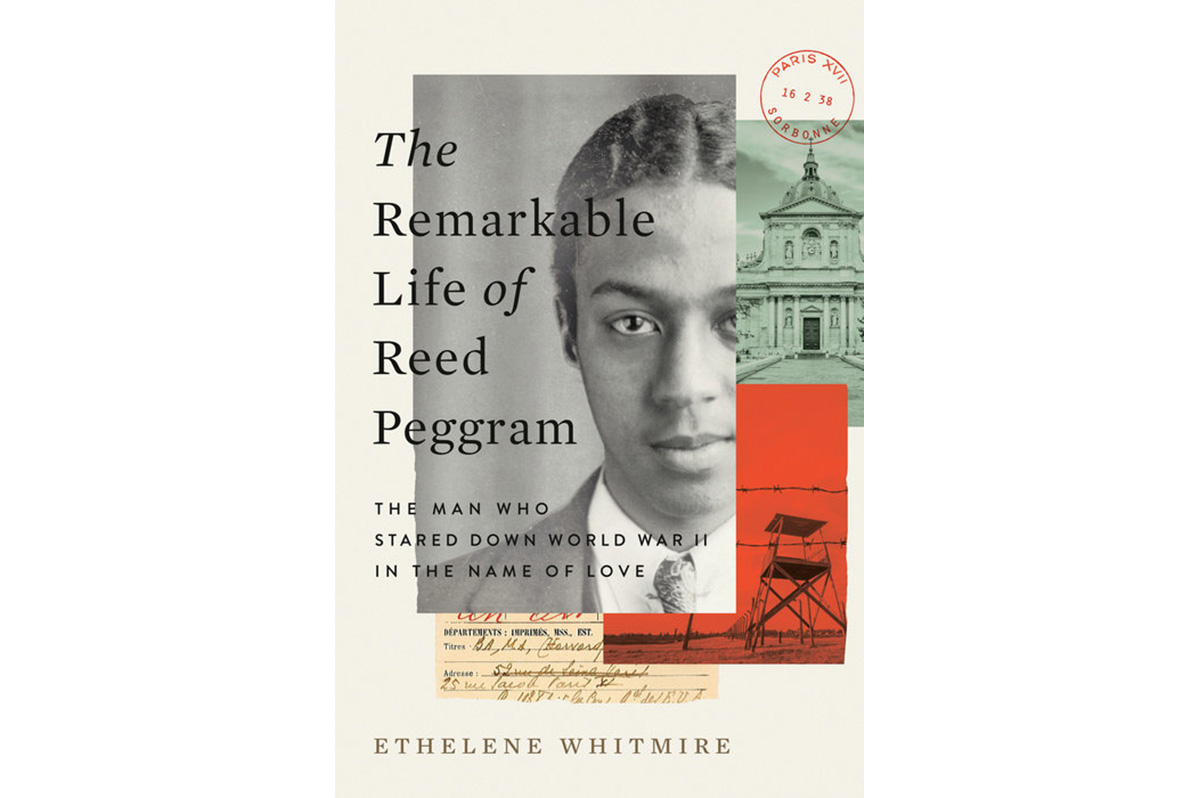
‘The Remarkable Life of Reed Peggram’
By Ethelene Whitmire
c.2026, Viking
$30/308 pages
You couldn’t escape it.
When you fell in love, that was it: you were there for good. Leaving your amour’s side was unthinkable, turning away was impossible. You’d do anything for that person you loved – even, as in the new biography, “The Remarkable Life of Reed Peggram” by Ethelene Whitmire, you’d escape toward danger.

On Aug. 28, 1938, Reed Peggram boarded a ship from Hoboken, N.J., hoping to “become a proper gentleman” and fulfill his dreams. A prolific writer and Harvard scholar of comparative literature, he’d recently been awarded the Rosenwald Fellowship, which put him in the company of literary stars like Du Bois, Hurston, and Hughes.
Both Peggram’s mother and grandmother were then domestic workers, and they had big expectations for him. Reed himself was eager to study abroad, for professional and personal reasons; he was “determined to become a French professor and an accomplished linguist” and “He also hoped to find love.”
What better place to do it than in Paris?
Outgoing and confident, Peggram made friends easily and had no trouble moving “through the world of his white male peers.” Where he faltered was in his lack of funds. He relied on the kindness of his many friends – one of whom introduced Peggram to a “man who would become so pivotal in his life,” a Danish man named Arne.
Peggram and Arne had a lot in common, and they began to enmesh their lives and dreams of living in the United States. But there were complications: homosexuality was largely forbidden, World War II was in its early stages, and it quickly became apparent that it was dangerous to stay in Europe.
And yet, Peggram loved Arne. He refused to leave without him and so, while most visiting Black Americans fled the war in Europe, “Reed was trying to stay.”
There’s so much more to the story inside “The Remarkable Life of Reed Peggram,” so much to know about Reed himself. Problem is, it’s a long haul to get to the good stuff.
In her introduction, author Ethelene Whitmire explains how she came to this tale and yes, it needs telling but probably not with the staggering number of inconsequential details here. Peggram moved homes a lot, and many people were involved in keeping him in Europe. That alone can be overwhelming; add the fact that costs and other monetary issues are mentioned in what seems like nearly every page, and you may wonder if you’ll ever find the reason for the book’s subtitle.
It’s there, nearly halfway through the book, which is when the tale takes a tender, urgent turn — albeit one with determination, rashness, and a dash of faux nonchalance. Also, if you’re expecting an unhappily-ever-after because, after all, it’s a World War II tale, don’t assume anything.
Reading this book will take a certain amount of patience, so skip it if you don’t have that fortitude. If you’re OK with minuscule details and want a heart-pounder, though, “The Remarkable Life of Reed Peggram” might be a good escape.
The Blade may receive commissions from qualifying purchases made via this post.
Theater
Iconic Eddie Izzard takes on 23 characters in ‘Hamlet’
Energized take on role offers accessible way to enjoy Shakespeare
‘The Tragedy of Hamlet’
Through April 11
Shakespeare Theatre Company’s Klein Theatre
450 7th St., N.W.
Tickets start at $90
Shakespearetheatre.org
Eddie Izzard is an icon.
Best known for her innovative standup and film roles, the famed British performer is also a queer activist who over the years has good-naturedly shared details from her decades long trans journey. What’s more, Izzard has remarkably run 43 marathons in 51 days for charity.
And now, Izzard finds a towering new challenge with the worldwide tour of “The Tragedy of Hamlet” (at Shakespeare Theatre Company’s Klein Theatre through April 11), in which she plays 23 characters (Hamlet, King Claudius, Queen Gertrude, the ghost, etc.) in a solo performance running just over two hours.
At a recent performance, Izzard, before slipping into character, appeared on the unadorned stage to say that though infused with comedy, “Hamlet” is definitely a tragedy, a story of a family and country both tearing themselves apart. She also warns that there’ll be a lot of breaking the fourth wall. After all, it didn’t exist in 1600 around the time when “Hamlet” was written.
The play unfolds in flurry of movement and scandal as the Danish prince begins to plot revenge after learning that his father, the old king was conspired against and murdered.
While some of Izzard’s character shifts are shown only by a subtle change in stance or modulation of voice, others are more obviously displayed like court sycophant Polonius walking with a stiff leg and mimed cane, or his ill-fated daughter Ophelia trotting girlishly across the upstage platform.
Delivered downstage at the intimate Klein venue, Izzard’s Hamlet soliloquies are performed with striking clarity. The one actor play is adapted and edited by Mark Izzard (the star’s older brother) and directed by Selina Cadell who successfully fosters the visceral connection between the actor and the house. Directly addressing an audience is something Izzard does exceedingly well. You feel as if she’s looking at/speaking to only you.
Cuts and choices are made that might not please traditionalists. The stabbing of eavesdropping Polonius might prove disappointingly underplayed to some. Whereas, the subsequent satisfying dual/death scene is long and precisely choreographed. Fear not, Izzard doesn’t flag a bit, not even when battling a cough (as was the case on the night of No Kings Day).
Not surprisingly, Izzard leans into the comedy. Her deliciously placed pauses, lines read ironically, and double takes, all gifts of comedy sharpened to perfection over a long career that kicked off as a street performer in the early eighties in London’s Covent Garden.
The play within a play scene finds Hamlet slyly rattling the conscience of King Claudius. As played by Izzard, it’s wickedly delightful and especially good. And the back and forth between the grave diggers done as a clever Cockney and his green assistant is a master class in how to play a Shakespearean clown.
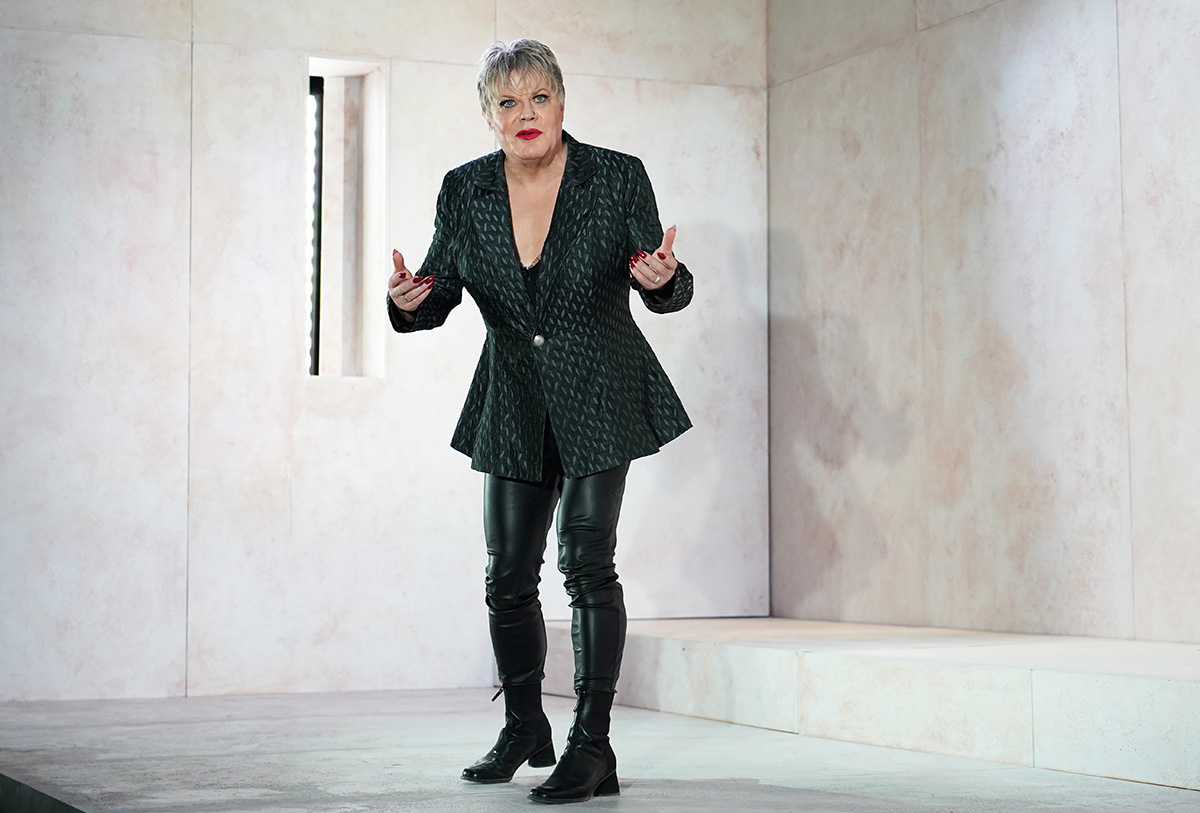
Kitted out in a black peplum jacket over leather leggings and boots, Izzard gives gender fluid shades of contemporary diehard scenester and a Renaissance courtier. (Design and styling by Tom Piper and Libby DaCosta)
Attention has been paid to the blonde high ponytail, crimson lips and matching lacquered nails. The hands are important. Whether balled into fists or fingers fluttering, they’re in use, especially when playing Hamlet’s ex-friends Rosencrantz and Guildenstern (a clever surprise that can’t be spoiled).
Tom Piper’s set is wonderfully minimal. It’s an empty white walled space with three narrow windows that appear cut deeply into stone like those of a castle. These white flats serve as the ideal canvas for lighting designer Tyler Elich’s looming shadows, ghostly green light, and other unexpected flourishes of drama.
Izzard fills the stage. Her presence is huge, and her acting first-rate. At times, you forget it’s a one-person show.
I’d like to say, prior knowledge of the Bard’s best tragedy isn’t necessary to enjoy this fast-paced production. Despite a halved runtime and obscure words replaced with modern equivalents (“tedious old git” Hamlet says of Polonius), familiarity with the play is helpful.
With “The Tragedy of Hamlet,” Izzard secures a place among fellow queer Brits like Miriam Margolyes (“Dickens’ Women”), Sir Ian Mckellan (“Ian McKellen on Stage”), and more recently Andrew Scott (“Vanya”) in the solo players’ pantheon.
Izzard’s energized take on Hamlet is terrific. The way her powerful public persona bleeds into the work without taking over is exciting, and a uniquely accessible way to enjoy Shakespeare.

Report: Grenell wants Russian ambassadorship

Log Cabin Republicans to honor Scott Presler

Cuba bajo presión y sin respuestas

Tenn. lawmakers pass transgender “watch list” bill