Arts & Entertainment
Samira Wiley, Gloria Carter, ‘CMBYN,’ honored at GLAAD Media Awards
Halsey, Ava DuVernay also received recognition
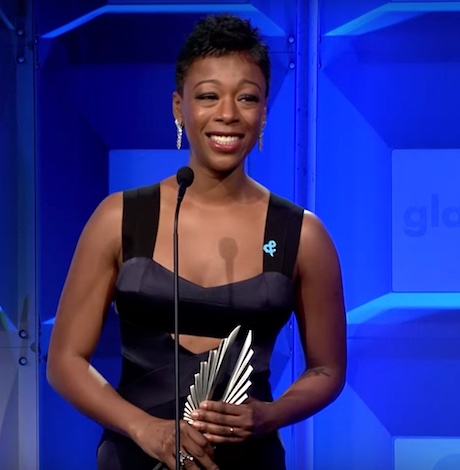
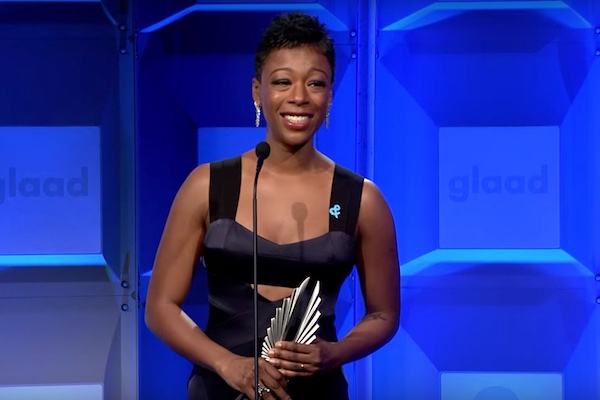
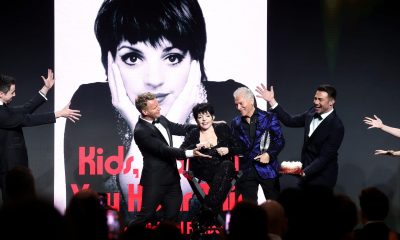
Samira Wiley accepting the Vito Russo Award at the GLAAD Media Awards (Screenshot via YouTube)
The 29th annual GLAAD Media Awards continued in New York City on Saturday hosted by Ross Matthews.
D.C. native Samira Wiley was presented the Vito Russo Award by her “The Handmaid’s Tale” co-star Alexis Bledel. Wiley recounted when she first came out to her parents in 2008 while accepting the speech.
“I heard the words, ‘I like girls’ come out of my mouth,” Wiley says. “When I was finished I looked up and I said, ‘OK, I’m done.’ I waited, and my father looked at me and said, ‘Cool.’”
Jay-Z was honored with the Special Recognition Award for the track “Smile,” included on his latest album “4:44,” which features his mother Gloria Carter coming out. Carter accepted the award on her son’s behalf.
“‘Smile’ became a reality, because I shared with my son who I am. Not that people didn’t know. It was someone that they didn’t talk about but they loved me anyway.” Carter explained in her speech. “But to me, this was the first time that I spoke to anyone about who I really am.”
“Call Me By Your Name” won Outstanding Film which was accepted by screenwriter James Ivory and producer Peter Spears. Outstanding Music Artist was awarded to Halsey for her album, “Hopeless Fountain Kingdom.”
Ava DuVernay was also presented the Excellence in Media Award by Sen. Cory Booker.
“We were never meant to survive,” DuVernay says in her speech.“I thank my LGBTQ comrades for your fight, for your resilience, for your daring, for your dignity, for your declaration of self, and I dedicate this award tonight to those of every pronoun.”
Read the complete list of winners below.
Outstanding Documentary: “Gender Revolution: A Journey With Katie Couric” (National Geographic)
Outstanding Music Artist: Halsey, “Hopeless Fountain Kingdom”
Outstanding Talk Show Episode: “Australian Marriage Equality,” “Last Week Tonight with John Oliver” (HBO)
Outstanding TV Journalism — Newsmagazine: “The Pulse of Orlando: Terror at the Nightclub,” “Anderson Cooper 360” (CNN)
Outstanding TV Journalism Segment: “Murders Raise Alarm for Transgender Community,” “NBC Nightly News With Lester Holt” (NBC)
Outstanding Newspaper Article: “The Silent Epidemic: Black Gay Men and HIV” by Gracie Bonds Staples (The Atlanta Journal-Constitution)
Outstanding Magazine Article: “Forbidden Lives: The Gay Men Who Fled Chechnya’s Purge” by Masha Gessen (The New Yorker)
Outstanding Magazine Overall Coverage: Billboard
Outstanding Digital Journalism — Multimedia: This Is How We Win’: Inside Danica Roem’s Historic Victory,” by Diana Tourjée (Broadly.Vice.com)
Outstanding TV Journalism — Newsmagazine (Spanish Language): “Pulse, Huellas de la Masacre,” “Docufilms” (CNN en Español)
Outstanding TV Journalism Segment (Spanish Language): “Comunidad LGBTQ Vulnerable Bajo Nuevo Gobierno,” “Perspectiva Nacional” (Entravision)




Out & About
Congressional Cemetery hosts Gays & Graves
Daylong Pride celebration blends history, remembrance, art and community

Historic Congressional Cemetery will host the second annual “Gays & Graves: A Big Gay Festival” on Sunday, June 14 at 11 a.m.
The event will feature pioneering activist Randy Wicker, the Gay Men’s Chorus of Washington, and new public art installations and programs celebrating LGBTQ+ history. Gays & Graves is an official partner event of Capital Pride 2026.
This event is a daylong Pride celebration blending history, remembrance, art and community. Visitors can shop from LGBTQ+ and allied artists and makers, experience performances and interactive installations, and engage with programs exploring LGBTQ+ history and lived experience.
For more details, visit the cemetery’s website.
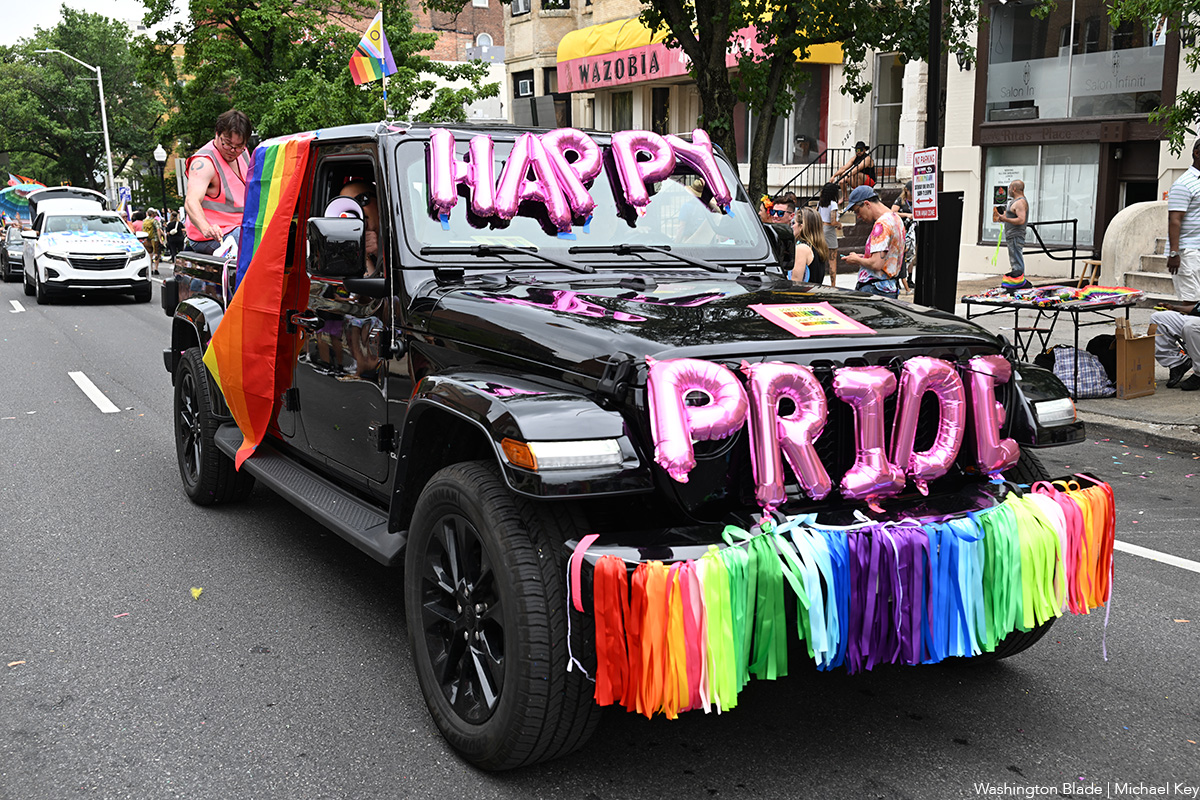
Baltimore Pride is underway, taking place from June 8-14.
The Pride Parade will be on Saturday, June 13 at 12 p.m. at Charles Street & North Avenue, followed by the Pride Block Party at 1 p.m. at Druid Hill Park. And then the Pride Festival will be held on Sunday, June 14 at 12 p.m. at Druid Hill Park.
There will be an array of additional events including: a fashion show, a “Suits and Sneakers” reception and a 5k race, among many other events.
For more details, visit Baltimore Pride’s website.
Friday, June 12
Bet Mishpachah will host “Pride Shabbat Happy Hour” at 6 p.m. at Edlavitch DC Jewish Community Center. This is an in-person happy hour with an open wine and beer bar, great company, and joyful conversation. Attendance is free and more details are available on Eventbrite.
Women in their Twenties and Thirties will meet at 8 p.m. on Zoom. This is a social discussion group for queer women in the Washington, D.C. area. For more details, visit Facebook.
Saturday, June 13
Out N Bad will host “SWEET WHINE: DC Pride Queer Caribbean Slow Whine Function” at 9 p.m. at Decades DC. This is a late-night escape into slow and steamy Dancehall & Kompa only. No splits. No headtops. No pressure. Tickets are $22.14 and are available on Eventbrite.
The DC LGBTQ+ Community Center will host a screening of “10s Across the Borders,” a bold pan-Asian queer film that confronts homophobia, transphobia, and racism while celebrating Southeast Asia’s underground ballroom scene. For more details, visit the DC Center’s website.
Sunday, June 14
Beth A Wolfe Yoga will host “Pride Baby Goat Yoga” at 1 p.m. at Faith Lutheran Church in Arlington, Va. The goats will be decked out in their finest Pride apparel, and human participants are welcome to do the same. Proceeds from this event will go to the Trevor Project. Tickets cost $44.52 and are available on Eventbrite.
Monday, June 15
“Center Aging: Monday Coffee Klatch” will be at 10 a.m. on Zoom. This is a social hour for older LGBTQ+ adults. Guests are encouraged to bring a beverage of choice. For more information, contact Adam ([email protected]).
Tuesday, June 16
“Self-Defense Class with Avi Rome” will be at 12:30 p.m. Rome is a proud member of the LGBTQ+ community and a full-time Martial Arts instructor with 25 years of teaching experience. He holds a 5th Degree Black Belt in Jhoon Rhee Tae Kwon Do and is the director of the studio’s Adaptive Tae Kwon Do program for students with special needs. He has also run numerous self-defense workshops for various groups and situations. For more details, visit the center’s website.
Center Bi+ Roundtable will be at 7 p.m. on Zoom. This is an opportunity for people to gather in order to discuss issues related to bisexuality or as Bi individuals in a private setting.Visit Facebook or Meetup for more information.
Wednesday, June 17
Job Club will be at 6 p.m. on Zoom upon request. This is a weekly job support program to help job entrants and seekers, including the long-term unemployed, improve self-confidence, motivation, resilience and productivity for effective job searches and networking — allowing participants to move away from being merely “applicants” toward being “candidates.” For more information, email [email protected] or visit thedccenter.org/careers.
Thursday, June 18
The DC Center’s Fresh Produce Program will be held all day at the DC LGBTQ+ Community Center. People will be informed on Wednesday at 5:00 pm if they are picked to receive a produce box. No proof of residency or income is required. For more information, email [email protected] or call 202-682-2245.
Virtual Yoga Class will be at 7 p.m. on Zoom. This free weekly class is a combination of yoga, breathwork and meditation that allows LGBTQ+ community members to continue their healing journey with somatic and mindfulness practices. For more details, visit the DC Center’s website.

Congressional Cemetery hosts Gays & Graves

Baltimore Pride is here

Calendar: June 12-18

Gender-bending buddy film gets 4K restoration for 25th anniversary

German group slams White House’s LGBTQ rights record ahead of World Cup

‘Mighty Real’ explores history of LGBTQ music

D.C.’s housing reality: Cautious optimism meets landlord strain

Hundreds of thousands expected to attend D.C. Pride events

PHOTOS: Pride Run