Sports
Washington Blade All Stars series: Stonewall Kickball
Local league draws diverse players seeking queer camaraderie
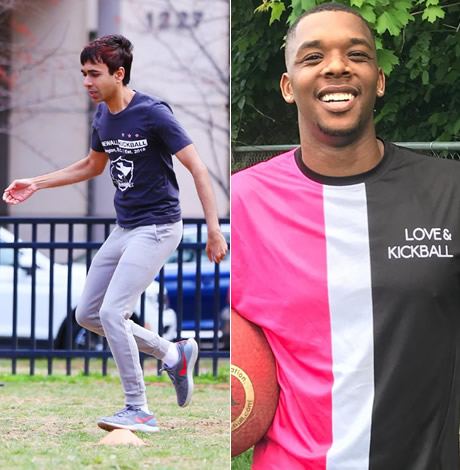
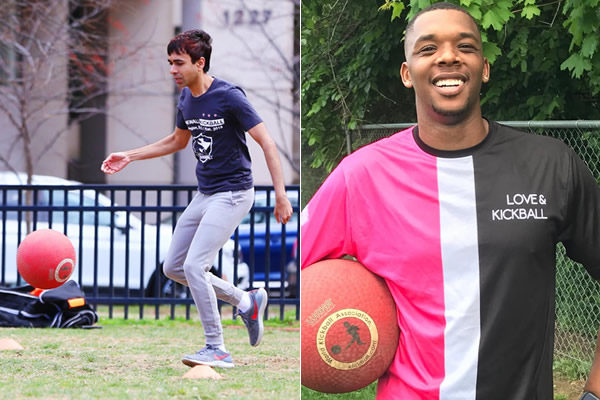
The Washington Blade All Star series continues to spotlight the journeys of members of the LGBT sports community in Washington. This week we meet two LGBT players who have found their place in Stonewall Kickball.
Everyone has seen the packs of Stonewall Kickball players walking through the streets of D.C. on Sunday afternoons. With their colorful team shirts, they’re hard to miss as they make their way to the post-game events. After moving into the District, Upen noticed them and a quick Google search showed an upcoming
Upen’s work with Amazon had brought him to the area in 2010 and he had been living near Dulles Airport. He was finding many challenges to making friends, especially gay ones. He showed up to a Stonewall Kickball new player event not really sure what to expect.
“I walked in and it was a really warm environment. I ended up joining a new team that was forming,” Upen says. “This was a chance for something different. I had nothing to lose and potentially a lot to gain.”
Growing up in Mumbai, India, Upen played soccer until middle school. He began to distance himself from sports when he realized he was different from other boys. That awareness made sports feel intimidating.
After receiving his undergraduate degree in India, Upen moved to Austin in 2003 to pursue his
Before coming to America, Upen had never heard of kickball. First up in his Stonewall Kickball experience was learning the rules and nuances of the sport.
“I really had to play catch-up on terminology and strategy. I’m still learning in my third season and I love the game,” Upen says. “There is a lot of specialization in various positions with different skill sets needed to excel. I feel like I have found my spot in right field.”
Upen has also played in Stonewall Dodgeball and Stonewall Yoga, both of which have added to the many life lessons he has learned along the way.
“Stonewall has provided me with a sense of community and I like that we are all working together towards a common goal,” Upen says. “One good thing about sports is that they are also a mechanism for growing as a person. I’ve discovered you can be friends with anyone and it feels really great.”
Vic Jones played a little bit of everything growing up in Lake Elsinore, Calif. — basketball, soccer, karate, baseball and football. He ran track and cross country in high school along with being a band kid as a drum major and saxophone player.
Band and sports taught him a lot about leadership and balancing multiple things in life, but he would leave both behind when he arrived at Howard University at 18.
“I thought I would walk onto the track team and join band, but everything was different,” Jones says. “I was intimidated by going to a black school. I was used to being the only black person.”
Jones did join a step club at Howard but focused on his studies to earn his Ph.D in clinical psychology. He is now working as a postdoctoral fellow with the DC VA Medical Center.
He joined Stonewall Dodgeball in 2015 with a friend before moving on to Stonewall Kickball the following year. The kickball league sparked a competitive streak and he fell in love with the sport.
“I made some amazing friends that made me feel comfortable,” Jones says. “I never realized that losing could be so fun when the loss comes from a good competition.”
Jones started meeting other players who were just as competitive and began joining other leagues. He is currently playing on three kickball leagues and is a member of a travel team.
One of his Stonewall Kickball teams, Alpha Q Up, has won the title at the last two Sin City Classic tournaments in Las Vegas. This summer members are hoping to continue their success at the Stonewall Sports National Tournament in Raleigh.
“It’s great to be branching out and playing people who are better players. Each team I have been on has been unique with its own vibe and culture,” Jones says. “It’s nice to reach that level of confidence and trust and know that everyone is just as dedicated as you are, giving 110 percent. We all put in the work and it pays off.”
Sports
New IOC policy bans trans women from Olympics
New regulation to be in effect at 2028 summer games in Los Angeles
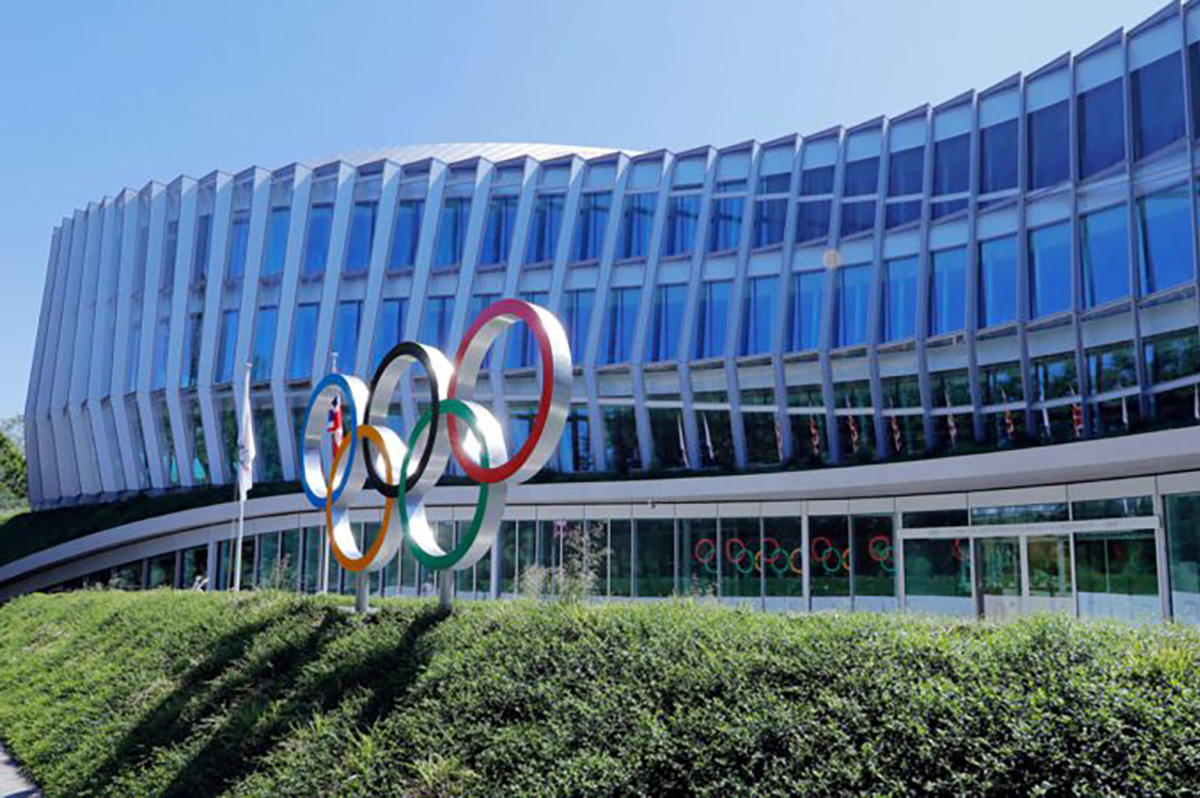
The International Olympic Committee on Thursday announced it will not allow transgender women from competing in female events at the Olympics.
“For all disciplines on the Sports Program of an IOC event, including individual and team sports, eligibility for any Female Category is limited to biological females,” reads the new policy.
The policy states “eligibility for the Female Category is to be determined in the first instance by SRY Gene screening to detect the absence or presence of the SRY Gene.”
“On the basis of the scientific evidence, the IOC considers that the SRY (sex-determining Region Y) Gene is fixed throughout life and represents highly accurate evidence that an athlete has experienced or will experience male sex development,” it reads. “Furthermore, the IOC considers that SRY Gene screening via saliva, cheek swab or blood sample is unintrusive compared to other possible methods. Athletes who screen negative for the SRY gene permanently satisfy this policy’s eligibility criteria for competition in the Female Category.”
The policy states the test “will be a once-in-a-lifetime test” unless “there is reason to believe a negative reading is in error.”
The new regulation will be in place for the 2028 Summer Olympics in Los Angeles.
“I understand that this a very sensitive topic,” said IOC President Kirsty Coventry on Thursday in a video. “As a former athlete, I passionately believe in the rights of all Olympians to take part in fair competition.”
“The policy that we have announced is based on science and it has been led by medical experts with the best interests of athletes at its heart. The scientific evidence is very clear: male chromosomes give performance advances in sport that rely on strength, power, or endurance,” she added. “At the Olympic Games, even the smallest margins can be the difference between victory and defeat. So, it is absolutely clear that it would not be fair for biological males to compete in the female category. In addition, in some sports it would simply not be safe.”
(Video courtesy of the IOC)
Laurel Hubbard, a weightlifter from New Zealand, in 2021 became the first trans woman to compete at the Olympics.
Imane Khelif, an Algerian boxer, won a gold medal at the 2024 Summer Olympics in Paris. Khelif later sued JK Rowling and Elon Musk for cyberstalking after they questioned her gender identity.
Ellis Lundholm, a mogul skier from Sweden, this year became the first openly trans athlete to compete in any Winter Olympics when he participated in Milan Cortina Winter Olympics in Italy.
President Donald Trump in February 2025 issued an executive order that bans trans women and girls from female sports teams in the U.S.
The U.S. Olympic and Paralympic Committee last July banned trans women from competing in female sporting events. Republican lawmakers have demanded the IOC ban trans athletes from women’s athletic competitions.
“I’m grateful the Olympics finally embraced the common sense policy that women’s sports are for women, not for men,” said U.S. Sen. Tom Cotton (R-Ark.) on X.
An IOC spokesperson on Thursday referred the Washington Blade to the press release that announced the new policy.
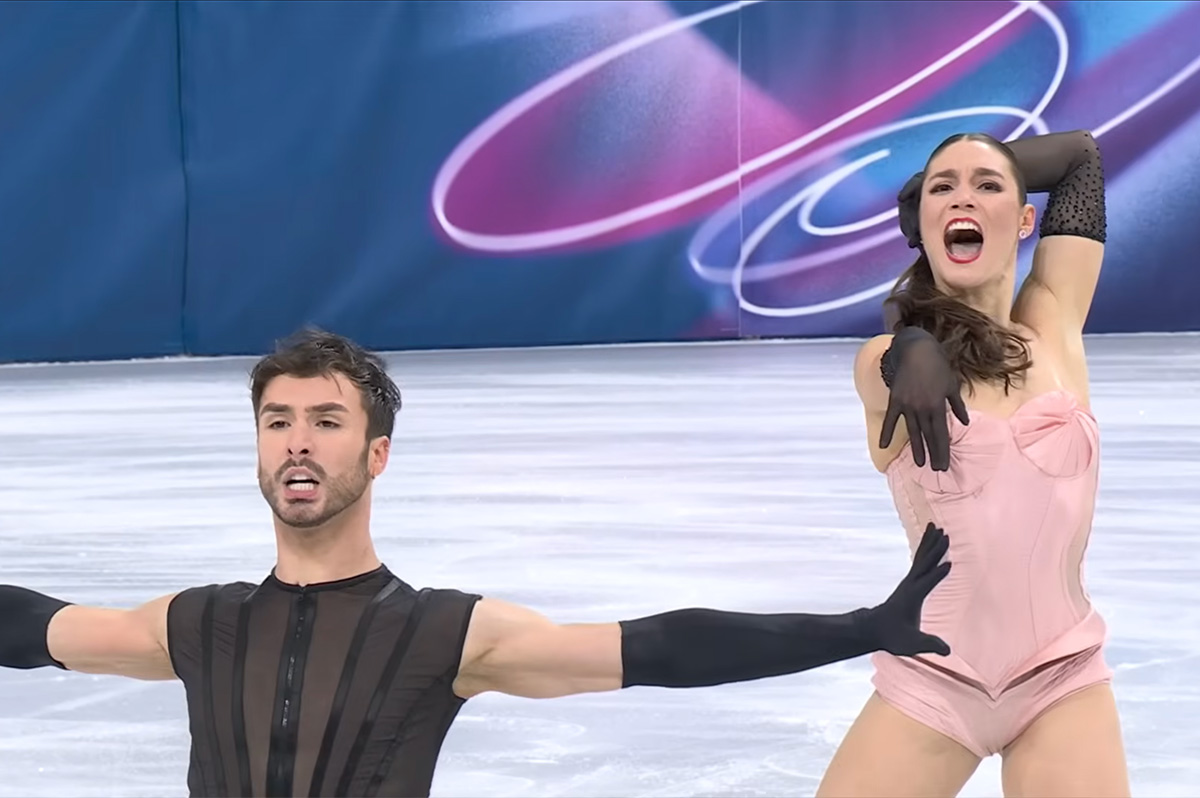
More than a dozen LGBTQ athletes won medals at the Milan Cortina Winter Olympics that ended on Sunday.
Cayla Barnes, Hilary Knight, and Alex Carpenter are LGBTQ members of the U.S. women’s hockey team that won a gold medal after they defeated Canada in overtime. Knight the day before the Feb. 19 match proposed to her girlfriend, Brittany Bowe, an Olympic speed skater.
French ice dancer Guillaume Cizeron, who is gay, and his partner Laurence Fournier Beaudry won gold. American alpine skier Breezy Johnson, who is bisexual, won gold in the women’s downhill. Amber Glenn, who identifies as bisexual and pansexual, was part of the American figure skating team that won gold in the team event.
Swiss freestyle skier Mathilde Gremaud, who is in a relationship with Vali Höll, an Austrian mountain biker, won gold in women’s freeski slopestyle.
Bruce Mouat, who is the captain of the British curling team that won a silver medal, is gay. Six members of the Canadian women’s hockey team — Emily Clark, Erin Ambrose, Emerance Maschmeyer, Brianne Jenner, Laura Stacey, and Marie-Philip Poulin — that won silver are LGBTQ.
Swedish freestyle skier Sandra Naeslund, who is a lesbian, won a bronze medal in ski cross.
Belgian speed skater Tineke den Dulk, who is bisexual, was part of her country’s mixed 2000-meter relay that won bronze. Canadian ice dancer Paul Poirier, who is gay, and his partner, Piper Gilles, won bronze.
Laura Zimmermann, who is queer, is a member of the Swiss women’s hockey team that won bronze when they defeated Sweden.
Outsports.com notes all of the LGBTQ Olympians who competed at the games and who medaled.
Sports
US wins Olympic gold medal in women’s hockey
Team captain Hilary Knight proposed to girlfriend on Wednesday
The U.S. women’s hockey team on Thursday won a gold medal at the Milan Cortina Winter Olympics.
Team USA defeated Canada 2-1 in overtime. The game took place a day after Team USA captain Hilary Knight proposed to her girlfriend, Brittany Bowe, an Olympic speed skater.
Cayla Barnes and Alex Carpenter — Knight’s teammates — are also LGBTQ. They are among the more than 40 openly LGBTQ athletes who are competing in the games.
The Olympics will end on Sunday.

Trans activists gather on National Mall for Transgender Day of Visibility

The cost of speaking one’s mind

Senegalese president signs bill that further criminalizes homosexuality

Md. lawmakers reaffirm legislative priorities

Supreme Court rules against Colo. law banning conversion therapy for minors

Celebrate cherry blossoms the drag way

Lorato ke Lorato: marriage equality, democracy, and the unfinished work of justice in Botswana

Japanese Supreme Court to consider marriage equality

The outrage economy is not the LGBTQ community

Trump tells Fox News he won the ‘gay vote’ — but polls tell a different story
-

 Out & About5 days ago
Celebrate cherry blossoms the drag way
-
Botswana5 days ago
Lorato ke Lorato: marriage equality, democracy, and the unfinished work of justice in Botswana
-
Japan5 days ago
Japanese Supreme Court to consider marriage equality
-
Opinions5 days ago
The outrage economy is not the LGBTQ community