World
Hong Kong activist dismisses calls to boycott Gay Games
WTA suspended China tournaments after tennis player disappeared
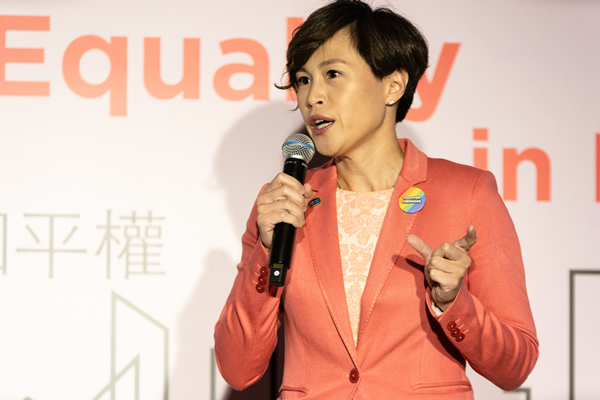
An LGBTQ activist in Hong Kong on Tuesday dismissed calls to boycott the 2023 Gay Games over China’s human rights record.
“In Hong Kong, the team behind Gay Games has really worked tirelessly to bring it to Hong Kong and it will be a very good opportunity to showcase diversity and people working together and the human spirit at its best,” Gigi Chao told the Washington Blade during a telephone interview from Hong Kong. “So, if it all gets rather political and if you twist the sentiments of what they want China to be, it will just really not work.”
Chao is the co-founder of Hong Kong Marriage Equality, a group that seeks to extend marriage rights to same-sex couples in the former British colony. Chao also founded the Faith in Love Foundation, a group that seeks to increase awareness of LGBTQ issues in Hong Kong.
Chao is a member of the OutRight Action International board of directors. Chao is slated to speak in the group’s annual summit that will take place virtually this week.
“All eyes are peeled on the events of next year: The Beijing Olympics, the relationship between Beijing and the U.S. as relationships either improve or sour over the course of the next 12 months and also trade and the global economic situation … it’s not a rosy picture by all means,” Chao told the Blade. “Everybody is bracing for the worst in terms of how the world recovers from COVID, but LGBTIQ rights continue.”
Chao said Dennis Philipse, a Hong Kong resident who co-chairs Gay Games Hong Kong, and his colleagues “want the Gay Games to be a celebration of the human spirit in terms of sport.”
“In Hong Kong, there’s certainly no shortage of people engaged in sport and enjoying sports,” said Chao.
Gay Games Hong Kong in September announced the postponement of the quadrennial event until 2023 because of the pandemic. The Federation of Gay Games, which oversees the Gay Games, awarded the games to Hong Kong over D.C. and Guadalajara, Mexico.
Hong Kong was a British colony until China regained control of it in 1997.
Upwards of 2 million people took part in pro-democracy protests that took place in Hong Kong in 2019.
Hong Kong’s National Security Law, which, according to human rights activists, makes it easier for authorities to punish anyone who challenges the Chinese government, took effect in 2020. Hong Kong Chief Executive Carrie Lam, who is closely aligned with the Chinese government, supports the statute.
The Women’s Tennis Association last week announced the suspension of tournaments in Hong Kong and throughout China in response to the disappearance of Peng Shuai, a Chinese tennis star, after she publicly accused former Vice Premier Zhang Gaoli of sexual assault. The Biden administration on Monday announced a diplomatic boycott of the 2022 Winter Olympics that are slated to take place in Beijing in February.
“The Federation of Gay Games continues to monitor the situation in Hong Kong regarding COVID-19, the National Security Law and all other aspects that affect the safety and security of our event,” Sean Fitzgerald, co-president of the Federation of Gay Games, told the Blade in a statement after the Women’s Tennis Association announced it had suspended all of its tournaments in China. “We are committed to hosting Gay Games 11 in Hong Kong in November 2023.”
Chao acknowledged Gay Games organizers are “facing a lot of opposition from all directions.” Chao also noted Hong Kong’s government is “not actually positively promoting it.”
“If we can get really high-profile athletes to participate, I think that’s going to be a huge call for everybody to participate,” said Chao.




China
China’s top court acknowledges anti-LGBTQ discrimination
Postgraduate student petitioned for legal clarification
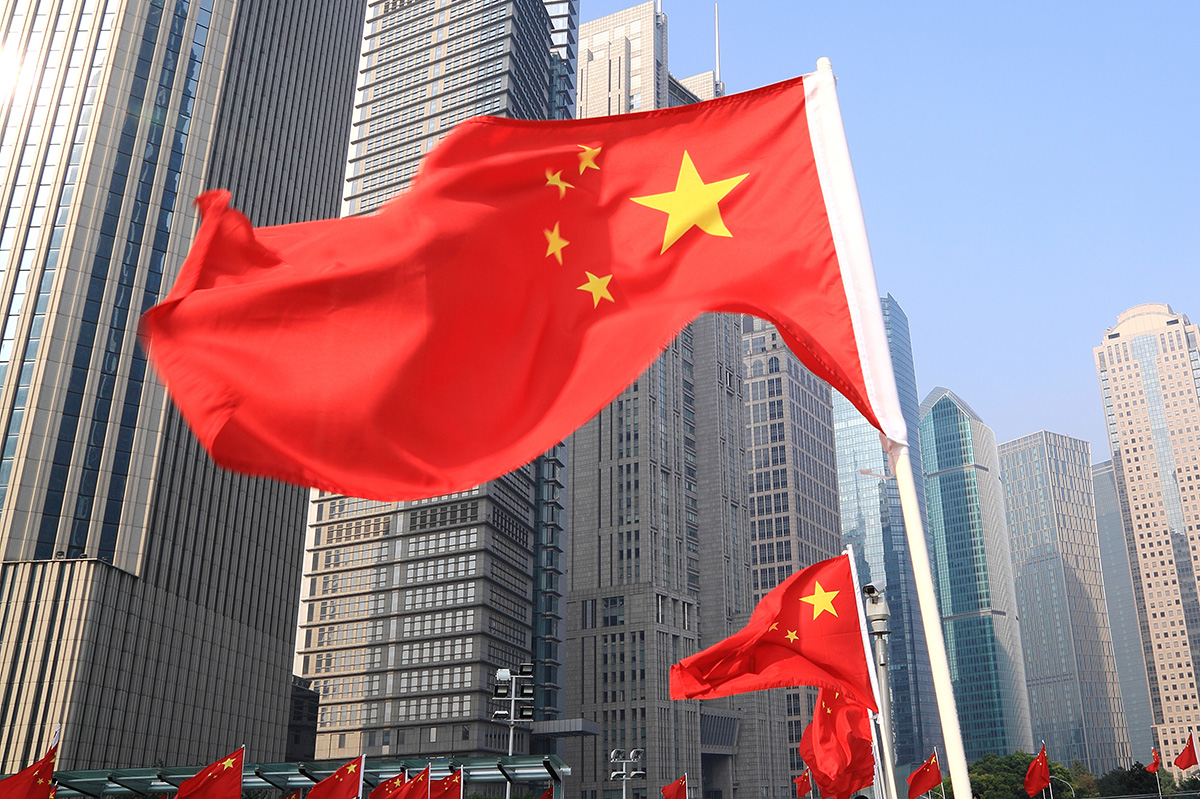
China’s Supreme People’s Court on May 8 issued a rare response to a petition involving LGBTQ discrimination.
In a surprising response; it discussed sexual orientation, gender identity, and gender expression. The response also mentioned workplace discrimination, public humiliation, and school bullying, language considered uncommon from China’s legal system.
The response stemmed from a proposal submitted by a postgraduate student in Qingdao through China’s xinfang petition system on March 25, urging the court to establish clearer judicial standards against discrimination based on sexual orientation and gender identity. Six weeks later, the Supreme People’s Court Research Office issued a written reply.
The Research Office is an internal legal and policy body within the Supreme People’s Court. It studies legal issues, drafts judicial guidance, and responds to legal inquiries submitted through official channels. Its responses do not carry the same legal weight as a judicial interpretation or court ruling.
“The opinions and suggestions you raised are of great value,” reads a translated version of the Supreme People’s Court Research Office response. “In order to thoroughly implement the Constitution, Civil Code, Employment Promotion Law and other legal provisions, and effectively protect citizens’ personality rights from infringement, the Supreme People’s Court has guided local courts at all levels to handle a number of related cases, and through typical cases and other forms has clarified adjudication rules.”
The response stated that courts may determine public insults, defamation and, discriminatory conduct targeting sexual orientation, gender identity and gender expression as infringement of personality rights. It also said employers treating individuals differently in hiring, employment, transfer or dismissal based on those characteristics could face employment discrimination claims. Schools could also bear legal responsibility for improper discipline or bullying involving students based on sexual orientation, gender identity and gender expression, according to the response.
“It’s not a systematic change from the authorities recognizing LGBTQ rights,” said Renn Hao, an LGBTQ activist in China. “However, it’s an informal statement from the Supreme Court. According to a scholar researching LGBTQ legal cases in China, courts are recognizing more cases involving LGBTQ discrimination and same-sex partners through their verdicts.”
China decriminalized consensual same-sex sexual relations in 1997 and removed homosexuality from the country’s list of mental disorders four years later. Chinese law, however, does not recognize same-sex relationships.
Public advocacy involving LGBTQ issues also remains tightly controlled. Authorities in recent years have continued restricting community organizing, public events, and online expression involving sexual minorities.
Discussions involving LGBTQ issues are also frequently censored on Chinese social media platforms.
Activists and advocacy groups say Chinese authorities in recent years have removed online content, shut down LGBTQ student group accounts and restricted public discussion involving sexual minority issues. After the Supreme People’s Court response began circulating online, related posts and articles were also removed from some Chinese platforms.
“It may still be too early to fully assess the long-term impact, as this development has only just happened and the situation is still unfolding,” said Xiaogang Wei, a Beijing-based LGBTQ rights activist, filmmaker, and founder of the China Rainbow Collective Foundation. “Although the reply is not legally binding, it represents a rare form of institutional acknowledgment of SOGIE-related discrimination in China. For Chinese LGBTQ people and advocates, this could become a meaningful reference point for future legal advocacy, public communication, and community awareness.”
Wei said the rapid removal of related posts and articles limited the development’s broader public impact and underscored how fragile LGBTQ visibility remains in China.
“This is why we believe it is important to continue sharing verified information and ensuring that this development is not erased from public understanding,” Wei said.
Chinese courts in recent years have also heard a number of LGBTQ-related employment discrimination cases, despite the absence of explicit nationwide protections based on sexual orientation or gender identity. In one notable case, the Supreme People’s Court in 2018 formally recognized “equal employment rights disputes” as a legal cause of action, allowing some discrimination-related cases to proceed through the courts.
Chinese courts have previously handled several LGBTQ-related disputes involving employment discrimination, custody, and so-called conversion therapy. In 2024, a Beijing court drew attention after recognizing visitation rights for a child involving a same sex couple, a decision activists described as a milestone for LGBTQ families in China.
Kenya
Kenyan High Court issues landmark transgender rights ruling
Government ordered to allow trans people to amend ID documents
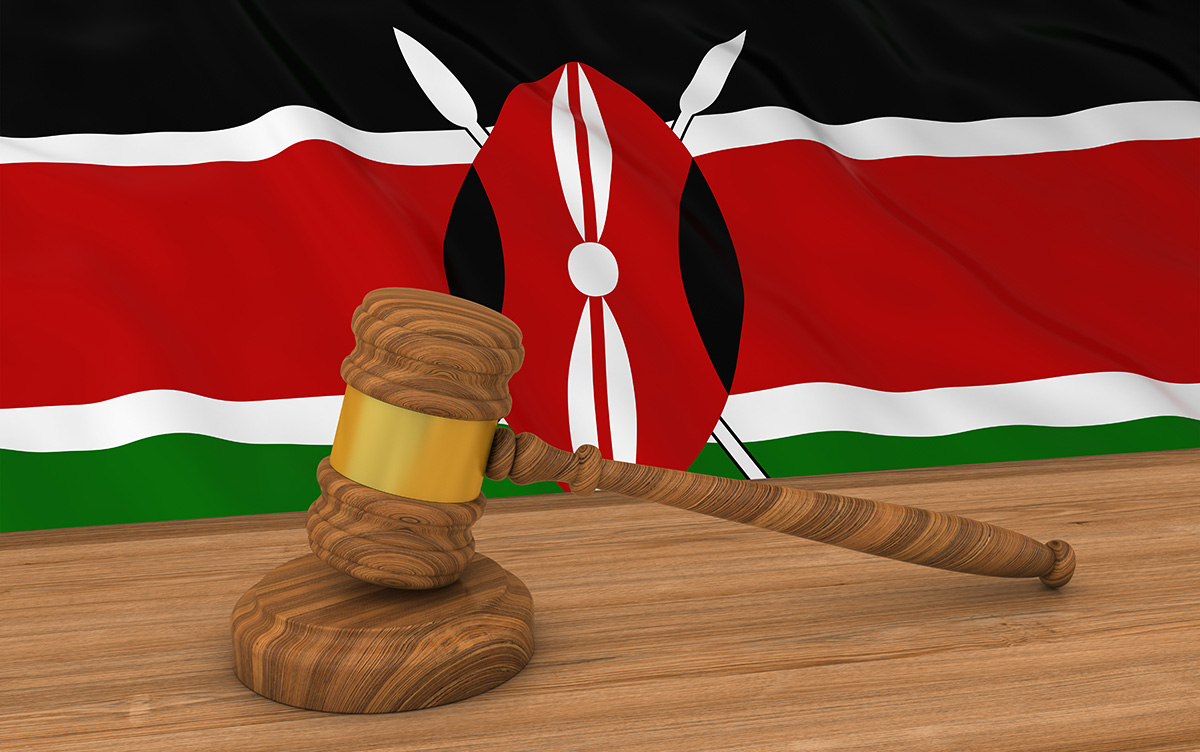
Kenya’s High Court has ruled the country’s government cannot refuse requests to amend gender markers on birth certificates and other ID documents.
Audrey Mbugua, a prominent transgender activist, and two other people in 2020 sued Attorney General Dorcas Oduor, the Registrar of Births and Deaths, the National Registration Bureau, and Immigration Services Director General Evelyn Cheluget after they did not receive amended birth certificates.
The Washington Blade previously reported the three plaintiffs argued documents that do not correspond with their gender identity “has denied them opportunities and rights.” Oduor, for her part, in response to the plaintiffs’ claims argued “a person’s gender is based on fact — not feelings — and the plaintiffs at birth were registered and named based on their gender status.”
High Court Justice Bahati Mwamuye ruled on May 20.
“The silence and delay cannot defeat rights,” ruled the court, according to the Daily Nation, a Kenyan newspaper. “Constitutional rights cannot be delayed over administrative convenience.”
The court in 2014 ordered the Kenya National Examinations Council to change Mbugua’s name on her academic diplomas and to remove the male gender marker from them.
Kenya’s intersex rights law took effect in 2022. The government in February 2025 announced intersex people can receive birth certificates with an “I” gender marker.
The Daily Nation notes Mwamuye ordered the Registrar of Deaths and Births and other government agencies to “begin receiving and considering applications for gender-marker changes within” 60 days.
“Access to legal identity documentation is not just a human rights issue; it is a foundational pillar of socio-economic inclusion,” said the Initiative for Equality and Non-Discrimination, a Kenyan advocacy group, in response to the ruling. Without accurate IDs or passports, individuals face severe barriers to employment, financial systems, global business travel, and participation in governance and democratic processes.”
“This ruling marks a critical step forward in reducing administrative discrimination and fostering an inclusive environment where every Kenyan citizen’s legal identity aligns with their dignity,” added INEND.
Outright International, a New York-based global LGBTQ and intersex advocacy group, in a statement described Mwamuye’s ruling as “a meaningful shift towards aligning Kenya’s legal framework with constitutional guarantees of equality, privacy, and human dignity. Outright International also applauded Mbugua and other activists who fought for this change.
“Today, we celebrate a milestone — one achieved through resilience, solidarity, and an unwavering belief in justice,” said the group. “Outright International stands with transgender and intersex Kenyans in honoring this victory and reaffirming our commitment to advancing rights, recognition, and equality for all.”
Cuba
When impunity meets history
Raúl Castro indicted for alleged role in shooting down Brothers to the Rescue aircraft
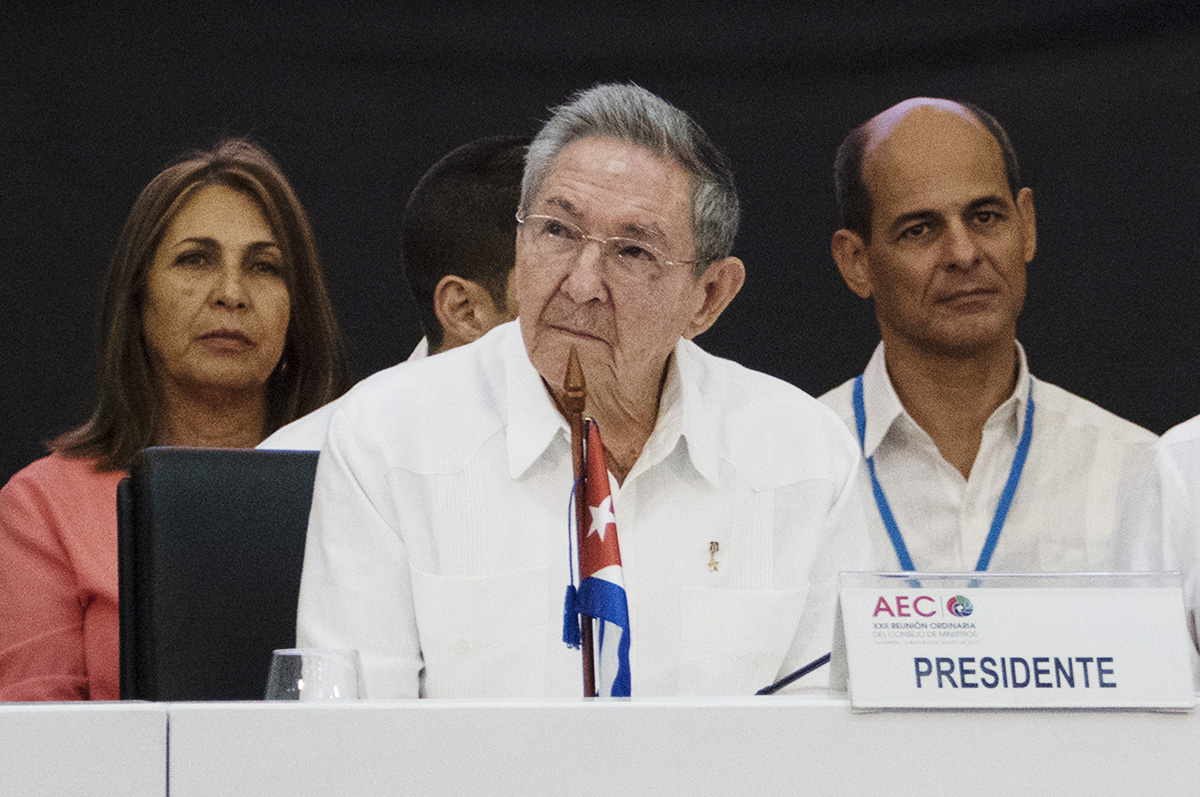
The scene would have seemed impossible only a few years ago.
The name of Raúl Castro Ruz appearing formally inside a United States federal criminal indictment. Cuba’s former general of the Army, for decades one of the most powerful figures inside the Havana regime, accused in connection with the shootdown of the Brothers to the Rescue aircraft and the deaths of American citizens in 1996. And all of it unfolding in Miami, inside the Freedom Tower, on May 20.
That detail matters.
Because this indictment arrives at one of the most fragile and politically tense moments in recent relations between Washington and Havana. It comes as Cuba faces deep economic collapse, growing political exhaustion, mass migration, blackouts, and increasing public frustration both inside and outside the island. It also arrives on a date carrying enormous symbolic weight for Cuban exiles — the anniversary of the founding of the Cuban Republic in 1902.
But the true significance of this moment goes far beyond symbolism.
What happened in Miami represents something much larger: the collapse of the idea that certain men would never face accountability.
For decades, Raúl Castro embodied the permanence of revolutionary power in Cuba. Defense minister. Military strategist. The man who oversaw the armed forces for generations. One of the central architects of the Cuban political and security apparatus built alongside Fidel Castro. A figure many believed would leave this world untouched by any court, shielded forever by power, time, and history itself.
Today the image is very different.
Today his name appears inside the language of American criminal prosecution.
And that changes the historical dimension of this case completely.
Because this is no longer simply a political accusation voiced by the Cuban exile community. It is now a formal federal criminal indictment publicly announced by the United States government against one of the highest-ranking figures in the history of the Cuban regime.
The setting itself carried enormous meaning.
The Freedom Tower is not just another building in Miami. For generations of Cuban exiles it represents memory, displacement, survival, and the beginning of a new life after fleeing Cuba. Thousands of Cubans passed through those doors after escaping the revolution. Families arrived carrying fear, uncertainty, grief, and hope all at once. Announcing these charges from that location transformed the moment into something far deeper than a legal proceeding.
And the people witnessing it were not only members of the exile community.
Among those present were relatives of the young men killed nearly 30 years ago. Families who spent decades waiting to hear words they feared might never come. Families who carried the weight of loss while believing the men responsible would never be formally accused by any court.
That emotional weight still surrounds this case.
On Feb. 24, 1996, two civilian aircraft operated by Brothers to the Rescue were shot down over the Florida Straits by Cuban military jets. Armando Alejandre Jr., Carlos Costa, Mario de la Peña, and Pablo Morales were killed. The flights were connected to humanitarian rescue efforts searching for Cubans attempting to flee the island during the migration crisis of the 1990s.
Those aircraft were not military bombers.
They were not attacking Cuba.
They were civilian planes associated with rescue operations involving Cubans risking their lives at sea.
That reality has always shaped how this tragedy lives inside the memory of the Cuban exile community.
For many, this was never viewed simply as a geopolitical conflict between hostile governments. It was seen as the use of military force against civilians connected to humanitarian missions during one of the darkest chapters in modern Cuban migration history.
But for many Cubans, the indictment reaches far beyond the Brothers to the Rescue case itself.
It touches decades of unresolved pain tied to one of the central figures behind Cuba’s military and political system.
It reaches mothers who buried sons lost in compulsory military service or in distant wars they never chose to fight. Families who spent years believing promises that were never fulfilled. Political prisoners who disappeared into silence. Relatives who watched loved ones die trying to flee the island.
And for many LGBTQ Cubans, the moment carries another layer of historical weight.
Long before official campaigns promoting tolerance and inclusion emerged from within the Cuban government, there were years of persecution, fear, forced silence, and humiliation carried out under the revolutionary system itself.
The UMAP labor camps remain one of the deepest scars in modern Cuban history. Gay men, pastors, religious believers, artists, and others considered incompatible with the revolutionary ideal were sent away under the language of “re-education” and forced labor.
In recent decades, public gestures toward LGBTQ inclusion promoted by figures close to the Cuban leadership attempted to project an image of progress and openness to the international community. But for many survivors, and for many Cuban LGBTQ people, those gestures never erased the trauma or the historical responsibility tied to the same structures of power that once persecuted them.
For many, acknowledgment without accountability still feels painfully incomplete.
That is why this indictment resonates so deeply today.
Because it arrives while Cuba once again faces profound national crisis. The island is losing entire generations through migration. Public frustration continues to grow. Economic collapse shapes daily life. And the revolutionary narrative that once projected permanence and control appears increasingly eroded by reality itself.
Against that backdrop, the image emerging from Miami becomes even more striking.
A man once viewed as untouchable by history now formally accused by the United States government and legally transformed into a fugitive wanted by American justice.
History moves slowly until suddenly it does not.
And for many Cubans, both on the island and throughout the diaspora, what happened today inside the Freedom Tower felt like witnessing something they once believed they would never live long enough to see.
As a Cuban, as an immigrant, and as someone who has lived close to that pain, one thought keeps returning tonight:
Justice takes time.
But when it finally arrives, it arrives with history behind it.

D.C. Pride flag raising ceremony set for June 1

Still marching: Rev. Troy Perry and the ongoing fight for liberation

Introducing Next-Generation Assisted Living & Memory Support.

Cedric Neal on his juicy narrator role in ‘Pippin’

Dual endorsement for Independent Council-at-large: Patterson or Crawford

PHOTOS: Black Pride Opening Reception

Bree Fram’s congressional campaign ends but her fight continues

From Media Matters to massive queer ragers: the rise of Tara Dikhof

Peppermint made her mark on ‘Drag Race.’ Now, her advocacy is front and center

Why this Black Pride, I ranked Janeese Lewis George #1 for D.C. mayor
-

 Photos4 days ago
PHOTOS: Black Pride Opening Reception
-
2026 Midterm Elections2 days ago
Bree Fram’s congressional campaign ends but her fight continues
-
a&e features2 days ago
From Media Matters to massive queer ragers: the rise of Tara Dikhof
-
Celebrity News2 days ago
Peppermint made her mark on ‘Drag Race.’ Now, her advocacy is front and center