Maryland
Lesbian candidate loses Hyattsville City Council race by 17 votes
Final results show low turnout in special election to fill vacant seat
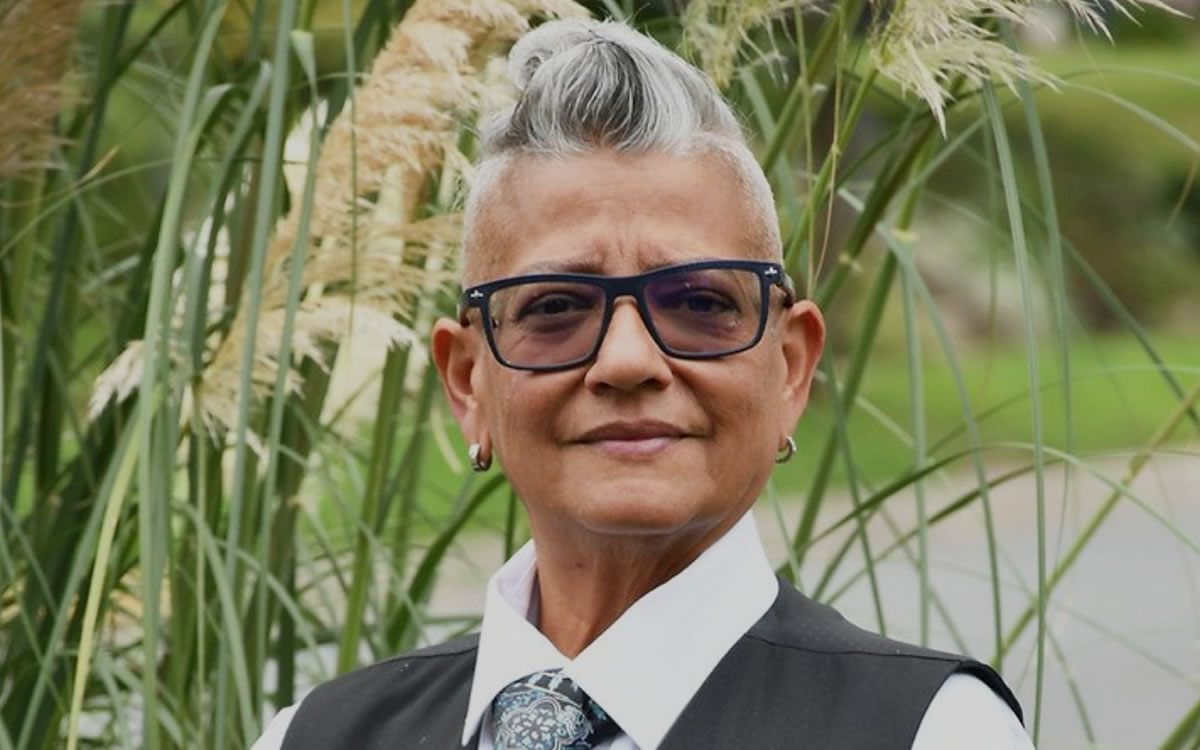
Lesbian activist and diversity consultant Lisbeth Melendez Rivera lost by just 17 votes in a three-candidate special election on Tuesday to fill a vacant seat on the Hyattsville, Md., City Council.
In what it said on Wednesday afternoon were the final certified results, the Hyattsville Board of Supervisors of Elections posted on its website that candidate Emily Strab had 280 votes, Melendez Rivera had 263 votes, and candidate Kelly Burello had 152 votes. Three votes were cast for write-in candidates, the election board posting said.
The Ward 2 seat on the 10-member Hyattsville Council in the Prince George’s County suburban city became vacant when the incumbent Council member, Robert Croslin, won election as mayor.
Melendez Rivera currently operates BQN Consulting, a firm she created to provide support services related to organizing, training and capacity building, according to the firm’s website. The website says that from 2014 to 2017 she served as Director of Latinx & Catholic Initiatives for the Human Rights Campaign, the D.C.-based national LGBTQ advocacy organization.
“I congratulated Emily,” Melendez Rivera told the Washington Blade Wednesday morning.
At that time, she said she remained hopeful that just a small number of mail-in ballots that may not have been counted on Tuesday night might emerge in her favor when the election board conducted its final tally of the votes later in the day on Wednesday or early Thursday.
But the final count released Thursday afternoon was identical to the preliminary count released Tuesday night, with winning candidate Strab receiving just 17 more votes than second-place finisher Melendez Rivera.
Melendez Rivera said she portrayed herself as the most progressive of the three candidates running for the nonpartisan City Council seat in a city that many consider to be one of the most progressive jurisdictions in the Washington metro area. Residents starting at age 16 and non-citizen immigrants are allowed to vote in local elections.
Like Melendez Rivera, Strab, a former teacher and school administrator, and Burello, who has worked as a workplace diversity trainer, each expressed support for Hyattsville’s diverse population, including racial minorities and immigrants.
The 698 total votes cast for the candidates plus what the election board lists as 3 “under votes” brought the total vote to 701 in the special election. That’s considered a low turnout for the Ward 2 election district that has a little over 2,000 registered voters.
Melendez Rivera said she plans to run again for the Ward 2 Council seat. The Hyattsville Council consists of two members for each of the city’s five wards. The second of the two Ward 2 Council seats is up for election in 2023, but Melendez Rivera said she will not run if the incumbent, Danny Schaible, decides to run for re-election.
“But I will definitely run in 2025,” she said, against then incumbent Strab, if Strab runs for re-election in 2023.




Maryland
Advocates for trans students urge Md. to fight White House threats
Four school districts under federal investigation
By JESSICA CALEFATI | Allies of transgender children are urging state education officials to fight back against the Trump-Vance administration, which has threatened to punish a growing number of Maryland school districts over local policies that affirm students’ gender identities.
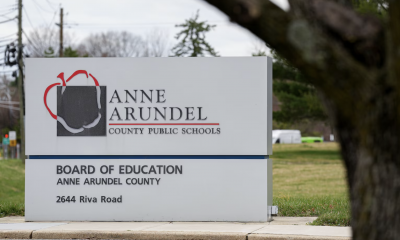
The advocates testified Tuesday morning before the Maryland State Board of Education — one day after the U.S. Education and Justice departments alleged that Anne Arundel County’s school system violated federal student privacy law by withholding a student’s gender identity from their parents. A spokesperson for the district said Monday legal counsel had not yet reviewed the claims and that the district had no further comment.
School districts in Prince George’s, Montgomery, and Frederick Counties were already under investigation for allegedly violating Title IX, the civil rights law that prohibits sex-based discrimination. The federal government last month threatened to revoke funding from the districts because they allow trans students to use restrooms and locker rooms that align with their identities.
The rest of this article can be read on the Baltimore Banner’s website.
Maryland
White House threatens Anne Arundel schools over gender identity policy
District faces possible legal action or loss of federal funding
By JESSICA CALEFATI | The Trump-Vance administration on Monday threatened to punish Anne Arundel County’s school system with legal action or the loss of federal funding for allegedly withholding information about a student’s gender identity and transition from the child’s parents.
The U.S. Education and Justice Departments together determined that the suburban Maryland district treats students’ gender identities as confidential medical information that cannot be shared with parents, in violation of federal student privacy law, according to a news release. A federal lawsuit filed against the district earlier this month made similar claims.
“As a mother and a grandmother, it is unconscionable that any school district would hide the most sensitive information about children in their care from their own parents,” U.S. Secretary of Education Linda McMahon said in a statement. “This is not only an affront to basic moral principles, but also to parents’ rights under federal law.”
The rest of this article can be read on the Baltimore Banner’s website.
Maryland
Christa Tichy hopes to preserve LGBTQ representation in Md. House of Delegates
Queer Democrat running to succeed retiring state Del. Bonnie Cullison
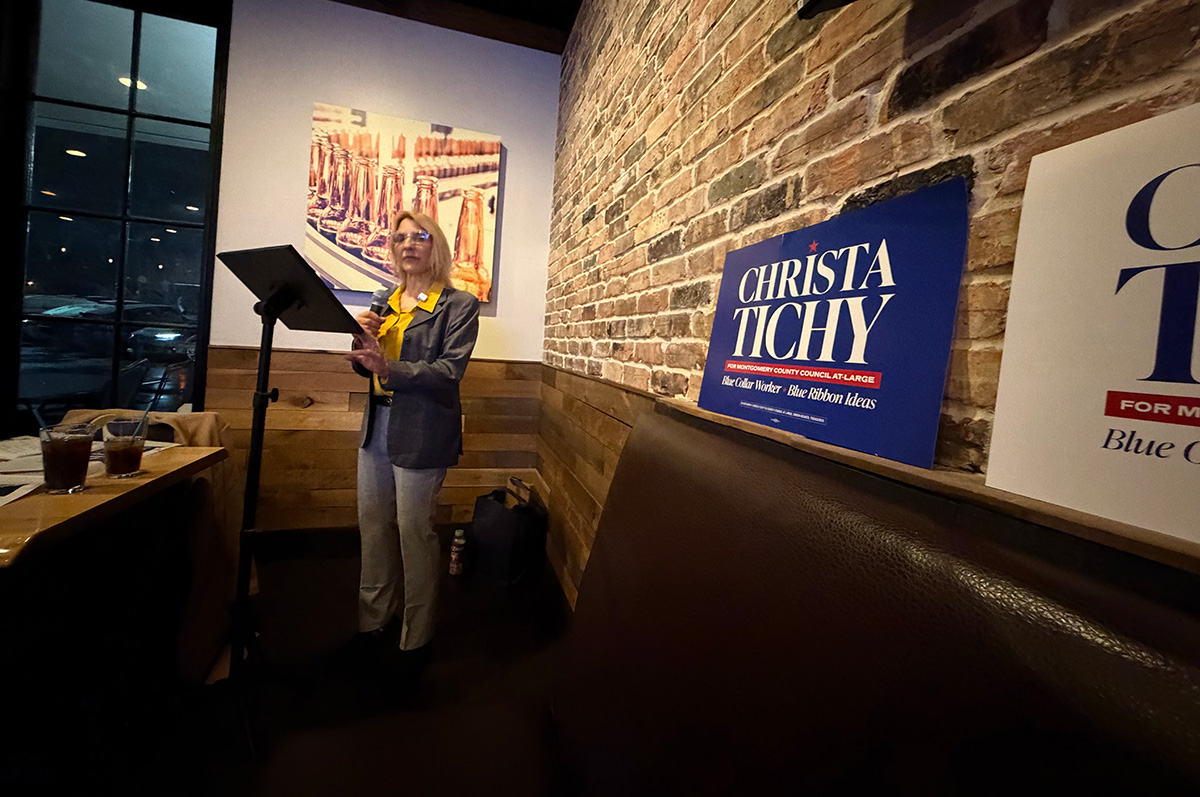
When longtime Maryland state Del. Bonnie Cullison (D-Montgomery County) announced she would retire, Christa Tichy immediately saw an opportunity.
The queer Democrat advanced from the June primary and will appear on the November ballot, hoping to succeed one of Maryland’s first openly LGBTQ legislators and preserve LGBTQ representation in Annapolis.
“But when Bonnie made that announcement, I knew right away that that’s what I was supposed to do,” Tichy told the Washington Blade during a recent interview. She always felt connected to Cullison’s background, which she said is very similar to her own.
Some of these shared traits include a background in teaching and a strong connection to Leisure World of Maryland. Cullison has inspired her in the past and feels motivated to take her place. She had always hoped to be her successor.
Besides their shared background, she also understands how important it is under the Trump-Vance administration to advocate for LGBTQ rights, as Cullison had in the past.
“I think there’s a lot of fears with the present administration of losing certain rights. And you know, Bonnie was a big advocate for marriage equality. I want to continue that, and you know, make sure that legislation that protects that is in place,” Tichy said.
Beyond specific policy priorities, Tichy said preserving LGBTQ representation in the General Assembly was equally important.
“I mean, of all the candidates that ran, I was the only female. […] I thought we needed that voice. We could not just let that voice be forgotten,” Tichy said.
Tichy said she believes serving in the Maryland General Assembly is where she can have the greatest impact on the issues she cares most about; including education, labor, and working families.
“I knew that this was my passion, and I felt this is where I could be most effective on a state level when it came to education, labor, for working with families,” Tichy said.
Throughout the campaign, Tichy said one unexpected source of enthusiasm came from her personal life. She and her now-wife, Jodie Bekman, were married during the campaign, and constituents closely followed their journey.
“A lot of my constituents knew that I was engaged in getting married, and they met my now wife, and our marriage was like part of the campaign,” Tichy said. “So, like our ring, the date, […], Jodie would come along with me just about at every event, so people got to know her and couldn’t help but like her.”
She believes that openness helped voters connect with her campaign on a personal level.
“I think there was an energy and an excitement to seeing two people that much in love that actually could win. I think that all contributed to it,” Tichy said.
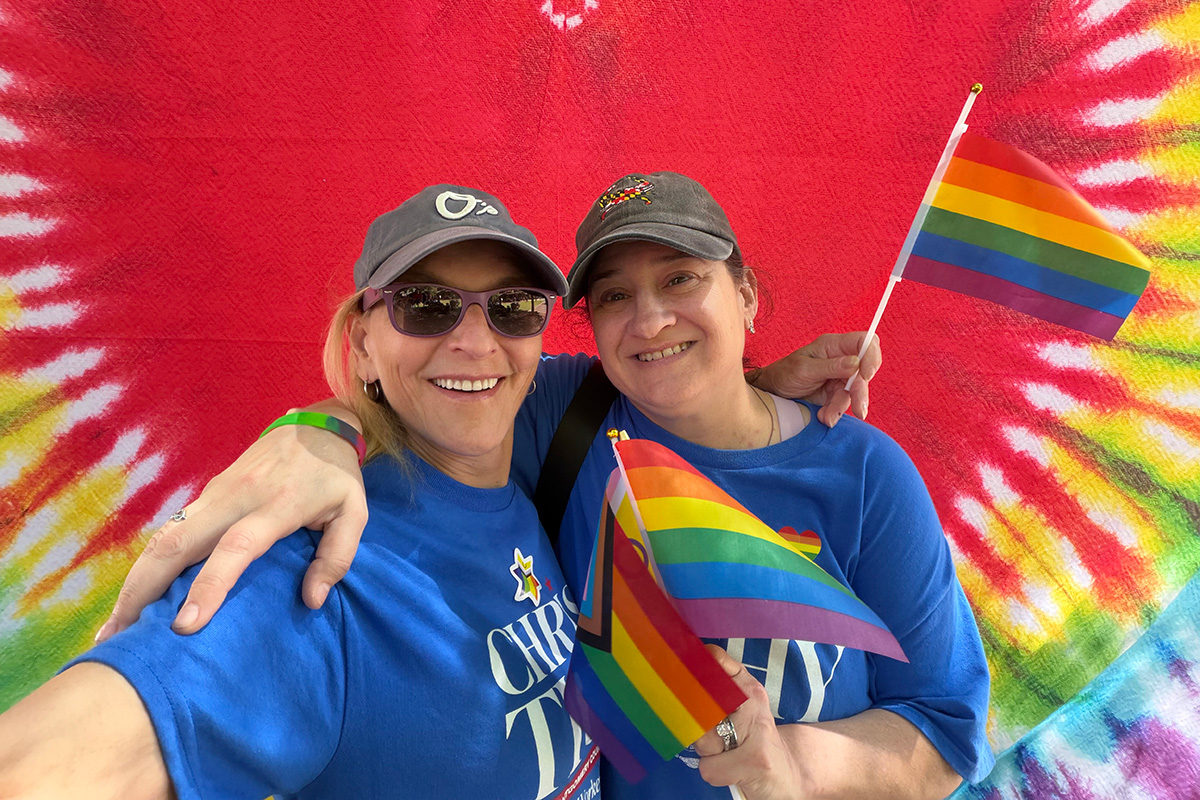
Tichy also credited support from other LGBTQ elected officials, including state Del. Kris Fair (D-Frederick County), who chairs Maryland’s LGBTQ+ Caucus, and Montgomery County Councilmember Evan Glass. She said Fair was among the first elected officials to publicly endorse her campaign.
She also praised the volunteers who helped propel her through the primary election, from canvassing neighborhoods to enduring rainy weather on Election Day.
“When I think of how they stood out […] in the rain on election day with raincoats and umbrellas pouring down, holding walk cards that were like just folding over. They were so wet and damp. That’s the type of dedication that we had,” Tichy said.
Outside of politics, Tichy has built a career breaking barriers in the skilled trades. She became Maryland’s first female licensed Master Electrician and now teaches electrical trade courses, helping students prepare for careers in the field.
She said many of her students come from underserved communities and that helping them find stable careers has reinforced her commitment to workforce development.
A lot of her policies focus on workforce development and encouraging more women to join career trades.
Her experiences in the electrical trade also shaped many of her policy priorities. Tichy said she has advocated for better workplace conditions, including properly fitting equipment for women and paid time off for workers who were often reluctant to take leave.
Working in a male-dominated profession, she said, was not always easy.
“I remember how many times I wanted to say, ‘I’m going to give up. I’m not going to do this. It’s too hard,’ and I always thought — I’m a mom. I have, you know, four boys now, but they needed me, and I was all they had, right?” Tichy said.
Looking ahead to November, Tichy said she hopes to continue the success of her campaign thus far and to keep reaching out to her community for support.
“Our diversity is our greatest strength, and by working together, there is no challenge we cannot overcome,” she said in a statement after winning the Democratic primary.
Other LGBTQ candidates also advanced to the general election, which can be found here.

PHOTOS: Petal Release Party

Madonna headlines World Pride Music Festival in Amsterdam

Reggie White relishing first season as artistic director of Woolly Mammoth

PHOTOS: Amsterdam Pride Canal Parade

Amsterdam Pride Canal Parade draws hundreds of thousands

‘Heartstopper Forever’ delivers satisfying conclusion

Madonna to perform at World Pride in Amsterdam

BLADE ENDORSEMENT: Susan Stewart for mayor of Rehoboth Beach

PHOTOS: Lambda Legal in the Pines