Virginia
Va. Department of Education releases updated guidelines for transgender, nonbinary students
Equality Virginia accuses Republican governor of targeting LGBTQ youth
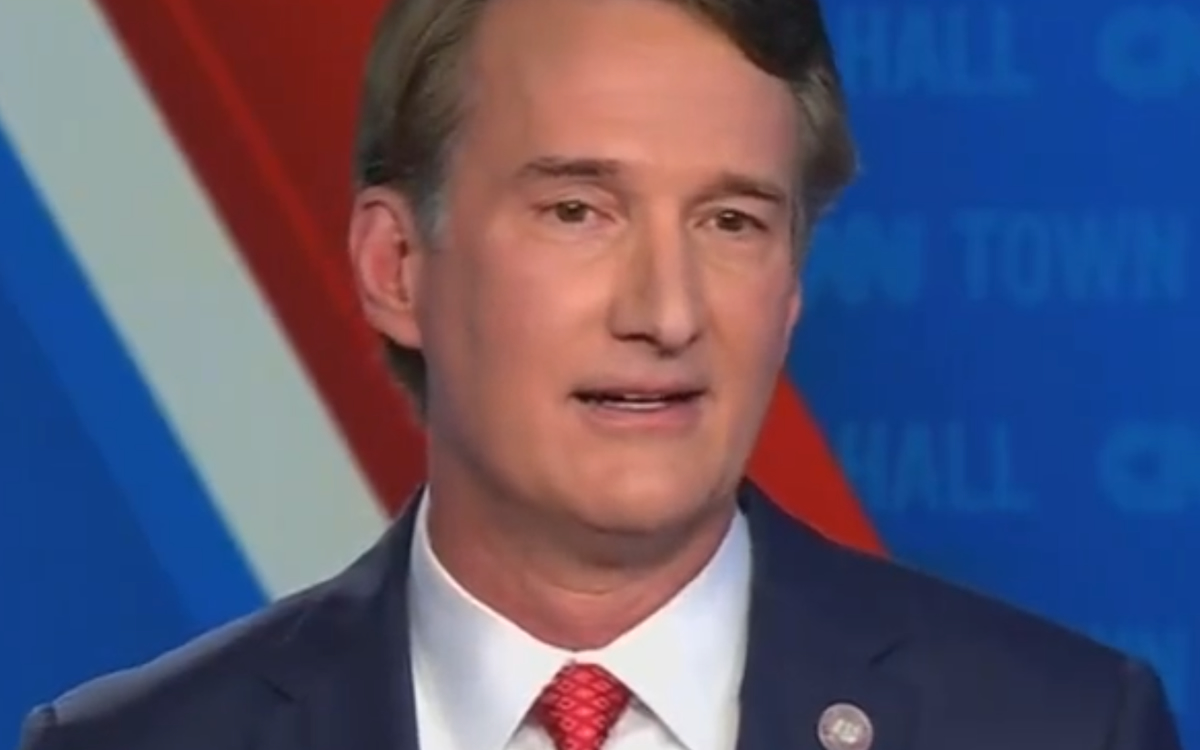
The Virginia Department of Education on Tuesday released its updated guidelines for transgender and nonbinary students in the state.
One section of the new guidelines states “schools shall defer to parents to make the best decisions with respect to their children.”
“Parents are in the best position to work with their children and, where appropriate, their children’s health care providers to determine (a) what names, nicknames and/or pronouns, if any, shall be used for their child by teachers and school staff while their child is at school, (b) whether their child engages in any counseling or social transition at school that encourages a gender that differs from their child’s sex, or (c) whether their child expresses a gender that differs with their child’s sex while at school,” they read.
Another section states “schools shall keep parents informed about their children’s well-being.”
“To ensure parents are able to make the best decisions with respect to their child, school personnel shall keep parents fully informed about all matters that may be reasonably expected to be important to a parent, including, and without limitation, matters related to their child’s health, and social and psychological development,” reads the guidelines. “Parents’ rights are affirmed by the U.S. Supreme Court that characterized a parent’s right to raise his or her child as ‘perhaps the oldest of the fundamental liberty interests recognized by this court.’ Troxel v. Granville, 530 U.S. 57, 65 (2000). This requirement is, of course, subject to laws that prohibit disclosure of information to parents in certain circumstances including, for example, Code of Virginia § 22.1-272.1(B) (prohibiting parental contact where student is at imminent risk of suicide related to parental abuse or neglect.)”
The guidelines further state “schools shall serve the needs of all students” and the Virginia Department of Education “is committed to working with school divisions to ensure a positive, safe and nurturing learning environment for all students.”
“Each student’s individual needs should be taken into consideration by his or her school, and divisions should develop policies that encourage schools to account for these individual needs, with due sensitivity to the needs of other students and the practical requirements of the teaching and learning environment,” reads the guidelines. “Schools should attempt to accommodate students with distinctive needs, including transgender students. A team of appropriate school staff and other caregivers should collaborate with the student’s parents or with an eligible student to identify and implement such reasonable accommodations or modifications (if any), considering the resources and staff available in the school and school divisions, as well as the rights and needs of other students and of school staff.”
The guidelines further state “single-user bathrooms and facilities should be made available in accessible areas and provided with appropriate signage, indicating accessibility for all students.”
“To ensure that all students have access to a learning environment in which they feel comfortable and safe, where state or federal law requires schools to permit transgender students to share otherwise sex-segregated facilities (such as bathrooms or locker rooms) with students of the opposite sex, parents should be given the right to opt their child out of using such facilities, and the child should be given access to alternative facilities that promote the child’s privacy and safety,” reads the guidelines. “Eligible students should be given the same right to opt out.”
Republican Gov. Glenn Youngkin last September announced plans to revise the guidelines that his predecessor, Democrat Ralph Northam, signed into law in 2020. The Virginia Joint Commission on Administrative Rules late last year formally objected to Youngkin’s proposed revisions.
“All children in Virginia deserve to have a parent engaged in their life and to be treated with dignity and respect. The VDOE updated model policies reaffirm my administration’s continued commitment to ensure that every parent is involved in conversations regarding their child’s education, upbringing and care,” said Youngkin in a statement. “Public comment, input and concerns were carefully evaluated and assessed to formulate the updated model policies. The Department of Education has delivered policies that empower parents, prohibit discrimination, create a safe and vibrant learning environment by addressing bullying incidents immediately, and protect the privacy and dignity of all students through bathroom policies, athletic procedures and student identification measures.”
Equality Virginia, the state’s largest LGBTQ advocacy group, on Tuesday sharply criticized the new guidelines.
“Today, Gov. Youngkin and the VDOE made a dangerous, politically motivated decision to ignore the thousands of Virginians who submitted public comments in opposition to his proposed model policies — policies which single out transgender and nonbinary youth in our schools,” said Narissa Rahaman, the group’s executive director. “Youngkin did all of this with no input from LGBTQ+ advocacy groups nor subject matter experts. Throughout the comment process, though, Virginians made it clear that LGBTQ+ youth deserve safety, respect and the opportunity to thrive.”
The new guidelines can be found here.






Virginia
Va. Supreme Court invalidates Democrat-backed redistricting plan
Voters narrowly approved new congressional districts last month
The Virginia Supreme Court on Friday struck down a Democrat-backed redistricting plan that voters approved last month.
Ten of 11 of Virginia’s congressional districts favor Democrats in the plan that passed by a 51-48 vote margin in last month’s referendum.
The Human Rights Campaign PAC is among the groups that support it. The court by a 4-3 majority invalidated the referendum results.
Democrats on May 11 asked the U.S. Supreme Court to stay the ruling.
Virginia
Prominent activists join ‘Living History’ panel at Freddie’s Beach Bar
Event organized by owner of new Friends of Dorothy Café in Alexandria

Six prominent LGBTQ community leaders and elders, including a beloved drag performer, talked about their role in advancing the rights of LGBTQ people and their thoughts on how the upcoming generation of LGBTQ youth should get ready to join the movement participated in an April 23 “Living History” panel discussion at Freddie’s Beach Bar.
The event was organized by Dorothy Edwards, who plans to open Friends of Dorothy Café in Alexandria. She said the café will be an LGBTQ community “intergenerational space” that will host events like the one she organized at Freddie’s Beach Bar.
“It will be a space for connection, storytelling, and belonging, especially for LGBTQ+ youth and community members who don’t always have places like that,” she said in a statement announcing the event at Freddie’s.
The six panelists at the Freddie’s event included Kierra Johnson, president of the D.C.-based National LGBTQ Task Force; Freddie Lutz, owner of Freddie’s Beach Bar located in the Crystal City section of Arlington, Va.; Donnell Robinson, who for many years performed in drag as the icon Ella Fitzgerald; Taylor Chandler Walker, a local transgender rights advocate, author and public speaker; Heidi Ellis, coordinator of the D.C. LGBTQ Budget Coalition; and Leti Gomez, an LGBTQ Latino community advocate and chair of the board of the American LGBTQ+ Museum.
Dr. Ashley Elliott, an LGBTQ community advocate and clinician who also goes by the name Dr. Vivid, served as moderator of the panel discussion, asking each of the panelists a serious of questions before opening the event to questions from the audience.
Among the issues discussed by the panelists was who was “centered” and who was excluded in the earlier years of LGBTQ organizing. Elliot also asked the panelists to address topics such as racism within queer spaces, gender dynamics, and strategies for coalition building between the LGBTQ community and other movements, including civil rights, feminism, and immigrant rights.
Each of the panelists expressed various thoughts on how the LGBTQ rights movement can make changes in response to the questions: “What can we do better?” and “Who is being left out?”
“I’m overwhelmed and so thankful that everyone on this panel said yes and agreed to come,” Edwards told the Washington Blade at the conclusion of the event. “I think every one of those people, including the moderator, was so brilliant and has done such good work for this community,” she said.
Edwards noted that each of the panelists, who have been involved in LGBTQ advocacy work for many years, talked about how they interact with younger LGBTQ people who are just beginning to become involved in activism.
“Truly, it’s an intergenerational conversation, and their wisdom and their words and their experiences can be disseminated to younger generations and people who want to do this work, people who want to fight for our community,” Edwards said.
“I was pleasantly surprised,” Lutz said. “I thought it was a good turnout, and everybody was very enthusiastic and engaged,” he said. “And I think it was great and fabulous.”
Lutz has operated Freddie’s Beach Bar for more than 25 years and has hosted numerous LGBTQ events. A sign above the front entrance door to the popular LGBTQ bar and restaurant says, “Straight Friendly Gay Bar.”
Edwards said the April 23 event was recorded and she will make arrangements for the recording to be released for others to view it. The Blade will post the link in this story when it becomes available.
Virginia
Va. voters approve HRC-backed redistricting plan
10 of state’s 11 congressional districts now favor Democrats
Virginia voters on Tuesday narrowly approved a congressional redistricting plan ahead of the 2026 midterm elections.
The referendum passed by a 51-48 vote margin.
Virginia’s last Census happened in 2020. The next time maps would have been redrawn was intended for 2030, but the referendum results allow for redistricting to happen this year, while allowing the standard district procedures to resume after the 2030 Census.
Many congressional maps have been redrawn since the Trump-Vance administration took office, adding seats for both Republicans and Democrats. Ten of 11 of Virginia’s congressional districts will now favor Democrats.
The Human Rights Campaign PAC supported the referendum.
“Virginians made their voices heard today, rebuking Republicans’ attempts to stack the deck in their favor in the 2026 midterm elections and beyond,” said Human Rights Campaign PAC President Kelley Robinson in a statement. “This year, we’re going to take Congress back from the fringe extremists who have bent the knee to President Trump’s historically unpopular agenda at every turn.”
“Virginians just put anti-equality, anti-democracy, and anti-freedom lawmakers on notice — together, we are fighting for a future where every single American’s vote matters and where every elected official must earn their constituents’ trust,” she added.

Iran war causes condom shortage in India

U.S. attorney nominee confirmed despite anti-LGBTQ history, no trial experience

Vt. lawmaker equates transgender identity with bestiality

Gay Men’s Chorus celebrates 45 years at annual gala

BREAKING NEWS: Barney Frank dies at 86

Disillusioned about democracy? Think of it as a community garden

Honey, have we been priced out of gay paradise?

IDAHOBiT a reminder we all must stand up against transphobia

PHOTOS: Blade Summer Kickoff Party