Nigeria
Four men accused of homosexuality beaten, chased out of Nigerian city
Incident took place in Benin City on Nov. 17
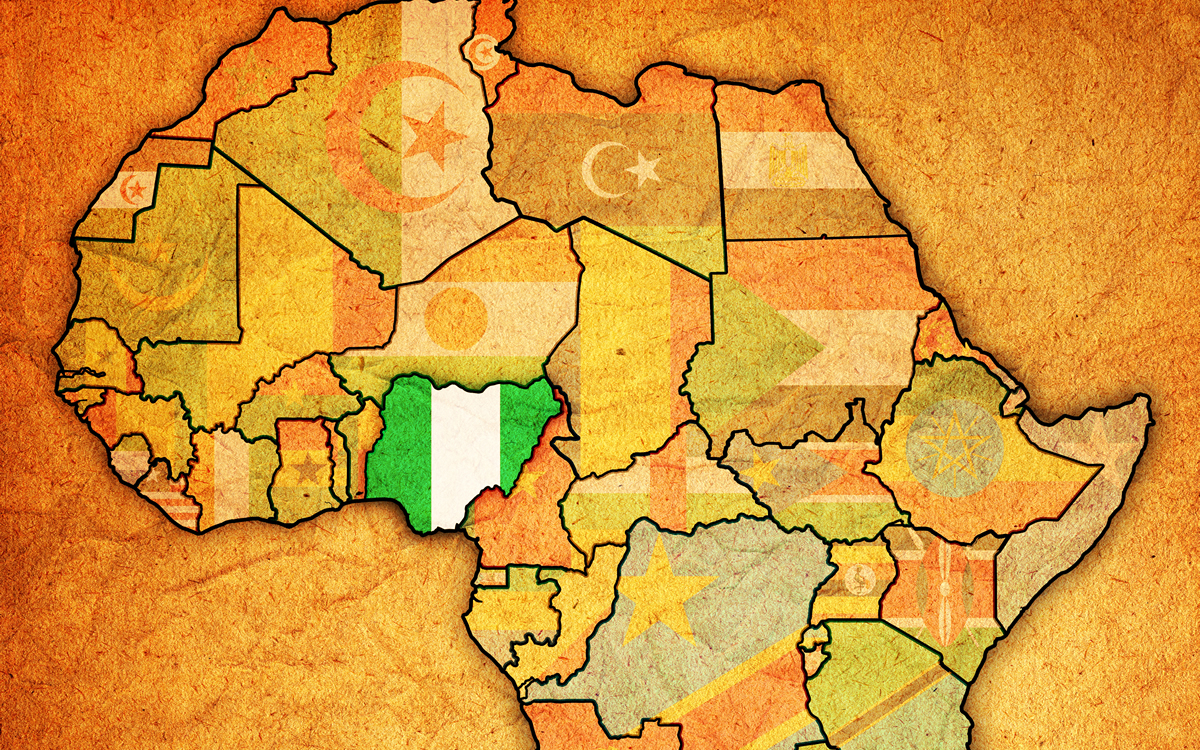
Four young men have been beaten and chased out of a Nigerian city after they were found engaging in consensual same-sex sexual activity.
An angry mob paraded the four men, who were only wearing boxing shorts, down Nomayo Street in Benin City, the capital of Edo state, on Nov. 17. One of them had a visible deep cut on his forehead as a result of the beating.
The mob threatened to kill them if they were to return to the city. It also questioned why they were “into” homosexuality when there were many women in the area.
Samson Mikel, a Nigerian LGBTQ activist, said the attack was misdirected anger.
“Benin City is one of the backward places in Nigeria and a dorm for scammers and other crimes, the people are proud of their roughness, they are never concerned about these other crimes or how the government is impoverishing them, but will light gay men on fire the moment they think,” said Mikel. “All they want is to live and experience love. They are not the cause of the economic meltdown in the country, neither are they the reason why there are no jobs in the streets of Nigeria.”
Attacks like the one that happened in Benin City have been happening across Nigeria — the latest took place in Port Harcourt in Rivers state last month.
Section 214 of the Criminal Code Act on Unnatural Offenses says any person who has “carnal knowledge of any person against the order of nature, or has carnal knowledge of an animal, or permits a male person to have carnal knowledge of him or her against the order of nature, is guilty of a felony” and could face up to 14 years in prison.
Several LGBTQ people and activists have been arrested under Section 214.
In some cases they are murdered with law enforcement officials showing little to no interest in investigating, such as the case of Area Mama, a popular cross-dresser whose body was found along the Katampe-Mabushi Expressway in Abuja, the Nigerian capital, in August.
The Initiative for Equal Rights, a Nigerian advocacy group, said the federal government should take concrete steps to protect the rights of all Nigerians.
“For many, especially LGBTQIA+ individuals, women, and those within the Sexual Orientation Gender Identity, Expression and Sexual Characteristics (SOGIESC), community, freedom remains a distant goal. Discrimination, violence and human rights violations are daily realities,” said TIERs Nigeria. “Despite the progress we have made, the journey towards justice is long, but our voices remain unwavering.”
TIERs Nigeria also called upon the federal government to repeal the Same Sex Marriage (Prohibition) Act 2014, to respond to the African Commission’s recommendation to review laws that criminalize rights of assembly and association, and to enact laws and policies that discourage hate speech and other actions that incite discrimination against LGBTQ people.
Many Nigerians vehemently oppose public discussions about LGBTQ-specific issues because of religious and cultural beliefs.
A number of local and international human rights organizations have advised the federal government to prioritize the rights of everyone in Nigeria, including those who identify as LGBTQ. There is, however, little hope that Nigerian officials will do this anytime soon.
Consensual same-sex sexual relations remain punishable by death in states with Sharia law. Those who advocate for LGBTQ rights in these areas could also face a similar fate.



Nigeria
Two students murdered at Nigerian boarding school because they were gay
Attack took place in Kano State on July 14
The brutal death of two students at a boarding school in Nigeria’s Kano State on July 14 has sparked outrage among local and regional activists.
Dailytrust, a local newspaper, said a handful of students attacked four fellow students they accused of being gay. The incident reportedly happened around midnight at the Government Secondary School Bichi.
The newspaper further reported two of the students who were attacked — Hamza Idris-Tofawa and Umar Yusuf-Dungurawa — died and two others are currently fighting for their lives in the hospital.
Authorities have arrested 11 students. The Kano State government has advised students not to attack their fellow classmates who they suspect are gay, and promised to thoroughly investigate the incident.
A month later, however, Kano State’s government has yet to offer the students’ families any compensation.
Augusta Yaakugh-Shahin, founder and director of Lex Initiative for Rights Advocacy and Development, an LGBTQ rights group, said schools should be safe spaces.
“This is not just school indiscipline, it’s a tragic case of mob violence driven by prejudice,” said Yaakugh-Shahin. “Schools should be safe places, not sites of fear. No child should fear being attacked for who they are, or who others think they might be.”
Bandy Kiki, an LGBTQ activist, said the students’ death is a stark reminder of the risks that LGBTQ Nigerians face.
“The murder of Hamza Idris-Tofawa and Umar Yusuf-Dungurawa is not just a school tragedy, it’s a direct result of a system that dehumanizes LGBTQ+ people,” said Kiki. “While the local authorities in Nigeria have promised an investigation, we must also be honest, without dismantling the prejudice enshrined in law and policy, we will keep seeing violence like this.”
Consensual same-sex sexual relations are prohibited under Nigeria’s Criminal Code Act and the Same Sex Marriage Prohibition Act.
The penal code criminalizes so-called acts of carnal knowledge against the order of nature, gross indecency, same-sex unions, and LGBTQ advocacy with up to 14 years in prison.
In Kano and most other states in northern Nigeria that practice Sharia law, punishments for being LGBTQ or engaging in LGBTQ activities can range from 100 lashes if unmarried to a year in prison. A person who is married or was previously married could face death by stoning.
Kano Gov. Abba Yusuf last year ordered the Kano State Hisbah Corps, which is responsible for the enforcement of Sharia law and promoting moral norms, to crack down on groups promoting LGBTQ rights in the state.
Anietie Ewang, a Nigeria researcher in Human Rights Watch’s Africa Division, said the country’s government should adopt and act on recommendations the U.N. Human Rights Council’s Universal Periodic Review made on Jan. 23 that include upholding LGBTQ rights.
“On LGBT rights, member states called for the repeal of Nigeria’s 2013 SSMPA which criminalizes same-sex relations, the release of people detained based on their sexual orientation or gender identity, and for ending prosecutions on these grounds,” said Ewang. “However, Nigerian authorities including the Minister of Justice have continued to denounce LGBT rights.”
Ewang also said the federal government should take the council’s concerns seriously and begin immediate steps — beyond laws and policies — to rectify them. They include prompt and transparent investigations and prosecutions of human rights abuses.
Nigeria
Gay couple beaten, paraded in public in Nigeria
Incident took place in Port Harcourt this week
A gay couple was beaten and paraded in public this week because of their sexual orientation.
In a video clip shared by Portharcourt Specials on X, the couple who appeared half naked were being insulted and slapped on the back, with one showing trails of blood on his back. The incident took place in Rumuewhara in Port Harcourt.
Although consensual same-sex sexual relations are criminalized in Nigeria and punishable by death on some states, many Nigerians viewed the attack against the couple as distasteful, arguing rapist or pedophiles don’t face the same treatment.
“This is where you will see Nigerians very active on; on matters that don’t concern them because why is someone’s sexual orientation your problem? We are well deserving of politicians that punish us well,” said Rinu Oduala, a human rights activist.
No Hate Network Nigeria, an LGBTQ rights organization, said the couple’s public victimization was a stark reminder of the rampant homophobia in the country.
“The brutal attack on the gay couple is appalling and unacceptable,” said the organization. “It’s a stark reminder of the rampant homophobia and intolerance in Nigeria.”
“Such violence is often fueled by discriminatory laws, societal norms, and lack of education, this incident highlights the urgent need for increased advocacy, education, and protection for LGBTQI+ individuals,” added No Hate Network Nigeria.
No Hate Network Nigeria also highlighted the plight of LGBTQ people in the country who are constantly under attack due to current laws and cultural and religious norms.
“The LGBTQI+ community in Nigeria faces extreme risks, including violence, harassment, and persecution, the Same-Sex Marriage (Prohibition) Act of 2014 exacerbates these challenges, effectively criminalizing LGBTQI+ individuals,” said No Hate Network Nigeria. “Many live in fear, hiding their identities to avoid persecution, the community requires enhanced support, safe spaces, and robust advocacy to ensure their basic human rights.”
For many LGBTQ people in the country, remaining in the closet is the only way they can preserve their life. They often flee Nigeria if they decide to come out.
There is currently no appetite from any lawmakers to amend or repeal parts of Section 21 of the Criminal Code Act (Penal Code) that are used to arrest, charge, and prosecute those who identify as LGBTQ.
In northern states where Sharia law is practiced, one who is found to identify as LGBTQ or is an advocate may face death by stoning.
Although not widely practiced, death by stoning is the preferred punishment in many of the northern states if a Sharia court finds someone guilty of engaging in consensual same-sex sexual relations. A number of local and international human rights organizations in recent years have condemned this punishment. It is, however, still enforced in some of these states.
No Hate Network Nigeria said amending parts of the Criminal Code Act and repealing the Same Sex (Prohibition) Act might give relief to LGBTQ people in the country.
“Repealing or amending discriminatory laws, like the Same-Sex Marriage (Prohibition) Act, implementing education and awareness campaigns to combat homophobia, establishing safe spaces, and support networks for LGBTQI+ individuals and strengthening law officials’ response to hate crimes as well as holding perpetrators accountable, will aid in averting and combating attacks on LGBTQI+ individuals,” said No Hate Network Nigeria.
Miscellaneous
YouTube suspends queer Nigerian streaming TV channel
Deplatforming ‘basically shutting the voice’ of region’s LGBTQ community
A queer Nigerian streaming TV channel has initiated a global signature collection drive that demands YouTube restore its platform that was suspended this week under unclear circumstances.
Omeleme TV, which airs gay love movies in Nigeria, faulted YouTube’s action on Sept. 8 as “not only surprising but disappointing” to the LGBTQ community.
The channel, established a year ago, launched its first short film “Nearly All Men” on Oct. 22, 2023, featuring notable Nigerian actors as leads. “Pieces of Love” went viral after its release on June 21.
The channel boasted more than 5,000 subscribers and YouTube monetized it.
“We have never involved ourselves in any aspect that goes against YouTube policies and have always complied with their rules and regulations accordingly,” reads the petition. “So deleting our YouTube page is basically shutting the voice of the queer folks in the region.”
The TV channel notes homophobia around consensual same-sex love is often shrouded in taboo in society and that Omeleme has been the only primary YouTube platform to debunk such discriminatory beliefs.
“Omeleme TV plays a crucial role in normalizing these relationships, providing visibility and affirmation for LGBTQ+ individuals, both young and old. And the only platform through which their voice can be heard and seen is YouTube,” reads the petition.
The channel’s spokesperson told the Washington Blade that YouTube did not indicate “the main issue” for terminating the platform and confirmed that initially there was a copyright claim on a song they received from an artist but the concern was settled.
“We immediately requested a review and informed the artist of the copyright. He immediately informed his distributors and after back and forth, the distributors based in Sweden approved that we got permission,” the spokesperson, who sought anonymity, stated.
The spokesperson also disclosed that while settling the copyright issue, they realized that “Nearly All Men” had not been monetized despite having the certificate. Concerned about YouTube’s delay in giving feedback when contacted, the channel pulled the film, recorded an original song, and uploaded the movie.
“They (YouTube) flagged it also on Aug. 18,” the spokesperson said. “This time they claimed it is not ad friendly but it does not affect the channel and that we can only earn and be viewed by premium subscribers.”
Although the channel complied by subscribing to Premium and received approval on Sept. 3, they were not comfortable with the condition since the film was only limited to some subscribers against their streaming expectation targeting everyone.
“In all of these, YouTube never for once issued a strike on our channel, rather they kept assuring us that it does not warrant a strike if we request for reviews since we had copyrights and all,” the spokesperson noted.
YouTube under its user policies boasts a safer platform that allows viewers and creators around the world to express their ideas and opinions freely with an assurance that such “a broad range of perspectives ultimately makes us a stronger and more informed society, even if we disagree with some of those views.”
Under the copyright rules, the streaming platform provides that “creators should only upload videos that they have made or that they are authorized to use.”
“So if this back and forth is what warranted the deleting of our channel, it remains masked as they did not in any way specify the actual violation or spam,” the Omeleme spokesperson said.
The spokesperson noted many Omeleme viewers around the world who were happy watching the films feel disappointed by the suspension by YouTube and that the channel has also suffered online mentions and subscriptions.
“It was a labor of love and YouTube remains our major source for distribution of these films to queer folks all over the world,” the spokesperson said, while asking the platform not to silence the voice of young indie queer filmmakers behind the movies. “We believe it could have been a mistaken scam identity and YouTube being a safe space for filmmakers all over the world will do the right thing by restoring our channel for their esteemed viewers.”
Reverend Jide Macaulay, a gay minister of Nigerian descent who was born in London and founded House of Rainbow, an LGBTQ-affirming fellowship, criticized YouTube’s move to suspend Omeleme, which he applauds for promoting a positive queer narrative.
“Omeleme TV has been a critical platform for increasing awareness and visibility of same-sex relationships, particularly in regions like Nigeria where LGBTQ+ individuals face pervasive homophobia and discriminatory laws,” said Macaulay.
He reiterated the channel has been the only beacon of hope for the queer community to see their stories represented and heard in a hostile homophobic environment.
“By blocking Omeleme TV, YouTube is silencing an essential voice in the fight for equality and understanding, especially in countries like Nigeria where safe spaces for queer individuals are scarce,” Macaulay stated.
He called on YouTube to support queer people’s right to be seen and heard by reinstating the channel so it can continue streaming films to empower marginalized voices. Macaulay also appealed for global support in signing the petition to have the channel restored in defending freedom of expression and the right to share diverse experiences.

Delaware fines Rehoboth bar $15,000 for discriminating against trans woman

Music icon and dear LGBTQ friend Dolly Parton remembered

Push to elect more LGBTQ ANC members yields results

Chris Van Hollen says the Democratic Party needs change. Is he the one to lead it?

New data shows record-high LGBTQ population amid Trump attacks

Exploring Renée Richards’s life through lens of a trans author

Why we need to protect ‘sacrilegious’ art

New GALA show about WWII spy full of conflict, intrigue

Proposed Indian foreign funding law overhaul could further pressure LGBTQ groups

Two awesome, affordable rides
-

 Books4 days ago
Exploring Renée Richards’s life through lens of a trans author
-
Opinions4 days ago
Why we need to protect ‘sacrilegious’ art
-
Theater4 days ago
New GALA show about WWII spy full of conflict, intrigue
-
India3 days ago
Proposed Indian foreign funding law overhaul could further pressure LGBTQ groups