District of Columbia
D.C. police seek help in Dupont Circle murder probe
Records show victim was arrested three times for area assaults
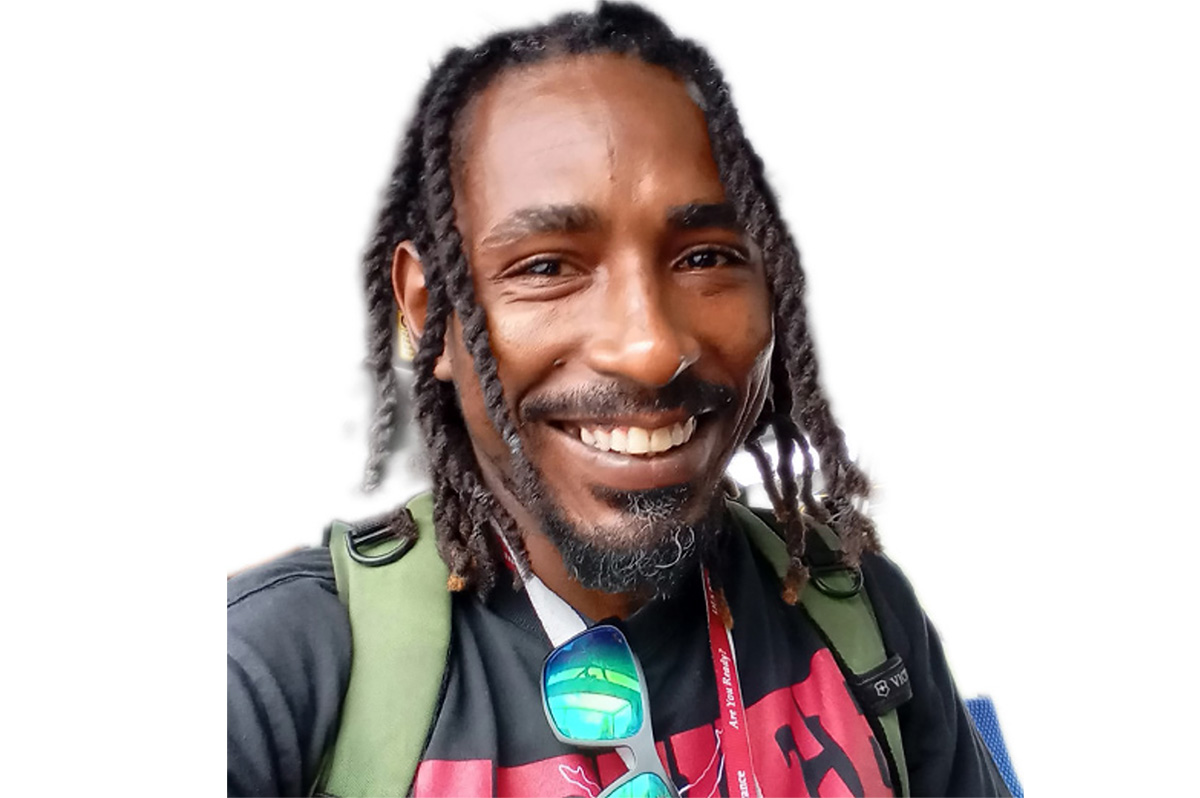
D.C. police are seeking help from the public in their investigation into the Dec. 30 Dupont Circle stabbing death of a 36-year-old man who had been arrested at least three times between 2016 and 2023 for assault related incidents in the neighborhood, according to police and court records.
A police announcement says D.C. police and U.S. Park Police officers responded at about 3:58 p.m. Monday, Dec. 30, 2024, to Dupont Circle for a report of a stabbing. It says an adult male later identified as Dominique Ratiff of Southeast D.C. was found unresponsive suffering from a stab wound.
According to the statement, he was taken to a hospital and pronounced dead. Police said they have made no arrest in the case, but a police liaison officer told the Dupont Circle Advisory Neighborhood Commission that a suspect was described as a male wearing a purple beanie and baggy sweatpants leaving the scene on a bicycle on New Hampshire Avenue, N.W.
Police have said the stabbing occurred at the western side of Dupont Circle that intersects with Massachusetts Avenue, N.W. near the CVS Pharmacy and a PNC Bank.
Court records show that Ratiff was first arrested on June 2, 2016, on a charge of assault with a dangerous weapon and simple assault for allegedly hitting a woman with his walking cane following a “verbal altercation” in Dupont Circle.
D.C. Superior Court records show he was arrested again on June 15, 2016, for allegedly repeatedly punching a homeless man outside the man’s tent near 901 27th St., N.W., while wearing boxing gloves. That incident did not occur at Dupont Circle, but court records show prosecutors combined that case with the earlier assault case against the woman.
The records show both cases were dismissed by a judge after Ratiff complied with his pre-trial release requirements and successfully completed a “mental health” diversion program.
Records show Ratiff’s third arrest took place on April 16, 2022, when he was charged with Robbery Force and Violence, Theft Second-Degree, and Simple Assault for allegedly pushing a male victim against the wall outside of the CVS Pharmacy at Dupont Circle and taking money from the man after threatening to stab him.
Again, court records show all charges were dismissed against Ratiff after he complied with his pre-trial release requirements and successfully completed a court diversion program that included community service.
His fourth arrest occurred on July 18, 2023, court records show, when he was charged with Unlawful Entry-Private Property and Simple Assault for allegedly entering the CVS Pharmacy at Dupont Circle after having been barred from the premises one year earlier and assaulting a CVS manager who told him he had to leave.
The records show that a remote “citation” hearing was held on Aug. 9, 2023, which Ratiff attended with his attorney. According to the records, a judge ordered him to return to court on Sept. 20, 2023, for an arraignment and a judicial summons with the order was mailed to his address at 2863 Denver St., S.E.
The summons was returned as “undeliverable” on Aug. 22, 2023, and Ratiff failed to appear at the Sept. 20 hearing, the records show, prompting the judge to issue a bench warrant for his arrest. But the records show no further action, such as an arrest, had taken place and authorities did not learn of Ratiff’s whereabouts until the time he was found fatally stabbed in Dupont Circle.
Gay Dupont Circle Advisory Neighborhood Commissioner Vincent Slatt has called Ratiff’s murder a tragedy that possibly could have been prevented by better social services programs that Slatt said could have been arranged by the court system.
“This guy had gone through the system multiple times, and the social services have failed him,” Slatt told the Washington Blade. “And it resulted in him getting killed.”
Slatt added, “So, he was in several of these deferment programs. But ultimately, he still needed the social services, and it cost him his life,” Slatt said. “This is an indication that we need to improve our social services. And these people are falling through the cracks.”
D.C. police are offering a $25,000 reward for information leading to the arrest and conviction of the person responsible for Ratiff’s murder. Anyone with information that could help in the investigation is asked to call the police Homicide Branch at 202-645-9600.





District of Columbia
Bowser appoints first nonbinary person to Cabinet-level position
Peter Stephan named Office of Disability Rights interim director
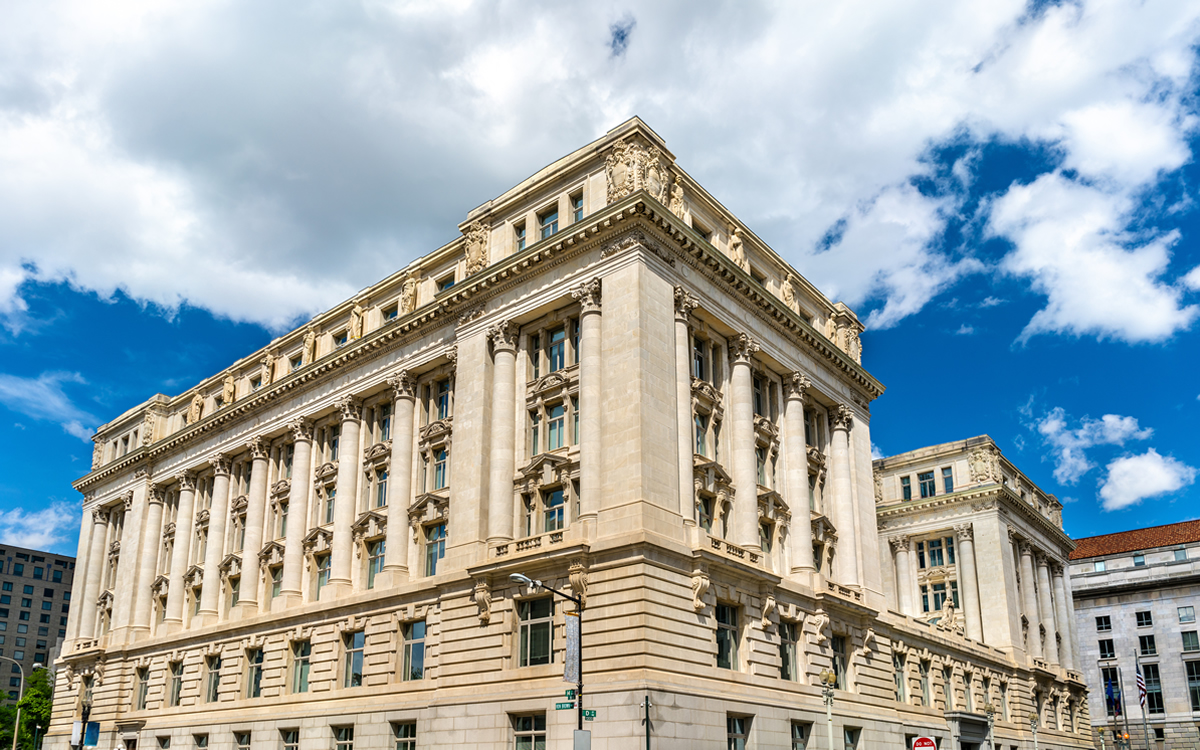
D.C. Mayor Muriel Bower has named longtime disability rights advocate Peter L. Stephan, who identifies as nonbinary, as interim director of the D.C. Office of Disability Rights.
The local transgender and nonbinary advocacy group Our Trans Capital and the LGBTQ group Capital Stonewall Democrats issued a joint statement calling Stephan’s appointment an historic development as the first-ever appointment of a nonbinary person to a Cabinet-level D.C. government position.
“This milestone appointment recognizes Stephan’s extensive expertise in disability rights advocacy and marks a historic advancement for transgender and nonbinary representation in District government leadership,” the statement says.
The statement notes that Stephan, an attorney, held the position of general counsel at the Office of Disability Rights immediately prior to the mayor’s decision to name him interim director.
The mayor’s office didn’t immediately respond to a question from the Washington Blade asking if Bowser plans to name Stephan as the permanent director of the Office of Disability Rights. John Fanning, a spokesperson for D.C. Council member Anita Bonds (D-At-Large), said the office’s director position requires confirmation by the Council.
Stephan couldn’t immediately be reached for comment.
“At a time when trans and nonbinary people ae under attack across the country, D.C. continues to lead by example,” said Stevie McCarty, president of Capital Stonewall Democrats. “This appointment reflects what we have always believed that our community is always strongest when every voice is represented in government,” he said.
“This is a historic step forward,” said Vida Rengel, founder of Our Trans Capital. “Interim Director Stephan’s career and accomplishments are a shining example of the positive impact that trans and nonbinary public servants can have on our communities,” according to Rangel.
District of Columbia
Capital Stonewall Democrats set to celebrate 50th anniversary
Mayor Bowser expected to attend March 20 event

D.C. Mayor Muriel Bowser, members of the D.C. Council, and local and national Democratic Party officials are expected to join more than 150 LGBTQ advocates and supporters on March 20 for the 50th anniversary celebration of the city’s Capital Stonewall Democrats.
A statement released by the organization says the event is scheduled to be held at the Pepco Edison Place Gallery building at 702 8th St., N.W. in D.C.
“The evening will honor the people who built Capital Stonewall Democrats across five decades – activists who fought for rights when the odds were against them, public servants who opened doors and refused to let them close, and a new generation of leaders ready to carry the work forward,” the statement says.
Founded in 1976 as the Gertrude Stein Democratic Club, the organization’s members voted in 2021 to change its name to the Capital Stonewall Democrats.
Among those planning to attend the anniversary event is longtime D.C. gay Democratic activist Paul Kuntzler, 84, who is one of the two co-founders of the then-Gertrude Stein Democratic Club. Kuntzler told the Washington Blade that he and co-founder Richard Maulsby were joined by about a dozen others in the living room of his Southwest D.C. home at the group’s founding meeting in January 1976.
He said that among the reasons for forming a local LGBTQ Democratic group at the time was to arrange for a then “gay” presence at the 1976 Democratic National Convention, at which Jimmy Carter won the Democratic nomination for U.S. president and later won election as president.
Maulsby, who served as the Stein Club president for its first three years and who now lives in Sarasota, Fla., said he would not be attending the March 20 anniversary event, but he fully supports the organization’s continuing work as an LGBTQ organization associated with the Democratic Party.
Steven McCarty, Capital Stonewall Democrats’ current president, said in the statement that the anniversary celebration will highlight the organization’s work since the time of its founding.
“Capital Stonewall Democrats has been fighting for LGBTQ+ political power in this city for 50 years, electing people, training organizers, holding this community together through some really hard moments,” he said. “And right now, with everything going on, that work has never mattered more. This gala is the first moment of our next chapter, and I want the community to be a part of it.”
The statement says among the special guests attending the event will be Democratic National Committee Vice Chair Malcolm Kenyatta, who became the first openly gay LGBTQ person of color to win election to the Pennsylvania General Assembly in 2018.
Other guests of honor, according to the statement, include Mayor Bowser; D.C. Council member Zachary Parker (D-Ward 5, the Council’s only gay member; D.C. Council member Anita Bonds (D-At-Large); Earl Fowlkes, founder of the International Federation of Black Prides; Vita Rangel, a transgender woman who serves as Deputy Director of the D.C. Mayor’s Office of Talent and Appointments; Heidi Ellis, director of the D.C. LGBTQ Budget Coalition; Rayceen Pendarvis, longtime D.C. LGBTQ civic activist; and Phillip Pannell, longtime D.C. LGBTQ Democratic activist and Ward 8 civic activist.
Information about ticket availability for the Capital Stonewall Democrats anniversary gala can be accessed here: capitalstonewalldemocrats.com/50th
District of Columbia
Owner of D.C. gay bar Green Lantern John Colameco dies at 79
Beloved businessman preferred to stay ‘behind the scenes’
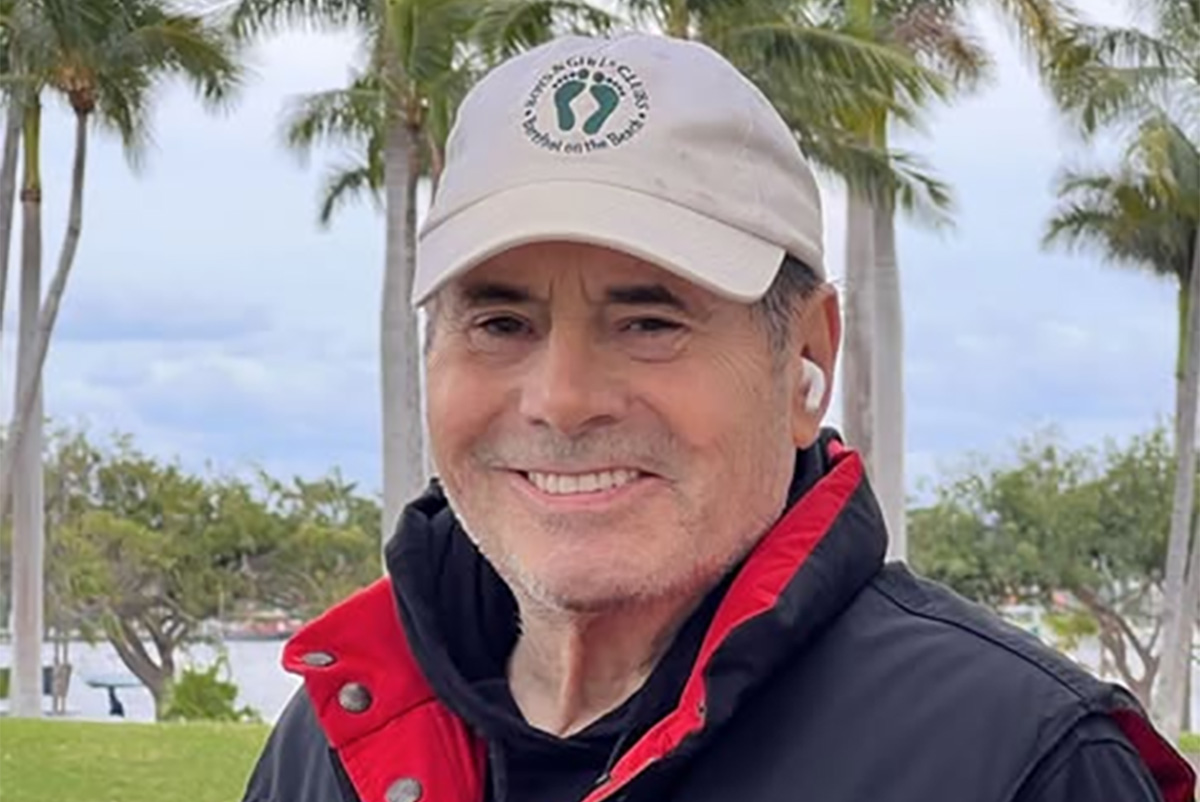
John Colameco, owner of the popular D.C. gay bar Green Lantern, has died, according to a March 7 announcement posted on the bar’s website and Instagram account. The announcement didn’t provide a date of his passing or a cause of death.
Green Lantern manager Howard Hicks said Colameco was 79 at the time of his passing.
“It is with great sadness that Green Lantern announces the death of our beloved owner, John Colameco,” the announcement says. “Most of our patrons might have heard John’s name, but might not have known his face,” it says.
“He was a ‘behind-the-scenes’ kind of guy who avoided the limelight,” the announcement continues. “He preferred to stay in the back of the house with staff and team ensuring everything was running smoothly so that everyone out front was having a good time.”
The announcement adds, “As a veteran and businessman, John wasn’t a member of the LGBTQ + community, but he was one of the best damn allies our community has ever had.”
It says he “long provided spaces for the queer community to come together” since the 1990s when he owned and operated a popular restaurant on 17th Street, N.W. called Peppers.
According to the announcement, Colameco and his then business partner Greg Zehnacker opened the Green Lantern in 2001 in an alley off of 14th Street, N.W., between Thomas Circle and L Street, N.W.
The announcement points out that the Green Lantern first opened in the same location in the early 1990s before it later closed when the original owners decided to purchase and open other bars, one of which was the gay bar Fireplace near Dupont Circle. Colameco and Zehnacker were able to reopen the bar with the Green Lantern name.
“When Greg died unexpectedly in February 2014, John remained steadfastly committed to carrying on their vision and ensuring that Green Lantern remained part of the fabric of D.C.’s queer community,” the announcement says.
“Over the years, through Green Lantern, John has provided support to many community organizations, most notably Stonewall Sports, the Gay Men’s chorus of Washington, and ONYX Mid-Atlantic with Green Lantern serving as a gathering hub for their activities,” it states.
The announcement adds that Colameco’s family was planning a memorial for him in his hometown of Philadelphia.
“His Green Lantern family will celebrate his life by operating the bar as usual and we encourage you to stop by and join us,” it says. “Community coming together and having a good time – it’s exactly what John would want.”

Gay Venezuelan man ‘forcibly disappeared’ to El Salvador files claim against White House

Trump proclamation targets trans rights as State Dept. shifts visa policy

Adolescentes trans en Ecuador podrán cambiar datos en su cédula, pero con condicionamientos

Gay Cameroonian immigrant will be freed from ICE detention — for now

Laverne Cox, Liza Minnelli among authors with new books

Too afraid to leave home: ICE’s toll on Latino HIV care

Claudia López wins primary in Colombian presidential race

Trump will refuse to sign voting bill without anti-trans provisions

Man stuck in Lebanon as Iran war escalates

CAMP Rehoboth hires new executive director
-

 Health5 days ago
Too afraid to leave home: ICE’s toll on Latino HIV care
-
Colombia5 days ago
Claudia López wins primary in Colombian presidential race
-
The White House4 days ago
Trump will refuse to sign voting bill without anti-trans provisions
-
Iran4 days ago
Man stuck in Lebanon as Iran war escalates