Federal Government
Expert warns Trump’s drastic cuts to HHS will have far-reaching consequences
HRC’s HIV and LGBTQ health policy advocate shared his concerns with the Blade

Ten years ago, as the opioid epidemic ripped through communities across the United States, the recreational use of oxymorphone with contaminated needles led to an explosion of new HIV infections in southern Indiana’s Scott County.
In places like Austin, a city with about 4,000 residents, the rate of diagnoses quickly ballooned to levels seen in some of the hardest-hit nations of sub-Saharan Africa, more than 50 times higher than the national average.
Thankfully, by 2020, NPR reported that the area was rebounding from what was the most devastating drug-fueled HIV epidemic that rural America had ever experienced, with three-quarters of patients managing the disease so well with antiretroviral therapies that their viral loads were undetectable.
Five years after officials called a public health emergency over the outbreak in Scott County, Austin had opened new addiction treatment centers, support groups, and syringe exchanges.
Initially, Indiana’s response was sluggish. The state’s governor at the time, Mike Pence, opposed clean needle exchanges for 29 days before ultimately signing an executive order allowing for a state-supervised program.
The administration in which he would go on to serve as vice president, however, launched an ambitious initiative designed around the objective of ending the HIV epidemic in the U.S. by the end of the decade, using proven public health strategies including syringe exchanges.
NPR further noted “the administration’s HIV goals were championed” by Pence along with Trump’s U.S. Surgeon General, Jerome Adamsthe, who was Indiana’s health commissioner during the outbreak in Austin.
Still, the news service warned, the Centers for Disease Control and Prevention determined that 220 U.S. counties were vulnerable to outbreaks of HIV and other blood borne infectious diseases like hepatitis C.
“When you have these outbreaks, they affect other states and counties. It’s a domino effect,” Dr. Rupa Patel, an HIV prevention researcher at Washington University in St. Louis, told NPR. “We have to learn from them. Once you fall behind, you can’t catch up.”
Trump’s approach to public health, including efforts to prevent, detect, mitigate, and treat outbreaks of infectious diseases, looks radically different in his second term.
‘I don’t know why they hate public health so much’
The Washington Blade spoke with Matthew Rose, senior public policy advocate for the Human Rights Campaign, during a recent interview about the the administration’s dramatic cuts and mass layoffs that will totally reshape the way America’s health agencies are run under Trump’s secretary of the U.S. Department of Health and Human Services, Robert F. Kennedy, Jr.
“They’re dismantling all the things around” the first Trump administration’s Ending the HIV Epidemic in the U.S. effort, he said, eliminating key positions and offices within America’s health agencies that support this effort, including by tracking progress toward — or movement away from — the 2030 goalposts.
Rose said there is no evidence to suggest the initiatives combatting HIV that were begun when Trump was in office the first time were ineffective, either in terms of whether their long term cost-savings justified the investment of government resources to administer them or with respect to data showing measurable progress toward ending the epidemic within the decade.
Therefore and in the absence of an alternative explanation,, Rose said he is left with the impression that the Trump-Vance administration does not care about Americans’ public health, especially when it comes to efforts focused on disfavored populations, such as programs supporting access to PrEP to reduce the risk of HIV transmission through sex.
The outbreak in Scott County “can happen over and over again, if we don’t have CDC surveillance,” he warned. “We’re still having a fentanyl crisis in the country that we don’t seem to really want to deal with, but you end up with outbreaks that bloom and bloom very quick and very fast.”
Rose added, “The really crazy thing is that they got rid of disease intervention and branch and response,” referring to the CDC’s National Center for HIV, Viral Hepatitis, STD, and Tuberculosis Prevention, specifically its Division of HIV Prevention, and the various branches within that division that are responsible for different aspects of HIV prevention, care, and research. They include HIV Research, Behavioral and Clinical Surveillance, and Detection and Response.
“These are literally the disease detectives that chase down outbreaks,” Rose added. “When there’s a syphilis outbreak in an area, when COVID came along and we had to trace COVID outbreaks, like, those folks are the folks who do this.”
If (or perhaps when) communities experience an outbreak, “We wouldn’t truly know what’s going on until probably 10 years later, when those folks’ CD4 counts finally crash to an AIDS diagnosis level,” he said, at which point “they’re very, very sick.”
“They’ll start looking like we haven’t seen people look since probably 30, 40 years ago,” Rose said, a time well before the advent of highly effective medicines that from the perspective of many patients turned HIV from a death sentence to a manageable disease.
Additionally, “every person that we lose to follow up and care, if they don’t know their status, that’s where the majority of new diagnoses come from,” he said, noting that without the CDC’s work “bringing people back into care,” there is “no way of tracking that.” HIV positive people will continue to potentially transmit the disease to others as “their own health deteriorates at levels that it doesn’t need to deteriorate at,” Rose said, “so, we make it worse.”
Along with the breakthroughs in drug discovery that led to the introduction of highly efficacious and well tolerated antiretrovirals, the use of PrEP by those who are HIV-negative to drastically reduce the risk that they may contract the virus through sex has put the goal of eliminating the epidemic within reach.
“One of the things we learned from things like the PROUD study,” Rose said, referring to randomized placebo-controlled HIV trials conducted in the U.K. in 2016 “ is that if you can get to the highest impacted folks, the most vulnerable folks, for every one person you get on PrEP, you’re getting anywhere from 16 to 23 infections averted.”
Disparities in health outcomes are likely to worsen
Rose noted that “we’re finally starting to stabilize” the disproportionately high rate of new infections among gay and bisexual Black men who have sex with men thanks in large part to the federal government’s work by employees and divisions that were cut by Kennedy’s restructuring of HHS, initiatives like culturally competent public health messaging campaigns for vulnerable populations, addressing subjects like PrEP, other prevention methods, the importance of regular HIV/STI screenings, and the availability of treatments for HIV and other sexually transmitted infections.
There is no way of knowing if any intervention was effective in the absence of “surveillance units” to monitor the disease’s spread through communities and track mitigation efforts, he said, adding that the gutting of these positions comes as “Latin men have actually been catching [up to] Black men in terms of new diagnoses” while rates among Black and Latina trans women remain high.
Along with NCHHSTP’s Prevention Communication Branch, the health secretary’s near 20 percent cut to CDC staff also eliminated the center’s Division of Behavioral & Clinical Surveillance Branch, its Capacity Development Branch, its Quantitative Sciences Branch, and its HIV Research Branch.
As a result, Rose said “You’re going to see these populations get hit hardest again,” communities that have long suffered disproportionately from the HIV epidemic due to factors like racial or income-based disparities in access to testing and treatment.
Broadly, the CDC is distinguished from other agencies because the Atlanta-based agency’s remit is focused to a significant extent on the population level implementation of public health interventions, endeavoring to change health outcomes, he explained. With respect to PrEP, for example, once the drug was shown safe and effective in clinical research and the evidence supported its use as a critical tool in the federal government’s effort to stop the epidemic, the CDC is responsible for work like making sure at-risk populations who are disinclined to use condoms can stick with (or are sticking with) the medication regimen.
The administration’s cuts encompass programs on the research side as well as the implementation side, Rose said. For example, he pointed to the “decimation” of divisions within the National Institutes of Health’s National Institute of Allergy and Infectious Diseases, which conducts studies on HIV interventions from the preclinical basic science stage to double blind clinical trials such as those that led to the introduction of injectable PrEP, which can be administered once every other month after the first two doses.
In fact, Rose said he worked alongside Dr. Jeanne Marrazzo, who succeeded Dr. Anthony Fauci as head of NIAID, on the Microbicide Trials Network board looking for behaviorally congruent HIV prevention products for populations that might not wish to take an oral or injectable formulation of PrEP. He added that she is a “brilliant scientist” who helped him better understand the vaginal microbiome as well as the ways in which “we fall short on women’s health and women’s sexual health, and what that means in the context of HIV prevention.”
Together with other top officials like Dr. Jonathan (“Jono”) Mermin, who led the NCHHSTP, on or around April 1, Marrazzo was reportedly offered the chance to either be placed on administrative leave or relocate to Indian Health Service outposts in rural American Indian or Native Alaskan communities located in states like Montana, Oklahoma, and Alaska.
Infectious disease related risks and benefits of research extend beyond HIV
Rose stressed the risks presented by the administration’s decision to shutter divisions within NCHHSTP that were responsible for communications, education and behavioral studies around tuberculosis, especially provided how the disease is underdiscussed as a public health issue within U.S, borders — where rates of infection are elevated in certain communities, like unhoused and incarcerated populations, where queer folks are disproportionately represented.
The restructuring of NCHHSTP and NIAID also raises the chances of outbreaks of viral and bacterial infections spread through sex that these public health workers could have prevented or better contained, Rose said.
Instead, “for some reason, someone thought it was a good idea to get rid of labs at the Division of STIs,” at a time when “we’ve had increases in STIs for the last, like, six years,” including rising rates of congenital syphilis, “the one that kills babies” and increased diagnoses of the disease among gay men.
Additionally, Rose noted disparities in health outcomes for people living with hepatitis C are likely to worsen by the cessation of federal government initiatives to slow the spread of the disease — which co-infects one of every four patients with HIV and can be fatal if untreated because the virus can cause cirrhosis, cancer, failure of the liver — because direct acting antivirals that cure 95 percent of all cases are covered by most insurance plans only when the policyholder has already sustained severe liver damage.
Broadly, “the fact that we’re like, getting rid of the labs to test people means that we’re literally choosing to go backwards, stick our heads in the sand, and hope that no one has the ability to want to say anything,” he added.
Even populations who are less susceptible to infection with diseases like HIV stand to benefit from basic and clinical science research into the disease, Rose said.
He pointed to such examples as the drug discovery studies targeting a vaccine for HIV that ultimately led to the identification of combinations of antivirals that were capable of curing most cases of hepatitis C, the inclusion of participants with HIV in clinical trials that led to the introduction of Ebola vaccines, and breakthroughs in the biomedical understanding of aging that were reached through research into why patients with untreated HIV age more rapidly.
“We continuously find new scientific endeavors that are able to help the general population, but also able to help the LGBTQ population,” Rose said, as “the things that happen in the HIV space spill over to other places.”
“From the LGBTQ health perspective, and especially from the research side,” he said, “we have just, in the last decade, started to really think about what interventions those populations need — not just [with respect to] HIV, but [other health issues like] smoking, alcohol and substance use and abuse,” including “crystal meth, which is always the number two drug in most major cities.”
Likewise, as large swaths of America’s public health infrastructure are unraveled under the direction of the president and his health secretary, the dissolution of each position or each division should not be considered in isolation given (1) the interdisciplinary nature of the work in which these individuals and entities are engaged and (2) the administration’s efforts elsewhere to restrict access to healthcare, especially for disfavored populations like trans and gender-diverse communities.
“There’s first the attack on the research pipeline,” Rose said, such as the HIV Vaccine Trials Network’s identification of an urgent or unmet need (behaviorally congruent methods of HIV prevention for women) and its discovery of a new intervention through research and clinical trials (a ring worn inside the vagina that releases an antiretroviral drug to stop the virus from entering the body during sex).
“Then there’s the destruction of key health interventions,” he said. For example, “STI testing is a public health intervention. It keeps people healthy, and we’re able to reduce the amount of STI floating in populations” through regular testing and monitoring of new diagnoses. “Getting rid of programs that look at and support these [efforts] is really, really bad,” Rose said.
He noted that the administration has endeavored to restrict healthcare access along a variety of fronts, especially when it comes to transgender medicine for youth, Rose said, from working to pass regulations circumscribing the scope of the ACA’s coverage mandate to gutting the HHS Office of Civil Rights such that vulnerable populations have less recourse when they are denied access to care or experience unlawful discrimination in healthcare settings, and conditioning the government’s federal funding for providers and hospital systems on their agreement not to administer guideline directed, evidence based interventions for the treatment of gender dysphoria in youth.
“Last year, CDC documented that we had reduced new HIV infections by 6% and by 23% and 26% in counties that were in the Ending the Epidemic jurisdictions,” Rose said.
In the face of these challenges shortly into the president’s second term, he said, “we will stand up to a scientific rigorous process every time, because we’ve done it every time, and every time we’ve done it, the world has been better for it.”



Federal Government
Education Department rolls back protections for LGBTQ students under Title IX
The DoE policy rescinds Biden-era protections
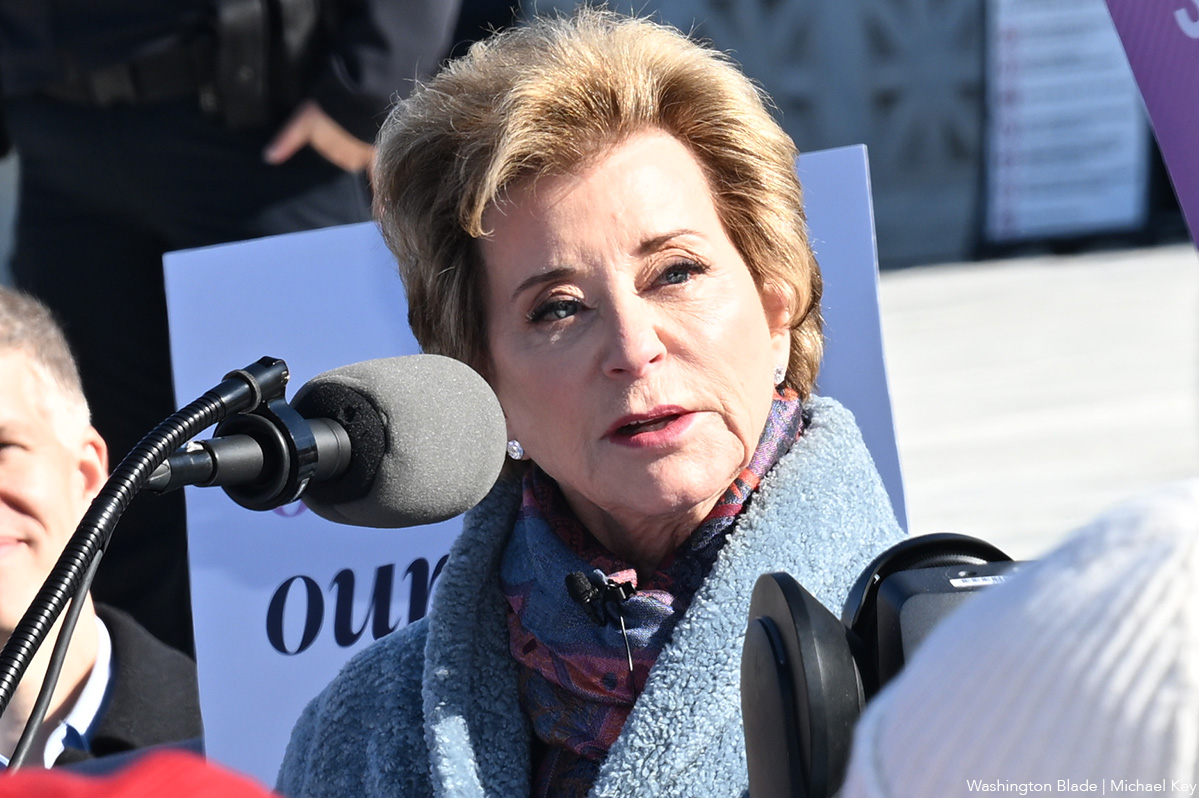
The Department of Education rolled back a Biden-era Title IX interpretation on Monday that secured sex-based discrimination protections for students on the basis of sexual orientation and gender identity.
Title IX was established in 1972 as landmark civil rights law. It prohibits sex-based discrimination in any school or any other education program that receives funding from the federal government.
Education Secretary Linda McMahon spoke about the revision of the policy, claiming the decision would explicitly help “women and girls.”
“Thanks to today’s action, the published Title IX regulations faithfully reflect court orders and congressional intent — reducing confusion for parents, students, and educational institutions. We will continue to relentlessly champion equal opportunity for all Americans and hold accountable any school or college that violates the rights, privacy, or athletic opportunities of our women and girls,” McMahon said via press release.
Prior to her work under the Trump-Vance administration, McMahon was a World Wrestling Federation/World Wrestling Entertainment executive before resigning to pursue a career in politics. She was appointed to the Connecticut State Board of Education by then-Gov. Jodi Rell in January 2009, but resigned from her role shortly afterward to run what ultimately became two failed campaigns for Connecticut’s U.S. Senate seat in 2010 and 2012.
A “fact sheet” provided by the Department of Education also called the inclusive sexual assault and gender identity protections expanded under the Biden-Harris unlawful, saying, “This change is necessary to provide clarity in the Code of Federal Regulations so that institutions, administrations, students, and families can see the rules that are actually in force and to help eliminate public confusion about the Biden administration’s unlawful attempt to stretch Title IX’s legal protections to cover ‘sexual orientation’ and ‘gender identity.’”
This is not the first time this policy has faced judicial hurdles. While Biden was still in office, the plan was struck down in multiple courts in Republican states.
Opponents of the move say it will harm transgender athletes and weaken protections for sexual assault victims.
“Sexual harassment and assault continue to be pervasive in schools and, to the fullest extent possible, we should be working to enforce the laws that protect student survivors of sexual violence. Yet, Education Secretary Linda McMahon and the Trump administration have decided to ignore what survivors need, instead weaponizing Title IX to attack trans students,” said Shiwali Patel, senior director of education justice at the National Women’s Law Center.
This is a return to a first Trump term policy after Biden issued an executive order to attempt to curb discrimination for all — especially those with different sexual orientations and gender identities — that had been given a pass during Trump’s first term. Much of Title IX’s policy has a narrow vision of what sex protections look like that often and enthusiastically leave gender-diverse and non-heterosexual people out.
In March 2021, President Joe Biden signed Executive Order 14021, “Guaranteeing an Educational Environment Free From Discrimination on the Basis of Sex, Including Sexual Orientation or Gender Identity,” to attempt to undo some of the flagrantly anti-LGBTQ policy the Trump-Pence administration had set forth relating to Title IX protections for LGBTQ students and sexual assault survivors.
The secretary focused this “win” for the administration as one more step toward restricting transgender students from competing in women’s sports, but the 2020 rule, completed under former Education Secretary Betsy DeVos, didn’t explicitly ban trans students from participating on sports teams consistent with their gender identity. It did limit the types of sexual harassment and assault complaints that schools had to investigate and required live hearings so male students could respond to accusations.
McMahon didn’t discuss those aspects in her statement or in requests for comment. The 2020 rule drew praise from conservatives and intense opposition from advocates who said it downplayed sexual abuse and left victims unprotected.
In a statement, U.S. Rep. Tim Walberg (R-Mich.), who chairs the House Education Committee, said, “Returning to the 2020 regulations restores longstanding protections for women and girls that the Biden-Harris administration attempted to dismantle and realigns Title IX policy with court precedents.”
LGBTQ activists have called this decision a direct attack on LGBTQ safety — particularly for trans students who continue to face a barrage of legislative, executive, and judicial attacks in recent years from the Trump-Vance administration.
Kelley Robinson, president of the Human Rights Campaign, the largest LGBTQ advocacy group in the world, released a statement following the DoE’s announcement.
“Title IX is, quite simply, about protecting students and ensuring that they are safe from abuse, harassment, and discrimination while they pursue their education. But Donald Trump and his cronies aren’t interested in any of that,” Robinson said. “Donald Trump’s Department of Education has completely lost sight of that mission. Instead of enforcing protections for students, they’re rescinding them. They don’t care if sexual harassment and assault go unaddressed. And they’re happy to strip funding away from school districts and states that are actually trying to keep students safe.
“We know who will be hurt: women, girls, and others who are vulnerable to sexual harassment, assault and abuse — including LGBTQ+ students. The fact that they’re dropping this rule into place abruptly, without a comment period, denying families, educators, loved ones, and the students themselves a say in how they should be treated, shows how little they care about the safety of our students.
“This is a monstrous injustice, and it drives home how essential it is that we take action at the polls this November to start bringing some accountability to an administration that has turned its back on the very students Title IX was written to protect,” she added.
The Washington Blade reached out to the DoE for comment and questions on whether Title IX protections still included LGBTQ students, and received this email response from Education Spokesman Sabin Sidney:
“Your questions indicate you are clearly missing the entire point of this Final Rule. The Biden Administration illegally rewrote Title IX to include ‘sexual orientation’ and ‘gender identification’ in the definition of sex-based discrimination. The Trump Administration is rescinding this rule—only after every federal court that heard legal challenges rejected it as unlawful.
“Since January 2025, the Department has been enforcing Title IX consistent with the President’s Executive Order grounded in biological truth that there are only two sexes. The Trump Administration is restoring the original promise of Title IX and providing clarity to students, parents, and educational institutions. We will vigorously defend equal opportunity consistent with the law’s intended purpose.”
Federal Government
Todd Blanche’s record on LGBTQ issues comes under scrutiny as he takes over DOJ
Blanche was confirmed by the Republican controlled Senate 50-49.
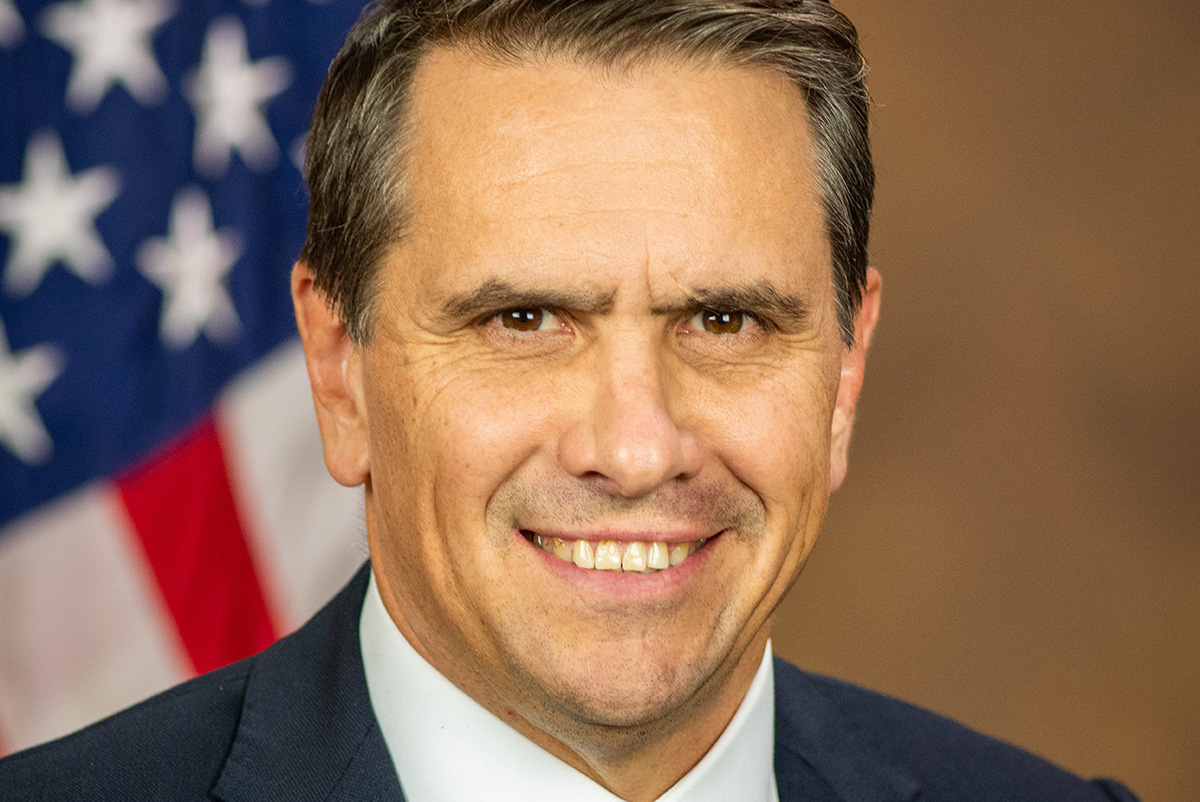
Todd Blanche, President Trump’s former personal lawyer, was sworn in as attorney general of the United States on Monday.
Blanche secured the position as the country’s 88th chief law enforcement officer on Sunday night after a contentious Senate confirmation process, ultimately ending with a 50-49 vote in his favor. All Democrats, as well as Republican Sens. Susan Collins and Lisa Murkowski, voted against him.
The confirmation hearing — and subsequent vote — brought questions surrounding Blanche’s credibility and integrity, as well as concerns about Trump’s ethical dilemmas surrounding cronyism, to the forefront.
The attorney general acts as the head of the Department of Justice, responsible for enforcing federal laws, representing the U.S. in court, and advising the president.
Blanche has a long history in Washington, beginning when he attended American University for his undergraduate education, like fellow former Trump attorney Michael Cohen. He began his legal career as an intern in the U.S. Attorney’s Office in Washington, which eventually became a full-time position.
That job eventually led him to work as a paralegal in the U.S. Attorney’s Office for the Southern District of New York while attending Brooklyn Law School at night. Blanche graduated cum laude in 2003.
Blanche left the public sector in 2014, taking a job in the Manhattan office of the law firm WilmerHale. In September 2017, he moved to Cadwalader, Wickersham & Taft LLP, where he was a partner in the White Collar Defense and Investigations practice.
There, Blanche represented several figures associated with President Donald Trump, including former New York City Mayor Rudy Giuliani and Trump’s former campaign manager Paul Manafort.
In 2024, Blanche switched from Democrat to Republican and moved from New York City to Palm Beach, Fla., where he would be closer to Trump’s primary legal residence at Mar-a-Lago.
He then served as Trump’s personal defense attorney in the New York state case that led to Trump’s 2024 conviction on 34 felony counts of falsifying business records to cover up hush-money payments to adult film star Stormy Daniels.
While serving as acting head of the Department of Justice before his official confirmation, Blanche played a central role in overseeing the department and was involved in leadership decisions tied to several controversial actions affecting LGBTQ people.
One of the first issues was transgender rights and gender-affirming care, particularly for minors — an issue the White House and Republican Party have made a key part of their broader cultural agenda and federal policy efforts.
In a letter to New York Attorney General Letitia James, Blanche declared that the Justice Department “will not sit idly by while you attempt to use your office to force harmful procedures on our most vulnerable population.”
The letter came before NYU Langone ended its gender-affirming care at the behest of the president, forcing the hospital system to stop prescribing puberty blockers and hormones to minors.
The hospital’s change in policy came after the Trump-Vance administration threatened to pull all federal funding if it continued providing the care.
Blanche wrote that “the Justice Department believes the law is clear, and anti-discrimination laws cannot be used to force NYU Langone to perform sex-rejecting procedures on children.”
“As just one example, your office’s position would require a hospital to prescribe certain medications for certain diagnoses, regardless of the hospital’s or its doctors’ independent medical determination about the propriety of such treatment,” he continued in the letter.
In addition to his anti-transgender positions, Blanche also echoed his predecessor, Pam Bondi, in taking a public stance on limiting LGBTQ-related protections at the federal level.
He aligned with Bondi’s sentiments in June 2025 regarding the U.S. Supreme Court’s 6–3 decision that restricted LGBTQ history lessons in schools and limited lower federal courts from issuing nationwide injunctions — rulings that have often blocked Trump administration policies.
Blanche called it “another great decision that came down today,” arguing the ruling “restores parents’ rights to decide their child’s education.”
“It took the Supreme Court to set the record straight, and we thank them for that,” he said. “Now that ruling allows parents to opt out of dangerous trans ideology and make the decisions for their children that they believe is correct.”
In December 2025, a Justice Department memo stated that, “effective immediately,” prisons and jails would no longer be held responsible for violations of standards meant to protect LGBTQ people from harassment, abuse and rape under the Prison Rape Elimination Act.
The law, passed unanimously by Congress in 2003, requires that incarcerated people be screened for their risk of sexual assault, including consideration of LGBTQ status, and applies to all correctional facilities.
Additionally, when the Justice Department, under Blanche’s deputy leadership and at Trump’s behest, attempted to force Children’s National Hospital in D.C. to turn over medical records related to gender-affirming care, U.S. District Judge Julie R. Rubin ruled that the effort “appears to have no purpose other than to intimidate and harass.”
Blanche also faced scrutiny over a slew of other issues surrounding his leadership during his tenure as acting AG.
The Justice Connection, a watchdog organization that works to protect current and former civil servants working in the U.S. Department of Justice, called his work so far “devastating.”
The organization said Blanche “harmed the department’s workforce, advanced the politicization of the department, undermined the rule of law, and threatened public safety.”
The group cited several issues, including what it described as Blanche minimizing the violent reality of the January 6 insurrection led by Trump supporters; investigating and attempting to prosecute President Trump’s perceived political enemies; the botched release of the Epstein Files to Congress and the public, including the release of victim and witness details and censorship surrounding the scope of Trump’s relationship with the convicted sex trafficker and pedophile; and the expansion of federal immigration enforcement in Minnesota which lead to the death of two U.S. citizens by federal officials.
Sharon McGowan, senior vice president of Policy & Litigation at the Human Rights Campaign, the largest LGBTQ advocacy group in the country, provided a statement to the Blade about Blanche’s confirmation calling it “chilling.”
“The last thing Todd Blanche deserves is a promotion,” McGowan said via email. “For months, Blanche has used his position as Acting Attorney General to advance President Trump’s personal and financial interests and to weaponize the Justice Department against the President’s enemies, whether they be transgender kids or civil rights organizations trying to help people vote. His notion of justice is warped and dangerous, and LGBTQ+ Americans deserve better.”
Federal Government
Trump holds housing bill hostage to anti-trans SAVE Act
President’s SAVE Act failed in the Senate
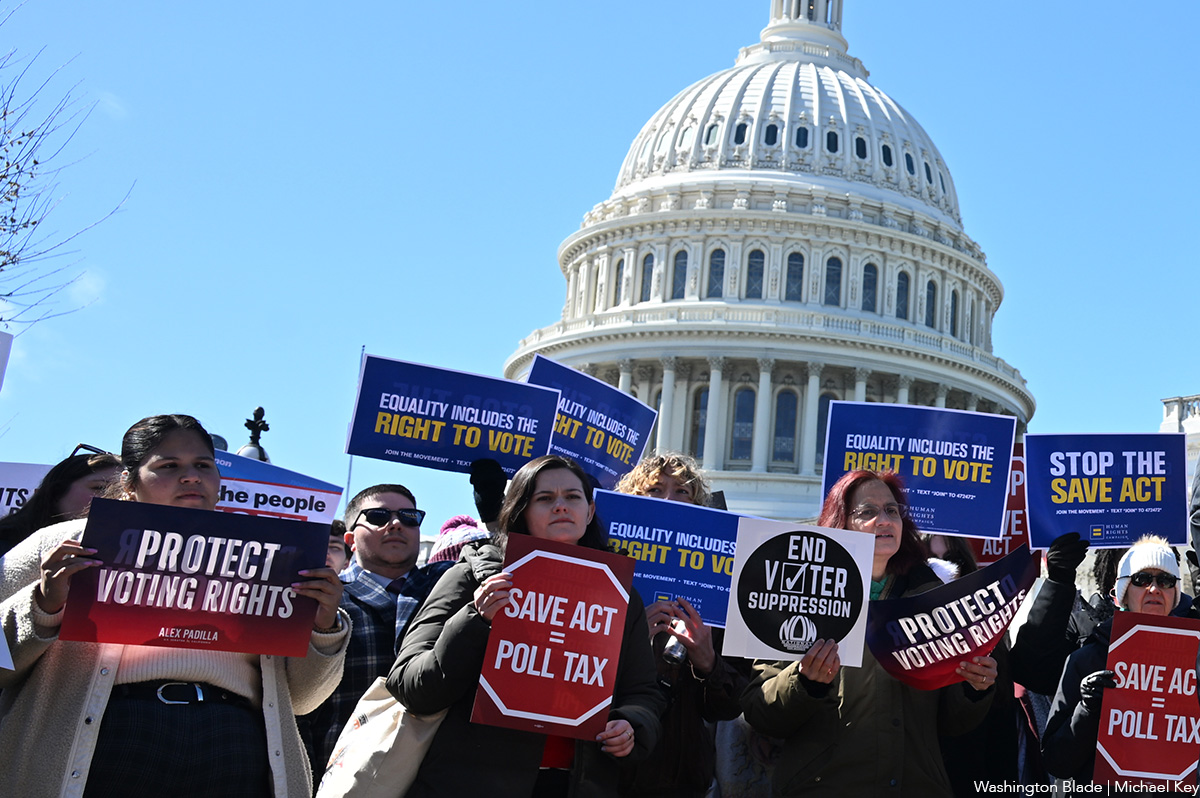
President Donald Trump is refusing to sign a new bipartisan housing bill unless his SAVE Act is approved by the legislative branch.
The bill being prevented from being enacted into law is the “21st Century ROAD to Housing Act.” The legislation is an attempt by Congress to make buying a home in the U.S. Senate more affordable in response to various factors — including housing shortages and regulatory constraints — that have made homeownership increasingly difficult. The total number of homeowners has nearly stopped growing, with high interest rates and surging home prices pushing more Americans toward renting.
The housing bill was considered highly bipartisan, something that is rare in this Congress. The House voted to pass the bill 358-32 on Tuesday after the Senate approved the measure 85-5 a day earlier. The legislation was led by U.S. Sens. Elizabeth Warren (D-Mass.) and Tim Scott (R-S.C.) in the Senate and U.S. Reps. Maxine Waters (D-Calif.) and French Hill (R-Ark.) in the U.S. House of Representatives.
Some of the highlights of the legislation are aimed at increasing the supply of affordable housing while making homeownership more accessible. The bill would streamline environmental reviews and direct the U.S. Department of Housing and Urban Development to provide guidance to communities on reforming zoning and land-use policies that can create barriers to housing development.
The legislation would also expand the definition of “manufactured housing,” making it cheaper and easier to mass-produce homes built in factories before being transported to their sites. To encourage additional development, the bill would provide grants and loans for the construction of new housing, the rehabilitation of aging properties, and the conversion of vacant buildings into residential units. It would also increase certain banks’ Public Welfare Investment cap, allowing them to direct more capital toward low-income and affordable housing projects.
In an effort to help more Americans purchase homes, the legislation would create a program to expand access to small-dollar mortgages, which are often used to finance lower-cost homes, while also seeking to improve housing opportunities for veterans. The bill would further promote homeownership by limiting the number of single-family homes that large institutional investors can own and requiring them to disclose how many such properties they control, a measure intended to prioritize American families over corporate buyers.
The bill the president wants enacted — the SAVE Act — is a restrictive and anti-transgender piece of proposed legislation.
The bill would impose a number of new limitations on voter registration across the country by amending the National Voter Registration Act of 1993 to require in-person proof of citizenship for anyone seeking to vote in U.S. elections. The bill would also limit acceptable forms of identification to documents such as a birth certificate or passport — records that the Brennan Center for Justice estimates more than 21 million Americans do not possess — effectively restricting access to the ballot. It would also ban online voter registration, DMV voter registration efforts, and mail-in voter registration.
Trump pushed for the SAVE Act to include a provision that would ban gender-affirming medical care for trans minors, even with parental consent, and prohibit trans people from participating in school or professional sports consistent with their gender identity rather than their sex assigned at birth.
Trump also pressed Senate Majority Leader John Thune (R-S.D.) to eliminate the filibuster so the Republican-controlled Congress could pass the SAVE Act, saying Republicans will never win another election without it.
It is expected that Congress will override the president’s veto and pass the 21st Century ROAD to Housing Act, as it requires a two-thirds supermajority vote in both the House of Representatives and the Senate — a threshold the legislation currently exceeds.
It is not expected that the SAVE Act will pass the Senate in its current form. It passed the House, but every Democrat and four Republicans voted against it in the Senate.

529 openly LGBTQ candidates running in Brazilian election

Lesbian Bar Project co-founder: purity politics could destroy our remaining spaces

HRC report: LGBTQ students face ‘far greater challenges’ in non-supportive states

HRC National Dinner 2026: A night of music, activism, LGBTQ history

Trump asks Supreme Court to allow restrictions on gender-affirming care in prisons

‘Star Trek: Strange New Worlds’ star Celia Rose Gooding breaks down that finale time travel twist

Center for Black Equity’s annual gala to take place Oct. 3

Grace Meng sharply criticizes DOJ over hospital settlements

Tyler Clementi Foundation to host fundraiser in Rehoboth

Former Capital Pride board member reiterates sexual harassment allegation
-

 Television5 days ago
‘Star Trek: Strange New Worlds’ star Celia Rose Gooding breaks down that finale time travel twist
-
 District of Columbia5 days ago
Center for Black Equity’s annual gala to take place Oct. 3
-
New York5 days ago
Grace Meng sharply criticizes DOJ over hospital settlements
-
Out & About5 days ago
Tyler Clementi Foundation to host fundraiser in Rehoboth