Celebrity News
Sasha Colby’s ‘Stripped II Tour’ is more than a show — it’s a movement
The ‘drag queen’s drag queen’ is just getting started
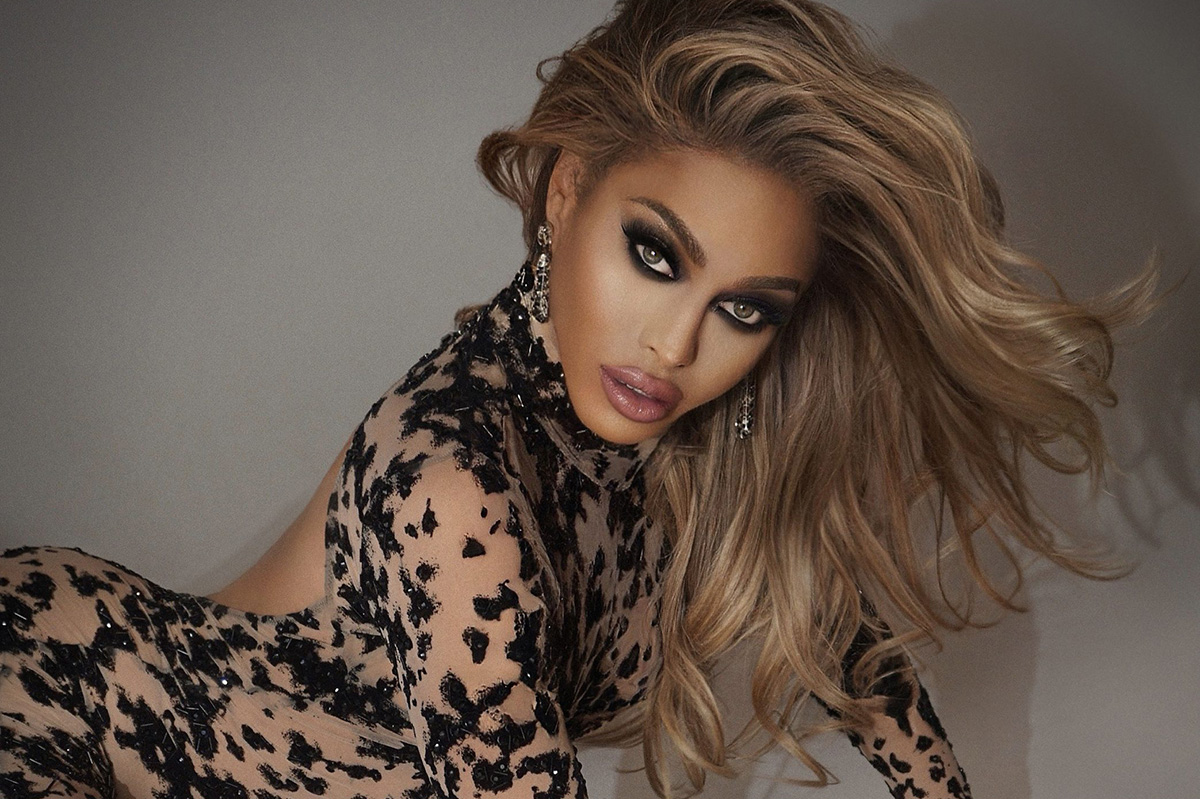
Sasha Colby didn’t set out to become “your favorite drag queen’s favorite drag queen.” It just kind of happened.
“You know, I was so stoned,” she admitted with a laugh, recalling the filming of her “Meet the Queens” promo. “We were about to sit down for the interview, and they were like, ‘Oh, just think of something, like a catchphrase you want to say.’” What came out was a now-iconic phrase that captured the truth: Colby is the queen’s queen, beloved by legends, adored by fans, and deeply respected in her craft. “It came out of the deep crevices in here,” she said, pointing to her head.
She thinks RuPaul might have planted the seed: “Ru had said on the main stage once, ‘You’re a drag queen’s drag queen — you’re what drag queens watch.’ And maybe that stuck in my head and just kind of … word association.”
And she’s only getting started.
After making history as the first out trans winner of “RuPaul’s Drag Race” to headline a Live Nation tour, Colby is hitting the road again this fall. Her “Stripped II” tour kicks off Sept. 16 in Seattle and wraps up in Hawaii, where she’ll bring her artistry full circle back home. This time, it’s bigger, bolder, and deeply personal, just like Sasha herself.
“I’m really excited to be going back on the road,” she told the Los Angeles Blade. “We’re doing a lot more cities. I think we did 23 last year, and this year we’re doing 30.” But the expansion isn’t just about scale, it’s about purpose. “The last tour was more about my journey to ‘Drag Race.’ This one’s about having fun, having some escapism, and magic. That’s so desperately needed in the world right now.”
The show is shaped by themes of resilience, joy, and gender freedom. It’s not just entertainment, it’s a protest in lipstick and lace.
“For me, doing drag is a protest,” Sasha said. “The most accessible way I can create change is through art and storytelling.” That means celebrating her Native Hawaiian heritage, honoring trans and queer ancestors, and centering the experiences mainstream media still too often ignores. “I love talking about how Native Hawaiians used to live and how they revered and had a space for trans people, for nonbinary people,” she said. “Those two things — the cultural and the queer — they overlap a lot. That’s my safe space to create from.”
The show will include Easter eggs for fans, references to cultural pride, sex and body positivity, and, of course, a healthy dose of gender fuckery. “Just really bending the mind,” she said, “and hopefully allowing us to get more comfortable with what we see as sexy or queer — or even straight, you know?”
It’s no surprise that Sasha’s rise to icon status has made her a beacon of trans joy and resilience. But she’s honest about the weight of that visibility.
“I actually try not to think about being someone everyone looks up to,” she confessed. “I’m definitely far from a perfect example of always having my shit together.” What grounds her, though, is openness. “I think that’s the real point of strength in vulnerability — being OK to show yourself, flaws and all.”
It’s a reminder that behind every perfectly executed performance is a full human being with trauma, imposter syndrome, and insecurities, just like the rest of us. And yet, she shows up anyway. “It comes and goes. It comes in waves. Work in progress.”
Digital spaces, she says, have been crucial for building community when in-person organizing isn’t always possible. “Sometimes when we can’t be there in person, all we have is community online.” But that connection comes with responsibility. “What we post matters. A lot of people look to us as their news source. So I try to be mindful of that.”
Her activism, like her art, feels instinctive. “I think maybe just my upbringing — being Native Hawaiian, living with injustice on an occupied island nation — I’ve always just been interested in speaking truth,” she said. “I’m trying to do this mantra where I don’t have to be right, I just have to be happy. Unfortunately, being right makes me happy.”
Same, Sasha. Same.
Her connection to her roots runs deep: not just culturally, but queerly. “Being queer, being trans got me connected with my Hawaiian side,” she explained. “There’s a long history of trans hula dancers and singers. They were the ones who taught me about Miss Continental, the Glades, the Carousel — all these places I was drawn to as a performer.”
One concept she carries with her is the Hawaiian idea that “kana” (your purpose in life) is tied to “kulana” (your responsibility to community). “Once you know your purpose, then that’s easy to understand your part in your community — whether it be your trans community, local community, or global community.”
As for the future? “Sky’s the limit,” she said, beaming. “I see myself telling stories in different ways — drag, film, music, stage. I just love telling stories.” And she hopes that trans and queer people everywhere keep doing the same. “Keep on existing, because it’s making everybody so upset. It’s wild — but we’re not going to stop.”
Before we wrapped, I asked Sasha what she would say to her younger self—before the wigs, before the titles, before she became everyone’s favorite drag queen’s favorite drag queen. “Oh, baby girl,” she said tenderly, “even though it feels like you’re trapped in your body, in your house, in your family—just stick with it. You’re one stubborn little gal. And don’t forget, you’ve always taken care of yourself. You got you.”
And what is she most proud of? It’s not the crown, or the titles, or the sold-out shows. “I’m proud that after working as a gig worker, living off tips for 30 years, I can finally pay my bills on autopay,” she said. “It’s an amazing thing for trans women of color to be able to do that. So, thank you, drag.”
Yes. Thank you, drag. And thank you, Sasha Colby, for reminding us that joy is revolutionary, art is healing, and we shouldn’t just “protect the dolls,” we should also pay the dolls.
Check out the full interview:
(Video courtesy of the Los Angeles Blade)
“Stripped II” runs from Sept. 16 to Nov.15, 2025, with 30 confirmed North American dates, including Los Angeles on Sept. 26 and a grand finale in Honolulu, bringing “Stripped II”’s powerful celebration of trans joy and storytelling to a wider audience than ever.



Celebrity News
Liza Minnelli makes surprise appearance at GLAAD Media Awards
Laverne Cox’s fiery speech earned standing ovation
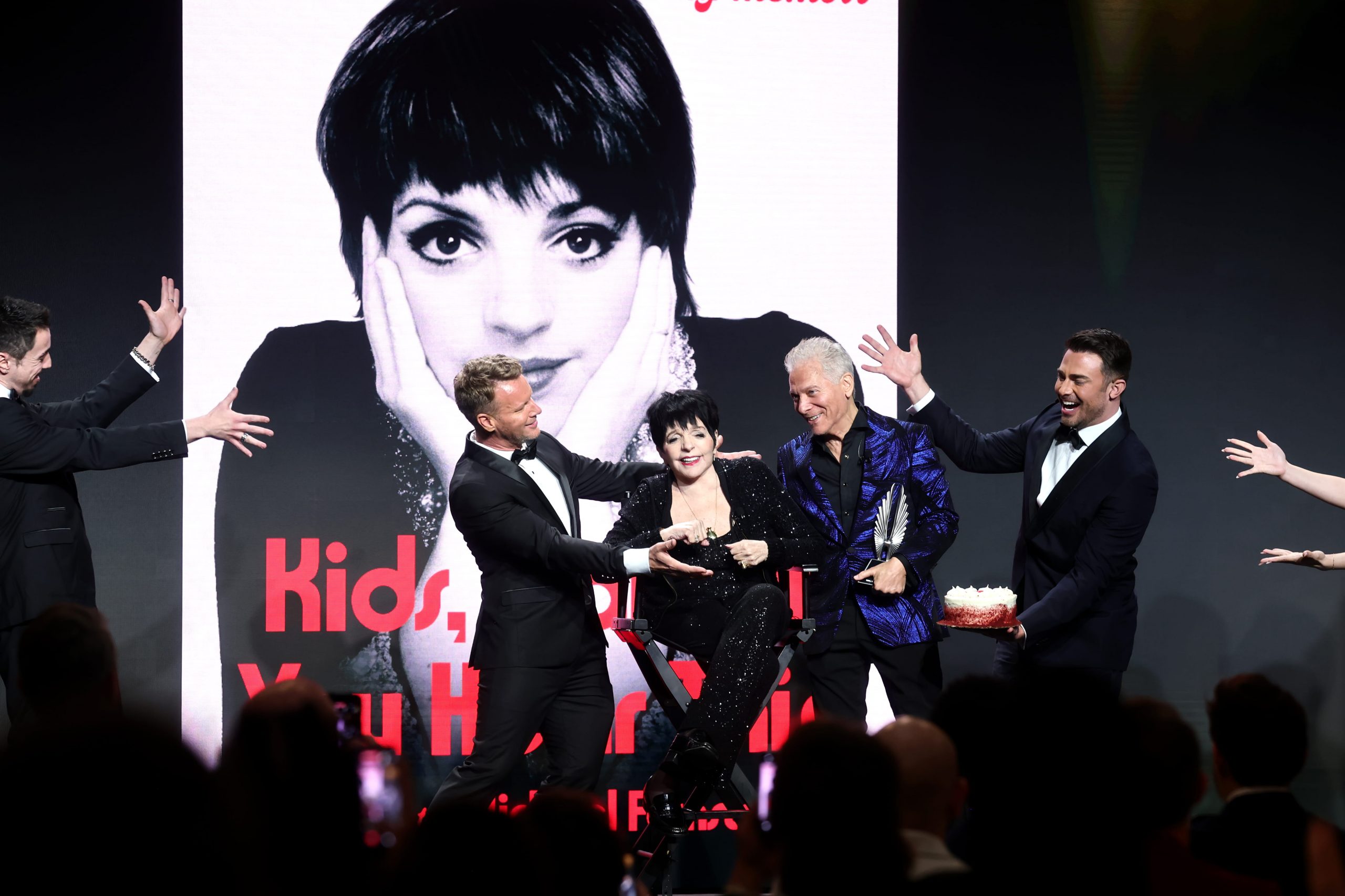
Last night’s GLAAD Media Awards had a few pleasant surprises in store.
Throughout the evening, which was hosted by “Mean Girls” star Jonathan Bennett on Thursday at the Beverly Hilton in Los Angeles, the audience was clued into the fact that a mystery guest would make an appearance. By the end of the night, it was revealed to be none other than “Cabaret” star and queer icon Liza Minnelli, who was in attendance to accept the newly-created Liza Minnelli Storyteller Award.
An emotional Minnelli told the crowd of queer attendees and creatives, “You make me so proud because you’re so strong, and you stand up for what you believe in. You really do, and it’s so nice to be here. I feel like a five-year-old!” Everyone then joined in a happy birthday celebration for Minnelli’s upcoming birthday on March 12, and the release of her upcoming memoir, “Kids, Wait Till You Hear This!”
Another moment that got the audience standing and cheering was when “Orange Is the New Black” star Laverne Cox took to the stage to call out how “what is going on right now in the United States of America is not right.”
She said, “Identify, I said this earlier, and I’m going to say it again, what dehumanizing language and images are. Call it out and don’t buy into it! So much of my struggle over the past several years [has been] trying to figure out how to combat this assault on my community, rhetorically. I do not want to have the conversation about my life and my humanity on the oppressor’s terms.”
That message was echoed by Bowen Yang and Matt Rogers when accepting the Stephen F. Kolzak Award for their “Las Culturistas” podcast and pledging to donate $10,000 to Equality Kansas after the state revoked transgender people’s driver’s licenses. “We cannot accept this award without condemning the rampant active transphobia from this administration,” Rogers said. “We are also here to let them know in advance that they are fighting a losing battle. When we gather in rooms like this, we are always going to have each other’s backs.”
Among the big winners last night were “Heated Rivalry” for outstanding new TV series, “The Traitors” for outstanding reality competition program, “Stranger Things” for outstanding drama series, “Palm Royale” (which was just cancelled after two seasons) for outstanding comedy series, “Come See Me in the Good Light” for outstanding documentary, “Kiss of the Spider Woman” for outstanding wide theatrical release film and a tie between “A Nice Indian Boy” and “Plainclothes” for outstanding limited theatrical release film.
Quinta Brunson received the Vanguard Award for her hit TV series “Abbott Elementary,” which features Jacob, an openly queer character played by Chris Perfetti. Brunson said, “Queer people have been a part of my life since birth. I have to shout out my uncle … who was the first example of representation in my life of queer people, who allowed me to be free. There are so many people in the room who changed my life.”
On the music side, Young Miko won for outstanding music artist, and KATSEYE won for outstanding breakthrough music artist. Demi Lovato even opened the show with a steamy performance of her single “Kiss.”
The GLAAD Media Awards will officially air Saturday, March 21 on Hulu.

Rob Reiner, most known for directing untouchable classics like “The Princess Bride,” “Misery,” “When Harry Met Sally…,” and “Stand by Me,” died Dec. 14 alongside his wife, Michele Singer Reiner, in their Los Angeles residence. While investigations are actively underway, sources have told PEOPLE Magazine that the pair’s son, Nick Reiner, killed his parents and has been taken into custody.
Reiner was a master of every genre, from the romantic comedy to the psychological thriller to the coming-of-age buddy movie. But in addition to his renowned work that made him a household name, Reiner is also remembered as a true advocate for the LGBTQ community. In 2009, Reiner and his wife co-founded the American Foundation for Equal Rights, helping fight against California’s Prop 8 same-sex marriage ban. They were honored at the 2015 Human Rights Campaign Las Vegas Gala.
In a statement, HRC President Kelley Robinson said: “The entire HRC family is devastated by the loss of Rob and Michele Reiner. Rob is nothing short of a legend — his television shows and films are a part of our American history and will continue to bring joy to millions of people across the world. Yet for all his accomplishments in Hollywood, Rob and Michele will most be remembered for their gigantic hearts, and their fierce support for the causes they believed in — including LGBTQ+ equality. So many in our movement remember how Rob and Michele organized their peers, brought strategists and lawyers together, and helped power landmark Supreme Court decisions that made marriage equality the law of the land — and they remained committed to the cause until their final days. The world is a darker place this morning without Rob and Michele — may they rest in power.”
Reiner’s frequent collaborators have also spoken out as the industry is in mourning, including figures like Ron Howard and John Cusack.
A joint statement from Jamie Lee Curtis and Christopher Guest (who starred in Reiner’s “This is Spinal Tap”) reads: “Christopher and I are numb and sad and shocked about the violent, tragic deaths of our dear friends Rob and Michele Singer Reiner and our ONLY focus and care right now is for their children and immediate families and we will offer all support possible to help them. There will be plenty of time later to discuss the creative lives we shared and the great political and social impact they both had on the entertainment industry, early childhood development, the fight for gay marriage, and their global care for a world in crisis. We have lost great friends. Please give us time to grieve.”
While attending the 2019 HRC Los Angeles Dinner, Reiner spoke out about the need for equality: “We have to move past singling out transgender, LGBTQ, black, white, Jewish, Muslim, Latino. We have to get way past that and start accepting the idea that we’re all human beings. We’re all human beings, we all share the same planet, and we should all have the same rights, period. It’s no more complicated than that.”
Brazil
Black transgender singer from Brazil wins three Latin Grammy Awards
Liniker performed at Las Vegas ceremony
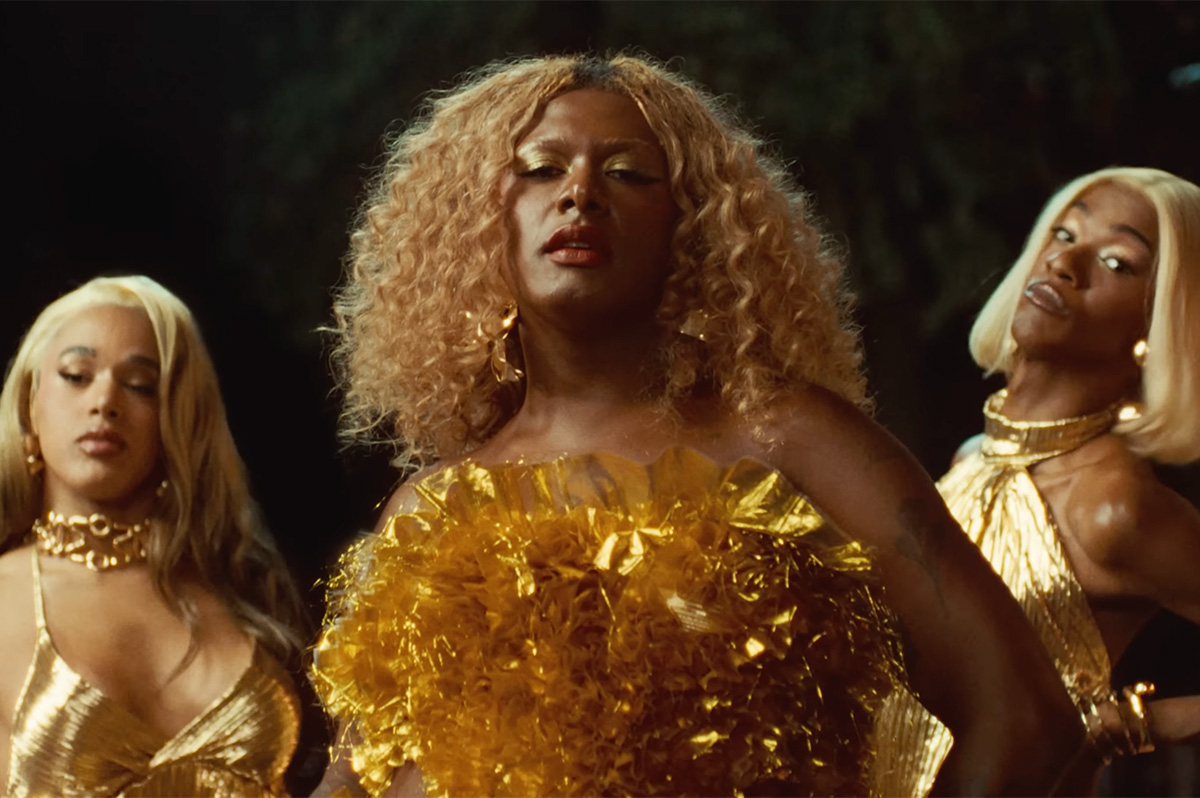
A Black transgender singer and songwriter from Brazil on Nov. 13 won three Latin Grammy Awards.
Liniker, who is from Araraquara, a city in São Paulo State, won for Best Portuguese Language Song for her song “Veludo Marrom,” Best Portuguese-Language Urban Performance for her song “Caju” from her sophomore album of the same title, and Best Portuguese Language Contemporary Pop Album for “Caju.”
She accepted the awards during the Latin Grammy Awards ceremony that took place in Las Vegas. Liniker also performed.
“I’ve been writing since I was 16. And writing, and poetry, have been my greatest form of existence. It’s where I find myself; where I celebrate so many things I experience,” said Liniker as she accepted her first Latin Grammy on Nov. 13. “And being a composer … Being a trans composer in Brazil — a country that kills us — is extremely difficult.”
Liniker in 2022 became the first openly trans woman to win a Latin Grammy.

Gay Venezuelan man ‘forcibly disappeared’ to El Salvador files claim against White House

Trump proclamation targets trans rights as State Dept. shifts visa policy

Adolescentes trans en Ecuador podrán cambiar datos en su cédula, pero con condicionamientos

Gay Cameroonian immigrant will be freed from ICE detention — for now

Laverne Cox, Liza Minnelli among authors with new books

Claudia López wins primary in Colombian presidential race

Trump will refuse to sign voting bill without anti-trans provisions

Man stuck in Lebanon as Iran war escalates

CAMP Rehoboth hires new executive director