Virginia
Abigail Spanberger sworn in as Va. governor
Former congresswoman took office Saturday
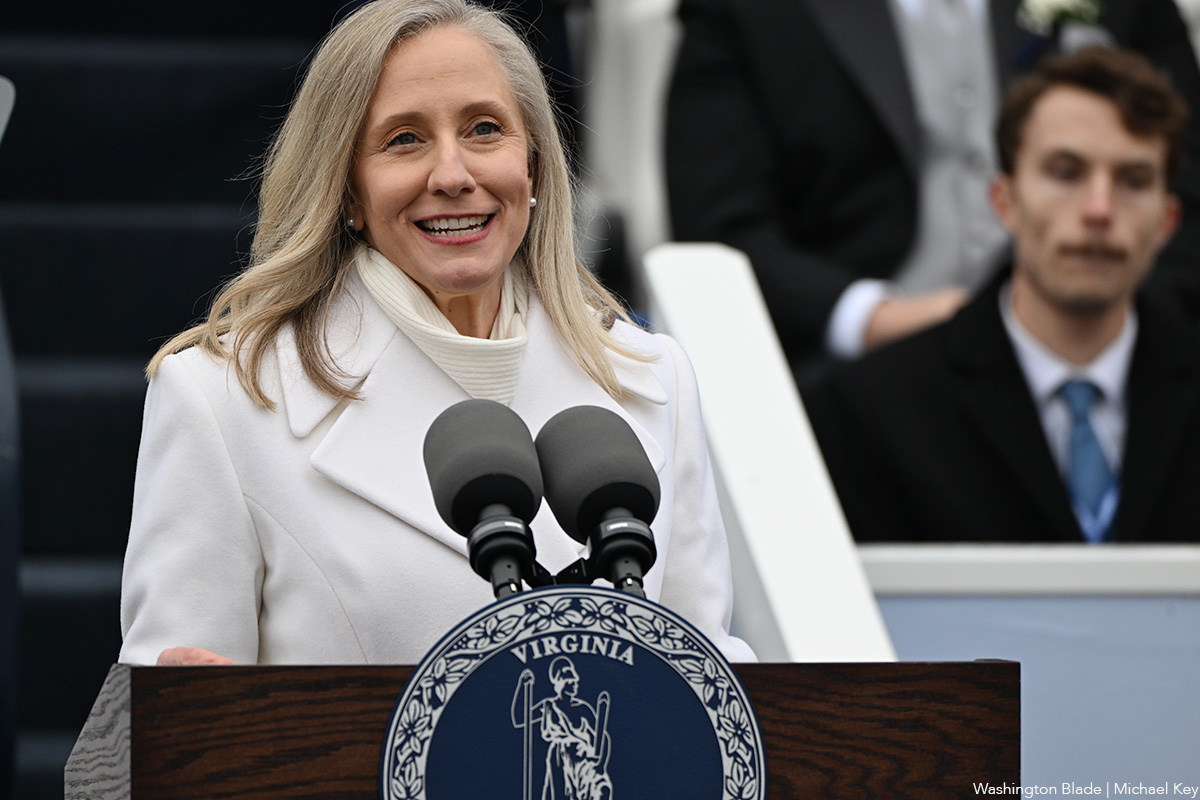
Abigail Spanberger was sworn in as the 75th governor of Virginia at a ceremony on the grounds of the Virginia State Capitol on Saturday. Thousands of spectators watched the swearing-in ceremony and parade, despite the rain and temperatures in the low 40s.
Spanberger, a member of the Democratic Party and an LGBTQ ally, became the first woman to be Virginia’s governor.
View on Threads
Newly-elected Attorney General Jay Jones, Lt. Gov. Ghazala Hashmi, and Spanberger were each administered the oath of office in the public ceremony.
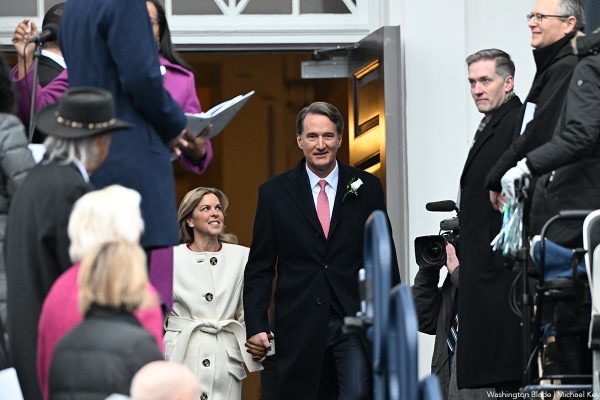
Republican former Gov. Glenn Youngkin left the ceremony shortly after the oath of office was administered to Spanberger and before the inaugural address.
In her speech, the new governor made an appeal to bipartisanship and looking past division in our current moment.
“To my friends in the General Assembly — on both sides of the aisle — I look forward to working with you,” said Spanberger. “I know what it means to represent your constituents, to work hard for your district, and to pursue policies you believe in. We will not agree on everything, but I speak from personal experience when I say that we do not have to see eye-to-eye on every issue in order to stand shoulder-to-shoulder on others.”
Spanberger acknowledged Virginians’ frustrations with federal layoffs and governmental policy.
“I know many of you are worried about the recklessness coming out of Washington. You are worried about policies that are hurting our communities — cutting healthcare access, imperiling rural hospitals, and driving up costs,” said Spanberger. “You are worried about Washington policies that are closing off markets, hurting innovation and private industry, and attacking those who have devoted their lives to public service.”
Spanberger alluded to the Trump administration, though never mentioned President Donald Trump’s name in her remarks.
Spanberger said, “you are worried about an administration that is gilding buildings while schools crumble, breaking the social safety net, and sowing fear across our communities, betraying the values of who we are as Americans, the very values we celebrate here on these steps.”
The new governor then spoke of her priorities in office, pledging to tackle housing affordability by working to “cut red tape” and increase housing supply. Spanberger also spoke of forestalling an impending healthcare crisis by protecting access and cracking down on “middlemen who are driving up drug prices.”
Spanberger spoke of investments in education at every level, standing up for workers (including the large number of federal workers in Virginia), and taking action on gun violence.
Virginia married couple Mary Townley and Carol Schall witnessed the inauguration ceremony from the stands set up on the grounds of the Capitol. Schall and Townley are one of the plaintiff couples in the case that challenged the Virginia constitutional ban on same-sex marriage.
Same-sex marriage became legal in Virginia in 2014.
“We are delighted with the inauguration of Abigail Spanberger as governor of Virginia,” Schall told the Washington Blade. “The celebration of her inauguration was full of the beautiful diversity that is Virginia. The Virginia Pride contingent was included as a part of what makes Virginia a great place to live.”
“Such an honor to attend such a wonderful event in Virginia history,” Townley told the Blade. “The weather before the Inauguration was cold and rainy, but I believe it represented the end of a dreary time and it ushered in the dry and sunny weather by the end of the inaugural parade. Madam Governor brought us to the light!”
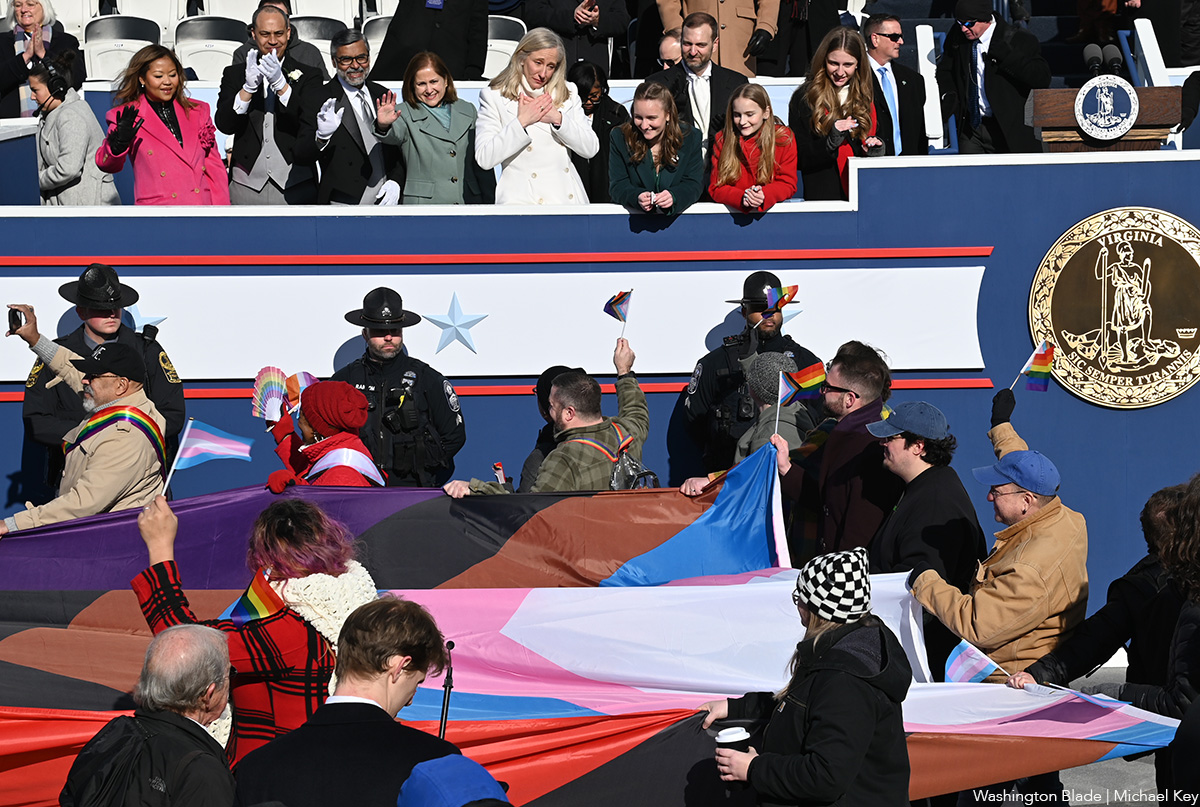
The inaugural parade following the governor’s remarks included a contingent from Diversity Richmond and Virginia Pride. Marchers in the LGBTQ contingent carried a giant Progress Pride flag and were met with loud cheers from the gathered spectators.
Spanberger after her inauguration signed 10 executive orders. One of them bans discrimination against state employees based on sexual orientation, gender identity, and other factors.
“By virtue of the authority vested in me as Governor under Article V of the Constitution of
Virginia, I hereby declare that it is the firm and unwavering policy of the Commonwealth of Virginia to ensure equal opportunity in all facets of state government,” reads the executive order. “The foundational tenet of this executive order is premised upon a steadfast commitment to foster a culture of inclusion, diversity, and mutual respect for all Virginians.”


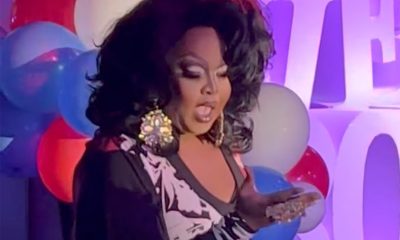



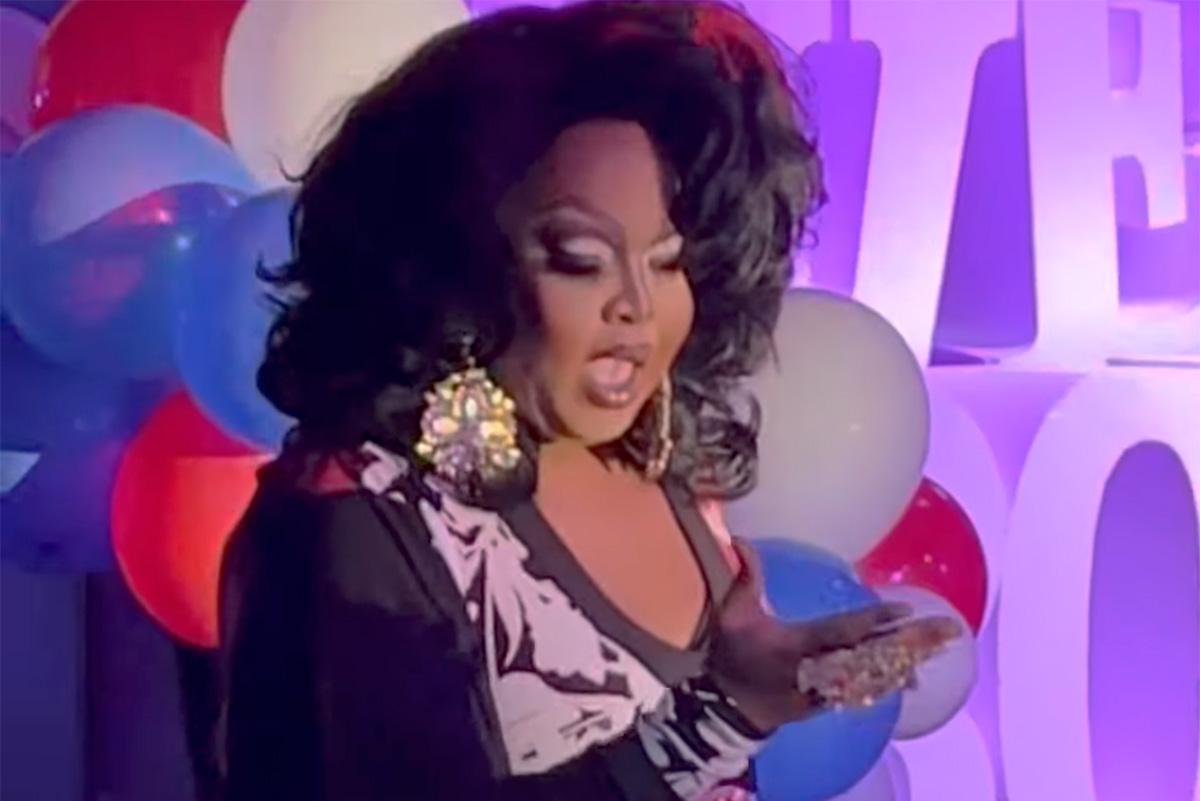
A gay man was murdered in Petersburg, Va., on March 13.
Shyyell Diamond Sanchez-McCray, who was also known as Saamel and Mable, was a drag queen who won the Miss Mayflower EOY pageant in 2015. Reports also indicate Sanchez-McCray, 42, was a well-known community activist in Virginia and in North Carolina.
Local media reports indicate police officers found Sanchez-McCray shot to death inside a home in Petersburg.
Sanchez-McCray’s brother, Jamal Mitchell Diamond, in a public statement the Washington Blade received from Equality Virginia and GLAAD, said Sanchez-McCray was not transgender as initial reports indicated.
“Our family has always embraced the fullness of who he was. He used the names Saamel, Shyyell, and Mable interchangeably, and we honor all of them. There is no division within our family regarding how he is being represented — only a shared commitment to preserving his truth with love and respect,” said Diamond.
“He was also deeply committed to community work through Nationz Foundation, where he worked and completed multiple state-certified programs to support marginalized communities,” added Diamond. “That work meant a great deal to him.”
Authorities have not made any arrests.
The Petersburg Bureau of Police has asked anyone with information about Sanchez-McCray’s murder to call Petersburg-Dinwiddie Crime Solvers at 804-861-1212.
Virginia
Virginia General Assembly’s 2026 legislative session ends
Voters in November will consider repealing marriage amendment
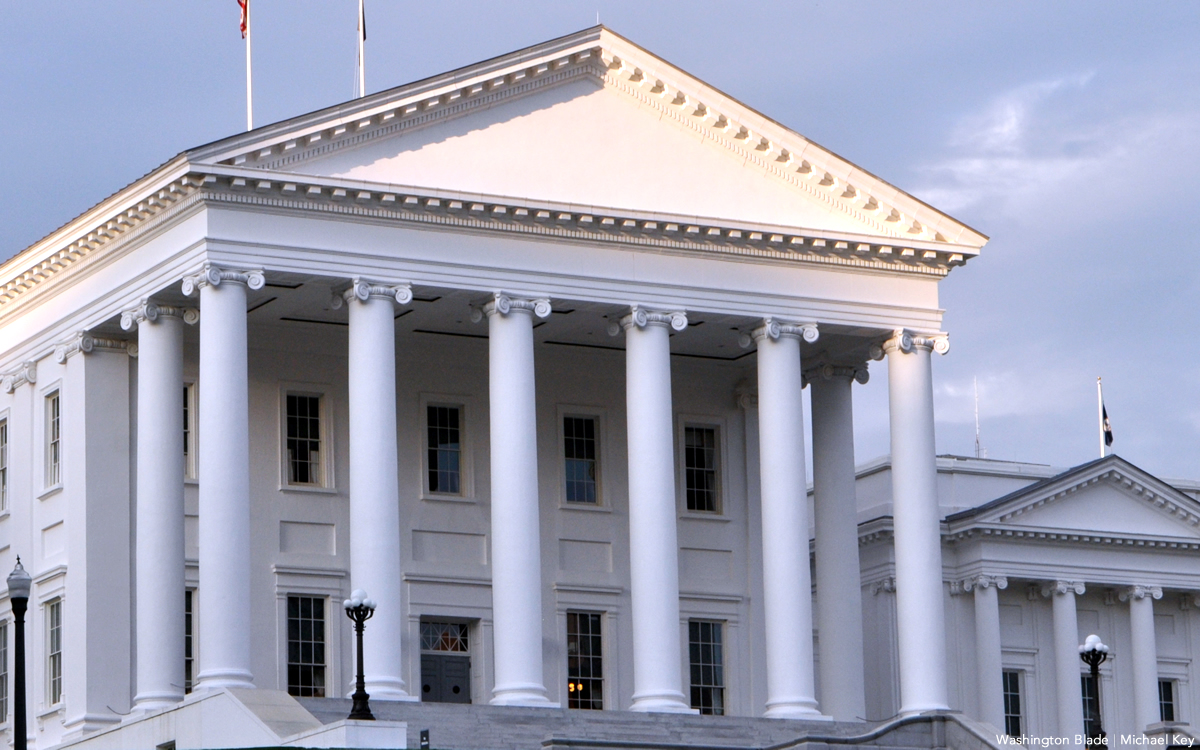
The Virginia General Assembly’s 2026 legislative session ended on March 14.
Lawmakers have yet to approve a budget, but they did pass a resolution that paves the way for a referendum on whether to repeal the state’s constitutional amendment that defines marriage as between a man and a woman. Lawmakers also advanced House Bill 60, which would protect PrEP users from insurance discrimination.
Democratic Gov. Abigail Spanberger has until April 13 to decide to pass, amend, or veto legislation before it goes back to the House of Delegates on April 22.
Spanberger on Feb. 6 signed the bill that sets the stage for the marriage amendment referendum. Voters will consider whether to “remove the ban on same-sex marriage; (ii) affirm that two adults may marry regardless of sex, gender, or race; and (iii) require all legally valid marriages to be treated equally under the law?”
Equality Virginia has been working during this legislative cycle to urge lawmakers to allocate funding towards LGBTQ rights. The budget would expand funding for schools, competency training for the 988 suicide hotline, and funding to provide gender affirming care to LGBTQ youth.
“As the budget moves through conference and the Reconvene Session approaches on April 22, Equality Virginia remains focused on ensuring our victories this session translate into durable protections,” Equality Virginia Executive Director Narissa Rahaman told the Washington Blade in a statement. “Progress on marriage equality, nondiscrimination protections, and HIV care funding was essential, but Virginia must do more.”
Virginia
Va. lawmakers consider partial restoration of Ryan White funds
State Department of Health in 2025 cut $20 million from Part B program
The Virginia General Assembly is considering the partial restoration of HIV funding that the state’s Department of Health cut last year.
The Department of Health in 2025 cut $20 million — or 67 percent of total funding — from the Ryan White Part B program.
The funding cuts started with the Trump-Vance administration passing budget cuts to federal HIV screening and protection programs. Rebate issues between the Virginia Department of Health and the company that provides HIV medications began.
Advocates say the funding cuts have disproportionately impacted lower-income people.
The Ryan White HIV/AIDS Program, a federal program started in 1990, provides medical services, public education, and essential services. Part B offers 21 services, seven of which remained funded after the budget cuts.
Equality Virginia notes “in 2025, a 67 percent reduction severely destabilized HIV services across the commonwealth.”
Virginia lawmakers have approved two bills — House Bill 30 and Senate Bill 30 — that would partially restore the funding. The Ryan White cuts remain a concern among community members.
Both chambers of the General Assembly must review their proposed changes before lawmakers can adopt the bills.
“While these amendments aren’t a full restoration of what community-based organizations lost, this marks a critical step toward stabilizing care for thousands of Virginians living with HIV,” said Equality Virginia Executive Director Narissa Rahaman. “Equality Virginia plans to continue their contact with lawmakers and delegates through the conference and up until the passing of the budget.”
“We appreciate lawmakers from both sides of the aisle who recognized the urgency of this moment and will work to ensure funding remains in the final version signed by the governor,” added Rahaman.

Kristi Noem ‘devastated’ as husband’s alleged fetish spending surfaces

Colo. activists condemn SCOTUS conversion therapy ruling

Is Ghana’s selective justice a human rights contradiction?

Supreme Court ruling against conversion therapy bans could affect Md. law

Glisten report details hostile climate for LGBTQ students

‘Out for McDuffie’ event held at D.C. gay bar

The Oscar-losing performance that’s too good to miss

‘Jonah’ an undeniably compelling but unusual memory play

PHOTOS: ‘No Kings’ rally and march