Local
Md. senator key to marriage vote
‘Yes’ from Conway puts measure over the top
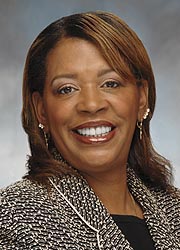
Conway
At least 23 members of Maryland’s 47-member State Senate have publicly disclosed they will vote for a same-sex marriage bill next week, drawing attention to a senator from Baltimore who promised she would cast the deciding vote in favor of the bill if supporters were just one vote short.
Twenty-four votes are needed to pass legislation in the State Senate, and LGBT advocates monitoring the marriage bill say they are reasonably certain that Sen. Joan Carter Conway (D-Baltimore City) will fulfill her private commitment to vote “yes” if 23 of her colleagues also vote for the measure.
The Senate’s Judicial Proceedings Committee was expected to vote on Thursday to approve the bill and send it to the full Senate for debate and a floor vote next week.
Earlier this week, Conway told the Baltimore Sun she was still struggling over which way to vote on the Religious Freedom and Civil Marriage Protection Act, which calls for allowing lesbian and gay couples to marry in Maryland.
“She made a statement earlier saying that she would cast the deciding vote if the votes were there,” Josh Hastings, Conway’s legislative assistant, told the Blade on Feb. 11. “But she didn’t think the votes were there. That was like two weeks ago.”
As of Monday, the number of senators who publicly disclosed they would vote for the bill reached 23.
Sens. Katherine Klausmeier and Edward Kasemeyer, both Democrats from Baltimore County, were the latest to announce their decision to vote ‘yes’ on the measure in statements to the media on Monday.
On the previous Friday, Sen. Jim Brochin, also a Democrat from Baltimore County, disclosed that he would vote for the marriage bill. He said his decision to support the bill was driven, in part, by the harsh and intolerant-sounding testimony against the bill by some of its opponents at a public hearing in Annapolis on Feb. 8.
Brochin is a member of the Senate Judicial Proceedings Committee and was present for nearly seven hours of testimony by more than 100 witnesses.
Conway shares the same legislative district as lesbian House of Delegates members Maggie McIntosh and Mary Washington, both Democrats from Baltimore City.
Sources familiar with the Maryland Legislature say Conway has made it clear to her Senate colleagues that she would vote “yes” if at least 23 other senators vote for the bill.
Sen. Jamie Raskin (D-Montgomery County), a co-sponsor of the marriage bill, told the Blade Friday that he heard Conway say she would vote for the bill if her vote was needed to secure its passage.
Twenty senators have said they would vote against the bill and three have said they are undecided.
Raskin said the Senate Judicial Proceedings Committee, which held an all-day hearing on the bill on Tuesday, was scheduled to vote on the bill Feb. 17. He said the committee could also vote on amendments to the bill on the same day if committee members decide to introduce one or more amendments.
He said the full Senate was expected to begin debating the bill on Feb. 22, with a vote likely to take place the next day following two full days of debate.
According to Raskin, it has been more difficult for the bill’s supporters to line up the 24 votes needed to pass the bill than it has for obtaining the 29 votes needed to stop an expected filibuster.
“What’s interesting is it’s really been easier for us to get to 29 than to get to 24,” he said. “There are a number of senators who on principle feel that legislation should not be blocked by filibuster. There are also a number of moderate Democrats who, for whatever reason, cannot bring themselves to vote for marriage but are able to tell pro-marriage constituents that they will not stand in the way of a vote.”
Senate President Thomas V. “Mike” Miller (D-Prince Georges and Calvert Counties) has taken such a position, saying he will vote against the marriage bill while voting for cloture to end a filibuster.
“I think he will bring a number of other senators with him in his wake,” Raskin said.
Political observers in the state capital in Annapolis have said support for the marriage bill is stronger in the House of Delegates, which is expected to pass the bill by a wider margin in March. Gov. Martin O’Malley has said he would sign the measure.
In a related development, the Judicial Proceedings Committee on Feb. 11 released a list of witnesses who signed up to testify for or against the marriage bill at a packed public hearing in Annapolis.
The list shows that a total of 124 people signed up to testify on the morning of the Feb. 8 hearing, with 67 indicating they oppose the marriage bill and 57 checking a box saying they support the measure.
A committee aide said the committee did not keep track of the number of people who signed up but did not appear when called to testify during the hearing, which lasted nearly seven hours.




Delaware
Michael Smith could make history as Delaware’s first LGBTQ treasurer
Promises to defend state from Trump administration

With experience as an economist, legislative staffer, and nonprofit director, Michael Smith is looking to protect Delaware from the Trump administration and become Delaware’s first openly LGBTQ treasurer.
With a master’s degree in economics from the University of Alabama, Smith has worked as an economist at the Progressive Policy Institute, Secretariat Economist, and Cornerstone Research.
“I think my work in economic and financial analysis has given me a lot of experience and know-how about what the treasurer role can and should be,” said Smith.
Smith also worked in the Delaware House Democratic Caucus in Dover, working with state representatives to improve the quality of life of Delawareans.
“I got to see where the rubber meets the road and how we can have policies that positively affect everyday working Delawareans.” said Smith.
In 2024, Smith narrowly lost a race to represent District 21 by 30 votes. He said that this loss gave him the itch to make a positive impact on the community.
Smith also founded and directed Powering Our Future, a nonprofit that promoted clean energy infrastructure throughout New Castle County.
“We helped people across Delaware reduce their energy bills and specifically try to encourage energy efficiency and electrification,” said Smith.
According to Smith, affordability is the biggest issue to voters, especially with the rising cost of utility bills.
“Everyone is worried about the affordability crisis. The cost of living is just incredibly high.”
“I’ve been knocking on doors for months now, and every time I hear people say: ‘My utility bill has gone up 75 percent. My property taxes are going through the roof. I can’t afford health care. I can’t afford to save for my children’s college or my own retirement.’”
“The treasurer cannot solve all those problems. But what we can do is we can help people save for them and their family’s future,” said Smith.
Smith talked about his goal to increase awareness around Delaware EARNS, a state sponsored Roth IRA geared toward people who don’t have access to a traditional employer-sponsored retirement plan.
“There’s roughly 150,000 Delawareans who could take advantage of it,” said Smith. “These are people who are the backbone of Delaware’s economy, whether they are working for small businesses, certain nonprofits, or working the gig economy,” said Smith.
Smith said that many people working for companies such as Doordash and Lyft are not saving for the future but that they could be doing so in a tax-advantaged way through Delaware EARNS.
“I think there’s some work that needs to be done to make a clear on-ramp for the self-employed and for those gig workers to get enrolled,” said Smith.
“Right now, we just passed our 10,000th account, which is fantastic, but there’s a lot of room left to grow.”
Smith also spoke of his plans to build on the Aspire 529 College Savings Plan, a project that helps traditionally underserved students finance their college education in ways that traditional 529 plans don’t.
Smith said that Delaware needs a treasurer who will work to protect the first state from the Trump administration, and he says is ready to step up to the plate.
“I think we need someone who’s willing to speak out and try to work with state treasurers, comptrollers, and other elected officials across the country to push back over the next two years.”
“We have a president in Washington, D.C., who is working with his Republican cronies in Congress to attack blue states like ours and threaten our federal funding.”
“I think that the best form of resistance is resilience,” said Smith.
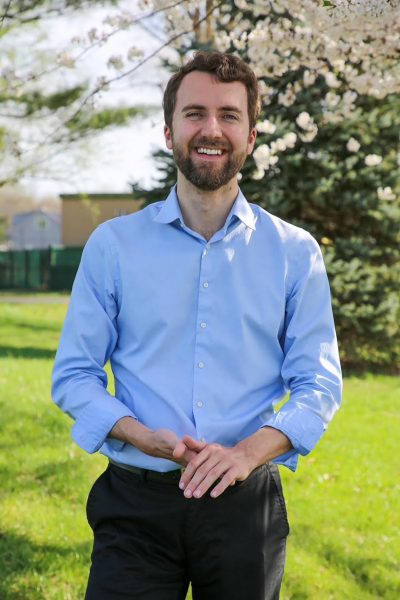
Smith identifies as pansexual, having come out 10 years ago in college. He said that he is proud of the representation Delaware already has, from Rep. Sarah McBride to Travis McDermott, the mayor of Newark.
“I would love to partner with our attorney general, our governor, and our General Assembly to defend our LGBTQ+ citizens and residents as much as possible,” said Smith.
“I’d be honored to be Delaware’s first openly LGBTQ+ treasurer,” said Smith.
Mike Ramone, the Republican nominee for treasurer, has described Delaware as being in a ‘financial crisis.’The Blade asked Smith to respond to Ramone’s statement.
“I would disagree with Mike Ramone. I think Delaware is in a very strong financial shape, with the caveat of our state employee health benefits, which needs to be more well funded.”
Michael Smith will face Ted Lauzen and Mike Miller on the ballot for the Sept. 15 primary.
Rehoboth Beach
Rehoboth mayor calls for commissioner’s resignation after investigation into improper behavior
Suzanne Goode ‘has violated her oath of office, disgraced position of commissioner’

Rehoboth Mayor Stan Mills called for the resignation of Commissioner Suzanne Goode, following release of an independent investigation into Goode’s behavior that led Mills to conclude she has violated her oath of office.
Over the past few months, city staff have complained about Commissioner Goode’s extensive and inappropriate communications with them.
In June, Goode went to the house of a fellow commissioner in an attempt to settle a dispute she was having with his neighbor on the online platform NextDoor. Goode also has a history of using anti-LGBTQ language in various emails.
“I believe we’ve come to the point where we can take the most severe action we can take at this time to end Commissioner Goode’s intentional lies and harassment,” said Mills. “This has never been about differences of opinions on issues, but rather about uncivil behavior.”
“Commissioner Goode has violated her oath of office and has disgraced the position of commissioner, and she should resign,” said Mills.
In late June, the city of Rehoboth hired Margaret DiBianca, an attorney who specializes in business and employment conflict resolution, to investigate allegations of harassment and inappropriate behavior by Goode toward city employees and fellow commissioners.
DiBianca submitted the 17-page report on Aug. 12. On Aug. 21, a majority of the commissioners voted to release a redacted version of the report to the public.
Before the vote, Commissioner Susan Stewart, who is set to be sworn in as mayor next month, said that releasing the report is necessary.
“In most workplaces, the documented conduct would warrant her termination,” said Stewart.
“Our laws provide no such path for an elected official. To simply move on would mean keeping this conduct secret, leaving the victims to shoulder the burden themselves without institutional support,” said Stewart.
The investigation reported that Goode had sent nearly 2,000 emails to city employees since 2024 with more emails being sent almost daily. Only 90 emails from June and July were used in the scope of the investigation.
The report found that the emails contained “intentionally degrading and derogatory language, references to individuals’ family members, religion, and disabilities, as well as language hostile to the LGBTQIA+ community.”
The following emails were noted in the report as examples of ‘hostile’ language toward the LGBTQIA+ community:
“On November 7, 2025, Cmr. Goode wrote to a constituent, “PS just curious – how does this alienate the ‘Queens’ in [the City] more than the non-queens in the sense how is it a LGBTQ issue? (Not everything in [the City] revolves around gays, right?).”
“On November 15, 2025, Cmr. Goode said to the Targeted Employees “conservatives now have to remain in the closet (conservatives now have to do what gays had to do in the 20th century – ah, the irony) who object to the woke, drag queen bent of [Clear Space Theatre] at times.”
“On December 29, 2025, Cmr. Goode wrote to a constituent, “straight white males like yourself and my husband might as well just shoot themselves. Pale, stale and male doesn’t cut it in this town, eh?”
The report stated: “The volume of emails and the short intervals between communications sent by Goode reveal a pattern of conduct designed to intimidate, demean and harass rather than to advance legitimate city business.”
The report demonstrated multiple instances of Goode circumventing directives from Mayor Mills requiring her to cease inappropriate communications with city staff.
The conclusion of the report found that Goode’s behavior “falls substantially and demonstrably outside the bounds of acceptable professional behavior expected of an elected official and public servant in violation of the City’s Civility Code and, in turn, constitutes a violation of the Ethics Code.”
“Cmr. Goode’s communications do not foster a “respectful, courteous, and professional work environment” and do not reflect the “dignity and respect” required by the Civility Code.”
The report outlined six recommendations for the city to follow to address Goode’s behavior.
The recommendations included prohibiting Goode from contacting city employees and accessing administrative offices, and requiring Goode to undergo city-approved training on subjects such as respectful workplace behavior.
At the Aug. 21 meeting, the Commissioners voted to adopt all six recommendations.
During the meeting, Goode was given time to respond before the official release of the report.
“When an investigation is an attorney up in Wilmington looking at emails, who never contacts me, obviously it is a one-sided investigation,” said Goode. “The investigative reporter never got my side of anything. I was never given the opportunity to defend myself.”
“In June, Commissioner Goode’s communication became even worse,” City Manager Taylour Tedder told the Blade this week.
Tedder said that the volume of messages jumped to nearly 100 emails just in the month of June.
Tedder identified himself and City Solicitor Lisa Borin Ogden. He said that each of them filed multiple complaints, with one of them being to the Human Resources director.
“With an elected official, there is no way to reprimand or punish them because they’re not an employee,” said Tedder.
Brooke Thaler, communications director for the city of Rehoboth, expressed her frustration with the city’s inability to take serious action against Goode.
“That’s just a bit mind-boggling that something like this can go on, and there’s nothing that can be done about it,” said Thaler.
“The public put their trust in her when they elected her, and I don’t think that their intention was for her to so badly mistreat city staff,” Thaler told the Blade.
“It’s highly doubtful that she will stop, but I think the fact that these protections are in place to at least insulate the employees from receiving it when she’s not in person is a good step,” said Tedder.
Goode responded to the Blade’s request for comment by saying:
“Friday’s session was a kangaroo court and a blatant weaponization of FOIA. The entire report relies on systematic misrepresentation. Time and again, comments I shared from social media or resident outreach were falsely attributed directly to me.
“Without context, these claims are meaningless. As just one example, the city manager accuses me of using a vulgar word on a phone call—a word I do not use (p. 6, line 22). The investigating attorney never even contacted me, proving this process was never meant to be fair,” said Goode.
“I will not validate or accept an investigation built on inaccurate claims.”
Goode has not announced plans to resign.
Maryland
Girlfriends charged with Silver Spring murder to go on trial in 2027
Prosecutors charged both women with killing mother of one of them
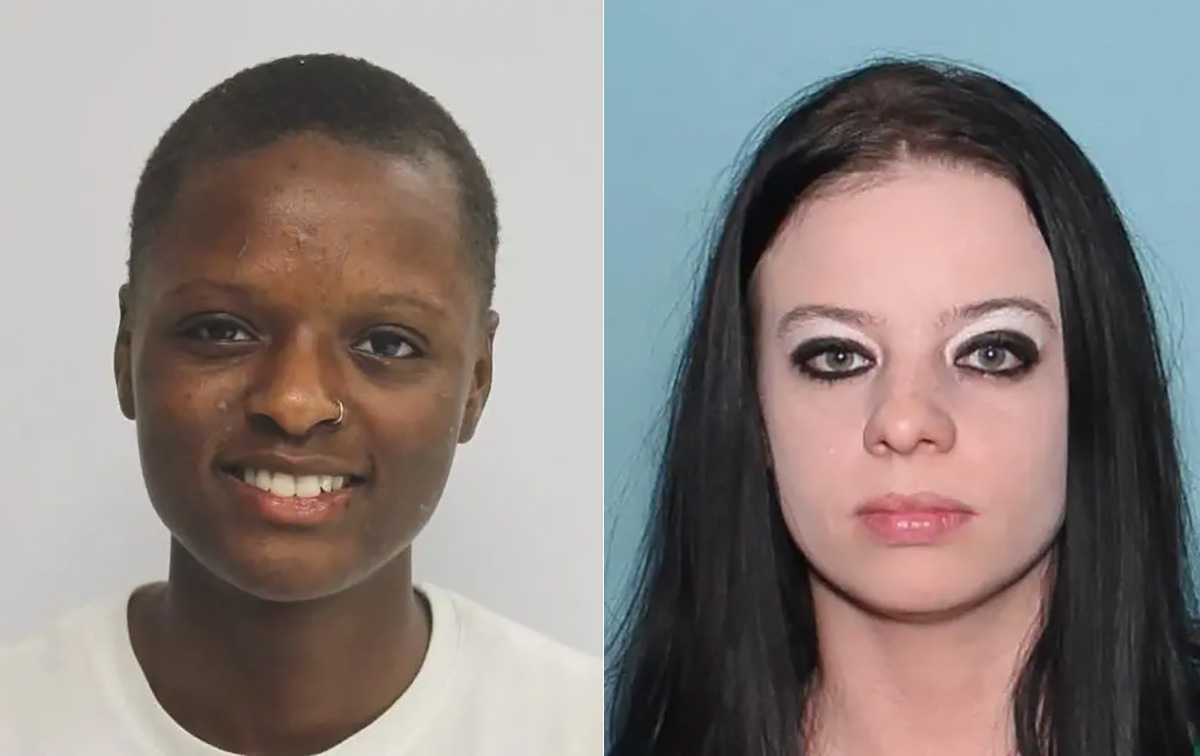
Two women identified as a couple who are charged with the May 22, 2026, murder of the mother one of them in her Silver Spring home and who were arrested three weeks later in Ohio are scheduled to go on trial for murder April 19, 2027.
According to online records filed with Montgomery County Circuit Court in Rockville, Vanessa Tjongarero-Henderson, 29, of Clarksburg, Md., and Samantha Raebel, 36, of Phoenix are being held without bond in the Montgomery County Correctional Facility until the time of their trial.
Statements from Montgomery County police show the two women were arrested June 10 in Genoa, Ohio, after fleeing from the scene of the murder in Silver Spring. Police statements and court records show they were extradited back to Maryland in July, where prosecutors with the Montgomery County State’s Attorney’s Office obtained indictments against them for murder.
Earlier statements from Montgomery County police say their investigation into the murder led to their decision to initially charge the two women with first-degree murder for the death of Hilde Henderson, 67, who was Tjongarero-Henderson’s mother.
“Through the course of the investigation, detectives identified Henderson’s daughter, Vanessa Tjongarero-Henderson, and Vanessa’s girlfriend, Raebel, as the suspects,” one of the police statements says. It says police obtained arrest warrants for both women and launched a nationwide search seeking help from the public in in locating them.
One of the police statements says an autopsy determined the cause of Hilde Henderson’s death was blunt-force trauma injuries brought about by a murder. Police and the State’s Attorney’s Office, which is prosecuting the case, have yet to disclose whether they have determined a motive for the murder.
Court records show that prior to the start of the April 19, 2027, trial a “motion” hearing was scheduled for Oct. 30, 2026, a pre-trail conference was scheduled for Feb. 12, 2027, and another motion hearing and a status hearing were scheduled for March 12, 2027.
Court records also show that Tjongarero-Henderson is being represented by attorneys with the Montgomery County court system’s public defender service. The records show that Raebel initially had been represented by a public defender service attorney, but updated records show Aug. 14 is listed as the “removal date” for that attorney.
The docket shows that on Aug. 20, two new attorneys with the prominent D.C. law firm of Covington & Burling made their official appearance as her attorneys in the murder case. One of them, Daniel Solomon, told the Washington Blade in response to an inquiry that the defense has no comment at this time on the case.
He confirmed that Covington & Burling is representing Raebel on a no-cost, pro bono bass.
The office of the Montgomery County public defender service didn’t immediately respond to a phone message from the Blade asking for a comment on the Tjongarero-Henderson case.

HRC president campaigns for Chris Pappas in NH

We’re getting married but our parents object

Michael Smith could make history as Delaware’s first LGBTQ treasurer

Poland begins to legally recognize same-sex marriages from other countries

Immersive ‘Nation-State’ imagines a society free of authoritarianism

Please join me in supporting the Washington Blade Foundation

American democracy on the brink

Girlfriends charged with Silver Spring murder to go on trial in 2027

Rehoboth mayor calls for commissioner’s resignation after investigation into improper behavior

San Francisco, long a queer safe haven, remains competitive for homebuyers
-

 Commentary5 days ago
Please join me in supporting the Washington Blade Foundation
-
Opinions5 days ago
American democracy on the brink
-
Maryland5 days ago
Girlfriends charged with Silver Spring murder to go on trial in 2027
-
Rehoboth Beach5 days ago
Rehoboth mayor calls for commissioner’s resignation after investigation into improper behavior