Local
Activists end Nellie’s protests, but continue boycott
Concerns over ‘anti-Black’ practices of bars voiced at community listening session
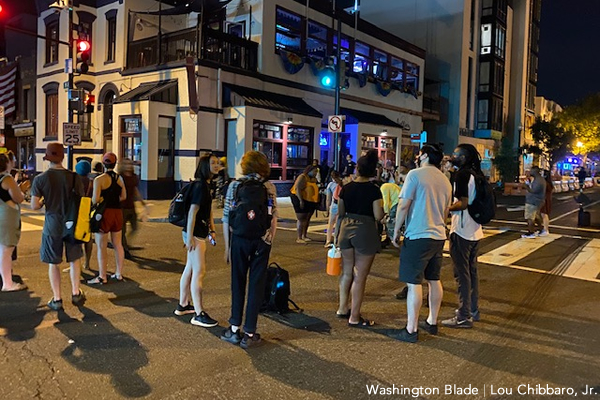
LGBTQ activists who have organized weekly Friday night protests outside D.C.’s Nellie’s Sports Bar since June announced at an Aug. 26 Community Listening Session that they would discontinue the protests after 11 consecutive weeks, but they are continuing to ask the community to boycott Nellie’s.
Nellie’s, a gay bar located at 9th and U Streets, N.W., became embroiled in controversy when one of its security guards pulled a Black woman by her hair down a flight of stairs during a June 13 brawl between customers and security officers that broke out during the night of the city’s LGBTQ Pride celebration.
The action by the security guard, which was captured on video taken by one of the customers on their phone, went viral on social media, prompting LGBTQ activists and others to demand that Nellie’s take appropriate action to review its security procedures
Nellie’s issued an apology for the incident the following day and announced it had fired the private security company whose employee, who is Black, dragged Keisha Young, 22, down the stairs. Nellie’s also announced it would temporarily close for business to assess what had happened and develop plans for reopening as a safe space for all members of the community.
It has since reopened and has been operating despite the weekly Friday night protests, although protest organizers say fewer customers have been showing up at the bar than prior to the start of the protests.
The activists that organized the protests said they have learned from longtime customers of the bar that Nellie’s staff and management allegedly have a long history of racial bias toward the bar’s Black customers.
Andrew Kline, an attorney representing Nellie’s, told the Washington Blade on Tuesday that he and Nellie’s owner Doug Schantz would have no comment on the Community Listening Session or the allegations by the protesters at this time. In July, following requests by the protesters, Schantz issued an apology to Young, which he had not done earlier, and said he had arranged for his employees to undergo training aimed at addressing the concerns raised by protesters.
He has since hired Ruby Corado, founder and CEO of D.C.’s LGBTQ community services center Casa Ruby, to arrange for the staff training and advise him on community outreach efforts.
But several of the protesters, including Makia Green, who serves as co-conductor of the Black-led community defense group Harriet’s Wildest Dreams, said Schantz last week appeared to display a disrespect for the protesters and for Young by declining to show up in person for the Aug. 26 Community Listening event to which he was invited. The official name of the event released by organizers was the Boycott Nellie’s Community Listening Session.
The session was held at D.C.’s Eaton Hotel at 1201 K St., N.W. and was live-streamed on Facebook. Schantz informed the organizers that he was attending the event online. But under the Facebook Live format, he and others viewing the event online could only submit written messages and could not speak or be seen on video like other online meeting platforms such as Zoom.
Organizers of the Listening Session, in which about 35 people showed up in person at one of the Eaton Hotel’s meeting rooms, said Schantz did not submit any comments other than to say he was watching the event live on Facebook.
The Listening Session, which lasted a little over two hours, included a panel of speakers including moderator Iris Jacob, a trained facilitator with the local group Social Justice Synergy; Preston Mitchum, an attorney and board co-chair of the local group Collective Action for Safe Spaces (CASS); and Makia Green and NeeNee Taylor, local activists who are both affiliated with Harriet’s Wildest Dreams.
Green recounted at the Listening Session what activists and others who witnessed the June 13 incident in which Young was dragged down a flight of stairs at Nellie’s that security guards appeared to have incorrectly believed Young was among a group of customers that brought their own bottle of liquor into the bar in violation of the bar’s longstanding policy. Green said Young, a college student, was not part of the group that brought in the liquor bottle and had arrived at Nellie’s minutes before the incident began.
Witnesses have said the altercation broke out after a Nellie’s employee arranged for security guards to order those believed to have brought in the liquor to leave the bar. Minutes before the security guard is seen on the video dragging Young down the stairs, Young is seen on the video punching one or more men at the top of the stairs.
Green told the Listening Session that Young was attempting to help her male cousin, who Green said was being attacked and beaten by others during the fight that broke out.
Green and the other panelists who spoke at the Listening Session noted that organizers arranged for the weekly Friday night protests outside Nellie’s to be carried out as block parties, with DJ’s playing music and some participants dancing in the street in front of the bar. They said their aim was to create a “safe space” for Black LGBTQ people to celebrate who they are that they have not been able to do in Nellie’s and other D.C. gay bars, which the panelists said have displayed a bias toward “Black queer” customers.
The city’s Alcoholic Beverage Regulation Administration, which issues liquor licenses to bars and restaurants announced shortly after the Nellie’s incident that it had opened an investigation into the incident and found Nellie’s may have violated the D.C. liquor law in its handling of the fight. The city’s Alcoholic Beverage Control Board referred the case to the Office of the D.C. Attorney General to further investigate whether Nellie’s violated city laws in its response to the fight on its premises.
Spokespersons for the liquor board and the Attorney General’s office didn’t immediately respond to a Blade inquiry about whether the investigations were completed and reached a determination on who was at fault in the Nellie’s incident.
Mitchum, one of the panelists at the Listening Session last week, said organizers have decided not to schedule another such session at this time.
“Overall, the event went well,” Mitchum told the Blade in a statement. “It was a safe space curated by Black queer and nonbinary organizers and activists to speak about the history of anti-Black racism at Nellie’s and other queer bars in D.C. and across the country,” he said.
“Attendees also shared their personal experiences navigating majority-white queer spaces, namely bars and clubs,” he said, adding, “Though I am disappointed that Doug did not show up in-person to meet the activists, organizers, and attendees, we hope he listens to us clearly and takes action to crate safe spaces for all, not just the acceptable few.”
The Community Listening Session can be viewed here.

The Comings & Goings column is about sharing the professional successes of our community. We want to recognize those landing new jobs, new clients for their business, joining boards of organizations and other achievements. Please share your successes with us at [email protected].
The Comings & Goings column also invites LGBTQ+ college students to share their successes with us. If you have been elected to a student government position, landed an exciting internship, or are graduating and beginning your career with a new job, let us know so we can share your success.
Congratulations to Jaime Christopher Pierce on their appointment to serve as a member of the Virginia Governor’s LGBTQ+ Advisory Board. Pierce was sworn in on Sept. 3 by Greg Parks, clerk of the Alexandria Circuit Court.
Pierce currently serves as vice chair of the Alexandria City LGBTQIA+ Task Force and as a member of the Alexandria Pride planning committee. They previously served on the board of directors of Equality Virginia.
Upon being sworn in, Pierce said, “Public service has been a central part of my life for more than 30 years, and this appointment gives me an opportunity to serve the Commonwealth in a different and very personal way. My career has allowed me to work with people and communities throughout Virginia, and I hope to bring that experience, along with my own lived experience and my involvement in the LGBTQ+ community, to the work of the Board.” They added, “Having Greg administer the oath makes the occasion even more meaningful because of his own historic role as Virginia’s first openly gay elected circuit court clerk.”
Pierce also serves as Circuit Court Services Manager for the Department of Judicial Services, at the Office of the Executive Secretary of the Supreme Court of Virginia. They began their career in Virginia’s judiciary in 1994 as a deputy clerk with the Virginia Beach Circuit Court and have since held several professional and leadership positions within the court system. Pierce is a member of the National Association for Court Management (NACM) and the Mid-Atlantic Association for Court Management. At the national level, Pierce participated in the workgroup that developed the National Association for Court Management’s Diversity, Equity, and Inclusion Guide, a resource designed to help court professionals advance inclusive practices and strengthen access, fairness and belonging within the justice system.
Pierce earned a degree in Criminal Justice from Liberty University, and a certificate in Paralegal Studies from Norfolk State University.
Maryland
Md. groups receive state grants to fight hate crimes
Pride Center of Maryland among recipients
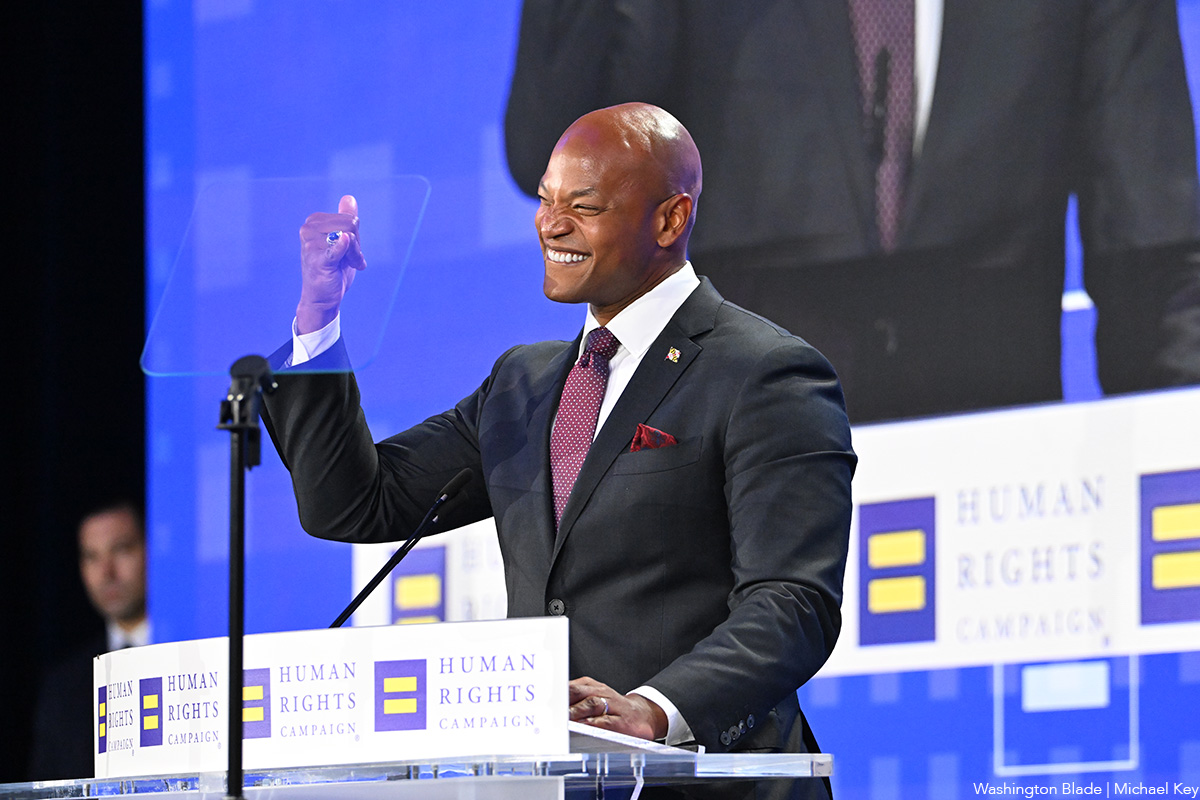
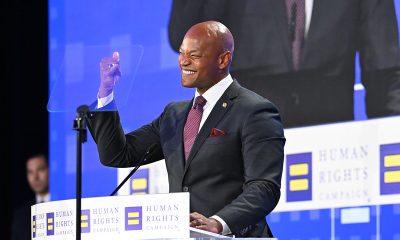
Maryland Gov. Wes Moore and the Governor’s Office of Crime Prevention and Policy are awarding a total of $10 million in grants in the 2027 fiscal year to nonprofit organizations that work to prevent hate crimes in the state.
The funds will be used to support those who feel targeted or discriminated against because of their race, religion, sexual orientation, gender identity, or disability status.
The Pride Center of Maryland is among the recipients. Churches, synagogues, mosques, and LGBTQ organizations are all eligible to receive grants
“The safety and security of all Marylanders is my top priority, so we are drawing a hard line because we have no tolerance for hate,” said Moore, according to media reports. “We are committed to protecting and ensuring safe and sacred spaces stay that way by investing in non-profit organizations, houses of worship, and community centers to protect and honor every community that makes our state so diverse and special.”
“Protection Against Hate Crime funding has strengthened the Pride Center of Maryland’s ability to protect, educate, and support the communities we serve … at a time of heightened concern associated with the Trump administration’s anti-LGBTQ/SGL (same-gender-loving) policies and pressures,” Pride Center of Maryland CEO Cleo Manago said. “PAHC funding helps us do more than improve physical security — it strengthens our community’s knowledge, preparedness, connection to resources, and ability to respond to hate with greater awareness and support.”
Maryland’s hate crimes law includes both sexual orientation and gender identity. The state’s nondiscrimination statute is also LGBTQ-inclusive.
District of Columbia
Blade welcomes fall intern
Alexis McLean is student at University of North Florida
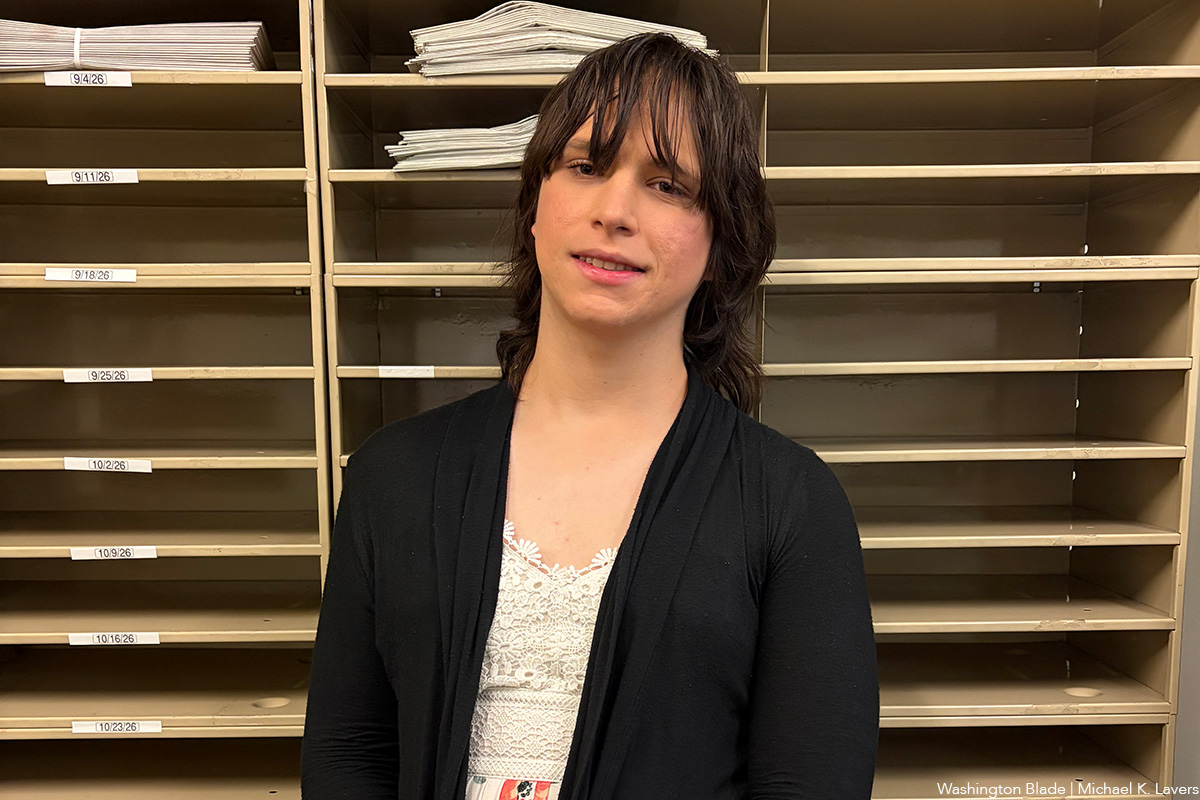
The Washington Blade this week welcomed Alexis McLean as its fall intern.
Alexis is studying political science at the University of North Florida in Jacksonville, Fla. She is interning with the Blade as part of a continued partnership with the Washington Center.
“I am looking forward to spending my time in the fall with the Washington Blade, as this is a new experience for me,” said Alexis. “I have not experienced any journalist jobs in the past so this would be my first time, and I am excited to better my writing and communications skills with this internship.”
Alexis’s internship with the Blade ends in early December.

‘Thelma and Louise’ remains landmark of unspoken queer rebellion

Comings & Goings

LGBTQ Military Happy Hour set for Sept. 15

Calendar: September 11-17

Multi-billion-dollar 9/11 Victim Compensation Fund to continue until 2090

Nominate your favorites for the Blade’s 25th annual Best Of LGBTQ DC Awards

Md. groups receive state grants to fight hate crimes

PHOTOS: SUNFESTIVAL

Gloria Steinem’s life of substance and consequence