BRITISH REMODELING, HANDYMAN
Commentary
The cost of speaking one’s mind
Colombian artist José Miel’s recent comments on Pride, LGBTQ community sparked controversy
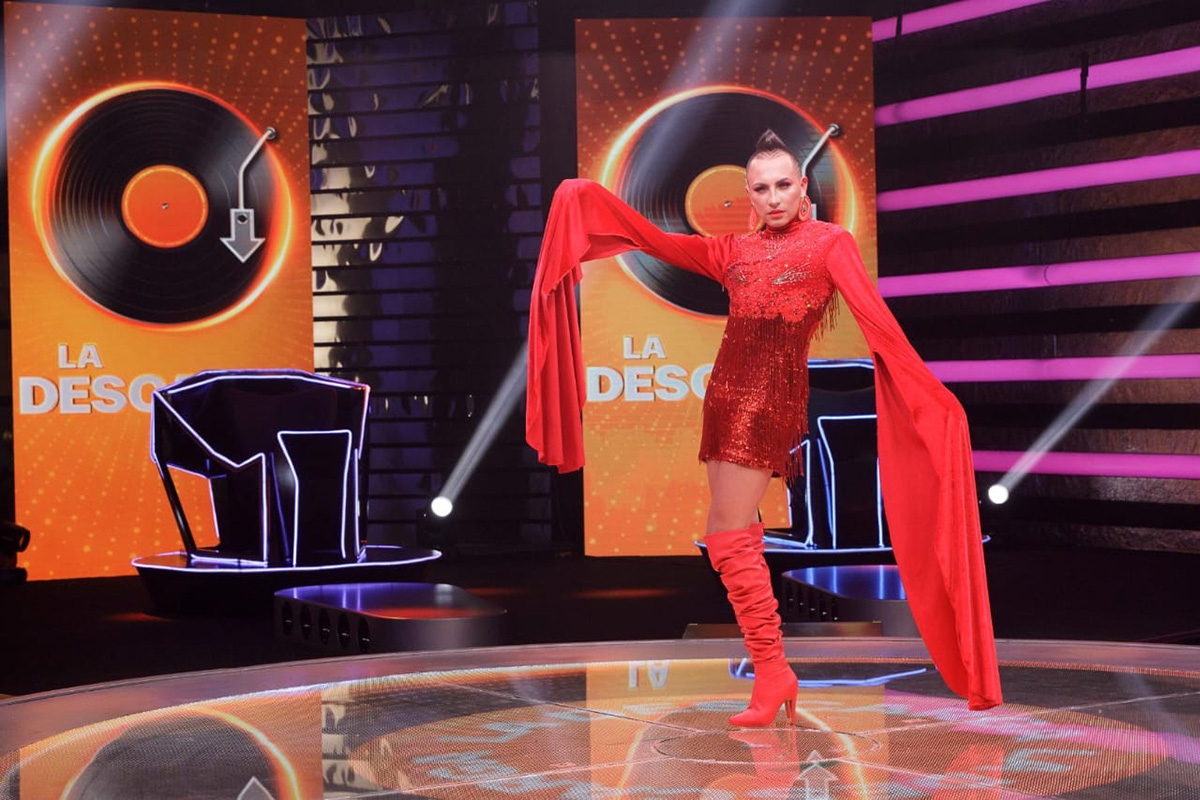
Colombian artist José Medina, known professionally as José Miel, 34, originally from Bogotá, is going through one of the most complex moments of his public career. Following his exit from “La casa de los famosos Colombia,” his name has been placed at the center of a controversy that has gone beyond the realm of entertainment and into a broader terrain: the debate over freedom of expression, diversity, and the limits of dissent within a society that defines itself as inclusive.
Miel is not an improvised figure. His trajectory in music, acting, and television reflects a sustained process of training, work, and exposure across different platforms. He participated in “Yo me llamo” (2019) and “La Descarga” (2022), establishing himself as a versatile artist within the Colombian entertainment industry. His career has been built through effort, in an industry that does not guarantee permanence without discipline.
However, the recent focus is not on his artistic work, but on his statements.
On March 15, the program “La Red” on Caracol Televisión released an interview on its digital platforms in which the singer spoke openly about the difficult moment he is facing, stating that his words — referring to comments he made after leaving “La casa de los famosos” — “cost him dearly.” His opinions on Pride, inclusive language, and the LGBTQ acronym triggered an immediate and polarized reaction.
From that moment on, the debate moved beyond the content of his words and opened another angle that cannot be overlooked.
Miel is known for the precision, firmness, and clarity with which he expresses his ideas. He is not an improvised artist, neither in discourse nor on stage. However, amid this controversy, a question also arises — one that deserves consideration from a journalistic standpoint:
What was the intention of the journalist, commentator, or media outlet that posed the questions leading to these statements?
This is not about shifting responsibility for what was said, but about understanding the context in which it occurred. At a moment in his career marked by multiple opportunities and projects, Miel’s responses placed him at the center of a controversy with real consequences.
In that sense, it is worth asking whether these were genuine questions within an open dialogue, or whether they followed a more provocative line, aimed at generating headlines or exposing the interviewee in a sensitive terrain.
This is not a minor question.
In media environments where every word can be amplified, the role of the one asking the questions is also part of how the story is constructed.
Within this context, this outlet held a phone conversation with the artist this Wednesday in order to gather his position directly. What follows are his responses to three central themes: the consequences of his words, his identity, and his call for respect.
Regarding the personal cost of expressing his opinion, Miel was clear:
You are now paying a high price for speaking your mind.
Do you regret having spoken out, or do you still believe your voice is non-negotiable?
Response:
“I believe that as human beings we all know that giving an opinion on any topic will bring problems. That’s the problem with society: it doesn’t respect other people’s opinions, because many think they are always right, and that’s not the case. Everyone has their reasons, everyone has their opinions, and those must be respected — even if you disagree.
What I expressed was an opinion without discrimination, without harming anyone, without stepping on anyone. And yet the opposite has been done to me: I’ve been trampled on, harmed, threatened, sent very ugly messages, harassed, hate coming from everywhere.
I knew what I was getting into. I knew what could happen. But I am proud of myself. I am proud of my conviction, and I will defend it until the end, because I truly believe in what I said. I do not regret it.”
When addressing his stance on labels, Pride, and how he defines himself, the artist stated:
You say you don’t identify with certain expressions of Pride or with the acronym.
So how do you define who you are, without labels or molds?
Response:
“Well, I don’t identify with Pride marches because they don’t represent me at all. They would represent me if they were respectful and appropriate, because many families attend — children, grandparents, parents … everyone is there.
And it’s quite disrespectful to see many people — not all, I emphasize — exposing their bodies, wearing very little clothing, drinking alcohol, intoxicated, using drugs. I don’t think that’s the way I would seek respect and equality.
I don’t like the term LGBTIQ+ community or all the letters that keep being added, because I feel that these acronyms make people discriminate more. I understand why they exist, because I know that what is not named does not exist, but I feel it is not the right way.
To me, everyone is part of society. We are human beings.
I don’t have labels or molds. I am a man, I am homosexual, and that’s it. The fact that I wear makeup or more feminine clothing is part of my artistic work, part of the stage. My everyday life is completely different.”
Finally, when referring to the reactions he has received, Miel insisted on a point that runs throughout his position:
You speak about respect, yet you’ve received attacks even from within the same community. What do you say today to those who call for inclusion but do not respect when someone thinks differently?
Response:
“I realized that the same community discriminates against itself. Many gay people have written to support me, telling me how brave I am, that they think the same way but don’t dare to speak.
To those who disagree with my opinion, I say: respect it, even if you don’t like it. You can express your opinion because we live in a free country, but do it with arguments, from your perspective, without stepping on others.
Because that is not the way.
I understand the struggles, I understand what is being sought, but I feel that if other ways of fighting were heard, many things could be achieved through respect and equality.
Everyone is free to think and say what they want — but always with respect. It’s that simple.”
Beyond his statements, what the artist is currently facing was also exposed in the March 15 interview on “La Red.” In that space, Miel described in his own words what he called a “string of problems”: constant harassment on social media, direct threats, hate messages, canceled performances, loss of contracts, and stalled projects due to external pressure and boycott warnings.
This situation not only highlights the media impact of his words, but also the material consequences that expressing an opinion can have in today’s digital environment.
His statements also drew reactions from the political sphere. Colombian Congressman Mauricio Toro wrote on social media:
“Hate and discrimination are learned. Sometimes they are so deeply rooted that they turn against oneself. José Miel, neither you nor I have anything to hide or to be ashamed of. Being free and loving without fear is the greatest thing you can experience as a human being.”
However, this position was also criticized. A significant number of users — even those who do not agree with the artist’s statements — have insisted that his right to express his views must be respected, pointing to a growing tension between inclusive discourse and tolerance for dissent.
The case of José Miel goes beyond a media controversy. It reflects a broader reality: the difficulty of sustaining respect when opinions do not align, even within spaces that promote diversity.
In a context where social media amplifies every stance, reactions to difference become immediate and, in many cases, disproportionate.
Beyond individual positions, what happened raises a deeper question:
Is it possible to speak of inclusion if we are not capable of respecting difference?
The philosopher Voltaire left behind an idea that remains relevant:
“I disagree with what you say, but I will defend to the death your right to say it.”
That is the point.
Because if a society is not capable of upholding the right of others to express themselves — even when it is uncomfortable — then it is not building inclusion; it is merely managing agreement.
And in that scenario, the case of José Miel stops being an isolated episode.
It becomes a test.
A test of how far we are willing to go in respecting others when they do not think like us.
Support does not mean agreement.
In this case, support means something more basic and more necessary: defending the right to exist, to think, and to express oneself without being destroyed for it.
Senegal
Senegalese president signs bill that further criminalizes homosexuality
Measure passed in National Assembly with near unanimous support
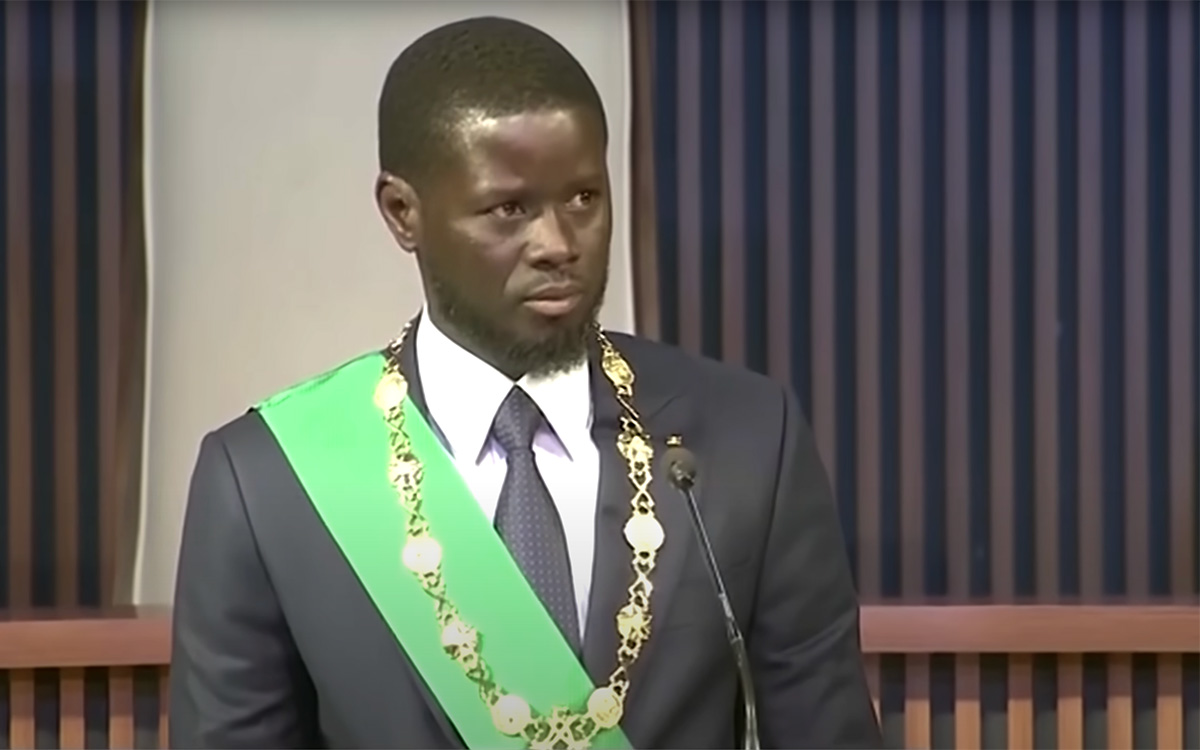
Senegalese President Bassirou Diomaye Faye on Tuesday signed into law a bill that further criminalizes consensual same-sex sexual relations in the country.
Lawmakers in the African country on March 11 nearly unanimously passed the measure that increases the penalty for anyone convicted of engaging in consensual same-sex sexual relations from one to five years in prison to five to 10 years. The bill that Prime Minister Ousmane Sonko introduced also prohibits the “promotion” or “financing” of homosexuality in Senegal.
Reuters on March 16 reported MassResistance, an anti-LGBTQ group based in the U.S., worked with Senegalese groups that support the bill. Volker Türk, the U.N. high commissioner for human rights, is among those who urged Faye not to sign it.
The Senegalese National Assembly in 2021 rejected a bill that would have further criminalized homosexuality in the country.
Police in February arrested a dozen men and charged them with committing “unnatural acts.”
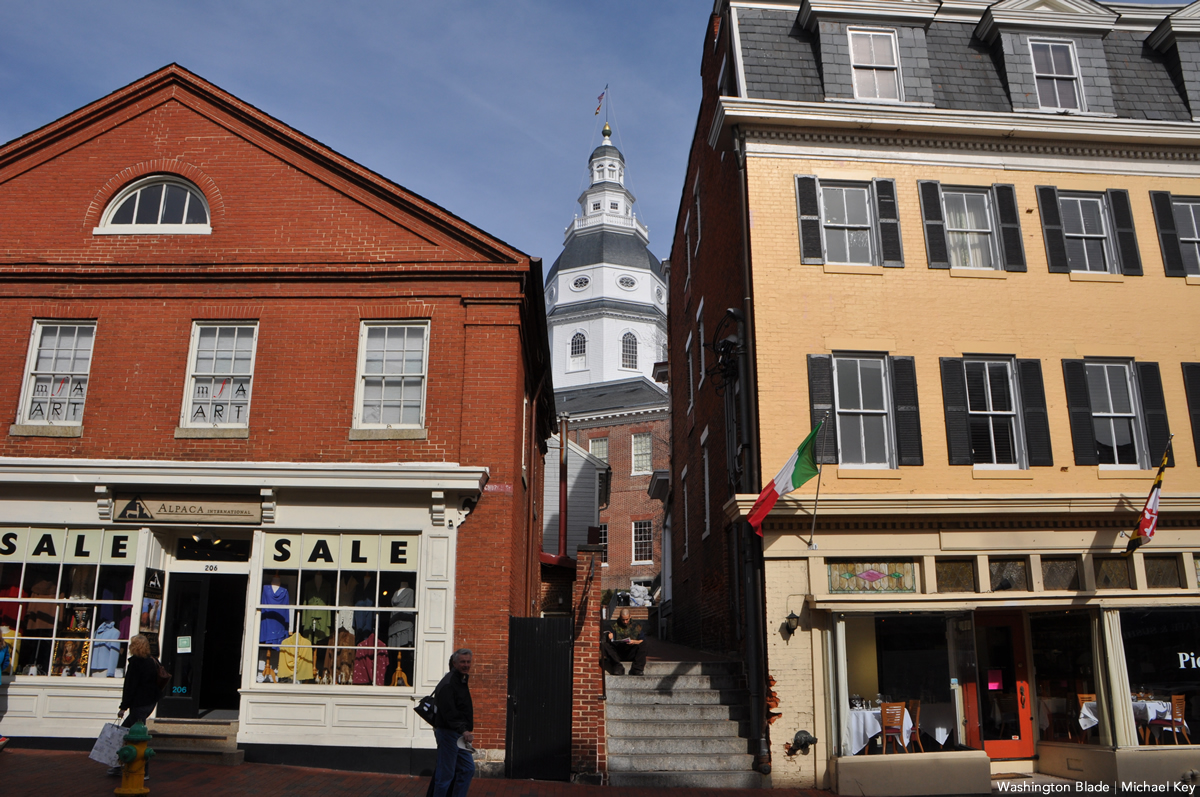
Maryland’s legislative caucuses outlined their legislative priorities heading into the final weeks of the 2026 General Assembly during a joint press conference on March 24.
The press conference was titled “We are Maryland,” where a representative for each of the legislative caucuses outlined priorities.
State Del. Kris Fair (D-Frederick County) of the LGBTQ+ Caucus opened the press conference with a statement on the unity of Maryland’s caucus.
“Together we can show our state and our community a different world, one where we mutually support one another and through that support uplift every Marylander,” he said.
In a press conference on March 5, the LGBTQ+ Caucus outlined its top legislative priorities. Fair highlighted two of those bills again during the “We are Maryland” press conference.
The first of the two highlighted pieces of legislation was Senate Bill 626 and House Bill 1589.
The bills would simplify the process of updating an individual’s birth certificate and align the Department of Health and DMV systems to reflect those changes. The bill is being led by state Sen. Clarence Lam (D-Anne Arundel and Howard Counties) and state Del. Ashanti Martinez (D-Prince George’s County).
The second piece of legislation is Senate Bill 950 and House Bill 1209, which would update and modernize laws and regulations around so-called conversion therapy. The bills have failed to pass either chamber thus far. They are being led by state Sen. Cheryl Kagan (D-Montgomery County) and state Del. Bonnie Cullison (D-Montgomery County).
(The U.S. Supreme Court on Tuesday ruled against a Colorado law that bans so-called conversion therapy for minors. Maryland is among the U.S. jurisdictions that prohibit the widely discredited practice for anyone under 18.)
Martinez and Lam have introduced bills in their respective chambers that would expand PrEP access in Maryland. Martinez did not attend the press conference, and Fair did not mention it when he spoke.
State Del. N. Scott Phillips (D-Baltimore County) represented the Black Caucus during the press conference. State Del. Dana Jones (D-Anne Arundel County) spoke on behalf of the Women’s Caucus, State Del. Teresa Woorman (D-Montgomery County) represented the Latino Caucus, and State Del. Lily Qi (D-Montgomery County) represented the Asian-American and Pacific Islander Caucus. State Del. Jared Solomon (D-Montgomery County) represented the Jewish Caucus, and state Del. Sean Stinnett (D-Baltimore County) represented the Muslim Caucus during the press conference.
Solomon ended the press conference by explaining the importance of all the caucuses coming out together.
“We are stronger when we’re together, and many of these issues that we have talked about, again, impact all of us,” said Solomon.

The cost of speaking one’s mind

Senegalese president signs bill that further criminalizes homosexuality

Md. lawmakers reaffirm legislative priorities

Supreme Court rules against Colo. law banning conversion therapy for minors

Thousands attend ‘No Kings’ protests in D.C.

Celebrate cherry blossoms the drag way

Lorato ke Lorato: marriage equality, democracy, and the unfinished work of justice in Botswana

Japanese Supreme Court to consider marriage equality

The outrage economy is not the LGBTQ community

Anti-trans visa ruling echoes Nazi regime destroying trans documents
-

 Out & About4 days ago
Celebrate cherry blossoms the drag way
-
Botswana4 days ago
Lorato ke Lorato: marriage equality, democracy, and the unfinished work of justice in Botswana
-
Japan4 days ago
Japanese Supreme Court to consider marriage equality
-
Opinions4 days ago
The outrage economy is not the LGBTQ community