National
National news in brief
D.C. declared gayest U.S. region, same-sex domestic violence is up and more
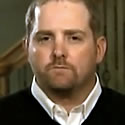

Screen capture of hate-spewing ex-school board member Clint McCance.
Anti-gay Ark. school board member resigns after FB rant
PLEASANT PLAINS, Ark. — A school board member who urged bullied gay and lesbian youths to “commit suicide” has quit his post, CNN and other media outlets reported this week.
Clint McCance, the vice-president of the Midland School District in Pleasant Plains, Ark., apologized for the comments which caused public outcry. He had posted them on Facebook in response to Spirit Day on Oct. 20, when people were asked to wear purple in recognition of bullied gay youths after several suicide.
McCance apologized on CNN during an interview with Anderson Cooper. He’d written on his Facebook page and said, “Seriously they want me to wear purple because five queers killed themselves,” McCance wrote. “The only way im wearin it for them is if they all commit suicide. I can’t believe the people of this world have gotten this stupid. We are honoring the fact that they sinned and killed thereselves because of their sin.”
McCance told Cooper his statements were ill-chosen and not indicative of his true feelings. He attributed the posts to a lapse in judgement.
McCance’s comments had been savaged by his peers.
Tom Kimbrell, Arkansas commissioner of education, said, “I strongly condemn the statements that appeared on Mr. Clint McCance’s Facebook page. The divisiveness and disruption of these comments cause me to seriously question the ability of Mr. McCance to remain as an effective member of the Midland School Board.”
A statement signed by Midland School headmaster Dean Stanley, distanced the school from McCance’s remarks but school officials said they didn’t have the authority to fire McCance since he was an elected official.
D.C. gayest U.S. region: report
WASHINGTON — The District of Columbia leads the country in male same-sex households and Massachusetts is tops in lesbian-led homes, Washington Times has reported citing a university-based research center report.
Overall, there were 581,300 gay-couple-headed households in the United States in 2009, the National Center for Marriage & Family Research said in this month’s Family Profiles report, citing data from the 2009 American Community Survey.
This is somewhat smaller than the 594,391 same-sex couples identified in the 2000 census, but potential misclassifications mean “these differences should be interpreted with caution,” the Center report said.
About 26 percent of the nation’s 581,300 gay households, or 152,121, were led by married couples in 2009.
Census Bureau data also showed that, when it came to weddings, lesbians significantly outnumbered gay males — 85,847 to 66,274 or 56 percent to 44 percent. But this broad-based number was less dramatic than other studies that have suggested that lesbians marry at twice the rate of gay men.
Geographically, the report identified about a dozen places where at least one in 10 unmarried couples are gay (whether the gay couples are themselves unmarried or married), the Times article said.
The District came in No. 1 in the nation, with 31 percent of the city’s unmarried couples identifying themselves as same-sex. This high representation was overwhelmingly due to the men — gay male households make up 26 percent of all unmarried households, compared with 4 percent that were led by lesbians.
However, Massachusetts was the top choice of lesbian couples, who represented nearly 8 percent of the state’s unmarried couples. Gay males were about 6 percent of the Bay State’s unmarried households.
The Center’s Family Profiles are summaries of the latest statistics on a variety of family issues. The center was established in 2007 at Bowling Green State University in Bowling Green, Ohio, and receives support from the U.S. Department of Health and Human Services.
LGBT domestic violence up 15 percent nationwide
CHICAGO — LGBT domestic violence is up 15 percent from 2008 in the U.S. according to a report released last week from the National Coalition of Anti-Violence Programs.
The findings — which cite six 2009 murders related to LGBT domestic or intimate partner violence, represents a 50 percent rise since 2007 — come at a time when gay-specific programs are losing staff or closing due to the sluggish economy.
“Member programs face sharp increases in calls from LGBTQ survivors, while sustaining 50 percent or more in cuts to staffing and program closures because of the financial crisis,” said Lisa Gilmore of Chicago’s Center on Halsted Anti-Violence Project. “We know that LGBTQ survivors need specific and culturally competent services to stay safe, and our primary recommendation is that funding for LGBTQ-specific anti-violence programs is needed now more than ever.”
From 2008 to 2009 there was a 99 percent increase in calls for police assistance and a 135 percent increase in arrests, though misarrests and reports of police misconduct also rose dramatically in LGBT households, the report said.
“Police are 10 to 15 times as likely to make a dual arrest in cases of same-sex domestic/intimate partner violence than in heterosexual ones,” said Kelly Clark at the Gay Alliance of the Genesee Valley’s Community Safety Program. “This report demonstrates the critical need for LGBTQ-specific cultural competency for first responders, such as law enforcement, to prevent re-traumatizing the survivor of violence.”
Chicago Jewish group in spotlight after terror plot
CHICAGO — About two dozen members of the Congregation Or Chadash were enjoying their usual Friday evening dinner before services at their Edgewater neighborhood headquarters when they got the startling news that they were apparently the target of an international terrorist plot, the Chicago Tribune reported.
The small congregation for LGBT Jews that started with an alternative newspaper ad in 1976 had gotten used to a life of relative obscurity — too small with about 100 members to afford its own building or build much of a profile.
How a terrorist in Yemen who’d rigged printer cartridges with explosives would know who and where they are sparked as much puzzlement as fear, congregants said last week.
“I thought ‘Wow, I didn’t know we had such visibility,'” congregation member Marvin Levin said.
But that’s what the tight-knit group got as federal officials announced last week that a woman in Yemen had been arrested in the alleged terrorist plot that sent several packages to the U.S. loaded with the industrial explosive, PETN.
Authorities have not said which two Chicago addresses the packages were mailed to, but a source told the Tribune both were Jewish congregations on the North Side, home to a thriving Jewish community. Chicago police said they were making increased checks in areas with a high number of synagogues, including Edgewater, Rogers Park and West Rogers Park.
Or Chadash leaders said they learned that their group was an intended recipient of one of the Yemen packages from Emanuel’s Rabbi Michael Zedek.
“It was just a surprise,” said Rabbi Larry Edwards of Or Chadash. “When I was first hearing news (about the packages), I assumed there were probably bigger targets. We’re a small congregation. Either we were selected at random or it’s because we’re a mostly gay congregation.”





The White House
Trump will refuse to sign voting bill without anti-trans provisions
Measure described as ‘Jim Crow 2.0’

President Donald Trump said he will refuse to sign any legislation into law unless Congress passes the “SAVE Act,” pressuring lawmakers to move forward with the controversial voting bill.
In posts on Truth Social and other social media platforms, the 47th president emphasized the importance of Republican lawmakers pushing the legislation through while also using the opportunity to denounce gender-affirming care.
“I, as President, will not sign other Bills until this is passed, AND NOT THE WATERED DOWN VERSION — GO FOR THE GOLD,” Trump posted. “MUST SHOW VOTER I.D. & PROOF OF CITIZENSHIP: NO MAIL-IN BALLOTS EXCEPT FOR MILITARY — ILLNESS, DISABILITY, TRAVEL: NO MEN IN WOMEN’S SPORTS: NO TRANSGENDER MUTILIZATION FOR CHILDREN! DO NOT FAIL!!!”
The proposed Safeguard American Voter Eligibility (SAVE) Act would amend the National Voter Registration Act of 1993 to require in-person proof of citizenship for anyone seeking to vote in U.S. elections. Trump has also called for the legislation to include a ban on gender-affirming medical care for transgender minors, even with parental consent.
“This is a huge priority for the president. He added on some priorities to the SAVE America Act in recent days, namely, no transgender transition surgeries for minors. We are not gonna tolerate the mutilation of young children in this country. No men in women’s sports,” White House Press Secretary Karoline Leavitt said. “The president putting all of these priorities together speaks to how common sense they are.”
The comments mark the first time the White House has publicly confirmed that Trump is pushing to attach anti-trans policies to the SAVE Act.
The bill would also require the removal of undocumented immigrants from existing voter rolls and allow election officials who fail to enforce the proof-of-citizenship requirement to be sued.
It is already illegal for noncitizens to vote in federal elections. Current safeguards include requirements such as providing a Social Security number when registering to vote, cross-checking voter rolls with federal data and, in some states, requiring identification at the polls.
Trump began pushing for the legislation during his State of the Union address last month, where he singled out Senate Majority Leader John Thune (R-S.D.) by name while criticizing the lack of movement on the bill.
Senate Minority Leader Chuck Schumer (D-N.Y.) has denounced the legislation as “Jim Crow 2.0” and said it has little chance of advancing through the Senate, calling it “dead on arrival.”
In remarks on the Senate floor, Schumer said “the SAVE Act includes such extreme voter registration requirements that, if enacted, could disenfranchise 21 million American citizens.”
Trump has repeatedly used political messaging around trans youth and gender-affirming care as part of broader cultural and policy debates during his presidency — most recently during his State of the Union address, where he cited the case of Sage Blair, a Virginia teenager whose school allegedly encouraged her to transition without her parents’ consent.
LGBTQ advocates — including those familiar with Blair’s story — say the situation was far more complex than described and argue that using a single anecdote to justify sweeping federal restrictions could place trans people, particularly youth, at greater risk.
Health
Too afraid to leave home: ICE’s toll on Latino HIV care
Heightened immigration enforcement in Minneapolis is disrupting treatment
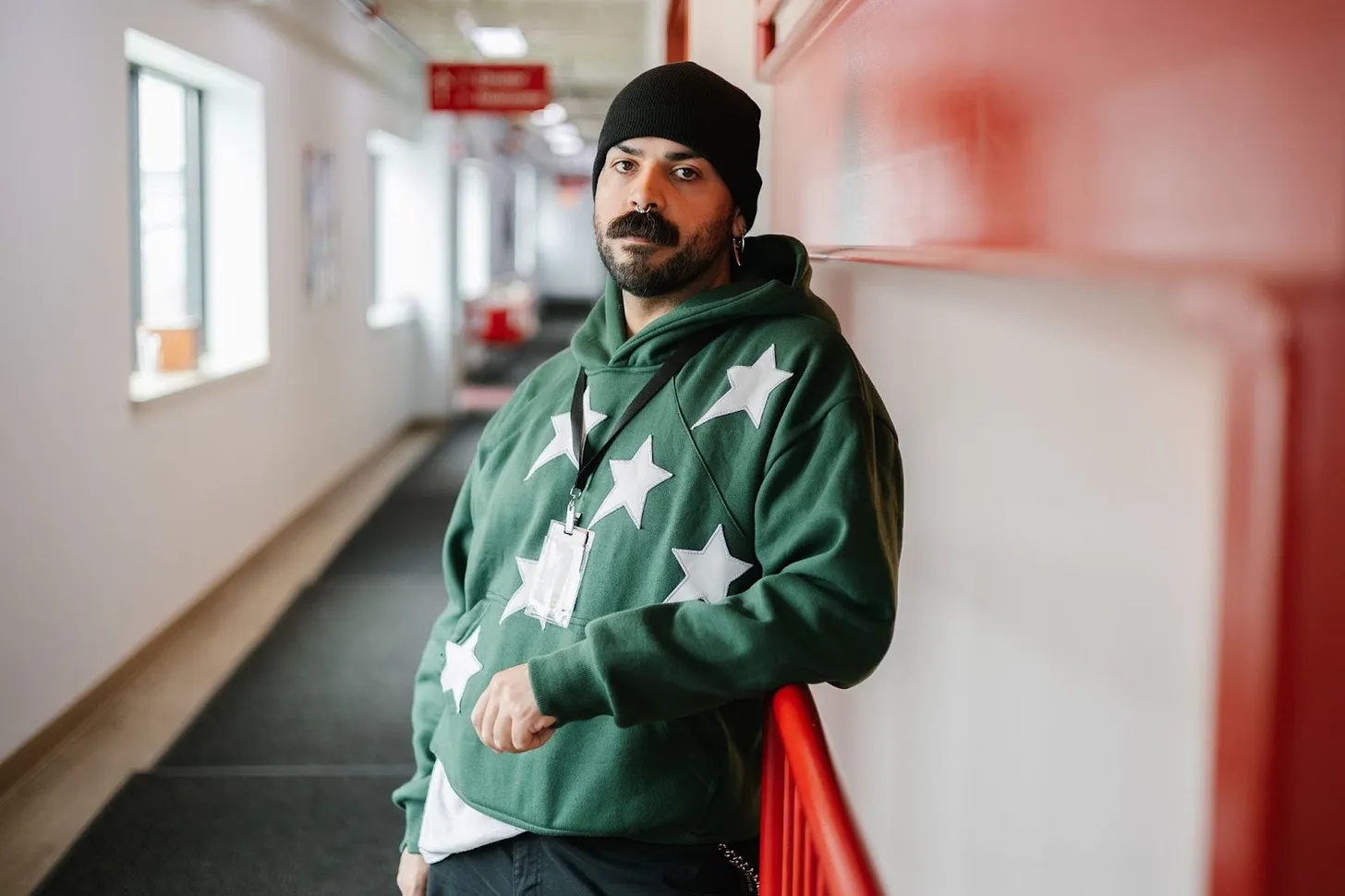
Uncloseted Media published this article on March 3.
This story was produced in collaboration with Rewire News Group, a nonprofit publication reporting on reproductive and sexual health, rights and justice.
This story was produced with the support of MISTR, a telehealth platform offering free online access to PrEP, DoxyPEP, STI testing, Hepatitis C testing and treatment and long-term HIV care across the U.S. MISTR did not have any editorial input into the content of this story.
By SAM DONNDELINGER and CAMERON OAKES | For two weeks, Albé Sanchez didn’t leave their house in South Minneapolis.
“[I was] forced into survival mode,” Sanchez told Uncloseted Media and Rewire News Group (RNG). “I felt like there was an invisible wall [to the outside world] that I couldn’t cross unless I really wanted to put myself in a place where there was a chance that I might not be able to come back.”
Queer and Mexican American, Sanchez was afraid of being targeted by the Immigration and Customs Enforcement presence in their neighborhood, even though they are a U.S. citizen.
“Every day is a risk,” they say, adding that even if they have paperwork, if they fit the profile, they are a target, making it scary to go even to work or the grocery store.
Sanchez, a 30-year-old sexual health care educator, has been taking oral PrEP, the daily preventive medication for HIV, for over a decade. But the mounting stress of ICE raids has made it harder to keep up with dosing.
“A missed dose here and there pushed me to make the appointment [for something more sustainable],” they say.
Sanchez says they felt like somebody would have their back at their local clinic. It was only a 10-minute drive from where they worked, they knew its staff from previous visits and community outreach, and they could count on finding Spanish-speaking staff and providers of Latino heritage. But not everybody has had that same experience accessing care.
Since ICE’s Operation Metro Surge began in early December, an increasing number of Latino patients in Minnesota are delaying or canceling what can be lifesaving care for the prevention and treatment of HIV.
These findings are particularly alarming for Latino communities, who, as of 2023, are 72 percent more likely than the general U.S. population to be diagnosed with HIV. And while overall infections have decreased, cases among Latinos increased by 24 percent between 2010 and 2022.
“I’m very concerned that there is going to be a sharp uptick in transmission,” says Alex Palacios, a community health specialist in the Minneapolis area.
In a January 2026 declaration as part of a lawsuit seeking to end Operation Metro Surge in the days following Renee Nicole Good’s killing, the commissioner of the Minnesota Department of Health said HIV testing among Latino populations has “dropped dramatically” and that “although grantee staff continue to go into the community to promote and provide testing, people are not showing up.”
Local clinics are reporting the same thing. The Aliveness Project, a community wellness center in Minneapolis specializing in HIV care, told Uncloseted Media and RNG they have seen more than a 50 percent decrease in new clients. The clinic serves a large number of Latino and undocumented clients, and while it usually sees 750 people walk through their door each week, according to providers, it reported seeing 100 fewer people each week since December.
Red Door, Minnesota’s largest STI and HIV clinic, has had a “modest uptick” in no-shows and missed appointments since December.
What happens when treatment stops
Today, there are multiple medications available that work to prevent HIV and dozens that treat it once a person tests positive. Many people who consistently take their medication have such low levels of the virus that they can’t transmit it through sex. But becoming undetectable requires patients to stay on their medication; otherwise, the virus replicates and mutates, weakening the immune system and increasing the risk of life-threatening infections.
“If patients aren’t on their medicines consistently, HIV can learn about the medication and become resistant to them. When this happens, the medicine will not work for the patient, and the new resistant virus could potentially be passed on to others,” says George Froehle, a physician assistant and provider at Aliveness Project. “Medication adherence is one of the most important aspects of HIV care.”
To maintain care and prevent dangerous, untreatable strains from spreading in Minnesota, providers at Aliveness Project have begun delivering medication to patients when possible, offering telehealth when they can, and pausing routine lab work to limit in-person appointments.
“The most important thing we can do from a public health perspective is to keep people undetectable so they don’t transmit HIV,” Froehle says, adding that providers in other cities targeted by ICE will need to make plans for missed injection visits, pivot to telehealth and prepare their teams for the “trauma that can occur.”
Sanchez understands the risks of inconsistent treatment, which is why they opted for the injectable preventative medication.
“I have a lot of risk [to HIV in my community],” Sanchez says. “With so much uncertainty about the future and whether HIV care will remain stable, I realized I couldn’t let this opportunity pass.”
But injectable HIV treatments are commonly dosed at two weeks to six months apart, and the medication must be administered in a clinic — a setting many patients are avoiding, according to providers.
“They have a two-week window” to get their shots, according to Froehle, who added that because patients are afraid to come in person, they have had to transition people off of their injectable HIV treatments. This has caused patients to return to oral HIV treatments without the testing they would normally receive had ICE not been in Minneapolis. “[Oral treatments] weren’t super successful [for these patients] to begin with and that’s why they were on injectables.”
Oral HIV medications, too, must be taken consistently to work. In response, providers have urged patients to have their pills with them at all times in case they get deported or detained.
The caution is not unfounded. Federal immigration facilities have a history of denying adequate medical care to people living with HIV, despite internal standards that require them to comply. Since 2025, at least two men living with HIV have been denied access to their medication in a Brooklyn jail, according to lawsuits obtained by THE CITY. One man said he was only given his medication after his lips broke open and he developed an open pustule on his leg. And in January 2025, another man died of HIV complications while in ICE custody in Arizona.
Beyond being detained without proper medication, patients are at risk of being deported to countries with limited access to HIV care, like Honduras and Venezuela, experts say.
“A lot of men [from Venezuela] told me they left because it wasn’t safe to be gay there and because they struggled to access HIV care,” says Froehle. “It’s a little heartbreaking to see new folks not only face the threat of deportation, but to places where they didn’t feel safe medically or identity-wise.”
“Some of these patients will die in their home country,” says Anna Person, the chair of the HIV Medicine Association. “It’s a death sentence.”
A ‘cascading disaster’
While ICE’s presence is threatening the infrastructure of HIV care that Minneapolis has built over decades, experts say there has always been a blind spot in HIV care for the city’s Latino community.
Vincent Guilamo-Ramos, executive director of the Institute for Policy Solutions at the Johns Hopkins University of Nursing, describes HIV in Latino communities as a “cascading disaster,” the result of years of compounding inequities.
“There’s been an invisible crisis among Latinos that hasn’t gotten traction,” he says. “The numbers have consistently gone up in terms of new infections, while nationally they’ve gone down. … That should be a big alarm.”
Numbers are rising because structural barriers and stigma are preventing Latinos from receiving care. A 2022 report from the Centers for Disease Control and Prevention found that between 2018 and 2020, nearly 1 in 4 Hispanic people living with HIV reported experiencing discrimination in health care settings. Lack of representation among providers, language barriers and deep-rooted medical mistrust further complicate access to care, according to Guilamo-Ramos.
Beyond the medical system, stigma within Latino communities can be equally damaging. According to Human Rights Campaign data, more than 78 percent of Latino LGBTQ youth reported experiencing homophobia or transphobia within the Latino community in 2024.
Sanchez agrees that stigma and bias are already massive barriers to care, citing the strict gender norms and Catholic beliefs many Latino communities hold. They say ICE’s presence is threatening already delicate access to HIV care.
“This has caused so much damage to people,” Sanchez says. “Not being able to access your health care appointments is such a stab in the side. … Being able to navigate any of these things in normal circumstances already has so much difficulty to it.”
Palacios, who is Afro-Latine and living with HIV, says the heightened ICE presence is worsening barriers that have long undermined the Latino community’s access to HIV care.
“The horizon has always been stark and dim,” they say. “And this just feels like one more thing to address and to fight back against.”
Sliding backwards
Navigating HIV care is becoming more difficult across the board, as the federal government has decimated HIV funding, compromising decades of progress made in the fight against the virus since Donald Trump retook office just over a year ago.
In February 2026, three months into Operation Metro Surge, the Trump-Vance administration proposed slashing $600 million in HIV-related grants, targeting four blue states, including $42 million for Minnesota programs. A federal judge has temporarily blocked the cuts.
“This would completely decimate and gut all of our HIV prevention,” says Dylan Boyer, director of development at Aliveness Project. “That’s the reality that we live in.”
“We have all the tools, and yet we are staring down this rollback of infrastructure and research dollars, prevention efforts, treatment efforts, that are going to put us squarely back in the 1980s,” says Person, a national HIV expert who grew up in Minnesota. “[There] seems to be no other rationale for that besides cruelty, to be quite frank, since there’s no scientific reason for it.”
Repair and representation
Jenny Harding, director of advancement at a Minneapolis-area supportive housing program for people living with HIV, says that while ICE’s presence is lessening in the Twin Cities, the “damage is done.”
Person says that this mending will take time, especially between the medical community and patients, since HIV providers can have a “very fragile” relationship with their clients.
“It takes, sometimes, years to build that level of trust. And I do worry that folks are just going to say, ‘I don’t feel safe here anymore. The system does not have my best interest at heart, and I’m not coming back,’” she says. “This is not something that you can flip a switch and everything will go back to normal.”
“We need to hold our federal government accountable, particularly HHS, [and] we need to ensure that HIV funding remains intact,” Guilamo-Ramos says, adding that in order to lower rates of HIV in the Latino community, there should be more specialized efforts: such as bilingual and culturally aligned health care providers, community-based outreach programs co-located where risk is highest, trust-building initiatives to address medical mistrust, mobile clinics, and targeted programs to re-engage patients who have fallen out of care.
Aliveness Project’s patient numbers have increased in the last few weeks as the ICE operation has waned, but the clinic staff is keeping “a watchful eye” and is having “difficulty reaching folks who are understandably scared.”
“Our biggest focus right now is reconnecting with people through our outreach so no one has a lapse in their HIV medications or prevention care,” Boyer, of Aliveness Project, says.
For Sanchez, seeing providers who speak Spanish and are of Latin heritage at Aliveness Project built enough trust for them to reach out and make an appointment despite the risks. Sanchez feels optimistic about their new injectable prevention strategy with the support of their clinic.
“There’s many places where you can receive care here in the Twin Cities where you might not see your skin tone. … There’s still a lot of health care professionals that unfortunately carry bias. … Aliveness is the opposite of that,” they say. “Seeing that representation and knowing someone has that cultural context of how to meet you in moments of sensitivity, it’s crucial.”
Florida
Fla. Senate passes ‘Anti-Diversity’ bill that could repeal local LGBTQ protections
Bipartisan coalition urges Florida House to reject ‘extremism’ measure

The Florida Senate on March 4 voted 25-11 to approve an “Anti-Diversity in Local Government” bill that critics have called a sweeping and extreme measure that, among other things, could repeal local LGBTQ rights protections.
According to Equality Florida, a statewide LGBTQ advocacy organization, if approved by the Florida House of Representatives and signed by Republican Gov. Ron DeSantis, the bill “would ban, repeal, and defund any local government programming, policy, or activity that provides ‘preferential treatment or special benefits’ or is designed or implemented’ with respect to race, color, sex, ethnicity, sexual orientation, or gender identity.”
In a March 4 statement, Equality Florda added that the bill would also threaten city and county officials with removal from office “for activities vaguely labeled as DEI,” with only limited exceptions.
The Florida House was scheduled to vote on the bill on Monday, March 9, with opponents hopeful that a broad coalition of both Democratic and Republican lawmakers would secure enough votes to defeat the bill.
“Once again, Gov. DeSantis and Florida lawmakers are advancing one of the most sweeping and extreme bills in the country — this time threatening decades of local progress supporting diverse communities, including the LGBTQ community,” said Equality Florida Senior Political Director Joe Saunders. “This legislation is a sledgehammer aimed at cities and counties that recognize and address the diversity of the people they serve,” he said.
Among the LGBTQ organizations that could be adversely impacted by the bill is the highly acclaimed Stonewall National Museum, Archives and Library located in Fort Lauderdale.
Robert Kesten, the Stonewall organization’s president and CEO, told the Washington Blade the organization receives some funding from Broward County, in which Fort Lauderdale is located, and the city of Fort Lauderdale has provided support by purchasing tables at some of the museum’s fundraising events.
“Based on this legislation, hose things would be gone,” he said. “We also are based in a government building. So, we don’t know what potential side effects that could have.” He noted that the building in question is owned by Broward County and leased by Fort Lauderdale, with the bill’s vaguely worded provision making it unclear whether Stonewall would be forced to leave its building.
“It’s unknown, and we’re really in unchartered waters,” he said.

Md. Legislative LGBTQ+ Caucus outlines 2026 priorities

PHOTOS: ‘Defrosted’

Trump will refuse to sign voting bill without anti-trans provisions

Owner of D.C. gay bar Green Lantern John Colameco dies at 79

Man stuck in Lebanon as Iran war escalates

13 HIV/AIDS activists arrested on Capitol Hill

Fla. Senate passes ‘Anti-Diversity’ bill that could repeal local LGBTQ protections

Ugandan activist named Charles F. Kettering Foundation fellow

Liza Minnelli makes surprise appearance at GLAAD Media Awards

Capital Pride must be transparent about sexual misconduct investigation
-

 National5 days ago
13 HIV/AIDS activists arrested on Capitol Hill
-
Florida4 days ago
Fla. Senate passes ‘Anti-Diversity’ bill that could repeal local LGBTQ protections
-
Uganda4 days ago
Ugandan activist named Charles F. Kettering Foundation fellow
-
Celebrity News4 days ago
Liza Minnelli makes surprise appearance at GLAAD Media Awards